
Can Hotels Hold Your Luggage
Yes — most hotels will hold your luggage for short periods, usually free for guests and sometimes for a small fee for non-guests. Policies vary by hotel size and type: big chains often have formal storage, while small or budget places may be informal or limited. Ask about time limits, fees, liability, and prohibited items, photograph your bag before drop-off, and keep valuables with you. Keep going to learn specifics, risks, and best practices.
Will Hotels Hold Your Luggage?

Wondering whether hotels will hold your luggage? You’ll usually find they will, especially if you’re a registered guest. Many properties offer short-term storage before check-in and after checkout, handled at reception or a secure storage room.
Policies differ: some limit time, size, or liability; others require ID, tags, or a small fee. Boutique or budget places might lack space, while larger hotels often have formal procedures and records.
Always ask in advance, confirm hours and any charges, and get a receipt. That way you’ll avoid surprises and keep your trip running smoothly.
Hotel Luggage Storage: Who Offers It
Policies on luggage storage differ by hotel, so you’ll want to check before you book or arrive. Many full-service hotels offer concierge or bell staff who’ll hold bags for a few hours or even a day.
At smaller or budget properties you mightn’t get that service, or it may be limited or fee-based.
Hotel Policies Vary
Because hotels serve different guests and have different resources, their luggage policies can vary widely—some chains and boutique properties gladly store bags before check-in and after check-out, while others limit storage to registered guests or charge a fee.
You should check policies before arrival: review the website, call the front desk, or confirm when booking. Ask about storage hours, liability limits, and required ID.
If you’re staying elsewhere nearby, verify whether non-guests may drop bags.
Keep valuables with you; don’t rely on free coverage.
Knowing rules ahead avoids surprises and helps plan arrival or departure logistics.
Concierge And Bell Services
When hotels offer concierge or bell services, they’ll usually handle luggage for both arriving and departing guests—sometimes even for non-guests if the property allows it. You can expect staff to tag bags, move them to secure storage, and retrieve them on request.
Policies vary by size and security level, so always ask about hours, fees, and liability.
- Small boutique: limited space, personal handling, possible fee.
- Large chain: dedicated storage room, standard procedures, often complimentary for guests.
- Luxury/resort: valet bell desk, 24/7 access, higher liability coverage.
How Hotel Size and Type Matter
Although many hotels will store your bags, the size and type of property often determine how easily—and for how long—they’ll do it.
In large hotels and chains, you’ll usually find formal luggage storage: staffed desks, inventory tags, and secure rooms.
Boutique inns or B&Bs might offer a simpler, informal option handled by the owner or receptionist.
Budget motels may lack dedicated space and might ask you to keep items in your car or room.
Resorts often provide extensive services for guests, while small properties prioritize limited space.
Ask ahead so you know what to expect and avoid surprises.
Typical Storage Time Limits
Size and type of hotel influence not just whether you can leave bags, but how long they’ll keep them. You’ll usually find short windows: same-day pickup, overnight storage, or a few days for checked-out guests. Policies vary, so ask at check-in.
- Budget and boutique hotels often limit storage to same-day or 24–48 hours to free space.
- Midrange and larger hotels typically offer 48–72 hours, sometimes longer for loyalty members.
- Airport and big-city hotels may hold luggage for a week or more, often with a fee and ID verification.
Confirm limits and retrieval procedures before you leave items.
What Hotels Won’t Store (And Why)

You should know hotels won’t hold everything—most have a prohibited items list that bars weapons, perishables, and illegal goods. They also refuse hazardous materials like batteries, chemicals, or anything flammable for safety and insurance reasons.
And don’t expect long-term storage; many properties limit how long they’ll keep belongings to avoid liability and space issues.
Prohibited Items List
Hotels won’t accept everything you hand them, and understanding the typical prohibited-items list helps you avoid surprises and liability. You should expect hotels to refuse items that create legal, safety, or reputational risks. Know policies before you arrive so you can plan alternatives.
- Illegal goods: drugs, stolen property, or items linked to criminal activity.
- Weapons: firearms, knives intended for harm, or unauthorized defensive devices.
- Perishables and biohazards: unsafely stored food, decomposing matter, or biological samples.
If unsure, ask the front desk and get written confirmation to avoid disputes.
Hazardous Materials Rules
Because hazardous items pose clear safety, legal, and insurance risks, hotels generally won’t store them—and you should plan ahead if you need to transport or ship anything dangerous.
You can’t expect hotels to accept batteries, aerosol cans, fireworks, fuels, compressed gas cylinders, corrosives, or toxic chemicals. Even small quantities like spare lithium batteries or camping fuel are often refused.
Ask before arrival; staff will cite fire codes, hazardous materials laws, and insurer restrictions.
Use specialized carriers, ship-to-storage services, or declare items to airlines following hazardous materials rules.
Don’t leave prohibited dangerous goods unattended or attempt to hide them.
Long-Term Storage Limits
If you plan to leave belongings for days or months, ask about the hotel’s maximum storage period up front and get any limits in writing; many properties refuse long-term holds because they lack space, insurance coverage, or legal authority to act as storage providers. You’ll want clarity on abandonment policies, fees for extended storage, and procedures if the hotel moves or closes.
Don’t assume protection beyond check-out day. If you need long-term options, consider dedicated storage services or shipping items home.
- Overstay fees and eventual disposal timelines.
- Insurance exclusions and liability caps.
- Required ID and contract for holds.
Hotel Liability for Stored Luggage
What happens to your bags after you check out depends on the hotel’s policies and how it handles stored luggage; generally, hotels act as bailees and owe you a duty to exercise reasonable care while your belongings are in their custody. You should expect reasonable security, proper storage conditions, and accountability. Liability varies by jurisdiction, posted limits, and whether negligence or intentional misconduct occurred. Keep receipts and note any disclaimers. Below is a concise comparison to clarify common factors:
| Factor | Hotel Responsibility | Your Action |
|---|---|---|
| Security | Maintain safe storage | Request receipt |
| Limits | May cap liability | Know posted terms |
| Negligence | Full liability possible | Document condition |
| Valuables | Often excluded | Carry valuables yourself |
Steps to File a Lost-or-Damaged Claim
Ready to file a claim for lost or damaged luggage? You should act quickly, document everything, and follow the hotel’s procedures.
First, notify the front desk and ask for a written incident report. Take photos of damage and inventory missing items. Keep boarding passes, receipts, and baggage tags.
Notify the front desk for a written incident report, photograph damage, inventory losses, and keep receipts and tags.
- File an incident report with hotel management immediately; get a copy and a contact name.
- Document damage and losses with photos, receipts, and timestamps; note witnesses.
- Submit a formal claim to the hotel (and your travel insurer or airline if applicable); follow up in writing and keep records.
Branded Chains vs. Independent Hotels
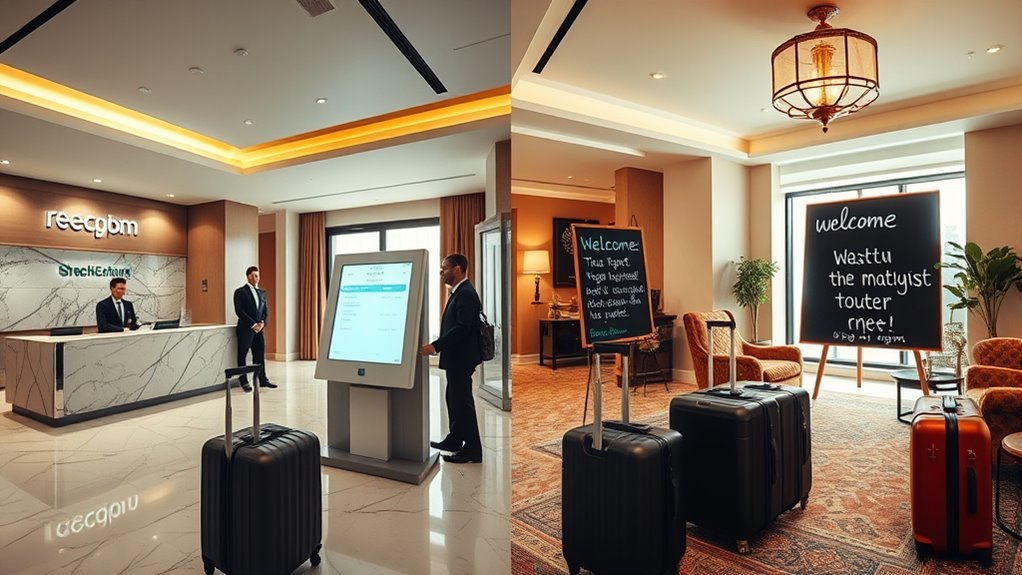
When deciding where to leave your bags, know that branded hotel chains and independent properties usually handle luggage claims and storage very differently.
Chains often follow corporate policies: standardized storage procedures, documented logs, and clearer liability limits, so you’ll likely find consistent service and written claim forms.
Independents vary widely; some offer personalized care and flexible hold times, while others lack formal systems, meaning responsibility can be ambiguous.
You’ll want to assess convenience versus predictability: chains give uniform rules and recourse, independents may give tailored help but require more trust.
Check policies before you commit to leaving valuable items.
How to Ask the Front Desk to Hold Bags
If you need the desk to hold your bags, approach the staff politely, state your arrival or departure time, and ask how long they can store your belongings.
Tell them the number of items, any fragile or valuable contents, and whether you’ll return same day or later.
Mention how many items you have, note any fragile or valuable contents, and say if you’ll return the same day.
Offer ID and reservation info to speed the process.
Confirm any fees, hours for pick-up, and where items will be kept.
- Say your name, room number (if checked in), and pick-up time.
- Describe items (size, fragility) and ask about liability.
- Request a tag or receipt and note collection hours.
Same-Day Storage Options and Tips
Although many hotels will keep your bags for a few hours at no charge, you should confirm the maximum same-day storage window and any fees before dropping them off.
When you need brief storage between check-out and departure, ask about secure baggage rooms, tagged receipts, and required ID.
Pack valuables and documents with you; leave only clothing and nonessentials.
Get an estimated retrieval time and note liability limits if damage occurs.
If the hotel can’t help, use nearby lockers or luggage-storage apps with clear insurance.
Always request a written or photographed receipt and verify pickup hours to avoid delays.
Long-Term Hotel Storage: Rules and Risks
If you plan to leave bags for days or weeks, check the hotel’s storage duration limits so you don’t violate their policy or incur fees. Remember hotels often limit liability for long-term items and may require you carry insurance or sign a waiver.
Ask staff how they secure stored luggage and what paperwork covers loss or damage before you commit.
Storage Duration Limits
When you ask a hotel to store your bags for more than a few days, know that hotels set clear limits and expect you to follow them; those limits affect liability, storage fees, and how long staff will hold items before they’re removed or discarded.
You should check the hotel’s written policy, confirm maximum days, and get timestamps on receipts.
If you overstay the agreed period, staff will typically charge daily fees, move items to long-term storage, or notify you before disposal.
Keep contact info current and arrange pickups proactively to avoid loss or extra charges.
- Verify maximum days and fees.
- Get dated receipts.
- Update contact details.
Liability And Insurance
Beyond storage limits and fees, you’ll want to know who’s responsible if something goes wrong while the hotel holds your belongings. Check the hotel’s published liability policy and ask staff whether they offer insured storage, use secure storage areas, or require you to sign a waiver.
Many hotels limit liability to a nominal amount or exclude valuable items; you’ll need to declare high-value goods and may pay extra for declared-value coverage. Your travel insurance or homeowners policy might cover stored items—confirm exclusions and filing procedures.
Keep receipts, inventory lists, and photographs to support any claim quickly and clearly.
How Hotels Secure Stored Luggage
Although hotel luggage storage might seem informal, most properties use clear procedures and physical controls to keep your bags safe. You’ll notice staff log arrivals, tag each item, and require ID to reclaim belongings.
Back rooms are often lockable, monitored, and accessible only to authorized employees.
Back rooms are kept locked, monitored, and accessible only to authorized staff to protect stored luggage.
- Staff procedures: reception logs time, name, and tag number when you drop off.
- Physical controls: locked storage rooms, chained shelves, or secured cages limit access.
- Monitoring: CCTV, occasional audits, and restricted keys help prevent theft and quickly resolve issues.
Costs: Free Courtesy vs. Paid Storage
You’ll often get complimentary luggage hold if you’re checking in early or have a room reservation, but policies vary by hotel.
If you need longer-term or guaranteed storage, many places charge a fee based on size or duration.
Check the front desk rules and any posted rates so you’re not surprised.
Free Courtesy Options
When you check out early or arrive before your room’s ready, many hotels will gladly hold your bags for free as a courtesy — but that service usually comes with limits like time windows, liability caps, or restrictions on oversized items. You can usually drop luggage at reception, get a claim ticket, and pick it up later the same day.
Staff won’t insure valuable items, so you’ll want to keep passports and electronics with you. Policies vary by property; ask about hours, identification, and whether items go to a locked storage room.
- Short-term hold procedures
- ID and claim tickets
- Size and liability limits
Paid Storage Fees
Hotels often offer paid luggage storage if you need longer-term or guaranteed holding beyond their free courtesy — and the fees and terms can vary widely. You’ll see hourly, daily, or per-item rates; boutique hotels may charge more but add tracking or insurance. Always ask about access hours, liability limits, and identification requirements. Compare costs to local storage services if price or duration seems high. Use the table below to quickly judge what to expect.
| Service Type | Typical Cost | Perks |
|---|---|---|
| Hourly | $2–$5 | Short stays |
| Daily | $5–$15 | Flexible access |
| Secure | $10–$30 | Insurance, tracking |
Hotel Policies on Valuables and Electronics
Although many properties offer luggage storage, their policies on valuables and electronics vary widely, so you should check rules before leaving expensive items. Hotels often limit liability, require you to sign declarations, or refuse high-value gear. You should ask about secure storage locations, insurance coverage, and staff access. Note written rules and keep receipts.
Check luggage storage policies for valuables—ask about safes, liability limits, staff access, and keep written receipts.
- Ask if items like laptops, cameras, and jewelry must stay with you or can go in a locked room.
- Confirm whether the hotel uses a safe, locked luggage room, or front-desk custody and who’s key access.
- Request liability limits in writing and consider your own insurance.
Alternatives: Luggage Lockers and Services
If the hotel can’t store your bags or won’t accept high-value items, look into luggage lockers and commercial storage services nearby. You’ll find secure, short-term options at stations, airports, and dedicated stores. Compare prices, insurance, hours, and reviews before committing. Pack valuables in your carry-on if possible. Bring a sturdy lock and photo ID, and note pickup deadlines to avoid fees. Use services with clear liability limits and tracking. The right choice gives freedom to explore without constant worry.
| Service | Peace of Mind | Cost |
|---|---|---|
| Station lockers | Relieved | Low |
| Commercial storage | Confident | Moderate |
| Airport lockers | Rushed | Higher |
Using On-Demand Pickup Apps Safely
When you use an on-demand pickup app, confirm the app’s reviews, credentials, and the carrier’s ID before handing over your bags.
Insist on in-app tracking, photo confirmation, and a secure pickup spot to reduce loss or theft.
If anything seems off, cancel the request and choose a verified alternative.
Verify App And Carrier
How do you know the on‑demand pickup service is trustworthy? You check the app and the carrier before booking. Look for verified company info, clear pricing, and recent reviews. Confirm the carrier’s ID photo, vehicle details, and ratings. Don’t rely solely on screenshots or unfamiliar logos.
- Verify app legitimacy: official store listing, HTTPS site, and contact email.
- Inspect carrier profile: real name, photo match, vehicle/license info, and high ratings.
- Cross‑check reviews: recent, specific mentions of luggage handling, and responses from the company.
Secure Pickup Procedures
Because you’re handing someone your bags, take clear steps to secure the pickup. You’ll confirm the app’s driver photo, vehicle details, and real-time ETA. Meet in a well-lit public area the hotel designates, watch ID match, and keep valuables with you. Use in-app chat, share trip status with a friend, and don’t release luggage until you verify the carrier.
| Step | What to Check | Why it Matters |
|---|---|---|
| 1 | Driver photo | Confirms identity |
| 2 | Vehicle info | Prevents wrong car |
| 3 | ETA | Reduces waiting |
| 4 | ID match | Ensures legitimacy |
| 5 | In-app record | Provides proof |
Local Laws That Affect Hotel Storage
Local laws can shape whether and how a hotel may store your luggage, so you should know the rules that apply where you’re staying. They affect liability limits, required documentation, and security obligations. Check local statutes or ask the front desk about storage policies that reflect those laws.
- Liability caps: some jurisdictions limit a hotel’s financial responsibility for loss or damage, so you should note posted limits.
- Permits and reporting: hotels might need permits or must report items (especially valuables or suspicious goods) to authorities.
- Storage duration limits: local ordinances can restrict how long bags may be held.
Documenting Bag Condition Before Storage
Before you leave your luggage with the front desk, take a few minutes to document its condition so you won’t be stuck disputing damage later. Photograph scratches, stains, broken zippers, and tags from multiple angles. Note dents and odours in writing, timestamp photos, and ask staff to initial a copy. Keep digital and printed records so you can show proof quickly.
| Visible damage | Emotional reaction |
|---|---|
| Scratches, scuffs | Frustration |
| Broken zipper | Anxiety |
| Stains, smells | Betrayal |
These steps protect you and make claims straightforward if problems arise.
Insurance: Travel and Home-Policy Coverage
If your luggage gets lost, damaged, or stolen while a hotel holds it, your claim options may come from the hotel’s liability, your travel insurance, or your homeowner/renter policy—so check all three. You should review policy limits, deductibles, and exclusions before you travel.
Note that hotels often limit liability and may require proof of value or negligence. Travel insurance can cover delayed, lost, or damaged baggage beyond hotel limits, while home policies sometimes cover personal property away from home but with sublimits.
Hotels often cap liability and require proof; travel insurance and home policies can cover extra baggage losses.
- Check hotel liability caps and required documentation.
- Verify travel policy baggage limits and claim deadlines.
- Confirm your home policy’s off-premises coverage and deductible.
Quick Checklist Before Leaving Your Bags
When you drop off your bags, do a quick, targeted check so you don’t leave anything important behind and you know what protections you’ve arranged. Confirm your ID, reservation name, and estimated pickup time with staff.
Remove valuables—passport, electronics, medication—and note serial numbers or photos. Ask where luggage will be stored, whether it’s locked or under surveillance, and who can access it.
Get a written or emailed receipt listing item count and condition. Verify liability limits, insurance recommendations, and contact info for claims.
Keep the receipt and a photo of each bag until you reclaim them.
Frequently Asked Questions
Can Hotels Refuse Storage for Oversized Sports Equipment?
They can refuse storage for oversized sports equipment if it poses safety, space, or liability issues, and hotels won’t accept items against policy. You should check policies in advance, request alternatives, and document any refusals.
Do Hotel Loyalty Members Get Guaranteed Free Storage?
No, loyalty members aren’t universally guaranteed free storage; policies vary by brand and property, so you should check your program’s terms and call the hotel ahead. Some tiers often get perks, but it’s not automatic.
Can Hotels Store Perishable Food or Plants?
Yes — but policies vary, so you should ask first. Hotels might store sealed, nonperishable food and small potted plants temporarily, but perishable items, hazardous substances, or anything requiring refrigeration are usually refused for safety and liability reasons.
Are There Pandemic-Related Storage Restrictions Currently Enforced?
Yes — you’ll usually find no pandemic-specific storage bans now; hotels generally let you store luggage with usual precautions, though local rules or hotel policies might still require sanitization, screening, or limited access during outbreaks.
Do Staff Ever Access Bags Without Owner Consent?
Yes — staff can access bags without your consent in specific situations, like safety checks, lost-and-found, or legal orders. You should request to be present, document concerns, and ask management or local authorities if you’re unsure.
Conclusion
Yes, hotels will often hold your luggage, but it’s not guaranteed. Ask ahead and get a clear time limit, especially at smaller or boutique properties. Don’t expect them to store valuables, perishables, or prohibited items. Photograph bags before leaving them and note any damage. Check your travel or home insurance for coverage gaps. Before you go, confirm policies, collect contact details, and pack essentials you’ll need while you’re out.
