Are Ziploc Bags TSA Approved for Air Travel?
Yes — you can use Ziploc bags for air travel as long as they meet TSA liquid rules and are clear and resealable. You’ll need quart-sized bags for carry-on liquids, with each container 3.4 ounces (100 ml) or less and all containers fitting in one bag. Empty or nonrestricted items are fine in any size Ziploc in checked or carry-on. Follow medical and duty-free exceptions and keep the bag accessible at security if you want more tips on packing and compliance.
Will TSA Let You Bring Ziploc Bags? Quick Answer
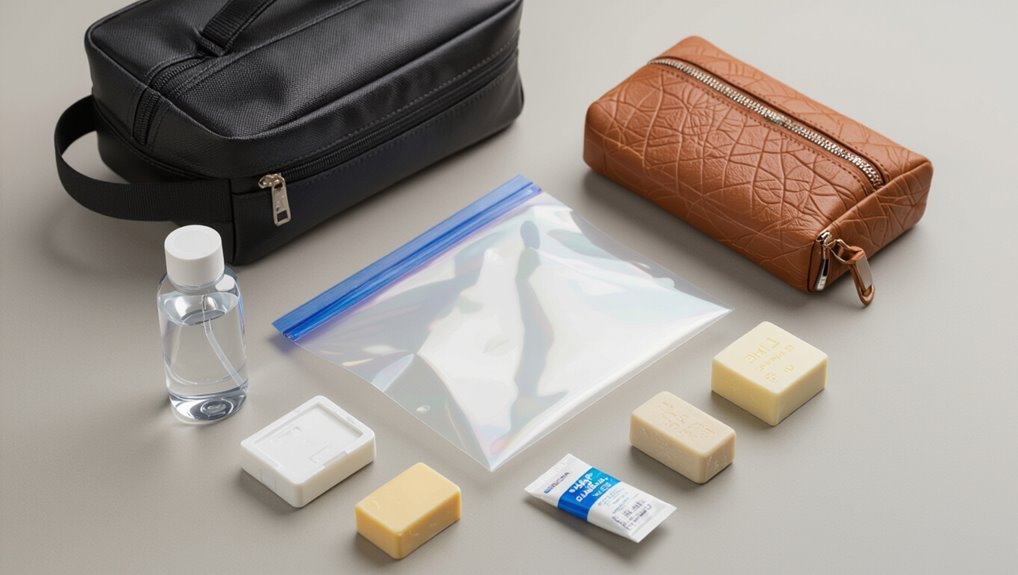
Wondering if you can bring Ziploc bags through TSA? Yes — you can carry empty or nonrestricted items in Ziploc bags in carry-on and checked luggage.
If they hold liquids, gels or aerosols, follow the TSA’s quantity and packaging limits for carry-on.
Use clear, resealable bags to organize items and speed screening, but remember rules differ for restricted substances and duty-free purchases.
Which TSA Rule Governs Liquids and Clear Bags?
When you’re packing liquids or using clear resealable bags like Ziploc for carry-on screening, the TSA’s 3-1-1 rule governs what you can bring through security:
you must place liquids in containers of 3.4 ounces (100 ml) or less, fit all containers into a single 1-quart clear resealable bag, and limit one bag per passenger.
Follow screeners’ instructions.
What Counts as a “Liquid” Under TSA Rules?
Although the TSA’s 3-1-1 rule talks about “liquids,” it actually covers a broader category—gels, creams, pastes, lotions, aerosols, and other items that can flow or be squeezed out of a container count too—so you’ll need to pack things like toothpaste, shampoo, sunscreen, hand sanitizer, mascara, and hair gel in your single 1-quart clear bag if they’re in containers 3.4 ounces.
What Is the 3-1-1 Rule and Quart-Bag Size?
The TSA’s 3-1-1 rule limits the carry-on liquids you can bring: each passenger may carry liquids, gels, creams, pastes and aerosols in containers of 3.4 ounces (100 milliliters) or less, all fitting inside one clear, resealable 1-quart (about 1-liter) plastic bag, with one bag allowed per person.
Pack small travel bottles, seal them fully, and present the bag separately at security.
Which Ziploc Bag Sizes Meet 3-1-1?
Most travelers can use Ziploc’s quart-size bags (labeled 1 quart/0.95 L) to meet the TSA 3-1-1 requirement, since they’re clear, resealable, and sized to hold your 3.4 oz (100 mL) containers.
Snack-size bags are usually too small and gallon bags are larger than allowed for the single-bag rule, though you can still use them if you downsize contents to fit and present only one bag per person.
You should choose a transparent, resealable quart bag and avoid overfilling; check dimensions if unsure.
Can You Use Quart Ziploc Bags for Carry-On Liquids?
You can use quart Ziploc bags to follow the TSA 3-1-1 liquid rule, since each bag holds the required one-quart volume for your containers.
Make sure each liquid container is 3.4 ounces (100 ml) or less and that all containers fit comfortably in a single clear bag for quick inspection.
Pack flat, seal fully, and keep the bag accessible during security screening.
TSA Liquid Rules
When packing toiletries for a flight, remember that TSA limits carry-on liquids to containers of 3.4 ounces (100 milliliters) or less, all fitting inside a single clear quart-sized bag per passenger.
You should place gels, creams, aerosols, and liquids in a resealable quart bag, present it separately at screening, and guarantee containers are fully sealed to avoid spills and delays.
Bag Size Limits
One clear quart-sized Ziploc usually meets TSA’s carry-on liquid requirement, so you can pack your 3.4-ounce (100 ml) containers in it and present the bag separately at security.
Confirm the bag is transparent, resealable, and no larger than quart size.
Only one bag per passenger is allowed for liquids, gels, and aerosols aboard carry-on.
Packing Tips
Although TSA accepts quart-sized Ziploc bags for carry-on liquids, check that your bag is clear, resealable, and truly no larger than a quart before packing.
Pack thoughtfully: keep bottles under 3.4 oz, seal liquids in separate pouches, and flatten the bag for screening.
Follow these tips so you won’t slow security or risk confiscation.
- Use compliant bottles
- Double-seal small leaks
- Organize by frequency
Are Gallon Ziploc Bags Allowed in Checked Baggage?
Curious whether you can toss gallon Ziploc bags into checked luggage? Yes — you can pack gallon Ziploc bags in checked baggage without TSA size restrictions.
Use them to organize clothing, shoes, or non-liquid items, and to contain spills from larger containers.
Avoid packing prohibited items inside. Airlines may have specific rules for hazardous materials, so check carrier policies before you fly.
How to Pack Travel Toiletries in One Quart Ziploc
You’ll want to use clear, leakproof travel containers so anything that spills stays inside the bag.
Make sure the total volume fits the one-quart Ziploc and that each bottle is compliant with TSA liquid limits.
Arrange items neatly and flat for quick screening so you can pull the bag out easily at the checkpoint.
Choose Clear Leakproof Containers
When packing your toiletries into a one-quart Ziploc, pick clear, leakproof containers so airport security can see contents quickly and your liquids won’t spill during travel.
Use sturdy plastic bottles with screw tops, silicone travel tubes with locking seals, and small pump bottles for lotions.
Store caps facing up and double-seal with tape to prevent leaks during handling and transit.
Fit Within Quart Limit
Start by laying out everything you’ll need and only what fits: place your full-size essentials into checked luggage and transfer travel-size bottles into the quart Ziploc, arranging taller items upright and flat items like toothpaste and makeup wipes alongside them so the bag closes easily.
Check volume labels, consolidate products (multiuse sticks, solid shampoo), and cap bottles tightly to prevent leaks.
Organize For Quick Screening
With your toiletries already sorted into travel-size containers and packed upright in the quart Ziploc, focus next on arranging the bag for speedy TSA inspection.
Lay items flat, face labels outward, and keep liquids visible. Remove bulky cases.
- Place clear essentials nearest seal for quick reach.
- Group creams together by size.
- Keep medications separate and accessible.
Packing Medications and Medical Liquids for TSA
Because TSA treats medications and medical liquids differently from other toiletries, you should pack them accessibly and clearly labeled.
Carry prescription meds, insulin, and necessary liquids in your carry-on, in original containers when possible.
Keep doses separated for easy inspection, and bring extras in case of delays.
Inform officers during screening if you have large or unusual medical liquids to simplify checks.
Documenting Medically Necessary Liquids for TSA
When you travel with medically necessary liquids, document them clearly to speed up screening and avoid misunderstandings.
Carry prescriptions, a doctor’s note with diagnosis and dosage, and original labeled containers.
Carry prescriptions, a signed doctor’s note listing diagnosis and dosage, and medications in their original labeled containers.
Declare the items at the security checkpoint and offer documentation proactively.
- Prescription labels
- Doctor’s note (signed)
- Receipt or pharmacy printout
Can Baby Formula or Breast Milk Go in Ziploc Bags?
Can you pack baby formula or breast milk in Ziploc bags for TSA screening? Yes — you can carry breast milk and formula beyond 3.4 oz, but keep them separate from carry-on liquids, declare them at security, and be prepared for inspection. Use sealed containers; Ziploc bags help organize, not replace proper containment.
| Item | Declare? | Inspection |
|---|---|---|
| Breast milk | Yes | Possible testing |
| Formula | Yes | Possible testing |
| Water/ice | Yes | May melt |
Are Aerosols, Gels, and Pastes Allowed in Ziploc Bags?
Wondering whether aerosols, gels, and pastes can go in Ziploc bags for air travel? You can carry them, but containers must follow the 3-1-1 rule: 3.4 ounces (100 ml) max, all fit in one clear quart-size bag.
Larger duty-free or medically necessary items have exceptions—declare them. Pack securely to prevent leaks.
- Follow 3-1-1.
- Declare exceptions.
- Seal tightly.
Are Frozen Items in Ziploc Bags Allowed Through Security?
How do frozen items in Ziploc bags fare at airport security?
You can bring frozen food in resealable bags, but TSA may screen them separately.
If items are completely solid, they usually pass; partially thawed liquids or slush could be treated as liquids and exceed limits.
Labeling and declaring baby food or medication helps.
Pack frozen goods accessibly for inspection.
Do Solid Cosmetics Need Ziploc Bags?
Solid cosmetics like lipstick, solid perfume, and stick deodorant are generally allowed through TSA screening without being placed in a quart-size Ziploc.
You should still bag them if they’re part of a larger liquid/cream kit or if you want to keep your carry-on organized and prevent messes.
When in doubt, keep items accessible for inspection to speed up the process.
Solid Cosmetics Allowed?
Because they don’t melt or spill, most solid cosmetics—like bar soap, solid shampoo, balm stick deodorant, and pressed powder—are allowed in carry-on without being placed in a zip-top bag, so you won’t need to include them with your liquids.
- Carry solids loose in your toiletry kit.
- Keep sharp applicators sheathed.
- Pack bulky solids in checked luggage if space is tight.
When To Use Bags
While you don’t generally have to tuck bar soaps, solid shampoo, or pressed powders into a zip-top bag, you should put them in one when they could rub off, break into crumbs, or contact liquids—think crumbly foundations, balm sticks that can smear, or if your kit will be jostled in transit.
Use bags for travel to contain mess, protect other items, and simplify security checks.
Can You Use Ziploc Bags for Snacks and Food at TSA?
Wondering if you can bring snacks in Ziploc bags through TSA? You can—solid foods are allowed in carry-on bags, and resealable bags keep portions tidy.
Declare liquids, gels, and sauces that exceed limits.
- Pack solid snacks (fruit, sandwiches) in sealed Ziplocs.
- Keep sauces under 3.4 oz per container inside a quart-sized bag.
- Be ready for inspection.
How to Organize Electronics and Cables in Ziploc Bags
You can keep chargers and cables tangle-free by using simple wrapping techniques like twists, small Velcro ties, or the figure-eight method.
Place each device in its own labeled Ziploc to protect screens and make security checks quicker.
Compact organization saves space and helps you find the right cable fast.
Cable Wrapping Techniques
Start by grouping cables by type and length so you can choose the best wrap for each: short charging cords, medium headphones, and longer power or HDMI cables all need different approaches.
Use these wraps to keep things tidy and tangle-free:
- Coil and secure with a twist tie for short cords.
- Figure-eight wrap for elastic headphone cables.
- Loose over-under loop for long power/HDMI cables.
Device Separation Methods
When packing electronics and cables in Ziploc bags, separate items by function and fragility so you can grab what you need without dumping everything out.
Label bags (phone, chargers, adapters, batteries), use small bags for tiny items, and keep fragile devices cushioned with soft cloth.
Stack flat items together, avoid overstuffing, and place frequently used gear on top for quick access during security checks.
Will TSA Make You Remove Ziploc Bags From Carry-On?
Curious whether TSA agents will make you remove Ziploc bags from your carry-on? You usually won’t need to unless bags obscure contents or contain liquids over limits.
Keep them visible and organized to speed screening.
- Place quart-size bags on top for quick inspection.
- Avoid overstuffing; let agents see contents.
- Remove only if asked by TSA for clearer X-ray images.
How TSA Inspects Ziploc Bags at Checkpoints
At security checkpoints, TSA officers inspect Ziploc bags primarily through X-ray imaging and, if needed, a quick visual check—so keep your bags flat and contents visible to speed screening.
You’ll place them in a bin or on the belt; officers assess density, shape, and liquid containers.
If something looks unclear, they may open or swab the bag for further inspection.
Quick Checklist: What Triggers Extra Screening With Ziplocs
If you pack clear liquids that exceed the allowed volume, expect extra scrutiny at the checkpoint.
Unlabeled or oddly colored contents in a Ziploc will also prompt officers to pull your bag for testing.
Keep liquids within limits and label anything questionable to speed things along.
Clear Liquids Over Limit
When your clear liquids in a single quart-size Ziploc exceed the 3.4-ounce (100 mL) limit per container, TSA agents will flag them for extra screening—so pack carefully and know what counts as a single container.
You’ll need to separate oversized items, declare them, or move them to checked baggage to avoid delays.
- Split into compliant bottles.
- Declare oversized items.
- Check larger quantities.
Unlabeled or Suspicious Contents
Because TSA officers can’t inspect what they can’t identify, any unlabeled or suspicious-looking items in your Ziploc will trigger extra screening—so pack clearly and be ready to explain what’s inside.
Don’t stash powders, unknown liquids, or wrapped objects without labels. Use original packaging or simple tags, and keep receipts or prescription notes handy to speed up inspection and avoid delays or confiscation.
Common Mistakes That Cause Delays With Ziploc Bags
Although Ziploc bags are meant to speed you through security, a few common mistakes can still slow you down—overstuffing them, using the wrong size, or failing to separate liquids and gels correctly are frequent culprits.
- Overstuffing: TSA may pull your bag for inspection if items overlap or obscure contents.
- Wrong size: Noncompliant bags get flagged.
- Mixed items: Powders with liquids invite extra checks.
How to Avoid Delays When Using Ziploc Bags at Security
If you pack thoughtfully and follow TSA rules, you’ll move through security faster and avoid having your Ziploc bag pulled for inspection.
Place liquids in a clear, quart-size bag, seal it, and keep it accessible. Remove electronics and powders as required.
Label medications and baby items. Use one bag per passenger, avoid overstuffing, and present it separately in the bin for quick screening.
What to Do If TSA Rejects Your Ziploc Bag Contents
If a TSA officer says something in your Ziploc bag isn’t allowed, stay calm and ask them politely what the issue is.
You’ll either need to remove or dispose of the item on the spot, so be prepared to act quickly.
Once that’s done, repack your bag according to the rules to avoid further problems.
Ask TSA Officer Politely
What should you do when a TSA officer says your Ziploc bag contents aren’t allowed? Stay calm, listen, and ask concise questions.
You can clarify the rule, request a supervisor if unsure, and offer documentation for medical items. Use polite language and nonconfrontational body language to resolve the issue quickly.
- Ask for a brief explanation.
- Show proof if available.
- Request supervisor help.
Remove Or Dispose Items
After politely asking questions and showing any documentation, you’ll need to decide how to handle items the officer deems prohibited.
You can remove them for separate screening, place them in checked baggage if time allows, discard them in provided bins, or return them to a companion leaving the checkpoint.
Follow the officer’s instructions and get a receipt if property is retained.
Repack According Rules
When TSA rejects items from your Ziploc, stay calm and repack promptly to meet the rules:
- Separate liquids, gels, and aerosols into a clear quart-sized bag, keeping each container ≤100 mL.
- Remove prohibited items (sharp objects, large batteries) and place them in checked luggage or dispose.
- Zip the bag fully, place it on top of carry-on for screening, and cooperate with agents if further checks are needed.
Packing Ziploc Bags for Connecting Flights
If you’re changing planes, pack your Ziploc bags so essentials are easy to find and comply with TSA rules at every checkpoint.
Separate liquids, medications, and important documents into clearly labeled quart-size bags. Keep one accessible in your carry-on for transfers.
Remove sealed bags only when asked. Consolidate similar items to speed re-screening and avoid delays between connections.
Airport Security Tips for Families Using Ziploc Bags
When you pack family carry-ons, keep liquids in clear 1-quart Ziploc bags so they meet TSA’s 3-1-1 rules and slide easily through screening.
Use labeled bags to organize snacks, medicines, and wipes for quick access at security and on the plane.
Prepare kids by showing them the screening process and packing a small bag of familiar items to speed checkpoints and reduce stress.
Carry-On Liquids Rules
Because airport security enforces strict carry-on liquid limits, you’ll want to pack toiletries for the whole family into clear, quart-sized Ziploc bags and organize them by passenger before you reach the checkpoint.
- Label each bag with a name and essentials to speed inspection.
- Keep liquids ≤100ml/3.4oz, gels, and creams visible and upright.
- Put all family bags in an accessible bin to avoid delays.
Organizing Family Essentials
Although airport lines move fast, you can keep family essentials stress-free by packing each person’s items in clearly labeled, quart-sized Ziploc bags arranged by priority (meds and baby supplies first).
Put travel documents, snacks, chargers, and hygiene items in separate bags so agents can inspect quickly.
Keep one communal bag for shared items and stash duplicates to avoid last-minute scrambling at checkpoints.
Child-Friendly Security Prep
If you want security to go smoothly with kids, pack each child’s essentials in clearly labeled quart-sized Ziploc bags so you can pull items quickly for inspection.
Explain the process calmly, show them the bag, and keep snacks, medications, and a change of clothes accessible.
- Snacks and small toys
- Meds with prescription labels
- Spare shirt and underwear
Flying With Cosmetics: Ziploc Bag Best Practices
When you pack cosmetics for a flight, use clear, resealable Ziploc bags to keep liquids accessible and prevent spills from ruining your carry-on; they make TSA inspections faster and help you stay within the 3-1-1 rule.
Separate creams, gels, and aerosols, label fragile items, squeeze air out before sealing, and keep the bag at the top of your carry-on for quick removal.
How TSA PreCheck or CLEAR Affects Ziploc Screening
If you have TSA PreCheck, you’ll usually keep your Ziploc bagged liquids in your carry-on and skip removing them at screening.
With CLEAR, you move faster through the ID check but still follow the same liquid rules at the X-ray lane.
Both services speed your process, but they don’t change size or packaging requirements for Ziploc bags.
TSA PreCheck Screening Impact
TSA PreCheck and CLEAR can streamline your security experience, but they don’t change the basic rules for carrying liquids in Ziploc bags—those still need to meet the 3-1-1 liquids rule and be presented when required.
- You’ll usually keep your Ziploc bag in your carry-on and remove it only if asked.
- PreCheck often lets you skip removing shoes and laptops, not liquids.
- Follow officer instructions to avoid delays.
CLEAR Expedited Screening
CLEAR and PreCheck can speed you through identity and document checks, but they don’t exempt your Ziploc bag from the 3-1-1 liquids rule or from being shown at security if an officer asks. You’ll still pack, present, and possibly remove the bag. Stay ready, follow limits, and avoid delays.
| Calm | Clear | Compliant |
|---|---|---|
| Prepare | Present | Respect |
| Fast | Simple | Secure |
How Many Ziploc Bags Can You Bring Through Security?
Because the liquid rule limits each passenger to one quart-sized, clear plastic bag for carry-on screening, you’ll generally be allowed only a single Ziploc-style bag filled with liquids, gels, and aerosols in containers of 3.4 ounces (100 milliliters) or less.
Follow these tips:
- Pack all small liquids in that one bag.
- Place the bag separately for screening.
- Put larger toiletries in checked luggage.
Do Ziploc Brand Bags Need to Be Clear and Resealable?
You’ll need a clear, resealable bag to meet TSA’s liquids rule, and not all Ziploc products are exactly the same.
Check the packaging — many Ziploc quart-size bags are designed to comply, but opaque or nonresealable varieties won’t work.
Always confirm size and transparency before you pack to avoid being stopped at security.
Clear And Resealable Requirement
When preparing toiletries for airport security, you don’t need a Ziploc bag that’s branded specifically as “clear and resealable.”
TSA requires bags to be transparent and able to close securely, so any clear, resealable plastic bag that meets size limits will work.
- Choose a transparent bag with a reliable seal.
- Keep liquids within quart-size limits.
- Present the bag separately for screening.
Ziploc Brand Compliance
Although Ziploc is a common brand, TSA doesn’t require branded bags — you just need a clear, resealable bag that fits the quart-size rule.
You can use any clear, resealable bag that’s durable and transparent enough for inspection. If your Ziploc meets size and resealability criteria, it’s fine.
Avoid opaque, single-use, or oversized bags to prevent delays at security.
Reusable Clear Travel Bags or Disposable Ziploc: Which to Choose?
Which fits your travel style better: a sturdy reusable clear bag you can zip and reuse dozens of times, or cheap disposable Ziploc bags you toss after a trip?
Decide by frequency, budget, and packing habits. If you travel often, reusable saves waste and money; if occasional, disposables are flexible and cheap.
- Frequency
- Budget
- Convenience
Reusable Clear Bags vs. Single-Use Ziploc: Pros and Cons
Now that you’ve weighed frequency, budget, and convenience, compare the tangible pros and cons of reusable clear bags versus single-use Ziplocs so you can pick what actually works.
Reusable bags are sturdier, eco-friendlier, and TSA-friendly long term but cost more upfront and need maintenance.
Single-use Ziplocs are cheap, disposable, and lightweight but create waste and tear more easily.
How to Clean and Reuse Ziploc Bags Safely for Travel
Cleaning and reusing Ziploc bags for travel is simple if you follow a few quick steps to keep them sanitary and TSA-compliant.
Wipe, wash, dry, and inspect before use. Store clean bags separately.
- Wash with warm soapy water, rinse thoroughly.
- Air-dry fully (open seal), avoid moisture inside.
- Inspect for holes or residue; replace if damaged.
Environmental Trade-Offs of Using Ziploc Bags
You’ll weigh the convenience of Ziploc bags against the environmental cost of single-use plastics and the waste they generate.
Consider how reusable silicone or fabric alternatives compare in durability, weight, and TSA compatibility.
Also learn simple disposal and recycling steps to reduce your travel footprint.
Single-Use Plastic Impact
Although Ziploc bags make travel security checks easier, they also add to the single-use plastic problem you see in landfills and oceans; their convenience comes with environmental trade-offs that matter over time.
- You contribute to persistent waste when bags aren’t recycled properly.
- Wildlife and microplastics suffer as bags fragment in nature.
- Production and disposal drive carbon and resource use you mightn’t expect.
Reusable Alternatives Comparison
When you swap single-use Ziploc bags for reusable options, the environmental trade-offs shift rather than disappear: reusable silicone, beeswax wraps, and durable plastic containers each cut waste but differ in production impacts, lifespan, and end-of-life disposal.
You’ll reduce landfill volume, but higher manufacturing energy, material sourcing, and eventual recycling challenges mean you should choose based on use frequency and durability.
Proper Disposal Practices
1 clear step toward reducing the environmental harm of Ziploc bags is to dispose of them correctly: check local recycling rules, clean and dry bags before putting them in designated drop-off bins for plastic film, and never toss contaminated bags in curbside recycling.
- Rinse and air-dry to avoid contamination.
- Combine many bags to justify drop-off trips.
- Consider store take-back programs or switch to reusable silicone bags.
Alternatives to Ziploc Bags That Meet TSA Rules
If you want alternatives to Ziploc bags that still meet TSA rules, several reusable and disposable options work well for carrying liquids through security.
Choose clear, quart-sized PVC or vinyl zip pouches, travel-specific clear toiletry bags, or TSA-approved silicone travel bags.
Disposable clear quart bags and pre-approved toiletry kits also suffice.
Label reusable bags and keep them accessible for screening to speed inspection.
Where to Buy TSA-Compliant Clear Bags and Alternatives
Now that you know which types of clear and silicone bags meet TSA rules, you can pick up suitable options at several common retailers.
Now that you know which TSA-approved clear and silicone bags to use, find them at familiar retailers.
Look for quart-size clear bags, reusable silicone pouches, or travel toiletry kits labeled TSA-compliant. Compare price, durability, and closure type before buying.
- Drugstores (CVS, Walgreens)
- Big-box stores (Walmart, Target)
- Online marketplaces (Amazon, brand sites)
How to Choose Ziploc Sizes for Weekend Trips
Pick Ziploc sizes based on what you’re packing—small bags for toiletries and meds, quart or sandwich for liquids and electronics, and gallon for bulk items or shoes.
You’ll save space by grouping similar items, squeezing air out, and nesting soft pieces inside larger bags.
For protection, double-bag fragile or leak-prone things and use padding or clothing as buffers.
Size Vs. Item Type
Packing smart for a weekend trip means matching Ziploc sizes to the items you’re bringing, so you don’t waste space or carry excess weight.
Choose sizes by item type: small for cords and jewelry, quart for toiletries, gallon for shoes or bulky layers.
Prioritize visibility and protection, label bags, and avoid overstuffing to keep your carry-on efficient and organized.
- Small: cords, jewelry
- Quart: toiletries
- Gallon: shoes, layers
Maximizing Space Efficiently
When you’re prepping for a weekend trip, match Ziploc sizes to item bulk and frequency of use so every inch of your bag works for you; use quart bags for toiletries and electronics chargers, sandwich bags for socks and underwear, and snack bags for jewelry or cables.
Layer smaller bags inside larger ones, keep daily essentials accessible, and label bags to speed packing and retrieval.
Compression And Protection Tips
Although space’s limited, choosing the right Ziploc sizes helps you compress items without sacrificing protection: pick quart bags for liquids and toiletries,
sandwich bags for socks/chargers, and gallon bags for bulky or dirty items.
Use roll-and-squeeze for air removal, double-bag fragile bits, and label contents.
Follow TSA liquid limits and keep your clear bag accessible for security checks.
Packing Checklist: Ziploc Bags for a Weekend Trip
If you’re packing for a weekend trip, Ziploc bags will become one of your most useful organizers: use quart bags for toiletries to meet TSA rules, sandwich bags for snacks, and small bags for chargers, jewelry, and meds.
Label each bag, compress clothing bits to save space, and keep a clear bag accessible for airport screening to speed up security checks.
Packing Checklist: Ziploc Bags for a Weeklong Trip
Since you’re packing for seven days, think beyond quart-size toiletries and bring a mix of Ziploc sizes to keep everything organized:
Since you’re packing for seven days, bring a mix of Ziploc sizes—beyond quart toiletries—for tidy, organized luggage.
- Small: daily meds, jewelry, chargers to prevent tangles.
- Medium: spare socks, underwear, lightweight tops—compress to save space.
- Large: laundry bag, shoes, or bulk snacks; seal to protect from spills.
Use clear labels and resealable bags to track items and keep luggage tidy.
Packing Checklist: Ziploc Bags for International Travel
When you’re packing for international travel, use clear Ziploc bags to separate liquids and toiletries so security checks and spills won’t slow you down.
Put chargers, adapters, and small electronics in labeled bags to keep cords untangled and devices protected.
Keep passports, boarding passes, and important documents in a flat, waterproof Ziploc for quick access and added security.
Liquids And Toiletries
Although airport security has strict rules about carry-on liquids, you can simplify packing by using clear, resealable Ziploc bags to organize your toiletries and meet size limits.
- Pack travel-size bottles (100 ml/3.4 oz) and double-check seals.
- Group creams, gels, and sprays separately to prevent leaks.
- Keep one easily accessible bag for inspection; replace spilled items before return.
Electronics And Chargers
Keep your electronics and chargers organized in clear Ziploc bags so you can spot cords, adapters, and spare batteries at a glance. You’ll separate cables, power bricks, and small devices to speed security checks and prevent tangles. Label bags for quick access and keep batteries accessible for screening.
| Item | Quantity | Tip |
|---|---|---|
| Cables | 3–6 | Coil neatly |
| Adapters | 1–2 | Label |
| Batteries | 2–4 | Accessible |
Document Organization
After you’ve sorted chargers and batteries into clear bags, do the same for travel papers so nothing gets lost at checkpoints.
Use labeled Ziploc bags to separate passports, boarding passes, visas, and insurance copies. Keep originals accessible and scans in a waterproof pouch.
- Passports & visas
- Boarding passes & itineraries
- Emergency contacts & insurance
How Ziploc Bags Affect Carry-On Space (Not Weight)
When you pack liquids, gels, and aerosols into Ziploc bags for airport security, they change how you use carry-on space more than how much your bag weighs.
You’ll need to allocate a flat, accessible area for the bag so it can be removed quickly. Bulky or multiple bags eat internal volume, force reshuffling, and limit room for clothes or electronics.
Tips for Sealing and Labeling Ziploc Bags for TSA
If you want smooth TSA screening, seal Ziploc bags fully and label them clearly so agents can spot contents without opening them.
Use a permanent marker or printable label, place labels on clear side, and expel air for a flat profile.
Use a permanent marker or printable label on the clear side, and squeeze out air for a flat, visible bag.
Follow these quick tips:
- Write contents and date.
- Seal twice along the zipper.
- Keep liquids upright in a secondary pouch.
How to Handle TSA Opening Your Ziploc Bag
Even with careful sealing and clear labels, TSA may need to open your Ziploc for inspection; stay calm and cooperate.
Politely ask the officer what they’re checking, step aside when requested, and keep belongings accessible.
If they reseal your bag, note any tags or stickers.
If anything’s removed or damaged, request documentation and follow up with the airline or TSA customer service promptly.
Myths About Ziploc Bags and Airport Security
Curious about what you can and can’t bring in a Ziploc through airport security? You might hear myths; don’t assume rules vary by bag brand or color. Know the facts and follow liquid limits.
- Ziplocs aren’t inherently banned—size and contents matter.
- TSA doesn’t require branded bags; clear, resealable is preferred.
- Solid foods usually pass; liquids follow the 3-1-1 rule.
Real Traveler Scenarios: Ziploc Dos and Don’ts
When you’re packing a Ziploc for security screening, think about purpose and contents: use a clear, resealable bag for small liquids, creams, and gels that meet the 3-1-1 rule.
Keep solid snacks separate and accessible, and avoid overfilling so agents can quickly inspect the bag.
Pack medications and baby food separately with labels, declare unusual items, and replace torn bags before arriving at the checkpoint.
Sample Packing Layouts Using Ziploc Bags
Now that you know which items belong in a Ziploc at the checkpoint, let’s look at practical layouts you can use to organize a carry-on.
You’ll pack by function and accessibility: toiletries, meds, and tech cords. Use clear bags, label them, and place them where security or you can reach easily.
- Toiletries bag
- Medication bag
- Electronics & cords bag
Are Ziploc Rules Different on Low-Cost Carriers?
Do low-cost carriers enforce different rules for Ziploc bags?
Generally, they follow the same TSA liquid and bag-size limits, so your quart-sized Ziploc and 3.4-ounce containers remain acceptable.
However, budget airlines may have stricter carry-on size or gate-check policies, so check the carrier’s baggage rules before travel.
Be prepared to repack if cabin space is limited.
Recent TSA Rule Changes That Could Affect Ziploc Use
Budget carriers usually stick to TSA liquid limits, but recent and proposed TSA rule changes could alter how you pack those quart-sized Ziplocs.
You’ll want to track updates that affect carry-on screening, liquid definitions, and container visibility.
- Screening tech upgrades may require clearer packing.
- Redefined liquid/gel rules could change allowed volumes.
- Enforcement shifts might tighten bag inspections.
Quick Summary: When Ziploc Bags Work and When They Don’t
When you’re packing, Ziploc quart-sized bags work well for liquids that meet TSA’s 3-1-1 rule and for organizing small items, but they won’t substitute for larger or opaque containers that fail visibility or volume checks.
Use them for travel-sized toiletries, chargers, and snacks.
Don’t rely on them for prohibited items, fragile gear, or checked-bag-only substances; follow TSA guidance to avoid delays.
Frequently Asked Questions
Can Ziploc Bags Be Used to Store Spare Batteries?
Yes — you can use Ziploc bags to store spare batteries, but you should keep terminals covered or tape them, separate batteries to avoid contact, and follow airline or TSA rules for carrying spare lithium batteries in carry‑on luggage.
Are Ziploc Bags Acceptable for Carrying Small Jewelry Items?
Yes — you can use Ziploc bags to carry small jewelry; they’ll keep pieces together, prevent tangling, and protect against scratches. You should label or secure valuable items separately and keep them in your carry-on for safety.
Do International Airports Outside the U.S. Accept Ziploc Bags?
Yes — many international airports accept Ziploc bags for carry-on liquids, but rules vary by country and airline, so you should check specific airport and carrier guidelines beforehand, and always follow local security size and transparency requirements.
Can You Pack Sharp Toiletry Items (Razors) in Ziploc Bags?
Yes — you can pack disposable razors or cartridge razor heads in Ziploc bags for carry-on, but you shouldn’t carry loose safety or straight razors; check your airline and destination rules, since some countries restrict sharp items.
Will Airline Staff (Not TSA) Enforce Ziploc Bag Rules Onboard?
Airline staff might enforce cabin rules, but they generally follow TSA and carrier policies; you’ll find gate or flight attendants can ask you to comply, repack, or stow items if they deem them unsafe or noncompliant.
Conclusion
Yes — you can use Ziploc bags for air travel, and they’re TSA-friendly for carrying liquids in carry-on, provided they follow the 3-1-1 rule: each container 3.4 ounces (100 mL) or less, all fit in a single clear quart-sized bag, one per passenger. Larger liquid containers must go in checked baggage. Use a quart-size or approved clear bag; avoid opaque or oversized bags. Check airline rules for variations and recent TSA updates before packing.