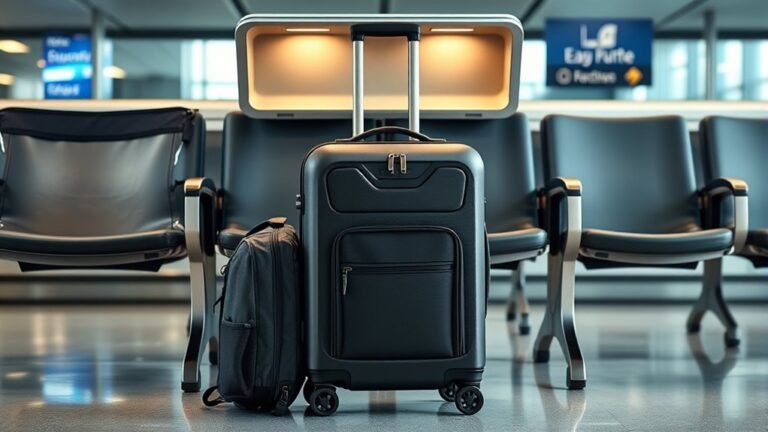
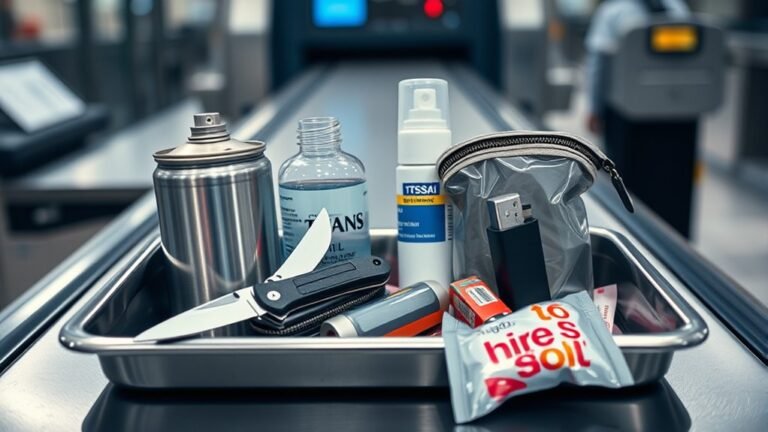
Are Umbrellas Allowed in Carry on Luggage and Airline Rules Explained
You can usually bring a compact, blunt‑tipped umbrella in your carry‑on, but policies vary by airline and security agency, so don’t assume all models are allowed. Collapsible umbrellas are generally fine; full‑length or sharp‑tipped ones may be flagged, hand‑inspected, or required to be checked. Pack the umbrella accessibly, cover or blunt any pointed tips, and be ready to remove it at screening. Keep exploring the guide for specific airline rules, packing tips, and real traveler solutions.
Who This Guide Is For and What You’ll Learn
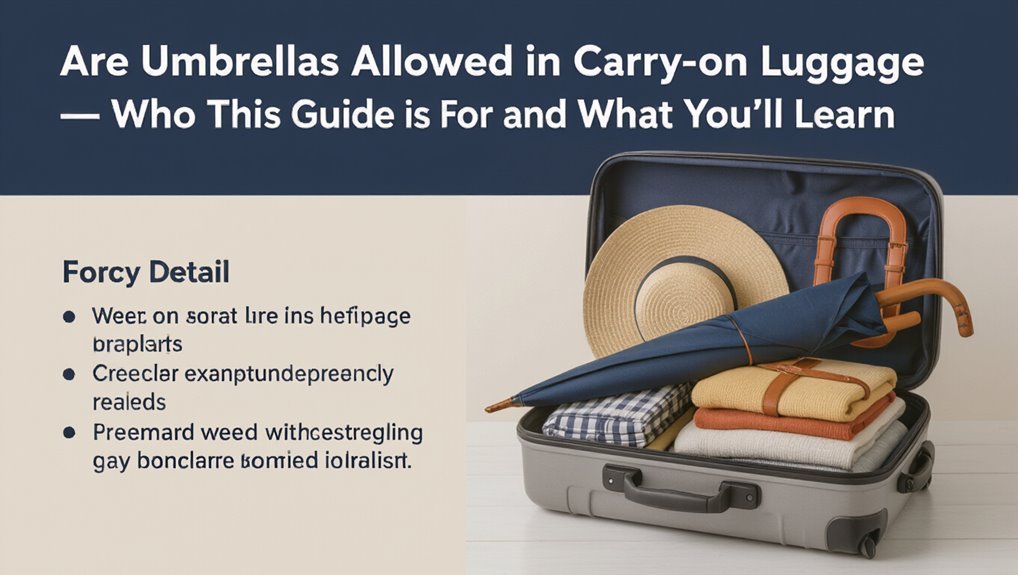
This guide is for travelers who want clear, practical answers about carrying umbrellas in carry-on luggage—whether you’re a frequent flyer, an occasional vacationer, or packing for a business trip.
You’ll learn which umbrella types airlines typically allow, packaging tips to avoid delays, relevant safety concerns, and how to handle gate checks or security questions so you’ll pass through screening smoothly and confidently.
Quick Answer: Are Umbrellas Allowed in Carry-On Luggage?
Yes—you can usually bring umbrellas in carry-on luggage, but rules vary by airline and security screeners.
You’ll need to follow size and type limits (compact vs. pointed shafts) and expect inspection at security.
Check your airline’s carry-on policy and TSA or local security rules before you fly.
Airline Carry-On Policies
Because most airlines treat umbrellas like common personal items, you can usually bring a compact or folding umbrella in your carry-on without trouble—just check its length and any sharp tips against the carrier’s size and safety rules.
You should confirm individual airline limits, stow larger or telescoping models according to their policies, and be prepared to place bulky umbrellas in overhead bins if requested.
Security Screening Rules
When you go through TSA or other airport security, you can usually carry a compact or folding umbrella through the checkpoint, but agents may inspect or screen it if it has a pointed tip or looks suspicious.
You’ll need to place it on the X-ray belt; officers might open or hand-inspect it. If deemed a threat, they’ll confiscate it or require you to gate-check or mail it.
Size And Type Limits
Most airlines and security agencies let you carry a compact umbrella in your carry-on, but rules vary by size and tip type—rigid, full-length umbrellas with sharp points may be restricted or treated as checked items.
You should choose collapsible models with rounded or blunt tips, check airline policies before flying, and be prepared to gate-check or check any umbrella deemed a potential weapon.
TSA Rules for Umbrellas in Carry-On and Checked Bags
If you’re planning to carry an umbrella through airport security, know that the TSA allows most umbrellas in both carry-on and checked bags but enforces size and safety checks at the checkpoint. You’ll present umbrellas for screening; sharp tips or unusual features may be questioned. Pack responsibly to avoid delays.
| Item | Rule |
|---|---|
| Carry-on | Allowed, subject to screening |
| Checked | Allowed |
| Tips | May be inspected |
| Exceptions | Prohibited if deemed weapon-like |
Collapsible vs Full-Length: Which Can You Carry On?
You can usually bring a collapsible umbrella in your carry-on without trouble because it folds down to a compact size.
Full-length umbrellas, though, may be restricted or treated like potential makeshift weapons and could be barred from the cabin depending on the airline or security officer.
Check your carrier’s rules before packing so you don’t get stuck gate-checking or surrendering it.
Collapsible Umbrellas Allowed
Because collapsible umbrellas fold down to fit inside bags, airlines generally treat them like other small personal items and allow them in carry-on luggage.
You can stow one in your backpack, tote, or underseat bag.
Still, screeners may inspect it; compact models without sharp tips pass more smoothly.
Check your airline’s size rules and pack it where it won’t pierce fabric or electronics.
Full-Length Restrictions
Airlines usually let collapsible umbrellas ride in your carry-on, but full-length umbrellas face tighter limits and are often treated like potential improvised weapons.
You’ll need to check airline policy or gate agent rules; some let plain shafts on board, others require checked baggage.
Consider:
- Measure length and tip type before travel
- Remove sharp ferrules or pack tip guards
- Ask gate staff for final approval
Metal Tips, Spikes, and Sharp-Pointed Umbrellas: Security Concerns
Many travelers don’t realize that metal tips, spikes, and sharply pointed umbrella ends pose clear security risks, so screeners often treat them like potential weapons.
You should expect additional inspection or confiscation if an umbrella has a rigid, pointed end.
To avoid delays, carry a blunt-tipped or collapsible model, pack sharp accessories in checked baggage, or replace tips with rounded covers before screening.
How Major U.S. Airlines Handle Umbrellas (Delta, American, United)
When you fly with Delta, American, or United, each carrier generally follows TSA rules for carry-on umbrellas but may have small policy differences and staff-level discretion about size, tip shape, and storage during boarding.
Expect airlines to defer to TSA on whether an umbrella can stay in the cabin and to require gate agents to enforce plane-space and stowage limits.
- Check umbrella length limits
- Avoid sharp or metal tips
- Be ready to gate-check if asked
Umbrella Rules: UK, EU, Canada, Australia
Across the UK, EU, Canada, and Australia, airport security largely treats compact, non-pointed umbrellas as allowed in carry-on bags.
However, you should expect country-specific size and tip restrictions and occasional gate-agent discretion.
Be prepared for varying size and tip limits — and for gate agents to exercise discretion.
Check local civil aviation and airport websites before travel.
If your umbrella is large, pointed, or looks like a weapon, pack it in checked baggage or swap it for a travel-friendly model.
What to Expect at the Security Checkpoint With an Umbrella
When you go through security with an umbrella, expect it to be sent through the X-ray and possibly inspected by an officer.
Some checkpoints may restrict long, pointed, or unusual umbrella types, so be ready to answer questions or pack a different item.
To keep screening smooth, collapse umbrellas, place them where they’re easy to pull out, and know your airline or country’s specific rules.
Carry-On Screening Process
If you bring an umbrella through security, expect to place it on the X-ray belt for inspection and possibly answer a brief question from the screener about its construction or folding mechanism.
You’ll remain nearby while they X-ray and may be asked to open or extend it.
Typical steps include:
- Placing umbrella on belt
- Brief screener questions
- Possible manual inspection or opening request
Potential Umbrella Restrictions
Although most umbrellas pass through security without issue, you should expect a few possible restrictions at the checkpoint: agents may ask you to remove or unwrap the umbrella for X-ray inspection, inspect pointed tips or collapsible mechanisms, or separate it from other items.
Some gates prohibit large golf-style umbrellas; metal spikes or suspicious modifications can trigger further screening, and final decisions rest with security officers.
Tips For Smooth Screening
Now that you know what might trigger extra screening, here are practical steps to keep your umbrella from slowing you down at the checkpoint.
You’ll want to prepare and present it confidently to speed screening.
- Collapse and stow in an easy-to-reach spot.
- Place it separately on the belt if asked.
- Tell the officer if it’s a walking aid or contains unusual features.
When TSA or Gate Agents Might Ask You to Check an Umbrella
When security officers or gate agents see an umbrella that looks like it could be used as a bludgeon or contains a dense metal shaft, they’ll ask you to check it before boarding.
You’ll also be asked to check unusually long, pointed, or disguised umbrellas, items triggering alarms, or cases where space is limited.
Complying quickly avoids delays and keeps screening efficient.
How to Handle Gate Agents and Last-Minute Disputes
If a gate agent challenges your umbrella, stay calm and be courteous to keep the situation from escalating.
Know the rules ahead of time so you can explain your position clearly and cite relevant policies.
If you still disagree, politely ask to speak with a supervisor to resolve the issue.
Stay Calm And Courteous
Because gate agents control boarding and security final decisions, staying calm and courteous gives you the best chance of resolving last-minute disputes over umbrellas or other carry-ons.
You should speak clearly, listen, and accept reasonable requests. Try these tactics:
- Explain your need briefly and politely.
- Offer to gate-check or stow the umbrella.
- Ask for a supervisor only if necessary, calmly.
Know The Rules
Although gate agents have the final say, you can handle last-minute disputes over umbrellas by knowing the airline and TSA rules and communicating clearly. Stay polite, show documentation, and offer to stow the umbrella or check it if required. Remain firm but respectful to avoid escalation.
| Feeling | Action |
|---|---|
| Anxious | Breathe |
| Frustrated | Explain |
| Hopeful | Cooperate |
| Relieved | Comply |
| Confident | Document |
Ask For Supervisor
When a gate agent still refuses to accept your umbrella despite following the rules and showing documentation, politely ask to speak with a supervisor; that step often resolves misunderstandings without escalating.
Stay calm, state facts, and carry ID.
- Explain policy citation and show proof
- Request reinstatement or written denial
- Note names, time, and file a complaint later
Packing Tips for Carrying an Umbrella Through Screening
If you plan to bring an umbrella in your carry-on, pack it where TSA agents can easily see and access it—near the top of the bag or in an outer compartment—so screening goes quickly and without surprises.
Collapse and secure the tip, cover sharp points, and position the handle away from dense items.
Remove it promptly if asked, and keep receipts or brand tags accessible for quick verification.
Protecting Checked Luggage From Wet Umbrellas
Because wet umbrellas can soak through fabric and damage other items, pack them to keep moisture contained and luggage dry.
Wrap the umbrella in a sealed plastic bag or waterproof pouch before checking your bag. Place it near shoes or toiletries, and consider a small absorbent towel to catch drips.
- Use a heavy-duty zip bag
- Layer with a towel
- Isolate from clothes
Best Umbrella Styles for Travel and Commuter Convenience
When you’re packing for travel or your daily commute, choosing the right umbrella makes a big difference.
Compact folding umbrellas tuck into your bag without taking up space, while hands-free designs like wearable or hands-free canopy styles let you keep your hands free for bags or devices.
Consider size, weight, and ease of opening to match your routine.
Compact Folding Umbrellas
- Auto-open mechanism for quick use
- Wind-resistant ribs for stability
- Slim case for easy packing
Hands-Free Travel Umbrellas
If you juggle bags, coffee, or a phone during your commute, hands-free travel umbrellas let you stay dry without slowing down.
You’ll prefer wearable designs—poncho umbrellas, backpack covers, or umbrella hats—that free both hands.
Pick lightweight, quick-dry materials and secure attachments that won’t snag in crowds or overhead bins.
These styles suit cyclists, commuters, and travelers who need mobility and fuss-free protection.
Travel Gear Alternatives: Raincoats, Ponchos, Travel Umbrellas
Although you can always grab a compact umbrella, lightweight raincoats, disposable ponchos, and travel umbrellas each bring different trade-offs in weight, packability, coverage, and durability.
Compact umbrellas, raincoats, ponchos, and travel umbrellas each trade off weight, packability, coverage, and durability—choose by itinerary and tolerance.
So pick the option that best matches your itinerary and tolerance for wet gear. You’ll want to take into account ventilation, storage, and weather severity.
- Raincoat: reusable, better coverage
- Poncho: ultra-packable, disposable option
- Travel umbrella: compact, moderate coverage
Exceptions and Special Cases: Oversized Items and Instruments
1 common exception you’ll run into is oversized items and musical instruments, which don’t fit neatly into standard carry-on rules and often require special handling.
You’ll need to check airline size/weight limits, book a seat for large instruments or gate-check them, and pay fees.
Always contact the carrier ahead, secure proper cases, and arrive early to resolve space or documentation issues.
Temporary Policy Changes During Severe Weather or Emergencies
When severe weather or other emergencies hit, airlines often suspend or temporarily alter standard carry-on rules — so check the carrier’s notices before you pack.
You should expect quick changes that affect umbrellas and other items. Typical temporary measures may include:
- Restricted carry-on counts to speed boarding and deplaning
- Gate-checking policies for wet or bulky umbrellas
- Short-term security screening adjustments that affect small items
How to Check a Specific Airline’s Umbrella Policy Before You Fly
Want to be sure your umbrella won’t cause delays at the gate? Check your airline’s website under baggage or carry-on rules, search FAQs for “umbrella,” and review size or tip restrictions.
Call customer service or use live chat for clarification. Save screenshots of policy pages and confirmation emails.
Arrive early so staff can assist if a gate agent questions your umbrella.
Sample Packing Checklist: Umbrellas and Rain Gear
Pack two essentials: a compact umbrella and a lightweight rain shell you can stash in your carry-on pocket or personal item.
Keep gear organized, accessible, and compliant with airline size limits. Consider these items:
- Compact folding umbrella (fits sleeve or pocket)
- Packable rain shell with hood (lightweight)
- Waterproof pouch for documents and electronics
Pack smart to stay dry and breeze through security.
Real Traveler Scenarios and Solutions
Having your compact umbrella and rain shell ready makes handling real-world rain hassles much smoother, but you’ll still face varied situations on the road.
If security inspects your umbrella, stay calm, show receipts or packing.
For sudden downpours, stash wet gear in a plastic bag to protect electronics.
If a gate agent questions size, politely request a quick supervisor check to avoid delays.
Quick Reference: Do’s and Don’ts for Bringing Umbrellas on Planes
1 simple checklist will keep you out of trouble: choose a compact, foldable umbrella with a blunt tip, keep it in your carry-on or personal item where it’s easy to show at security, and avoid long or sharpened shafts that could be flagged as potential weapons.
- Carry compact, blunt-tip umbrellas
- Keep it accessible for screening
- Check airline rules for exceptions
Frequently Asked Questions
Can I Bring an Umbrella in My Personal Item (Purse/Backpack) Only?
Yes — you can usually bring an umbrella in your personal item, but security or airline-specific rules might restrict certain types (sharp tips, long or metal shafts). Check TSA and your carrier’s policy before you travel to be safe.
Are Novelty Umbrella Handles (Cane-Style) Considered Assistive Devices?
Generally, no — novelty cane-style umbrella handles aren’t treated as assistive devices unless you’ve got documentation proving medical need. You’ll usually face normal carry-on screening and airline discretion, so pack documentation if you need accommodation.
Do International Flights Enforce Different Umbrella Blade Length Limits?
No, international flights don’t have a universal umbrella blade length limit; you’ll face varying national and airline security rules, so check specific carrier and airport guidelines and be prepared to surrender or gate-check oversized or suspicious umbrellas.
Can I Gate-Check an Umbrella for Free on Domestic Flights?
Yes — you can usually gate-check an umbrella for free on domestic flights; airlines typically treat collapsible umbrellas as carry-on or gate-checked items without charge, though policies vary, so verify with your carrier before boarding.
Will an Umbrella Be Confiscated if It Triggers the Scanner Alarm?
If your umbrella triggers the scanner alarm, security may inspect it and you’ll either be allowed to carry it after screening or asked to surrender it if it’s prohibited; you won’t automatically lose it without cause or explanation.
Conclusion
You can usually bring an umbrella on the plane, but you’ll want to pick a compact, non-spiked model and be ready for security screening. Collapsible umbrellas generally fly in carry-on bags, while long, pointed umbrellas may be flagged and should go in checked luggage if allowed. Always check TSA guidance and your airline’s rules before you travel. Pack smart, stow rain gear securely, and you’ll avoid delays or surprises at the gate.