Are Tools Allowed in Carry On Luggage TSA?
Yes — you can bring some small, non‑sharp tools in your carry‑on, but anything sharp, long, or that could be used as a weapon generally must go in checked luggage. Items like short screwdrivers (about 7 inches or less), hex keys, small pliers, and safety‑bladed cutters with restrictions are usually allowed, while knives, exposed‑blade box cutters, saws, and large hammers are prohibited. Follow TSA and airline size rules, and keep documents handy if needed to learn more.
Who This Guide Is For
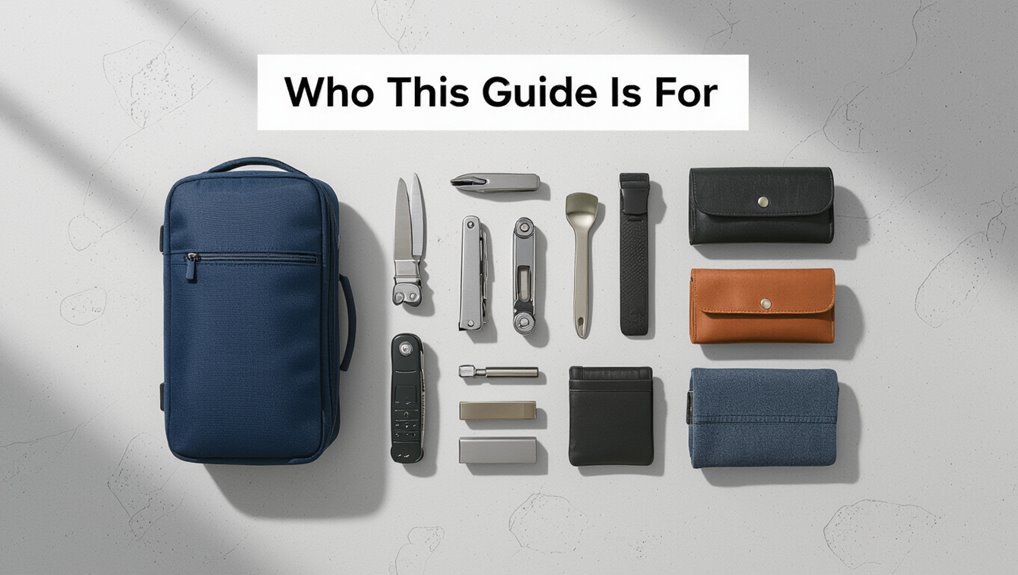
Who’s this guide for?
You’re a traveler who packs tools—DIYers, technicians, contractors, and hobbyists—needing clear TSA guidance.
You want practical rules for carry-on decisions, avoiding surprises at screening.
This guide helps you assess which items are typically allowed, what to declare, and when to place tools in checked baggage, so you can plan trips confidently and comply with security requirements.
Quick Answer: Are Tools Allowed in Carry-On Luggage?
You can bring small, non-sharp tools like screwdrivers under the airline and TSA size limits in your carry-on.
You can’t bring sharp or heavy tools that could be used as weapons, such as large knives, hatchets, or crowbars.
Check specific airline and TSA rules before packing to avoid surprises at security.
Allowed Small Tools
Wondering whether small tools can go in your carry-on? You can bring non-sharp, compact hand tools like disposable tape measures, small screwdrivers with rounded tips, hex keys, and safety-bladed box cutters if permitted by airline/TSA.
Keep them accessible for screening, pack them securely to avoid injury, and check specific airline rules—some items may be allowed but subject to additional inspection or restrictions.
Prohibited Sharp Tools
Because sharp tools pose clear safety risks, most knives, box cutters with exposed blades, razor blades, and large cutting tools aren’t allowed in carry-on bags and must go in checked luggage or be left at home.
You should check TSA guidelines before packing, secure prohibited items in checked baggage, and consider mailing specialty blades or buying replacements at your destination to avoid confiscation and travel delays.
Key Rules That Govern Tools in Carry-Ons (TSA Basics)
Although tools can be handy on the road, the TSA applies clear limits to what you can bring in a carry-on, so you should know which items are allowed, restricted, or banned.
You’ll need to check length, purpose, and blade presence; packed safely and declared when required. Follow screeners’ instructions to avoid delays.
- Check length limits
- Avoid sharp blades
- Pack tools securely
- Declare unusual items
- Know replacement rules
How TSA Defines “Tools” at Checkpoints
You’ll want to know what items the TSA actually labels as tools so you can pack smart.
Consider how the agency looks at a tool’s function and purpose—if it’s meant to fasten, cut, or pry, it may be scrutinized.
Also pay attention to size and material, since length and construction often determine whether something’s allowed in carry-on.
What TSA Calls Tools
Think of “tools” as any handheld items designed to fix, cut, fasten, pry, or measure—TSA classifies them by function and potential as improvised weapons, not by brand or hobby use.
You’ll be screened based on size, sharpness, and proposed use; officers decide admissibility.
Know that similar items can be treated differently depending on context.
- Screwdrivers
- Pliers
- Wrenches
- Utility knives
- Tape measures
Tool Function And Purpose
Beyond the basic list of items, TSA looks at what each tool is meant to do: does it tighten, cut, pry, measure, or fasten?
You should describe a tool’s designated function when questioned; tools designed to inflict damage or bypass security draw stricter scrutiny.
Conveying legitimate repair, maintenance, or measurement use helps officers assess whether the item’s presence is reasonable.
Tool Size And Material
Size and material matter as much as function when TSA officers decide whether an item counts as a “tool” at the checkpoint.
You should assess dimensions, weight, and composition: metal edges or dense cores raise concerns. Soft or plastic tools are likelier allowed if small.
Declare ambiguous items and pack sharp metal tools in checked baggage.
- length under 7 inches
- blunt vs sharp
- solid metal parts
- folding vs fixed
- declared to officer
Size and Length Limits You Must Know
While airlines vary, most let you bring a carry-on if its combined dimensions (length + width + height) fit their published limit—typically around 45 linear inches (115 cm) for U.S. carriers or about 55 x 35 x 20 cm for many international airlines.
Check tool length limits too: many carriers and TSA allow small hand tools under 7 inches (17.8 cm); longer tools usually must go in checked luggage.
What Always Gets Confiscated at Security
Knowing the size and length rules helps, but some items never make it past the security checkpoint.
You’ll have them taken every time because they pose clear safety risks or aren’t allowed by policy. Pack these elsewhere or leave them home to avoid delays:
- Large knives
- Explosive materials
- Firearms and replicas
- Brass knuckles
- Pressure-producing tools
Screwdrivers: Allowed Lengths and Types
You can bring some screwdrivers in your carry-on, but length limits and types matter.
Typically, airlines and TSA allow short, non-locking screwdrivers under a specific inch limit, while long or multi-bit tools may be prohibited.
Check the exact allowed lengths and whether flathead, Phillips, or insulated types are permitted before packing.
Allowed Length Limits
When packing screwdrivers in your carry-on, airlines and TSA typically limit blade or shaft length to around 7 inches (about 17.8 cm) or less; shorter, stubby drivers and multi-bit handles are usually acceptable, while long fixed-shaft tools can be prohibited.
You should measure tools, check airline rules, and pack longer items in checked baggage.
- Measure each tool
- Favor multi-bit sets
- Avoid fixed long shafts
- Confirm airline policy
- Use checked baggage for long tools
Permitted Screwdriver Types
Although rules vary by airline and country, most allow short, stubby screwdrivers and multi-bit sets in carry-on if the shaft or blade is about 7 inches (17.8 cm) or less; long fixed-shaft drivers are usually banned and should go in checked baggage.
You should carry only compact, non-locking multi-bit tools or short drivers, avoid pry bars or heavy torque drivers, and check local rules.
Pliers, Wire Cutters, and Clamping Tools
Since pliers, wire cutters, and similar clamping tools can look like improvised weapons, airlines and security screeners often treat them cautiously; you’ll usually find small, non-locking versions allowed in carry-on while larger or locking types are restricted.
Pliers and wire cutters may seem weapon-like; small, non-locking ones often fly in carry-on, larger or locking types usually don’t.
- Check length and locking mechanism
- Pack in original case if possible
- Expect secondary inspection
- Declare if unsure to avoid delays
- Ship bulky tools in checked luggage
Wrenches, Sockets, and Small Sets
If you carry wrenches, sockets, or a small multi-piece set, keep them compact and non-locking because TSA and many airlines typically prohibit larger hand tools in carry-on bags.
Pack short, lightweight pieces that pose minimal risk; place them in checked luggage when in doubt.
Check TSA guidelines and your airline’s rules before travel to avoid confiscation or delays at security.
Hammers, Mallets, and Why Most Are Banned
Wrenches and sockets are relatively easy to justify for repairs, but hammers and mallets present a different problem: their size and striking surfaces make them obvious blunt instruments.
So TSA and most airlines ban them from carry-on bags. You should pack them in checked luggage or buy replacements at your destination.
- safety risk
- obvious weapon
- flight crew concern
- storage damage
- checked alternative
Saw Blades and Handsaws: TSA Limits
When you’re packing tools for a trip, know that saw blades and handsaws fall into clear TSA restrictions: loose blades and fixed-blade hand saws are prohibited in carry-on bags, while compact folding saws with blade guards may be allowed after screening.
You should pack prohibited items in checked luggage, secure folding saws, declare unusual tools during screening, and follow officer instructions to avoid delays.
Power Tools: TSA Rules and Batteries
Although power tools can be handy to bring along, TSA treats them differently depending on size, type, and batteries, so you’ll need to pack carefully.
You can usually carry small non-powered tools; powered tools often belong in checked bags if allowed. Follow battery rules and secure sharp or heavy parts to prevent damage or injury.
- Verify tool allowance before travel
- Remove or protect batteries
- Use original cases when possible
- Tape exposed terminals
- Declare oversized items at check-in
Airline Battery Limits for Tools
Airlines limit the size, type, and quantity of batteries you can bring for tools, so check limits before packing.
You’ll usually face restrictions on lithium-ion cells (watt-hours) and loose batteries; some airlines cap spare batteries in carry-on and prohibit them in checked bags.
Label watt‑hour ratings, carry them in your cabin bag, protect terminals, and get airline approval if batteries exceed standard limits.
Multi-Tools and Swiss Army Knives: Rules
You should check airline and TSA rules on multi-tools and Swiss Army knives before packing them in your carry-on.
Pay attention to blade length restrictions and which types (folding, fixed, or novelty) are allowed.
If in doubt, leave blades at home or put the tool in checked baggage.
Blade Length Restrictions
While rules vary by carrier and country, most security agencies ban any fixed blade or folding knife with a blade longer than about 2.36 inches (6 cm) from carry-on luggage.
Multi-tools or Swiss Army knives that include blades typically fall under the same restriction—so check local regulations before packing one.
You should:
- Measure blade length precisely.
- Leave oversized tools in checked baggage.
- Expect confiscation if unclear.
- Review airline and airport rules.
- Consider bladeless multi-tools instead.
Allowedツ Types
Having covered blade length limits, let’s look at which multi-tools and Swiss Army knives you can bring in carry-on luggage.
You can carry multi-tools whose blades are within allowed lengths and designed primarily for utility, not as weapons.
Swiss Army knives with small blades and non-locking tools are generally permitted.
Locking large blades or tools resembling weapons should go in checked baggage.
Pocket Knives: Blade-Length and Carry-On?
Curious about bringing a pocket knife in your carry-on? You can’t carry knives with blades over the TSA’s allowed length; rules vary, so check airline and departure country limits.
Pack small, non-locking blades if permitted, or place larger or locking knives in checked baggage. Always disclose when asked and follow local laws.
- blade length matters
- locking vs non-locking
- airline differences
- pack securely
- check laws
Scissors, Razors, and Other Cutting Tools
If you plan to bring cutting tools in your carry-on, know that rules differ by item and carrier: scissors with blades under 4 inches are usually allowed, while straight razors and box cutters are banned.
Disposable razors and safety razors without exposed blades are typically permitted.
Always check your airline and TSA updates before flying, and pack questionable items in checked baggage to avoid confiscation.
Measuring Tools, Levels, and Non-Sharp Carry-Ons
You can usually bring measuring tapes, small rulers, and similar non-sharp tools in your carry-on, but check airline specifics for lengths and materials.
Levels and other blunt instruments are generally allowed if they don’t have sharp edges or loose heavy parts.
Keep them accessible for security inspection and avoid anything that could be mistaken for a weapon.
Measuring Tools Allowed
When packing tools in your carry-on, know that many measuring devices and levels are allowed as long as they’re non-sharp and don’t contain hazardous materials; think tape measures, spirit levels, calipers without pointed tips, and laser distance meters with their batteries secured.
You should pack items neatly, declare unusual devices, and verify batteries are safe.
- Tape measure
- Spirit level
- Non-pointed caliper
- Laser distance meter
- Measuring wheel
Levels And Non-Sharp
Although levels and other non-sharp measuring tools might seem harmless, you should still screen them carefully before placing them in carry-on luggage. You’ll need to confirm size, material, and whether any metal parts could alarm screening. Pack them where security can inspect easily and keep receipts or manufacturer info handy.
| Item | Tip |
|---|---|
| Plastic level | OK if small |
| Aluminum level | May trigger x-ray |
| Glass vial | Declare |
| Long levels | Check gate/hold |
Toolkits and Organized Sets: Packing Tips
If you’re bringing a toolkit or an organized set in your carry-on, prioritize compactness and accessibility so security screening goes smoothly and you can reach essentials midflight.
Pack only permitted items, use a clear pouch, separate sharp tools, label contents, and keep receipts for unusual pieces.
Pack only allowed items, use a clear pouch, separate sharp tools, label contents, and keep receipts for unusual pieces.
- Choose compact, multi-tools
- Use transparent organizers
- Remove prohibited items
- Keep items secured
- Position where visible
How TSA Officers Evaluate Ambiguous Tools
Because some tools look harmless on the X-ray but can be repurposed, TSA officers combine visual scans, physical inspection, and context to judge ambiguous items.
They’ll assess size, shape, materials, and how the item is packed, ask you about proposed use, and err on the side of safety if anything could pose a threat.
You should answer clearly, show receipts or instructions if needed, and cooperate.
Size Thresholds TSA Enforces at Screening
When TSA screens your carry-on, officers apply clear size limits for certain tools and objects—most importantly blades, screwdrivers, and metal cutters—so anything longer than a specified length will be flagged for confiscation or checked baggage.
You should measure and compare items before travel to avoid surprises.
- Blade length limits
- Screwdriver length checks
- Multi-tool component rules
- Precision cutters evaluated
- Discretionary officer judgment
Packing Tools in Checked Baggage Safely
Although checked bags handle tools that aren’t allowed in carry-on, you still need to pack them so they’re safe, secure, and compliant with airline rules. Wrap sharp edges, pad heavy items, and lock toolboxes. Label contents and declare unusual items if required. Handle batteries and flammables per airline rules.
| Item | Action | Feeling |
|---|---|---|
| Blades | Wrap | Relief |
| Wrenches | Pad | Confidence |
| Batteries | Secure | Calm |
Shipping Tool Kits Instead of Flying With Them
If you’d rather skip airport security hassles and the risk of confiscation, shipping your tool kit ahead is often the smarter choice.
You’ll control packaging, choose insurance, and avoid weight fees. Use a sturdy case and track the shipment to reduce loss.
- Pack tools securely
- Insure high-value items
- Use a hard-sided container
- Label contents clearly
- Choose reliable carrier
Tools for Tradespeople and Contractors
If you’re a tradesperson or contractor, know that small hand tools like pliers, screwdrivers, and nut drivers are often allowed in carry-on.
However, sharp instruments such as box cutters, utility knives, and large blades are usually prohibited.
You’ll need to check specific airline and TSA rules before you fly to avoid surprises.
Pack allowed items neatly in a clear pouch or tool roll and place them in an accessible spot for screening.
Allowed Small Hand Tools
When you’re traveling for work, you can usually bring small hand tools in carry-on luggage as long as they’re compact, blunt, and meet airline and TSA size rules; typical examples include screwdrivers under 7 inches, small pliers, hex keys, and tape measures.
You should pack them securely, declare if asked, and verify limits with your airline.
- Screwdrivers (≤7″)
- Small pliers
- Hex/Allen keys
- Tape measures
- Precision nut drivers
Prohibited Sharp Instruments
Those small, blunt hand tools are generally fine, but many sharp instruments common to tradespeople and contractors are banned from carry-on baggage for safety reasons.
You can’t bring exposed blades, utility knives, hooked pruning tools, chisels, or saws in the cabin. Pointed tools that could be used as weapons must go in checked luggage or be shipped.
Check TSA guidelines before travel.
Best Packing Practices
Because many trade tools are restricted in carry-on, pack thoughtfully so your gear arrives intact and complies with rules. You’ll check heavy or sharp items, label cases, and prepare receipts for inspections.
Use padding and separate compartments to prevent damage and speed security.
- Check tool sizes against airline/TSA limits
- Use lockable, labeled tool cases
- Pad sharp edges
- Keep batteries separate
- Carry documentation
Special Cases: Competitions, Demos, and Repairs
If you’re traveling for a competition, demo, or to get an item repaired, pack with intent: know the event requirements, verify airline and venue rules, and prepare documentation like entry confirmations, proof of ownership, or repair estimates.
Pack only essential tools, use hard cases, separate blades or sharp items, declare unusual items at security, and allow extra time for screening to avoid delays or confiscation.
Labeling, Permits, and Documentation to Bring
You’ll want to know which permits airlines and local authorities require for tools and when to carry them.
Bring clear documentation like receipts, work orders, or manufacturer letters, and keep digital copies on your phone.
Label each item with your name, contact info, and a brief description to speed checks and reduce misunderstandings.
Permit Requirements Explained
When you’re carrying tools in your carry-on, know that certain items need clear labeling, permits, or paperwork to pass security and avoid delays.
You should verify local and airline rules, obtain any required permits for specialty tools, keep original receipts, and present documents proactively to officers to prevent confiscation or fines.
- Check jurisdictional restrictions
- Confirm airline policy
- Obtain needed permits
- Keep paperwork accessible
- Be ready to explain use
Acceptable Documentation Types
Because rules vary by jurisdiction and airline, bring clear, specific documentation that matches the tool and its designated use.
Carry purchase receipts, manufacturer manuals, and proof of employment or job assignment when tools are work-related.
Include any required permits, export/import paperwork, or inspection certificates for regulated items.
Keep originals plus digital copies accessible for quick review by TSA or airline staff at security checkpoints.
Proper Item Labeling
After gathering receipts, manuals, and permits, label each tool and its case clearly so inspectors can verify what you’re carrying at a glance.
You’ll reduce confusion and speed inspections by using concise, legible labels and attaching documentation where needed.
- Tool name and model
- Owner contact info
- Permit or certification ID
- Purchase receipt date
- Brief planned use statement
When to Call TSA or Your Airline Ahead
Wondering whether you should call TSA or your airline before you travel?
Call if you’re packing unusual or high-value tools, batteries, or items borderline by size or function.
Ask about specific carry-on limits, declaration procedures, and local security variations.
Contacting ahead can prevent confiscation, delays, or gate-side disputes and gives clear guidance tailored to your flight and departure airport.
How TSA PreCheck or Assistance Helps Screening
If you enroll in TSA PreCheck or request TSA assistance, you’ll usually move through screening faster and with fewer removals of shoes, laptops, and light outerwear—helpful when you’re juggling tools or batteries that might otherwise trigger questions.
You’ll face clearer guidance, less handling of sensitive items, and quicker resolution if an agent needs to inspect something.
- faster lanes
- fewer removals
- clearer instructions
- less handling
- quicker resolution
What to Expect if TSA Confiscates an Item
Even with TSA PreCheck or on-site help, you might still face confiscation if an item violates rules or poses a safety risk.
Officers will explain the reason, tag and secure the item, and either dispose of it or hold it for retrieval when allowed.
You’ll get a receipt or documentation for items taken; follow posted instructions to claim eligible belongings later.
Dispute and Appeal Options After Confiscation
Though TSA officers usually explain the reason for confiscation on the spot, you can challenge the decision if you believe it was wrong or handled improperly.
Start by asking for supervisor review, get a receipt, and file a complaint promptly. Keep records, photo evidence, and timelines to support your case.
- Request supervisor review immediately
- Obtain written confiscation receipt
- Photograph items and screening area
- File TSA complaint online
- Retain travel and witness details
Airline-Specific Restrictions to Verify
Check each airline’s carry-on rules before you pack, since policies can vary widely even for common tools.
Don’t assume international carriers follow the same limits as domestic ones—some items allowed on one airline might be banned on another.
If you’re unsure, verify directly with the airline to avoid surprises at security.
Airline Policy Variations
Because each carrier sets its own rules, you’ll need to verify specific restrictions before you pack: size and weight limits, allowed sharp or electronic items, and whether certain tools count as carry-on or must go in checked baggage can vary widely between airlines.
Check your airline’s site, contact customer service, and confirm rules for special items.
- Carry-on size/weight
- Tool blade length
- Battery-powered tools
- Airline exemptions
- Checked-bag procedures
International Carrier Rules
When you fly internationally, each carrier—and often the country’s aviation authority—sets specific rules you’ll need to confirm before packing tools in your carry-on: permitted blade lengths, battery types and watt-hour limits, allowed hand tools, and whether certain items that are carry-on domestic-only must go in checked baggage abroad.
Check airline and arrival/departure authority pages, contact the carrier, and document approvals to avoid confiscation or fines.
International Travel: How Other Countries Differ
If you’re flying abroad, remember that carry-on rules vary widely by country and airline, so a bag that’s fine at home might get you stopped at the gate elsewhere.
You should check local aviation authority lists, know tool length limits, and confirm airline policies before packing. Ignore assumptions; enforce compliance.
- Voltage tools may be banned
- Blade length rules differ
- Battery rules vary
- Customs seizure risk
- Airline discretion applies
Smart Packing Tips to Avoid Checkpoint Delays
Knowing international tool rules is only part of avoiding delays; smart packing habits will keep you moving through checkpoints no matter where you fly.
Pack tools in clear, accessible compartments, keep sharp items properly sheathed or in checked luggage, and place batteries and electronics where they’re easy to remove.
Have documents ready, minimize loose metal, and inspect bags before you leave to prevent surprises.
Carry-On Tool Alternatives That Clear Security
Anyone can streamline their carry-on by choosing tool alternatives that pass security without hassles.
Anyone can streamline their carry-on by swapping banned tools for compact, security-friendly alternatives that keep travel hassle-free.
You’ll swap banned metal implements for safe, practical options that solve common needs on the go. Pack compact, approved items to stay efficient and compliant.
- Plastic multi-tools for small fixes
- Disposable razors for grooming
- Travel sewing kits with plastic needles
- Battery-powered screwdrivers (small)
- Credit-card multitools made of plastic
Top Portable Tools Safe to Pack in Carry-On
You can bring compact, low-profile hand tools like screwdrivers and small pliers that meet size limits.
Pack electronic repair kits with precision bits and insulated handles for quick fixes on the go.
Choose soft-grip multi-tools without large blades so they pass security and still handle everyday tasks.
Small Hand Tools
Which small hand tools can you bring on a plane without triggering security?
You can pack compact tools that meet TSA length and blade rules; always check restrictions and gate-check if unsure.
Carry them safely in a pouch to avoid questions and protect screening staff.
- Small pliers (under 7 inches)
- Screwdrivers (non-fixed blades)
- Allen wrenches
- Tape measure
- Small paintbrush
Electronic Repair Kits
While security allows many small tools, packing an electronic repair kit for carry-on means choosing compact, non-bladed items that meet TSA rules and won’t slow you down at checkpoints.
Include precision screwdrivers, plastic spudgers, tweezers, ESD-safe brushes, and adhesive strips.
Keep batteries installed or carry spares per airline limits, store small metal bits securely, and place the kit in an accessible pouch for screening.
Soft-Grip Multi-Tools
Several compact soft-grip multi-tools combine comfort and airport-friendly design, making them smart choices for carry-on kits.
You can pack them if blades are absent or locked per TSA rules. Choose lightweight, nonmetal grips and check tool functions before flying to avoid surprises.
- Compact size
- No exposed blades
- Locking mechanisms
- Lightweight materials
- Easy inspection access
Real Traveler Scenarios: Mistakes and Fixes
1 common mistake travelers make is assuming whatever fits in their carry-on is allowed — and that slip-up can cost you time, money, or gear.
You might pack a multi-tool and get it confiscated or miss a flight dealing with TSA.
Fix it: inspect tools, move prohibited items to checked bags, and pack receipts or photos to prove value if retrieval is possible.
Official TSA Resources and Where to Check
If you’re unsure whether a tool is allowed in your carry-on, start with the TSA’s official resources—they’re the most direct way to get up-to-date rules and avoid surprises at the checkpoint.
Check online and call ahead so you won’t risk confiscation or delays.
- TSA.gov prohibited items list
- “What Can I Bring?” tool
- Airport/TSA social feeds
- TSA Contact Center phone
- Airline policies and notices
Frequently Asked Questions
Can I Bring Replacement Drill Bits or Saw Blades in Carry-On Luggage?
Yes — you can bring replacement drill bits or saw blades in carry-on only if they’re small, securely sheathed or wrapped to prevent injury, and allowed by the airline and TSA; larger or exposed cutting tools aren’t permitted.
Are Tool Batteries With Non-Standard Chemistries (E.G., Lifepo4) Allowed in Carry-On?
Yes, you can usually carry tool batteries like LiFePO4 in carry-on, but you’ll need to check airline-specific watt-hour limits, guarantee terminals are protected, and declare them if required—confirm with the carrier before flying.
Do Rental or Loaned Tools at My Destination Affect TSA Rules Departing My Origin?
No, rental or loaned tools at your destination don’t change TSA rules departing your origin; you’ll still follow carry-on and battery restrictions, so check tool batteries, declare hazardous items if required, and pack according to airline policies.
Can I Carry Tool Parts (Nails, Screws, Bolts) in Carry-On Containers?
Yes — you can carry small tool parts like nails, screws, and bolts in carry-on containers, but pack them securely and expect TSA to inspect them; anything deemed a potential weapon or sharp may be confiscated.
Are Insulated or Tattoo Tools Treated Differently at Security Checkpoints?
No, insulated or tattoo tools aren’t treated differently; you’ll still face screening and possible restrictions. If devices look like needles or sharp instruments, they’ll be inspected or confiscated, so pack them in checked baggage when possible.
Conclusion
You can bring some tools in your carry-on, but TSA limits size and type—no large wrenches, hammers, or box cutters. Check length rules (typically under 7 inches) and avoid anything that could be used as a weapon. When in doubt, pack tools in checked baggage or use travel-friendly alternatives like multi-tools with blades removed. Always verify the latest TSA guidance before you fly to avoid delays or having items confiscated at the checkpoint.