Are Sweets Allowed in Hand Luggage Airline?
Yes — you can bring most solid, commercially packaged sweets in your carry-on, but avoid large amounts of gel‑like, creamy, or sauce‑based confections unless each container is 100 ml or less and fits in a single 1‑liter clear bag. Pack homemade treats in airtight containers, label anything unusual, and declare food on arrival forms if required. Check country and airline rules for fresh produce or restricted items, and keep sweets accessible for inspection if you want more practical tips.
Quick Guide: Can I Bring Sweets in Carry‑On?
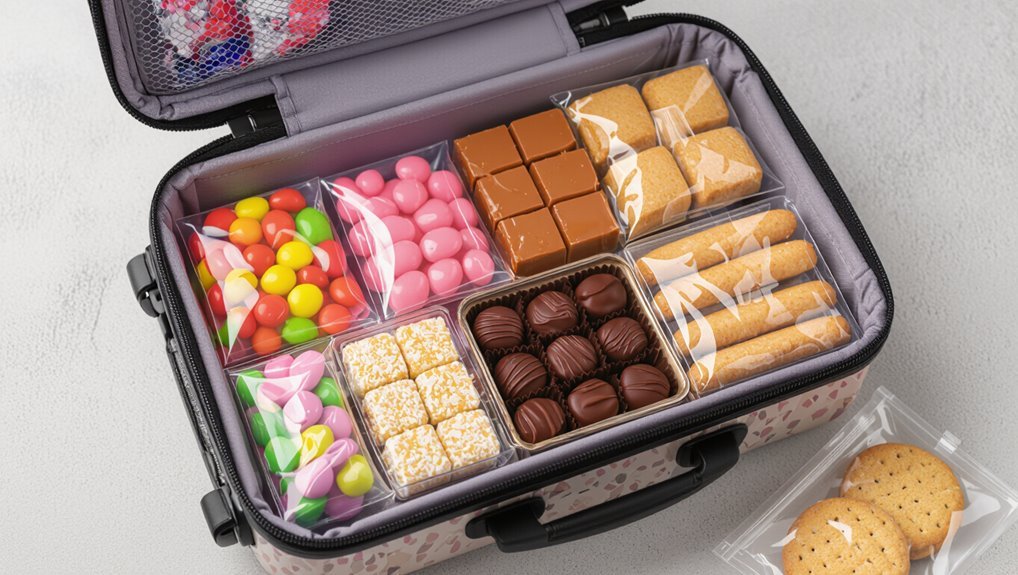
Wondering if you can bring sweets in your carry-on? You can, but stick to solid, packaged candies and sealed chocolates.
You can bring sweets in your carry-on—choose solid, packaged candies and sealed chocolates for smooth security checks.
Avoid large quantities of gel‑like or liquid confections that resemble spreads or syrups, since they may be restricted.
Declare any unusual or homemade items if asked.
Check specific airline and country rules before flying to prevent delays or confiscation.
Quick Answer: Are Sweets Allowed in Hand Luggage on Airlines?
You can usually bring sweets in your hand luggage, but the rules depend on what type they are: solid candies and wrapped chocolates are fine, while gels, spreads, syrups and large quantities of soft confections may fall under liquid/gel restrictions.
Check your airline and country rules, pack commercially sealed items when possible, declare anything questionable at security, and be ready to discard prohibited items.
Why Solids vs Liquids Matter at Airport Security
You need to know the difference between solid and liquid sweets because rules treat them differently at security.
Solids like candy bars usually pass through screening easily, while liquids, gels, and creams must fit container and volume limits.
Knowing how to pack containers and present items for screening will save you time and prevent discarded treats.
Solid Vs. Liquid Rules
Because airport security focuses on reducing liquid-based threats, the rules make a clear divide between solids and liquids you’ll pack in carry-on luggage.
You must treat gels, creams, sauces, and syrups as liquids—subject to size limits and screening.
Solid candies, baked goods, and chocolate bars are generally fine, but anything soft, spreadable, or soaked may be restricted and inspected more closely.
Screening And Containers
When TSA and other agencies scan carry-ons, they’re looking for items that could be disguised or altered—so whether a sweet is solid or liquid changes how it’s packaged, screened, and sometimes whether it’s allowed at all.
You’ll need to separate liquids, declare gels, and pack solids accessibly to speed screening.
- Candy bars, chocolates
- Jellies, syrups
- Homemade sauces
- Gel-filled candies
- Powdered mixes
The 100 Ml/3‑1‑1 Rule and Sweet Sauces
You need to know that each sauce container must be 100 ml or less and fit the 3-1-1 bag rule to pass security.
Pack sweet sauces in travel-size squeeze bottles or single-serve packets to avoid spills and keep portions compliant.
At screening, place the clear bag on top of your carry-on and be ready to remove any sauces for inspection.
100 Ml Limit Explained
If you’re bringing sweet sauces in your carry-on, know that most airlines and security agencies enforce the 100 ml (3‑1‑1) rule: you can carry containers up to 100 ml each, all fitting into one clear, resealable 1‑liter bag per passenger.
Follow these quick tips:
- Measure bottles before packing
- Use travel‑size containers
- Label sauces clearly
- Keep the bag accessible
- Expect security inspection
Sauce Packaging Options
One clear approach is to choose packaging that fits the 100 ml/3‑1‑1 rule while keeping your sweet sauces spill‑proof and easy to show at security. Use clear, labeled bottles, leak‑proof caps, and resealable bags to combine containers under the limit.
| Container Type | Best Use |
|---|---|
| Travel bottle (100 ml) | Sauces |
| Squeeze bottle | Thick syrups |
| Resealable bag | Extra protection |
| Mini jar | Sticky spreads |
Security Screening Tips
When packing sweet sauces for carry‑on, follow the 100 ml/3‑1‑1 rule so security screening goes smoothly: you’ll avoid confiscation and delays by keeping containers under 100 ml and fitting them in one clear quart bag.
Pack smart and declare if unsure.
- Use travel‑size bottles
- Seal lids tightly
- Place bag on top of carry‑on
- Keep receipts handy
- Remove for screening
Common Liquid, Gel, and Paste Sweets That Trigger Bans
Although sweets seem harmless, many common confections fall into the liquid, gel, or paste category that security screens flag. You’ll want to know which ones to pack in checked baggage or buy after security.
Examples include yogurt-based candies, gel-filled gummies, fruit purees, marshmallow spreads, custard or pudding cups, liquid-filled chocolates, and creamy fillings—these often exceed liquid limits and get confiscated.
Popular Borderline Items: Chocolate Spreads, Caramel, Syrups
Chocolate spreads, caramel sauces, and syrups often sit in a gray area at security checkpoints because they behave like liquids or pastes and can exceed carry-on limits.
So you’ll want to know their typical packaging and how to pack them to avoid surprises.
- Check jar size against 100 ml/3.4 oz rule
- Use travel-sized containers
- Place in clear bag
- Declare large jars
- Consider checked baggage
Solid Sweets You Can Usually Pack in Carry‑On
You can usually bring packaged candy bars without fuss, as their solid form keeps them outside liquid restrictions.
Hard candies are also fine and make a good snack during the flight.
Check your airline or destination rules if any items are unusually large or vacuum-sealed.
Packaged Candy Bars
When packing for a flight, grab your packaged candy bars last so you can stash them in your carry-on without slowing down security; most solid, commercially wrapped sweets are allowed through checkpoints and make an easy, mess-free snack during travel.
You’ll appreciate their convenience and shelf stability.
- Granola chocolate bars
- Chocolate-coated nougat bars
- Peanut butter bars
- Wafer chocolate bars
- Single-serve protein bars
Hard Candies Allowed
Although they’re small, hard candies are one of the easiest snacks to bring through airport security, so toss a few in your carry-on for a quick, mess‑free pick‑me‑up during travel.
You can usually keep individually wrapped mints, lozenges, and boiled sweets without issue.
Avoid powdered or gel fillings that could be treated as liquids or messy; check country-specific rules for exceptions.
Packing Homemade Treats: Cookies, Fudge, Brittles
Packing homemade cookies, fudge, or brittles in your carry-on takes a little planning so they arrive fresh and intact.
You’ll secure treats, follow security rules, and avoid spills without refrigeration.
- Use airtight containers
- Layer with parchment or foil
- Cushion edges with napkins
- Pack flat to prevent breakage
- Declare if asked by security
Carrying Refrigerated or Perishable Sweets
If you’re bringing refrigerated or perishable sweets, pack them in temperature-controlled bags or insulated coolers with ice packs to keep them safe.
Check airline policy exceptions and contact the carrier ahead of time to confirm rules for chilled foods and any documentation you might need.
At security, declare any ice packs or gel packs and be ready for screening that may require removal from your bag.
Temperature-Controlled Bags
When you’re carrying perishable sweets, temperature-controlled bags let you keep chocolates, cream-filled pastries, and gelato-safe treats fresh and safe during your trip. They use insulation, gel packs, or small refrigerated units to maintain consistent temperatures and prevent spoilage.
- Choose size for your portions
- Use TSA-compliant gel packs
- Monitor with a thermometer
- Pack sturdy containers
- Keep access for security checks
Airline Policy Exceptions
Although airlines generally restrict liquids and refrigerated items, you can often get exceptions for perishable sweets if you follow specific rules and notify the carrier in advance. Contact the airline, declare contents, use approved coolers, and pack documentation for medical or commercial needs. Check fee policies and gate approvals.
| Step | Action | Note |
|---|---|---|
| 1 | Contact airline | Phone/email |
| 2 | Declare | Advance notice |
| 3 | Use cooler | Approved size |
| 4 | Show docs | Medical/commercial |
| 5 | Pay fee | If applicable |
Security Screening Tips
Because security officers focus on safety, you should prepare perishable sweets for efficient screening:
- Pack chilled items in clear, sealed containers.
- Label contents and refrigeration needs visibly.
- Bring a small cooler bag within size limits.
- Declare liquids, gels, and creams at the checkpoint.
- Avoid ice packs that’re fully frozen; use gel packs and note thawing.
You’ll speed screening and reduce spoilage risk.
Packing Sweets to Avoid Melting and Stickiness
If you want your chocolates, gummies, and caramels to arrive intact, pack them with temperature and friction in mind: place each sweet in airtight zip bags, separate layers with wax or parchment paper, and cushion in a rigid container to prevent crushing.
Keep heat-sensitive items toward the center of your carry-on, avoid direct sunlight, and consider insulated pouches for warm climates.
Security‑Friendly Containers and Portion Sizes for Sauces
When bringing sauces in your carry-on, choose clear, leak‑proof containers and stick to airline liquid limits so security checks go smoothly.
When bringing sauces in carry‑on, use clear, leak‑proof containers and follow airline liquid limits for smooth security checks.
Pack small portions in compliant bottles, use silicone tubs for thicker sauces, seal lids with tape, place containers in a single transparent bag, and keep portions under the allowed volume to avoid disposal at the checkpoint.
- Small compliant bottles
- Silicone tubs
- Tape‑sealed lids
- Single clear bag
- Under allowed volume
Labeling and Packaging to Speed Up Screening
When you pack sweets, put clear ingredient labels on each container so screening staff can quickly see what’s inside.
Use secure, resealable packaging to prevent spills and keep samples accessible for inspection if requested.
These small steps cut delays and reduce the chance your treats get tossed.
Clear Ingredient Labels
Although security officers rely on scanners and tests, you can speed screening by packing sweets with clear, readable ingredient labels.
They’ll help officers identify allergens, liquids, and prohibited components quickly. Include concise, printed details and avoid handwritten notes.
- Product name
- Full ingredient list
- Allergen declarations
- Net weight/volume
- Manufacturer/contact info
Secure Resealable Packaging
Because resealable, tamper-evident packaging keeps sweets accessible and orderly, pack each item in clear, labeled bags or containers that security officers can inspect at a glance. You’ll speed screening, prevent spills, and show ingredients quickly. Use small portions, seal each bag, and label allergens clearly.
| Pack Type | Benefit | Tip |
|---|---|---|
| Zip bag | Visible | Portion |
| Clamshell | Stable | Label |
What to Do if Security Flags Your Sweets
If security flags your sweets, stay calm and cooperate—this usually speeds things up and reduces hassle.
Show packaging and receipts, answer questions briefly, and follow officer instructions. If requested, remove items for inspection and accept confiscation if required. You can ask for clarification or request a supervisor if unsure.
- Stay polite
- Present labels
- Open containers
- Follow directions
- Ask questions
Customs: Declaring Sweets on Arrival Forms
When you fill out arrival forms, declare any food items, including sweets, to avoid fines or confiscation.
Check the country’s rules beforehand so you know what’s allowed and whether you need permits.
Be ready to list ingredients clearly, especially if your treats contain meat, dairy, or fresh produce.
Declare Food Items
Arriving with sweets means you’ll usually need to declare them on your customs form, so gather details about what you’ve got—types, quantities, and whether they’re commercially packaged or homemade—before you fill it out.
Declare accurately to avoid fines or seizure.
- List each sweet type
- Note quantities and weight
- Mark homemade vs. store-bought
- Keep receipts handy
- Be honest on the form
Follow Country Rules
Because countries set different rules, check the specific customs guidance for your destination before you pack sweets—some nations ban certain ingredients, limit quantities, or require special declarations.
When arriving, honestly complete arrival forms and declare sweets if asked. Failure to declare can mean fines or confiscation.
If unsure, contact the embassy or customs website ahead of travel to confirm reporting requirements.
List Ingredients Clearly
If you’re unsure about whether to declare sweets, listing ingredients clearly on arrival forms or accompanying paperwork makes inspection smoother and shows you’re cooperating with customs rules.
You should state allergens, meat or dairy content, alcohol, nuts, and fresh fruit. This helps officers assess restrictions quickly and prevents delays or confiscation.
- Allergens
- Meat/dairy
- Alcohol content
- Nuts
- Fresh fruit
Countries That Commonly Ban Traveler Food Items
When you travel, remember that many countries strictly limit what food you can bring in, and knowing the usual offenders can save you time and fines at customs.
You’ll find strict rules in Australia, New Zealand, the United States, Japan and many Gulf states. They often ban fresh fruit, meat, dairy and unprocessed snacks.
Always declare items and check country-specific lists before packing.
Bringing Sweets Through High‑Risk Agricultural Airports
Knowing which countries restrict food is a good start, but airports with high agricultural risk have extra scrutiny you’ll need to plan for.
Knowing which countries restrict food helps — but high-risk airports add extra inspections you should plan for.
You’ll face inspections, declarations, and possible confiscation of sweets, especially if they contain seeds, nuts, or fresh fruit ingredients.
- Declare all food items honestly
- Pack commercially sealed sweets
- Avoid homemade or fruit-based treats
- Expect inspection delays
- Learn local agricultural rules
Airline Policies: What Major Carriers Allow and Restrict
Although rules vary by carrier and route, major airlines generally let you bring commercially packaged sweets in carry-on bags but set limits on quantity, packaging, and types of ingredients you can carry.
You should check each airline’s food policy: some ban strong‑smelling or perishable items, others restrict liquids like syrups or custards, and security may open packages for inspection.
Follow labeling and size rules.
Domestic vs International Flights: Key Differences
Policies for sweets can change a lot once you cross borders, so you’ll want to treat domestic and international trips differently.
You’ll check customs, quarantine rules, and liquid limits; declare as needed; and pack commercially sealed items when possible.
- Domestic: lenient, standard security checks
- International: stricter, customs inspections
- Fresh produce: often prohibited
- Sealed candies: usually OK
- Declaration: required sometimes
Sweets for Kids and Special Meal Requests
When you’re traveling with children, bring a small selection of familiar, non-melting sweets and individually wrapped treats to help with distractions and potential sensory sensitivities.
Check airline rules and note any allergy or special-meal requests on your booking so cabin crew can assist if needed.
Pack extras for delays, avoid liquids over security limits, inform staff about severe allergies, and offer treats at calm moments.
Medicinal and Dietary Sweets: Supplements and Gummies
If you rely on gummy vitamins, CBD chews, or other edible supplements, pack them in their original, labeled containers and keep dosage instructions handy so you can show staff or quickly reference amounts during your trip.
Pack edible supplements in original labeled containers with dosage info ready to show staff during travel.
- Declare prescription gummies at security
- Carry a doctor’s note for controlled meds
- Keep small quantities to avoid questions
- Store supplements in a clear bag
- Separate them from snacks for inspection
Shipping Sweets Instead of Carrying Them: When to Choose It
You’ve already sorted gummies and supplements for security; now think about whether it’s smarter to ship sweets ahead instead of lugging them through airports.
Ship when quantities are large, fragile, perishable, or risk confiscation.
Consider cost, delivery timing, customs rules at destination, and tracking insurance.
Shipping can reduce carry-on weight and stress, but only choose it if timing and legal requirements align with your trip.
How to Fill Customs Forms and Declare Food at Borders
Because customs rules vary by country, you should read the declaration instructions carefully and declare any food items truthfully to avoid fines or delays.
When filling forms, be specific, list packaged sweets, and keep receipts ready. Declare fresh or homemade items and follow officer instructions.
- List item type and quantity
- Note country of origin
- Keep packaging visible
- Carry receipts
- Answer questions honestly
Practical Checklist: Prepare Sweets for Your Carry‑On
When packing sweets in your carry‑on, think like a customs officer and a fellow passenger: organize items by type, keep packaging intact, and separate anything perishable or homemade into clearly labeled bags so you can present them quickly at security or on arrival.
Pack sturdy containers, avoid sticky or melting treats, note quantity limits, carry receipts for purchased items, and declare as required.
Troubleshooting: Fast Fixes for Common Travel Sweet Problems
If a sticky spill, melted chocolate, or a customs question threatens your snack stash, act fast and keep calm: a few simple fixes will usually save your sweets and your trip.
- Blot spills with napkins, avoid rubbing.
- Chill melted candy in a bathroom or fridge.
- Repackage broken pieces in sealed bags.
- Declare restricted items honestly at customs.
- Use airtight containers to prevent future messes.
Frequently Asked Questions
Can Airport Staff Confiscate Sweets Bought in Duty-Free After Security?
Yes, they can confiscate duty-free sweets if security or customs suspect prohibited items, liquid limits are exceeded, or local rules forbid them; you’ll usually get warned, but noncompliance can lead to seizure without refund.
Are Liquid Sweets Purchased Onboard Allowed as Carry‑On to a Connecting Flight?
Yes — you can usually carry liquid sweets bought onboard to a connecting flight, but you’ll need proof of purchase and must follow transit security rules; if security deems them liquids over limits, they might be confiscated.
Do Airline Lounge Food Rules Differ for Bringing Sweets Through Security?
Yes — lounge food rules can differ; you’ll usually be allowed solid sweets through security, but liquids or gel-like desserts must meet airport liquid limits and local rules, so check the lounge and transit country policies beforehand.
Can Special Dietary Certification Affect Sweets Allowed in Hand Luggage?
Yes — certified dietary items can help. If sweets have official allergy, medical, or religious certification, you’ll likely face fewer issues; still carry documentation and comply with customs, local regulations, and airline or security officer discretion.
Are Sweets in Checked Baggage Subject to Different Customs Declarations?
Yes — you’ll usually declare sweets in checked baggage if your destination requires food declarations; rules vary by country and may restrict fresh produce, meats, or large quantities, so check customs forms and carry receipts for packaged items.
Conclusion
You can usually bring solid sweets in your hand luggage, but liquids, gels, creams, and pastes (like syrups, chocolate sauces, and some fondants) must follow the 100 ml/3-1-1 rule. If a sweet’s texture counts as a liquid or gel, pack it in checked baggage or ship it. Always declare food at customs when required, label homemade items, and pack airtight. Check your airline and destination rules to avoid surprises.