Are Medicines Allowed in Hand Luggage TSA?
Yes — you can bring prescription and over‑the‑counter medicines in your carry‑on, but you’ll need to follow TSA rules. Keep meds in original labeled containers or a clearly marked organizer, declare any liquid doses over 3.4 ounces at security, and be ready for inspection. Bring prescriptions or doctor’s notes for controlled drugs, injectables, or special devices, and store temperature‑sensitive meds in an insulated pouch. Continue on and you’ll get practical packing tips and international considerations.
Quick Answer: Can You Bring Meds in Carry‑On?
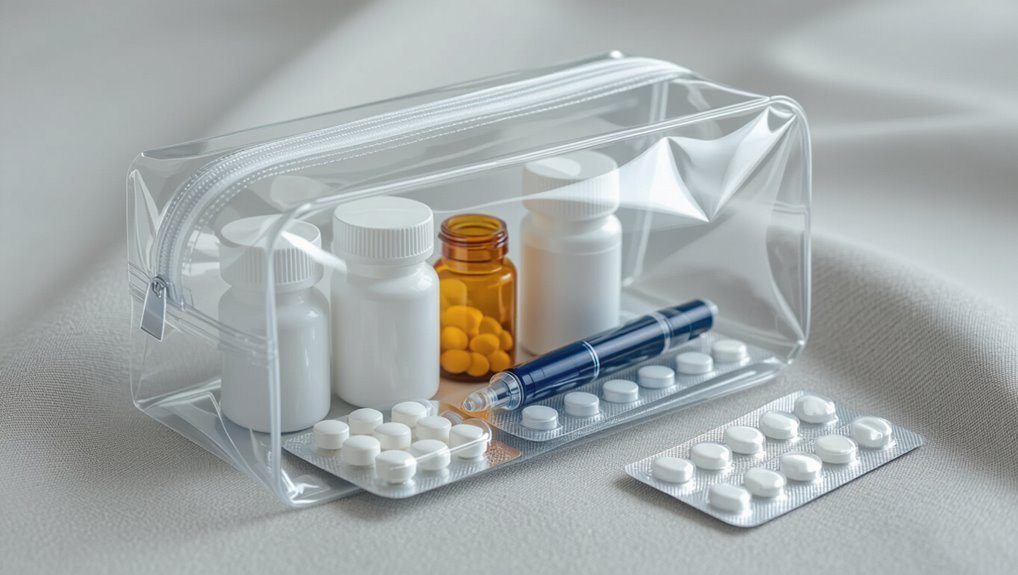
Wondering if you can bring your meds in carry-on? Yes — you can.
Pack prescription and essential over‑the‑counter meds in your carry‑on so you’ll have access during travel. Keep them in original containers or clearly labeled organizers, and separate any liquid doses per TSA rules.
Carry documentation if helpful. Declare items at security if staff ask, and keep meds within reach.
Can I Bring Prescription and OTC Medicines in Hand Luggage?
You can bring both prescription and over‑the‑counter (OTC) medicines in your carry‑on, and packing them properly makes security and in‑flight access easier.
Keep bottles labeled, bring prescriptions or notes, separate daily doses, use a clear pouch, and inform officers if needed.
- Keep original labels
- Carry prescriptions
- Pack daily doses separately
- Use clear pouch
- Notify security if asked
TSA Rules for Liquid Medicines Over 3.4 Ounces?
How do the 3.4-ounce liquid rules apply to your medications? You can bring liquid medicines over 3.4 ounces in carry-on, but declare them at screening. TSA may inspect them; keep doses reasonable and separate for inspection. Pack extras in checked baggage if preferred.
| Item | Action | Tip |
|---|---|---|
| Liquid meds >3.4 oz | Declare | Separate bag |
| Inspected meds | Allowed | Carry bottle |
| Quantities | Reasonable | Receipts helpful |
Why Keep Medicines in Original Containers?
After declaring and having liquid medicines screened, keep medications in their original containers so TSA officers can quickly verify what they’re and match labels to prescriptions.
You’ll speed inspection, avoid questions, and protect dosing info. Originals also show expiry and lot numbers, which helps if issues arise.
- Faster security checks
- Clear prescription matching
- Visible dosing instructions
- Proof of legitimacy
- Easier identification
When to Carry Prescriptions, Doctor Notes, or a Med List?
If your medication is controlled, in large quantities, or has a name that doesn’t match the label, carry the prescription with you to avoid delays.
Bring a doctor’s note when you need to explain injections, portable oxygen, or any special administration instructions.
Also keep a simple med list with dosages and emergency contacts in case your documents aren’t available.
When To Carry Prescriptions
When you’re packing meds for a trip, carry original prescription labels or a printed med list with dosage and prescribing doctor—airline and TSA agents rely on clear documentation to verify necessity and prevent delays.
Bring prescriptions when meds are controlled, injectable, refrigerated, or exceed liquid limits, and whenever you might need medical care abroad.
- Controlled substances
- Injectables
- Refrigerated meds
- Large liquid volumes
- Travel to foreign clinics
When To Bring Doctor Notes
Because TSA and airline staff can ask questions about your medications, bring a doctor’s note whenever your meds are controlled, injected, require refrigeration, exceed liquid limits, or could be unfamiliar to security or foreign medical providers.
Also carry prescriptions and a concise med list with generic names, dosages, and indications.
Keep notes accessible, translated if traveling abroad, and include emergency contact details.
How to Declare Medically Necessary Liquids and Creams at Screening?
When you reach the security checkpoint, tell the TSA officer you have medically necessary liquids or creams in your carry-on.
Be ready to present the medication labels or prescription bottles so they can verify contents quickly.
This simple step speeds screening and helps avoid delays.
Declare At Security
If you’re carrying medically necessary liquids, gels, or creams through airport security, tell the TSA officer before screening so they can handle your items properly and speed up the process.
Declare items clearly, remove them if asked, and follow instructions. Keep containers accessible and separate from other belongings.
- Be upfront and concise
- Show quantity when asked
- Follow officer directions
- Keep a travel bag ready
- Expect additional screening
Present Medication Labels
After declaring your medically necessary liquids and creams, be ready to show clear labels or a prescription to verify the items.
Keep original pharmacy labels, include dosage and your name, and pack bottles where labels remain legible. If unlabeled, bring a doctor’s note or prescription.
Present items separately at screening when asked, so TSA officers can quickly confirm medical necessity.
What Counts as a Controlled Substance and Required Documentation?
Because some prescription drugs fall under federal drug schedules, you’ll need to know which medications count as controlled substances and what paperwork to carry.
You should carry original prescriptions, a doctor’s note, pharmacy labels, proof of medical need, and keep quantities reasonable. TSA may inspect but generally allows them with documentation; check state and airline rules.
- Original prescription bottle
- Doctor’s note or letter
- Pharmacy label matching name
- Proof of medical necessity (e.g., diagnosis)
- Limited quantity documentation
Refrigerated Medications: TSA Carry‑On Packing Tips
Controlled substances may need paperwork, but refrigerated meds add another layer of planning for carry-on travel.
Pack vials or bottles in an insulated cooler or thermal bag with ice packs, and place them atop other items for quick inspection.
Label prescriptions clearly, carry a doctor’s note, and tell TSA agents during screening.
Keep meds accessible; don’t check refrigerated medications in hold luggage.
Packing Injectables and Needles for Carry‑On
When you pack injectables and needles in your carry-on, have medical documentation and prescriptions ready to show at security.
Keep syringes and needles in their original packaging or a clear, labeled case and separate any liquids like saline per TSA rules.
Expect to notify officers and have your items inspected during screening, and follow any additional instructions they give.
Medical Documentation Required
If you’re carrying injectables or needles in your carry‑on, have clear medical documentation ready to show TSA agents; this speeds screening and prevents delays.
Carry original prescriptions, a doctor’s note, and labeling that matches the medication. Be prepared to explain medical necessity.
- Prescription bottle or label
- Physician letter with diagnosis
- Pharmacy printout
- Translation if not in English
- Contact info for prescriber
Syringe And Needle Rules
Now that you’ve got your prescriptions and doctor’s note ready, you should also understand TSA rules for carrying syringes and needles in your carry‑on. Pack needles and injectables visibly, bring documentation, and keep supplies separate for inspection. Notify officers if needed.
| Item | Pack | Tip |
|---|---|---|
| Syringes | Carry-on | Visible bag |
| Needles | Protective case | Labelled |
Security Screening Procedures
Although security checkpoints can feel hectic, you can speed screening by packing injectables and needles so they’re easy to inspect, carrying prescriptions or a doctor’s note, and keeping syringes and supplies in a clear, separate bag or protective case.
- Show medication and documentation promptly
- Label vials and pens clearly
- Use a hard case for sharps
- Declare items at security
- Keep extra supplies accessible
Medical Devices and Supplies Allowed in Hand Luggage
When traveling with medical devices, pack them in your carry-on so you can access them during security checks and inflight; carry prescriptions, device manuals, and extra supplies, declare devices at screening, and request private inspection if needed.
| Device | Feeling |
|---|---|
| Insulin pump | Reassured |
| CPAP | Comforted |
| Glucometer | Confident |
| EpiPen | Safe |
| Catheter supplies | Supported |
Traveling With Liquid Medicines for Children and Infants
If your child needs liquid medicine during travel, pack it in your carry-on and keep prescriptions or a doctor’s note handy for screening.
Bring only what’s needed, label bottles, and separate doses for easy access. Carry measuring syringes, extra doses, and allergy info. Inform staff if your infant uses breast milk or formula.
Pack only needed doses, label bottles, separate meds for easy access, carry syringes, backups, and allergy info; notify staff about breast milk or formula.
- Label medicines clearly
- Pack measuring tools
- Bring backups
- Keep prescriptions
- Note allergies
What to Expect During TSA Screening of Meds and Devices
After packing your child’s medicines and documentation, be prepared for TSA officers to inspect those items separately from your other carry-on belongings.
They’ll ask questions, request testing or X‑ray screening, and may open containers for visual inspection.
Answer clearly, show prescriptions or notes, and follow officer directions. You can request a private screening if you’d prefer.
Remain calm and cooperative throughout.
Protecting Medication From Loss, Theft, and Temperature Changes
Because your child’s meds are both essential and vulnerable, take steps that prevent loss, theft, and temperature damage before you leave home.
Because your child’s meds are essential and vulnerable, take precautions to prevent loss, theft, and temperature damage.
Pack meds in carry-on, use a small insulated pouch, keep prescriptions and a doctor’s note, separate doses into labeled containers, and never check critical supplies.
Monitor temps during layovers and secure items on your person when possible.
- Carry-on only
- Insulated pouch
- Prescription copy
- Labeled doses
- Keep on person
How International Rules Differ From U.S. TSA
When you travel internationally, be aware that liquid medication limits can vary from U.S. TSA rules and might require different packaging.
You’ll also need to check whether airlines or destination countries want prescriptions, doctor’s letters, or specific documentation for controlled drugs.
Before you pack, compare the TSA guidance with your destination’s rules so you don’t face delays or confiscation.
Liquid Medication Limits
Although U.S. rules allow larger medically necessary liquids, other countries vary. You should check limits, declare meds, and separate them for screening. Expect differing allowances at security.
- Some airports permit any volume with declaration
- Others cap containers (e.g., 100 ml)
- Rules change by carrier and country
- Screening procedures differ
- Always verify before travel
Documentation And Prescription
If you’re flying internationally, expect documentation rules for prescription medications to differ from U.S.
You’ll often need original prescriptions, doctor’s letters, and medication labels matching your name. Some countries require translated or notarized documents, import permits, or declarations for controlled substances.
Check destination and transit regulations before travel, carry photocopies, and store prescriptions with medicines to avoid confiscation or delays at security and customs.
Airline Policies vs. Country Entry Rules for Carrying Meds
Because airlines and countries each set different rules, you’ll need to check both your carrier’s policies and the destination’s entry requirements before you travel with medications.
Because airlines and countries set different rules, check your carrier’s policies and destination entry requirements before traveling with medications.
You should confirm prescription labels, quantity limits, controlled-substance rules, and documentation needed for customs. Prepare for inspections and potential declarations.
- Prescription label matching passenger name
- Quantity permitted
- Controlled substance restrictions
- Required medical letters
- Declaration procedures
Using TSA PreCheck and Global Entry With Medications
When you enroll in TSA PreCheck or Global Entry, you’ll usually move through security faster, but you still need to follow rules for carrying medications:
keep prescriptions in their original labeled containers, declare liquids over 3.4 ounces at the checkpoint, and be prepared to show supporting documentation for controlled drugs.
You should present meds and paperwork when asked, and follow officer directions.
Quick Packing Checklist Before You Fly With Medicines
Now that you know how TSA PreCheck and Global Entry affect screening, make a quick packing checklist so your medicines stay accessible and compliant.
Keep medications accessible and compliant—pack originals, doctor notes, TSA-safe liquids, extras, and an easy-to-reach spot.
Pack prescriptions in original bottles, keep a doctor’s note and copy of the prescription, separate liquids per TSA rules, carry extra doses, and place meds in an easy-to-reach spot.
- Original prescription bottles
- Doctor’s note/prescription copy
- TSA-compliant liquid packaging
- Extra doses
- Easy-to-reach placement
Frequently Asked Questions
Can I Bring Herbal Supplements or CBD Products in Carry-On?
Yes — you can bring herbal supplements and most CBD products in your carry-on, but you’ll need to follow airline and international rules, carry labels or proof, and avoid THC-containing items banned in some jurisdictions.
Are Emergency Allergy Kits Allowed in Overhead Bins?
Yes — you can store emergency allergy kits in overhead bins, but keep epinephrine autoinjectors with you in the cabin when possible. Airlines may allow stowage, yet you’ll want access and to follow crew instructions during flight.
Do I Need a Letter for Pet Medications and Supplies?
You don’t usually need a letter for pet medications and supplies, but it helps if they’re prescription-only or liquid medicines. Keep prescriptions, labels, and vet records handy, and declare items at security or to airline staff when asked.
Can Airline Crew Assist With Injecting Medication During Flight?
Yes, they can help in limited ways: crew’ll assist with basic first aid, fetch supplies, and follow airline medical protocols, but they won’t administer injections unless a trained medical crew member or volunteer passenger provides that service during flight.
Are Expired Medications Permitted for Flight Use?
No, you shouldn’t use expired medications for flight use; airlines and TSA generally allow them in carry-on, but expired meds can be less effective or unsafe, so replace them before travel and carry current prescriptions and originals.
Conclusion
You can bring medicines in your hand luggage—both prescription and OTC—and TSA lets liquid meds over 3.4 ounces through if you declare them at screening. Keep meds in original containers when you can, and carry prescriptions, a doctor’s note, or a meds list for controlled substances or international travel. Check airline and country rules before you go, and use TSA PreCheck or Global Entry to speed screening. Pack meds in your carry-on, not checked bags, and keep essentials accessible.