Are Ice Skates Allowed in Carry On Luggage?
Yes — you can usually bring ice skates in your carry-on if the blades are sheathed or covered, but final approval is up to the TSA officer and the airline. Pack blades with guards or wrap them securely, check your carrier’s policy ahead of time, and be ready for possible extra screening or a gate-agent decision. If overhead space or weight is tight, consider checking or shipping instead, and keep going to learn practical packing tips and airline specifics.
How to Decide: Carry-On, Check, or Ship Your Skates
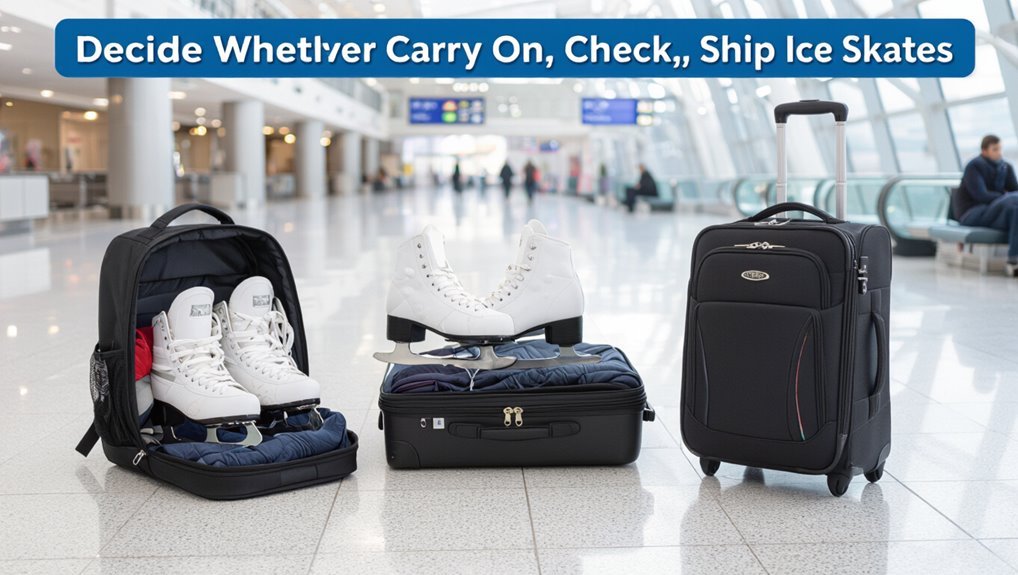
When you’re deciding whether to carry on, check, or ship your ice skates, weigh cost, convenience, and risk: consider gate restrictions, TSA rules, and airline baggage fees.
If you need blades during travel or want to avoid damage, carry them. If space or sharp-item policies block you, check them.
Shipping suits long stays or tournament gear; compare fees, timing, and loss risk.
Quick Answer: Can You Bring Ice Skates in Carry-On Luggage?
Yes — you can usually bring ice skates in your carry-on, but you should check TSA rules and airline policies first.
You’ll need to address blade safety, like sheathing blades or using a skate guard, to prevent injuries and protect staff during screening.
If you’re unsure, contact your airline or the TSA for clarification before you pack.
TSA Rules Overview
Although airlines and the TSA generally allow you to bring ice skates in your carry-on, there are a few important limits to keep in mind: the blades must be sheathed or covered, and final approval rests with the TSA officer at the checkpoint.
You should follow these rules and expect inspection:
- Pack skates securely.
- Cover blades fully.
- Be ready to explain purpose.
- Accept officer decisions.
Blade Safety Considerations
If you plan to carry ice skates onboard, prioritize securing and covering the blades so they can’t accidentally cut you or trigger extra screening.
TSA officers usually require blade guards or full sheaths, and they’ll inspect them at the checkpoint. Wrap blades with durable guards, tape, or a skate bag, fasten boots together, and stow them where they won’t shift.
Declare them if asked.
Why Travelers Ask About Bringing Skates in Carry-On Luggage
You’re asking because skates raise questions at security checkpoints about blades and sharp objects.
You’re also facing different airline rules that can change whether skates go in a carry-on or checked bag.
And you’re juggling practical packing issues like space, protection for blades, and weight limits.
Security Screening Concerns
Because ice skates combine a metal blade with bulky, oddly shaped boots, travelers worry they’ll trigger extra screening or get confiscated at checkpoints.
You should expect questions, possible bag searches, and brief delays.
Consider these feelings and actions:
- Anxiety about missed flights.
- Frustration over unpacking.
- Embarrassment at extra attention.
- Relief when allowed after inspection.
Airline Policy Variations
When airlines set their own rules about carrying ice skates, you can end up facing different outcomes depending on the carrier, aircraft type, and security authority at the airport.
You should check each airline’s baggage policy, as some allow skate blades in carry-on, others require blade guards or stowing in checked luggage, and some prohibit them entirely—so confirm before you fly.
Practical Packing Challenges
Different airline rules are only part of the story; practical packing challenges are what usually make travelers ask whether they can bring skates in carry-on luggage.
You worry about space, sharp blades, weight limits, and gate checks. Consider:
- Limited overhead room
- Blade protection needs
- Carry-on weight caps
- Last-minute gate decisions
Plan to avoid stress and surprises.
TSA Rules Overview for Sports Equipment and Skate Blades
If you’re planning to fly with ice skates or other sports gear, you should know how the TSA classifies and screens those items so you can pack them correctly and avoid delays.
You’ll usually carry smaller, non-threatening equipment in cabin bags, while larger or potentially hazardous items may need checked baggage.
Expect inspection, possible screening, and follow airline-specific rules to prevent confiscation.
Are Ice Skate Blades Considered Sharp Objects by the TSA?
You’ll want to check TSA rules on sharp objects to see how skate blades are classified and whether any restrictions apply.
Note the blade’s length, exposed edges, and whether it’s covered or sheathed, since those specs affect screening decisions.
Then pack skates with blade guards or in checked baggage when required to avoid issues at security.
TSA Sharp Object Rules
Because ice skate blades can be sharp and pose a safety risk, the TSA treats them differently depending on how you pack them: in checked baggage they’re generally allowed, but in carry-on bags most blades and exposed edges are prohibited.
You should follow TSA sharp-object rules to avoid delays and confiscation:
- Fear of losing gear
- Frustration at checkpoints
- Relief when packed correctly
- Confidence traveling safely
Skate Blade Specifications
Having packed your skates to meet TSA sharp-object rules, you’ll want to know exactly what qualifies a blade as a prohibited item.
TSA treats blades as sharp if they’re exposed, have cutting edges, or could be used as weapons. Rounded or fully covered blades are less problematic.
Keep blades sheathed or wrapped; exposed, unsecured edges risk denial from carry-on.
Packing And Transport
1 clear rule to start with: the TSA treats exposed skate blades as sharp objects, so you should assume they’ll be scrutinized during security screening.
You should pack skates safely and expect questions.
- Wrap blades with guards and tape.
- Use a hard case or padded bag.
- Declare if asked; stay calm.
- Follow TSA size and carry rules to avoid confiscation.
Who Decides : TSA or the Airline?
While the TSA sets baseline rules about prohibited items, airlines can impose stricter policies, so you’ll need to check both before packing your ice skates.
You should review TSA guidelines for blades and carry-on size, then confirm your airline’s specific baggage rules, blade cover requirements, and carry-on allowances.
If rules conflict, follow the airline for boarding and TSA for security screening decisions.
How U.S. Airport Security Treats Hockey Skates vs. Figure Skates
After you’ve checked both TSA guidelines and your airline’s rules, you’ll find that airport security treats hockey skates and figure skates similarly but with some practical differences.
You’ll want to contemplate:
- Sharp blades can alarm scanners and prompt checks.
- Bulkier hockey skates draw attention at checkpoints.
- Figure skates’ toe picks may get extra scrutiny.
- Packing, demeanor, and clear communication reduce delays.
Carry-On Allowances: Size and Weight Limits That Matter for Skates
Because airlines set carry-on size and weight limits differently, you’ll want to confirm your carrier’s exact dimensions before packing skates so they don’t exceed overhead-bin allowances or gate-checked thresholds.
Measure skate bags including blades and any protective cases, and weigh them. If close to limits, pack skates in checked luggage or use a compact bag to avoid surprises and potential gate fees.
Common Airline Policies on Ice Skates (Delta, United, American)
Check each carrier’s carry-on size limits so your skates actually fit in the overhead bin or under the seat.
You’ll need blade covers or guards to meet protection requirements and avoid damage or safety issues.
Also note slight airline-specific allowances—Delta, United, and American may differ on whether skates count as your single carry-on or as an additional personal item.
Carry-On Size Limits
While airlines vary, most let you bring ice skates in carry-on bags as long as the bag meets their size limits and fits in the overhead bin or under the seat.
Check each carrier’s dimensions—Delta, United, American differ slightly. Pack tightly and measure.
Consider these quick reminders to avoid trouble:
- Confirm dimensions
- Weigh your bag
- Test fit
- Bring proof of measurements
Blade Protection Requirements
If you’re bringing ice skates onboard, airlines expect the blades to be properly covered to protect staff and other luggage; Delta, United, and American all require blade guards or full covers that enclose the edges.
You should secure guards tightly, use hard or padded cases when possible, and avoid exposed sharp edges.
Flight crews may refuse improperly protected skates for safety.
Airline-Specific Allowances
Because airlines set their own rules, you’ll find slight differences between Delta, United, and American when bringing ice skates in carry-on bags.
You should check each carrier, but generally:
- Delta: allows skates if blades sheathed and bag fits overhead.
- United: similar, may request secondary screening.
- American: accepts sheathed skates; gate agent discretion applies.
Always verify policy before travel.
Low-Cost Carriers (Spirit, Frontier, Ryanair): Sports-Gear Carry-On Rules and Fees
Many budget carriers treat ice skates as oversized or special items, so you’ll usually need to follow strict carry-on size rules or pay an extra fee for sports gear. You should check each airline’s sports policy, prepay fees, or pack skates in checked luggage to avoid surprises.
| Airline | Carry-on rule | Typical fee |
|---|---|---|
| Spirit | Often checked | $30–$60 |
| Frontier | Varies by fare | $25–$75 |
| Ryanair | Sports bag allowed | €10–€40 |
International Carriers: Sample Skate Policies for Europe and Asia Airlines
Some airlines in Europe and Asia treat ice skates as sports equipment with specific size, packing, and fee rules, so you should check policies before you travel.
You’ll find varied rules that can surprise you:
- Strict size limits that may force gate check.
- Mandatory protective covering.
- Extra sports-gear fees.
- Advance notice or booking required—don’t assume free carry-on.
How Checked Baggage Rules Differ for Ice Skates
When you check ice skates, airlines usually treat them differently than carry-on items, applying distinct size, packing, and fee rules that can affect where and how you pack them. You’ll often need a hard case or blade guards, declare oversize charges, and expect baggage weight rules to apply.
| Item | Checked Notes |
|---|---|
| Packing | Hard case recommended |
| Fees | Oversize/weight may apply |
| Liability | Limited, inspect on delivery |
When Skates Must Be Checked: Practical Red Flags at Security
If your skates have bulky fittings or exposed sharp blades, expect them to raise concerns at the security checkpoint.
You’ll likely be asked to check them if metal parts trigger screening alarms or look like potential weapons on x-ray.
Pack or cover blades and minimize protruding hardware to reduce the chance they’re flagged.
Bulky Or Sharp Components
Because security rules focus on items that could injure or obstruct screening, you should expect skates with bulky or exposed metal parts to be flagged for checked baggage.
You’ll want to avoid obvious hazards; pack or cover blades and heavy mounts, or check them.
Consider these emotional triggers:
- Fear: exposed blades worry TSA.
- Frustration: bulky hardware slows you down.
- Embarrassment: being pulled aside sucks.
- Relief: checking avoids drama.
Security Screening Flags
Although airport rules vary, security officers flag carry-ons that present clear safety or screening risks, so you’ll want to recognize the practical red flags that usually force skates into checked baggage. If blades, bulky guards, or suspicious modifications obstruct X‑ray or look like weapons, expect inspection and possible checking.
| Red flag | Why it matters |
|---|---|
| Exposed blades | Cut risk |
| Oversized guards | Blocks scan |
| Metal repairs | Looks like weapon |
| Multiple pairs | Raises suspicion |
Packing Skates Safely in a Carry-On: Step-by-Step Checklist
When you’re packing skates in a carry-on, a clear step-by-step checklist will keep your gear protected, TSA-friendly, and easy to access—start by cleaning and drying the blades, then pad them, secure boots, and organize accessories so nothing shifts or damages other items.
- Wrap blades tightly.
- Stuff boots for shape.
- Use compression straps.
- Place accessories in pockets.
How to Protect Skate Blades and Prevent Damage in Transit
You’ll want to start with hard blade covers or guards to shield the edges from nicks and to stop them from cutting your bag.
Then wrap each skate with cloth, bubble wrap, or foam sleeves to cushion shocks and keep blades from rubbing against other items.
Secure everything with tape or straps so nothing shifts during transit.
Blade Covers And Guards
One simple step you can take is to fit quality blade covers or guards before packing your skates; they protect edges from nicks and keep blades from cutting other items in your carry-on.
You’ll feel calmer knowing blades won’t damage gear or injure handlers.
- Safety
- Confidence
- Protection
- Convenience
Wraps And Padding Techniques
Although blade covers are a great start, wrapping and padding your skates adds an essential layer of protection that prevents nicks, keeps blades from cutting other items, and cushions against shocks in transit.
Wrap each blade in microfiber or soft cloth, secure with tape or rubber bands, then nest skates in padded bags or between clothes.
Fill gaps to limit movement.
Recommended Blade Guards and Travel Covers for Carry-Ons
Picking the right blade guards and travel covers keeps your skates sharp and protects other items in your carry-on.
You’ll want guards that lock, cushioned covers, and a compact travel sleeve for organization. Choose quality materials that resist moisture and smashing.
Consider:
- Locking hard guards
- Foam blade covers
- Waterproof sleeves
- Compact zippered travel cover
Soft Cases vs. Hard Cases: Which Is Best for Carry-On Skates?
Which works better for carry-on skates: a soft case that squishes into tight overhead bins or a rigid hard case that shields blades from crushing?
You’ll choose based on priorities: soft cases save space, compress around other items, and lighten your load; hard cases offer superior blade protection and structure.
If you carry delicate gear or fly often, favor hard; for occasional travel, soft usually suffices.
How to Pack Skates With Other Gear to Save Space and Meet Size Limits
Pick a compact skate bag that fits your carrier’s size limits to keep bulk under control.
Pack skates snugly around soft items like clothing or towels to cushion blades and fill gaps.
Distribute weight evenly across your carry-on so it stays balanced and within limits.
Choose Compact Skate Bags
A slim, purpose-built skate bag lets you pack your skates with other gear without wasting space or exceeding carry-on limits.
Choose padded, low-profile designs with external pockets so items stay organized and blades don’t snag.
You’ll appreciate lightweight materials and carry straps that fit overhead bins.
Pick one that feels secure and confident.
- Compact
- Protective
- Organized
- Lightweight
Pack Around Soft Items
Stack your skates snugly between soft items like sweaters, towels, or a jacket to cushion blades and save space; this lets you use every inch of your carry-on while keeping sharp edges from snagging other gear.
Tuck socks or lightweight layers into boots to fill voids, compress garments around the bag’s contours, and zip compartments tightly to prevent shifting during transit.
Distribute Weight Evenly
Start by balancing the skates’ weight across your carry-on so the bag sits evenly and meets size limits without bulging; place one skate on each side, blades sheathed, then tuck socks or a soft sweater between them to cushion and save space.
Follow this checklist to stay organized and calm:
- Even placement
- Blade protection
- Soft padding
- Compact layering
Ship Skates vs. Bring Them: Cost Comparison
While shipping your skates can save you the hassle of lugging them through airports, you’ll pay for that convenience—and sometimes the costs approach or exceed checked-bag fees. You should compare shipping quotes, checked-bag rates, and potential gate-check costs to decide. Quick glance:
| Option | Typical Cost | Notes |
|---|---|---|
| Carry-on | Free | If fits cabin rules |
| Checked | $25–$60 | Airline dependent |
| Ship | $15–$80+ | Packaging adds cost |
Best Shipping Methods and Insurance for Expensive Skates
If you decide shipping makes the most sense after comparing costs, pick a method that protects both your blades and the boot’s value.
Cushion tightly, use a rigid box, and insure for retail replacement. Choose tracked overnight or insured ground service so you’re not anxious.
Cushion everything, pack in a rigid box, and insure for full retail—use tracked overnight or insured ground.
- Signature required
- Full-value insurance
- Padding and immobilization
- Photo documentation
When to Buy a Second Pair at Your Destination Instead of Traveling With Skates
If the cost and hassle of carrying your skates outweigh buying a spare, you might opt to purchase a second pair at your destination.
Check local skate shops or rink rentals in advance to see if the right size and quality are available.
That way you’ll weigh convenience against price and avoid surprises on arrival.
Cost Versus Convenience
Deciding whether to pack your skates or buy a cheap pair at your destination comes down to balancing the extra baggage cost and hassle against the value of comfort and fit.
If you skate frequently or need a particular blade, bringing them usually pays off.
If you’re on a short trip or just trying skating once, a local rental or budget pair can save you money and stress.
- Save money
- Avoid hassle
- Maintain comfort
- Reduce risk
Skate Availability Nearby
You’ve weighed cost and comfort, but availability at your destination can tip the scales toward buying a second pair instead of hauling yours.
Check local rental shops, pro stores, and rink proximity before you travel. If quality rentals or affordable new skates are nearby, buy there to avoid baggage fees, transit hassle, and damage risk.
Reserve only if inventory’s limited.
How to Document Serial Numbers and Receipts for Valuable Skates
Because airlines and insurers may ask for proof, record each skate’s serial number and keep receipts in multiple formats: a physical copy tucked with your travel papers, a scanned PDF in cloud storage, and a photo in your phone’s gallery.
Record each skate’s serial number and keep receipts in paper, PDF, and phone photo formats for travel and claims.
You should also:
- Note model and purchase date.
- Timestamp photos with location.
- Email copies to yourself.
- Keep originals in a secure place.
Tips for Carrying Skate Tools, Laces, and Accessories in Carry-On Luggage
When packing skate tools, laces, and accessories in your carry-on, organize them so security checks go smoothly and you can reach essentials mid‑travel.
Use clear pouches or small bags to separate laces, tape, guards, and spare parts. Label items, stow soft items atop for easy inspection, and keep a compact kit accessible in case you need quick adjustments before or after flying.
Can You Bring Skate Sharpening Tools or Screwdrivers in a Carry-On?
Curious whether you can carry skate sharpening tools or screwdrivers in your carry‑on?
You can bring small screwdrivers and certain sharpening tools if they’re blunt and stored safely, but rules vary.
Check TSA/airline guidance.
Pack them in checked baggage if unsure.
Feel empowered, cautious, prepared, and relieved:
- Empowered
- Cautious
- Prepared
- Relieved
Carrying Spare Blades: TSA Considerations and Airline Limits
If you plan to bring spare skate blades, know that TSA and airlines treat them like other cutting tools: they’re generally allowed in checked baggage but restricted in carry‑ons, so you’ll want to confirm rules before packing.
Pack spares securely in checked luggage, sheathe blades to prevent injury, declare when asked, and check your airline’s specific limits or bans to avoid confiscation or fines.
Traveling With Skate Guards and Soakers Through Security
When you go through security, keep your hard skate guards readily accessible since officers may ask to inspect them.
Pack soft soakers inside your carry-on to protect blades and prevent cuts or damage.
Use blade covers or wrap blades in a towel and place them between clothing for extra padding and stability.
Skate Guards At Security
Bring your skate guards and soakers through security, but be ready to show them and explain their purpose—TSA agents usually let hard plastic guards and soft soakers pass, yet policies vary by country and officer.
You’ll want to:
- Stay calm when asked to remove them.
- Explain they protect blades and luggage.
- Offer to demonstrate placement.
- Pack spares to avoid last‑minute stress.
Soakers In Carry-On
You’ll be allowed to carry soft soakers in your carry-on at most airports, but be ready to show them and explain that they’re fabric blade covers meant to keep blades from nicking luggage or people.
TSA and similar agencies usually treat soft soakers like clothing or protective padding, so they’re not considered sharp objects, though screening procedures and officer interpretations can vary by country and airport.
Carry them accessible for inspection.
Packing Tips For Blades
1 simple rule makes traveling with skates smoother: protect the blades and separate them from other items.
Pack soakers to absorb moisture, slip guards on for rigidity, and wrap blades in a towel. Keep blades accessible for inspection to avoid delays.
- Cushion blades
- Use hard guards
- Label bag “skates”
- Keep receipts or ID
What to Do If TSA or the Airline Asks You to Check Your Skates at the Gate
If TSA or the airline asks you to check your skates at the gate, stay calm and confirm whether they mean gate-checked (items returned at the jet bridge) or checked through to baggage claim—this affects how you pack valuables and protective covers.
If gate-checking, secure blades with guards, pad boots, and tag them.
If checked through, remove valuables, add extra padding, and note the bag for tracking.
How to Request a Supervisor or Clarification Politely at Security
Need clarification? Stay calm, smile, and say you’d like a supervisor or clarification about carrying skates. Use these steps:
- Briefly state the rule you were told and ask for the policy source.
- Request a supervisor respectfully: “Could I speak with a supervisor, please?”
- Offer to cooperate while waiting.
- Thank them for their time and note the supervisor’s name.
Special Considerations for Traveling With Kids’ Skates in Carry-On Luggage
When traveling with kids’ skates in your carry-on, remember that smaller blades still count as potential hazards, so pack and present them thoughtfully: secure blade guards, tape exposed edges, and place skates in a clear, accessible part of your bag for quick inspection.
Explain their age and purpose if asked, keep receipts or coaching notes handy, and consider soft cases to protect other items.
Traveling With Pro or Competition Gear: Team Logistics and Tips
Because pro and competition gear often includes multiple pairs of skates, sharp accessories, and team-branded equipment, you should plan logistics with precision: coordinate carry-on and checked-item lists, assign gear to specific people or bags, and label everything clearly for quick security checks and transfers between flights.
- Assign roles
- Pack essentials first
- Share contact info
- Confirm airline rules
Skate Bag Organization Hacks for Easy Security Screening
Keep sharp components like blades and screws in a clearly labeled, padded pouch so they’re separate from clothing and easy to spot.
Pack items you might need to show—blade guards, spare laces, and tools—in an outer pocket for quick access. That way you’ll move through security faster and avoid surprises at the checkpoint.
Separate Sharp Components
Split your skates into discrete parts so security can quickly see which items are sharp and which aren’t.
You’ll calm inspectors and speed screening by separating blades, guards, and tools into clear pouches. Label everything. Use a soft cloth between blades to prevent nicks.
- Blades
- Guards
- Laces
- Tools
Quick Access Packing
Carry a dedicated, clearly organized skate bag so you can open it and point inspectors straight to blades, guards, laces, and tools; label pouches, use transparent zip bags for sharp items, and tuck softer gear into a separate compartment for quick visual checks.
Pack blades with guards in one sleeve, tools in a sealed pouch, laces coiled in a mesh pocket, and keep receipts or permits visible.
Real Traveler Stories: How Skates Were Handled at Different Airports
Stories from fellow travelers show how differently airports treat ice skates: some agents waved them through as sports equipment, others insisted they go in checked bags, and a few required blade covers or special packing.
You’ll feel relief, frustration, or surprise depending on staff.
- Relief — polite approval
- Frustration — forced checking
- Surprise — unexpected rules
- Anxiety — last-minute packing
Airline Liability If Skates Are Damaged in Checked Baggage
Those varied airport experiences can leave you wondering what happens if your skates end up checked and come back damaged.
You’ll usually rely on the airline’s liability limits and their baggage policy; many carriers have weight/value caps and require prompt notice.
Keep receipts and photos, note apparent damage immediately, and expect compensation to follow documented limits rather than full replacement value.
How to File a Damage Claim for Broken or Scratched Skates
If your skates arrive broken or scratched, photograph the damage right away and keep the original packaging.
Then contact the airline’s baggage service office immediately and file a claim, providing your boarding pass and bag tag.
Attach receipts or repair estimates to prove the skates’ value and speed up your reimbursement.
Document The Damage
When you find your skates damaged after a flight, act quickly to document everything so your claim won’t be denied for lack of evidence.
Photograph each scratch, tear, and broken part from multiple angles. Note time, flight number, and where they were stored. Save receipts and packaging.
- Photo evidence
- Written notes
- Original receipts
- Packaging saved
Contact The Airline
Now that you’ve documented the damage, contact the airline promptly to start a claim. Call their baggage desk, stay calm, note names and claim numbers, and ask about timelines. Be persistent but polite; record all communications and follow instructions.
| Feeling | Detail | Action |
|---|---|---|
| Frustrated | Broken blade | Report |
| Sad | Scratches | Photograph |
| Hopeful | Response | Follow up |
Provide Proof And Receipts
Because airlines rely on documentation to approve claims, gather clear photos of the damage, original purchase receipts, and any repair estimates before you file.
Then submit everything promptly with a concise statement describing the incident.
Include:
- Photos showing scratches, dents, and serial numbers.
- Original purchase receipt.
- Repair estimate or quote.
- Your contact info and flight details.
Rare Rules: State and International Quarantine or Agricultural Restrictions That Could Affect Shipments
Although rare, state and international quarantine or agricultural rules can block or delay your shipment of ice skates if blades, packaging, or accessories carry plant or animal materials; always check destination-specific restrictions before you pack.
You should remove wooden handles, leather guards, packing straw, or organic packing materials. Declare any treated leather or animal-derived items, and expect inspections, fines, or destruction if regulations aren’t met.
How to Check a Specific Airline’s Skate Policy Quickly Before You Fly
Before you pack, check the airline’s website for specific rules about skates and blade guards.
If anything’s unclear, call the airline’s customer service for a quick confirmation.
You can also open the airline’s app for live chat or policy updates on the go.
Check Airline Website
Want to know if you can bring your ice skates in carry-on luggage? Check your airline’s website first — it’s the fastest, official source.
Look for baggage rules, prohibited items, and size/weight limits. If unclear, use their site search or FAQ.
Follow these steps to feel confident and avoid surprises:
- Search “skates”
- Open baggage policy
- Note dimensions
- Save screenshot
Call The Airline
If the airline’s website doesn’t give a clear answer, call them to confirm whether you can bring ice skates in carry-on luggage and how they should be packed.
Ask about blade covers, sharp object rules, size limits, and whether skates count toward carry-on or personal item allowances.
Note the agent’s name, confirmation number, and any special instructions to avoid surprises at security or boarding.
Use Airline Apps
Looking for a fast way to confirm your airline’s skate rules?
Use the airline’s app to check baggage policies, search FAQs, and message support. It’s quick and reassuring.
- Open app
- Search “skates”
- Read baggage details
- Chat with support
You’ll avoid surprises and travel calmer knowing exactly what’s allowed.
What to Say at Check-In to Avoid Surprises With Your Skates
Mention your skates right away at check-in so the agent can confirm whether they go in carry-on, checked baggage, or need special handling.
Tell them blade covers are on and whether blades are removed.
Note whether blade covers are fitted and if the blades have been removed before handing over your skates.
Mention bag size and weight, and any sharp-object rules you reviewed.
Ask if a tag, label, or sticker is required and whether you should gate-check instead of boarding with them.
Preboarding and Gate-Check Options for Bulky Skate Bags
After you tell the agent about your skates at check-in, plan how you’ll handle a bulky skate bag at the gate: ask whether you can preboard with it, if the airline offers a gate-check option, and what size or weight limits apply for carry-on versus gate-checked items.
- Relief — avoid last-minute stress.
- Confidence — know your options.
- Frustration — expect possible limits.
- Victory — get your gear on board or gate-checked.
Security-Friendly Packing for Multi-Leg Trips and Layovers
When you’re routing through multiple flights, pack your skates and gear so security checks go smoothly at every stop: keep blades covered and separate from boots, place smaller tools in clear bags, and tuck manuals or receipts where officers can see them.
Balance items to avoid shifting, label fragile gear, and keep a compact repair kit accessible so inspections stay quick and predictable.
How to Handle Tight Connections When You Need to Check Skates Mid-Trip
Even with blades sheathed and gear organized, tight connections can force you to check your skates unexpectedly; have a plan so you won’t miss the next flight.
Act fast: alert gate agents, ask for priority handling, and keep essential items with you.
Steps to calm and control the situation:
- Breathe.
- Communicate.
- Insist gently.
- Track luggage.
Budget-Friendly Gear Choices That Make Travel Easier for Skaters
If you want to travel light without giving up performance, choose versatile, affordable gear that packs well and protects your skates.
Pick lightweight boot covers, compact blade guards, and a roll-up towel for drying.
Opt for lightweight boot covers, compact guards, and a roll-up towel to keep skates dry and travel-ready
Use a small soft-sided skate bag with padded dividers and compression straps.
Bring multi-use tools (screwdriver/wrench combo) and quick-dry socks to save space and stay ready.
Pro-Level Protection Upgrades for Competitive Skaters on the Road
Budget-friendly gear gets you on the road with less bulk, but competitive skaters need heavier-duty protection to keep blades and boots competition-ready.
You’ll invest in robust cases and padding, reduce damage anxiety, and preserve performance.
Consider these upgrades:
- Rigid skate case for impact resistance
- Molded boot support to maintain shape
- Thick blade guards with locking clips
- Moisture-control inserts for corrosion prevention
Seasonal Travel Tips: Flying With Skates During Winter Holidays
When you’re flying home for winter holidays, packing skates smartly keeps them safe and lets you move through airports faster; choose weatherproof cases, pad blades and boots against jostling, and separate wet liners to prevent mold and odors.
Pack blade guards and compact towels, check airline rules beforehand, carry essential tools in checked or permitted bags, and plan transport to rinks to avoid delays.
Quick Troubleshooting: Common Problems and Immediate Fixes at the Airport
Three quick checks can usually fix the most common skate problems you’ll face at the airport: inspect blades for nicks or ice buildup, tighten loose screws or screws that rattle, and swap damp liners for dry ones to stop odors and rust.
- Calmly dry blades to prevent slipping.
- Secure hardware to avoid surprises.
- Replace soaked liners fast.
- Ask staff for tools.
Checklist to Decide: Carry On, Check, or Ship Your Skates
Wondering whether to carry on, check, or ship your skates? Evaluate flight duration, layovers, and security rules.
Consider blade guards, weight limits, and bag size for carry-on. Check airline fees and fragile handling if checking.
If timing, liability, or multiple transfers worry you, ship with tracking and insurance.
Prioritize convenience, cost, and risk to decide.
Further Resources and Where to Verify the Latest Rules
Because airline and TSA rules can change, check official sources before you travel: start with the TSA website for U.S. security guidance, your airline’s baggage policy page for carry-on and checked blade rules, and the airport website for local restrictions.
Because rules change, check TSA, your airline’s baggage policy, and the airport site before traveling to avoid surprises.
Then consult:
- TSA updates
- Airline customer service
- Airport advisories
- Local security rules
You’ll avoid surprises and travel confidently.
Frequently Asked Questions
Can I Bring Skate Sharpening Stones or Whetstones in Carry-On Luggage?
Yes — you can bring skate sharpening stones or whetstones in carry-on luggage, but TSA may inspect them. Pack them securely to avoid injury, declare if asked, and check airline or destination rules for any additional restrictions.
Are Blade Covers With Metal Reinforcements Allowed Through TSA Screening?
Yes — you can usually bring blade covers with metal reinforcements in carry-on luggage, but TSA officers might inspect them; you should pack them where they’re accessible and be prepared to remove or explain them during screening.
Do Country-Specific Sharp-Object Laws Override Airline Skate Policies?
Yes — local sharp-object laws can override airline skate policies, so you’ll need to follow the stricter rule. Check both the airline and the country’s regulations before traveling to avoid confiscation or fines.
Will Travel Insurance Cover Theft of Skates From a Checked Bag?
Usually yes, if you bought extensive travel insurance and declared valuable sports gear, you’ll need proof of ownership, police and airline reports, and receipts; check your policy’s limits, exclusions, and required claim procedures before you travel.
Can I Rent Skates at Airports or Nearby Rinks if Mine Are Denied Carry-On?
Yes — you can often rent skates at airports with full service or nearby rinks; availability varies, so call ahead or check online, and you’ll want size options, blade maintenance, and transport plans if yours get denied.
Conclusion
You can usually bring ice skates in your carry-on, but check airline and TSA rules first since blade length and sharpness can be an issue. If you’re unsure, pack blades in a rigid guard and wrap them, or put skates in checked luggage to avoid delays. For holiday travel, consider shipping ahead to guarantee arrival. Always verify current TSA guidance and your airline’s policy before you leave to avoid surprises at the security checkpoint.