Are Golf Clubs Considered Oversized Luggage on Airlines
Yes — airlines treat golf clubs as sports/oversize baggage rather than standard carry‑on, so you’ll usually need to declare them, tag them, and meet specific size and weight limits to avoid extra fees. Measure and weigh your packed bag (empty pockets first), expect oversize charges if it exceeds common linear limits or 50–70 lb thresholds, and keep receipts and photos in case of damage. Keep going to learn packing, measurement, and cheaper alternatives.
Who This Guide Is For
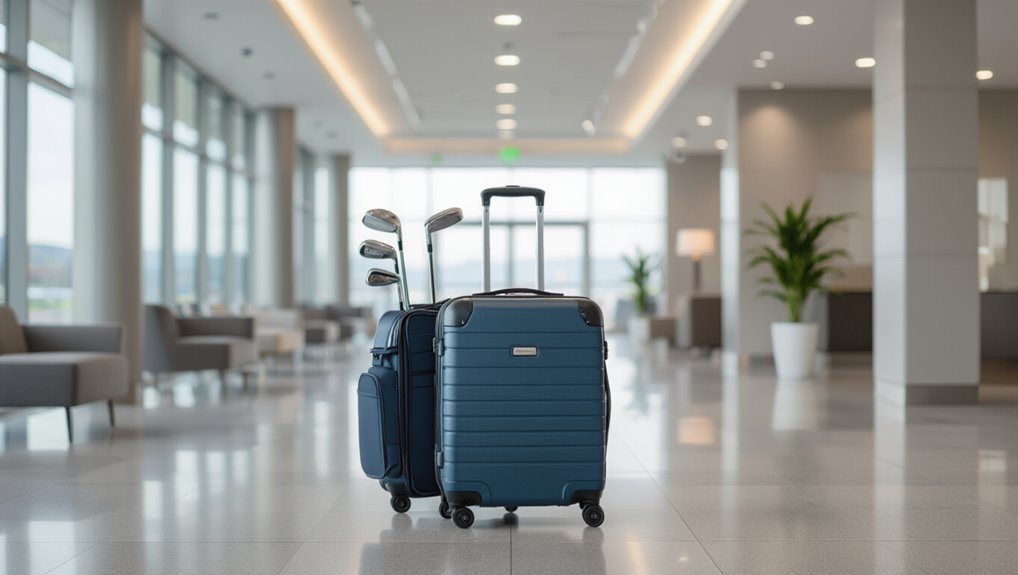
Whether you’re a weekend hacker packing a set for a resort trip or a competitive player shipping clubs across the country, this guide is for you.
You’ll get clear, practical info on airline rules, packing tips, fee expectations, and claim procedures.
It’s aimed at travelers who want to avoid surprises, save money, and protect equipment so you can focus on playing, not paperwork.
Quick Answer: Are Golf Clubs Oversized Luggage?
Wondering if your golf bag counts as oversized luggage?
Usually it doesn’t by default — airlines treat golf bags as sports equipment and often allow them as checked items within size/weight limits.
You’ll sometimes face oversize or overweight fees if it exceeds those limits.
Always check your carrier’s specific measurements and fees before you travel to avoid surprises.
How Airlines Classify Golf Bags and Clubs
When you check a golf bag, airlines usually classify it as sports equipment rather than standard carry-on, which affects how it’s priced and processed. You’ll see it handled under special baggage rules, may need reservations, and should tag it clearly. Check carrier policies before travel to avoid surprises.
| Item | Classification |
|---|---|
| Golf bag | Sports equipment |
| Clubs | Sporting item |
Golf Bag Size & Weight Thresholds That Trigger Fees
You’ll want to check each airline’s size limits for golf bags, since length and overall dimensions can determine whether your gear’s accepted as standard or oversized.
Pay attention to weight thresholds too—many carriers charge extra once your bag exceeds a set poundage. Knowing both the size and weight triggers ahead of time will help you avoid surprise oversize or overweight fees.
Size Limits By Airline
How big is too big for your golf bag? You’ll find limits vary: many U.S. carriers cap linear dimensions around 62–80 inches and charge oversize fees; low-cost airlines enforce stricter rules. Check your carrier’s policy before travel.
| Airline | Max Linear Inches | Typical Fee |
|---|---|---|
| Delta | 62 | $100 |
| United | 62 | $150 |
| Spirit | 80 | $150 |
| Southwest | 80 | $75 |
Weight Thresholds Explained
Because airlines base baggage fees not just on size but on weight, you should know the common thresholds that trigger extra charges for golf bags and oversized equipment.
Typically, domestic carriers charge for bags over 50 lb (23 kg) and impose higher fees or require special handling above 70 lb (32 kg).
International rules often mirror those limits, but always check your airline’s specific policy before traveling.
Oversize Fee Triggers
Size and weight both trigger oversize fees, so check your bag’s dimensions and scale it on the airline’s limits before you fly.
Measure length, width, and height including wheels and headcovers; weigh packed clubs. Airlines often charge for anything over set linear inches or weight limits (commonly 62 linear inches or 50–70 pounds).
Confirm carrier-specific thresholds to avoid surprise fees.
How to Measure and Weigh Your Golf Bag Correctly
Measuring and weighing your golf bag correctly saves you from surprise oversize fees and damaged clubs, so start by emptying pockets and removing loose items.
Lay the bag flat, measure length from clubhead to bag end, then width and height at widest points.
Use a reliable luggage scale with the bag packed as you’ll travel.
Record dimensions and weight for airline limits.
Major U.S. Carriers’ Golf Club Policies at a Glance
When you fly within the U.S., each major carrier sets its own rules for golf bags—so check policies before you pack to avoid surprises at the gate.
Airlines vary on fees, size limits, liability, and required packing (hard vs. soft cases). You should review fee tiers for checked baggage, declare oversized items when booking, and arrive early to resolve any gate-check or oversize charges.
International Carrier Differences to Expect
When you fly internationally, expect wide variation in baggage allowances, size and weight limits, and how much carriers charge for oversized golf bags.
You’ll need to check each airline’s specific fees and inspection policies before you pack.
Planning ahead will help you avoid surprises and extra costs.
Baggage Allowance Variations
Because airlines set their own rules, you’ll find wide differences in what counts as checked baggage, how oversized items are charged, and which sports equipment they accept, so planning ahead saves time and money.
Check each carrier’s policy for fees, required declarations, and whether golf bags count as free checked items, oversize pieces, or require special handling to avoid surprises at the airport.
Size And Weight Limits
Although airlines all call them “oversize” or “sports equipment,” international carriers set very different size and weight caps for golf bags and other bulky luggage, so you’ll need to check limits for both linear dimensions and per-item weight before you pack. Check dimensions, confirm kilogram or pound limits, and note carrier-specific exemptions.
| Carrier | Typical cap |
|---|---|
| Airline A | 23 kg / 158 cm |
| Airline B | 32 kg / 203 cm |
Fees And Inspection Policies
If you’re flying internationally, expect wide variation in how carriers charge for oversized golf bags and how they inspect them.
You’ll find airlines that include clubs as checked baggage, others that levy hefty oversize fees, and some that require advance booking.
Security and handling inspections differ too — you should declare clubs, pad them, and confirm fees and inspection rules before arrival to avoid surprises.
When Clubs Count as Checked Baggage vs. Special Items
When you’re packing for a trip, whether your golf clubs count as standard checked baggage or a special item depends on the airline’s size, weight, and fee rules, plus how you declare them at check-in.
Check carrier policies beforehand: some treat clubs as sporting equipment with separate fees or allowances, others count them toward your baggage limit.
Pack, declare, and label accordingly to avoid surprises.
How Airlines Calculate Oversize and Overweight Fees (Examples)
Because airlines set fees based on both size and weight limits, you’ll usually pay separately for an oversized bag (too long or wide) and an overweight bag (too heavy), with charges rising in clear brackets—for example, a bag 62–80 linear inches might incur a $100 oversize fee while anything over 70 lb triggers a $75 overweight charge.
- long club case on a cart
- scale tipping past 50 lb
- tape measure showing 80 inches
- fee notice at check‑in
- agent tagging a bulky bag
Packing Tips to Avoid Oversize Fees and Damage
To avoid oversize fees and protect your clubs, pack strategically: choose a rigid travel case with internal padding, remove or loosen club heads and wrap them in headcovers or bubble wrap, and stagger longer clubs diagonally so they fit within linear‑inch limits.
Add towels or foam between shafts, secure loose items in pockets, lock the case, weigh it at home, and redistribute gear to meet airline size and weight rules.
Soft Travel Covers vs. Hard Cases: Pros and Cons
Now that you know how to pack clubs to avoid oversize fees and damage, pick the right travel protection for your trip: soft travel covers and hard cases each offer different trade-offs.
You’ll choose soft covers for lightness and easy storage, or hard cases for rugged impact protection. Consider weight limits, handling, and storage space.
- Duffel-style soft cover slung over shoulder
- Molded shell resisting crushing
- Wheels for airport transit
- Compression straps inside padding
- Zippered pockets for tees and gloves
Check‑In Essentials: Tags, Receipts, and Declaring Clubs
When you check a golf bag, make sure it has a durable ID tag with your contact info and a copy of your itinerary inside.
Always declare the clubs at the airline counter so they’re noted as oversized or sports equipment and any fees are confirmed.
Keep your receipt and baggage stub until you’ve retrieved your bag to speed up claims if anything goes wrong.
Tagging Your Golf Bag
Tags do more than identify your bag—they protect you from lost or delayed clubs and speed up claims if something goes wrong.
Attach a durable tag with your name, phone, and backup contact. Add a luggage tag from the airline and wrap a brightly colored ribbon for quick spotting.
Keep a photo of labels and serial numbers.
- Weatherproof tag
- Airline claim stub
- Bright ribbon
- Photo record
- Club serials
Declaring At Check‑In
If you’re checking a golf bag, declare it at the counter and keep receipts and claim tags handy so you can prove ownership and the checked status quickly. Tell the agent it’s sporting equipment, confirm size/weight limits, and request a fragile or special-handling tag if available. Keep tags and receipts until you retrieve clubs.
| Item | Action | Proof |
|---|---|---|
| Bag | Declare | Tag |
| Clubs | Inspect | Receipt |
If Your Clubs Are Damaged or Lost: What to Do
Should your clubs arrive dented, broken, or not at all, act quickly to protect your rights and speed up a resolution.
If your clubs arrive damaged or missing, act immediately—inspect, document, and report to protect your rights.
You should inspect, document, and report damage or loss at the airport counter, keep receipts and bag tags, file a written claim with the airline, follow up persistently, and consider travel insurance claims if needed.
- bent shafts
- cracked clubheads
- torn golf bag
- missing driver
- discarded grip pieces
Alternatives: Rent, Ship, or Borrow Clubs?
Wondering what to do when your clubs are damaged or lost? You can rent clubs at many courses or nearby pro shops for convenience and no baggage hassle.
Shipping clubs ahead via courier avoids airline oversized fees and reduces risk.
Borrowing from friends or club rentals at your destination saves time and cost when you’re traveling briefly or replacing lost gear.
Cost‑Saving Strategies and Loyalty Perks for Golfers
Everyone can trim travel and equipment costs without sacrificing play: start by joining course loyalty programs, signing up for airline or hotel travel rewards that offer free or discounted oversize baggage allowances, and comparing rental versus shipping prices before every trip.
You’ll save by timing bookings, using credit card perks, and leveraging partner benefits.
- A packed travel cover
- Airport baggage desk
- Course pro shop rental
- Hotel concierge pickup
- Rewards account dashboard
Decision Checklist: Check, Ship, or Rent Your Clubs?
When you’re weighing whether to check, ship, or rent your clubs, focus first on cost, convenience, and risk: compare airline baggage fees and delay rates, shipping prices and insurance, and rental availability at your destination so you can pick the option that minimizes hassle and protects your gear.
Also factor in trip length, club value, transportation logistics, and timing to choose the safest, cheapest, most practical solution.
Frequently Asked Questions
Do Rental Clubs Match Professional Specifications for Tournaments?
Yes — rental clubs often meet professional specifications, but they vary. You’ll want to confirm lofts, shaft flex, and club lengths beforehand, because tournament rules require conforming equipment and not all rentals match touring setups.
Can Golf Club Shaft Type Affect Airline Handling or Damage Likelihood?
Yes — shaft type can affect airline handling and damage risk. Stiffer, brittle graphite shafts flex less during rough handling, increasing breakage chances; flexible steel shafts absorb shocks better, so you’ll likely face lower damage likelihood.
Are Electric Golf Trolleys or Batteries Allowed in Checked Golf Bags?
You generally can’t check lithium-ion batteries for electric trolleys; airlines usually require removal and carriage in the cabin with terminals protected, or prohibit batteries above certain watt-hours, so you’ll need to check specific carrier rules beforehand.
Do Travel Insurance Policies Cover Delayed Golf Clubs Delivery?
Yes — many travel insurance policies cover delayed golf club delivery if you bought the right delay or baggage benefit; you’ll need to check policy limits, required documentation, and time thresholds to file a claim promptly.
Will Oversized Golf Bags Incur Fees on Connecting International Flights?
Yes — you’ll likely incur fees on connecting international flights if your golf bag exceeds an airline’s size/weight limits or transfers between carriers with different rules; check each carrier’s baggage policy and pay applicable oversized or international transfer charges.
Conclusion
If you’re still undecided, weigh convenience against cost and risk: checking your clubs saves time but may mean oversized or overweight fees and potential damage, while shipping or renting can cut hassles or protect prized gear. Measure and weigh your bag before travel, call your airline for exact rules, and use padding or a hard case to reduce damage risk. Choose the option that fits your budget, schedule, and how much you care about your clubs.