Are Chocolates Allowed in Carry On Luggage?
Yes — you can bring most solid chocolates in your carry‑on, including bars, wrapped truffles, and candy pieces, but soft centers, spreads, ganaches, and syrups count as liquids/gels and must follow the 3‑1‑1 rule (3.4 oz/100 mL or less) or go in checked luggage. Pack chocolates in simple, nonmetallic wrappers or sealed bags, keep them cool and cushioned, and check customs limits for large quantities; continue for tips on packing, temperature control, and inspections.
Can You Bring Chocolate in a Carry‑On? Quick Answer
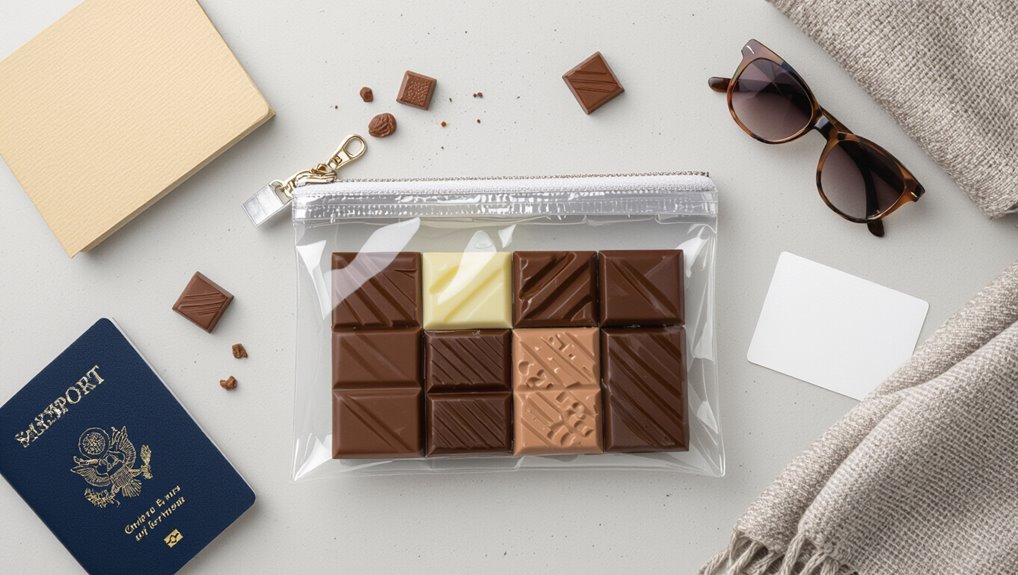
Yes—you can bring solid chocolate in your carry‑on.
You’ll be allowed most bars, truffles and wrapped candies through security since solids aren’t subject to liquid limits.
Most chocolate bars, truffles and wrapped candies sail through security—solids aren’t bound by liquid limits.
Keep them packaged or in a sealed container to prevent melting or mess.
Declare homemade or unusual confections if asked.
Remember local customs rules may restrict certain food items on arrival, so check destination regulations beforehand.
What Counts as “Chocolate” at Airport Security?
You can usually bring solid chocolate through security, but not every chocolate item is treated the same.
You’ll need to evaluate texture, fillings, and packaging.
Examples to visualize:
- Plain chocolate bar, hard and unfilled
- Chocolate with caramel or liquid centers
- Chocolate spread or ganache, creamy and spreadable
- Chocolate syrup or sauce
- Chocolate-covered fruit or nuts, chunky and solid
Are Solid Chocolate Bars Allowed in Carry‑Ons?
You can usually bring solid chocolate bars in your carry‑on without issue, since TSA treats solid food differently than liquids.
There aren’t specific size limits for solid chocolates, but anything that looks like a gel or paste could be inspected more closely.
Keep them accessible in case an officer asks to inspect them.
Solid Chocolate Rules
Most airlines and TSA guidelines let you bring solid chocolate bars in your carry‑on, so you can stash a candy bar without worrying about security confiscation.
You should still pack thoughtfully and follow common sense.
- wrapped bars
- boxed truffles
- brittle pieces
- chocolate-coated nuts
- gift tins
Keep bars accessible for screening and avoid melting by using insulated pouches.
TSA Carry‑On Limits
Although security focuses on liquids and gels, the TSA generally lets you bring solid chocolate bars in your carry‑on, so you don’t have to worry about them being flagged at screening.
You can pack multiple bars, but declare anything unusual if asked.
Keep them accessible for inspection, avoid soft or melted confections that might be treated like gels, and follow airline carry‑on size limits.
How Does TSA Treat Chocolate Bars vs. Candy Pieces?
When you’re packing treats for a flight, TSA generally treats solid chocolate bars and small wrapped candy pieces the same: they’re allowed in carry-on bags, but expect standard screening.
You should:
- see neat rows of candy
- feel solid chocolate bars
- unwrap sticky truffles at home
- separate loose pieces for inspection
- keep receipts for large quantities
Are Chocolate‑Covered Nuts and Fruits Allowed?
You can bring chocolate‑covered nuts and fruits in your carry‑on, but you should know how TSA views them.
Moist or fresh fruit can trigger extra screening, so pack dried or well‑sealed items and keep moisture minimal.
Labeling and declaring unusual or homemade snacks will speed up inspection and avoid surprises.
TSA Rules For Chocolates
If you’re wondering whether chocolate-covered nuts or fruit are allowed in carry-on bags, the short answer is yes—solid chocolates and confections that don’t contain liquid fillings are generally permitted through TSA checkpoints.
You should still follow rules and be ready for screening.
Imagine textures and sizes:
- bite-sized truffles
- chocolate-dipped almonds
- fruit bonbons
- boxed pralines
- sealed retail packs
Fruit And Nut Moisture
Because moisture can change how TSA treats your snacks, check whether the chocolate coating seals in wet fillings like jam, syrup, or fresh fruit juice before packing them in carry-on luggage.
If fillings leak or stay moist, agents may consider them liquids or perishable and inspect or confiscate them.
Dried nuts and fully sealed candied fruit pieces usually pass without issue.
Packaging And Declaration
Moisture and fillings affect how agents screen your snacks, so next consider how you package and declare chocolate‑covered nuts and fruits.
You should pack them sealed, label ingredients, and declare fresh items when asked to avoid delays and disposal.
- vacuum‑sealed pouch
- airtight tin
- clear plastic bag
- ingredient label
- declaration at security
Are Liquid or Gel Chocolates Allowed in Carry‑On?
Wondering whether liquid or gel chocolates can go in your carry‑on?
You’ll usually need to follow the TSA 3-1-1 rule: containers must be 3.4 ounces (100 mL) or less and fit inside a single quart-sized clear bag.
Larger jars, spreads, or dessert sauces should go in checked baggage or be discarded at security to avoid delays and confiscation.
What Counts as Liquid or Gel Chocolate at Security?
When you get to the security checkpoint, agents classify chocolate by its texture and how it would behave if squeezed or spread: solid bars, individually wrapped pieces, and molded bonbons are treated as solids, while chocolate spreads, ganaches, syrups, hot‑chocolate mixes that are already liquid, and soft truffles with runny centers are treated as liquids/gels and must meet the 3‑1‑1 rule.
- creamy spread
- molten ganache
- syrup bottle
- powdered mix
- gooey truffle
How Much Liquid Chocolate Can You Bring in a Clear Bag?
Now that you know which chocolates count as liquids or gels, you should also know how much of those items you can carry in your clear 3‑1‑1 bag.
You’re limited to containers of 3.4 ounces (100 ml) or less, all fitting inside a single, clear, quart‑size bag.
Combine multiple small containers, but keep total volume manageable for inspection.
Can I Pack Chocolate Spreads and Sauces in My Carry‑On?
Can you bring chocolate spreads and sauces in your carry‑on? Yes, but jars or squeezable bottles over 100 ml must go in checked luggage; smaller containers belong in your quart‑size clear bag.
Think about texture, sealing, and mess risk:
- sticky jar smeared in bag
- squeeze bottle leaking
- thermal melting in cabin
- TSA inspecting lids
- container labeled and sealed
Are Boxed or Assorted Chocolates Allowed in Carry‑On?
You can bring most boxed or assorted solid chocolates in your carry‑on without trouble.
Be careful with items that have liquid fillings, creams, or sauces—those may count toward your 3.4 oz/100 mL liquids limit or be restricted by security.
Solid Chocolates Allowed
One box of solid, non-liquid chocolates—whether assorted truffles, plain bars, or wrapped bonbons—is generally allowed in your carry‑on as long as it doesn’t contain liquid centers or gels that exceed TSA liquid rules.
You should pack them neatly and declare if asked.
Visualize textures and sizes:
- bite-sized truffles
- long chocolate bars
- foil-wrapped squares
- molded shapes
- praline clusters
Liquid/Filling Restrictions
Solid chocolates are usually fine, but boxed or assorted chocolates often include fillings—caramel, cream, ganache, or liqueur—that may fall under TSA liquid/gel rules.
You should check ingredients and packaging: creamy or liquid centers might be treated as gels, subject to the 3.4 oz/100 ml rule and bagging requirements.
Declare questionable items and consider packing them in checked baggage.
Can You Bring Homemade Chocolates in a Carry‑On?
Wondering whether homemade chocolates can join you in a carry‑on? You can usually bring them if they’re solid and packed well, but watch fillings that look like gels.
Pack airtight containers, label if needed, and be ready to separate them for inspection.
Pack chocolates in airtight containers, label them, and be ready to remove for inspection at security.
- tight plastic box
- layered parchment sheets
- chilled cooler pack
- bubble wrap cushion
- clear zip bag
How Does Chocolate Packaging Affect Security Screening?
How your chocolates are packed can change how they show up on X-ray, since dense boxes might look like electronics or blocks.
You’ll want to separate wrapped candies from loose or unwrapped pieces so agents can quickly identify them.
Also note that creams, sauces, or liquid fillings may count toward your liquids allowance or trigger a bag check.
Packaging Density And Screening
Think about density as chocolate’s fingerprint for X-ray machines: tightly packed bars, layered boxes, and metalized wrappers all change how items look on scanners, and that affects how screeners interpret images.
You should pack thoughtfully so density doesn’t mask other items. Consider visual cues:
- Stacked chocolate bars
- Dense praline clusters
- Foil-wrapped truffles
- Cardboard gift boxes
- Loose, irregular pieces
Wrapped Versus Unwrapped Items
When you pack chocolate, the wrapper type can make a big difference at the X-ray belt: foil and metallic films create bright, dense signatures that can obscure nearby items, while matte paper, cardboard, or unwrapped pieces produce more predictable, see-through images that let screeners identify contents faster. You should choose simple, nonmetallic packaging to reduce delays.
| Wrapper Type | Screening Effect |
|---|---|
| Foil/metallic | Dense, obscures |
| Matte paper | Clearer, predictable |
| Unwrapped | Transparent |
| Cardboard box | Moderately clear |
Liquid Fillings And Exceptions
If a chocolate contains a liquid or semi-liquid filling—ganache, caramel, liqueur, or fruit puree—it can trigger extra scrutiny at the security checkpoint because those fillings can look like prohibited liquids or gels on X-ray and may require manual inspection.
You should pack carefully and expect questions:
- gooey caramel oozing from a truffle
- shiny liqueur centers
- soft fruit jellies
- creamy ganache pools
- broken wrappers spilling contents
Will Body Scanners Flag Chocolate?
Curious whether the full-body scanners at airport security will pick up the chocolate bars in your carry-on?
They scan people, not bags, so bars inside your bag won’t trigger a body scanner.
X-ray machines inspect carry-ons and will show dense items like chocolate as solid shapes; that’ll prompt a quick visual check, but chocolate itself isn’t prohibited and usually won’t cause delays unless concealed with contraband.
How Likely Is Chocolate to Melt During a Flight?
How likely is your chocolate to melt on a flight depends mostly on cabin temperature, packaging, and the time it spends out of refrigeration.
You’ll usually be fine on short flights, but warm cabins or long layovers raise risk.
- soft truffle center
- thin chocolate shell
- warm overhead bin
- sun through window
- hours on a hot tarmac
How to Wrap Chocolate to Prevent Melting Before Security
Since chocolate starts softening well below typical room temperature, wrap it thoughtfully before you reach security to keep it solid through checkpoints and the wait beyond.
Place bars or truffles in airtight resealable bags, layer with absorbent paper, and surround with flexible insulating layers like folded clothing.
Keep treats near your body or in an outer bag pocket to benefit from your warmth control.
What Insulated Packaging Works Best for Carry‑On Chocolate?
When you want to keep chocolate from blooming or melting in your carry‑on, choose insulated packaging that balances thermal protection, size, and airport rules.
Pick slim, compliant solutions that fit your bag and the flight duration. Consider:
Opt for slim, rule‑friendly insulation that fits your bag and the trip’s length for reliable chocolate protection.
- Aluminum foil pouch hugging small bars
- Neoprene sleeve for chocolate boxes
- Rigid insulated tin for truffles
- Thermal lunch bag for multiple items
- Vacuum‑sealed pouch for firm protection
Can You Use Ice Packs With Carry‑On Chocolate?
If you want extra cooling beyond insulated wraps, ice packs can help keep chocolate firm on short flights but you’ll need to follow TSA rules and choose the right type and size. Pack solid or gel packs that won’t leak, wrap chocolate to prevent condensation, and place packs near—not on—delicate items.
| Pack Type | Duration | Tip |
|---|---|---|
| Solid | Short | Wrap |
| Gel | Moderate | Seal |
| Dry ice? | Not typical | Check rules |
Do Ice Packs Count as Liquids in Carry‑On?
Wondering whether ice packs count as liquids in your carry-on? You’re fine: gel or frozen packs aren’t treated as liquids if solidly frozen at screening, but may be inspected or discarded if partially melted.
Pack smart and expect questions.
- a hard-sided cooler
- frosty gel packs
- melting puddles
- security inspection tray
- wrapped chocolates
How Airline Carry‑On Size Limits Affect Bringing Chocolate
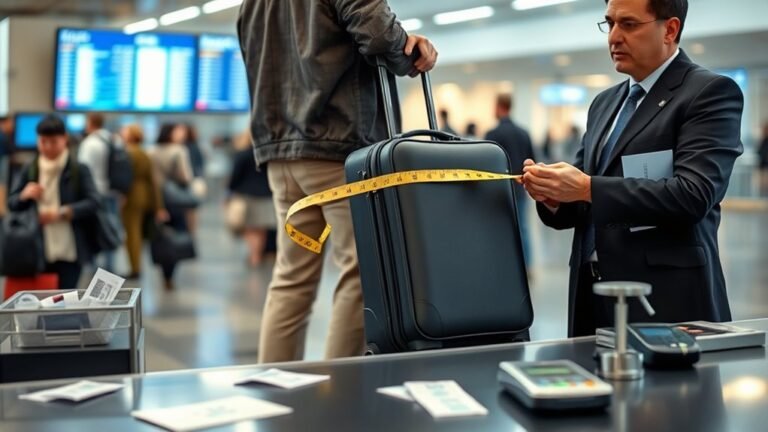
Carry-on size limits directly affect how much chocolate you can bring and how you pack it, since bags that exceed airline dimensions get gate-checked or stowed as checked luggage. You should measure your bag, prioritize fragile boxes, and distribute weight to avoid inspection or damage.
| Item | Tip | Impact |
|---|---|---|
| Boxed chocolates | Flatten packaging | Saves space |
| Truffles | Use padding | Protects shape |
| Bars | Stack vertically | Maximizes capacity |
Quick Rules for Carrying Chocolate on US Domestic Flights
When you pack chocolate for a US domestic flight, remember solid bars and boxed confections are usually fine in carry‑on.
If you bring spreads, sauces, or syrups, keep them within the 3.4 oz (100 mL) liquid limit and place them in your quart‑size bag.
Pack items to prevent melting or crushing and declare any food if TSA or customs ask.
Solid Chocolate Rules
Although TSA rules are pretty straightforward, you still want to know what’s allowed before you pack:
You can bring solid chocolate in carry‑ons without issue. Keep bars and boxed truffles accessible for inspection. Avoid messy spreads (see liquid rules).
Consider packaging and temperature. Visualize:
- wrapped chocolate bars
- boxed pralines
- chocolate-covered nuts
- molded figures
- chocolate bark
Liquid Chocolate Limits
Solid chocolate is easy, but chocolate in liquid, paste, or spread form follows stricter rules.
You must treat sauces, syrups, and ganache like liquids under TSA’s 3-1-1: containers 3.4 ounces (100 mL) or less, all fit in one quart-sized bag.
Larger portions belong in checked baggage.
Remember airport security can ask to discard oversized items.
Packing And Declaration
Bring only what you’ll actually eat or gift, and pack it smartly:
- Wrap in sturdy, airtight containers
- Cushion with clothing or bubble wrap
- Keep temperature-sensitive bars insulated
- Place in an easy-to-open spot for inspection
- Separate homemade or irregular items for declaration
You’ll declare homemade, meat-filled, or large quantities if asked; proactive honesty speeds screening and prevents confiscation.
What to Check Before Bringing Chocolate on International Flights
Before you pack chocolate for an international flight, check customs rules, local food restrictions, and airline carry-on policies so you won’t run into surprises at the airport.
Also verify packaging (sealed vs. loose), ingredient limits (nuts, dairy), and quantity allowances for duty-free items.
Confirm temperature sensitivity, transport within carry-on versus checked baggage, and whether transit countries impose additional prohibitions or inspection requirements.
Customs Rules: Can You Bring Chocolate Into Another Country?
Before you travel, check whether the country you’re visiting restricts certain food items—some places ban dairy, meat, nuts, or fresh produce even in processed forms.
If chocolate is allowed, you’ll still need to declare it at customs and stick to any quantity limits to avoid fines or confiscation.
When in doubt, declare what you’re carrying and ask officials how much you can bring in.
Restricted Food Items
If you’re wondering whether you can carry chocolate across a border, the short answer is: usually yes, but it depends on the country’s rules and the type of chocolate.
You should watch for restricted items and inspections.
Consider examples:
- Fresh fruit-filled bars
- Nut clusters with seeds
- Homemade truffles
- Dairy-rich creams
- Chocolate with plant-based fillings
Declaration And Limits
After checking whether your chocolates fall under restricted categories, you’ll need to declare them and follow each country’s limits. Declare at customs, keep receipts, and pack separately to speed inspection. Know quantity, value, and any dairy rules before arrival.
| Country | Limit | Notes |
|---|---|---|
| USA | 10 kg | Commercial amounts require license |
| UK | 2 kg | Dairy limits may apply |
| Japan | 1 kg | Declare all food items |
Which Countries Restrict Chocolate or Dairy Treats?
Many countries limit or prohibit bringing chocolate or other dairy-based treats in your carry-on because they’re seen as agricultural products that can carry pests, diseases, or bacterial contamination; the strictness varies by destination, from mild cash fines and confiscation to heavy penalties and quarantine measures.
- Australia: strict, fresh dairy banned
- New Zealand: stringent biosecurity checks
- USA: processed allowed, fresh limited
- EU: rules vary by member state
- Japan: cautious about undeclared foods
When Must You Declare Chocolate at Customs?
When do you need to declare chocolate at customs?
You must declare chocolate if it exceeds duty-free allowances, contains restricted ingredients (like fresh dairy in some countries), or if you’re entering with commercial quantities.
Always declare when forms ask about food, when carrying gifts above limits, or when unsure—failure can mean fines or seizure.
Check destination rules before travel.
How Long Can Chocolate Sit in a Bag Before Spoiling?
Declaring chocolate at customs matters for legal and safety reasons, but once you’re past border control you’ll want to know how long treats can safely sit in your bag.
You should monitor temperature, packaging, and travel time. Aim to eat within a day if warm; longer if cool and sealed.
- soft centers
- solid bars
- wrapped truffles
- heat exposure
- airtight packing
Shelf‑Stable Chocolates vs. Delicate Confections: Which to Choose?
You’ll want to pick shelf-stable chocolates like solid bars or nut clusters if you need something tough that can handle temperature changes in your carry-on.
If you’re carrying delicate, temperature-sensitive confections—think truffles or cream-filled bonbons—you’ll need cooling packs and careful placement to keep them intact.
Decide based on how long and how warm your journey will be so you don’t end up with a melted mess.
Shelf-Stable Options
Picking between shelf-stable chocolates and delicate confections comes down to how long your trip is, what temperature changes you’ll face, and how much handling you expect; shelf-stable bars and individually wrapped treats tolerate jostling and warm cabins far better than ganaches, pralines, or truffles.
- a snug chocolate bar in your pocket
- foil-wrapped square in a pouch
- hard caramel-studded bark
- sealed cookie-filled tin
- individually wrapped caramels and nougats
Delicate Temperature-Sensitive
If your trip will expose chocolates to fluctuating cabin or ground temperatures—or if you’re carrying items that melt, bloom, or bruise easily—you’ll want to assess whether delicate confections are worth the risk compared with sturdier, shelf-stable options.
Choose shelf-stable chocolates for long flights or warm climates; pack delicate truffles or ganaches in insulated containers with ice packs, keep them close, and avoid checked baggage to prevent damage.
Tips for Carrying Chocolate Through Long Layovers
Anyone traveling through a long layover knows chocolate can melt, sweat, or lose its snap if you don’t plan ahead.
Pack sturdy boxes, small insulated pouches, and frozen gel packs wrapped in cloth. Keep chocolate near you, avoid overhead heat, and eat sooner rather than later.
- insulated pouch
- frozen pack wrapped
- sturdy box
- carry-on side pocket
- eat within hours
Is It Better to Put Chocolate in Checked Luggage?
Think about temperature sensitivity before you toss chocolate into checked luggage, since hold cargo can get hot or cold and melt or bloom.
You’ll also need to follow transit security rules—some countries restrict food or require declarations.
Weigh the risk of damage against convenience and pack accordingly.
Temperature Sensitivity
Because temperature swings during travel directly affect chocolate’s texture and appearance, you’ll want to contemplate where you pack it. You should prefer carry-on for stable cabin temps; checked holds can get hot or cold.
Pack insulated pouches or cooling packs if needed. Visualize conditions:
- warm, sticky melt
- glossy bloom
- cracked shells
- soft centers
- chilled, firm bite
Transit Security Rules
While cabin temperatures matter, transit security rules often dictate where you should stash chocolates, and putting them in checked baggage can introduce screening complications and loss risks you might not expect. You’ll face longer screening, possible opening, and delayed retrieval. Keep valuables and fragile treats with you when possible.
| Issue | Impact |
|---|---|
| Screening | Delays |
| Loss | Irreversible |
| Damage | Melted/crumbled |
Security Differences: Checked Bag vs. Carry‑On Chocolate
If you want to bring chocolates through airport security, how you pack them matters: carry‑ons and checked bags are treated differently, and those differences affect what you can take, how it’s inspected, and the risk of damage or confiscation.
You’ll notice:
- powdered cocoa sifted at a scanner
- melted bars in warm cargo holds
- TSA sniffing suspicious packages
- quick x‑ray checks on your tray
- lost box in baggage claim
What to Do If TSA Flags Your Chocolate at Security
When TSA flags your chocolate at security, stay calm and be cooperative — the agents are just following procedures to guarantee safety. Show ID, answer questions briefly, and remove items as requested. If inspection’s needed, step aside politely. Ask for a supervisor if you disagree and document the encounter.
| Step | Action | Tip |
|---|---|---|
| 1 | Stay calm | Breathe |
| 2 | Comply | Keep it short |
| 3 | Document | Take notes |
How to Separate Chocolate From Liquids in Your Carry‑On
To keep your chocolate from getting smooshed or melting into toiletries, pack it separately and clearly from any liquids.
Use barriers and organization so sweets stay dry and intact.
- rigid tin or box
- resealable plastic bag
- padded sleeve or bubble wrap
- upright zippered pouch
- keep away from toiletry compartment
Bringing Chocolate as Gifts: Packaging and Customs Tips
Keeping your chocolate protected from toiletries also helps preserve its presentation if you’re bringing it as a gift abroad.
Wrap boxes in bubble wrap or tissue, seal individual bars in airtight bags, and use a sturdy outer container to prevent crushing.
Check destination customs for food restrictions and declare chocolates when required.
Keep receipts to prove origin and value to avoid delays or fines.
Traveling With Chocolate for Kids: Safety and Packing Tips
When you pack chocolate for kids, think about safety first—avoid small pieces for toddlers and keep treats in sealed, childproof containers to prevent spills and choking hazards.
Store chocolate in an insulated pouch or cooler pack if you expect heat, and tuck it in carry-on where you can monitor temperature and access.
Label any allergy-prone ingredients and keep snacks separate from medications or items that could be mistaken for food.
Chocolate Safety Tips
Although you’re excited to bring chocolate for the kids, pack it thoughtfully so it stays safe and mess-free:
- Individually wrap bars to prevent melting into clothing.
- Use small, rigid containers to avoid crushing.
- Keep treats in a cool, shaded spot during outings.
- Seal open candy in zip bags to stop sticky fingers spreading.
- Label allergen info for caregivers and flight staff.
Packing And Storage
Along with those safety steps, packing and storing chocolate properly will keep it tasty and intact throughout your trip.
Pack bars in airtight containers or resealable bags to prevent melting and crushing. Use insulated pouches or a small cooler with ice packs for warm destinations.
Keep treats in your carry-on to control temperature and avoid rough handling in checked luggage. Inspect before serving.
Can You Bring Vegan or Keto Chocolates in Carry‑On?
Curious whether vegan or keto chocolates can join you in your carry‑on? You can bring them—solid, non-liquid bars or bites are fine.
Pack them in sealed wrappers, keep them cool, and declare if asked.
Visualize options:
- dark cacao squares
- coconut oil truffles
- nut‑based bars
- sugar‑free bites
- wrapped single‑serves
Avoid creams or liquid centers to prevent issues.
Are Alcohol‑Filled or Liqueur‑Center Chocolates Allowed?
Wondering if alcohol‑filled or liqueur‑center chocolates can ride in your carry‑on?
You can usually bring solid chocolates with alcoholic centers, but rules vary by airline and country.
Declare them if asked, keep packaging intact, and expect inspections.
If centers qualify as liquid under local rules, they might be restricted or require checked baggage.
Always confirm with your carrier before travel.
Regulations for Chocolate With Liqueur Centers in Carry‑On
When you pack chocolates with liqueur centers, check the alcohol content limits because higher-proof fillings may be treated like liquids.
You’ll also need to follow TSA liquid rules if the filling can leak or is considered a liquid, meaning containers over 3.4 ounces may be restricted.
Pack them securely and be prepared to declare them at security to avoid delays.
Alcohol Content Limits
If you’re packing chocolates with liqueur centers in your carry‑on, keep in mind that most airlines and security agencies treat them like alcohol-containing food and restrict the alcohol by volume (ABV).
You should check labels and airline policies; high‑ABV centers may be prohibited.
Consider these visual clues:
- tiny glassy liquid core
- glossy syrup oozing
- alcohol aroma when opened
- manufacturer ABV on box
- soft, runny filling
TSA Liquid Rules
Although chocolates with liqueur centers are solid candies, TSA treats any free‑flowing liquid filling the same way as other liquids, gels, and aerosols in carry‑ons; so you’ll need to follow the 3-1-1 rule for portions that can leak or are clearly liquid.
Pack individual confections in containers of 3.4 ounces (100 mL) or less inside a single quart‑size bag, or check larger quantities.
Packaging And Declaration
Now that you know how liquid‑center chocolates fall under the 3-1-1 rule, you should package and declare them to prevent delays at security.
Pack each in clear resealable bags, keep containers under 3.4 oz, group all liquids together, label if possible, and declare at screening.
- clear zip bag
- small sealed jars
- padded box
- visible labels
- separate pouch
How Duty‑Free Chocolate Purchases Are Treated at Security
When you buy duty‑free chocolates after security, the new sealed bag and receipt usually let you carry them through additional checkpoints without trouble, but rules vary by airport and destination so you should be prepared to show proof of purchase.
If asked, present the sealed bag and receipt promptly; if crossing borders, check customs limits beforehand since officers may inspect or require declaration.
Best Travel‑Friendly Chocolate Types and Brands
If you want chocolate that survives travel without melting, crushing, or drawing curious customs inspections, choose firm, individually wrapped options like dark chocolate bars, filled bonbons with sturdy shells, or coated nuts and caramels.
You’ll pick brands that balance durability and flavor — think artisanal and supermarket staples that pack well.
- Dark chocolate bar
- Almonds in chocolate
- Chocolate‑coated caramels
- Sturdy pralines
- Individually wrapped truffles
How to Read Labels to Judge Carry‑On Suitability
Start by scanning the ingredient list and the packaging for any clues about temperature sensitivity, liquid content, and fragility so you can judge whether the chocolate will survive a flight in your carry‑on.
Check for fillings like ganache, liqueur, or creams (they may be treated as liquids), melting points, and fragile shapes.
Prefer solid bars, resealable packs, and clear allergen or storage instructions.
Using TSA PreCheck: Does It Change Chocolate Screening?
If you have TSA PreCheck, you’ll usually move through security faster and keep shoes and light jackets on, but rules about food and gels still apply.
Chocolate itself rarely triggers extra scrutiny, though officers may open packages if X-rays look unclear or if you carry large quantities.
To speed things up, pack chocolates in clear, easy-to-open containers and declare anything that looks like a gel or spread.
TSA PreCheck Screening Differences
When you go through TSA PreCheck, screening for chocolate usually becomes quicker and less intrusive because you keep shoes, belts and light jackets on and can leave laptops and compliant liquids in your bag; solid chocolates and most confectionery still ride through the X-ray machine like other carry-on items, though densely packed or unusual shapes might prompt an agent to take a closer look.
- boxed truffles
- foil-wrapped bars
- molded figures
- dense nougat
- oddly shaped gifts
Chocolate Inspection Procedures
Although TSA PreCheck speeds your overall screening, it doesn’t automatically exempt your chocolates from inspection; agents still rely on X-ray images and may ask you to open packages or remove dense items for a closer look.
You’ll usually keep chocolates in your carry-on; if imaging looks unclear, officers might swab for traces of prohibited substances or request repacking to verify contents before clearing them.
Tips For Faster Screening
1 quick tip: having TSA PreCheck can speed your overall process, but it doesn’t guarantee you’ll skip chocolate checks—officers still screen dense or opaque items and may ask you to open packages or remove oversized bars for clearer imaging.
- unwrapped bar on tray
- foil reflection checked
- boxed chocolates opened
- dense truffles inspected
- oversized slab removed
Airport Climate and Season: Protecting Chocolate on the Go
If you’re flying during hot months or through sun-drenched terminals, plan for temperature swings that can melt or bloom your chocolate; pack it in insulated pouches, keep it out of direct sunlight, and move it into a carry-on rather than checked baggage so you can control its environment.
Also consider seasonal humidity—use airtight containers to prevent moisture damage, and choose travel-friendly chocolates with higher cocoa solids for greater heat resilience.
Quick Fixes If Your Chocolate Melts Mid‑Travel
When your chocolate starts to soften or smear mid‑trip, act fast to limit mess and salvage flavor:
- Wrap in cold napkins to firm edges
- Stash in a sealed bag with ice packs
- Transfer melted truffles into a clean cup
- Chill in airplane bathroom with cold water tap
- Eat quickly with a spoon to avoid sticky fingers
Creative Packing for International Chocolate Gifts
Because customs and temperature swings can ruin a special box of chocolates, pack them with care so they arrive intact and legal: choose sturdy, tamper-evident packaging, seal perishable items in insulated pouches with chilled gel packs, label contents and origin, keep receipts for customs, split gifts between bags to reduce loss, and research destination import rules so you don’t pack prohibited ingredients.
Can Travel Insurance Cover Lost or Damaged Chocolate?
Though travel insurance typically covers lost or damaged baggage, it won’t always reimburse you for a ruined box of chocolates—policies vary widely on per‑item limits, coverage for perishable goods, and proof requirements.
Check your policy, keep receipts, and file promptly.
Visualize possible issues:
- Melted truffles in summer
- Crushed gift box corners
- Smashed pralines
- Leaking fillings
- Missing pieces
Storing Chocolate at Your Destination to Preserve Quality
After you’ve dealt with travel hiccups like melted or crushed chocolates, you’ll want a plan for storing them at your destination so they keep their texture and flavor.
Unpack quickly, keep chocolates in a cool, dry spot away from sunlight, and seal them in airtight containers.
For longer stays, refrigerate in a sealed bag to avoid odors, then bring them to room temperature before serving.
Bringing Chocolate for Dietary Needs on Flights
If you rely on chocolate for medical dietary needs, check ingredient lists and choose certified options before travel.
You’ll need to declare and bring documentation—like a doctor’s note or prescription—if your chocolate contains medically necessary ingredients or falls under special food rules.
Pack it in an insulated case or with cold packs to keep temperature-sensitive items stable during the flight.
Medical Dietary Restrictions
When you rely on chocolate to manage a medical dietary restriction—such as needing sugar-free, nut-free, or fortified options—it’s important to pack clearly labeled, unopened products and any supporting documentation before heading to the airport.
You’ll want to:
- sealed sugar-free bars
- nut-free wrappers
- fortified meal replacement squares
- prescription-level nutrition packets
- compact cooler with ice packs
Keep them accessible for inspections.
Declaration And Documentation
You’ll want to declare any medical dietary chocolates at security and check-in and have documentation ready to show why they’re needed—this can include a doctor’s note, prescriptions, or nutritionist letters that specify sugar-free, allergen-free, or fortified products.
Keep originals and copies, explain dosage or necessity if asked, and store paperwork where you can quickly present it to agents to prevent delays or confiscation.
Storage And Temperature
Because cabin and baggage zones can vary widely in temperature, plan how you’ll protect medical or dietary chocolates so they stay safe and effective.
Pack insulated pouches, use gel cool packs, and keep items in carry-on where you can monitor them.
Visualize storage options:
- small insulated bag
- wrapped chocolate bars
- frozen gel packs
- resealable airtight container
- soft cooler tote
How to Buy Travel‑Sized Chocolate Legally at Airports
If you want travel-sized chocolate that’s allowed through security, head for official airport shops or certified duty-free retailers and look for sealed, single-serving packages clearly labeled with weight and ingredients. Choose items under liquid/gel limits, keep receipts, and confirm country rules.
| Shop Type | Packaging | Tip |
|---|---|---|
| Duty-free | Sealed bag | Keep receipt |
| Official shop | Single-serve | Check weight |
| Vendor kiosk | Wrapped | Ask staff |
Common Mistakes When Packing Chocolate (And How to Avoid Them)
When you pack chocolate for a flight, the biggest mistakes are letting it melt, crushing delicate pieces, and forgetting TSA rules.
Use insulated pouches or frozen gel packs to prevent melting, wrap chocolates in padding to avoid breakage, and keep receipts and original packaging handy for security checks.
Follow these steps and you’ll save both your snacks and your sanity.
Melt Prevention Tips
Even on a short flight, chocolate can turn into a gooey mess if you make a few common packing mistakes, so it’s worth learning how to avoid them.
Pack bars in insulated pouches, use cold packs, keep them in the cabin, avoid direct sunlight, and monitor cabin temperature.
- insulated pouch
- frozen pack
- shaded pocket
- upright placement
- quick access
Packing Fragility Errors
Because chocolate’s texture and shape are easily ruined by pressure and rough handling, you should pack it with protection and thought.
Wrap individual pieces in bubble wrap or soft cloth, place them in a rigid container, and cushion gaps with tissue.
Don’t overstuff bags or stack heavy items on top.
Label the container fragile and carry it in an accessible, stable spot in your carry-on.
TSA Rules Missteps
If you plan to bring chocolate through airport security, know the TSA rules so you don’t get stuck discarding treats at the checkpoint.
You should avoid liquid fillings over 3.4oz, undeclared spreads, unwrapped bulk pieces, misleading packaging, and unattended bags.
Pack smart:
- gooey caramel oozing in heat
- jars of chocolate spread
- unsealed truffles rolling around
- large blocks without labels
- forgotten cooler with ice
5‑Step Checklist for Packing Chocolate in a Carry‑On
When you’re packing chocolate in your carry‑on, follow a clear checklist to keep it intact, legal, and tasty on arrival.
Check destination import rules, pack sealed or declared items, use insulated or padded containers, separate from liquids, avoid melting-prone fillings, label homemade treats, keep receipts for expensive brands, place near the top for inspection, and limit quantity to reasonable personal-use amounts.
When to Choose Checked Luggage Over Carry‑On for Chocolate
Although carry‑ons keep your chocolate within reach, you’ll want to choose checked luggage when size, quantity, or temperature control make a carry‑on impractical.
You should check chocolate when it risks melting, crushes, customs limits, bulk gifting, or needs insulated packing you can’t fit onboard.
- oversized box
- dozens of bars
- hot climate transit
- fragile truffles
- bulky insulation
Frequently Asked Questions
Can I Bring Chocolate Medication or Supplements in My Carry‑On?
Yes — you can bring chocolate medication or supplements in your carry‑on; just keep them in original packaging, carry prescriptions or doctor’s notes if applicable, declare any powders over allowed limits, and follow airline and TSA guidelines.
Do Temperature‑Sensitive Chocolates Count as Medical Items?
No, temperature‑sensitive chocolates generally aren’t considered medical items unless prescribed as treatment; you should treat them like perishables, bring insulated packaging or cold packs, and declare them if an airline or security agent asks.
Are White Chocolate or Cocoa Butter Items Treated Differently at Security?
No, white chocolate and cocoa‑butter items aren’t treated differently; you’ll screen them like other solid chocolates. If they’re liquid, gel, or unusually soft, they might fall under liquids rules, so pack accordingly to avoid issues.
Can I Bring Chocolate With Edible Glitter or Metallic Decorations?
Yes — you can bring chocolates with edible glitter or metallic decorations, but you’ll need to declare them if asked; security may inspect them, and some glittery additives could trigger extra screening or restrictions depending on materials and local rules.
Will Duty‑Free Chocolates Purchased Abroad Be Allowed Back Into My Home Country?
Yes, you can usually bring duty‑free chocolates home, but you’ll need to follow customs rules, declare them if required, and check your country’s restrictions on food, quantities, and packaging to avoid fines or confiscation.
Conclusion
Yes — you can bring chocolate in your carry‑on. Solid chocolate bars and most candy are allowed through security; just avoid anything liquidy like sauces or soft spreads that might trigger the 3.4‑ounce rule. Pack delicate pieces in a sturdy tin or wrap to prevent melting and crushing. If you’re traveling in hot weather or carrying large quantities, consider checked baggage. Follow airport shop rules for sealed purchases to simplify screening.