How Much to Travel to Japan Budget and Cost Breakdown
You can expect to spend about ¥5,000–8,000 per day on a tight budget, ¥12,000–25,000 daily for a comfortable midrange trip, or ¥40,000+ if you want to splurge; multiply that by your trip length (7/10/14 days) and add airfare, which varies by season and airport. Accommodation, transport (Shinkansen vs night bus), food, and attraction fees drive costs; set aside 10–20% for emergencies — keep going to see detailed breakdowns and saving tips.
Quick Budget Snapshot: Daily Costs (Budget/Midrange/Splurge)
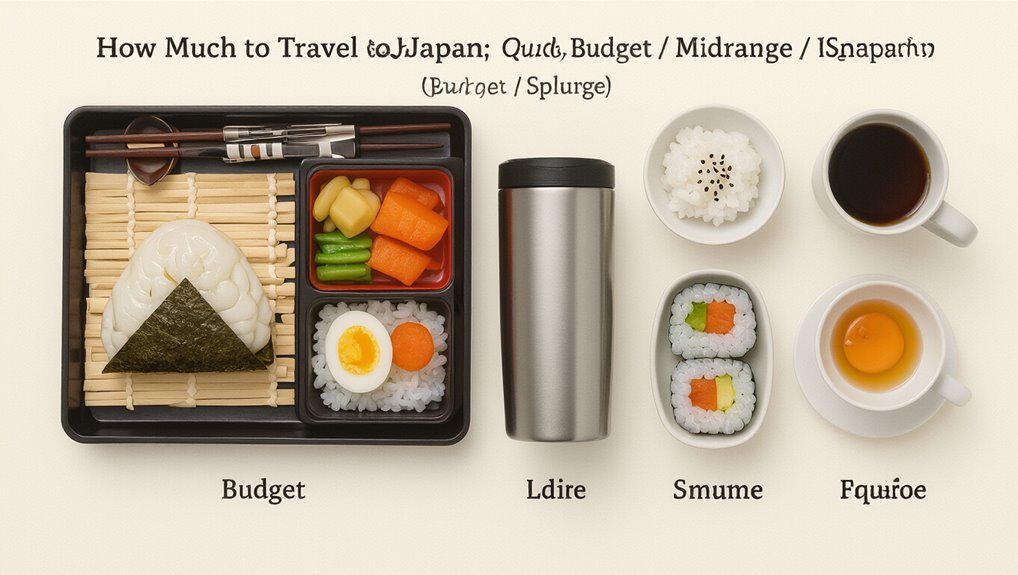
When planning your daily spending in Japan, you’ll want clear benchmarks so you don’t over- or under-budget; here’s a concise snapshot of typical per-person costs for budget, midrange, and splurge travelers.
You’ll pay roughly ¥5,000–8,000 on a tight budget (hostels, cheap eats, local transit),
¥12,000–25,000 midrange (comfortable hotels, varied dining, some attractions),
and ¥40,000+ splurge (luxury stays, fine dining, private tours).
How Trip Length (7/10/14 Days) Changes Total Cost
Trip length directly multiplies your daily budget, so a 7-, 10- or 14-day itinerary quickly shifts you between budget tiers: expect to spend roughly 7×, 10×, or 14× your chosen daily amount, plus a bit extra for one-off costs like travel insurance, the Japan Rail Pass, and occasional splurges that tend to cluster on longer trips.
| Days | Extra costs |
|---|---|
| 7 | low |
| 10 | moderate |
Seasonality: When Prices Spike or Drop in Japan
You’ll notice costs jump during peak cherry blossom weeks when hotels and flights sell out fast.
Golden Week also drives sharp price surges across transport and accommodations.
Conversely, winter ski season pushes rates in mountain resorts while off-peak months can offer noticeable discounts.
Peak Cherry Blossom Weeks
Because cherry blossom timing draws huge crowds, prices for flights, hotels, and tours spike sharply during the peak weeks — usually late March to early April in most of Japan, though exact dates shift by region and year.
You’ll pay more unless you book months ahead or travel off-peak.
Consider:
- Book 3–6 months early.
- Use flexible dates.
- Choose regional, later blooms.
Golden Week Surge
Golden Week — a cluster of national holidays in late April and early May — brings one of the sharpest price spikes across Japan as domestic travel surges and hotels, trains, and flights sell out fast.
You’ll pay premiums for accommodation and transport, face limited availability, and see restaurant and attraction queues lengthen; book months ahead or avoid those dates to keep costs down.
Winter Ski Demand
After Golden Week’s spring rush subsides, winter brings a different kind of pressure: ski season, especially from December through February, drives sharp price increases in popular resort areas like Niseko, Hakuba, and Furano.
You’ll pay more for lodging, lessons, and lift tickets; plan early, book packages, or visit shoulder dates to save.
- Book early
- Consider packages
- Use shoulder dates
Cheapest Airports & Routes to Japan (Cost Comparison)
When you’re planning a budget trip to Japan, choosing the right arrival airport and route can cut your airfare by hundreds. Fly into major hubs like Tokyo (NRT/HND), Osaka (KIX), or Fukuoka for more direct, cheaper options.
Look for flights via Seoul, Taipei, or Hong Kong, use low-cost carriers, and compare layover versus direct fares to find the best balance of price and travel time.
How Airfare Affects Your Overall Japan Budget
Because airfare usually takes the biggest slice of your travel budget, choosing flights wisely shapes everything else you’ll afford in Japan—from accommodation and rail passes to daily meals and activities.
Prioritize timing and routes to stretch funds. Consider these trade-offs:
- Cheaper flights = less for extras.
- Longer connections = potential savings.
- Premium fares = more daily comfort.
Japan Accommodation Costs by City & Style
Although prices vary widely, where you stay in Japan and what style of lodging you pick will largely determine your daily budget.
Choosing between capsule hotels, business hotels, ryokan, or Airbnbs changes costs more than tiny differences in train fares.
Your choice of capsule, business hotel, ryokan, or Airbnb affects costs far more than small train fare differences.
Tokyo and Kyoto command higher rates; regional cities are cheaper.
Capsule and business hotels cut costs, ryokan add splurge fees, and location impacts nightly rates considerably.
Choosing: Hotel vs Hostel vs Airbnb in Japan
Accommodation type often makes a bigger dent in your budget than which neighborhood you pick, so choosing between hotels, hostels, and Airbnbs comes down to the experience and costs you want.
Decide by priorities:
- Hotels: comfort, privacy, predictable pricing.
- Hostels: cheapest, social, shared facilities.
- Airbnbs: space, local feel, variable rules and fees.
Choose what matches budget and vibe.
How to Find & Book Cheap Japan Accommodation
Looking for a cheap place to stay in Japan? Use comparison sites, book early, stay near train lines without central locations, and consider business hotels or capsule stays. Check reviews, refundable rates, and weekday stays for lower prices. Negotiate longer stays on Airbnb or guesthouses.
| Tip | Why it helps |
|---|---|
| Compare sites | Find best rates |
| Book early | Lower prices |
| Weekdays | Cheaper stays |
| Long stays | Negotiate discount |
Japan Rail Pass: Cost and When It Pays Off
If you’re planning long-distance travel between cities like Tokyo, Kyoto, and Osaka, the Japan Rail Pass can save you money.
I’ll break down the pass costs (7-, 14-, 21-day options and ordinary vs. green cars) and compare them to buying individual shinkansen and limited express tickets.
Then you’ll see exactly when the pass pays off based on your itinerary.
When It Pays
Because the Japan Rail Pass covers almost all long-distance shinkansen and many regional trains, it pays off when you plan several long intercity hops over a short period—typically three to seven days—rather than staying in one region.
You’ll save when you:
- Chain Tokyo–Kyoto–Osaka within days.
- Add a Hiroshima or Hakone day trip.
- Cross regions quickly on tight schedules.
Cost Breakdown
1 key step in deciding on a Japan Rail Pass is comparing its sticker price to the total cost of the individual tickets you’d buy for your planned trips.
Map your itinerary, list Shinkansen and limited express fares, include local JR lines, and factor seat reservations.
If summed fares exceed the pass price, buy it; otherwise, pay per ride for flexibility and savings.
Alternatives to JR Pass and Regional Passes
While the JR Pass can save you money on long-distance travel, plenty of cost-effective alternatives can fit shorter itineraries or local trips.
While JR Passes help on long hauls, numerous budget-friendly alternatives suit shorter, local, or flexible travel plans.
You should compare options and mix transport types to cut costs:
- Regional private railway passes for targeted areas.
- Highway and overnight buses for cheap intercity travel.
- IC cards and single tickets for flexible, pay-as-you-go local travel.
Tokyo & Osaka: Metro and Bus Costs
Tokyo and Osaka offer extensive metro and bus networks that keep most rides affordable, so you can get around city centers without breaking your budget.
Expect single fares from about ¥180–¥320 depending on distance; day passes and IC cards (Suica, Pasmo, Icoca) save time and small amounts.
Buses cost similarly; use IC cards for convenience and transfer discounts when available.
Intercity Transport: Shinkansen vs Night Bus vs Flights
Because you’ll often need to balance speed, comfort, and cost, choosing between the Shinkansen, night buses, and domestic flights comes down to your priorities: quick but pricier rail, slow but very cheap overnight coaches, or sometimes bargain flights that can beat trains if you book early.
Weigh speed, comfort, and cost: Shinkansen for speed, night buses to save, flights if booked early.
Decide by trip length, sleep needs, and schedule:
- Shinkansen: fast, convenient, higher cost.
- Night bus: saves accommodation, longer travel.
- Flights: cheapest when booked early.
Sample 7‑Day Budget : Tokyo, Kyoto & Osaka
To put those transport choices into numbers, here’s a compact sample budget for a week that sends you from Tokyo to Kyoto to Osaka: it assumes moderate comfort (periodic taxis, midrange meals, some paid attractions), mixes one Shinkansen leg with a night bus option to save a night’s lodging, and shows how booking flights or trains early can shift totals.
| Item | Qty | Cost |
|---|---|---|
| Accommodation | 6 nights | ¥45,000 |
| Transport | Shinkansen+bus | ¥18,000 |
| Food+Activities | per week | ¥25,000 |
Sample 14‑Day Multi‑City Japan Budget
Planning a 14‑day multi‑city trip across Japan means balancing travel time, lodging, and a mix of splurge and save choices so you get variety without overspending.
You’ll allocate days for major cities and smaller towns, juggle JR Pass value versus local trains, and blend guesthouses with one or two ryokans.
- Transport priorities
- Accommodation mix
- Activity budgeting
Daily Food Costs in Japan and Where to Save
When you budget food in Japan, expect to spend roughly ¥2,000–¥5,000 per day depending on how often you eat at convenience stores, noodle shops, or nicer restaurants; mixing cheap staples with occasional splurges keeps costs predictable while letting you enjoy local specialties.
Eat konbini meals, standing ramen, supermarket bento after hours, and gyudon chains to save.
Try local markets for fresh, affordable snacks.
Attraction and Entrance Fees: Typical Costs
You’ll find most temples charge a small entrance fee—usually a few hundred yen—while major sites can cost a bit more.
Museums and galleries typically run from about 300–1,500 yen depending on exhibitions.
Big attractions and theme parks like Tokyo Disneyland or Universal Studios Japan are pricier, often several thousand yen for a day pass.
Typical Temple Entrance Costs
Most temples charge a modest entrance fee—often between ¥300 and ¥600 for popular sites—so you can budget easily for a day’s temple visits.
You’ll find variations: some smaller shrines are free, special halls cost more, and gardens add a surcharge.
Plan per-site, expect cash payments, and allocate spare change.
- Routine: ¥300–¥600
- Premium halls: ¥800–¥1,000
- Free/optional donations
Museums And Gallery Fees
If you like art, history, or pop culture, expect to pay a bit more for museum and gallery entry than for typical temple visits—standard admission usually runs ¥500–¥1,500, with major national museums and special exhibitions reaching ¥2,000–¥3,000 or more.
Discounts for students, seniors, and evening hours are common. Daily pass combos, audio guides, and special exhibits add extra costs, so budget accordingly.
Theme Park And Attraction Prices
Theme parks and major attractions tend to be one of the pricier line items in a Japan trip, with single-day adult tickets commonly ranging from about ¥4,000–¥9,000 for popular parks and ¥1,000–¥3,000 for smaller attractions or specialty experiences.
You’ll budget accordingly; consider passes, combo tickets, and timing to save.
- Buy multi-day or FAST passes
- Use city attraction passes
- Visit off-peak weekdays
Onsen, Cultural Experiences & Guided Tour Prices
When planning your Japan budget, include onsen admission fees, cultural-class rates, and guided-tour costs so you don’t get surprised later; day-entry to public baths usually runs ¥300–¥1,500, while ryokan with private baths or kaiseki meals can push a single overnight to ¥10,000–¥40,000 per person. Balance costs:
| Experience | Typical cost |
|---|---|
| Onsen day | ¥300–¥1,500 |
| Ryokan stay | ¥10,000–¥40,000 |
Shopping, Souvenirs & Japan Tax‑Free Rules
Shopping in Japan can be surprisingly wallet-friendly if you know where to look and how tax-free rules work, so plan what you want before you buy.
Shopping in Japan can be wallet-friendly—plan ahead, know tax-free rules, and shop smart for bargains.
You’ll find bargains at 100-yen shops, local markets, and outlets. Know receipt rules for tax-free refunds and carry your passport.
- Buy small: gifts, snacks.
- Seek tax-free signs.
- Compare prices.
Nightlife Costs: What to Expect
When you go out in Japan, expect club cover charges to range from modest to steep depending on the venue and night.
Drinks can be pricey, especially in big-city clubs and upscale bars, so factor in several thousand yen per person.
Also budget for late-night taxis since trains stop running around midnight in many places.
Club Cover Charges
Expect to pay anywhere from ¥1,000 to ¥3,500 for cover charges at most Tokyo and Osaka clubs, with prices rising for special DJs, weekend nights, or themed events.
You’ll often get entry, basic seating, and occasional promos included. Plan ahead and buy presale to save.
- Weeknights: lower, ¥1,000–¥2,000
- Weekends: ¥2,000–¥3,500
- Special events: higher, variable
Drinks And Taxis
A typical night out in Tokyo or Osaka will cost you more for drinks than cover, with a beer or highball running about ¥600–¥900 and cocktails usually ¥800–¥1,500 at midrange bars; upscale venues and hotel bars can push cocktails to ¥2,000–¥3,000. You’ll pay taxis heavily late; short rides ¥600–¥1,200, longer ones ¥3,000+. Plan accordingly.
| Emotion | Cost |
|---|---|
| Delight | ¥600–¥1,500 |
| Caution | ¥3,000+ |
Mobile Data, SIM Cards & Pocket Wi‑Fi Pricing
You’ll find several affordable ways to stay connected in Japan: prepaid SIMs, eSIMs, and pocket Wi‑Fi rentals each suit different trip lengths and usage.
Choose based on data needs, device compatibility, and pickup convenience.
- Prepaid SIMs: cheap, limited data, good for short trips.
- eSIMs: instant activation, flexible plans, ideal for multi-country trips.
- Pocket Wi‑Fi: shared data, best for groups.
Travel Insurance: Coverage Levels and Typical Premiums
If you’re planning a trip to Japan, get travel insurance that matches your needs—basic medical-only plans cover emergency treatment and evacuation, mid-tier policies add trip interruption/cancellation and baggage loss, and extensive plans include higher medical limits, adventure-sport coverage, and generous cancellation protection; premiums typically run from about 1–3% of your total trip cost for basic plans to 4–8% for extensive coverage, varying by age, trip length, destination, and declared activities.
| Level | Coverage | Typical Premium |
|---|---|---|
| Basic | Medical, evacuation | 1–3% |
| Mid | Cancellation, baggage, higher limits | 2–5% |
| Extensive | Adventure sports, high limits | 4–8% |
Cash Habits, Tipping, and Payment Methods in Japan
Although Japan is increasingly card-friendly in cities, cash still rules many everyday transactions, so plan to carry enough yen for small shops, local trains, temples, and rural areas.
Although cities accept cards more, carry yen for small shops, local trains, temples, and rural areas.
You won’t tip; service is included and offering money can offend. Use cards where accepted, but keep cash handy.
- ATMs: 7-Eleven/post office reliable
- IC cards: convenient for transit
- Cash-only stalls: common in markets
Currency Exchange Tips to Avoid Fees
Bring a no-fee debit or credit card to avoid ATM and foreign transaction charges when you pay or withdraw yen.
When you do need cash, exchange only what you’ll use soon and compare rates between banks and airport kiosks to get the best deal.
That way you’ll cut unnecessary fees and keep more of your travel budget for experiences.
Use No-Fee Cards
When you pick a no-fee travel card, you’ll stop paying hidden charges on ATM withdrawals and foreign transactions, keeping more of your budget for food and experiences.
Choose cards with no FX markup, notify your bank before travel, and carry one backup.
- Compare annual fees and ATM limits.
- Confirm chip-and-PIN support.
- Prioritize widespread issuer acceptance.
Optimize Cash Exchanges
No-fee cards cut many costs, but you’ll still need some yen on hand for smaller shops, trains, or markets that don’t take cards.
Exchange a small amount at home to avoid poor airport rates, withdraw larger sums from ATMs at 7-Eleven or Japan Post for competitive rates, and avoid hotel or tourist bureau exchanges.
Track fees and use card-friendly banks.
Budgeting for Emergencies and Unexpected Costs
Although you’ll plan carefully, unexpected expenses happen, so set aside an emergency fund before you go—aim for 10–20% of your total trip budget or at least ¥30,000–¥50,000 to cover things like medical visits, delayed travel, or last-minute changes.
Follow these quick steps:
- Keep funds accessible (cash + card).
- Buy basic travel insurance.
- Track receipts and adjust spending.
Money‑Saving Hacks: Transport, Dining, Attraction Tips
Having an emergency cushion lets you be bolder with everyday choices—now let’s cut costs on transport, food, and sights so your fund lasts longer.
Use regional rail passes, prepaid IC cards, and overnight buses.
Grab regional rail passes, top up a prepaid IC card, and save nights with overnight buses.
Eat at konbini, depachika, and standing ramen shops.
Book timed-entry attractions, free museums, and city tourist passes.
Compare online discounts and buy combo tickets in advance.
Experiences Worth Splurging On in Japan
When you plan splurges in Japan, prioritize a kaiseki multi-course meal for its seasonal precision and theatrical presentation.
Book a private onsen rental so you can relax without interruptions and enjoy the ritual of bathing in a serene setting.
These two experiences deliver lasting memories that justify the extra cost.
Kaiseki Multi-Course Meals
If you’re splurging on just one culinary experience in Japan, make it a kaiseki meal: this refined multi-course tradition treats each dish as a seasonal work of art, balancing flavor, texture, and presentation to create a complete, memorable journey.
You’ll savor subtle courses, attentive service, and local ingredients.
Consider priorities:
- Seasonal ingredients
- Chef’s rhythm
- Ambience and plating
Private Onsen Rentals
Although quiet ryokans and bustling resorts both offer hot springs, booking a private onsen lets you soak without crowds, enjoy complete privacy, and tailor the experience to your pace—perfect for couples, families, or anyone craving a peaceful, restorative splurge.
You’ll reserve a room or outdoor tub, often with kimono service and seasonal views. Expect higher nightly rates but unmatched relaxation and intimate cultural immersion.
Cost Differences: Solo, Couple, Family & Group Trips
Traveling solo, as a couple, with kids, or in a group changes where your money goes and how much you’ll pay per person—sometimes dramatically.
Traveling solo, as a couple, with kids, or in a group reshapes costs and per‑person spending—sometimes dramatically.
You’ll notice: shared lodging cuts per‑person cost; families need bigger rooms and extra meals; groups can access discounts but face coordination costs.
Consider these priorities:
- Accommodation split vs. family-size needs
- Meal and attraction per‑person scaling
- Transport and logistical overhead
Build a Day‑By‑Day Japan Spending Plan
Start by listing your expected daily accommodation costs so you know your baseline.
Then map out transportation and transit expenses—passes, trains, taxis—by day to avoid surprises.
Finally, assign budgets for meals and activities each day so you can tweak plans without breaking the overall budget.
Daily Accommodation Costs
Because where you sleep will shape both your daily budget and your itinerary choices, plan accommodation costs right after you map out destinations for each day.
Estimate nightly rates per area, factor in cleaning fees and taxes, and decide tradeoffs between location and comfort.
- Budget hostels for savings
- Midrange business hotels for balance
- Ryokan or upscale hotels for experience
Transportation And Transit
1 key element that will make or break your daily Japan budget is how you move between cities and around town: choose between shinkansen passes, regional trains, local subways, buses, taxis, ride‑shares, and occasional flights based on distance, time, and cost.
Plan multi‑day passes for long hops, buy IC cards for urban travel, and factor in last‑mile taxis or late trains to avoid expensive surprises.
Meals And Activities
- Prioritize must-see paid sites
- Use bento/conbini saves
- Reserve one splurge meal
Final Budget Checklist Before You Book
Before you hit book, run a final check on five essentials: confirm total trip cost (flights, accommodation, transport, activities, and a buffer), verify cancellation and change fees, guarantee your passport and any visas meet entry requirements, compare payment options and foreign transaction fees, and double-check travel insurance covers medical evacuation and COVID-related interruptions.
Then itemize daily spend, prebook key tickets, set alerts for price drops, and save receipts.
Frequently Asked Questions
How Much Should I Tip Tour Guides or Restaurant Staff in Japan?
You generally shouldn’t tip in Japan; staff pride themselves on service included. If you really want to show thanks, give a small gift or polite cash in an envelope to tour guides, and they’ll accept discreetly.
Are Credit Cards Widely Accepted Outside Major Cities?
Not really — outside major cities, you’ll often find cash-only shops, small ryokans, rural restaurants and some trains require cash; carry enough yen, use ATMs at post offices or 7-Eleven, and plan for limited card acceptance.
Can I Use Foreign Bank Cards at ATMS in Convenience Stores?
Yes — you can usually use foreign bank cards at convenience store ATMs like 7‑Eleven and Lawson; they accept major networks (Visa, Mastercard, plus Cirrus/PLUS), though fees, daily limits, and occasional maintenance can block access.
Is It Cheaper to Buy Attraction Tickets Online or at the Gate?
It’s usually cheaper and smarter to buy attraction tickets online in advance, since you’ll get discounts, skip lines, and lock availability; gate prices can be higher and limited, so you’ll save time and often money by booking ahead.
Do Regional Rail Passes Cover Private Railway Lines?
Mostly no — regional JR passes usually won’t cover private railway lines, so you’ll need separate tickets or IC cards; check specific pass rules and maps since a few regional agreements can include select private operators on limited routes.
Conclusion
You’ve got the tools to plan a Japan trip that fits your wallet and your wishes. Decide your style—budget, midrange, or splurge—then map that daily rate across your chosen length, season, and who you’re traveling with. Prioritize one or two splurges (ryokan, sushi omakase, a bullet‑train pass), book flights early, and use the final checklist before you book. With a clear spending plan, you’ll enjoy Japan without surprises. Safe travels!