Is Cancun Safe to Travel Latest Safety Insights
You can safely visit Cancún now if you stick to tourist areas and use common‑sense precautions. Police and visible security patrols keep the Hotel Zone and major resorts relatively low‑risk, though crime varies year to year and is concentrated in certain non‑tourist neighborhoods. Use official taxis or apps, book tours through reputable operators, avoid flaunting valuables, and check recent municipal crime maps and travel alerts. Keep basic safety habits and you’ll enjoy a secure trip — more practical tips follow.
Is Cancún Safe Right Now? Quick Verdict
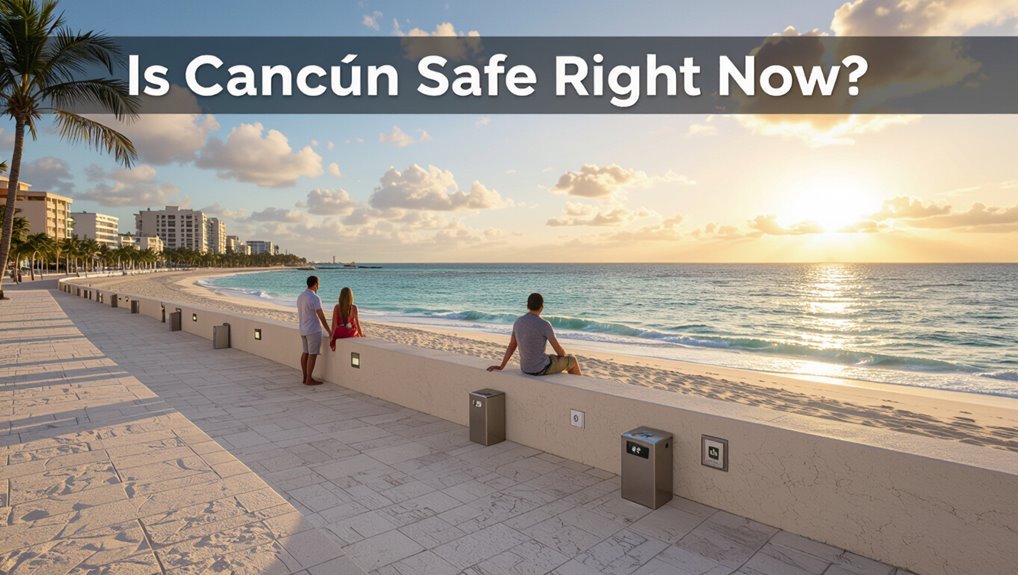
Wondering if Cancún is safe right now?
You can generally expect safe, tourist-focused areas with visible security, responsive hotels, and active police patrols.
Use normal travel precautions: avoid risky neighborhoods, don’t flaunt valuables, stay aware at night, and follow local advisories.
With common-sense behavior and updated travel alerts, you’ll keep risks low and enjoy your trip.
Cancún Crime Trends: Latest Data
Although headlines sometimes make violence in Quintana Roo sound widespread, recent official statistics and local reports show crime in Cancún is concentrated in specific non-tourist neighborhoods and has fluctuated year to year.
You’ll find most tourist zones remain relatively low-risk when you follow common-sense precautions.
- Check recent municipal crime maps.
- Note year-to-year shifts in data.
- Use official sources and local advisories.
Safest Neighborhoods and Hotel Zones
When you’re choosing where to stay, the Hotel Zone generally offers the most secure, tourist-focused environment with frequent police patrols and resort security.
If you explore downtown (El Centro), you’ll find more local color but should be mindful of which blocks are better lit and busier at night.
For a quieter, higher-end experience, luxury resort neighborhoods tend to prioritize gated access and stricter safety measures.
Hotel Zone Safety Overview
If you stick to the main Hotel Zone and a few well-known neighborhoods, you’ll find Cancun’s safest areas are easy to navigate and well-patrolled by both private security and municipal police.
You’ll feel secure walking beaches and boulevards; stay aware at night.
Key tips:
- Use well-lit, populated routes.
- Rely on hotel shuttles/taxis.
- Keep valuables concealed.
Downtown (El Centro) Considerations
While downtown Cancun (El Centro) feels more local than the Hotel Zone, you’ll still find safe, convenient neighborhoods and plenty of traveler-friendly hotels near main avenues like Tulum and Yaxchilán. Walk busy streets, use registered taxis, and pick accommodations near markets or plazas for convenience.
| Area | Perks | Tips |
|---|---|---|
| Centro | Affordable | Stay lit streets |
| Puerto Juárez | Ferries | Use official taxis |
| La Isla | Malls | Keep belongings secure |
Luxury Resort Neighborhoods
Beyond El Centro’s local vibe, most visitors head to the luxury resort neighborhoods where safety, service, and beachfront access are prioritized.
You’ll find gated resorts, regular security patrols, and tourist-focused police. Stick to hotel zones, use authorized transport, and avoid poorly lit streets after dark.
- Hotel Zone beachfronts
- Isla Mujeres ferries and docks
- Punta Nizuc resorts and marinas
Common Scams Targeting Tourists : How to Spot Them
Watch for taxi drivers who refuse meters or quote vague flat rates—you’re likely facing an overcharge scheme and should insist on the meter or use app-based services.
Be skeptical of overly enthusiastic tour vendors offering impossibly cheap excursions; they might be selling fake tours or shuttling you to subpar operators.
If something feels rushed or too good to be true, step back, verify credentials, and compare prices before you pay.
Taxi Overcharge Schemes
Ever wondered why your taxi fare suddenly seems much higher than expected? You can avoid common overcharge schemes by staying alert, asking for a meter, and confirming prices ahead.
Watch for detours, long routes, or claims of broken meters.
- Ask meter on start.
- Agree price before boarding for flat fares.
- Use licensed apps or official stands.
Fake Tour Vendors
After dealing with taxi overcharges, you’ll still need to watch for fake tour vendors who target newcomers looking for a deal.
They’ll approach you with too-good-to-be-true prices, unbranded booths, or urgent “limited” spots. Always verify licenses, read recent reviews, ask for company names, and avoid cash-only offers.
Book through official operators or your hotel to reduce risk.
Violent vs Petty Crime: Real Traveler Risks
How likely are you to face danger in Cancún — a mugging on the street or something more serious?
You’ll mostly encounter petty crime: pickpocketing, bag snatching, occasional scams.
Violent incidents are rarer but not impossible; stay aware, avoid isolated areas at night, and keep valuables secured.
- Petty: common
- Violent: uncommon
- Prevention: proactive
What Resorts and Hotels Do to Keep Guests Safe
While you’re on property, resorts and hotels take security seriously: they use gated entrances, uniformed guards, CCTV coverage, and key-card access to restrict guest-only areas. Staff are trained to spot suspicious activity and respond quickly.
You’ll also find well-lit grounds, escorted beach hours, in-room safes, emergency protocols, and clear staff communication so you can report concerns and get rapid assistance.
Airport Safety: Arrival, Luggage, and Customs
When you land in Cancún, stay alert and move with purpose through the airport: follow official signage, keep your passport and documents handy, and watch your belongings as you queue for immigration and baggage claim.
Be polite, expect checks, and use official counters.
Be courteous, anticipate inspections, and always handle transactions at official counters for a smooth arrival.
- Track luggage and report losses immediately.
- Declare valuables honestly.
- Keep photocopies of documents separado from originals.
Taxis, Shuttles, Buses : Getting Around Safely
When you leave the airport, stick with official airport taxis or pre-booked transfers to avoid scams.
Shared shuttle services are a cost-effective option if you confirm the company and pickup details in advance.
If you’re comfortable with local transit, the ADO and R1/R2 buses are safe and cheap ways to get around, but keep an eye on your belongings.
Official Airport Taxis
- Confirm the official badge and meter or posted fare.
- Note the taxi number and take a photo of the receipt.
- Pay in pesos when possible to avoid poor exchange rates.
Shared Shuttle Services
Confirm pickup points, estimated travel time, and luggage policies before booking.
Share rides only with companies that use licensed drivers, display identification, and provide receipts or booking confirmations for your safety and recourse.
Local Bus Safety
Although local buses in Cancun are affordable and frequent, you should still take a few simple precautions to stay safe and avoid hassles.
Keep belongings close, use main routes, and avoid empty late-night stops. Follow local guidance and trust your instincts.
- Buy tickets or exact fare before boarding.
- Sit near the driver or other passengers.
- Watch bags and electronics.
Car Rentals, Driving Risks, and Parking Tips
When you rent a car in Cancún, expect more freedom to explore but also a few extra risks you won’t face at home; stay alert for aggressive local driving, poorly marked side roads, and police checkpoints.
Use reputable agencies, inspect insurance limits, and photograph damage.
Park in well-lit, guarded lots, lock valuables out of sight, avoid isolated streets at night, and obey local traffic laws.
Beach Safety: Rip Currents, Flags, Lifeguards
Because Cancún’s beaches can change quickly with currents and weather, you should always watch the flag system, swim near lifeguards, and know how to spot rip currents before you enter the water.
Because Cancún’s beaches shift quickly, always watch flags, stay by lifeguards, and learn to spot rip currents.
Follow simple steps to stay safe:
- Swim between flags and heed lifeguard instructions.
- If caught in a rip, stay calm and swim parallel to shore.
- Avoid swimming alone or at night.
Water Activities: Checking Tour-Operator Safety
Before you book any water activity in Cancun, check that the operator holds recognized safety certifications and follows local regulations.
Ask about routine equipment maintenance checks and when gear was last serviced. If they can’t provide proof, choose a different company.
Operator Safety Certifications
If you’re planning water activities in Cancún, confirm that the tour operator holds current safety certifications and licenses for the specific activity—diving, snorkeling, jet-skiing, or boat excursions—so you’re not relying on assumptions.
Ask to see proof, verify issuing bodies, and check insurance.
- Certification validity dates
- Instructor qualifications
- Emergency response training and permits
Equipment Maintenance Checks
Licenses and instructor credentials only tell part of the safety story; you should also inspect how the operator maintains their equipment.
Ask when boats, life vests, snorkel gear and jetskis were last serviced, look for corrosion, frayed lines or patched inflatables, and confirm routine logs.
If staff welcome questions and show documentation, you’ll have more confidence in the gear and your safety.
COVID-19 and Current Health Guidance in Cancún
Although COVID-19 risks have eased compared with peak pandemic months, you should still follow local health guidance in Cancún—carry masks for crowded indoor spaces, check for vaccination or testing requirements from your airline or tour operator, and stay updated on any travel advisories or entry rules that can change quickly.
Though risks have eased, follow local health guidance in Cancún—mask indoors, verify travel rules, and stay updated.
- Monitor local health sites for outbreaks.
- Pack rapid tests for peace of mind.
- Isolate and seek care if symptoms appear.
Mosquito-Borne Illness and Food Safety Tips
When you’re in Cancún, protect yourself from mosquito-borne illnesses like dengue, Zika, and chikungunya by using EPA-registered repellents, wearing long sleeves in dawn/dusk hours, and choosing accommodations with screened windows or air conditioning; these simple steps cut your risk greatly.
Also drink bottled water, avoid ice in street drinks, eat at busy clean eateries, wash hands before eating, and peel fruit.
Emergency Contacts: Hospitals, Police, Embassy Help
If you face a medical emergency, crime, or need consular assistance, act quickly: call Mexico’s emergency number 911 for police, fire, or ambulance, and contact your country’s embassy or consulate for help with lost passports, legal issues, or evacuation.
Keep local hospital and police station numbers handy and follow official instructions.
Keep local hospital and police numbers accessible and follow official guidance promptly.
- Note nearest hospital addresses.
- Save embassy phone/email.
- Share location with trusted contacts.
Money and Passport Security: Cards, Cash, Copies
Worried about losing your cash or cards in Cancun?
Keep cards separate: carry one in a money belt, another in a secure bag. Use RFID-blocking sleeves and notify banks of travel.
Carry limited cash for taxis and tips; stash backups in hotel safe.
Photocopy or scan passport and cards to email yourself; keep originals locked unless required for ID or immigration.
Handling Confrontations and Reporting Crimes
If you face a tense situation, stay calm and assess your safety before reacting.
Move to a safe location, get help from bystanders or hotel staff if needed, and avoid escalating the confrontation.
If a crime occurs, report it to local police and your embassy or consulate as soon as possible, keeping any evidence or witness info handy.
Stay Calm And Assess
What should you do when a situation feels tense? Stay calm, breathe, and scan for exits or safe people.
Assess risks quickly: is there immediate danger, can you de-escalate, or should you withdraw? Trust instincts, keep phone ready, and note details for later.
If the threat persists, prioritize safety and move to a public area to get help.
- Identify danger
- De-escalate
- Exit safely
How To Report
Once you’re safe and clear-headed, report incidents promptly so authorities can respond and records can be made. You’ll give clear details, ID witnesses, preserve evidence, and request report numbers. Follow up with insurance and consular help if needed. Use local emergency numbers and tourist police; stay cooperative and get documentation for future claims.
| What | Who | Action |
|---|---|---|
| Theft | Police | File report |
| Assault | Tourist police | Seek medical |
| Fraud | Embassy | Notify bank |
| Harassment | Hotel security | Document |
Solo and Women Travelers: Practical Safety Tips
Worried about exploring Cancun alone? You can stay safe by planning, staying aware, and trusting instincts.
- Share your itinerary with someone and use location sharing.
- Use registered taxis or rideshares, avoid hitchhiking.
- Keep valuables discreet, carry a copy of documents, and know local emergency numbers.
Stay confident, set boundaries, and choose well-reviewed accommodations in populated areas.
Nightlife Safety: Clubs, Alcohol, Getting Home
When you head out to Cancun’s clubs and bars, prioritize getting there and home safely by planning your transport, watching your drink, and staying with people you trust. Stay in well-lit areas, use licensed taxis or apps, sip slowly, refuse unattended drinks, and keep ID and emergency contacts handy.
| Scene | Action |
|---|---|
| Club entrance | Check exits |
| Bar | Guard your drink |
| Street at night | Call a verified ride |
Packing Checklist and Decision Checklist for Your Trip
After you’ve planned safe nights out and sorted reliable rides home, pack smart so your days on the beach and evenings in town go smoothly.
Bring ID, cards, minimal cash, copies of documents. Choose a crossbody bag and waterproof phone case. Decide what to leave locked at your hotel versus carry with you.
Carry ID, cards, minimal cash, and document copies. Use a crossbody and waterproof phone case; lock the rest.
- Essentials: ID, meds, cards
- Safety: lockable luggage
- Extras: sun care, charger
Frequently Asked Questions
Do I Need Special Travel Insurance for Cancún-Specific Risks?
Yes — you should get travel insurance covering medical evacuation, hurricane/cancellation, and theft; don’t assume standard policies suffice. Compare riders for tropical storms, water-activity coverage, and emergency transport to guarantee full protection while in Cancún.
Are There Areas Near Cancún Tourists Should Avoid Visiting Day Trips?
Yes — you should avoid some outskirts and unfamiliar neighborhoods, especially after dark; stick to tourist zones, vetted excursions, Isla Mujeres, and popular cenotes, use reputable transport, stay alert, and follow local advice to minimize risks.
How Safe Are Eco-Parks and Cenote Tours Outside Hotel Zones?
They’re generally safe if you go with reputable operators, follow guides’ instructions, wear life vests, and avoid risky solo exploration; you’ll reduce hazards by checking reviews, confirming permits, and asking about emergency procedures before booking.
Can I Use Ride-Share Apps Reliably in the Cancún Metro Area?
Yes — you can usually rely on ride-share apps in the Cancún metro area for convenient, affordable trips; however, expect occasional coverage gaps, surge pricing, and verify driver details, avoid late-night solo rides in unfamiliar neighborhoods.
Are ATMS in Cancún Safe to Use at Night?
You can, but don’t relax: use ATMs inside banks, hotels, or malls, avoid isolated machines at night, shield your PIN, carry only needed cash, and consider using cards or hotel safes to minimize risk during late withdrawals.
Conclusion
Right now, Cancún is generally safe if you stay alert, pick reputable hotels in the hotel zone or gated neighborhoods, and follow basic precautions. You should avoid risky areas at night, use authorized taxis or ride-hailing apps, and keep valuables out of sight. If you’re targeted, stay calm, prioritize your safety, and report incidents to local authorities and your embassy. With common-sense steps, you can enjoy Cancún while minimizing risks.