How Many Cups Are in a 4lb Bag of Sugar Full Guide
You’ll get about 9 cups of granulated sugar from a standard 4‑lb bag, so you can plan recipes and storage without guessing. That estimate comes from 1 lb ≈ 2.25 cups (based on granulated sugar’s density), though packed brown sugar, powdered sugar, and moisture can change the volume. Weighing ingredients is more accurate for baking, but cup measures work fine for most cooking. Keep your sugar airtight and cool, and you’ll find tips and conversions ahead.
Who This Guide Is For and What It Covers
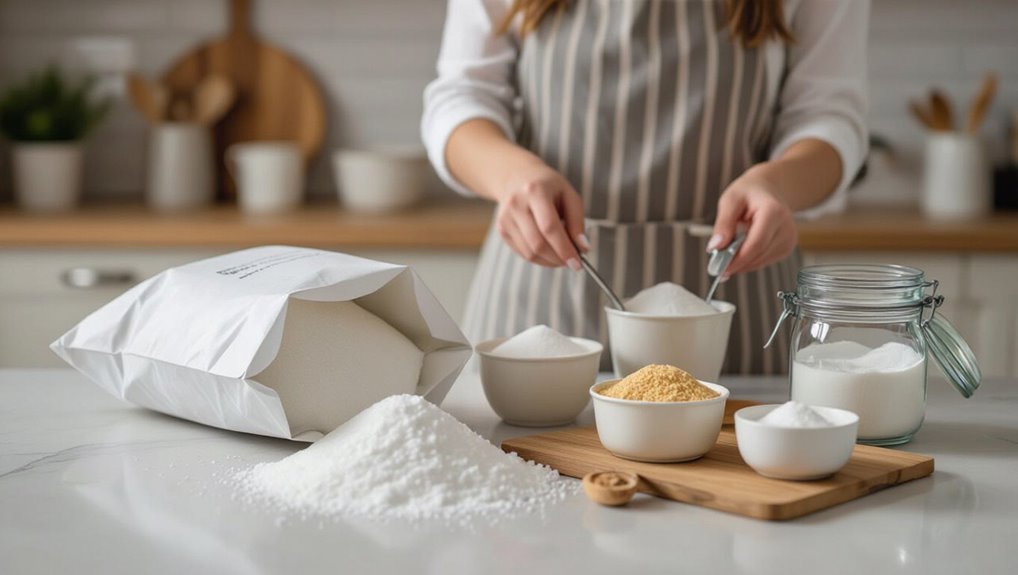
This guide is for home cooks, bakers, and anyone who needs a quick, reliable conversion from pounds of sugar to cups—whether you’re following a recipe, scaling servings, or stocking pantry staples.
You’ll get clear explanations of density-based conversions, common sugar types, practical measuring tips, and how to adjust recipes.
You’ll learn to convert confidently without overcomplicating measurements or tools.
Quick Answer: Cups in a 4‑lb Bag of Granulated Sugar
A 4‑pound bag of granulated sugar contains about 9 cups when measured by the common US cup. You can plan recipes and storage quickly: it’s roughly enough for several batches of cookies or a few cakes. Use this as a handy estimate when shopping or prepping.
| Item | Cups | Typical Use |
|---|---|---|
| Sugar bag | 9 | Multiple recipes |
| Cookies | 2–3 | Batch |
| Cake | 3–4 | Single cake |
| Storage jar | 1–4 | Portioning |
How We Convert Pounds to Cups
To convert pounds to cups, you’ll use a simple pounds-to-cups formula based on the ingredient’s density.
Because granulated sugar has a specific density, the formula tells you how many cups a given weight occupies.
Next, we’ll apply that conversion to show exactly how many cups are in a 4 lb bag.
Pounds-To-Cups Formula
Converting pounds to cups comes down to using the ingredient’s density and a simple math step: multiply the weight in pounds by 16 (to get ounces), then divide by the number of ounces per cup for that ingredient.
For sugar, you’d use its specific ounces-per-cup value; so take pounds × 16, then ÷ sugar’s ounces-per-cup to get the cup count.
Density And Measurement
Four simple measurements—weight, volume, density, and the standard cup size—determine how we convert pounds of sugar into cups.
Knowing how they interact helps you make accurate kitchen conversions.
Sugar’s density (about 7.05 ounces per cup for granulated) links pounds to cups: divide pounds by 0.44 (pounds per cup) or multiply by approx. 2.27 to get cups.
Adjust for packing.
Why Weight vs. Volume Matters in Baking
Because ingredients pack differently and measuring cups can lie, weighing your baking ingredients gives you far more consistent results than relying on volume. You’ll avoid dense cakes or dry cookies by using a scale, replicate recipes exactly, and adjust reliably for altitude or humidity. Use grams for precision and note that weight-based recipes translate cleanly across kitchens.
| Ingredient | Volume issue | Benefit of weight |
|---|---|---|
| Flour | Packs | Consistency |
| Sugar | Settles | Accuracy |
| Butter | Temperature | Repeatability |
Standard Conversion: Cups Per Pound (Granulated)
When you switch from volume to weight, knowing a simple cups-per‑pound rule for granulated sugar makes measuring faster and more reliable.
You’ll use the standard: 1 pound of granulated sugar equals about 2 1/4 cups.
That conversion helps you scale recipes, convert packaged weights to cup measurements, and guarantees consistent texture and sweetness without weighing every ingredient.
Cups in 4 Lb of Granulated Sugar : Step‑By‑Step
Start by remembering the simple conversion you already learned: 1 pound of granulated sugar equals about 2 1/4 cups, so a 4 lb bag contains roughly 9 cups of sugar—multiply the per‑pound cup value by four to get this result.
To confirm, multiply 2.25 cups × 4 = 9 cups.
Measure with a standard dry measuring cup for recipes and note fractions as needed.
How Packing and Settling Change Cup Measurements
One simple change in how you fill the cup can shift the amount of sugar by a noticeable fraction: packed sugar—pressed down or compacted—holds more by volume than loose, aerated sugar.
Sugar that’s settled during storage can measure lighter or denser depending on agitation. Tap, shake, or press results vary; be consistent with one method so recipes stay reliable.
Measure Granulated Sugar Correctly With Cups
When you measure granulated sugar with cups, know the rough cup-to-gram conversions so recipes stay consistent.
Use a spoon to scoop into the cup and then level it off rather than plunging the cup into the bag, because scooping vs leveling makes a big difference.
Remember that packing and settling can change volume, so tap gently or fluff the sugar before measuring.
Cup-To-Gram Conversion
Wondering how to convert cups of granulated sugar to grams for accurate recipes? You’ll use 1 cup ≈ 200 grams for granulated sugar; scale up or down and weigh for precision. Use this quick chart to match common measurements.
| Cups | Grams | Notes |
|---|---|---|
| 1/4 | 50 | Small amounts |
| 1/2 | 100 | |
| 1 | 200 | Standard cup |
Scooping Vs Leveling
Scooping straight from the bag packs extra sugar into your cup, so you’ll often end up with more than the recipe calls for; instead, spoon sugar into the cup and level it off with a flat edge for consistent results.
Use a dry measuring cup, fill by spooning, then scrape across the top to remove excess. That simple technique keeps your measurements accurate.
Packing And Settling
Leveling off after spooning helps, but you also need to watch for packing and settling, which change how much sugar actually fits in a cup.
When sugar packs—after tapping or compressing—you’ll get more per cup. Settling from pouring or transport reduces apparent volume.
Scoop gently, avoid packing, and re-level before measuring to keep recipes consistent and results predictable.
Measure Granulated Sugar by Weight With a Kitchen Scale
Using a kitchen scale is the quickest way to measure granulated sugar accurately, and it takes just a few simple steps.
Tare a bowl, add sugar until the display shows your target weight, and note the measurement.
You’ll get consistent results for recipes and portioning, avoid packing variations, and save time compared to cup measurements—especially when precision matters.
Converting Grams, Ounces, Pounds, and Cups for Sugar
Converting between grams, ounces, pounds, and cups for sugar helps you follow recipes and scale batches without guesswork—start by remembering that 1 cup of granulated sugar weighs about 200 grams (7.05 ounces), so you can convert up or down from that baseline to get precise amounts whether a recipe lists weight or volume.
Multiply or divide: 1 lb ≈ 453.6 g ≈ 2.27 cups.
Cups in a 4‑lb Bag of Powdered (Confectioners’) Sugar
A 4‑pound bag of powdered (confectioners’) sugar contains about 14 to 15 cups, since powdered sugar is much lighter and more aerated than granulated sugar—one cup weighs roughly 120 to 128 grams (about 4.2 to 4.5 ounces).
Dividing 4 lb (1,814 g) gives that range depending on how tightly you pack or sift it.
You’ll measure around 14–15 cups; sifting reduces volume slightly.
Cups in a 4‑lb Bag of Brown Sugar : Packed vs. Unpacked
When you scoop brown sugar, how you pack it makes a big difference: a 4‑lb bag yields about 9 to 10 cups when firmly packed but closer to 11 to 12 cups if lightly spooned or loose.
Measure consistently for recipes: press brown sugar into the cup for packed measurements, or spoon and level for unpacked.
Note slight variations by moisture and clumping.
Why Brown Sugar Cup Counts Differ From Granulated Sugar
You’ll notice brown sugar measures differently because its higher moisture and molasses content makes it stickier and denser than granulated sugar.
How tightly you pack it changes the cup count, since trapped air in granulated sugar gives a lighter volume.
Those differences in moisture, packing, and composition are why recipes sometimes call for packed brown sugar or specify weight instead.
Moisture Content Difference
Because brown sugar keeps more moisture than granulated sugar, a packed cup of brown weighs noticeably more than a cup of white.
You’ll find that molasses binds water to crystals, increasing mass per volume. That extra moisture alters how many cups you get from a pound, so when you convert weight to cups, account for brown sugar’s higher water content to avoid underestimating volume.
Packing And Density
One key reason cup counts differ is how you pack the sugar: brown sugar is soft and clumps, so you compress it into a cup, while granulated sugar flows and settles loosely.
You’ll notice packing changes volume and recipe results. Consider:
- Pressed brown sugar yields fewer cups per pound
- Fluffed granulated sugar yields more
- Measuring technique matters
- Use consistent packing for accuracy
Ingredient Composition Effects
While brown and granulated sugar may look similar, their compositions change how much fits in a cup: brown sugar contains molasses that adds moisture and stickiness, so it packs denser.
Granulated sugar’s dry, crystalline grains stay looser and trap more air. You’ll measure fewer cups from brown sugar per pound; adjusting recipes avoids overly sweet, dense results.
Adjusting Recipes When Swapping Sugar Types
When swapping granulated white sugar for a different type—like brown, raw, or confectioners’—you’ll need to adjust for texture, moisture, and sweetness so your recipe keeps the right structure and flavor.
You should:
- Reduce liquid when using moist sugars.
- Add structure for finer sugars.
- Taste and reduce sweetness if needed.
- Stir gently to avoid overbeating.
Coarse vs. Superfine Sugar: Volume Differences
Because crystal size changes how sugar packs, coarse and superfine varieties take noticeably different volumes for the same weight; you’ll find a cup of coarse sugar holds fewer grams than a cup of superfine.
When you measure by volume, coarse crystals leave air gaps so cups weigh less. Superfine sugar compacts tightly, increasing grams per cup, so adjust measurements accordingly for consistent texture and sweetness.
Common Baking Mistakes From Wrong Sugar Conversions
Crystal size affects how you measure sugar, and that difference can quickly lead to baking mishaps if you convert weights and volumes incorrectly.
You’ll end up with texture and rise issues if you guess.
Watch for these mistakes:
- Overpacked cups from coarse crystals
- Underestimating volume of superfine sugar
- Ignoring spoon-and-level for scooping
- Swapping weight and volume without recalculation
Printable Cups↔Pounds/Grams Conversion Chart
A clear, printable cups↔pounds/grams conversion chart lets you swap between volume and weight quickly so you can measure sugar accurately every time. Print and keep it near your scale and measuring cups for recipes. Use it to convert batch sizes or double recipes confidently.
| Cups | Grams |
|---|---|
| 1/4 | 50 |
| 1/2 | 100 |
| 1 | 200 |
| 2 | 400 |
How Humidity and Temperature Affect Sugar Volume
Your printable chart helps you convert between cups and grams, but real-world conditions can change how much sugar actually fits in a cup.
You’ll notice changes when moisture or heat alter granule behavior:
- Humidity makes sugar clump, reducing volume per cup.
- Dry air loosens sugar, increasing volume.
- Warmth can melt tiny crystals, compacting sugar.
- Cool, dry storage preserves consistent volume.
Best Tools for Accurate Sugar Measurement
Three simple tools will give you the most reliable sugar measurements: a digital kitchen scale, a set of nested dry measuring cups, and a firm, straight-sided scoop.
Use the scale for recipes that list grams for consistency. Keep measuring cups for quick scoops when weight isn’t required. The scoop speeds transfer without spilling.
Calibrate or check your scale periodically to verify accuracy.
How to Level and Pack Sugar in a Measuring Cup
Spoon sugar into the measuring cup, then level it off with the back of a straight-edged knife for an accurate cupful.
Tap the cup gently if sugar clumps, but don’t compress it unless recipe calls for packed sugar.
- Fill by spooning, not pouring
- Use a flat knife to level
- Tap gently to settle
- Press firmly only for packed measurements
Scaling Recipes: Convert Cups to Pounds for Large Batches
Now that you’ve got consistent cup measurements by leveling or packing sugar, you’ll often need to scale recipes for bigger batches and convert those cups into pounds to buy the right amount. Use simple math: 1 cup granulated sugar ≈ 0.44 lb. Multiply cups by 0.44 for pounds, round up for packaging.
| Cups | Pounds |
|---|---|
| 1 | 0.44 |
| 2 | 0.88 |
| 4 | 1.76 |
| 8 | 3.52 |
Estimating Leftover Cups From a Partially Used 4‑lb Bag
Estimating how many cups are left in a partially used 4‑lb bag is simple: weigh how much remains or eyeball the volume, then convert using 1 cup ≈ 0.44 lb (so a full 4‑lb bag holds about 9 cups).
- Weigh bag on kitchen scale, subtract empty bag weight.
- Divide remaining pounds by 0.44.
- Eyeball by comparing to a 1‑cup measure.
- Round to nearest quarter cup.
Storing a 4‑lb Bag to Preserve Volume and Texture
Because sugar readily absorbs moisture and odors, you’ll want to store a 4‑lb bag in an airtight container in a cool, dry place to keep its volume and texture consistent.
Resealable plastic bags, glass jars with tight lids, or food‑grade buckets with gasketed lids all work well, and you should avoid clear containers in direct sunlight.
Label with date, remove air, keep away from heat.
When to Switch to Weight Measurements for Consistent Results
Once you’ve kept your 4‑lb bag of sugar airtight and dry, you’ll notice recipes and baking outcomes are a lot more predictable — but measuring by volume can still introduce variation.
Switch to weight when you want precision, repeatability, or are scaling recipes.
Consider these triggers:
- delicate pastries
- consistent batch sizes
- converting recipes
- using different sugar types
Shopping Checklist: Sugar Quantities by Cup
When you’re shopping, know that a pound of granulated sugar is about 2 1/4 cups so you can quickly estimate cups per pound for recipes.
Remember that loose versus packed measurements (like brown sugar) change volume, so check whether a cup is packed or sifted.
Also plan storage to keep sugar fresh—airtight containers and a cool, dry spot will preserve weight and texture.
Cups Per Pound
A handy rule to remember is that one pound of granulated sugar equals about 2 1/4 cups, so for shopping you can quickly convert pounds to cups to match recipes.
Use this quick guide to plan purchases and portions:
- 1 lb = 2 1/4 cups
- 2 lb = 4 1/2 cups
- 4 lb = 9 cups
- 5 lb = 11 1/4 cups
Measuring Loose vs Packed
Because sugar can settle or be fluffed, you’ll get different cup measurements depending on whether you spoon it lightly into the cup or pack it down—loose (fluffed) sugar gives you less per cup than firmly packed sugar.
So measure the way the recipe specifies or use a kitchen scale for consistent results.
When shopping, note whether quantities assume scooped, packed, or sifted sugar to buy the right amount.
Storage And Freshness
Now that you know how packing affects cup measurements, think about how you store sugar to keep those measurements reliable.
You’ll want airtight containers, cool dry spots, and simple labeling to maintain volume consistency.
- Use airtight, opaque containers
- Store away from heat and moisture
- Label with purchase/open date
- Stir or sift before measuring to remove clumps
Troubleshooting: Batter Too Dry or Too Wet After Conversion
If your batter turns out too dry or too wet after converting a 4 lb bag of sugar into cups, don’t panic—you can fix it quickly by adjusting liquid or dry ingredients and checking measurements.
For dry batter, add small amounts of milk, oil, or beaten egg until texture is right.
For wet batter, fold in a tablespoon of flour or dry mix at a time to thicken without overmixing.
User Examples: Recipe Conversions Using a 4‑lb Bag
If you need to convert pounds to cups, remember a 4‑lb bag of granulated sugar contains about 9 cups.
Use that number to adjust recipe quantities quickly and keep ratios correct when scaling up or down.
I’ll show simple examples for single recipes and for scaling to multiple servings so you can swap measurements with confidence.
Converting Pounds To Cups
A 4‑lb bag of granulated sugar contains about 9 cups, so when you’re converting recipes you can quickly scale ingredients without weighing every item.
Use this quick guide to convert and portion sugar confidently:
- 1 lb ≈ 2.25 cups
- 2 lbs ≈ 4.5 cups
- 3 lbs ≈ 6.75 cups
- 4 lbs ≈ 9 cups
Measure by level cups for consistency.
Adjusting Recipes Easily
When you’re adjusting recipes, knowing that a 4‑lb bag of granulated sugar equals about 9 cups makes scaling simple—convert each ingredient proportionally and measure by level cups to keep texture and sweetness consistent.
Use the original recipe’s ratios: if it calls for 2 cups sugar, and you use half the batch, use 1 cup. Round small amounts cautiously, adjust flavor, and taste.
Scaling For Multiple Servings
Now that you know a 4‑lb bag of granulated sugar holds about 9 cups, you can scale recipes for multiple servings with confidence.
Measure total cups needed, then divide by 9 to see how many bags you’ll use. Keep conversions handy and adjust for texture.
Tips:
- Double a recipe: multiply sugar by 2
- Triple: multiply by 3
- Halve: divide by 2
- Use gram conversions for precision
Quick Takeaways: Cups, Measuring Tips, and Best Practices
1 clear rule: a 4 lb bag of granulated sugar gives you about 9 cups, so plan recipes and storage accordingly.
Use a dry measuring cup, level with a straight edge, and don’t pack sugar unless a recipe specifies. Store in an airtight container, cool and dry.
Convert weights when accuracy matters, and double-check recipe scaling to keep texture and sweetness consistent.
Frequently Asked Questions
Can I Use a 4‑Lb Bag of Sugar for Canning or Preserving Recipes?
Yes—you can use a 4‑lb bag of sugar for canning or preserving recipes, provided you measure properly, use the right sugar type (usually granulated), and follow tested recipes to guarantee safety and texture.
How Does Sugar Type Affect Fermentation in Bread or Beer?
Different sugars change fermentation speed and flavor: you’ll get faster, stronger fermentation with simple sugars (glucose, sucrose) and slower, more complex flavors with maltose or corn syrups; unrefined sugars add acids, minerals, and distinctive tastes.
Are Cup Counts Different for Sifted Powdered Sugar in Icings?
Yes — sifted powdered sugar measures differently because aeration reduces density, so you’ll get slightly more volume per weight after sifting; you’ll want to spoon and sift as recipes specify to keep icing texture and consistency predictable.
Can Sugar Absorb Odors From Nearby Pantry Items?
Yes, sugar can absorb odors from nearby pantry items, so you should store it in airtight containers. Keep it away from strong-smelling foods, check for contamination, and replace sugar that smells off to avoid flavor transfer.
Does Sugar Weight Change Significantly With Altitude?
No, sugar’s weight doesn’t change considerably with altitude; you’ll measure fundamentally the same mass, though volume can vary slightly due to packing and humidity differences at altitude, so use a scale for precise results.
Conclusion
You now know a 4‑lb bag of granulated sugar holds about 9 to 9½ cups, how we convert pounds to cups, and why weight beats volume for baking accuracy. Use a kitchen scale when precision matters, scoop and level when measuring by cup, and adjust liquid slowly if a converted recipe seems off. Keep this guide handy for shopping and quick conversions so your baked goods turn out consistent and delicious every time.