Are Candies Allowed in Carry on Luggage Tsa Rules
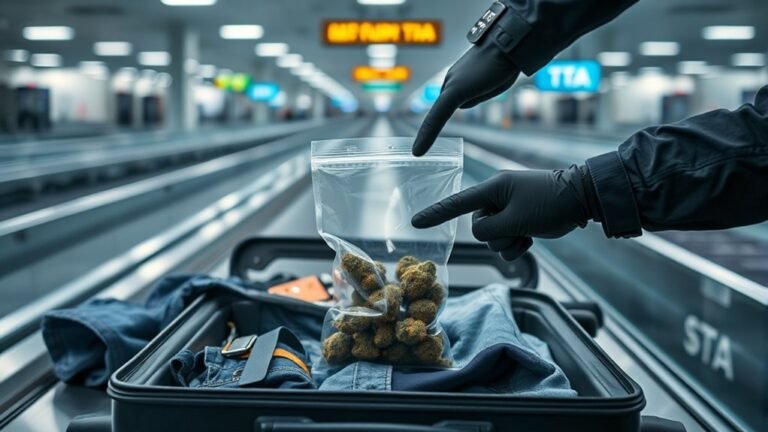
Yes — you can bring most solid candies in your carry‑on, like chocolate bars, hard candy, gummies and individually wrapped pieces. Don’t pack liquids, gels, spreads or sauces over 3.4 ounces in your carry bag, and expect homemade or fruit‑based treats to get extra scrutiny or be restricted by your destination. Put candies in original wrappers or clear bags for faster screening, declare anything unusual, and keep quantities reasonable so you’ll avoid delays and learn useful packing tips next.
Quick Answer: Are Candies Allowed in Carry‑On?
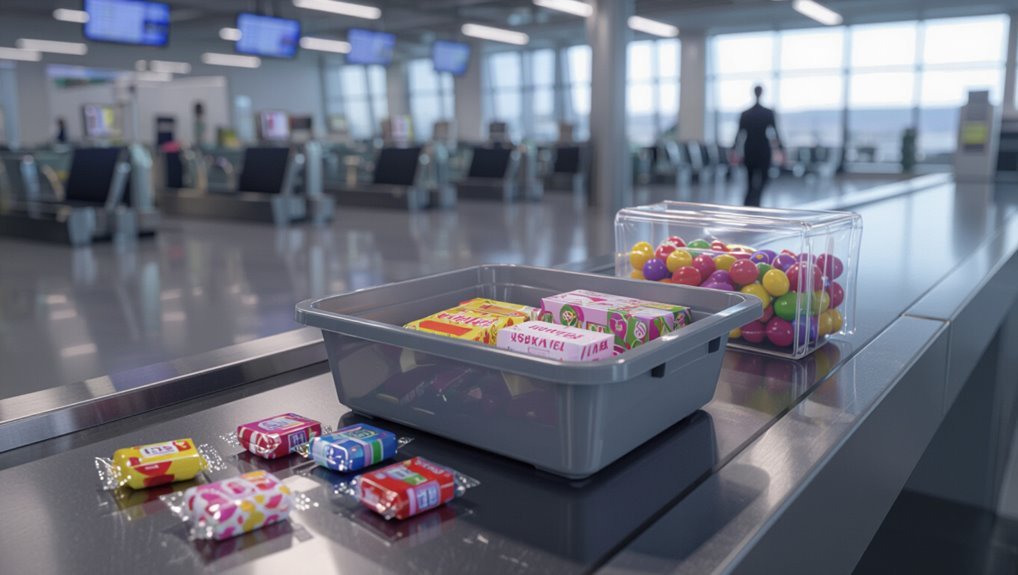
Wondering if you can bring candy in your carry-on? Yes—you can. Solid candies like chocolate bars, hard candy, and gummies are generally allowed.
Avoid liquids, gels, or spreads over 3.4 ounces; those follow liquid rules. Pack candies in original packaging or clear bags to ease security checks.
Declare unusual items if asked and follow airline or destination restrictions.
TSA Rules for Candies: The Basics
You can bring most types of candy in your carry-on, but be aware of rules for liquids, gels, and powders.
Keep individually wrapped or sealed packages to speed screening and avoid loose powders that may require extra inspection.
Also note quantity limits for liquid or gel confections and pack them where TSA officers can easily inspect if needed.
Allowed Candy Types
Although some restrictions apply, most common candies are allowed in your carry-on. You can bring a variety of sweets, but watch for liquids or gels that may trigger limits.
Choose solid, individually wrapped items to simplify screening.
- Hard candies and mints
- Chocolate bars and candy-coated pieces
- Fruit leathers and hard caramels
Packaging And Quantities
1 simple rule will keep screening smooth: pack candies so they’re easy to inspect. Use clear, resealable bags or original wrappers, and separate homemade or loose pieces.
You can carry typical quantities for personal use; avoid bulk commercial shipments that may raise questions. Label jars or containers if possible.
If you’re unsure, offer the item for inspection promptly to speed screening.
Which Candies Are Clearly Allowed
When you’re packing sweets, stick to solid, non-perishable candies like hard candies, gummy bears, chocolate bars, and wrapped caramels—these are routinely allowed in carry-on bags because they don’t trigger liquid or gel restrictions.
You can freely pack them for easy snacking and gifting.
- Hard candies and mints
- Individually wrapped chocolates and bars
- Gummies and chewy candies
Candies That May Trigger Extra Screening
Watch out for powdered candies, since loose powders can look suspicious on X-rays and often prompt agents to swab or inspect them.
You should also be cautious with sticky, syrupy, or strongly scented candies because their texture or odor can set off extra checks or require opening.
Knowing which types tend to attract attention helps you pack smarter and avoid delays.
Powdered Candy Concerns
If your powdered candy looks like or produces loose powder in the X-ray bin, it can prompt extra screening because security officers need to rule out potential threats.
You should pack powders in sealed containers, label them clearly, and keep receipts for specialty confections.
- Use transparent, resealable bags.
- Keep quantities minimal.
- Declare unusual items proactively.
Viscous/Scented Candies
Since sticky, gooey, or strongly scented candies can look suspicious on X-rays and sometimes set off odor-detection protocols, you should treat them like items that might need extra screening.
Pack them in clear, sealed containers and declare them if asked. Expect agents to open bags or test residues.
To avoid delays, keep such candies accessible and consider transferring them to checked luggage.
Are Liquid or Gel Candies Subject to 3‑1‑1?
Wondering whether that jar of gummy bears or travel-size chocolate spread counts toward your 3‑1‑1 liquids limit?
You should treat liquids, gels, and most soft candies like gels for screening. If they’re in containers larger than 3.4 ounces (100 mL) they must be checked or discarded.
Packables:
- Small gel-like candies under 3.4 oz fit 3‑1‑1.
- Clear containers help.
- Declare if unsure.
Are Spreads, Fudges, and Nut Butters Liquids?
Curious whether your jar of peanut butter or a slice of fudge counts as a liquid for TSA’s 3‑1‑1 rule?
You’ll treat spreads, fudges, and nut butters as gels/creams under TSA guidance, so containers over 3.4 ounces (100 ml) aren’t allowed in carry‑ons.
Small jars within the 3‑1‑1 limits are fine; otherwise pack them in checked baggage to avoid confiscation.
How to Pack Homemade Candies for Carry‑On
When packing homemade candies for carry-on, choose sturdy, airtight packaging like rigid containers or vacuum-sealed bags to prevent crushing and leaks.
Label containers clearly and separate any soft or spread-like fillings in small, TSA-compliant portions.
Remember that sauces, syrups, or gooey fillings may count toward the 3.4 oz liquid limit, so pack those accordingly.
Packaging Materials Choice
Because homemade candies are delicate and can shift or melt during travel, choosing the right packaging materials makes the difference between arriving with treats intact or a sticky mess.
Use sturdy, airtight containers, insulating layers, and shock-absorbing padding.
Pack items like:
- Rigid plastic containers
- Wax or parchment separators
- Bubble wrap or foam inserts
TSA Liquid Limits
1 clear rule to remember: the TSA treats most liquids, gels, and creams in your carry-on under the 3-1-1 rule, so any candy components like sauces, syrups, chocolate spreads, or soft fillings that’re pourable must fit in 3.4-ounce (100 mL) containers and collectively go into a single quart-sized, resealable bag.
Label containers, secure lids, and declare any unusual items if asked.
Best Containers for Carry‑On Sweets
Anyone planning to bring sweets on a flight should pick containers that keep candy fresh, prevent crushing, and pass through security easily.
Anyone bringing sweets on a flight should use lightweight, sealable containers that keep candy fresh and avoid crushing.
You’ll want lightweight, sealable options that fit in your bag and won’t spill. Consider these choices:
- Small airtight plastic tubs for gummies and mints.
- Rigid tin or metal cases for fragile pieces.
- Resealable clear bags for portions and inspection.
Can You Bring Chocolate Bars and Hard Candies?
Curious about whether you can carry chocolate bars or hard candies on a flight? You can bring solid chocolate and wrapped hard candies in carry-on bags without issue.
Pack them in resealable bags or a small container to stay organized and speed security checks.
Avoid melting by keeping chocolate in a cool spot, and declare nothing—these items aren’t restricted.
What About Gummies, Licorice, and Marshmallows?
If you’re wondering about gummies, licorice, or marshmallows, the good news is you can bring them in your carry-on—these soft, solid candies aren’t considered liquids or gels for TSA purposes.
You should pack them securely, declare anything unusual, and be mindful of international restrictions.
- Bag tightly to avoid stickiness.
- Keep portions reasonable.
- Separate if inspected.
How to Handle Candy Sauces, Syrups, and Caramel
Sauces, syrups, and caramel count as liquids or gels, so you’ll need to follow the TSA 3-1-1 rule: pack containers 3.4 oz/100 ml or less, fit all into one quart-size bag, and declare if unsure.
| Smooth sweetness | Sticky worry |
|---|---|
| Seal tightly | Leak fear |
| Use small jars | Throwaway sad |
Perishable Candies: Refrigerated Sweets and the Cabin
Those syrups and caramels might follow the 3-1-1 rule, but perishable candies—like cream-filled truffles, nougat with egg whites, or chocolate-covered fruit—bring a different concern: temperature control.
You’ll need to take into account spoilage, melting, and inspection risk. Pack with awareness of cabin temperature and flight duration.
- Spoilage risk
- Melting potential
- Inspection implications
Packing Tips to Avoid TSA Inspection of Sweets
When you want to minimize the chance your sweets get flagged, organize them clearly and declare any questionable items before screening.
Pack wrapped candies in a single transparent bag, separate homemade or liquid-filled confections, and place them near the top of your carry-on for easy inspection.
Label specialty items and keep receipts for packaged goods to speed up any queries.
TSA PreCheck and Candy Screening: What Changes?
If you have TSA PreCheck, your candy will usually move through screening faster since your bag stays on the belt and you don’t need to remove small items.
Be aware that some liquid or gel-like sweets might still count as liquids and need to follow the 3-1-1 rule or get flagged as exceptions.
You’ll also notice more privacy and convenience with fewer bag inspections, but you should still pack thoughtfully to avoid surprises.
Faster Candy Screening
Because TSA PreCheck speeds up your screening process, bringing candy in carry-on luggage can become even simpler: you’ll often keep shoes and belts on and can leave small packaged treats in your bag during the X-ray.
You’ll move faster, face fewer bag inspections, and spend less time repacking.
- Pack sealed candies.
- Keep loose items minimal.
- Declare unusual items.
Liquid Candy Exceptions
Though most candies sail through TSA PreCheck screening, liquid or gel-like sweets—think soft caramels in sauces, jarred marshmallow fluff, or large containers of syrupy toppings—still fall under the 3-1-1 liquids rule.
Privacy And Convenience
Soft caramels and marshmallow fluff may need special handling, but you’ll also want to think about how TSA PreCheck affects your privacy and convenience when carrying candy.
You’ll usually keep shoes and laptops on, reducing open-bag inspections, yet random checks still occur. Consider:
- Faster lanes cut public exposure of treats.
- Fewer hand inspections mean less handling.
- Random swabs can still require brief scrutiny.
What Happens if TSA Confiscates Your Candy?
If TSA agents decide your candy violates security rules or local regulations, they’ll usually confiscate it on the spot and explain why.
You won’t get compensation, and retrieval later is rarely possible. If you disagree, ask politely for a supervisor and document the interaction.
Keep receipts and photos for any claim, and note that policies vary by airport and country, so outcomes differ.
Buying Candy After Security or Onboard: Rules
You can buy candy after security at airport shops or from onboard snack carts, but you should know the rules that apply.
Remember that most liquids or gel-like candies still must meet carry-on restrictions, and some countries restrict bringing food items into the destination.
Check vendor policies and local customs regulations before you purchase so you don’t run into issues.
Buying Candy Post-Security
When you buy candy after clearing security or from an onboard cart, it’s generally allowed in your carry-on, but a few limits can apply depending on state laws and airline policies.
You can bring it aboard, but check specifics.
- Perishable or liquid-filled candies might face restrictions.
- Local laws may ban certain imports.
- Airline rules can limit quantity or packaging.
Purchasing Onboard Snacks
Though policies vary by carrier and destination, buying candy after security or from an onboard cart is usually fine, and you can carry it onto the plane as long as it doesn’t violate local import rules, contain prohibited ingredients, or exceed airline-specific quantity or packaging restrictions.
You can eat or bring onboard treats, but check destination rules and crew instructions.
| Tip | Note |
|---|---|
| Ask crew | Allergies |
| Keep wrapper | Proof of purchase |
| Avoid liquids | Gel limits |
| Declare | Customs rules |
Rules For Airport Vendors
While airport vendors generally sell candy that’s fine to bring on board, you should still follow a few practical rules before you buy.
You’ll avoid issues and stay considerate of crew and fellow passengers.
- Check labels for liquids or gels that might exceed limits.
- Keep receipts for duty-free items.
- Don’t open strong-smelling or messy candies in confined spaces.
Airline Snack Policies That Differ From TSA
Because airlines set their own onboard rules, you may find snacks allowed by the TSA still restricted by your carrier.
Check carrier policies before packing: some ban strong odors, loose crumbs, or hot foods.
Dietary-service rules, seat-class provisions, and international partner agreements can limit what you bring.
When in doubt, contact the airline or review its website to avoid disposal at the gate.
International Flights: Candy Rules That May Differ
When you fly internationally, remember that candy rules can change by country, with some places banning certain food items or requiring packaging standards.
You’ll also need to check customs declaration rules since you might’ve to declare or even surrender edible items on arrival.
Before you pack, look up the destination’s food restrictions and declaration requirements to avoid fines or lost snacks.
Country-Specific Food Policies
Customs rules differ by country, so you should check each destination’s guidelines before packing candy in your carry-on.
You’ll find restrictions vary for fresh, homemade, and meat-containing sweets. Follow local import rules to avoid fines or confiscation.
- Fresh fruit-based candies: often restricted.
- Homemade treats: usually prohibited.
- Commercial sealed candies: typically allowed.
Customs Declaration Rules
After checking destination-specific bans, you’ll also need to understand how to declare candy on international arrival forms.
You must list any food items if required, noting quantities and packaging.
Declare homemade goods, perishable items, and anything with meat, dairy, or fresh fruit.
Failure to declare can mean fines or confiscation.
When in doubt, declare it — officers will advise.
Declaring Candy at Customs on International Arrival
Arriving from abroad, you’ll need to declare certain candies on your customs form and to officers if they contain meat, dairy, fresh fruit, or other agricultural products.
Be honest to avoid fines or confiscation; keep packaging and receipts handy. Declare home-made or unlabelled treats.
- Meat-based sweets (e.g., gelatin with animal products)
- Dairy-filled confections
- Candies with fresh fruit or nuts
Shipping Candy vs Carrying It: When to Check a Bag
Deciding whether to ship candy or tuck it into checked luggage comes down to quantity, perishability, and destination rules — if you’re transporting large amounts, temperature-sensitive treats, or items restricted by the destination’s import laws, ship or check rather than carry them on. Choose shipping for bulk or fragile sweets; check luggage for weight or temperature control.
| Option | When to use |
|---|---|
| Carry-on | Small, nonperishable |
| Checked | Moderate quantity, stable |
| Ship | Bulk, perishable |
| Customs | Follow import rules |
Bringing Large or Unusual Food Items Through Security
If you’re planning to bring large or unusual food items through airport security, know that screening rules and practical considerations change compared with everyday snacks.
You should pack items to show easily, declare anything liquidy or dense, and expect additional inspection. Follow airline and destination rules to avoid delays.
Pack foods so they’re easy to inspect, declare liquids and dense items, and be prepared for extra screening.
- Pack transparent, accessible containers.
- Label contents and origin.
- Know liquid limits and customs rules.
Why Security Officers May Confiscate Unusual Treats
Because security officers have to keep screenings fast and safe, they’ll confiscate unusual treats when those items look like a threat, can’t be clearly identified, or violate size and liquid rules. You’ll want to declare odd items, expect inspection, and avoid ambiguous packaging to prevent delays or loss.
| Risk Indicator | Action Taken |
|---|---|
| Unidentified | Confiscate |
| Liquids/creams | Seize |
Medical Exceptions: Medicated Candies and Lozenges
If you rely on medicated candies or lozenges, know how they’re defined and whether they count as liquids or gels for carry‑on limits.
You’ll need to present any necessary documentation and be prepared for extra screening at the security checkpoint.
Clear labeling and a brief explanation to officers will usually keep the process smooth.
Medicated Candy Definitions
When you need relief on the go, medicated candies and lozenges are small-dose, sugar-based confections that deliver active ingredients like cough suppressants, antihistamines, or topical anesthetics.
They’re treated differently from regular candy because their therapeutic purpose and ingredient labels determine acceptability in carry-on luggage.
You should:
- Check labels for active ingredients and dosages.
- Keep originals and packaging for inspection.
- Declare them if asked by security.
Carry‑On Liquid Limits
Although carry-on liquid rules usually limit containers to 3.4 ounces (100 mL), security makes medical exceptions for small, medicated candies and lozenges that contain active ingredients or liquid centers.
You can pack reasonable quantities in carry-on when they serve a medical need. Keep amounts sensible, separate them for screening, and declare them if asked so officers can assess them quickly.
Documentation And Screening
Because medicated candies and lozenges can look like restricted liquids, bring clear documentation and separate them for screening so officers can verify their medical purpose quickly.
You’ll speed inspection and avoid delays if you:
- Pack prescriptions or a doctor’s note with the candies.
- Keep items accessible in a clear bag.
- Declare them during security checks and answer questions promptly.
Traveling With Candy for Children: Tips and Documents
If you’re flying with kids, pack a small stash of their favorite candies in your carry-on to keep moods steady and changes smooth; just check airline rules and consider sugar-free or portioned options to avoid meltdowns at security or in flight.
Bring receipts for special purchases, label homemade treats, keep candies accessible, and remind kids about polite eating and disposal to minimize mess and delays.
Avoiding Food Allergies and Cross‑Contamination on Flights
When traveling with candy around others who’ve food allergies, take simple steps to prevent exposure and keep everyone safe:
- Ask nearby passengers and crew about allergies before opening scented or nutty treats.
- Seal candy in airtight bags and label them to avoid accidental sharing.
- Wash hands and wipe tray tables after eating to minimize cross‑contact and reassure fellow travelers.
Practical TSA‑Friendly Snack Ideas for Flights
While airports limit liquids and gels, you can still bring a variety of tasty, TSA‑approved snacks that keep you satisfied and mess-free: think single‑serve nut or seed packs (check airline allergy policies), hard cheeses wrapped in wax paper, whole fruits like apples or bananas, granola or protein bars, and individually sealed crackers or rice cakes.
Pack portioned dried fruit, jerky, prepped veggies with hummus cups under 3.4oz, and dark chocolate.
Quick Packing Checklist for TSA‑Friendly Sweets
Pack smart with this quick checklist so your sweets sail through TSA without delays:
- Keep candies in original, sealed packaging or clear resealable bags to show ingredients and avoid questions.
- Separate any gel/liquid confections and follow the 3-1-1 liquids rule; place them where officers can inspect easily.
- Label homemade treats, list allergens, and stash them near the top of your carry-on for quick access.
Common Myths About Candy and Airport Security
Curious what you can and can’t bring through security? You don’t need to toss wrapped candy or hard candies—solid sweets are fine in carry‑ons.
Liquid-filled chocolates or gels over 3.4 ounces may be restricted.
Don’t assume homemade treats are banned; declare unusual items if asked.
Also, candies that resemble prohibited items (meds, powders) can prompt inspection, so pack clearly.
Frequently Asked Questions
Can Candies Trigger Secondary Screening Due to Powdered Substances?
Yes — powdered candies can prompt secondary screening if they resemble controlled powders. You’ll want to separate and label them, keep containers clear, and be ready to explain contents to TSA so officers can quickly verify they’re harmless.
Are Gift-Wrapped Candies Allowed Through Security?
Yes, you can bring gift-wrapped candies through security, but TSA may ask you to unwrap them for inspection; keep them accessible and avoid liquids or large amounts of powders to prevent delays or secondary screening.
Can You Bring Candy-Filled Baking Molds or Trays?
Yes — you can bring candy-filled baking molds or trays in carry-on bags, though TSA may inspect them; unwrap or pack them accessibly, avoid liquids over limits, and be ready to remove items for screening if asked.
Do Duty-Free Candy Purchases Bypass Carry-On Restrictions?
Yes — duty-free candy doesn’t bypass carry-on restrictions; you can bring it, but you’ll need to follow TSA rules and any liquid/gel limits, and purchases in secure zones are usually allowed through security for your carry-on.
Are Candies Allowed in Carry-On During Layovers/Transfers?
Yes — you can carry solid candies in your carry-on during layovers or transfers, but you’ll need to follow liquid/gel limits for fillings or sauces, and expect additional screening or restrictions when passing through other countries’ security.
Conclusion
Yes — you can bring candy in your carry‑on, but keep it simple. Solid candies like chocolate bars, hard candies, and wrapped gummies are allowed and usually pass through screening without issue. Avoid large quantities of liquid or gel candies (think syrupy fillings, gel packs) since they fall under 3-1-1 rules and might be confiscated if oversized. Pack wrapped or sealed items to prevent cross-contamination and allergies, and have them accessible for inspection to make security checks smoother.