What Happens If My Carry on Is 1 Inch Too Big Delta Rules Explained
If your carry-on is one inch too big, Delta may still let it onboard but you should expect a gate check more often, especially on full flights or smaller aircraft. Agents use a sizer and overhead-bin fit to decide; protruding handles or hard-shell corners can trigger checks. Elite flyers or families sometimes get leniency, but be prepared to gate-check or pay fees. Measure and weigh bags at home to avoid surprises, and keep essentials in your personal item to stay covered if it’s checked—keep going to learn how to prevent this.
Will Delta Reject a Bag 1 Inch Too Big?
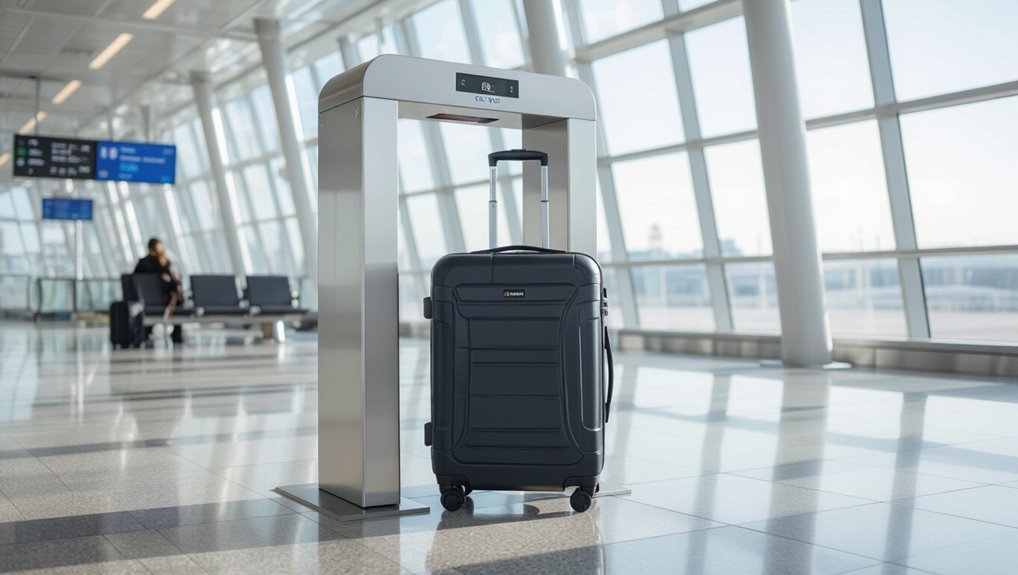
Worried a single inch will cost you a carry-on? You’ll usually be fine: gate agents often allow slight oversize if overhead bins have room and the bag’s safe to stow.
Still, they can enforce limits, especially on full flights or tight boarding. To avoid hassle, measure before travel, compress or switch bags, and be prepared to gate-check if asked.
Delta Carry-On Size & Weight Limits
Delta lets most passengers bring one carry-on and one personal item, but size and weight limits can vary by aircraft and fare, so you should check before flying.
Typically, carry-ons must fit overhead bins and usually measure about 22 x 14 x 9 inches including handles and wheels.
Weight limits aren’t strictly enforced on many domestic flights, but international or smaller aircraft may impose limits—verify your specific itinerary.
How Delta Measures Carry‑Ons at the Gate
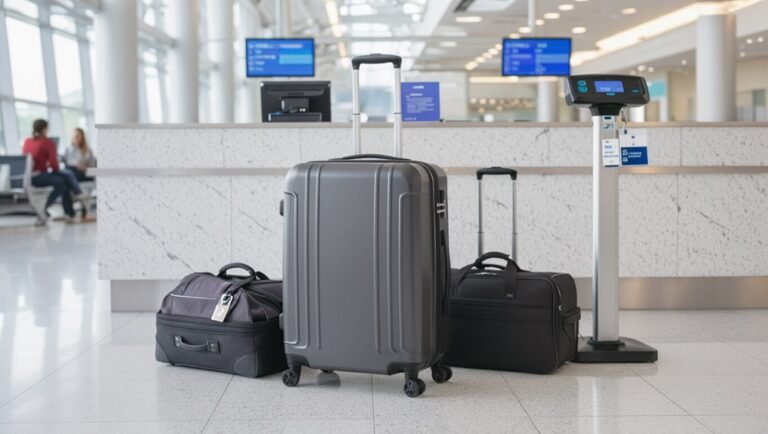
At the gate, a Delta agent may check your bag with a standard sizer frame to confirm it meets carry‑on dimensions.
If it looks borderline, the agent might also inspect how it fits in the overhead bin.
Be prepared to gate‑check items that don’t pass those quick measurements.
Gate Agent Measurement
If a gate agent thinks your bag might be too big, they’ll check it with a sizer or by placing it on the floor beside the jetway; you should be ready to lift it into the sizer and remove any loose items.
- Cooperate quickly to avoid delays.
- Empty exterior pockets and retract wheels if asked.
- If it fails, expect gate-checked options or a carry-on fee.
Standard Sizer Frames
When a gate agent reaches for a sizer, you’ll usually see one of two standard frames: the rectangular box that checks length, width, and height, or the flatter tray used for soft bags and backpacks.
You place your bag inside; if it fits flush without forcing, it’s acceptable. If edges protrude, the agent may ask you to gate‑check or repack before boarding.
Overhead Bin Inspection
Delta staff will often check carry-ons against the overhead bin itself rather than just a sizer, especially on full flights; you’ll be asked to lift your bag into the bin or the agent will slide it in to judge fit, handle clearance, and whether it blocks other bags.
- Expect a visual and hands-on fit test.
- They’ll note handles and wheels.
- Tight fits may require gate check.
Why One Inch Can Matter : And When It Won’t
A single inch can change whether your bag slides into the overhead bin or gets gate-checked, so you should measure with hardware and include wheels and handles.
One inch matters when bins are crowded or staff enforce limits. It won’t when space is ample or agents are lenient.
If tight, slim down or check the bag to avoid delays and fees.
How Aircraft Type and Load Affect Overhead Space
You’ve seen how an extra inch can determine whether your bag fits the bin; now consider how the plane itself changes that outcome.
Different aircraft and load conditions alter available overhead space and boarding priority. Check these factors before you travel:
Different planes and busy flights change overhead space and boarding priority—check aircraft, load, and seat location before you travel.
- Aircraft model — regional jets vs. widebodies have varying bin sizes.
- Load factor — full flights reduce spare bin space.
- Seat location — forward bins fill faster than rear ones.
What Agents Usually Do When a Bag Is Slightly Oversized
If an agent finds your bag just over the allowable dimensions, they’ll usually try a few quick steps before asking you to gate-check: they’ll test-fit it in the overhead, check whether another bin has room, and ask about compressibility or carry-on swaps with a travel companion.
You should respond promptly, show alternative item placement, collapse soft sides if possible, and accept their decision if space remains tight.
Gate‑Check vs. Checked Bag : What’s the Difference?
When an agent asks you to gate‑check, they’re taking your carry‑on at the jet bridge so it goes in the plane’s cargo hold but returns to you at the aircraft door or baggage claim, whereas a checked bag is handed over at ticketing or the curb, processed through standard baggage systems, and picked up at claim—so gate‑checking keeps the handoff last‑minute and often faster, but checked baggage follows normal handling and timing.
- You keep faster access with gate‑check.
- Checked bags enter standard sorting and delays.
- Gate‑checked items may be handed at the aircraft door.
Possible Fees If Delta Requires a Checked Bag
1 main thing to know is that Delta can charge you for a required checked bag, and those fees depend on route, fare class, and whether you have status or a co-branded credit card.
If your carry-on is denied, expect either a standard checked baggage fee, a higher overweight/oversize charge if applicable, or charges for additional pieces; pay at gate or baggage counter.
Exceptions: Elite Status, Families, Military, and Special Items
If you’ve earned elite status with Delta, you’ll often get extra carry-on perks and relaxed size rules.
Families traveling with young children and active-duty military members can also qualify for special exceptions.
I’ll explain what those benefits cover and how to claim them.
Elite Status Privileges
Delta gives certain travelers exceptions to standard carry-on rules: elites, families traveling with young children, active-duty military, and passengers with specific medical or mobility items often get greater flexibility.
If you have elite status, you’ll usually get priority boarding and leniency on slightly oversized bags. Check your tier for exact allowances.
- Priority boarding
- Extra carry-on leniency
- Verify via your account
Family And Military Exceptions
When you travel with young children or serve in active duty, you’ll find exceptions to standard carry-on limits that make boarding and stowing items easier.
Delta lets families bring collapsible strollers and diaper bags free of charge, often allowing priority boarding.
Active-duty military traveling on orders usually get additional baggage consideration and waived fees.
Always carry proper ID and documentation to guarantee smooth handling.
Which Routes and Aircraft Change Carry‑On Rules
Because route length and aircraft layout affect onboard space, carry-on allowances can vary depending on where you’re flying and what plane you board.
- Regional jets: You’ll often face smaller overhead bins and stricter size enforcement.
- International long-haul: Larger aircraft usually allow standard carry-ons, but check destination rules.
- Seasonal or charter routes: Configurations can differ, so confirm carry-on limits before you pack.
Immediate Steps at the Gate If Your Bag Is Flagged
If an agent flags your carry-on at the gate, stay calm and act promptly: have your ID and boarding pass ready, open the bag so staff can quickly check dimensions and contents, and be prepared to move items into a personal item or dispose of prohibited items.
Ask politely about options—gate check, carry-on remeasure, or paying a fee—confirm where the bag will go, and follow instructions.
Quick Fixes to Avoid Delta Gate Check in Under a Minute
Act fast: unzip the main compartment, shift bulky items toward the bottom, and transfer small electronics or a jacket into your personal item to squeeze your carry-on under Delta’s size limits.
- Compress clothing with rolling or quick vac-packing to save inches.
- Remove nonessentials—souvenirs, extra shoes—and place them elsewhere.
- Reorient the bag (wheels-first or flat) to fit the sizer slot and avoid gate check.
Best Carry‑On Dimensions and Soft vs. Hard Cases
You’ll want a carry-on that fits Delta’s 22 x 14 x 9-inch guideline to avoid gate checks and still pack efficiently.
Think about whether a soft case’s flexibility and exterior pockets or a hard shell’s protection and structured fit suit your typical trips.
I’ll compare size tips and the pros and cons of soft vs. hard cases so you can pick the best option.
Best Size Guidelines
When picking a carry-on, aim for a bag that stays within Delta’s 22 x 14 x 9 inch limit while giving you enough room for essentials; that size balances cabin-fit certainty with packing flexibility.
- Choose a compact bag that measures precisely or under limits.
- Prioritize internal organization to maximize usable space.
- Weigh your bag; lighter materials help you carry more without exceeding limits.
Soft Vs. Hard
Having picked a bag that fits Delta’s 22 x 14 x 9 inch limit, you’ll next choose between soft and hard-shell cases—each affects packing, protection, and how well the carry-on fits overhead bins. You’ll prefer soft for flexible packing and exterior pockets, hard for impact resistance and neat stacking. Compare pros quickly:
| Type | Benefit | Trade-off |
|---|---|---|
| Soft | Flexes | Less protection |
| Hard | Protects | Rigid space |
| Hybrid | Balanced | Pricier |
Pack This in Your Personal Item to Protect Essentials
Because your personal item stays within reach, pack anything you can’t afford to lose or access quickly inside it: travel documents, wallet, phone, chargers, medications, and a slim toiletry kit.
Keep essentials within reach: travel documents, wallet, phone, chargers, meds, and a slim toiletry kit.
Keep valuables organized and cushioned, and stash a spare outfit cell-phone power bank for delays.
- Passport, boarding pass, wallet
- Phone, charger, power bank
- Medications, small hygiene kit
Pre‑Flight Measuring and Weighing Checklist
1 simple routine can save you from gate-side surprises: measure and weigh your bags at home.
Use a tape measure for length, width, height including wheels and handles.
Weigh each packed bag on a bathroom scale or luggage scale.
Compare to Delta limits, redistribute items if needed, and note spares for souvenirs.
Double-check before leaving to avoid fees or gate rechecks.
Real Traveler Examples and What They Learned
When you hear other travelers’ stories—like the commuter who squeezed a weekend bag into an overhead only to be charged at the gate—you learn practical tricks fast: measure with handles and wheels, keep heavier items low, and pack a lightweight spare for souvenirs.
- Measure precisely and test fit.
- Redistribute weight to meet limits.
- Keep receipts and photos if challenged.
Frequently Asked Questions
Can I Bring a Slightly Oversized Bag on a Partner Airline Code‑Share Flight?
Yes — you can usually bring a slightly oversized bag on a partner airline code‑share flight, but you’ll need to follow the operating carrier’s size and weight rules; you might pay an oversize fee or gate-check it if it’s borderline.
Will Carry‑On Size Rules Differ for International Delta Partners at Foreign Airports?
Yes — you’ll often see different carry‑on size enforcement with international Delta partners at foreign airports; airlines and airports can enforce their own limits, so check each carrier’s rules and gate policies before you travel.
Are Medical Devices Exempt From Delta Carry‑On Size Strictness?
Yes — you’re generally exempt: Delta lets essential medical devices and supplies aboard beyond standard carry‑on limits, but you’ll need to notify gate agents, present documentation if requested, and confirm items meet TSA screening and safety rules.
Does Inflight Storage Availability Affect Gate Agent Decisions?
Yes — gate agents consider inflight storage when deciding; they’ll often let slightly oversized bags stay aboard if overhead bins have room, but they can still gate‑check items during full flights to guarantee safety and balance.
Can Preboarding Let Me Board With a Marginally Oversized Bag?
Yes — preboarding can help, but it doesn’t guarantee acceptance. You’ll board early and try to stow the slightly oversized bag, but gate agents still inspect sizes and may gate-check it if it won’t fit safely.
Conclusion
If your carry‑on is an inch over Delta’s limit, you’ll usually be fine — gate agents often use judgment, aircraft space, and current load to decide. Still, knowing exact limits and measuring before you fly reduces stress and surprises. Opt for soft-sided bags, keep valuables in your personal item, and weigh your bag at home. When in doubt, be ready to gate-check; it’s inconvenient but beats delays or extra fees. Stay flexible and prepared.