How Many Kilos Can I Take on an International Flight Baggage Limits
You can usually bring about 20–23 kg for one checked bag in economy, and roughly 30–32 kg per bag in business or first class, though low-cost carriers often charge per kilo or per bag and may be stricter. Some airlines use piece-based rules instead of weight limits, and codeshares or connecting carriers can change what’s allowed. Pay excess fees per kilo or per extra bag, and check specifics with your carrier; keep going to learn the practical details and exceptions.
Quick Summary: What This Guide Will Answer
What’ll this guide answer about international baggage limits?
You’ll learn how airlines measure weight and pieces, where rules vary by carrier and route, how excess fees work, and what counts as carry-on versus checked baggage.
You’ll get tips for weighing, packing, and avoiding surprises at the gate, plus when to check fare class or loyalty benefits for extra allowance.
Quick Answer: Typical Checked-Bag Kg by Class
Typically, economy passengers can expect a checked-bag allowance around 20–23 kg, though some carriers cap at 23 kg per bag or allow two lighter bags.
If you’re flying business or first class, limits usually rise to 30–32 kg per bag and may include extra pieces.
Check your airline’s specific policy before packing, since rules vary by carrier and route.
Economy Class Allowance
Most international airlines let economy passengers check one bag weighing between 20 kg and 23 kg, though some carriers and regions allow 25 kg or more.
You’ll often get one piece included on international economy fares; low-cost carriers may charge per kilogram or per bag.
Check your ticket and the airline’s website for exact limits, weight measurement (kg/lb), and excess-fee policies before packing.
Business/First-Class Limits
If economy fares usually include one checked bag around 20–23 kg, business and first class will often let you check more weight and more pieces. You’ll typically get two or three checked bags at 30–32 kg each, sometimes unlimited by piece with higher weight caps. Check your carrier for exact rules before packing.
| Class | Typical allowance |
|---|---|
| Business | 2–3 × 30–32 kg |
| First | 2–3 × 32 kg |
How Airlines Set Checked-Bag Weight Limits
Because aircraft performance, safety regulations, and operating costs all matter, airlines set checked-bag weight limits to balance passenger convenience with practical constraints.
You should expect limits based on aircraft type, cargo capacity, and runway/route requirements. Carriers also consider handling equipment, crew safety, and fuel efficiency.
Weight standards protect airworthiness and keep operations predictable, so follow posted limits to avoid fees or denied carriage.
Piece-Based vs Weight-Based Allowance Systems
You’ll want to understand how piece-based systems count each checked bag versus weight-based systems that set a total kilogram or pound limit.
Each approach has pros and cons—piece systems reward light, multiple items while weight systems give flexibility in how you distribute mass.
Consider your typical trip and luggage habits to choose which system saves you money and hassle.
Piece-Based Explained
While many carriers price checked luggage by total kilos, piece-based rules count items instead—so your allowance is defined by the number of suitcases or bags you can bring rather than their combined weight.
You’ll pack strategically: choose sturdy cases, distribute weight, and prioritize essentials.
Visualize typical allowances:
- Two checked suitcases
- One carry-on bag
- One personal item
- Additional sports bag or stroller
Weight-Based Basics
Many international airlines use weight-based allowances, so instead of counting bags you’ll work with a single total kilogram or pound limit for all checked luggage combined.
You’ll pack to that total, distributing weight across suitcases as needed. Exceeding the limit triggers overweight fees, so weigh bags before departure, consolidate items, and prioritize essentials to avoid costly surcharges and last-minute repacking.
Choosing The Right System
When deciding between piece-based and weight-based allowances, consider how you pack and what you usually travel with: you’ll choose system based on number of bags, flexibility, and gear weight.
Think about typical trips and avoid surprises.
- Several small checked suitcases
- One heavy duffel or trunk
- Photography or sports equipment
- Multiple light carry-ons
Which Major Carriers Use Weight vs Piece Systems
Airlines split between weight-based and piece-based checked baggage rules, and knowing which system your carrier uses helps you pack smarter and avoid fees.
Major Middle Eastern and some Asian carriers (Emirates, Qatar, Etihad) often use weight limits, while many US and European airlines (Delta, United, British Airways) use piece or combined rules.
Always check your ticket for specifics to avoid surprises.
Standard Checked Baggage Allowances for Economy International Flights
For most economy international fares you’ll typically get either one or two checked bags free, with standard weight limits around 23 kg (50 lb) per piece for piece-based systems or a combined allowance of 30–40 kg for weight-based fares;
always confirm your ticket or carrier policy since exceptions and fee tiers vary by route and frequent‑flyer status.
- Single 23 kg suitcase
- Two 23 kg pieces
- One 30–40 kg total
- Oversize/overweight fees apply
Business and First Class Checked Baggage Weight Limits
Because premium cabins cater to travelers who often pack more valuables and equipment, business and first class passengers usually get higher checked baggage limits than economy.
You’ll commonly see allowances of two pieces at 32 kg (70 lb) each or a single combined weight up to 40–50 kg on some carriers.
You should check your ticket and frequent‑flyer status, as extra allowances, oversized item rules, and partner airline differences can apply.
Low-Cost Carriers: Strict Kilos and Extra Fees
Many low-cost carriers cap checked baggage very tightly and charge extra for every kilo beyond a small allowance, so you’ll want to weigh and pre-pay before you get to the airport.
You’ll face steep per-kilo fees and strict size rules. Pack smart, weigh precisely, and prepay online to save.
- A single overweight tag
- A cramped carry-on overhead
- A packed scale at home
- A surprise fee at check-in
How Elite Status Affects Your Baggage Allowance
If you earn elite status with an airline, you’ll usually get extra baggage perks like additional checked bags, higher weight limits, or priority handling—benefits that can save you money and time at the counter.
You’ll often qualify for complimentary extra kilograms, waived excess fees, and expedited baggage service.
Check your carrier’s tier chart for precise allowances, rules for international routes, and any carry-on upgrades.
Family and Group Bookings: Pooled Allowances and Rules
When you book as a family or group, airlines sometimes let you pool baggage allowances so members can share kilos or piece counts, but rules vary widely by carrier and fare type.
You should confirm combined limits, fees, and who’s responsible for overages.
Consider examples for clarity:
- One shared 40kg checked allowance
- Child’s bag counted with adults
- Extra fee split among passengers
- Transfer flexibility on return flights
Carry-On Allowance: Weight, Size, and Limits
You’ll want to check each airline’s weight limits for carry-ons, since some cap pounds or kilograms while others only restrict size.
Also confirm the maximum dimensions they accept, because even slightly oversized bags can be gate-checked.
Don’t forget the difference between a personal item and a carry-on—airlines often allow one of each with different size rules.
Weight Limits By Airline
Because airlines set carry-on rules differently, you should check each carrier before packing to avoid surprises at the gate.
Airlines may limit carry-on weight (often 7–10 kg) or only enforce size. To prepare, imagine packing:
- A laptop and charger
- A light jacket and book
- Toiletries in a clear bag
- Snacks and medication
Confirm your airline’s specific allowance beforehand.
Size And Dimension Rules
Although airlines vary, most enforce both size and weight limits for carry-ons, so check dimensions and the allowed weight before you pack.
Measure your bag including handles and wheels; common limits are around 55×40×20 cm but vary. If oversized, you’ll gate-check or pay fees.
Know cabin bin sizes and airline rules to avoid delays, surprises, or extra charges.
Personal Item Versus Carryon
Having checked size and weight for your carry-on, don’t forget most airlines also let you bring a separate personal item — a small bag that must fit under the seat in front of you and usually carries different limits than the carry-on.
You’ll pack strategically:
- slim laptop bag
- compact tote
- small backpack
- purse or camera case
Check combined allowances and gate sizers.
Personal Item vs Carry-On: Weight and Dimension Differences
When you compare a personal item and a carry-on, the differences come down to size, weight, and where each fits in the cabin: a personal item is smaller and designed to stow under your seat, while a carry-on is larger and goes in the overhead bin.
You’ll usually see stricter dimension and weight limits for carry-ons; personal items are lighter, flatter, and meant for essentials.
How Excess-Baggage Fees Are Calculated (Per Kg)
Airlines usually calculate excess-baggage fees by multiplying the number of kilograms over the allowance by a per-kg rate, so you pay directly for every kilo above your limit.
You’ll see charges vary by route and fare class; taxes or minimum fees may apply.
Visualize costs like:
- A 1 kg coin
- A 5 kg brick
- A 10 kg suitcase
- A 20 kg pallet
Overweight Item Rules and Maximum Allowed Weights
You’ll want to check each airline’s overweight fees so you know what extra charges to expect.
Pay attention to the maximum weight allowed per bag, since exceeding it can force repacking or higher fees.
Also plan how you’ll handle excess luggage—prepaying fees, redistributing items, or shipping portions can save time and money.
Airline Overweight Fees
Most carriers set clear weight thresholds and charge steep fees if a checked bag exceeds them, so it’s important you know each airline’s limits before packing.
You’ll usually pay per kilogram over the limit, face flat surcharges for heavy items, or be forced to repack.
Consider these visuals:
- A scale flashing red
- A porter hefting a duffel
- A tag marked “overweight”
- A credit card being tapped
Weight Limits Per Bag
1 common rule to remember is that each checked bag usually has a strict maximum weight and exceeding it triggers specific overweight charges or handling restrictions.
You should check your airline’s exact per-bag limits—often 23kg, 32kg, or higher for premium tickets—and weigh bags before leaving.
Items over the maximum may be refused, reclassified, or require special handling, so plan accordingly.
Handling Excess Luggage
Knowing each bag’s weight limit helps you avoid fees, but if a piece runs over you’ll need to follow your airline’s overweight rules. You can pay per kilo, redistribute items, check an extra bag, or ship items separately.
Typical maximums are 32 kg per checked bag; some carriers cap at 23 kg. Confirm limits to avoid refusal or heavy fines.
- heavy duffel sagging
- scales at check-in
- luggage tags fluttering
- extra bag queue
Special Items: Sports Equipment and How Much They Add
Traveling with sports gear often changes how much baggage you can bring and what you’ll pay, so you should plan ahead.
Check each airline’s rules—items like golf bags, skis, bikes or surfboards often count as checked baggage or oversized pieces and incur extra fees or weight allowances.
Pack strategically, disassemble equipment if allowed, and prepay fees to save money and avoid surprises at the airport.
Musical Instruments: When They Count as Checked or Cabin Baggage
You’ll need to know your instrument’s dimensions and how they match standard carry-on size limits to see if it fits in the cabin.
Check each airline’s specific instrument policy, since rules on gate-checking, seat-store permits, and fees vary.
Also confirm the allowed case weight, because some carriers will count heavy hard cases as checked baggage even if the instrument itself could fit overhead.
Size And Carry-On Rules
Musical instruments often blur the line between carry-on and checked baggage, so you’ll want to know how airlines classify them before you arrive at the gate.
You should measure your case, aim for a sturdy cabin-sized bag, and prepare to gate-check if needed.
- violin in a compact hard case
- guitar diagonally across an overhead bin
- cello as gate-checked bulk
- flute in a slim pouch
Airline Instrument Policies
Airlines decide whether your instrument travels in the cabin or as checked baggage based on size, case type, and available bin space, so check each carrier’s policy before you fly.
You’ll usually get cabin allowance for small instruments that fit overhead or under-seat; larger or fragile pieces may need gate-checked or cargo transport.
Always notify the airline, reserve space, and carry documentation for fragile or valuable instruments.
Instrument Case Weight Limits
Along with case type and available bin space, an instrument’s weight often determines whether it travels in the cabin or as checked baggage.
So check both the carrier’s size and weight limits before you fly. You’ll need to:
- imagine a cello in a hard shell
- picture a violin under the seat
- weigh a guitar case on scales
- consider padded roller cases for checked transport
Baby and Child Baggage Allowances and Exemptions
Although rules vary by carrier and route, you’ll usually get special baggage provisions for infants and young children that differ from adult allowances.
You may be allowed a diaper bag, baby food, breast pump, stroller or car seat free of charge, plus a checked infant bag on some airlines.
Always verify size, weight limits and documentation requirements with your carrier before travel.
Connecting Flights: Which Carrier’s Allowance Applies?
When you’re booking or checking in for connecting flights, the ticketing carrier’s baggage rules usually set the baseline.
If carriers differ, you’ll typically have to follow the most restrictive allowance unless your itinerary is through-ticketed and the operating carrier’s rules are explicitly applied.
Also check whether a segment is a codeshare or a through-ticket, since codeshares often mean the operating carrier’s limits will control.
Ticketing Carrier Rules
If your itinerary includes connecting flights on different airlines, the baggage allowance that applies usually depends on which carrier issued your ticket and whether your flights were booked on a single itinerary.
The ticketing carrier’s rules often govern checked baggage limits and fees, though partner or transfer carriers may impose their own restrictions for carry-on size or excess charges.
- Your ticketing carrier sets checked kilo limits
- Partner airlines may cap carry-ons
- Fees follow the issuing fare rules
- Confirm at booking and at check-in
Most Restrictive Carrier
Because itineraries often combine airlines with different policies, the most restrictive carrier’s rules usually control your baggage allowance on connecting international flights, especially for carry-on size and weight limits.
Check each carrier’s limits before packing, confirm with the airline listed on your ticket, and note that checked baggage may follow the ticketing carrier while carry-on often defaults to the strictest operating carrier.
Codeshare Versus Through-Ticket
Although your itinerary might list multiple airlines, which carrier’s baggage rules apply usually hinges on whether your tickets were issued as a through-ticket or involve a codeshare; you should check the ticketing carrier, fare rules, and boarding passes.
Consider visuals:
- A single ticket with one airline logo
- Two airlines’ logos on one receipt
- Separate tickets in your hands
- A codeshare label on the flight number
Codeshares and Alliances: How They Affect Your Baggage Kg
When you book flights that involve codeshares or alliance partners, your baggage allowance can change depending on which airline is actually operating each segment.
So always check the operating carrier’s policy rather than assuming the marketing carrier’s rules apply. If segments are on different carriers, the most restrictive allowance often governs connecting flights.
Confirm weight, piece, and fee rules per carrier to avoid surprises.
Country-Specific Restrictions and Customs Weight Limits
If you’re traveling internationally, check both airline baggage rules and the destination’s customs regulations, since countries can cap the weight or value of duty-free goods and restrict certain items regardless of your airline allowance.
You’ll face fines or confiscation if you ignore limits.
Consider local rules for:
- alcohol and tobacco kilos
- food and plant products
- electronics and batteries
- high-value goods declaring thresholds
How to Find the Exact Allowance for Your Ticket Online
Start by checking your ticket type—economy, premium, or business classes often carry different baggage limits.
Then go straight to the airline’s website and enter your booking reference or log into your account to view the exact allowance for your ticket.
If anything’s unclear, use the site’s baggage policy page or contact customer service for confirmation.
Check Your Ticket Type
Want to know exactly what you can bring without surprises? Check your ticket type—basic, standard, flex or business—since each has specific kilos, pieces and carry-on rules.
Look at your booking confirmation or e-ticket code to identify the fare class, then match it to the airline’s allowance chart.
- basic: minimal checked weight
- standard: moderate allowance
- flex: extra kilos
- business: largest limit
Visit Airline Website
Now that you know your fare class, go straight to the airline’s website to check the exact baggage allowance tied to that ticket. Enter your booking reference or ticket number, view baggage rules for that fare, and note weight, piece limits, and fees. Use the online baggage FAQ or manage booking panel to confirm before packing.
| Item | Where to find |
|---|---|
| Weight | Manage booking |
| Fees | Baggage policy |
When Website and Ticket Disagree on Allowance
What do you do when the airline’s website and your ticket list different baggage allowances?
You check, document, and resolve before heading to the airport.
Contact customer service, keep screenshots, and ask for written confirmation.
Visualize options:
- Screenshot of website allowance
- Photo of your ticket showing kilos
- Email confirming corrected limit
- Gate agent stamping approval
Act promptly to avoid surprises.
Packing Strategies to Stay Under Kilo Limits
Start by weighing what you really need and pack with purpose: prioritize versatile clothing, choose lightweight fabrics, and plan outfits so you can mix-and-match instead of bringing duplicates.
Roll garments to save space, bundle fragile items inside shoes, limit shoes to two pairs, use travel-size toiletries in reusable containers, wear your bulkiest layers on the plane, and redistribute weight between bags to avoid surprises.
Best Luggage Scales and How to Use Them at Home
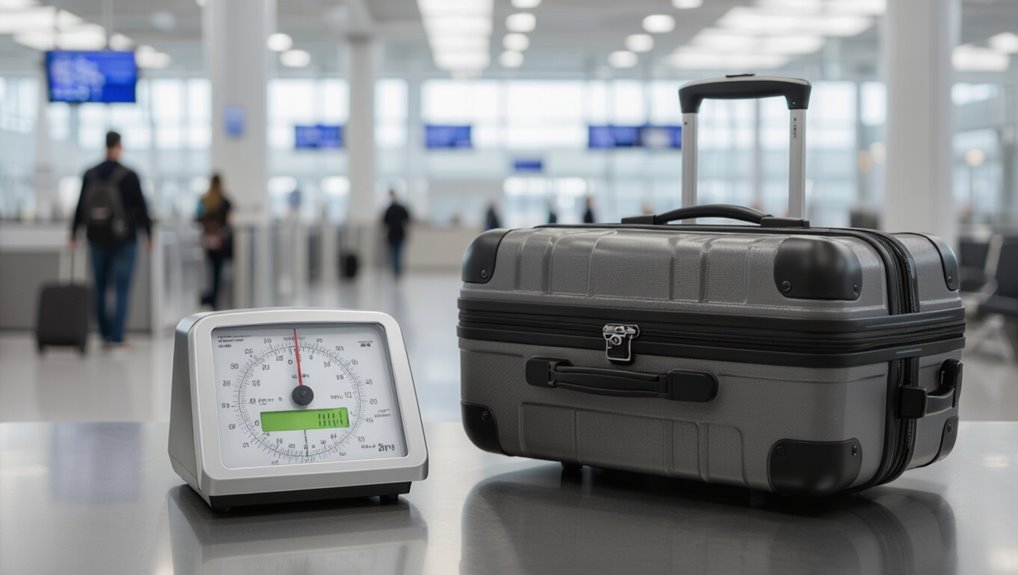
A compact digital scale can save you airport stress and overweight fees by giving you a quick, accurate reading before you leave home; pick a model with a clear display, a 50 kg (110 lb) capacity, and ±0.1–0.2 kg accuracy so you’re not guessing at the counter.
Use it to confirm weight, redistribute items, and avoid surprises.
- Sling handle tug
- Firm grip lift
- Zero/tare check
- Folded suitcase rest
Smart Repacking Tips at the Airport to Avoid Extra Kilos
If your bag’s over the limit, quickly redistribute weight by moving dense items into carry-on or checked pockets.
Slip on bulky layers like jackets or boots to shave kilos without unpacking.
Consolidate liquids into one clear pouch and secure them to save space and avoid spills.
Quickly Redistribute Weight
When the scale shows a surprise overage, don’t panic—move heavier items into your carry-on, pockets, or a partner’s bag to shave kilos fast.
Quickly rebalance: shift shoes, toiletries, books, and electronics to lighter bags. Check straps and zippers. Zip and weigh again.
Visualize options:
- Boots tucked into tote
- Shampoo in clear pouch
- Laptop under arm
- Jacket folded into daypack
Use Wearable Layers
Because airports let you wear extra weight without surcharges, layer smartly to move heavy or bulky items onto your body and free up checked-bag kilos.
Put a jacket over a sweater, tuck bulky shoes or a hat into outer pockets, and wear thicker trousers.
Balance comfort and mobility so you can pass security easily while shifting weight off your suitcase.
Consolidate Liquids Securely
You’ve already shifted bulk onto your body; now focus on shaving weight from your carry-on by consolidating liquids securely.
Swap full bottles for travel-sized, decant into 100ml clear bags, place creams in lightweight tins, and tuck toiletries into a compressible pouch to save space and kilos.
- tiny refillable bottles
- labeled zip bags
- flat silicone tubes
- slim toiletry roll
When to Buy Extra Allowance in Advance vs at the Desk
If you expect extra bags or heavy items, buy additional allowance in advance to save money and skip last-minute stress at the airport.
Compare airline fees online; prepaying is usually cheaper and guarantees space.
Pay at the desk if your weight estimate changes or flights are flexible, but expect higher charges and possible capacity limits.
Decide based on certainty and cost.
How to Claim Baggage Allowance on Refundable or Changeable Tickets
When your ticket is refundable or allows changes, check the fare rules and baggage policy immediately so you can claim any included allowance before making adjustments or canceling.
Contact the airline or your travel agent, note confirmation IDs, and request written proof of allowance.
Visualize the process:
- Phone call with agent
- Email with policy screenshot
- Updated itinerary showing allowance
- Receipt for paid extra kilos
Insurance and Declared Value for Overweight or Lost Baggage
Because airlines and insurers handle overweight and lost baggage differently, check both your ticket’s declared-value limits and any travel or cargo insurance before you travel.
You should document contents, keep receipts, and note weight at check-in. If baggage is overweight, insurers may not cover excess fees; for lost items, declared value caps damages.
File claims promptly and keep all airline paperwork.
Common Exceptions: Military, Medical, and Mobility Aids
Although standard baggage rules cover most travelers, airlines make specific exceptions for military personnel, medical equipment, and mobility aids, and you should know how these differ from regular allowances.
You can often carry extra or special-handled items; check documentation and notify the carrier.
Consider examples:
- Folded wheelchair with protective cover
- Portable oxygen concentrator with battery
- Prosthetic limbs packed securely
- Uniforms or gear inspected on request
Checklist: How to Ensure You Meet Kilo Limits Before Departure
You’ve handled special items and documented exceptions; now make sure your total weight fits the airline’s kilo limits before you leave. Weigh carry-on and checked bags, redistribute items, remove nonessentials, and check allowance online. Confirm fees and overage rules. Pack heavier items in checked bags if allowed.
| Item | Action | Target |
|---|---|---|
| Carry-on | Weigh | ≤ limit |
| Checked | Redistribute | Balanced |
| Extras | Remove | Save kilos |
Frequently Asked Questions
How Do Visa or Entry Rules Affect Permitted Baggage Weight per Person?
They usually don’t change airline baggage limits, but you’ll need to follow customs, import/export and duty rules that can restrict items or require declarations; you should check destination entry regulations and airline policies before packing to avoid penalties.
Can Duty-Free Purchases at Transit Airports Exceed My Baggage Limit?
Yes, they can—if your airline’s allowance covers the extra weight; otherwise you’ll need to pay excess baggage fees or ship items separately, and you must still comply with customs limits and transit airport duty-free rules.
Are Airline Staff Allowed to Weigh Bags Before Check-In Counters Open?
Yes — airlines can weigh bags before check‑in opens; they’ll check limits during drop‑off or screening. You should arrive early, follow carrier rules, and be ready to repack or pay fees if overweight.
Do Refurbished or Prototype Medical Devices Count Toward Baggage Kilos?
Yes, they usually count toward your baggage kilos, since refurbished or prototype medical devices are treated as luggage or checked items. You’ll need to declare them, check airline and customs rules, and secure proper documentation and packaging.
How Are Baggage Kilos Handled for Pet Carriers and Emotional Support Animals?
Pet carriers and emotional support animals usually count toward your checked or carry-on weight allowance if transported as baggage; if they fly in-cabin under airline-specific policies, they may incur separate fees or size limits, so check your carrier’s rules.
Conclusion
In short, know your ticket, check your airline’s policy, and weigh bags before you leave. Most international flights let economy passengers take 20–23 kg, premium economy 23–30 kg, and business/first 30–32 kg per checked bag, though some carriers use piece-based limits instead. Declare valuable items, consider insurance for high-value or fragile goods, and request exceptions for medical or mobility items in advance. Doing these things keeps you within kilo limits and avoids surprise fees.