How Many Kg Is a Cabin Bag Airline Limits Explained
You’ll usually find cabin-bag limits between 5 and 12 kg, with most airlines setting 7–10 kg as the common range; low-cost carriers often cap bags at 5–7 kg while some full-service airlines allow up to 12 kg. Rules differ by route, class and loyalty status, and size limits also matter since bags must fit bins or under seats. Weigh yours before you fly to avoid fees, and keep going to learn practical packing and contest tips.
Quick Answer: Typical Cabin Bag Weight Limits (kg)
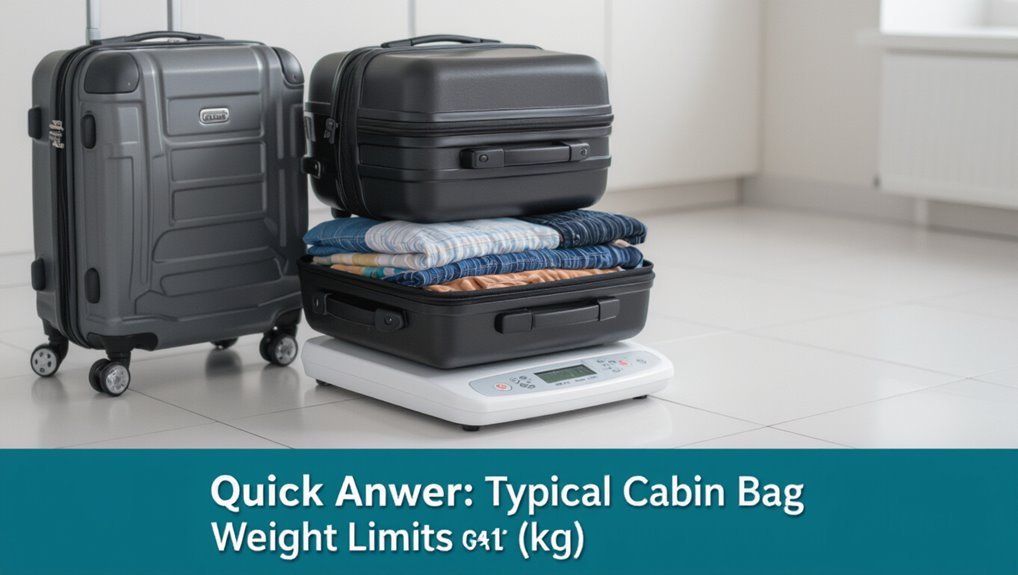
Most airlines let you carry a cabin bag weighing between 7 kg and 10 kg, though some low-cost carriers limit you to 5–7 kg and a few full-service airlines allow up to 12 kg; check your carrier’s rules before packing.
You’ll usually be allowed one cabin bag plus a smaller personal item. If unsure, weigh luggage at home and confirm dimensions to avoid gate checks.
Why Weight Limits Vary Between Airlines and Regions
Because airlines set policies to balance safety, space and revenue, you’ll see different cabin bag weight limits across carriers and regions.
You’ll notice factors like aircraft type, boarding procedures, average flight duration, and local regulatory standards shaping limits.
Low-cost carriers often enforce stricter weights to maximize seats and ancillary fees, while legacy airlines may allow more flexibility based on service models.
Weight vs Size: What Matters for Carry-On?
Which matters more when you’re packing: the bag’s weight or its size?
You’ll face both limits: size controls fit in overhead bins and under seats, weight affects lifting and some airlines’ rules.
Prioritize dimensions to guarantee carriage, then distribute items to meet weight limits.
Weigh your packed bag and adjust contents or swap items to avoid fees or gate checks.
How Airlines Word Their Cabin-Bag Rules
Airlines phrase their cabin-bag rules in different ways, so you should read policies carefully before you pack.
They’ll vary by wording—some stress dimensions, others weight, and some mix both. You’ll feel relieved if you:
- Check exact terms,
- Compare size vs weight,
- Note exemptions,
- Confirm recent updates.
That saves hassle and extra fees.
Standard Weight Bands: 5, 7, 8, 10, 12 Kg Explained
Many carriers group cabin-bag allowances into common weight bands—5, 7, 8, 10 and 12 kg—so you can quickly gauge what to pack based on typical limits; knowing which band your ticket follows helps you avoid surprises at the gate.
Choose lighter bands for hand luggage only; heavier bands let you pack more electronics or liquids.
Weigh bags before travel and redistribute items to comply.
Major Airlines With Strict Kg Limits
When you fly with carriers like Ryanair, EasyJet, and Vueling, expect strict cabin-weight limits that are enforced at boarding and can mean paying hefty fees if your bag’s even a kilo over.
You’ll feel anxious, rushed, and tempted to leave items behind.
Here’s what to watch for:
- weight caps
- strict enforcement
- surprise charges
- gate-checked items
Airlines With Flexible or No-Weight Policies
If you prefer less fuss at the gate, several carriers either don’t set a strict cabin-weight limit or let you bring a reasonably heavier bag without extra fees.
You’ll still follow size guidelines and common-sense packing; crews may ask very heavy items to go below.
Check specific airline pages—policies vary by route, class, and loyalty status—so you’re not surprised at boarding.
How Low-Cost Carriers Enforce Tight Kg Limits
You’ll often face strict weight checks at the gate where staff ask you to place your cabin bag on scales.
Low-cost carriers sometimes set up boarding bag scales in queues so they can enforce limits quickly.
If your bag’s even a kilo over, you’ll usually be asked to pay a fee or check it.
Strict Weight Checks
Because low-cost carriers squeeze margins tightly, they enforce cabin-bag weight limits with rigorous checks at multiple points — online, at self-service kiosks, and at boarding gates — and they won’t hesitate to charge you or gate-check your bag if it exceeds the limit.
You’ll face clear, fast consequences that can ruin plans:
- Surprise fees
- Last-minute repacking
- Delayed boarding
- Embarrassment and stress
Boarding Bag Scales
When airlines want to stop overweight bags at the gate, they put scales right where you board and make you lift them onto a trolley or hook—no debate, no leniency.
You’ll be weighed fast; staff enforce limits, charge fees, or gate-check items. Low-cost carriers train crews to act consistently, so you won’t slip through unless your bag clearly meets the allowed kilogramage.
How Full-Service Carriers Handle Cabin Weight
Although policies vary by airline, full-service carriers usually set clear cabin baggage weight limits and enforce them at check-in or the gate.
You’ll face measured limits, friendly reminders, and occasional fees. Prepare to adjust and pack smartly to avoid stress.
- You’ll feel relieved when compliant.
- You’ll be frustrated if overweight.
- You’ll appreciate clear signage.
- You’ll avoid last-minute repacking.
Regional Patterns: Europe, North America, Asia, Middle East, Australasia
You’ll notice Europe tends to set cabin bag expectations around 8–12 kg for many full-service and low-cost airlines.
In North America, limits are often less strict on weight but stricter on size, so you’ll see more emphasis on dimensions than kilos.
Comparing these norms helps you pack smarter depending on where you’re flying.
Europe Weight Norms
In Europe, most airlines set cabin bag limits between 7 kg and 12 kg. You’ll usually be expected to carry light, compact items rather than bulky suitcases.
You’ll find variations by carrier and fare, so pack strategically to avoid stress.
- Relief: lighter bags, easier moves
- Anxiety: strict gate checks
- Freedom: bring essentials onboard
- Frustration: unexpected fees
North America Limits
Moving from Europe’s generally light allowances, North American carriers tend to give you a bit more leeway: many U.S. and Canadian airlines set cabin bag limits between 8 kg and 14 kg or, more commonly, specify size and let weight be flexible—especially on U.S. domestic flights—so you should check each carrier’s rules since budget airlines and international routes often enforce stricter limits and gate checks.
| Airline | Typical Policy | Note |
|---|---|---|
| Major US | Size over weight | Flexible |
| Low-cost | Strict weight | Fees |
| International | Varies | Check online |
| Canada | Similar to US | Regional rules |
Class of Travel and Carry-On Weight Allowances
Wondering how your ticket class affects cabin baggage? You’ll often get different allowances by class.
Economy limits are tighter, while premium cabins grant more freedom. Check specifics before packing.
Economy bags are tighter; upgraded cabins offer more carry-on freedom—always verify your airline’s exact limits before packing.
- Economy: compact, strict — pack light.
- Premium Economy: a bit more comfort.
- Business: generous space, fewer worries.
- First: maximum allowance, travel relaxed.
Frequent-Flyer Status: Extra Carry-On Weight?
How much extra carry-on can you bring with elite status?
Elite tiers sometimes allow an additional small bag or increased weight—varies by airline.
You’ll often get priority boarding and extra allowance for essentials, but limits and dimensions still apply.
Check your carrier’s program terms before packing.
Don’t assume unlimited extras; verify weight, size, and eligible items to avoid gate fees.
Airline Family Memberships and Bundled Benefits
Check what family or bundled memberships do for cabin bag rules by comparing tiers and their shared baggage allowances.
You’ll want to know if higher tiers let family members pool weight or add extra carry-ons.
Also look for perks and discounts that cut fees or simplify boarding for the whole family.
Membership Tiers Compared
Many airlines offer tiered family or bundled memberships that combine baggage allowances, priority boarding, and additional perks into a single package, so you can compare concrete value instead of isolated benefits.
You’ll assess tiers by cost versus perks, choosing what saves you stress and money.
- Savings
- Convenience
- Flexibility
- Status
Shared Baggage Allowances
Curious how pooling allowances can simplify travel for families? You can join family or group plans some airlines offer, letting members share checked-bag kilos or cabin-item counts.
That means one parent can allocate extra weight to another traveler, reducing fees and juggling.
Check rules: which tiers qualify, transfer limits, booking windows, and whether unused kilos roll over or expire.
Family Perks And Discounts
When you travel as a family, airlines often bundle perks—like discounted fares, extra baggage kilos, priority boarding for kids, and lounge access—into family or group memberships so you can save money and skip repetitive bookings.
You’ll enjoy simpler planning and more weight flexibility.
Consider benefits like:
- Shared baggage kilos
- Discounted group fares
- Priority boarding for children
- Family lounge access
Long-Haul & Transatlantic Carry-On Weight Norms
On long-haul and transatlantic flights, airlines usually enforce stricter carry-on weight limits than on short-haul routes, so you’ll want to check policies before you pack.
Typical limits range from 7–12 kg for economy, while premium cabins often allow more.
You’ll face tighter enforcement at busy gateways; confirm allowances, include personal item rules, and weigh your bag to avoid surprises.
Short-Haul and Regional Flight Weight Norms
On short-haul and regional flights you’ll usually see lower carry-on weight limits—often 7–10 kg for budget carriers and up to 10–12 kg for some regional or full-service airlines.
Check your specific airline since regional operators vary a lot in rules and may charge for anything over a strict limit.
Pack smart by prioritizing essentials, using lightweight items, and weighing your bag before you leave to avoid surprises.
Typical Weight Allowances
Short-haul and regional carriers typically limit cabin bags to between 7 kg and 10 kg, though some low-cost airlines let you carry up to 12 kg or enforce only size limits.
You should check limits before packing to avoid stress.
Consider these quick realities:
- 7 kg—light, restrictive, anxious.
- 8–10 kg—standard, manageable, confident.
- 12 kg—generous, relaxed.
- Size-only—flexible, risky.
Regional Carrier Differences
If you’re comparing carriers, remember that regional and short-haul airlines often set different cabin weight rules than major international carriers.
So what felt generous on one flight can be restrictive on another. You should check specific limits: some cap cabin bags at 7–8 kg, others allow 10 kg, and size rules vary.
Low-cost regional operators enforce stricter checks and fees.
Packing Tips For Limits
When you’re preparing for a short-haul or regional flight with tight cabin weight limits, pack strategically to stay under strict 7–10 kg rules without sacrificing essentials.
You’ll prioritize versatility, weigh items, and use smart compartments.
- Choose lightweight layers to adapt.
- Limit shoes to one pair.
- Use travel-size toiletries.
- Weigh bag before leaving to avoid stress.
When Oversized Bags Trigger a Weigh-In
Although airlines generally let you board with a slightly larger cabin bag, carriers will often weigh or gate-check it if it visibly exceeds their size limits or looks heavy.
If your bag bulges, has extra straps, or causes boarding delays, staff may request a weigh-in.
You’ll either pay a fee, check the bag, or be asked to redistribute items to meet cabin rules.
How Gate Agents Check and Enforce Carry-On Weight
Because gate agents are responsible for keeping the cabin safe and compliant, they’ll visually inspect your bag and may ask you to place it on a scale if it looks heavy or oversized.
Gate agents may visually inspect and weigh oversized or heavy bags to ensure cabin safety and compliance—cooperate calmly.
You should cooperate calmly; they enforce limits to equalize space and safety.
- Respect rules
- Stay calm
- Accept recheck
- Pack lighter next time
Typical Airport Weigh-In Procedures
When you approach security or the check-in counter, your bag may be placed on a security scale for an initial weight check.
If the gate or airline staff need a confirmed figure, they’ll move it to the airline counter scale for an official weighing.
Knowing both checks can happen helps you pack to the published KG limits.
Security Scale Checks
Curious how airports verify cabin bags meet weight rules? You step forward, place your bag on a security scale, and watch staff or automated sensors record the mass.
You feel a mix of relief or dread as numbers appear.
Typical actions:
- Bag placed
- Weight displayed
- Staff confirm
- Pass or ask to redistribute items
Airline Counter Weighing
If you check in at the airline counter, an agent will usually place your cabin bag on a calibrated scale and record the weight before printing any boarding passes or bag tags. You’ll be told if it exceeds limits, asked to repack or gate-check, and charged if necessary.
| Step | Action | Outcome |
|---|---|---|
| 1 | Weigh bag | Measured kg |
| 2 | Compare | Within limit? |
| 3 | Repack | Reduce weight |
| 4 | Charge | Fee applied |
What Happens If Your Carry-On Is Overweight?
Although you might think a few extra kilos won’t matter, airlines enforce carry-on weight limits strictly and you’ll face consequences if your bag’s overweight. You might be stopped, delayed, or forced to repack.
Reactions can feel stressful:
Reactions can be overwhelming — frustration, embarrassment, panic, and helplessness are common but manageable.
- Frustration
- Embarrassment
- Panic
- Helplessness
Plan ahead, redistribute items, or check luggage early to avoid that moment.
Fees for Overweight Cabin Bags (What to Expect)
Most airlines charge a clear fee when your cabin bag exceeds the allowed weight.
You’ll usually find the exact amount listed on the carrier’s website or displayed at the check-in desk.
Expect tiered charges based on excess kilograms, higher costs for last-minute airport payments, and occasional options to pre-pay online for a lower rate.
Know the limit to avoid surprise fees.
Gate-Check vs Refusal: Who Decides?
When your bag looks too big or heavy at the gate, airline staff use specific gate-check criteria—size, weight, and cabin space—to decide if it must go in the hold.
You won’t be the one making that call; gate agents and sometimes the lead flight attendant have the authority to refuse cabin carriage.
Knowing their criteria ahead of time helps you avoid surprises and potential refusal.
Gate-Check Criteria
Airlines decide whether a bag gets gate-checked based on size, weight, and carry-on space availability, and you’ll usually find the attendant makes the call at the jet bridge.
You should expect quick assessment and clear reasons.
Factors that prompt gate-check:
- Overlarge or bulky bags
- Excess weight beyond cabin limits
- Crowded overhead bins
- Safety or boarding priority concerns
Refusal Authority
Although gate agents and flight attendants usually handle the immediate decision to gate-check or refuse cabin bags, you should know that ultimate authority can vary: airport ground staff enforce airline policies on the jet bridge, cabin crew assess safety and cabin fit during boarding, and airline management or regulatory officials can step in for contested cases.
| Role | When | Decision |
|---|---|---|
| Gate agent | Boarding | Enforces rules |
| Flight crew | Safety check | Final onboard say |
| Management | Appeals | Policy override |
Measure Your Bag and Convert Liters to Kg
Start by measuring your bag’s external dimensions—height, width, and depth—so you know its total volume in liters. Most cabin bag manufacturers list liters, but you can calculate it by multiplying those three measurements (in centimeters) and dividing by 1,000.
Then estimate weight: dense packing raises kg, loose packing lowers it.
Follow this quick checklist:
- Measure precisely
- Convert to liters
- Estimate contents’ density
- Weigh and confirm
Choose Fabrics and Frames to Cut Bag Weight
Pick materials and frame components that shave grams without sacrificing durability. You’ll prefer lightweight fabrics like ripstop nylon or polyester blends and minimalist internal frames or flexible stays.
Skip heavy leather or solid metal frames. Look for reinforced stress points instead of full-metal structures.
Every saved gram helps meet cabin limits, so prioritize smart construction, quality zippers, and efficient structural design over bulky ornamentation.
Pack to Stay Within Common Kg Limits
Anyone traveling with cabin baggage should weigh what they’ll bring and plan around common airline limits—typically 7–10 kg for many carriers, though some allow up to 12 kg or more.
Weigh carry-on items and plan for common cabin limits—usually 7–10 kg (sometimes up to 12 kg).
You’ll feel calmer packing with clear goals. Follow these steps to avoid surprises:
- Weigh items as you pack.
- Prioritize essentials.
- Use compact organizers.
- Remove extras last-minute.
Smart Packing Choices That Save Kilograms
You can shave kilos off your cabin bag by layering clothes strategically instead of packing bulky single pieces.
Pick multipurpose items that serve several outfits or functions so you carry less.
Favor lightweight materials for outerwear and accessories to cut weight without sacrificing comfort.
Layering Clothes Strategically
When space and weight matter, layering clothes strategically lets you adapt to changing temperatures without packing extra items.
You’ll feel lighter and more confident choosing thin base layers, a warm mid-layer, a versatile jacket, and compressible accessories.
Pack emotionally smart:
- Thin merino base
- Insulating mid-layer
- Weatherproof outer shell
- Compressible scarf and gloves
Prioritizing Multipurpose Items
1 smart, multipurpose item can replace several single-use pieces and shave kilos off your cabin bag; prioritize garments and gear that serve double duty—think a reversible jacket, a scarf that converts to a blanket, or shoes that work for both walking and a night out—so you carry less without sacrificing function. Choose items that layer, pack small, and meet multiple needs.
| Item | Dual Use |
|---|---|
| Reversible jacket | Day/evening wear |
| Scarf/blanket | Warmth/comfort |
| Foldable shoes | Day/night |
| Travel pants | Trek/meet |
| Packable tote | Shopping/laundry |
Using Lightweight Materials
A few smart material swaps can shave kilos off your cabin bag without cutting essentials: pick ultralight fabrics like merino, nylon blends, and packable down, favor hollow-core or foam travel accessories, and choose gear with high strength-to-weight ratios so you carry less bulk but keep function.
- Choose packable down
- Swap heavy cotton
- Use hollow-core pillows
- Pick titanium tools
Weighing Luggage at Home Accurately
Want to avoid surprises at the gate? You can check weight at home reliably: pack methodically, zip fully, and measure on a flat, stable surface. Compare to airline limits and remove extras if needed. Use consistent units and note pockets.
| Step | Tip |
|---|---|
| 1 | Empty pockets |
| 2 | Close zippers |
| 3 | Flat surface |
| 4 | Record weight |
| 5 | Adjust items |
Best Portable Luggage Scales and How to Use Them
You’ll want a top-rated portable luggage scale that’s accurate, durable, and easy to read.
I’ll show you how to use one correctly and what to check when calibrating and caring for it.
With the right scale and simple maintenance, you’ll avoid overweight fees and travel stress.
Top Rated Scales
Carrying an accurate portable scale can save you from surprise fees and last-minute repacking at the airport.
You’ll want reliable, compact, and fast options that feel sturdy and ease travel stress.
Consider these top-rated picks:
- Digital hook scale — precise, tactile confidence.
- Grip handle scale — ergonomic, reassuring control.
- Luggage strap scale — simple, dependable comfort.
- Travel pouch scale — discreet, calming convenience.
How To Use
1 simple routine will keep your bag under the airline limit: weigh it before you leave home. Use a portable scale, lift by the handle, read the display, adjust contents, and reweigh. Repeat until compliant. Quick tips:
| Action | Why |
|---|---|
| Weigh | Prevents surprises |
| Adjust | Meet limits |
| Reweigh | Confirm compliance |
Calibration And Care
When you rely on a portable luggage scale to keep your cabin bag within limits, regular calibration and basic care make the difference between accurate readings and surprises at the gate.
You’ll want to:
- Calibrate monthly against a known weight.
- Store dry and avoid shocks.
- Replace batteries regularly.
- Check straps and hooks before each trip.
These steps keep measurements reliable.
Distribute Weight: Carry-On vs Personal Item
Although airlines limit the combined weight you bring on board, you can stay within limits by smartly splitting items between your carry-on and personal item.
Put heavier, bulkier essentials in the carry-on—shoes, spare clothes—while reserving the personal item for valuables, documents, and immediate-onboard needs.
Weigh both before leaving, prioritize dense items, and adjust to meet airline-specific combined limits.
Compression and Organization Tricks to Save Kg
You can shave kilos off your cabin bag by maximizing packing efficiency with only what you’ll actually wear.
Use compression accessories like vacuum cubes or packing cubes to reduce bulk and organize items.
Layer smartly—roll thin garments, stack heavier pieces at the bottom, and keep toiletries compact to save space and weight.
Maximize Packing Efficiency
Trim your load by smartly compressing and organizing items so every kilo counts; using packing cubes, rolling clothes, and vacuum bags can greatly reduce bulk without sacrificing accessibility.
You’ll feel lighter and calmer when each item has a spot.
- Prioritize essentials to ease anxiety.
- Layer by weight for balance.
- Use straps to stabilize contents.
- Keep toiletries minimal and sealed.
Use Compression Accessories
When space feels tight, reach for compression accessories to shave kilos and keep things orderly; they squeeze out air and flatten bulky items so you can pack more efficiently without redistributing weight awkwardly.
Use vacuum bags for off-season garments, compression cubes for daily outfits, and straps to stabilize loads.
Roll soft items, separate liquids, and weigh your bag after packing to avoid surprises.
Smart Layering Techniques
Although layering might seem like extra work, smart combos let you wear heavier pieces and pack lighter ones so you shave kilos without sacrificing comfort.
You’ll feel confident using compression, rolling, and strategic pockets to minimize bulk.
Try these steps to cut weight and stress:
- Wear your bulkiest coat.
- Layer thin thermals.
- Roll shirts tightly.
- Use packing cubes.
Electronics and Batteries: Weight and Rules
Because electronics and batteries add both weight and safety considerations, you should pack them thoughtfully to stay within cabin bag limits and follow airline rules.
Place heavier devices close to the bag’s center, carry laptops and cameras in protective sleeves, and keep spare batteries and power banks in your carry‑on only.
Check airline watt‑hour and quantity limits before travel to avoid confiscation or fines.
Liquids and Duty‑Free: Packing to Save Weight
Know the 100ml rule and how liquids must fit in a clear, resealable bag so you don’t get held up at security.
If you buy duty‑free, keep purchases in their tamper‑evident bags and check airline policies so they won’t add unexpected weight or be confiscated.
Weigh your bag at home or at the airport counter after packing liquids to avoid surprises at the gate.
Liquid Limits Explained
Curious about what you can actually bring through security?
You’ll need to follow strict liquid limits to avoid delays and discarded items.
Pack smart: small containers, clear bag, essentials only.
Think convenience and calm.
- 100 ml max per container
- All fit in one 1L clear pouch
- Remove for screening
- Buy larger items after security
Duty‑Free Packaging Tips
After you’ve sorted your 100 ml travel-sized liquids into a clear 1L pouch, think about how duty‑free purchases fit into that setup—especially if you want to save weight and avoid repacking. Keep receipts, use tamper-evident bags, and place bulky bottles near the base to balance weight. Store fragile items between clothes to cushion them.
| Tip | Why it helps |
|---|---|
| Keep receipt | Proof for security |
| Use seal bag | Meets rules |
Weighing Strategies Before Security
Because cabin weight limits can sneak up on you, weigh your bag before you reach security so you can rearrange rather than repack under a line.
You’ll save stress and avoid extra charges by managing liquids and duty‑free buys. Check and shift items, use sealed duty‑free bags, and prioritize essentials.
- Calm
- Control
- Relief
- Confidence
Ship vs Check: When Overweight Items Are Cheaper
Ever wondered whether it’s cheaper to ship heavy items ahead or pay the airline’s overweight fees at the airport?
Compare courier rates, delivery times, and insurance to airline excess charges.
If shipping costs less than combined checked-bag fees and the risk of gate refusal, ship.
For valuables or urgent needs, pay the airline.
Always calculate total door-to-door expense before deciding.
Booking Tips to Avoid Surprise Kg Limits
Before you book, check the airline’s weight policies so you’re not caught off guard at the gate.
Weigh your luggage at home to confirm it meets the limit, and measure its dimensions to match carry-on rules.
That way you’ll avoid unexpected fees and last-minute repacking.
Check Airline Weight Policies
Want to avoid extra fees at the gate? Check each airline’s cabin weight rules before booking and note limits, carry-on allowances, and exceptions so you won’t be caught off guard.
- Compare weight limits across carriers.
- Note family, elite, or fare-specific perks.
- Record measurements and documentation rules.
- Save screenshots or confirmations for peace of mind.
Weigh Luggage Beforehand
How will you avoid surprise fees at the gate?
Weigh your packed cabin bag at home with a reliable digital scale so you know its exact kilos.
Adjust contents—remove nonessentials or move items to checked luggage—until you meet the airline’s limit.
Re-weigh after any last-minute additions.
This simple step prevents stress, extra charges, and time-consuming repacking at the airport.
Know Carry-On Dimensions
Weighing your bag at home is smart, but size rules matter just as much—airlines often enforce strict length, width, and depth limits that can force you to check an otherwise light cabin bag.
Measure carefully, compare to your carrier’s policy, and choose a compliant bag to avoid stress.
- Panic
- Relief
- Hassle
- Freedom
Read an Airline’s Baggage Policy for Kg Details
Start by finding the airline’s official baggage policy page—it’s the fastest way to get exact kg limits, size rules, and any weight-based fees that apply to cabin bags.
Read the fine print for permitted weights, variations by route or class, and whether items like laptops count separately.
Note how enforcement works at boarding and keep a screenshot or PDF for reference when checking in.
Buy-Ons and Fare Add-Ons to Raise Carry-On Weight
If the airline’s baggage page shows a strict cabin weight you can’t meet, check whether you can buy an extra allowance at booking or before boarding—many carriers let you add kilograms, upgrade to a higher fare class, or purchase a carry-on add-on online or at the gate.
- You’ll feel relieved paying a small fee.
- You’ll avoid last-minute stress.
- You’ll keep prized items close.
- You’ll travel lighter mentally.
How Ticket Upgrades Change Your Allowed Kg
When you upgrade your ticket—whether to premium economy, business, or first class—you’ll usually get a higher carry-on and checked baggage allowance, often measured in kilograms rather than piece counts.
Check your new fare’s specific kg limits, as upgrades can raise both cabin and hold weights.
Verify online or with the airline before travel to avoid surprises and extra fees.
Codeshares: Whose Carry-On Rules Apply?
Upgrading your ticket can change the weight or number of bags you’re allowed, but codeshare flights add another layer: the operating carrier’s baggage rules typically apply.
You should check the operating airline before packing. It can feel confusing, unfair, or freeing depending on the policy.
- Verify carrier
- Confirm limits
- Prepare backup
- Ask at check‑in
Preparing Multi-Airline Trips With Different Kg Rules
Because each airline sets its own cabin weight rules, you’ll want to map limits for every carrier on your itinerary before packing.
Note which segment has the strictest allowance, prioritize items accordingly, and plan transfers or consolidations to avoid surprises at boarding.
Check each carrier’s website, add permitted weight plus carry-on size, redistribute gear for tight segments, and confirm policies at check-in.
Common Mistakes That Push You Over the Kg Limit
Overpacking small, dense items and ignoring airline-specific rules are the quickest ways to exceed your cabin kg allowance.
You’ll feel stressed at the gate when you discover these mistakes:
- Packing heavy gadgets without cases
- Tossing full toiletries into carry-on
- Cramming shoes and bulky sweaters last minute
- Forgetting to weigh bag after gifts or shopping
3 Traveler Case Studies: Avoiding Gate Surprises
Mistakes like stuffing heavy gadgets or forgetting to re-weigh after shopping often lead to last-minute surprises at the gate.
So let’s look at real traveler cases to see how others avoided fines and forced checked bags.
You’ll read about smart swaps, redistributing weight to personal items, using prepaid overweight options, and asking staff for quick solutions—practical moves you can copy next trip.
Quick Checklist to Hit Cabin Bag Kg Limits
Want to make sure your cabin bag hits the airline’s kg limit without drama? Use this quick checklist to stay calm and compliant.
- Weigh your packed bag at home—don’t guess.
- Prioritize essentials; remove non-urgents.
- Wear heavy items on the plane to save weight.
- Compress soft items or swap for lighter alternatives.
Stay confident at the gate.
Apps and Tools to Check Carry-On Weight Rules
How can you quickly confirm a carrier’s cabin bag weight rules before you pack?
Use airline apps for official limits and alerts, check aggregator sites for side‑by‑side comparisons, and install flight apps that store your bookings and show baggage allowances.
Portable luggage scales and smart scales sync to apps for on-the-spot weighing.
Bookmark official policy pages and enable notifications for rule changes.
How to Contest an Overweight Carry-On Charge
If an agent tags your cabin bag as overweight, stay calm and act fast—you have options to contest the charge.
You can politely request a reweigh, show official weight limits, and ask for a supervisor. Document everything.
Consider these steps:
- Ask for a reweigh immediately.
- Request a supervisor.
- Show airline policy (app/email).
- Take photos and note names.
Final Tips: Travel Light and Avoid Last-Minute Fees
Even after disputing a weight fee, the best defense is packing smarter so you don’t face charges at all.
Roll clothes, use packing cubes, and limit shoes. Weigh your bag at home, choose versatile outfits, and move heavy items to checked luggage or your personal item when allowed.
Arrive early to rearrange items rather than paying last-minute fees.
Frequently Asked Questions
Can Pets or Medical Equipment Be Excluded From Carry-On Weight Limits?
Yes, you can often exclude pets or medical equipment from carry-on weight limits; airlines and regulators usually allow medical devices and service animals free of weight restrictions, but you’ll want to check specific airline policies and provide documentation.
Do Infant or Child Tickets Include Separate Carry-On Kg Allowances?
Usually, yes—you’ll get similar or reduced carry-on allowances for infants/children depending on the airline; some airlines grant a separate small bag or bassinet allowance, so check your carrier’s specific policy before packing.
How Do Stand-By or Award Tickets Affect Cabin Baggage Weight?
Stand-by or award tickets usually don’t change cabin baggage weight; you’ll follow the same carry-on allowance as paying passengers on that fare class. Check your airline’s specific rules, since elite status or route exceptions can apply.
Are Musical Instruments Considered Carry-On or Checked for Weight Rules?
Musical instruments can be either carry-on or checked depending on airline policy, cabin space, and size; you’ll usually be allowed small instruments as carry-on, but larger ones may require checked baggage or a purchased seat for proper stowage.
Do Airport Lounges or Priority Boarding Waive Carry-On Weight Limits?
No, airport lounges and priority boarding won’t waive carry-on weight limits; you’ll still need to meet the airline’s rules. Lounges and priority let you board or relax earlier, but checked baggage policies remain enforced.
Conclusion
You’ll usually find cabin bag limits between 5–12 kg, so check your airline before packing and focus on dimensions as well as weight. Weigh your bag at home, use lightweight packing cubes, and prioritize versatile clothing and travel-size toiletries to stay within limits. If gate staff challenge your bag, stay calm, ask to weigh it in front of you, and be ready to transfer items or pay the fee. Travel light, plan ahead, and avoid surprise charges.