How to Tie Luggage on Top of Car Step by Step Guide
Center your load on the roof or rack, keeping heavy items over the axle, then place non-slip padding beneath bags. Use at least two strong straps—front-to-back and side-to-side—and tighten them evenly with cam buckles or knots, routing strap ends away from moving parts. Compress gear and pad fragile items, recheck knots and tension after a short drive, and stop within 25–50 miles to inspect. Keep speeds and crosswinds in mind, and continue for detailed tips and safety checks.
Quick Answer: How to Tie Luggage on a Car Roof
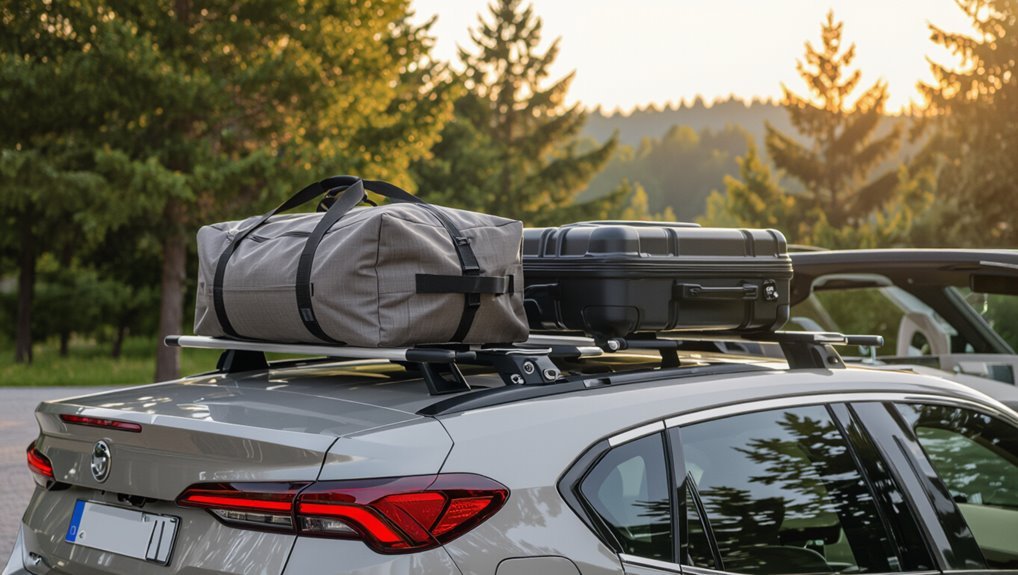
Start by centering the load on your roof or rack, then secure it with at least two strong straps—one front-to-back and one side-to-side—to prevent shifting.
Tighten straps firmly, use non-slip padding beneath luggage, and fasten ends away from moving parts.
Check knots or cam buckles, verify equal tension, and recheck after a short drive to confirm nothing’s loosened or rubbing against the vehicle.
When and Why to Use Roof Storage
When your cabin’s full or you need bulky gear—skis, bikes, a rooftop box—roof storage gives you extra capacity without cramming the interior; use it for long trips, family vacations, or when wet/muddy items shouldn’t come inside. You’ll free space, protect the cabin, and balance weight high and low for safety.
| Item | Benefit |
|---|---|
| Skis | Dry, secure |
| Bikes | Stable transport |
| Box | Organized gear |
| Bags | Extra space |
Measure Your Roof and Luggage Before You Buy
Before you buy a roof rack or rooftop bag, measure both your car’s usable roof area and the dimensions of the luggage you plan to carry so you know what’ll actually fit and how it will mount.
Measure length, width, and height of each item, note roof obstructions (antennas, rails), and check clearance to doors and garage.
Record measurements before shopping.
Which Roof Carriers Fit Your Measurements
You’ll want to measure your roof crossbars’ width and spacing before you shop.
Compare those numbers to carrier dimensions so the rack mounts and load fit securely. If the carrier’s specs don’t match your measurements, it won’t sit or fasten properly.
Measure Roof Crossbars
Start by measuring the distance between your roof crossbars and their width—these two numbers determine which carriers will fit and how securely your luggage will sit.
Use a tape measure, note center-to-center spacing and bar thickness. Record measurements, check for asymmetry, and inspect mounting points and clearance to doors, antenna, or sunroof so you pick compatible carriers.
Match Carrier Dimensions
With your crossbar spacing and thickness recorded, compare those numbers to carrier specs so you can pick models that clamp or strap on securely.
Check mounting range, clamp jaw width, and rail compatibility. Confirm weight capacity and internal clearance for straps.
Measure carrier base length to avoid overhang. If specs differ, choose adapters or a different carrier to prevent shifting, damage, or unsafe loads.
Best Roof Storage Types: Bags, Boxes, Racks, Carriers
Now that you’ve checked fit, consider the storage style that matches your trip.
Soft roof bags give flexible, lightweight packing and easy storage when not in use.
Hard cargo boxes offer weatherproof, secure protection for longer trips or heavier loads.
Soft Roof Bags
You’ll strap them to crossbars or bare roof, secure with reinforced straps, and weatherproof with sealed zippers or rain covers.
Check weight limits and balance load evenly.
Hard Cargo Boxes
If you prefer rigid protection and better aerodynamics than a roof bag provides, hard cargo boxes are the next step.
You’ll get weatherproof, lockable storage that reduces wind drag and noise.
Mount them to crossbars, secure with included hardware, and distribute weight evenly.
Check capacity limits, close latches, and use internal straps to prevent shifting for safer, quieter travel.
Essential Gear: Straps, Ropes, Pads, Anchors
Choosing the right straps, ropes, pads, and anchors makes securing luggage faster and safer.
Use cam straps for tight, quick tension; soft loops or ratchet straps for delicate fabrics; marine-grade ropes if you need knots.
Add non-slip pads between cargo and roof to prevent scratches and shifting.
Place non-slip pads between cargo and roof to prevent scratches and keep loads from shifting during transit.
Anchor to factory rails or attachment points only, and inspect hardware for wear before each trip.
Pack Smart: Compressing and Protecting Fragile Items
Once your straps, ropes, pads, and anchors are in place, think about how you pack: compressing gear saves space and prevents shifting while careful padding protects fragile items.
Use compression straps or duffel sacks to reduce movement, wrap glass or electronics in bubble wrap or clothing, and place fragile pieces in the center surrounded by soft items.
Secure everything tightly before driving.
Where to Place Heavy and Awkward Items
Because weight affects handling and balance, put the heaviest items low and centered over the vehicle’s axle or the trailer tongue so they won’t shift your center of gravity. Place awkward shapes inward, near the centerline, and keep weight evenly distributed side-to-side. Avoid tall stacks. Use padding to prevent shifting.
| Item type | Position | Tip |
|---|---|---|
| Battery | Center-low | Secure base |
| Cooler | Rear-center | Strap down |
| Gear box | Center | Pad sides |
Secure Soft Bags With Ratchet Straps (Step-by-Step)
Pick ratchet straps rated for your load and width so they won’t stretch or fail.
Position your soft bags evenly across the roof or rack to balance weight and prevent shifting.
Feed the straps through or around the bags and crank them until they’re snug and secure, but not over-tightened.
Choose Appropriate Ratchet Straps
Start by selecting ratchet straps rated for the weight and size of your soft bags so they hold firm without stretching or breaking.
Check strap width, working load limit (WLL), and breaking strength; choose corrosion-resistant hardware and weatherproof webbing.
Pick lengths that reach anchor points easily without excess slack.
Inspect for frays, cuts, or UV damage before each trip to guarantee safety.
Position Bags Evenly
With your ratchet straps chosen and inspected, lay out the soft bags on the roof or rack so their weight sits low and centered over the vehicle’s strongest anchor points. Move bags until load balances side-to-side and front-to-back. Use light items to fill gaps and keep heavy gear near the center.
| Bag | Position | Comment |
|---|---|---|
| A | Center | Heavy |
| B | Left | Medium |
| C | Right | Light |
| D | Front | Fill gaps |
Secure And Tension Straps
Grab your ratchet straps and anchor points, then thread the strap under the rack or through the roof rails so the webbing lays flat against the bags; this gives you a clean line to tension and prevents shifting.
Tighten each ratchet evenly, alternating sides, until bags feel firm. Secure excess webbing, tuck loose ends, and recheck tension after a short test drive to confirm stability.
Tie Hard Boxes and Suitcases With Ropes (Step-by-Step)
Securing hard boxes and suitcases with rope gives you a dependable, low-cost way to keep luggage from shifting or falling during transit.
Place items centered, loop a strong rope under and over, then tie a trucker’s hitch to tension. Check knots and ends. Recheck after short drive.
Center items, loop a strong rope over and under, tension with a trucker’s hitch, then recheck knots after a short drive
- Use durable, weather-resistant rope
- Cross ropes for stability
- Keep knots accessible for quick release
Fasten Loads to Factory Rails and Crossbars Safely
When you attach gear to factory roof rails or crossbars, pick the right straps and routing to prevent slippage and protect the vehicle’s finish.
Use cam or ratchet straps rated for loads, pad contact points, and run straps through secure anchor points or around crossbars—not over paint.
Balance weight evenly, keep items low, and tie off loose strap ends to avoid snagging.
Check Strap Tension and Prevent Slippage Before Driving
After routing and padding your straps, take a moment to tighten and test each one before you hit the road. Pull each strap snug, cinch ratchets firmly, and lift corners of luggage to confirm no slip.
Re-tension any slack and secure loose ends so nothing flaps.
- Check for even tension across load
- Lock ratchets or cam buckles fully
- Tie off excess strap tails
On-the-Road Inspections: Stops, Speeds, and Checklist
Make at least one stop within the first 25–50 miles to recheck your straps, load shift, and anchor points so you catch any loosening early.
While driving, also watch for changes in handling or unusual noises and slow down if you suspect movement.
After each break, inspect buckles, knots, and roof rails, tighten as needed, and note intervals for routine checks every 100 miles or after rough roads.
Legal, Weight, and Wind Limits to Know
Because laws, vehicle limits, and wind conditions all affect safety, you need to know the legal load limits for your state, your vehicle’s roof and hitch ratings, and how crosswinds and high speeds change handling before you hit the road.
Check weight, distribute load, and reduce speed in gusts. Follow local rules and manufacturer specs.
- Know max roof/hitch weight
- Secure and balance loads
- Slow for strong crosswinds
Alternatives: Hitch Carriers vs. Trailers – When to Switch
If you’ve got a few extra bags or bikes, a hitch carrier gives you a compact, affordable way to expand cargo without towing.
You’ll want to switch to a trailer when weight, size, or frequent use exceeds your carrier’s rating or affects handling.
Consider tow capacity, licensing rules, and how often you haul before making the change.
Hitch Carrier Advantages
When you need extra cargo without hauling a full trailer, a hitch carrier gives you a compact, easy-to-use option that keeps weight off your roof and preserves fuel economy.
You’ll load and secure gear at waist height, reduce wind drag, and avoid roof rack fuss. Consider size, tongue weight, and locking features.
- Easier loading
- Better fuel economy
- Secure, low-profile storage
When To Tow
As your cargo needs grow beyond what a hitch carrier can safely handle, you’ll need to decide whether it’s time to switch to a trailer—considering capacity, towing limits, and how often you haul heavy or bulky loads.
If you frequently exceed weight or size limits, tow regularly, or need secure, weatherproof hauling, choose a trailer.
Otherwise, stick with a hitch carrier for occasional trips.
Frequently Asked Questions
How Do I Protect My Car’s Paint From Straps and Anchors?
You’ll protect paint by using soft padding under straps and anchors, wrapping contact points with cloth or foam, loosening straps periodically, using rubber-coated anchors, and checking for rubbing—tape vulnerable spots and avoid overtightening to prevent scratches and dents.
Can I Tie Luggage on a Sunroof or Panoramic Roof?
You shouldn’t tie luggage to a sunroof or panoramic roof; it’ll leak, scratch, or break seals and glass. Use a proper roof rack or cargo box, and secure loads with straps over protected crossbars for safety.
How Do I Store Unused Roof Straps When Not in Use?
You should coil unused roof straps neatly, secure them with a rubber band or Velcro wrap, and stash them in a labeled bag or storage box in your trunk or garage. That keeps them tidy and prevents damage.
Are There Insurance Implications for Roof-Mounted Cargo?
Yes, you might face insurance implications: policies can limit or exclude roof cargo, require secured loads, and affect claims. You should document cargo, check your policy, notify your insurer, and consider supplemental coverage for peace of mind.
Can I Use Bungee Cords Instead of Straps for Roof Loads?
You shouldn’t—bungee cords aren’t secure enough for roof loads. They’ll stretch, loosen, and risk shifting or snapping. Use rated cam straps or ratchet straps, anchor points, and check tension frequently for safe transport.
Conclusion
You’ve got the basics now, so take a moment before each trip to double-check fit, weight, and security. Measure your roof and luggage, pick the right carrier, and use quality straps or racks. Tighten straps, lock buckles, and tuck straps away from wind. Reinspect after the first few miles and at stops. Respect weight limits and local laws, and choose a hitch or trailer if your load’s too big—safety and peace of mind come first.