Do I Need to Take Medication Out for Tsa Rules Explained
You don’t usually have to remove solid prescription pills from your carry-on, but you should keep them accessible and in their original labeled containers when possible to speed screening. Declare any liquid, gel, injectable, or temperature‑sensitive meds to the TSA officer; medically necessary liquids can exceed the 3.4‑ounce rule but may be inspected. Carry documentation for controlled or injectable drugs and temperature‑sensitive packs, and stay calm—more tips below will help you prepare.
Quick Answer: Do You Need to Remove Meds at TSA?
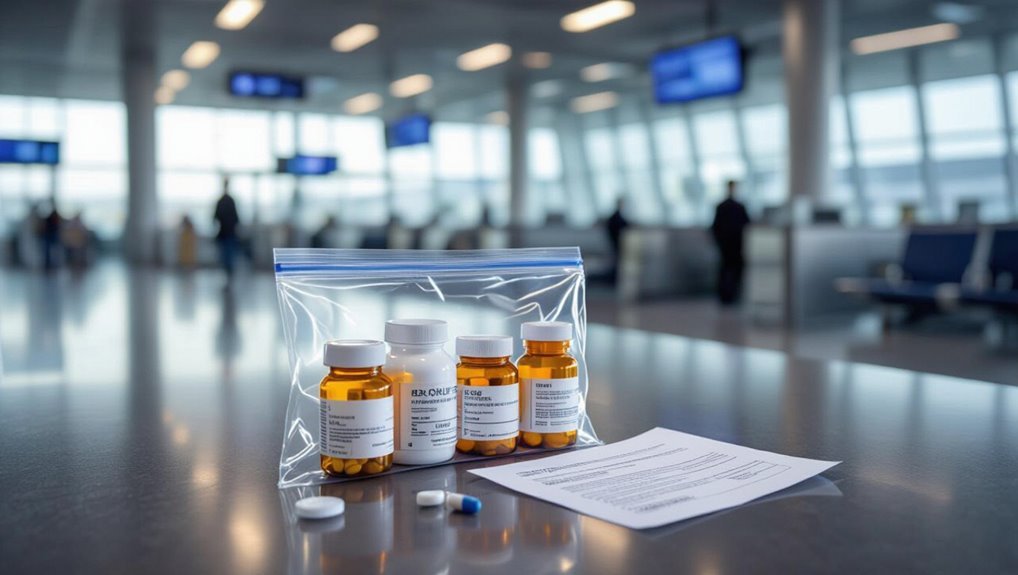
Need to take out your meds at TSA? You don’t usually have to remove prescription medications from your carry-on, but you should declare them if asked.
Keep them accessible for inspection, carry original labels when possible, and separate liquids exceeding the 3.4-ounce rule for screening if required.
Inform TSA officers about syringes, inhalers, or other devices before screening.
What Counts as a Liquid Under TSA for Meds?
Although solid pills and tablets are generally not treated as liquids, many common medication forms — like syrups, suspensions, creams, gels, liquid-filled capsules, and sprays — are considered liquids by TSA and fall under the 3.4-ounce (100 mL) carry-on rule unless declared and screened separately.
You should label, separate, and declare larger or medically necessary liquid meds to security for inspection and allowance.
When Should You Remove Gel or Liquid Meds at Security?
When you go through security, choose whether to keep medications in carry-on or checked luggage based on accessibility and temperature needs.
If your gels or liquids exceed the TSA 3.4-ounce limit, you’ll need to carry them separately and declare them to the officer.
Be ready to remove and place declared meds in a bin so they can be screened quickly and clearly.
Carry-On Versus Checked
Decide whether to carry gel or liquid meds in your carry-on or checked bag based on accessibility, security screening rules, and risk of loss or temperature damage.
Carry essential, temperature‑sensitive, or needed-on-arrival meds in your carry-on so you can present them at security and access them during travel.
Pack less critical or bulky items in checked luggage, but secure and label all containers to prevent spills or confusion.
Gel And Liquid Limits
1 clear rule: you don’t have to put medically necessary gels and liquids in the 3.4-ounce (100 ml) plastic bag, but you should separate them from your carry-on and declare them to TSA officers at the checkpoint for inspection.
Remove larger gel or liquid medications from bags for screening if requested, keep originals and prescriptions accessible, and answer officer questions promptly to speed inspection.
Declare And Separate Items
Declare and separate your gel or liquid medications before you reach the checkpoint so screening goes smoothly: keep them accessible, remove any larger-than-3.4-ounce containers if an officer asks, and place them outside your carry-on for inspection while keeping prescriptions or doctor’s notes handy.
Tell the TSA officer about meds, present documentation, and follow their instructions.
Keep smaller containers in a clear bag for quicker checks.
How to Pack Prescription Pills for TSA Carry‑On Screening
When you’re flying with prescription pills, pack them in your carry‑on where you can access them quickly and present them separately during TSA screening if asked.
Keep pills in original labeled containers or a clear, labeled pill organizer with prescription info. Bring a doctor’s note for unfamiliar medications.
Declare them if requested, know dosage names, and keep quantities reasonable for the trip length.
How to Pack OTC Medicines and Topicals for Screening
Keep OTC meds and topicals in your carry‑on so you can access them and answer any TSA questions.
Put pills, ointments, and small bottles in clear resealable bags to speed screening and keep things organized.
Label anything that isn’t in its original packaging to avoid confusion.
Pack In Carry‑On
If you’re flying with over‑the‑counter meds or topical treatments, pack them in your carry‑on so they’re accessible during screening and in case your checked bag is delayed.
Keep original labels when possible, bring only needed quantities, and place liquids within allowed size limits or declare larger medical amounts to security.
Have prescriptions and notes handy to speed inspection.
Organize In Clear Bags
Clear, resealable bags make screening smoother and protect your over‑the‑counter meds and topicals from spills.
Place pills, creams, and liquids in labeled bags, grouping similar items together. Keep prescriptions separate and accessible for inspection.
Use small, clear pouches for individual doses and a larger bag for extras. This speeds security checks and prevents leaks, keeping your carry‑on organized and compliant.
Packing and Labeling Controlled Substances for Travel
When you’re packing controlled substances for travel, organize them so TSA and other authorities can quickly verify their legitimacy.
Keep medications in original pharmacy bottles with clear labels, include dosage instructions, and separate controlled items from over-the-counter meds.
Use a sturdy, accessible pouch, avoid loose pills, and guarantee quantity matches prescriptions.
Follow airline rules and local regulations to prevent delays or confiscation.
What Paperwork Should I Bring for My Medications?
Bring prescription labels and a copy of the prescription so TSA can quickly verify your meds.
If you have special or controlled medications, carry a doctor’s note outlining the diagnosis and treatment to avoid questions or delays.
Keep medications in their original packaging to match labels and simplify screening.
Prescriptions And Labels
Traveling with prescription meds means you should carry the original prescription label or a copy of your prescription, plus a doctor’s note for any controlled substances or injectable medications.
Keep labels visible, match names to your ID, and include pharmacy contact info. For refills, bring a recent pharmacy printout showing dispensing dates.
Store paperwork with your carry-on for easy access during security checks.
Doctor’s Note Exceptions
You’ve already learned to keep labels and pharmacy records handy; now know when a doctor’s note really matters.
Bring a signed note for controlled substances, compounded meds, or if dosage/administration isn’t obvious. Include diagnosis, drug name, dose, and contact info.
Keep it concise and printed. TSA agents may request it during screening; it can prevent delays or additional questioning.
Original Medication Packaging
While TSA doesn’t always require original pharmacy bottles, keeping medications in their original packaging with clear labels can make screening smoother and prove the pills are yours.
Bring a copy of your prescription, physician letter for controlled meds, and pharmacy printout showing medication name and dosage.
Keep paperwork accessible during screening, and if you use pill organizers, retain original bottles or labels to verify prescriptions quickly.
How to Declare Meds to TSA Officers at Screening
When you reach the security checkpoint, proactively tell the TSA officer that you have medications and where they’re packed—hand them any pill bottles or labeled containers if asked.
Clearly state if they’re liquid, gel, or solid and whether you need them during the flight.
Answer questions calmly, present documentation if available, and follow the officer’s instructions to speed screening and avoid delays.
Traveling With Injectable Meds: Syringes and Needles
If you need to fly with injectable medications, pack syringes, needles, and sharps securely and declare them at the checkpoint—TSA allows medically necessary needles and syringes but expects them to be accessible for inspection.
Keep supplies in original packaging or a labeled container, bring a doctor’s note or prescription if possible, and separate sharps in a rigid, leakproof case to prevent injury and speed screening.
TSA Rules for Insulin Pumps, CPAPs, and Mobility Devices
When you go through TSA, know how insulin pumps are screened so you can request alternative inspection if needed.
You’ll also learn the CPAP screening steps and what to expect for battery cases and hoses.
Finally, find out how mobility aids are handled, whether they go through X-ray or need separate checks.
Insulin Pump Screening
Because insulin pumps are medical devices that many travelers rely on continuously, you should know how TSA screens them to avoid delays and protect your health.
You’ll usually keep the pump on; TSA may visually inspect it and swab it for explosives. If you request, you can get a private screening.
Carry documentation and extra supplies, and tell the officer about your device before screening.
CPAP Device Procedures
Most travelers bring a CPAP to maintain sleep apnea therapy, so you should know how TSA handles these devices to prevent delays and protect your health. You can carry CPAPs onboard, request screening, and keep batteries installed. Pack accessories separately and label medical equipment for quicker checks.
| Item | Tip |
|---|---|
| CPAP unit | Carry onboard |
| Batteries | Leave installed |
| Hoses | Pack separately |
| Filters | Label as medical |
| Backup | Notify TSA agent |
Mobility Aid Handling
If you rely on an insulin pump, CPAP, wheelchair, cane, or other mobility aid, tell the TSA officer and keep the device with you when possible to avoid delays and protect your health.
You can request a private screening, disable alarms if safe, and avoid removing implanted devices.
Carry documentation, extra batteries or chargers, and arrive early to allow time for inspection without compromising your travel.
How to Carry Refrigerated or Temperature‑Sensitive Meds
When you need to travel with refrigerated or temperature‑sensitive medication, plan ahead so your meds stay effective and compliant with TSA rules.
Pack medications in an insulated cooler or FDA‑approved cold pack, label contents and include a prescription or doctor’s note, notify security during screening, and use leakproof containers.
Monitor temperatures during transit and replace ice packs as needed to maintain required ranges.
Can I Put Meds in Checked Baggage vs. Carry‑On?
Now that you’ve handled temperature control for sensitive meds, decide whether to bring them in your carry‑on or checked bag.
You should keep prescriptions, inhalers, EpiPens and anything critical in your carry‑on so they’re accessible and protected from loss or temperature extremes.
Place surplus or nonessentials in checked baggage, but avoid freezing, crushing, or leaving them unreachable during delays or emergencies.
Airline Policies That Affect Carrying Meds on Board
Because airlines set their own rules on medications, you should check both the carrier’s policy and TSA regulations before you pack.
You’ll confirm allowed quantities, documentation, and storage. Ask about refrigeration, battery-powered pumps, and international differences. If uncertain, call the airline.
- permitted pill vs. liquid limits
- required prescriptions or labels
- carry‑on storage rules
- international transit restrictions
Rules for Antibiotics, Eye Drops, Inhalers, and Sprays
You’ll want to know how antibiotics fit into carry-on rules so you can keep doses accessible and avoid lost prescriptions.
Check how eye drops are screened and whether they must be in separate containers or declared at security.
Also confirm rules for inhalers and sprays, since some require medical declaration or different screening procedures.
Antibiotics In Carry-On
When you pack antibiotics, eye drops, inhalers, or nasal sprays in your carry-on, remember the TSA allows medically necessary liquids larger than 3.4 ounces but requires you to declare them and present them for inspection at the checkpoint.
Carry prescriptions, label bottles, separate items for screening if asked, and keep doses accessible.
- Show documentation when requested
- Keep originals or copies of prescriptions
- Pack in a clear bag if possible
- Carry enough for your trip
Eye Drops Screening Rules
1 simple step makes screening smoother: declare your eye drops at the checkpoint and hand them to the TSA officer for inspection.
You can bring prescription or over-the-counter drops in carry-on without the 3.4 oz limit if declared. Keep labels or prescription notes handy.
Officers may test or x-ray containers; follow instructions.
Pack them accessible to speed screening and avoid delays.
Inhalers And Sprays
If you carry inhalers or nasal/medical sprays, declare them at the checkpoint and hand them to the TSA officer for inspection so screening goes smoothly.
Prescribed inhalers and most medically necessary aerosol sprays are allowed in carry-on regardless of size if you declare them. You should label prescriptions and keep devices accessible for testing.
- Declare and present
- Keep prescriptions handy
- Pack spares in carry-on
- Ask for assistance
TSA and Legal Rules for Marijuana and CBD at Checkpoints
Although federal law still classifies marijuana as a controlled substance, TSA follows a practical rule at checkpoints: it screens for threats to aviation safety, not for possession of marijuana, and will refer suspected violations to local or federal authorities as required.
You can bring FDA-approved CBD and hemp-derived products meeting federal limits, but state laws vary; declare medical marijuana if asked and expect possible law-enforcement referral.
Special Rules for Traveling With Controlled Narcotics
When you travel with controlled narcotics for a legitimate medical need, carry the original prescription, a letter from your prescribing clinician that explains the diagnosis and necessity, and the medication in its labeled container so security and local authorities can quickly verify it.
You should also declare them when asked and keep doses reasonable for your trip.
- Bring documentation
- Keep meds labeled
- Declare at screening
- Pack sparingly
Tips to Speed Up Security When You Have Many Meds
If you’re carrying many medications, put them in clear, labeled bags so agents can see doses at a glance.
Keep prescriptions or doctor’s notes handy on your phone or printed in case you’re asked to verify.
These simple steps’ll help you move through security faster.
Organize Meds Into Clear Bags
Since airport security moves faster when your meds are visible, organize them into clear, labeled bags before you head to the checkpoint.
You’ll speed screening, prevent spills, and show officers what you have without unpacking. Keep similar items together and separate liquids.
- Group daily meds by time or purpose
- Use resealable clear bags
- Label contents and doses
- Separate gel/liquid medications
Have Prescriptions Handy
Along with clear bags, keep copies of your prescriptions and a list of medications ready to show at the checkpoint to speed screening when you’re carrying many drugs.
Carry originals or printed copies and a concise list with dosage, generic names, and prescribing doctor.
Have pharmacy labels visible and group items by type.
Present documentation proactively to the officer to reduce delays.
How to Organize a Meds Travel Kit for Fast Screening
When you pack a dedicated meds travel kit, you’ll speed up TSA screening and reduce stress at the checkpoint.
Organize clear pouches labeled for prescriptions, liquids, and supplies. Keep a printed list of medications and doses.
Carry essentials in your carry-on, separate from toiletries, so agents can inspect quickly without unpacking everything.
- Clear pouch per category
- Printed med list
- Originals plus copies
- Easy-access carry-on placement
Preparing for Enhanced Screening and Pat‑Downs With Meds
After you’ve organized your meds kit for quick screening, get ready for the possibility of enhanced screening or a pat‑down by making verification and privacy simple.
Carry prescriptions, doctor’s notes, and original packaging accessible.
Tell the officer about injections, pumps, or concealed meds before inspection.
Request private screening if needed and stay calm and cooperative; clear communication speeds the process and protects your privacy.
Special Considerations for Children and Elderly Travelers
If you’re traveling with children or elderly passengers, plan medication handling, documentation, and screening needs ahead so checks go smoothly and stress stays low.
Carry prescriptions, dose schedules, and allergy info; keep meds accessible for screening. Inform TSA officers about devices and liquid medicines calmly.
- Bring original bottles and notes from a provider
- Pack extra doses and supplies
- Use clear, labeled bags
- Seat vulnerable travelers near restrooms
What to Do If TSA Questions or Confiscates Your Meds
Although TSA officers may ask questions or occasionally seize medications, stay calm and cooperate while asserting your needs clearly. Show prescriptions, ID, and explain medical necessity. Ask for a supervisor if needed. If meds are confiscated, request documentation and contact your doctor or airline for replacements. Keep copies of records and pack backups when possible.
| ID | Prescription | Contact |
|---|---|---|
| Show | Explain | Ask |
| Keep | Notify | Replace |
Common Mistakes That Cause Delays or Confiscation
When you rush through packing or skip documentation, you’re more likely to face delays or have medications taken.
You should prepare clearly: label containers, carry prescriptions, declare meds at security, and separate liquids properly to speed screening and prevent confiscation.
- Unlabeled bottles
- Missing prescription or note
- Packing meds inside checked bags only
- Ignoring TSA declaration procedures
Frequently Asked Questions
Can I Bring Medication Samples or Trial-Size Vials Through TSA?
Yes — you can bring medication samples or trial-size vials through TSA. Keep them in original labeled packaging if possible, declare them at security, and carry prescription or doctor’s notes for controlled substances to avoid delays.
Are There Limits for Liquid Meds in International Transit/Connecting Flights?
Yes — limits can vary by country and airline, but you’ll generally follow the most restrictive security rule at each transit. Keep prescriptions, original containers, and documentation handy, and notify security if you’re carrying liquid meds.
Do TSA Rules Differ for Military or Diplomatic ID Holders?
Yes — TSA treats you the same; military or diplomatic ID doesn’t change basic screening rules, though special credentials can speed access or allow alternate lanes. You’ll still follow standard carry-on, liquid, and medication screening procedures.
Can I Carry Herbal Supplements or Homeopathic Remedies in Carry‑On?
Yes — you can carry herbal supplements and homeopathic remedies in your carry‑on. Keep them in original packaging when possible, declare any powders if asked, and be ready for additional screening if TSA or airline staff request it.
Will Medication Syringes Be Allowed in Carry‑On for Veterinary Use?
Yes — you can carry veterinary medication syringes in your carry‑on. You’ll need to declare them at security, keep them in original packaging if possible, and follow airline rules for sharps and animal medications.
Conclusion
You don’t usually have to take pills out, but you should pull out liquid or gel meds (including syrups, insulin in vials, and some inhalers) when requested so screening moves smoothly. Keep prescriptions labeled, pack extras in carry-on, and let the officer know about medical devices or supplies before screening. For kids or elderly travelers, carry a doctor’s note if needed. If TSA questions or seizes something, stay calm and ask for a supervisor or file a complaint.