What Size Carry on Southwest Baggage Size Rules Explained
You’ll get one carry-on and one personal item on Southwest; the carry-on must be 10 x 16 x 24 inches (including wheels and handles) and fit in the overhead bin, while the personal item is 18.5 x 8.5 x 13.5 inches to tuck under the seat. There’s no published weight limit, but agents may gate-check oversized bags for free. Measure exterior dimensions carefully and follow TSA liquid rules — keep going for practical measuring, packing, and boarding tips.
How to Use This Guide: Fast Answers Then Detail
Start here: skim the quick answers to get the essential rules, then read the details where you need exceptions, measurements, or fees.
You’ll scan headings for size limits, permitted items, and fees. If your situation’s straightforward, stop there.
If you’ve special items, connections, or tight transfers, read the full sections. You’ll save time and avoid surprises by checking measurements and policy notes.
Quick Answer: Southwest Carry-On Size Limit
Now that you know how to use this guide, here’s the quick answer on carry-ons so you can decide fast:
Southwest allows one carry-on bag and one personal item per passenger.
Southwest permits one carry-on and one personal item per passenger—plan accordingly for overhead bin space.
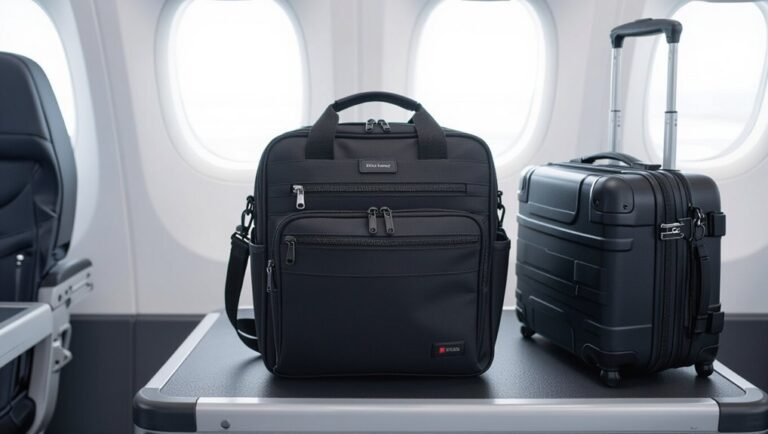
Pack smart: your personal item goes under the seat; the carry-on goes in the overhead bin if it fits.
If space’s limited, gate-checked items may be required, free of charge.
Official Southwest Dimensions for Carry-On Baggage
You’ll want to know the exact carry-on size limits Southwest enforces so your bag fits in the overhead bin.
Check the official dimensions for a carry-on and compare them to the allowed personal item dimensions to avoid gate-checking.
If your bag’s measurements approach the limits, measure it now to be sure it complies.
Carry-On Size Limits
Southwest allows one carry-on bag per passenger that fits the airline’s official dimensions: 10 x 16 x 24 inches (including handles and wheels).
You must guarantee your bag, packed, doesn’t exceed those limits; gate agents may measure and gate-check oversized items.
Soft-sided bags can compress but still must meet limits. If unsure, use a measuring tape before you travel to avoid delays or fees.
Personal Item Dimensions
Personal items must fit under the seat in front of you and meet Southwest’s official dimensions: 18.5 x 8.5 x 13.5 inches (including handles and wheels).
You should choose a bag that stays compact, packs essentials, and slides easily under the seat without forcing the row.
Measure pockets, straps, and protrusions to guarantee compliance, avoiding surprises at boarding and keeping your carry experience smooth.
What Counts as a Carry-On vs. Checked on Southwest
1 item you can bring onboard without a fee is a carry-on bag, but it must meet Southwest’s size limits: 10 x 16 x 24 inches (including wheels and handles).
If your bag fits, you’ll gate-check it only under special circumstances; if it exceeds those dimensions or weight practicalities, you’ll check it at the ticket counter and pay applicable fees.
Pack accordingly.
Southwest Personal Item: Definition and Size Limits
If your carry-on meets the airline’s size limits, you still get to bring one smaller item free: a personal item that fits under the seat in front of you. You should pack essentials—laptop, small bag, or purse. Southwest’s suggested maximum is roughly 18.5 x 8.5 x 13.5 inches.
| Item | Typical example |
|---|---|
| Laptop bag | Fits under seat |
| Purse | Small handheld |
Measuring Your Bag at Home the Right Way
When you measure your bag at home, measure the exterior dimensions so you capture its true size.
Make sure to include wheels and handles in those measurements, since airlines count them.
Use a rigid tape so your numbers are accurate and repeatable.
Measure Exterior Dimensions
Measuring your bag’s exterior is the simplest way to make sure it meets Southwest’s size limits: place the packed bag on a flat surface, use a rigid tape to measure height, width, and depth at the furthest points, and record each dimension.
Compare totals to Southwest’s allowed carry-on size. If any measurement exceeds limits, choose a smaller bag or redistribute contents.
Include Wheels And Handles
Don’t forget to include wheels and handles in your measurements, since airlines check the bag’s total exterior size and those parts can push you over the limit.
Lay the bag flat, extend handles as they sit during travel, and measure from the outermost wheel to the top of the handle.
Record width, height, depth including projections so you know if it meets Southwest limits.
Use A Rigid Tape
Because soft tapes can flex and give you false readings, use a rigid tape or a straight ruler to get accurate exterior measurements of your bag.
Lay the bag on a flat surface, include wheels and handles, and measure height, width, and depth at the widest points.
Record each dimension, verify against Southwest limits, and adjust packing or swap bags if any measurement exceeds the allowed size.
How Southwest Enforces Carry-On Size
When you gate-check your bag or bring a carry-on aboard, Southwest enforces size by using a simple visual and physical test: agents or flight attendants will ask you to place your item in their sizer or attempt to stow it in the overhead bin to confirm it fits within the airline’s 10 x 16 x 24-inch limit.
Southwest verifies carry-ons visually and with a sizer—place your bag calmly and cooperate for quick confirmation.
You should:
- present the bag calmly
- cooperate with staff
- expect quick verification
What to Do If Your Bag Is Slightly Over the Limit
If your bag looks a bit over the limit, ask the gate agent politely and explain the situation.
You can try compressing soft items or redistributing heavier things into a personal item to meet the size rules.
If those options won’t work, the agent can tell you the next steps so you’re not surprised at the gate.
Ask Gate Agent Politely
Approach the gate agent calmly and explain that your bag’s just a little over the limit, showing your tag or dimensions if possible; most agents appreciate politeness and may offer a quick solution like checking the bag, redistributing items, or waiving a fee depending on space and airline policy.
- Ask if they can check it at the gate
- Offer to gate-check for free
- Request a courtesy waiver if available
Compress Or Redistribute Items
After asking the gate agent, try compressing or redistributing items to meet size limits—unzipping pockets, loosening internal dividers, or shifting bulky items into your personal item can shrink the bag’s profile quickly.
You can also remove nonessential items, compress clothing into packing cubes, or transfer toiletries to a clear pouch.
Work efficiently and ask for a final check to avoid fees.
How Weight (Or Not) Factors Into Southwest Carry-On Rules
Although Southwest doesn’t set a weight limit for carry-on bags, you’ll still need to manage size and maneuverability to avoid gate checks.
You should focus on what you can comfortably lift and stow; agents judge by ease, not pounds.
- Pack heavier items low and close to your body
- Use wheels and sturdy handles for control
- Don’t overload beyond a safe, single-person lift
Soft vs. Hard Carry-Ons: Which Fits Overhead Better
When you’re deciding between soft and hard carry-ons, think about how each interacts with overhead bin space.
Soft bags compress and bend to squeeze into tight spots, while hard cases give better protection for fragile items.
You’ll trade off flexibility for rigidity depending on what you’re packing.
Soft Bags Flexibility
Anyone who’s wrestled a stiff carry-on into an overhead bin knows soft-sided bags usually give you more leeway; their pliable fabric and external pockets let you squeeze into tight spaces and mold around other luggage, whereas hard-shell cases hold their shape and need a clear slot.
You’ll appreciate:
- Compressible sides for extra millimeters
- External pockets for quick access
- Lightweight, flexible handling during boarding
Hard Cases Protection
Hard-shell carry-ons give your gear the best protection in the overhead bin, keeping laptops, fragile souvenirs, and toiletries from getting crushed when bags shift during boarding or turbulence. You’ll trade some flexibility for durability; hard cases resist impacts and stack neatly, but may not compress into tight spaces like soft bags.
| Benefit | Consideration |
|---|---|
| Impact protection | Less compressible |
| Stackability | Heavier |
| Weather resistance | Limited expansion |
| Organized interiors | Rigid shape |
Best Carry-On Sizes That Meet Southwest Rules
Because Southwest limits carry-ons to 10 x 16 x 24 inches, pick a bag that fits those dimensions with a little tolerance for wheels and handles so it actually stows in the overhead bin; a soft-sided tote or a compact spinner labeled 22–23 inches usually gives the right balance of capacity and compliance without forcing you to gate-check.
- Choose 22–23″ spinner for upright packing
- Soft-sided tote for flexible storage
- Slim duffel for overhead fit
Recommended Carry-On Models by Size and Price
Here are recommended carry-on models organized by size and price so you can pick the best fit for your travel style and budget; each option meets Southwest’s 10 x 16 x 24-inch limit with enough give for wheels and handles.
| Size | Model | Price |
|---|---|---|
| Compact | Away The Carry-On Lite | $175 |
| Standard | Samsonite Winfield 2 | $120 |
| Spacious | Travelpro Platinum Elite | $250 |
Choose based on capacity and durability.
Packing Tips to Maximize Southwest Carry-On Space
You can fit more in your Southwest carry-on by rolling clothing tightly to save space and reduce wrinkles.
Pack those rolls into packing cubes to keep items compressed and organized. Together they make locating and fitting essentials quicker and easier.
Roll Clothing Efficiently
Rolling your clothes lets you fit more into Southwest’s carry-on while keeping items wrinkle-resistant and easy to find.
Roll shirts, pants, and lightweight layers tightly, starting from hems to avoid bulk. Place heavier rolls along the bag edges to balance weight and use gaps for socks or belts.
- Roll each item snugly
- Group by fabric type
- Pack rolls vertically to save space
Use Packing Cubes
After you’ve rolled clothes to save space, add packing cubes to keep those rolls organized and compressed for Southwest’s carry-on limits.
Choose a few sizes to separate outfits, toiletries, and electronics. Compressible cubes reduce shifting and let you fit more without overstuffing.
Label or color-code cubes so you grab what you need quickly at security or your seat, saving time and stress.
How to Compress Clothes Without Damaging Them
While keeping fabrics’ fibers intact, compressing clothes lets you fit more into your carry-on without creating creases or damage.
You can protect garments by choosing gentle methods and avoiding overstuffing. Try these tips:
- Use soft-sided compression bags and squeeze air out slowly.
- Layer delicate items between sturdier pieces.
- Don’t compress bulky coats; wear them or check if needed.
Rolling vs. Folding: Which Saves More Space
Which method really gives you more room: rolling or folding?
Rolling usually trims air and fits irregular gaps, so you’ll often squeeze in extra items and reduce wrinkles in casual fabrics.
Folding keeps crisp lines for structured garments like blazers but wastes corners.
Use rolling for T‑shirts, underwear, and knits; fold delicate or tailored pieces to preserve shape and optimize overall space.
Using Packing Cubes to Organize and Save Room
If you want faster packing and less rummaging at your destination, pack cubes are a simple, high‑impact tool: they compress clothes, keep outfits separated, and let you slide entire cubes in and out of your bag instead of hunting for single items.
You’ll save space, protect wrinkle-prone pieces, and speed unpacking.
- compress and organize
- color-code outfits
- fit cubes to carry-on sections
What Fits in a Southwest Personal Item vs. Carry-On
Packing cubes make it easy to separate outfits and squeeze more into your luggage, but you still need to know what can actually go on board.
Your personal item (under-seat) should hold essentials: a small backpack, purse, or briefcase with documents, a change of clothes, and toiletries.
The carry-on (overhead) fits a standard-sized roller bag with additional clothing, shoes, and bulkier items.
Electronics and Fragile Items: Where to Pack Them
When you travel with electronics or fragile items, put them where they’ll be safest and easiest to access—your personal item for valuables and small devices, and the overhead carry-on for bulkier or well-padded gear.
- Keep laptops/tablets in padded sleeves in your personal item for quick access.
- Pack cameras and delicate gear in hard-shell cases in the overhead.
- Cushion accessories with clothing and secure loose parts to prevent movement.
Liquids and TSA Rules That Affect Carry-On Packing
You’ll need to follow the TSA liquids rule when packing carry-on bags for Southwest flights.
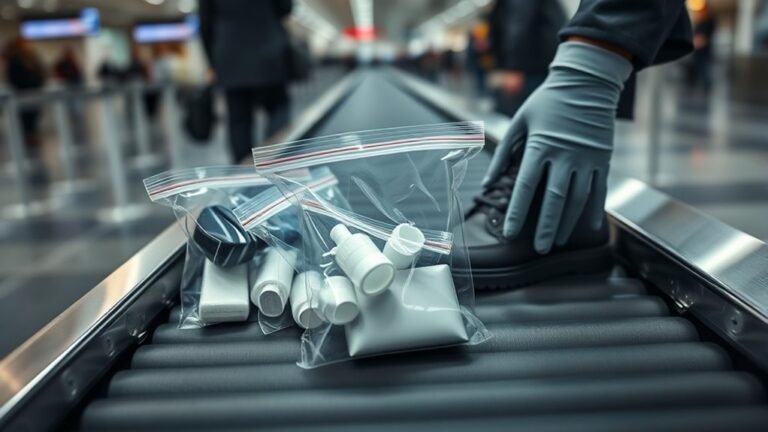
Keep liquids in containers of 3.4 ounces (100 milliliters) or less and place them together in a single clear, quart-size plastic bag.
Make sure that bag is easily accessible for screening so you don’t hold up the line.
TSA Liquids Rule
Although airport security can feel strict, the TSA liquids rule is straightforward once you know the basics: you’ll pack liquids to speed screening and avoid delays.
Follow simple steps:
- Place liquids in a clear, resealable bag for inspection.
- Keep the bag accessible during screening.
- Separate any oversized or medically necessary liquids and declare them to TSA agents.
Allowed Container Sizes
Think regarding inches and ounces: the TSA limits most carry-on liquids to containers of 3.4 ounces (100 milliliters) or less, and they must fit inside a single quart-sized, clear resealable bag you can easily remove for screening. Pack travel-size toiletries, gels, and aerosols accordingly. Check medication and baby formula exemptions at security.
| Item | Max Size | Notes |
|---|---|---|
| Liquid | 3.4 oz | Quart bag |
| Gel | 3.4 oz | Remove for screening |
| Spray | 3.4 oz | Airline rules may vary |
| Medication | Any | Declare if needed |
Packing Transparent Bags
Now that you’ve sized your liquids to meet TSA limits, pack them in a single clear, quart‑sized resealable bag so agents can quickly inspect them at screening.
Keep the bag accessible and separate from electronics. Follow these tips:
- Place small bottles upright and capped tightly.
- Consolidate lotions and gels to save space.
- Remove the bag for screening if requested to speed up the process.
Pro Tips for Gate-Checking Without Fees
If you want to avoid checked-bag fees at the gate, prepare a compliant carry-on and be ready to gate-check only when necessary. Pack essentials, use compact soft-sided bags, and board early. Ask politely if overhead space is limited and accept a gate-check tag when offered to avoid delays or fees.
| Tip | Action | Benefit |
|---|---|---|
| Pack light | Limit to essentials | Fits overhead |
| Bag type | Soft-sided | Easier to squeeze |
| Ask crew | Polite request | Quicker resolution |
| Accept tag | Gate-check when needed | No fees or delays |
Boarding Groups and Strategy to Secure Overhead Space
Know your boarding group and how it affects your chance to grab overhead space.
If you check in early you’ll usually get a better boarding position, so set an alarm or use the app to secure A or early B.
When you’re on board, be courteous with placement and consolidation so everyone can stow carry-ons efficiently.
Understanding Boarding Groups
When you’re booking or checking in, your boarding group determines who gets to load carry-ons into the overhead bins first.
So knowing how Southwest’s A/B/C and 1–60 sequence works helps you plan where to sit and when to gate-check bags.
You’ll use boarding position to choose strategy:
- Aim for early A or low number
- Sit near bins you want to use
- Decide to gate-check if bins fill up
Early Check-In Tactics
Because boarding order shapes whether you snag overhead space, check in exactly 24 hours before your flight and be ready to book your spot the moment it opens.
Grab an early A or B by logging into the app, refreshing, and completing check-in fast.
Consider family boarding only if eligible, and monitor upgrades or same-day changes to improve your boarding position and overhead access.
Overhead Space Etiquette
Getting a better boarding position by checking in early helps, but you still need a plan once the jet bridge opens to actually secure overhead space.
You’ll act quickly, courteous, and strategic: claim space near your row, lift compact bags above smaller items, and offer to help reposition bulky carry-ons.
- Board promptly when your group’s called
- Prioritize space near your seat
- Stow efficiently and assist others
How Southwest A-List and EarlyBird Affect Carry-On Space
Although elite perks don’t change the physical dimensions of the overhead bins, Southwest A-List status and EarlyBird Check-In can affect your ability to secure carry-on space by improving your boarding position.
You’ll board earlier, choose a spot with available bin room, and avoid gate scramble. That advantage helps you stow your bag overhead more reliably, reducing stress and travel-time delays.
How to Tag and Stow Your Carry-On to Save Space
When you tag and stow your carry-on smartly, you’ll maximize overhead-bin space and help fellow passengers board faster.
Label with your name and phone, use compact packing cubes, and keep essentials accessible. Place bags wheels-in and flatten soft items around rigid ones.
Share space courteously and lift bags into the bin from the center to avoid tilting.
- Label clearly
- Pack compactly
- Stow wheels-in
Airport Tricks to Avoid Last-Minute Gate Checks
If you want to dodge a last-minute gate check, act early: gate-checks usually happen because overhead bins fill up or boarding goes chaotic, so claim space by arriving at the gate with your carry-on already consolidated, compact, and ready to slide overhead.
Board in your assigned group, stow bulky items beneath the seat, and offer to lift a neighbor’s bag to fit yours.
Traveling With Infants: Car Seats, Strollers, Diaper Bags
You’ll want to know Southwest’s rules for car seats so you can decide whether to use one onboard or check it.
Strollers are usually gate-checked for free, but check size and timing to avoid delays.
Diaper bags count as a personal item, so pack essentials where you can reach them quickly.
Car Seat Policies
Because Southwest lets you bring essential infant gear without extra fees, you can travel with a car seat, stroller, and diaper bag while keeping costs down and convenience high.
You can install an FAA-approved car seat onboard for a ticketed child, bring it as checked or gate-checked, and must follow airline and FAA restraint rules.
- FAA-approved only
- Seat for ticketed child
- Follow installation rules
Stroller Gate Check
When you gate-check a stroller, Southwest lets you bring it to the aircraft door and leave it there until you deplane, saving hassle and protecting larger items from rough baggage handling.
You’ll tag the stroller at the jet bridge; staff store it in the hold and return it at the door on arrival.
Keep attachments removed and collapse it for quicker handling.
Diaper Bag Allowance
One small bag of essentials — diapers, wipes, a change of clothes, and a few snacks — is allowed in addition to your carry-on on Southwest flights, so pack it where you can reach it easily during the flight.
You’ll also want to:
- Keep essentials accessible for quick diaper changes.
- Stow liquids under 3.4 oz in a clear bag.
- Use a lightweight, easily carried diaper bag.
Service Animals, ESAs, and Allowed Carry Items
Southwest allows trained service animals to accompany you in the cabin at no extra charge and accepts emotional support animals under specific policies.
You should review their current documentation and advance-notification requirements before travel.
You can bring small medical devices, medication, and mobility aids onboard; larger equipment may count as checked or require gate-checking.
Always notify Southwest and have paperwork ready.
Musical Instruments: When They Count as Carry-On
If your instrument fits within the airline’s carry-on size limits and you can safely stow it in the overhead bin or under the seat, you can bring it into the cabin as your carry-on item.
You should check gate agent policies, consider a hard case or soft gig bag, and be ready to gate-check if space’s limited.
- Measure dimensions before travel
- Use protective case
- Ask gate staff early
Sports Equipment and Large-Item Rules
While musical instruments can often ride in the cabin, bulkier gear like bikes, skis, and surfboards usually need special handling and may count as checked or oversized items. You’ll pack, protect, and sometimes pay fees; always check Southwest’s sport-equipment policies and size limits before travel.
| Item | Typical handling |
|---|---|
| Bikes | Checked/boxed |
| Skis | Checked/padded |
| Surfboards | Oversized fee |
| Golf bags | Checked standard |
Oversized Carry-Ons: Exceptions and How to Request Them
If your carry-on is oversized, you’ll need gate agent approval before boarding.
Ask the agent politely for special handling and explain why the item can’t fit in the overhead or under the seat.
They’ll tell you whether it can travel onboard, needs to be checked, or requires alternate arrangements.
Gate Agent Approval
When your carry-on exceeds Southwest’s standard dimensions, you can ask a gate agent for an exception—agents have discretion to approve slightly oversized bags based on space and flight conditions.
Be polite, explain why the bag is necessary, and have measurements ready.
- Ask early at the gate
- Show dimensions and contents
- Accept decision and options offered
Requesting Special Handling
Because exceptions can make the difference between stowing your oversized carry-on and checking it, ask for special handling as soon as you know your bag mightn’t meet Southwest’s size limits.
Tell the gate agent you need an exception, show measurements or photos, and explain why the item’s needed onboard.
Be polite, flexible, and ready to gate-check if approval’s denied.
What Happens If Gate Agents Reject Your Carry-On
Should a gate agent decide your carry-on doesn’t meet Southwest’s requirements, you’ll usually be asked to check it at the gate or remove items until it complies.
You can:
- Transfer bulky items to checked luggage or personal item.
- Redistribute items into allowed bag sizes or wear heavier layers.
- Ask politely for clarification or request a supervisor if you disagree.
Fees and Penalties for Checking Oversized Carry-Ons
If your carry-on is oversized or overweight, you’ll likely face extra charges at the gate or bag drop.
In some cases you may be asked to repack items into a smaller bag or check the item for a fee, and repeated issues can lead to stricter scrutiny.
Know the size and weight limits before you fly so you can avoid unexpected penalties or being denied boarding with that bag.
Overweight And Oversize Charges
Baggage fees can surprise you at the gate, so it helps to know how Southwest handles overweight and oversize carry-ons: items that don’t meet the airline’s size or weight limits may be refused as carry-on and assessed additional charges to check.
You’ll usually pay a per-item fee; declare issues at the counter to avoid surprises.
- Expect checked-item fees
- Possible overweight surcharges
- Pay at counter or online
Denied Boarding Or Repacking
When an oversized carry-on won’t fit in the cabin, Southwest may require you to check it at the gate and charge the applicable checked‑bag or oversize fee.
In some cases, they can refuse boarding until the item’s repacked or checked. You’ll need to repack quickly, pay fees if required, or accept gate‑checked handling; refusal to comply can delay your travel or forfeit boarding.
Southwest Carry-On Policy for Families and Multiple Bags
Although Southwest lets each passenger bring one carry-on plus one personal item, families and travelers with multiple bags should plan how they’ll board and store items to avoid delays.
Pack essentials in personal items, gate-check bulky strollers or car seats, and coordinate boarding order to claim overhead space.
- Assign one bag per person
- Gate-check large items early
- Board strategically by group number
International Flights: Carry-On Rule Differences
When you fly Southwest internationally, you’ll need to check the specific carry-on size limits for that route since some countries enforce different dimensions.
You should also confirm what counts as a personal item abroad, as overseas rules can be stricter about laptop bags or purses.
Double-checking the airline’s international baggage page before you pack will help you avoid surprises at the gate.
International Carry-On Limits
Flying internationally? You’ll face stricter carry-on limits than domestic trips. Check airline and destination rules before packing.
Consider these essentials:
- Measure bags: strict linear dimensions often enforced.
- Weight caps: some carriers limit carry-on weight.
- Security rules: liquids and electronics may vary by country.
Confirm limits with your carrier to avoid gate checks or fees and pack accordingly.
Overseas Personal Item Rules
On international flights you’ll find that rules for personal items often differ from domestic policies, so check size, weight, and allowed contents before you pack. You should confirm limits, pack essentials smartly, and expect stricter security or weight checks.
| Item | Limit | Note |
|---|---|---|
| Bag | 18x14x8 in | Varies |
| Weight | 7–10 kg | Airline dependent |
| Contents | Restricted | Check list |
Traveling With Duty-Free and Shopping Hauls
If you plan to bring duty-free purchases or a post-trip shopping haul, know how those items affect your baggage allowance and security screening.
You’ll need to pack smartly, declare liquids if required, and fit within Southwest’s carry-on/personal item limits.
- Keep receipts and original packaging for security and customs.
- Place liquids in TSA-compliant bags or gate-sealed duty-free bags.
- Rebalance weight to avoid checked baggage.
Airline Comparison: Southwest vs. Other U.S. Carriers
While Southwest shares many baseline policies with U.S. carriers—like TSA screening and standard carry-on size limits—you’ll notice key differences in baggage fees, boarding procedures, and fare flexibility that can change total trip cost and convenience.
Southwest’s two free checked bags and open seating contrast with other airlines’ per-bag fees and assigned seats, so compare policies before booking to avoid surprises.
When to Choose Checked Baggage Instead of Carry-On
Comparing Southwest’s baggage perks to other carriers helps decide whether to carry on or check a bag, because your itinerary, luggage contents, and boarding comfort matter.
You’ll choose checked baggage when items exceed size/weight limits, you need hands-free mobility, or you’re carrying restricted or fragile goods.
Consider these triggers:
- Oversized or overweight items
- Need for hands-free travel
- Fragile, liquid, or restricted contents
Durable Carry-On Maintenance to Stay Compliant
One simple routine can keep your carry-on within Southwest’s size rules and extend its life: inspect the frame, wheels, handles, and seams before every trip.
Tighten loose screws, lubricate wheels, and patch small tears promptly. Remove dirt from zippers and test telescoping handles.
Store your bag upright in a cool, dry place to prevent warping and maintain compliant dimensions.
Real Passenger Stories: Common Carry-On Surprises
Ever wondered what trips people up most when bringing carry-ons on Southwest flights?
You’ll hear short tales showing easy mistakes and awkward moments. Learn from others so you won’t repeat them:
- Overpacked personal items that don’t tuck under the seat.
- Unexpected gate-checks when overhead bins fill.
- Misjudged dimensions for soft versus structured bags.
Quick Pre-Flight Checklist to Confirm Your Bag Fits
Before you leave for the airport, run through a quick checklist to make certain your bag meets Southwest’s carry-on rules:
Before heading to the airport, quickly confirm your bag meets Southwest’s carry-on rules—size, weight, and accessibility.
measure height, width, depth;
confirm wheels and handles are included;
weigh it if you expect limits;
pack essentials within allowed dimensions;
guarantee prohibited items are out;
verify personal item fits under the seat;
zip and secure pockets;
test maneuverability through narrow spaces.
Tools and Apps to Measure and Plan Your Carry-On
After that quick checklist, use simple tools and apps to confirm your bag’s dimensions and plan what stays in it.
Measure with a tape or ruler, photograph items, and map layouts. Try packing cubes and a checklist app to trim weight.
Use these resources:
- Tape measure or folding ruler for exact dimensions
- Packing cube visualizer app to arrange items
- Checklist app to track essentials and limits
How to Stay Updated on Southwest Baggage Rules
Want to avoid surprises at the gate? Check Southwest’s official policy page before travel, subscribe to airline alerts, and follow Southwest on social media for updates. Confirm measurements when booking. Use the table below for quick reminder actions.
| Action | Frequency |
|---|---|
| Official page | Before each trip |
| Airline alerts | Real-time |
| Social media | Weekly updates |
Extra Resources and Quick FAQs (Short, Actionable Answers)
If you need quick answers or deeper guidance, use Southwest’s official baggage page, their Mobile App, and TSA’s size/contents rules as your primary references; they’re the fastest way to confirm allowances, fees, and carry-on limits.
Check these quick FAQs and resources to avoid surprises:
Check these quick FAQs and resources to avoid surprises and ensure smooth travel prep.
- Confirm exact dimensions and weight before packing.
- Use the app to pay fees or view updates.
- Contact Southwest or TSA for edge cases.
Frequently Asked Questions
Can Oversized Duty-Free Items Be Carried Onboard After Security?
Yes — you can usually bring oversized duty-free items onboard after security, but you’ll need to gate‑check them if they exceed carry‑on dimensions or if overhead space is limited; always confirm with the airline before boarding.
Are Medical Supplies Exempt From Carry-On Size Limits?
Yes — you’re allowed medical supplies aboard even if they’re slightly larger than carry-on limits; you’ll need to screen them, declare items to TSA, and may show prescriptions or documentation if requested to guarantee safe transport and inspection.
Does Southwest Allow Carry-On Inflatable Pillows or Cushions?
Yes, you can bring inflatable pillows or cushions as carry-on items on Southwest, provided they fit within the allowed dimensions and stow properly in the overhead bin or under the seat; don’t exceed size or safety restrictions.
Can You Board With an Empty Checked Bag to Avoid Gate-Checking Carry-On?
Yes — you can check an empty bag at the ticket counter or gate, but you’ll likely pay checked baggage fees and airlines might still gate-check items. Bring proof of purchase and verify Southwest’s current policies beforehand.
Are Airline-Issued Amenity Kits Considered Personal Items?
Yes — airline-issued amenity kits count as personal items on most carriers, so you can keep them with you. They’re compact, free, and won’t usually trigger carry-on size or gate-check issues during boarding.
Conclusion
Now you know Southwest allows one carry-on up to 10 x 16 x 24 inches plus one personal item that fits under the seat. Check dimensions, weigh carry-ons only if you’re near limits, and use a measuring tape or airline app before you pack. Remember gate agents have final say and rules can change, so verify before travel. Follow the quick checklist, pack smart, and you’ll breeze through boarding with your bags accepted.