What to Pack Clothes in When Moving Best Packing Options
When moving, pick containers by garment type and trip length: use wardrobe boxes or garment bags to hang suits and dresses, clear plastic bins or medium boxes to fold daily wear, and breathable or vacuum bags for bulky seasonal items (avoid vacuuming delicate knits). Protect delicates with acid-free tissue, stuff shoes to keep shape, and label boxes with room and contents while keeping a “first-week” essentials box. Pack heavier boxes first in a climate-controlled vehicle to prevent shifting, and keep going to learn practical unpacking and care tips.
Quick Packing Decision Guide: Hang, Fold, or Compress
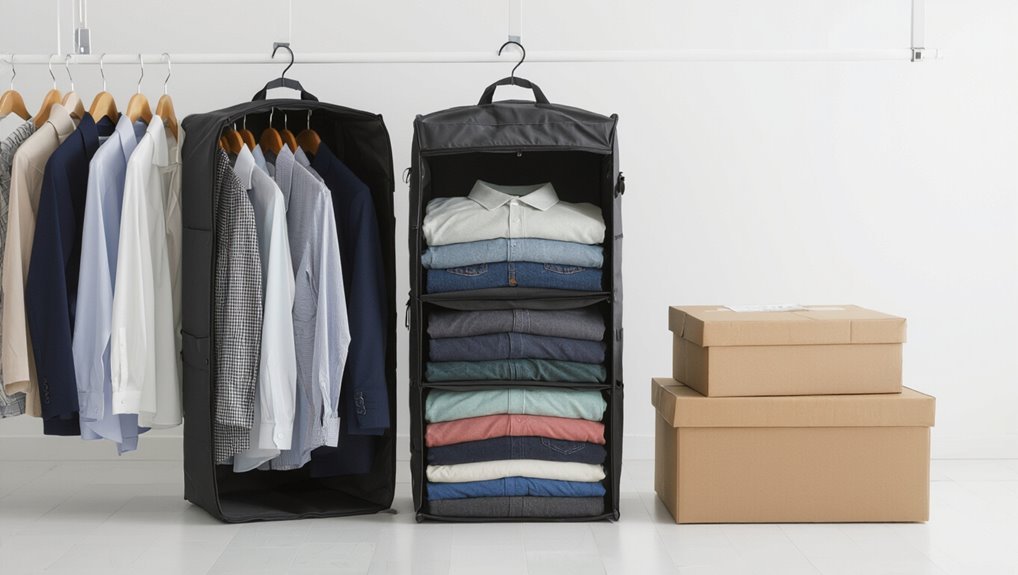
Wondering whether to hang, fold, or compress your clothes for a move?
You’ll hang delicate, structured, and wrinkle-prone items in wardrobe boxes or keep them on hangers.
Hang delicate, structured, and wrinkle-prone pieces in wardrobe boxes or transfer them on hangers to protect shape.
Fold casual wear and place it in medium boxes to save space and protect shape.
Use vacuum bags only for bulky, washable items you won’t need immediately; avoid compressing delicate fabrics.
Labeling & Inventory Tips Before You Pack Clothes
Now that you’ve decided which items to hang, fold, or compress, you’ll want a simple labeling and inventory system to keep clothes organized and easy to find.
Number boxes, note contents and destination room on each label, and mark fragile or seasonal items.
Create a digital inventory (photo or spreadsheet) matching numbers to contents. Update it as you pack to avoid lost items.
Use Wardrobe Boxes for Hanging Garments
When you use wardrobe boxes, your hanging clothes stay protected and wrinkle-free during the move.
You can transfer entire sections of your closet straight into the box without removing hangers. That makes packing faster and unpacking at the new place much simpler.
Protects Clothes On Hangers
If you want to keep suits, dresses, and coats ready to wear, wardrobe boxes let you move hanging garments without wrinkling or re-hanging them at your destination. You’ll hang items on the built-in bar, zip or tape the top, and transport confidently. Use breathable covers for delicate pieces and label boxes by room or outfit.
| Feature | Benefit |
|---|---|
| Built-in bar | Keeps garments upright |
| Zip/tape top | Prevents dust |
| Labels | Quick unpacking |
Easy Closet-to-Box Transfer
Because you can move whole outfits without unhooking them, wardrobe boxes make the closet-to-box transfer quick and simple: grab a box, lift hanging garments directly onto the built-in bar, zip or close the top, and label by category.
You’ll save time, prevent wrinkles, and keep outfits organized for immediate access. Use sturdy boxes and pack heavy items separately to avoid overloading.
Garment Bags vs. Plastic: Best for Suits & Dresses
Although plastic zip bags seem cheaper and easier, garment bags usually protect suits and dresses far better during a move. You’ll keep shape, avoid creases, and allow airflow to prevent mildew.
Use sturdy hanging garment bags for immediate wear; soft fabric or breathable ones are best for long hauls. Reserve plastic only for short trips or waterproofing, not long-term storage.
Vacuum-Seal Bags for Bulky Seasonal Items
When you’re packing bulky seasonal items like winter coats, comforters, or extra sweaters, vacuum-seal bags let you compress and protect them while saving a ton of space.
You can reduce volume dramatically, keep items dry and dust-free, and fit more into moving boxes or the trunk.
Use good-quality, puncture-resistant bags and avoid over-compressing delicate fabrics to prevent creasing.
Pack Everyday Clothes in Stackable Plastic Bins
After you’ve compressed bulky seasonal gear, keep your everyday wardrobe easy to access by packing it in clear, stackable plastic bins.
Label each bin by clothing type or outfit, fold items to maximize space, and reserve a top bin for immediate essentials.
Clear sides let you spot contents quickly, and uniform bins simplify loading, stacking, and carrying during unpacking.
Roll Clothes Into Duffels & Rolling Suitcases for Short Moves
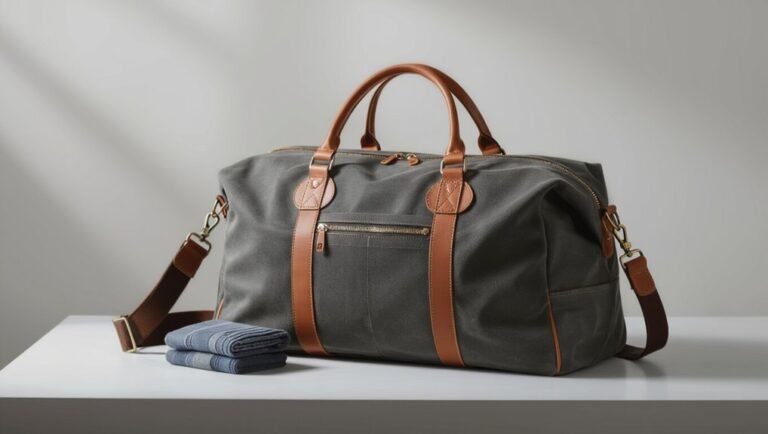
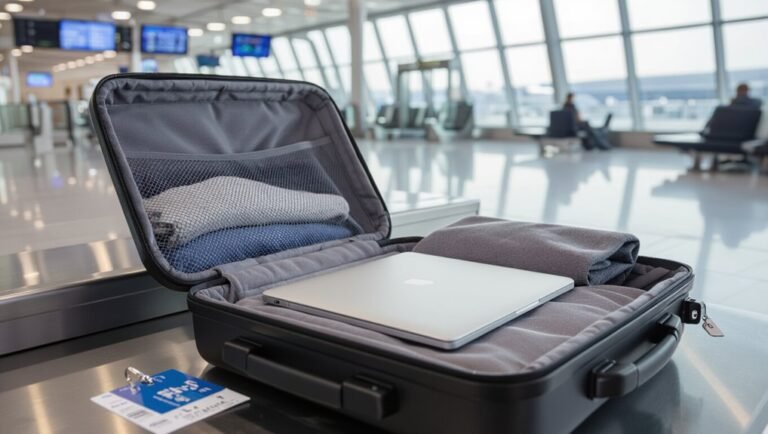
If you’re making a short move, pack outfits by rolling them into duffels and rolling suitcases to save space and keep things accessible.
Roll shirts, pants, and underwear tightly to minimize wrinkles and maximize capacity. Use interior compartments for socks and small items.
Keep a labeled overnight bag for immediate needs and place heavier items near wheels for easier transport and balance.
Compress Sweaters Safely Without Crushing Fibers
When you’re packing sweaters, fold them flat and stack evenly to keep their shape.
Use breathable compression bags or straps so you can reduce bulk without trapping moisture or crushing fibers.
That way your sweaters stay compact and ready to wear after the move.
Proper Folding Techniques
Start by laying each sweater flat and smoothing out seams and folds so you can see its true shape; that lets you compress the garment evenly without stressing the fibers.
Fold sleeves inward along the shoulder line, then fold the body in thirds or roll loosely from the hem to the collar.
Keep pressure gentle, stack flat, and avoid sharp creases that weaken yarn.
Use Breathable Compression
After folding sweaters neatly, you’ll want to compress them without suffocating the fibers; breathable compression bags or mesh packing cubes let you shrink volume while preserving loft and airflow.
Pack similar fabrics together, avoid overstuffing, and roll gently to minimize creases.
Use acid-free tissue between delicate knits, label containers, and check periodically to confirm ventilation and prevent mildew during transit.
Protect Delicate Fabrics With Acid-Free Tissue & Wraps
Because delicate fabrics can yellow, snag, or lose shape during a move, wrap each piece in acid-free tissue and breathable covers to preserve color and fibers. You’ll fold gently, stuff sleeves with tissue, and avoid plastic that traps moisture. Label wrapped items and pack flat or hung.
| Item | Wrap | Storage |
|---|---|---|
| Silk blouse | Tissue | Flat box |
| Lace dress | Muslin | Padded hanger |
| Cashmere | Tissue | Breathable bag |
Organize Kids’ Clothes: Bins, Labels, and Outfits
Handing over fragile dresses and sweaters to careful packing sets a good rhythm for the rest of the move, including how you handle kids’ clothes.
Sort outfits by size and season, use clear plastic bins for daily wear, and pack special outfits in labeled garment bags.
Pre-pack one or two day-of outfits in separate, marked bags so mornings stay calm.
Packing Shoes: Boxes, Shoe Bags, and Inserts
When you pack shoes smartly, they stay protected and take up less space — start by sorting pairs into boxes or cloth shoe bags and stuffing each shoe with paper, socks, or shoe inserts to keep shape. Label boxes by type, wrap heels, and place heavy shoes at the bottom. Use breathable bags for sneakers to prevent odor.
| Type | Tip |
|---|---|
| Sneakers | Bag + inserts |
| Heels | Wrap + box |
| Boots | Stuff shafts |
| Flats | Stack carefully |
| Sandals | Bag small pairs |
Move Formal Wear & Heirlooms: Cleaning, Packing, Transport
Moving formal wear and heirlooms calls for extra care, so clean each item, document its condition, and choose packing that protects fabric, finishes, and value.
Wrap garments in acid-free tissue, use breathable garment bags, and pad jewelry or fragile frames individually.
Label boxes, note appraisal info, and keep high-value pieces with you during transit.
Arrange climate-controlled transport for delicate or sentimental items.
Cheap Packing Materials That Still Protect Clothes
Although you’re on a budget, you can still protect your clothes with smart, low-cost materials; think thrift-store sheets and inexpensive tissue paper instead of pricey specialty supplies.
Use clean pillowcases for delicates, plastic bins for stackable items, and cardboard wardrobe boxes when you need hanging space.
Wrap fragile trims in tissue, seal with tape, and label contents for easy sorting.
Transport Day Checklist: Loading, Securing, Climate Control
Now that your clothes are packed and labeled, it’s time to focus on loading, securing, and controlling the truck’s environment so everything arrives in good shape.
Load heavier items first, stack boxes evenly, and keep garment bags upright.
Use straps, tie-downs, and non-slip mats to prevent shifting.
Maintain temperature-sensitive items in a climate-controlled vehicle or insulated containers to avoid humidity and heat damage.
Unpacking Strategy: Hang First, Fold Second
When you start unpacking, tackle your seasonal wardrobe first so you can put away items you won’t need right away.
Hang delicates and wrinkle-prone pieces immediately to keep them in good shape.
Fold casual essentials last so they’ll be ready for everyday use without taking up valuable hanging space.
Prioritize Seasonal Wardrobe
Looking for a quick way to make your new closet functional?
Sort boxes by season before unpacking so you can hang current items first and stow off-season pieces.
Place sweaters, coats, and dresses where you’ll reach them daily; pack summer tees and swimwear in labeled bins for top shelves or under-bed storage.
This saves time and keeps everyday dressing simple.
Hang Delicates Immediately
Hang your delicates as soon as you unpack to prevent wrinkles, snags, and mildew from settling in—silk blouses, lace pieces, and embellished garments fare best on hangers rather than folded.
You’ll save time and preserve shape by hanging immediately.
- Use padded hangers for fragile fabrics
- Cover with breathable garment bags
- Rehang in a cool, dry space
- Steam lightly to remove transit creases
Fold Casual Essentials
After you’ve rehung delicate pieces, turn to your everyday clothes and fold them neatly to save space and keep outfits ready. You’ll stack by category, roll bulky items, and label piles so unpacking’s fast. Keep a top-layer “first week” box for essentials.
| Category | Fold Method |
|---|---|
| T-shirts | Fold flat |
| Jeans | Fold in half |
| Sweaters | Fold with tissue |
| Shorts | Roll |
Frequently Asked Questions
Can I Ship Clothes Internationally and Avoid Customs Issues?
Yes — you can ship clothes internationally and avoid customs issues if you declare honestly, mark items as used personal effects, include an accurate itemized list and values, comply with destination rules, and avoid restricted or prohited items.
How Do I Pack Clothes With Embedded Electronics or Sensors?
You should remove batteries, insulate exposed contacts, wrap garments in anti-static or bubble wrap, place each in sturdy boxes with padding, label as electronic-containing, keep dry with desiccant packs, and document device specs for customs.
Are There Fire-Retardant Packing Options for Clothes?
Yes — you can buy fire-retardant garment bags and storage containers treated to resist ignition. You’ll also find flame-retardant fabric sprays and certified fire-safe boxes; always check ratings, labels, and ventilation recommendations before use.
What’s the Best Way to Pack Clothing for Long-Term Archival Storage?
Use acid-free tissue and breathable cotton garment bags, fold minimally, pad folds, avoid plastic, include silica gel for humidity control, store in archival boxes or cedar chests, keep cool, dark, and ventilated; check periodically and refold.
Can Pets’ Hair Be Fully Removed Before Packing Clothes?
No, you can’t fully remove every pet hair, but you can get most of it off by washing, lint-rolling, using a rubber glove or pet hair remover, and drying with dryer sheets before packing to minimize transfer and odors.
Conclusion
When packing clothes for a move, decide fast: hang what you’ll need, fold what stacks, and compress bulky seasonals. Label boxes with contents and room for quick finds, and use wardrobe boxes for suits and dresses you want on hangers. Choose garment bags or breathable covers for formal wear, vacuum-seal bags for bulky items, and clean delicate or heirloom pieces first. On moving day, secure loads and control temperature, then unpack by hanging immediately and folding next.