Where to Leave Luggage Best Storage Options for Travelers
You can stash your bags at station lockers, airport left-luggage desks, hotel concierges, or app-based courier services that pick up and drop off. Choose lockers or 24/7 options for quick hourly needs, staffed services for heavier or long-term holds, and couriers for doorstep convenience. Always check hours, size limits, liability caps, and fees, and keep essentials with you. Keep this guide handy and you’ll find details on timing, security, and booking next.
Quick Answer: Fastest Luggage Storage by Situation
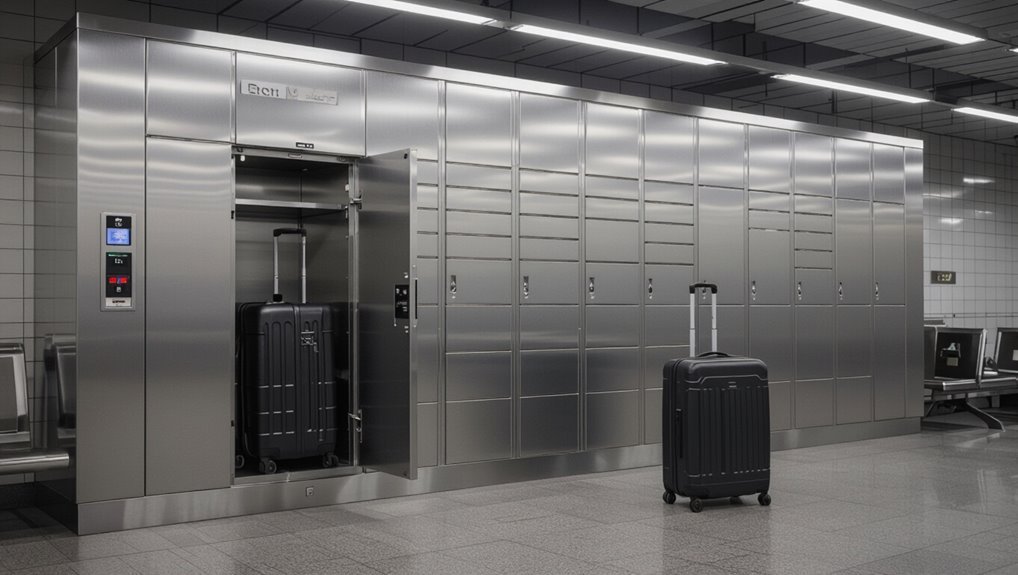
Need your luggage gone fast? You can drop bags at station lockers for immediate self-service, use app-based on-demand couriers for doorstep pickup, or choose hotel concierge drop-off if you’re nearby.
For short waits, airport baggage storage desks handle quick holds.
Compare cost, hours, and pickup speed so you pick the fastest, most reliable option for your specific timing and location.
Pick Storage by Trip Length & Timing
Fast options matter when you’re on a tight schedule, but your trip length and timing should drive which storage you choose. Short stays favor hourly lockers; day trips need flexible drop-offs; long trips require secure, long-term solutions. Check hours and holiday closures before booking.
| Trip Length | Best Fit | Timing Note |
|---|---|---|
| Hours | Lockers | 24/7 ideal |
| Days | Drop-off | Confirm closing |
| Weeks | Long-term | Reserve ahead |
App Lockers vs. Staffed Services: Speed, Cost, Security
Whether you grab an app-controlled locker or hand your bag to staffed services, you’ll trade off speed, cost, and security in different ways.
App lockers usually get you in and out fast and cost less for short stints, but you’re responsible for access and tech glitches.
Staffed services add human oversight, insurance options, and handling for odd items, often costing more and taking longer.
Airport Lockers and Staffed Left-Luggage Desks
If you’re passing through an airport and need to stash a bag for a few hours or a full day, you can choose between self-service lockers and staffed left-luggage desks—each fits different schedules and needs.
Lockers are quick, private, and often cheaper for short stays; staffed desks handle oversized items, offer receipts, and extend hours, but may charge more and require ID.
Train Station Lockers and Platform Baggage Services
Airports aren’t the only places to park luggage for a few hours—train stations often offer their own mix of self-service lockers and staffed platform baggage services.
- Check hours and size before you arrive.
- Prefer staffed desks for valuables and receipts.
- Use lockers for short stays and quick sightseeing.
- Note fees, time limits, and security cameras to avoid surprises.
App-Based Locker Networks
You’ll find app-based locker networks popping up in cities worldwide, letting you locate, reserve, and pay for storage from your phone in minutes.
You pick a nearby locker, open it with a code, and drop off bags securely. Rates, sizes, and availability show clearly; many offer hourly or daily options, customer reviews, and 24/7 access so you can plan flexible, contactless storage.
On-Demand Secure Storage Near Attractions
App-based lockers are great for flexible storage, but when you want something immediately next to a museum, park, or train station, on-demand secure storage services fill that gap.
- Book via app or website for instant confirmation.
- Drop off with ID verification and sealed tags.
- Track your bag with real-time updates.
- Retrieve anytime within booked hours, often with insurance included.
Hotel Day Rooms & Concierge Luggage Holds
If you need a quiet place to freshen up or stash bags for a few hours, hotels offer day rooms and concierge luggage holds that combine convenience with security. You can book short stays, request insured storage, and grab advice from staff. Table for imagery:
| Service | Feel |
|---|---|
| Day room | Private, calm |
| Concierge hold | Secure, practical |
Hostel & Guesthouse Short-Term Storage
Many hostels and guesthouses offer short-term storage that’s low-cost and flexible, making them a handy alternative to hotel concierge holds.
- Ask reception about fees and pickup times.
- Confirm security: lockers, tags, or staff-only rooms.
- Note liability limits and get a receipt.
- Pack valuables with you; use storage for bulky items and day trips.
Coworking Spaces That Accept Luggage
Because coworking spaces already handle packages and visitors, they can be a practical place to stash luggage for a few hours or a day.
Check policies and fees beforehand, book a day pass if required, and confirm secure storage or locked rooms.
You’ll want ID and a receipt, and you should avoid leaving valuables.
Ask staff about pickup deadlines to prevent surprises.
Retail Store Luggage Holds & Partnerships
Coworking spaces can work for short-term drops, but retail stores often offer a more visible, walk-in option for holding bags.
You’ll find predictable hours and staff accountability. Check policies, fees, and liability limits before leaving items.
- Ask about insurance.
- Confirm storage duration.
- Note access hours.
- Get a receipt and contact info.
Peer-to-Peer Options: Local Hosts & Drivers
If you prefer flexible, often lower-cost options, peer-to-peer services connect you with local hosts and drivers who’ll hold your bags for a few hours or a day.
You book via an app, see ratings, confirm pickup/drop-off windows, and get insurance options.
Costs vary by neighborhood and time; read reviews, verify ID, and communicate clearly to guarantee secure, timely service without surprises.
Long-Term Storage for Multi-Day or Seasonal Trips
For trips lasting several days to months, you’ll want storage solutions that prioritize security, accessibility, and cost-effectiveness.
- Choose climate-controlled units for sensitive items.
- Opt for facilities with 24/7 surveillance and gated access.
- Use durable locks and inventory lists; insure valuable goods.
- Pick locations near transit or long-stay accommodations for easy pickup and drop-off.
How Storage Pricing Typically Varies
Because storage costs depend on size, location, duration, and services, you’ll see wide price differences between facilities: You can expect hourly, daily, and weekly rates; downtown hubs cost more than neighborhood spots; added services raise fees. Compare options, read fine print, and pick what fits your schedule and budget.
| Type | Typical Price Range |
|---|---|
| Hourly | $3–$10 |
| Daily | $6–$25 |
Security Comparison: Monitored Lockers vs. Staff-Held Bags
You’ll want to weigh monitored locker surveillance against staff-held bag access to decide what feels safer for your trip.
Lockers often offer continuous camera coverage and limited entry, while staff-held bags rely on controlled access and human oversight.
Check each option’s liability and insurance terms so you know who’s responsible if something goes wrong.
Monitored Locker Surveillance
When choosing between monitored lockers and staff-held bags, think about how visibility and control affect your belongings: monitored lockers give constant camera or sensor oversight with limited human access, while staff-held bags rely on personnel presence and procedures to prevent theft or mishandling.
- You get continuous electronic logging.
- You reduce unauthorized handling.
- You can request footage if needed.
- You depend on system maintenance and alerts.
Staff-Held Bag Access
1 common alternative to monitored lockers is having staff hold your bag, which shifts security from cameras and sensors to trained personnel and procedures.
You’ll get human verification, controlled access, and chain-of-custody logs, plus quicker retrieval and personalized handling.
That relies on staff integrity, clear ID checks, and site policies, so confirm who can access your bag and how handoffs are recorded.
Liability And Insurance
Although both monitored lockers and staff-held bags aim to keep your items safe, they differ sharply in who bears liability and what insurance covers, so check policies before you leave anything behind.
- Lockers: facility limits liability; check posted caps.
- Staff-held: provider may assume more responsibility.
- Insurance: your travel/home policy might cover gaps.
- Claim process: note receipts, photos, and timeframes.
Insurance & Declared Value: When to Buy Extra
Travel insurance and declared-value options give you a safety net if your checked or stored luggage is lost, damaged, or delayed. You should buy extra when items are valuable, trip cost is high, or claims limits are low. Compare provider caps, deductibles, and proof requirements before paying.
| When to buy | What to check | Typical cap |
|---|---|---|
| Valuables | Receipts | $500–$5,000 |
| Long trips | Deductible | Varies |
Accessibility & Mobility Considerations
Insurance and declared value cover your stuff, but you also need to think about how you’ll access and move that luggage.
Consider pick-up, drop-off, and transit realities so nothing surprises you.
- Choose locations near transport hubs.
- Check hours and 24/7 access policies.
- Confirm elevator or curbside service.
- Ask about on-demand delivery or porter options.
Size, Weight & Oversized-Item Limits
Size and weight limits vary widely between providers, so check the maximum dimensions and kilogram/pound allowances before you book.
Confirm whether soft bags, boxes, or odd shapes are accepted and if fees apply for heavy or oversized items.
Note per-item and total-bag caps, plus extra charges for unusually large pieces.
Ask about handling policies to avoid surprises on drop-off or pickup.
What to Take With You (Essentials to Keep)
Keep your carry-on stocked with items you’ll need immediately—medications, a change of clothes, chargers, and basic toiletries.
Always keep passports, boarding passes, cash, and high-value items like jewelry or electronics on your person or in a secure carry-on.
That way you won’t be stuck if checked luggage is delayed or storage access is limited.
Carry-On Necessities
When you’re packing your carry-on, stick to items you’ll need during travel and anything you’d rather not risk in checked luggage: documents, devices and chargers, a change of clothes, basic toiletries in travel-sized containers, any medications (with prescriptions), and a small comfort kit (mask, earplugs, a light blanket or scarf).
- Snacks and water bottle
- Electronics and chargers
- Spare outfit and underwear
- Toiletries and medications
Valuables And Documents
You’ve already packed comfort and basics; now focus on the items you should always carry on your person.
Keep passport, ID, tickets, credit cards, and a small amount of local cash in a secure, RFID-blocking wallet or money belt.
Carry phone, charger, emergency contacts, and copies of important documents (digital and paper).
Store jewelry and irreplaceables on you, not in checked bags.
How to Prepare Bags: Locks, Labels & Tamper-Evidence
Although it’s tempting to toss belongings in and go, preparing your bags with the right locks, labels, and tamper-evidence saves time and headaches later.
Pack thoughtfully: secure zippers, clear IDs, and tamper-evident seals to avoid lost time and surprises.
Secure zippers with TSA-approved locks, attach durable ID labels, use tamper-evident seals or cable ties, and keep a spare key or code record separate.
- Locks
- Labels
- Tamper seals
- Backup key/code
Document Bag Condition: Photos & Checklist
Before handing off your bag, take clear photos and run a quick checklist so you’ve got proof of its condition and contents. Photograph exterior, interior, and valuables; note stains, dents, or open zippers. Share images with the storage provider if needed and keep timestamps. Use checklist copies for pickup.
| Photo Points | Checklist Items |
|---|---|
| Exterior | Zippers closed |
| Interior | Documents listed |
What Not to Store: Prohibited & Fragile Items
You shouldn’t leave items that are illegal or classified as dangerous goods, like explosives, certain batteries, or flammable liquids.
Don’t store fragile, perishable, or temperature‑sensitive things such as glassware, fresh food, or medications that need refrigeration.
Also check personal and legal restrictions—some services prohibit firearms, cash, or documents tied to active legal matters.
Prohibited Dangerous Goods
1 key rule when storing luggage is to never include prohibited or dangerous items: carrying batteries, flammable liquids, explosives, firearms, corrosive chemicals, and perishable biohazards can endanger staff, other customers, and your belongings.
You should:
- Ask the storage provider about banned items.
- Remove anything hazardous before drop-off.
- Declare unclear contents.
- Face penalties if rules are ignored.
Fragile Or Perishable Items
Alongside prohibited dangerous goods, you should also avoid leaving fragile or perishable items in storage: delicate glassware, artwork, musical instruments, fresh food, and live plants can suffer damage or spoilage and may create liability for the provider.
Instead, pack breakables with proper padding, carry valuables or instruments with you, refrigerate perishables or consume them before storing, and check provider policies on fragile handling.
Personal And Legal Restrictions
Because storage providers must follow laws and protect their premises, you should never leave items that are illegal, hazardous, or explicitly banned by the facility.
You’re responsible for checking rules and packing smartly.
Common prohibited items include:
- Weapons and ammunition
- Illegal drugs or paraphernalia
- Flammable liquids or explosives
- Perishables, live animals, or fragile heirlooms
Find Storage Near Transit With Maps & Apps
Looking for a place to drop your bags near the train station or bus hub?
Use maps and apps—Google Maps, Apple Maps, and specialist services like Bounce or Stasher—filter for “luggage storage” or “left luggage.”
Check distances, hours, user ratings, and real-time transit connections.
Book in advance when possible, save directions, and pick spots with clear pickup windows to avoid missed trains or buses.
Choose Storage Near Sightseeing to Save Time
If you want to make the most of a short day in a city, pick luggage storage within a few minutes’ walk of your main sights so you can drop bags quickly and start exploring without detours.
- Choose lockers near attractions to cut transit time.
- Prioritize secure, well-reviewed spots.
- Check opening hours against your itinerary.
- Keep essentials with you to stay flexible.
Booking vs. Walk-In: When to Reserve Ahead
Wondering whether to book luggage storage in advance or just walk in?
If you’re visiting during peak season, arriving late, or have tight timing, reserve to guarantee a slot and save stress.
For off-peak hours or flexible plans, walk-ins can work and may be cheaper.
Always check cancellation policies and operating hours so you don’t get stuck without options.
Verify Reliability: Reviews, Photos & Guarantees
Check recent traveler photos to see the actual condition of the storage space and any posted issues.
Look for consistent positive reviews and clear photos that match the listing.
Also confirm the provider’s damage protection guarantees and what you’d need to do to file a claim.
Read Recent Traveler Photos
How can you tell whether a listing is trustworthy? Check recent traveler photos to confirm condition, location, and accuracy.
- Look for timestamps and multiple angles.
- Compare photos to the listing description.
- Spot wear, cleanliness, and security features.
- Watch for inconsistent lighting or stock images.
If photos match reality, you’ll book with more confidence and fewer surprises.
Confirm Damage Protection Guarantees
Photos and reviews tell you what a space looks like; now make sure your belongings are protected if something goes wrong.
Check host or company policies for damage, loss, and theft coverage. Look for clear limits, claim procedures, and timelines.
Prefer services offering insurance or bonded guarantees and documented receipts. If coverage’s unclear, ask directly before you drop off your luggage.
Payment Methods & Avoiding Hidden Fees
When you book luggage storage, pay attention to accepted payment methods and any extra charges so you’re not surprised at checkout.
Choose cards, contactless, or cash based on convenience and fees. Check cancellation and overtime policies. Ask about insurance deductibles and receipt options.
- Compare card vs cash fees
- Verify service and VAT taxes
- Confirm overtime charges
- Request an itemized receipt
Safety Tips for Solo Travelers & Late Pickups
After checking payment terms and receipts, shift focus to your personal safety and what to do if you’re picking up bags late at night.
Share your pickup time with a friend, choose well-lit, staffed locations, and keep your phone charged.
Use rideshares from the storage site, avoid isolated routes, and trust your instincts—leave and call authorities if something feels wrong.
Handling Delays and Missed Pickup Windows
If your pickup window looks like it’ll slip, contact the storage provider immediately to explain the delay and request an extended hold or new pickup time; most operators can offer short grace periods or paid extensions if you ask quickly.
If your pickup may slip, call the storage provider right away to request a short hold or new pickup time.
- Confirm new pickup ETA and fees.
- Ask about secure overnight options.
- Get written confirmation via email or text.
- Note deadlines and plan backup transport.
Local Rules & Legal Limits on Luggage Storage
When you pick a storage service, check local zoning and permit rules so you don’t end up with an unexpected fine or sudden closure.
You’ll also want to know each provider’s liability limits and any size or item restrictions they enforce. Knowing these legal and practical boundaries up front keeps your trip running smoothly.
Zoning And Permit Requirements
Although you might think only hotels and transit hubs handle luggage, local zoning and permit rules often shape where and how storage services can operate.
- Check local zoning for commercial use allowances.
- Verify business permits and safety inspections.
- Ask about short-term storage legality in residential zones.
- Confirm signage, hours, and occupancy limits to avoid fines and sudden closures.
Liability And Storage Limits
Zoning and permits set the stage, but liability and storage limits determine what you can actually leave behind and who pays if something goes wrong.
You should check operator insurance, declared value caps, and item restrictions—electronics, perishables, and valuables often aren’t covered.
Ask about claims procedures, time limits, and fees for extended storage so you won’t be surprised if loss or damage occurs.
Eco-Friendly Storage Options & Trade-Offs
If you’re trying to minimize your travel footprint, choosing eco-friendly luggage storage can make a real difference—think solar-powered facilities, businesses that reuse or upcycle packing materials, and services that offset carbon for pickup and delivery.
- You’ll pay more for greener options.
- You’ll reduce plastic and waste.
- You’ll support local sustainable businesses.
- You’ll sometimes accept limited locations and capacity.
Special Handling for Sports & Oversized Equipment
When you’re traveling with skis, bikes, or other oversized gear, you’ll need to check airline oversize baggage rules and fees before you pack.
Consider specialized storage options like sports lockers, dedicated bike storage, or services that offer padded cases and climate control.
For fragile or bulky items, ask about handling procedures, insurance, and protective packing to reduce the risk of damage.
Airline Oversize Baggage Rules
Although policies vary by carrier, airlines generally treat oversized and sports equipment—like bikes, skis, surfboards, and golf bags—as special-handling items that often incur extra fees and require advance notification, specific packing, or gate check procedures.
- Check size/weight limits and fees before booking.
- Pack or use approved cases to prevent damage.
- Notify the airline in advance.
- Arrive early for check-in and possible oversized item procedures.
Sport Equipment Storage Options
Sporting gear often needs special handling, so consider storage and transport options that protect your equipment and save you hassle at the airport.
Use hard cases or padded bags for skis, bikes, and surfboards, and label items with contact info.
Check venue or rental storage for short-term holds, reserve oversized baggage services with carriers, and insure high-value gear before travel.
Handling Fragile Or Bulky Items
If you’re transporting fragile or oversized gear, plan packaging and handling well before you leave so items arrive intact and without delay.
Follow clear steps to protect and move bulky sports equipment securely.
- Pad and brace items inside hard cases.
- Label “fragile” and orientation.
- Choose storage or carriers with size-specific policies.
- Buy insurance or sign special-handling agreements.
Storing Valuables and Electronics Securely
When you’re storing valuables and electronics, pick options that give strong physical protection and controlled access so your items stay safe and reachable when you need them. Use lockable lockers, hotel safes, or insured storage; remove batteries and back up data. Choose padded cases and photograph contents before storing.
| Option | Security | Notes |
|---|---|---|
| Hotel safe | High | Receipt |
| Locker | Medium | Padlock |
| Storage unit | High | Insurance |
| Carry-on | Low | With you |
| Vault | Very High | Appointment |
Group Travel Strategies: Split & Coordinate Bags
Teamwork makes travel easier: split essentials across bags and assign clear responsibilities so no single loss derails the trip.
- Share chargers, meds, and documents so backups exist.
- Label bags and note who carries what.
- Stagger luggage locations to avoid one-point failures.
- Agree on meeting points and check-ins if bags get separated.
Save Money: Hourly vs. Daily Pricing Strategies
Pricing matters: choosing hourly or daily luggage storage can cut costs if you match the option to your schedule and needs.
If you’re pausing a few hours, hourly rates usually save money; for full days, daily caps prevent runaway fees.
Compare maximum daily charges, check peak‑time surcharges, and factor convenience.
Book online deals or loyalty discounts to lower your total storage spend.
Case Study: Storage Plan for a Long Layover
If you’ve got an 8–12 hour layover and want to leave the airport without hauling your bags, plan a storage strategy that balances cost, convenience, and transit time.
Evaluate options, book ahead, and map routes so you won’t waste time.
- Compare on-site vs. off-site lockers.
- Check prices and insurance.
- Reserve online if possible.
- Allow buffer for security and travel.
Common Luggage Storage Mistakes to Avoid
Don’t overpack just because it seems convenient — excess bags make storage harder and increase loss risk.
Always use locks and verified services so you don’t ignore basic security measures.
And never leave valuables unattended; keep passports, cash, and electronics with you or locked away.
Overpacking For Convenience
While you might think packing extra items keeps you comfortable, overpacking for convenience often creates more problems than it solves—heavier bags cost more to store, take longer to move, and leave you juggling logistics instead of enjoying your trip.
- Reassess needs; pack versatile items.
- Use travel-size and multiuse gear.
- Store bulky items at destination if possible.
- Keep essentials accessible to avoid unpacking.
Ignoring Security Measures
Because you’re keen to save time, it’s easy to overlook basic security when stashing your bags—but that shortcut can cost you much more than convenience.
Don’t ignore locks, tamper-evident seals, or secure storage providers with verified access controls. Check CCTV availability, staff ID procedures, and insured options.
You’ll reduce theft risk and travel stress by prioritizing simple, proven security steps before you go.
Leaving Valuables Unattended
If you leave valuables in checked bags or in plain sight inside stored luggage, you’re inviting loss or theft. You should secure or carry high-value items and avoid complacency.
Follow simple steps:
- Keep passports, cash, and jewelry on you.
- Use lockable compartments or concealed pouches.
- Photograph contents before storing.
- Choose reputable, monitored storage services.
Five-Minute Checklist to Choose Storage
Need help picking a storage option fast? Check location relative to transit, operating hours, and pricing.
Verify security: locks, surveillance, insurance limits.
Confirm size availability for your bags and any restrictions (prohibited items, weight).
Read recent reviews for reliability and customer service.
Note cancellation or refund policies.
Choose the option that balances convenience, cost, and peace of mind.
How to Book, Confirm, and Pick Up Your Bags
Book online ahead to lock in your spot and compare rates.
Confirm pickup details—hours, address, and any special instructions—before you arrive.
When you collect your bags, bring your ID and your booking confirmation.
Book Online Ahead
When you reserve luggage storage online, you’ll save time and lock in a spot near your arrival or destination—often at a lower price than walk-up rates.
- Pick dates, location, and size online.
- Compare prices, reviews, and insurance quickly.
- Enter contact and payment; get instant confirmation.
- Note access hours and directions, then head there to drop and retrieve your bags.
Confirm Pickup Details
Wondering how to make pickup smooth? After booking, double-check pickup window, address, and any locker or counter codes.
Confirm your reservation via email or app and save the confirmation screenshot. Note expected ID type (but don’t describe collection process).
Arrive within the allotted time, have payment ready for any fees, and message the provider if plans change so they can hold your bags.
Collect With ID
Collecting your bags with ID is straightforward: pick a provider that supports ID-based pickup, choose your dates and location, and confirm the reservation so you know exactly when and where to show up.
- Book online, noting pickup window.
- Bring matching ID and reservation code.
- Arrive within the confirmed time.
- Inspect luggage, sign receipt, and leave satisfied.
Frequently Asked Questions
Can I Store Perishable Food or Medicines in Luggage Storage?
You generally can’t store perishable food or temperature‑sensitive medicines in typical luggage storage; they’ll spoil or lose potency. Check each provider’s rules and ask about refrigeration or secure, climate‑controlled options before you leave anything sensitive.
What Happens if My Stored Bag Is Damaged While in Custody?
If your stored bag gets damaged while in custody, you should report it immediately, document the damage with photos, keep receipts, and file a claim with the storage provider; they’ll assess liability and may offer repair, replacement, or compensation.
Are There Age Restrictions for Signing Storage Agreements?
Yes, you usually need to be 18 to sign storage agreements, though some providers let minors with parental consent. Check the specific terms, bring ID, and don’t assume minors can sign without an authorized adult present.
Can I Change My Pickup Time After Booking Without Penalties?
Yes — you can usually change your pickup time after booking, and most services won’t charge if you adjust within their allowed window; check the provider’s policy, update via app or customer service, and confirm the new time.
Do Storage Services Accept Items Bought Duty-Free at the Airport?
Yes — many storage services accept duty-free purchases, but you’ll need to declare any restricted items, show receipts if asked, and follow local customs rules; some locations might refuse alcohol, tobacco, or fragile valuables.
Conclusion
You’ve got options—choose by time, cost and convenience. For short stops, app lockers win for speed; staffed desks work better for long layovers or valuables. Always check size limits, hours and insurance, book or reserve when you can, and keep ID plus your confirmation handy. Label bags, photograph contents, and set reminders for pickup. With a quick plan based on your schedule, you’ll save time and avoid baggage headaches.