Can I Vacuum Pack My Luggage Pros Cons and Travel Tips
You can vacuum-pack soft, bulky items like sweaters, down jackets, and towels to save major suitcase space and stay organized, but it’s best to avoid structured or delicate garments that can crease or lose shape. Use clear, TSA-friendly bags with good seals, don’t overstuff, and keep valuables and documents out. Remember airlines may have rules and accessing clothes mid-trip can be tricky — keep that balance and keep going to learn practical how-tos and alternatives.
Quick Recommendation: Should You Vacuum-Pack?
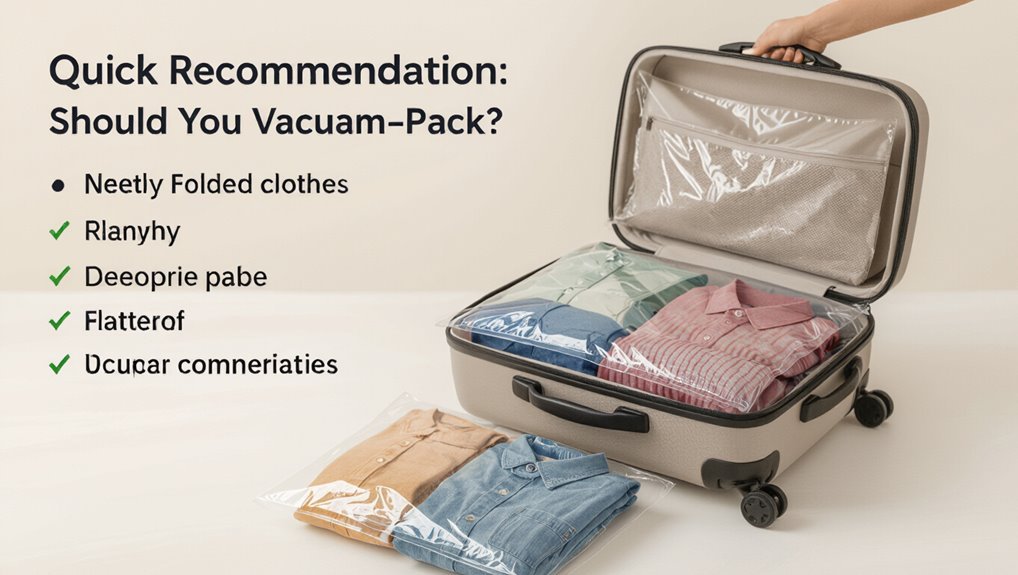
If you want to save space and keep clothes compact, go ahead and vacuum-pack—but only for soft, non-fragile items like shirts, sweaters, and down jackets.
You’ll reduce bulk and organize outfits, but don’t rely on vacuum bags for delicate fabrics, structured garments, or items needing ventilation.
Pack essentials accessible, label bags, and remember some airlines may limit tidy but compressed luggage.
When Vacuum-Packing Actually Saves Space
You’ll save the most space when vacuum-packing bulky, compressible items that trap air—think down jackets, sweaters, and thick towels—because removing trapped air reduces their volume dramatically.
You’ll notice slimmer bags, easier packing, and fewer creases. Use it strategically for trips needing compact bulk management.
- Puffy down coat
- Wool sweater
- Bath towel
- Sleeping bag
What to Vacuum-Seal : And What to Avoid
1 clear rule: vacuum-seal soft, compressible items that trap air, and leave rigid, fragile, or moisture-sensitive things alone.
Pack clothing, bedding, and non-delicate towels to save space and reduce shifting.
Pack clothing, bedding, and sturdy towels into vacuum bags to save space and prevent items from shifting during moves or storage.
Avoid shoes, electronics, perfumes, canned goods, and anything that needs ventilation.
Keep valuables, documents, and items prone to crushing or leaks out of sealed bags for safety and accessibility.
Vacuum-Packing: Airline & TSA Rules
Now that you know what to seal and what to leave out, check how airlines and the TSA treat vacuum-packed luggage before you zip everything up.
You should expect inspections, possible re-packing, and questions about liquids or electronics. Know each carrier’s baggage rules and declare anything suspicious.
Consider:
- Security may open sealed bags
- Liquids still follow TSA limits
- Fragile items risk compression
- Airline size/weight rules apply
How to Vacuum-Pack Clothes (Step-by-Step)
Start by laying out the clothes you want to compress and sorting them into groups—bulky sweaters, shirts, pants, and undergarments—so you know which items need folding versus rolling.
Fold bulkier pieces flat, roll shirts and underwear tightly, place items neatly in a vacuum bag without overstuffing, seal, then extract air with a pump or vacuum until compact but not crushed.
Best Vacuum Bags for Travel (TSA-Friendly Picks)
When you shop for travel vacuum bags, pick ones made from TSA-friendly materials like clear, durable plastics that inspectors can quickly see through.
Choose bags with easy, one-handed seal mechanisms or double-zip designs so you can open and reseal them without fumbling at security. Those two features speed inspections and keep your packing efficient.
TSA-Friendly Materials
Because airport security can flag unfamiliar materials, you’ll want vacuum bags made from clear, durable plastics and labeled as TSA-compliant.
You’ll also prefer materials that resist punctures, don’t trap odors, and visibly show contents for quick inspection.
- Clear multi-layer polyethylene
- Puncture-resistant TPU or nylon-reinforced film
- BPA-free, odor-neutral plastics
- Transparent labeling or window panels
Easy Seal Mechanisms
After choosing TSA-friendly, puncture-resistant materials, you’ll want vacuum bags that seal quickly and reliably so inspections and repacking don’t slow you down.
Look for one-way valves with clear indicators and wide zip tracks you can close with a single swipe. Click-lock seals and color-coded edges speed checks.
Choose durable seals that resist dust, won’t split when compressed, and stay airtight during transit.
Will Vacuum-Packing Wrinkle or Damage Clothes?
You’ll notice vacuum-packing affects fabrics differently — cotton and linen tend to crease more, while synthetics and knits usually resist wrinkles.
Keep in mind that prolonged compression can set deep creases, especially on garments with sharp folds or stiff collars.
To avoid long-term creasing, roll delicate items or use garment bags for pieces you don’t want compressed.
Fabric-Specific Effects
While vacuum-packing saves space, how it affects your clothes depends on the fabric: natural fibers like wool and silk can crease or lose loft if compressed long-term, whereas sturdy synthetics such as nylon and polyester usually resist wrinkling and recover shape.
- Delicate silk: avoid heavy compression
- Wool: may flatten, refresh with steam
- Cotton: creases but often irons out
- Polyester/nylon: durable, bounces back
Long-Term Creasing
Because vacuum-packing removes air and flattens garments, it can cause long-term creasing and shape loss if items stay compressed for weeks or months.
You should avoid compressing structured pieces like blazers, knitwear, and embroidered items for extended periods.
If you must, unpack and reshape items promptly, steam or press them, and store delicate pieces loosely to restore fibers and prevent permanent distortion.
Risks to Watch: Compression Damage and Access Problems
If you compress your clothes or gear too tightly, you can cause permanent creases, crushed padding, or damage to delicate materials—and you’ll also make accessing items mid-trip harder.
You should weigh risks, pack fragile items separately, and plan outfits to avoid unpacking everything.
Consider these examples:
- Puffy jacket flattened, losing loft
- Sunglasses frames warped
- Toiletry leaks spread
- Quick-change outfit buried
Alternatives That Save Space Without Vacuum-Packing
You don’t always need a vacuum to save space—try compression packing cubes to squeeze and organize layers.
Use rolling and smart folding techniques to minimize wrinkles and fit more into tight corners.
Wear your bulkiest items on travel days to free up suitcase room.
Compression Packing Cubes
- Thin compression cube for shirts
- Medium cube for pants
- Small cube for underwear
- Shoe pouch for footwear
Rolling And Folding Techniques
While vacuum bags work wonders, rolling and precise folding give you similar space savings without extra gear.
Roll T-shirts and soft fabrics tightly to minimize air pockets.
Fold dress shirts with neat, slim folds or use the military roll for tees and socks.
Stack rolled items in suitcase gaps.
Reassess and re-roll to eliminate wasted space before zipping.
Wear Bulkiest Items
If you want to free up serious suitcase space, wear your bulkiest items on the plane instead of packing them.
You’ll stay warm and free room for essentials while meeting airline limits. Consider layering smartly and using pockets.
- Heavy coat or parka
- Thick boots or hiking shoes
- Chunky sweater or hoodie
- Travel scarf that doubles as blanket
Packing Strategies by Trip Type + Quick Troubleshooting
Because different trips demand different gear, you’ll want packing strategies that match your itinerary and luggage type.
Match your packing strategy to the trip—choose gear and luggage that fit your itinerary and activities.
For beach or city breaks, vacuum small clothing but keep toiletries accessible.
For active trips, prioritize easy-access compartments and avoid over-compressing technical fabrics.
Quick troubleshooting: if bag bulges or seals fail, redistribute items, reseal slowly, or use compression bags instead to protect delicate gear.
Frequently Asked Questions
Can Vacuum-Packed Luggage Trigger Customs Inspections for Concealed Items?
Yes — vacuum-packed luggage can raise suspicions and prompt inspections; customs agents can X-ray or open bags if packing looks atypical, so expect scrutiny and be ready to explain contents, paperwork, and cooperate calmly.
Can I Use Vacuum Bags for Toiletries to Prevent Spills?
Yes — you can use vacuum bags for toiletries to reduce leaks and save space, but don’t overcompress fragile bottles, double-seal liquids in leakproof bags, and expect security to inspect sealed packs if needed.
Do Vacuum-Packed Bags Affect Travel Insurance Claims?
They can, if your policy excludes damage from compressed items or altered packaging; you should check terms and tell your insurer. Keep receipts, avoid over-compressing fragile goods, and photograph contents before sealing for claims.
Can I Vacuum-Pack Electronics or Batteries Safely?
You can vacuum-pack some electronics and batteries, but you shouldn’t for lithium-ion cells or devices with built-in batteries; do remove batteries, use original packaging or protective cases, and avoid crushing, extreme pressure, or prolonged compression.
Are Vacuum-Sealed Clothes Smell-Retentive After Long Storage?
Yes — vacuum-sealed clothes can retain smells if odor-causing residues weren’t cleaned first; you’ll lock in existing odors and moisture. Wash, fully dry, and optionally add a scent sachet before sealing to prevent mustiness.
Conclusion
You can vacuum-pack for many trips, but weigh the trade-offs. It saves space for bulky items like coats and bedding, yet can compress fragile fabrics, limit access, and cause baggage weight surprises. Check airline and TSA rules, avoid sealing damp or delicate garments, and use packing cubes or roll clothes when you need quick access. For short or style-focused trips, stick to regular packing. Make decisions based on item type, trip length, and convenience.