How to Fix Samsonite Luggage Handle at Home
You can usually fix a Samsonite telescoping handle at home with simple tools and patience: inspect for bent rails, loose screws or jammed debris, remove the interior liner to access the assembly, clean and lubricate the tubes, free trapped zippers, and replace worn buttons, rivets or gears as needed. Tighten fasteners, use epoxy or a brace for cracked housings, and photograph damage for warranty claims—keep going and you’ll find step-by-step fixes and maintenance tips.
Diagnose Your Samsonite Handle Problem
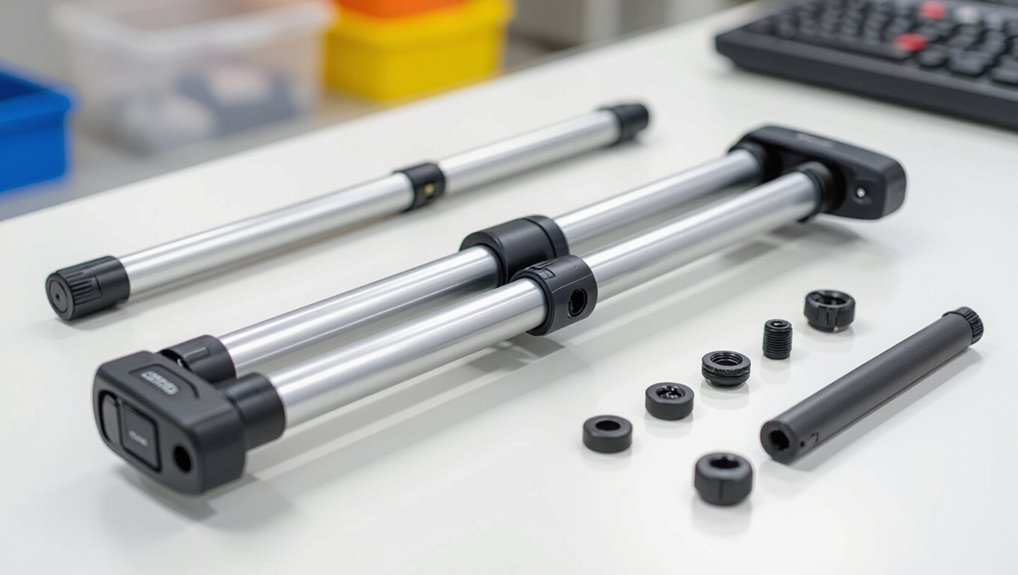
Start by observing how the handle behaves: extend and retract it several times, listen for clicks or grinding, and note whether it wobbles, sticks, or won’t lock.
Check alignment, feel for resistance, and inspect visible screws or bent rails.
Identify whether failure is mechanical (broken latch, bent tube) or cosmetic.
Record findings before disassembly to guide targeted repairs.
Tools and Parts You’ll Need for Common Repairs
Before you start, gather a few essential tools like screwdrivers, pliers, a hex key set, and a small wrench to handle most Samsonite handle repairs.
You’ll also want replacement parts on hand—common items include new rivets, screws, handle tubes, and the trolley mechanism.
Having these tools and parts ready will save time and keep the repair smooth.
Essential Tools List
You’ll only need a handful of common tools and a few spare parts to handle most Samsonite handle repairs.
Keep things simple and organized so you can diagnose and fix issues quickly.
- Phillips and flathead screwdrivers (small/medium)
- Needle-nose pliers and adjustable wrench
- Lubricant (silicone) and cloth
- Precision hex keys and a small flashlight
Replacement Parts Needed
When you’re ready to replace a broken component, gather the specific parts most commonly needed for Samsonite handles: replacement telescoping tubes or inner rails, slider locks and release buttons, mounting screws and rivets, nylon bushings or bearings, and any broken handle grips or top carry handles.
Also grab spare springs, washers, and small clips; match sizes to your model, and order OEM parts when possible.
How Telescoping Handles Work : Common Failure Points
You’ll want to understand the telescoping tube mechanism, since bent or jammed tubes are the root of many problems.
Check the locking button next, because a broken or sticky button will stop the handle from staying extended.
Finally, inspect slide wear and alignment—worn runners or misaligned tubes cause dragging, wobble, and further damage.
Telescoping Tube Mechanism
Inspect the telescoping tube assembly to understand how the handle extends, locks, and retracts: two or three nested metal tubes slide inside one another, guided by plastic or metal bushings. Sprung detent buttons engage indexed holes to lock positions, and an internal cable or latch mechanism releases the lock when you press the handle buttons.
- Check tube alignment and wear
- Inspect bushings for cracks
- Look for bent or scored tubes
- Verify smooth sliding and lubrication
Locking Button Failure
After checking tube alignment and bushings, focus on the locking buttons—the small sprung detents that hold the handle at set heights.
If buttons stick, clean debris and apply a little silicone lubricant.
Replace broken springs or buttons with matching parts, securing new clips or rivets as needed.
Test extension and retraction; if engagement is weak, swap to a stiffer spring for reliable locking.
Slide Wear And Alignment
Think of the telescoping handle as a pair of nested tubes that rely on smooth, aligned slides to operate; when those surfaces wear or shift, the handle will wobble, stick, or fail to lock.
You can inspect, clean, and correct slide wear to restore function:
- Check for grooves, burrs, or corrosion
- Clean debris and old lubricant
- Lightly file burrs and smooth edges
- Re-lubricate and realign tubes
Quick Check: Stuck Telescoping Handle Fixes
1 quick check can save you a lot of hassle: start by extending and collapsing the telescoping handle a few times to feel where it’s sticking, then look for visible jams like dirt, bent rails, or a trapped zipper pull. Use this quick guide to assess and decide if you can fix it or need parts/service.
| Symptom | Likely cause |
|---|---|
| Stiff | Dirt/debris |
| Off-track | Bent rail |
| Jammed | Trapped zipper pull |
Step-by-Step: Free a Stuck Telescoping Handle
Start by checking the tubes and latch for visible dirt, grit, or a bent section that could be blocking movement.
Then apply a light lubricant to the inner and outer tubes and let it penetrate for a minute.
Finally, work the handle up and down gently to work the lubricant in and free any stuck parts.
Assess The Obstruction
Before you force anything, take a close look and figure out what’s blocking the telescoping handle — dirt, a bent guide, or a trapped zipper pull are common culprits.
Inspect visually and by feel, then address the specific jam.
Check for:
- Debris inside the tube
- Bent or misaligned guide rails
- Caught fabric or zipper
- Loose screws or broken clips
Lubricate The Tubes
Grab a lubricant and a clean rag—proper lubrication can loosen a stuck telescoping handle without forcing or damaging the tubes.
Apply a few drops of silicone spray or light machine oil into the inner seams and joints, wipe excess, then extend and retract slightly to distribute lubricant.
Repeat sparingly if needed, avoiding petroleum jelly or thick greases that attract dirt and gum up tubes.
Work The Handle Gently
With the tubes lightly lubricated, you can gently work the telescoping handle to free any remaining stiffness.
Use slow, even motions and avoid forcing it. Try alternating extension and retraction while feeling for catches.
- Extend fully, then retract slowly
- Twist slightly to realign tubes
- Pause if you feel resistance
- Reapply lubricant if progress stalls
Fix a Handle That Won’t Lock in Place
If your Samsonite’s telescoping handle won’t lock, don’t assume the whole mechanism is ruined — many issues are simple to fix and you can troubleshoot them yourself.
Check for dirt or debris in the rails and clean with compressed air or a toothbrush.
Lubricate lightly with silicone spray.
Extend and press the release repeatedly to realign locking pins.
Test until it locks securely.
Replace a Broken Release Button on the Handle
When cleaning and realigning the locking pins doesn’t fix the issue, you’ll need to replace the broken release button to restore proper operation.
If cleaning and realigning the locking pins fails, replace the broken release button to restore proper operation.
Remove the handle assembly, inspect the button and spring, and source a matching replacement from manufacturer or generic parts. Reassemble and test.
Follow these steps:
- Remove handle from luggage
- Extract broken button and spring
- Install new button
- Test locking mechanism
Tighten Loose Handle Fasteners and Screws
Grab a small screwdriver set, a thread locker, and a flashlight so you’ve got the right tools on hand.
Start by locating the loose fasteners, then tighten them in a crisscross pattern to guarantee even pressure.
If any screws are stripped or won’t hold, replace them and apply a drop of thread locker to keep them secure.
Tools You’ll Need
Before you start tightening loose handle fasteners and screws, gather a small set of precision tools so you can work quickly and avoid stripping hardware: a Phillips and flat-head screwdriver (sizes #0–#2), a set of small Torx drivers (T6–T15), a needle-nose pliers, a magnetic tray or small container for screws, and a flashlight or headlamp for visibility in tight cavities.
- Precision screwdrivers
- Small Torx set
- Needle-nose pliers
- Magnetic tray and light
Tightening Step‑By‑Step
Start by positioning the suitcase on a stable surface with the handle fully extended so you can see each fastener clearly; then work methodically from one end of the handle to the other, tightening screws a quarter-turn at a time to avoid over‑torquing.
Check rivets and bolts, use the correct screwdriver or hex key, recheck alignment, and operate the handle to guarantee smooth movement before packing.
Replace Stripped or Damaged Internal Gears
If the handle still slips or won’t lock after cleaning and adjusting, the internal gears are likely stripped or broken and need replacing.
You’ll remove the handle assembly, note gear orientation, and swap in OEM or compatible gears. Test motion before reassembly.
- Gather replacement gears and small screwdriver
- Document gear positions with photos
- Replace gears carefully
- Reassemble and test lock function
Remove the Suitcase Interior to Access the Handle
Start by removing the internal liner so you can see the handle assembly from inside the suitcase.
Locate and loosen the fasteners holding the handle—screws, bolts, or rivets—so you can detach the mechanism.
Work carefully to protect the fabric and padding so you don’t tear or crush them while you pull the liner back.
Remove Internal Liner
You’ll need to remove the suitcase’s interior liner to reach the handle assembly; this usually means undoing a few screws or snaps and peeling the fabric back carefully so you don’t tear it or lose any clips.
- Gather a screwdriver and small tray
- Work on a flat, clean surface
- Peel liner slowly from seams
- Keep any removed clips labeled and safe
Locate Handle Fasteners
Once the liner’s out, flip the suitcase so the handle area faces up and shine a light into the cavity to spot the fasteners holding the handle assembly.
Look for screws, rivets, or plastic clips around the metal frame.
Use a magnet or small flashlight to confirm locations.
Note fastener types so you bring the right tools before unfastening the handle.
Protect Fabric And Padding
Before you remove the interior, cover the fabric and padding with a thin drop cloth or clean towel so tools and loose fasteners won’t snag or stain them.
Then carefully remove lining to expose the handle. Keep protected areas clean and accessible.
- Use a soft, lint-free cloth
- Work on a flat surface
- Store screws in labeled containers
- Avoid sharp tools near fabric
Swap the Entire Telescoping Handle Assembly
Start by removing the old telescoping handle assembly so you can install the replacement; this lets you access the mounting screws and guide rails without fighting trapped parts.
Measure tube spacing and note release mechanisms. Buy a compatible Samsonite assembly or universal kit.
Unscrew mounts, slide out rails, transfer any button or latch parts, then fit, align, secure screws, and test smooth extension and lock engagement.
Fix Molded Plastic Handle Housings (Cracks, Broken Mounts)
First check how bad the crack or mount break is so you know whether a simple patch will hold or you need replacement parts.
If the damage is small, you’ll often be able to bond and reinforce the housing with epoxy and a backing plate.
For larger breaks, plan to reinforce the area with metal or plastic braces and secure new mounting points so the handle operates safely.
Assess Damage Extent
A careful inspection will tell you whether the molded plastic handle housings need a simple repair or a full replacement: check for visible cracks, fractured mounting tabs, warped edges, and any play when you move the handle.
- Note crack length and depth
- Test mounting tab stability
- Look for hairline fractures inside corners
- Wiggle handle to gauge looseness
Repair Or Reinforce Housing
Repair or reinforce the molded plastic housings by cleaning, evaluating, and then choosing the strongest method for the damage:
For hairline cracks you can bond and back-up with epoxy and fiberglass or plastic welding, while for fractured mounting tabs you’ll want to rebuild the tab with a layered epoxy filler or replace the entire housing if the mounting interface is compromised.
Then sand, prime, and paint or seal for corrosion resistance.
Lubricants and Cleaners Safe for Samsonite Handles
When treating your Samsonite handle, choose mild, non-abrasive cleaners and lightweight lubricants designed for plastics and metal; they’ll clean grime without degrading finishes or seals.
You should:
- Use isopropyl alcohol (70%) for surface dirt and residue.
- Apply silicone spray for telescoping rails and plastic sliders.
- Avoid WD-40 on plastics long-term.
- Wipe excess product and let parts dry before reassembly.
When to Use Epoxy, Plastic Weld, or New Parts
After cleaning and lubricating the handle, assess the damage to decide whether epoxy, plastic weld, or replacement parts will work best.
Use epoxy for small cracks or bonding metal-to-plastic where flexibility isn’t required.
Choose plastic weld for fractured plastic that needs structural strength and continuity.
Opt for new parts when the mechanism, telescoping tubes, or mounts are warped, missing, or extensively crushed.
Finding Compatible Replacement Parts and Part Numbers
Once you know which parts are damaged, locate exact replacement pieces by checking the model number stamped on the suitcase (usually on the interior tag or near the handle cavity) and matching that to manufacturer diagrams or parts lists.
This guarantees you order compatible telescoping tubes, latch assemblies, or mounting hardware instead of guessing by size or appearance.
- Check Samsonite parts diagrams online
- Search OEM part numbers first
- Use authorized dealers or forums for rare parts
- Keep original fasteners and note orientation before removal
Measure Handle Size and Mounting Points (How-To)
Start by laying the suitcase on a flat surface and opening the handle cavity so you can clearly see mounting points and fasteners.
You’ll measure the tube diameter, mounting plate dimensions, and hole spacing directly from these exposed areas. Use calipers or a ruler, note inner versus outer diameters, measure center-to-center screw distances, record thread size and plate thickness, and photograph for reference.
Fix Bent or Misaligned Handle Rails
With your measurements and photos in hand, inspect the telescoping rails for bends, kinks, or misalignment by fully extending and compressing the handle while watching how each tube slides.
With measurements and photos ready, fully extend and compress the telescoping rails to spot bends or misalignment.
If you see binding, gently straighten with vise grips or a soft mallet, protect finish, and test movement. Consider replacement if damage is severe.
- Locate the kink
- Protect the tube
- Apply controlled pressure
- Test repeatably
Temporary Airport Fixes to Get You Home
If your telescoping handle gives out at the airport, don’t panic—use quick, sturdy fixes to get your bag home.
Strap a small roller bag to a carry-on with strong zip ties or cord.
Use duct tape to secure a collapsed handle to the frame.
Remove wheels and carry by reinforced grab handles if necessary.
Ask airline staff for a luggage cart.
Preventive Maintenance to Extend Handle Life
After you’ve used quick airport fixes to get home, spend a little time on regular upkeep so the telescoping handle lasts longer.
Clean, lubricate, and inspect it regularly to prevent jams and wear.
- Wipe dirt from tubes and rails
- Apply silicone lubricant sparingly
- Tighten loose screws and rivets
- Store retracted in a cool, dry place
Avoid Common DIY Mistakes and Safety Tips
When you tackle handle repairs yourself, take care to avoid shortcuts that can make damage worse or create safety hazards.
Wear gloves and eye protection, unplug any electronics, and work on a stable surface.
Don’t force parts, use correct tools, and follow torque specs.
Test the handle gently before heavy use.
If something feels unsafe or beyond your skill, stop and consult a pro.
Cost: DIY Repair vs Pro Service vs Replacement
Although DIY fixes can save you money upfront, you’ll need to weigh parts, tools, and your time against the certainty and warranty that a pro service or full replacement provides.
You’ll compare costs, effort, and risk to decide what’s worth it:
- DIY: cheap parts, more time
- Pro service: higher cost, guaranteed work
- Replacement: costly, instant solution
- Resale value vs repair expense
How to Check Samsonite Warranty and File a Claim
Wondering if your Samsonite handle repair is covered? Check your original receipt and serial number, then visit Samsonite’s website to review warranty terms for your model.
If it’s eligible, register the claim online or call customer service with photos of damage and purchase proof. Follow their instructions for return authorization, repair, or replacement; keep records of all correspondence and shipping.
Repurposing or Recycling a Suitcase With an Irreparable Handle
If your Samsonite’s handle is beyond repair, don’t toss the whole case — you can repurpose or recycle it in practical, creative ways that keep usable materials out of the landfill.
You can convert the shell into storage or donate parts; check local recycling rules first.
Ideas include:
- Closet or garage organizer
- Pet bed or shelter
- Tool or craft station
- Sell parts online for reuse
How to Photograph and Video Handle Damage for Claims
When you document a broken Samsonite handle for a claim, shoot clear, well-lit photos and steady videos that show the damage, surrounding context, and any identifying labels or tags.
Capture close-ups from multiple angles, a short video demonstrating the fault, and shots of serial numbers, receipts, and the whole suitcase for scale.
Timestamp files and keep originals for your claim.
Quick Reference: Symptom → First Fix to Try
Because you need fast solutions at the airport or on the road, this quick-reference list pairs common Samsonite handle symptoms with the first fix to try so you can decide what to do next.
- Handle won’t extend: clear debris, lubricate rails.
- Wobbly handle: tighten visible screws.
- Retract spring stuck: pull gently, tap to free.
- Broken grip: secure with tape or replace.
Frequently Asked Questions
Can I Use Automotive Grease on Telescoping Rails?
Yes—you can use automotive grease on telescoping rails, but don’t. It’s too thick, attracts dirt, and can gum mechanisms. Use a lightweight silicone or Teflon spray instead; they lubricate smoothly and won’t clog the rails.
Are Samsonite Handles Compatible Across Different Model Years?
Generally no, you’ll find Samsonite handles vary by model year and series, so they’re not universally compatible; you’ll need to check part numbers or measure mounting points, and sometimes swap only within the same generation.
Will Airline Baggage Handlers Cover Handle Damage Claims?
No, airlines usually won’t cover handle damage unless it happened during handling and you filed a damage report immediately; you’ll need receipts and photos, and compensation varies, so check the carrier’s baggage policy and follow their claims process.
Can a Glued Plastic Crack Hold Heavy Luggage Long-Term?
Not reliably — a glued plastic crack might hold short-term, but you’ll likely see failures under heavy, repeated loads. Use proper structural repair or replacement; adhesives alone rarely restore original strength for long-term use.
How Do I Dispose of Foam or Fabric Removed From Interiors?
You should separate foam and fabric, check local recycling rules, compost natural fibers if allowed, donate usable fabric, or place non-recyclable foam and mixed materials in general waste; hazardous adhesives need special disposal at facilities.
Conclusion
Now you know how to diagnose, troubleshoot, and either repair or replace a Samsonite telescoping handle at home. Start with simple fixes—clean, lubricate, and free stuck sections—before disassembling or ordering parts. Check your warranty and document damage with clear photos or video for claims. If repair’s not worth it, repurpose or recycle the suitcase responsibly. Keep tools, replacement parts, and this quick-reference checklist handy for future luggage issues.