How to Remove Mold From Luggage Safely
Move your luggage outdoors or to a well-ventilated area and brush off loose mold with a soft brush. Wear an N95 mask, gloves, and goggles. Wipe fabric or hard shells with diluted mild detergent, treat stubborn spots with vinegar or diluted alcohol, then rinse and dry completely in sunlight. For leather, use minimal moisture and condition after cleaning. If stains, odors, or growth persist you may need professional help—keep going to find step-by-step tips and precautions.
Quick 5-Step Mold Removal for Luggage
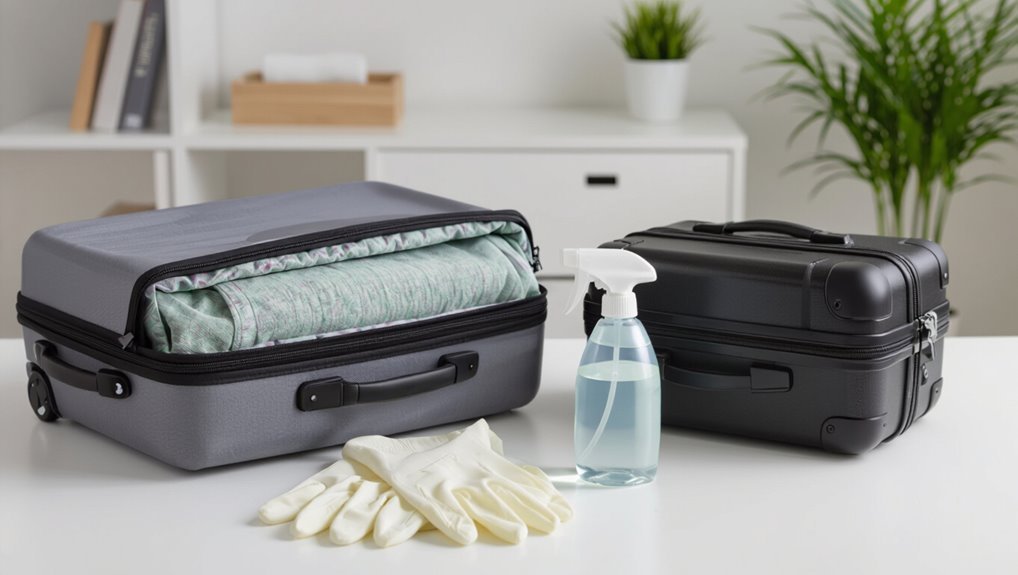
Start by moving your luggage outdoors or to a well-ventilated area to stop spores from spreading.
Then, brush off loose mold with a soft brush or cloth.
Next, wipe affected spots with a mixture of mild detergent and warm water.
Treat stubborn patches with a diluted vinegar or rubbing alcohol solution.
Let the bag dry completely in direct sunlight if possible.
Finish by applying a fabric-safe antimicrobial spray or storing silica packets to prevent recurrence.
After cleaning, inspect seams and zippers.
Repeat treatment if needed, vacuum interior, and store luggage dry with desiccants to deter future mold.
Is It Mold or Just Dirt on My Luggage?
Check the spots visually first: mold often looks fuzzy or has a ringed pattern, while dirt usually wipes away or stays as a flat stain.
You can rub a hidden area with a damp cloth and sniff—mold smells musty and feels slightly raised or slimy, whereas dirt won’t have that odor or texture.
Also consider the material—fabric and leather trap moisture and mold more easily than hard plastics, which usually just get dirty.
Visible Signs Versus Stains
Although dirt, dye bleed, and wear can look similar at a glance, you can usually tell mold from simple stains by looking for texture, smell, and location.
Check visual cues and context, then decide whether cleaning or remediation’s needed.
- fuzzy black specks along seams
- powdery white patches in corners
- dark, spreading rings on fabric
- clustered growth under straps
Texture And Smell Tests
How can you tell whether that grime on your suitcase is harmless dirt or active mold? Check texture and smell: mold feels fuzzy or slimy, dirt is gritty. Sniff cautiously — musty means mold; earthy or neutral is likely dirt. If unsure, test a small spot and note changes.
| Look | Feel | Smell |
|---|---|---|
| Dusty | Gritty | Neutral |
| Stain | Smooth | Earthy |
| Patch | Fuzzy | Musty |
| Spot | Slimy | Sour |
Surface Type Considerations
Different materials hold grime and mold differently, so you’ll want to identify your luggage’s surface before deciding how to clean it.
Check for texture, color change, and odor to tell mold from dirt.
Consider treatment based on material:
- Smooth hard shell with powdery spots
- Fabric with fuzzy growth in seams
- Leather with darkened patches
- Plastic trim with stubborn specks
How to Identify Surface vs. Deep-Set Mold
When you inspect mold on your luggage, focus on texture, stain penetration, and how it responds to light scrubbing.
Surface mold usually sits on the material, comes off or lightens with a damp cloth and mild cleaner, and often looks fuzzy or powdery.
Deep-set mold has darker, ingrained stains, may fuzz up beneath the surface, and won’t budge without deeper treatment or professional cleaning.
Check odor, probe seams gently, and test a hidden area: if residues lift, it’s surface; if stains persist or fibers are discolored, treat as deep-set and consider specialized cleaning.
When It’s Time to Replace a Moldy Bag
If mold has soaked into the lining, warped structural components, left a persistent musty smell, or you can’t remove visible spores without risking your health, it’s time to replace the bag.
You should act when cleaning won’t restore safety or function. Consider these visual cues:
- fabric blackened and stained beyond scrubbing
- foam padding collapsed and crumbly
- metal frame rusted and warped
- smell that won’t fade
Health Risks of Handling Moldy Luggage
When you handle moldy luggage you can stir up spores that cause respiratory irritation, coughing, or wheezing.
People with allergies or asthma may have stronger reactions, including sneezing, itchy eyes, or worsening breathing.
If you’re elderly, very young, or immunocompromised, exposure can raise the risk of serious infections and complications.
Respiratory Irritation Risks
Although you might think mold on luggage is only a visual nuisance, it can release spores and volatile compounds that irritate your eyes, nose, throat, and lungs.
You should minimize exposure, work outdoors or with ventilation, and wear a mask.
Visualize symptom sources:
- powdery spores puffing into the air
- musty chemical odors
- tickle in your throat
- watery, burning eyes
Allergic Reaction Triggers
Because mold spores and fragments can act like airborne allergens, handling moldy luggage can trigger sneezing, nasal congestion, itchy eyes, hives, or asthma attacks in sensitive people.
You should wear gloves, an N95 or higher mask, and eye protection when cleaning. Limit exposure time, work outdoors or in ventilated areas, and have antihistamines or your inhaler ready if you’re prone to reactions.
Infection Risk For Vulnerable
Beyond allergy symptoms, mold on luggage can pose an infection risk for people with weakened immune systems, chronic lung disease, diabetes, or open wounds.
You should avoid direct contact, wear PPE, and get medical advice if exposed.
Visualize contaminated items:
- Damp fabric spreading dark spots
- Flaky spores on zippers
- Musty odors clinging to lining
- Visible colonies near seams
What Protective Gear to Wear Before Cleaning
Before you start scrubbing, gear up so you don’t inhale spores or spread contamination—put on a well-fitting N95 or P100 respirator, chemical-resistant gloves (nitrile or neoprene), and eye protection such as goggles. Wear long sleeves and closed shoes, and work outdoors or in ventilated space. Remove and wash clothing after.
| Item | Purpose | Note |
|---|---|---|
| Respirator | Filter spores | Seal check |
| Gloves | Protect skin | Dispose or clean |
| Goggles | Shield eyes | No vents |
How to Patch-Test Cleaners on Luggage
Anyone can accidentally damage luggage by using the wrong cleaner, so always patch-test first: pick a small, inconspicuous area (inside a pocket, under a seam, or the underside of a wheel housing), apply a tiny amount of the cleaner with a cotton swab, wait 10–15 minutes, then blot and inspect for color change, fabric weakening, or finish dulling before proceeding.
- inside pocket
- under seam
- wheel housing underside
- zipper backplate
Best Cleaners for Common Mold on Luggage
Choose cleaners based on the luggage material and the mold type so you remove growth without harming fabric, leather, plastic, or metal hardware.
For canvas or nylon, use a mild detergent and water with a soft brush; for leather, a pH-balanced leather cleaner and conditioner; for hard-shell plastic or metal, diluted isopropyl alcohol or an all-purpose cleaner.
Rinse, dry, and ventilate thoroughly.
Safe Homemade Cleaners That Actually Work
You can tackle mold on luggage with simple, safe mixtures you make at home. A spray of white vinegar and a paste of baking soda lift stains and neutralize spores, while diluted hydrogen peroxide is great for disinfecting seams and hard spots.
Test a hidden area first, then blot and air-dry your bag after treating it.
Vinegar And Baking Soda
While commercial cleaners can be harsh, vinegar and baking soda are gentle, affordable options that actually kill and lift mold from luggage fabrics and hard surfaces; you’ll use vinegar for disinfecting and baking soda for deodorizing and scrubbing.
Spray diluted white vinegar, let sit, then scrub with a baking soda paste.
Visualize:
- fizzing paste on seams
- damp vinegar mist
- gentle scrubbing brush
- air-dry in sun
Hydrogen Peroxide Solutions
Hydrogen peroxide’s oxidizing power makes it a reliable, kid- and pet-safe option for killing mold spores and whitening stained luggage fabrics; you’ll use a 3% solution straight for spot treatments or diluted slightly for larger surfaces.
Apply it, let it bubble for a few minutes, then blot and air-dry.
Test an inconspicuous area first, wear gloves, repeat as needed, and avoid colored fabrics to prevent fading.
Cleaners and Methods That Damage Luggage (Avoid)
Because some cleaners eat through fabrics, finishes, and seals, don’t reach for harsh chemicals or abrasive tools when removing mold from luggage.
You’ll ruin liners, coatings, and stitching. Avoid anything that strips color or melts seals.
- Bleach soaked rags
- Metal scouring pads
- Ammonia-based degreasers
- Undiluted rubbing alcohol
Remove Mold From Hard-Shell Suitcases
When mold shows up on a hard-shell suitcase, act quickly to prevent stains and odors from setting into the shell seams and lining.
Wipe exterior with a soft cloth dampened in diluted dish soap, rinse, then disinfect with isopropyl alcohol or a mild bleach solution applied sparingly.
Dry completely, air out in sunlight if possible, and inspect seals and wheels for hidden growth.
Remove Mold From Fabric and Soft-Sided Luggage
If your soft-sided or fabric luggage develops mold, tackle it promptly to prevent stains and musty odors from setting into the fibers and lining.
Wear gloves and a mask, brush away spores outdoors, vacuum, then spot-clean with diluted detergent or vinegar, rinse, and air-dry fully in sunlight.
Visualize:
- moldy zipper seams
- fuzzy spots on lining
- damp corners
- faint musty smell
Clean Mold Off Leather and Faux-Leather Luggage
Before you start, check whether the luggage is real leather or faux and inspect for cracking or discoloration so you know how much repair it might need.
Use gentle cleaners and a soft cloth to remove mold, avoiding soaking the material.
After cleaning, apply an appropriate conditioner or protector to restore flexibility and help prevent future growth.
Assess Material And Damage
Because leather and faux-leather react differently to cleaning, check the material closely and the extent of the mold before you start treatment.
Inspect for staining, deep pitting, or softened seams. Note odor and spread. Decide if professional repair is needed.
- black specks on grain
- white powdery surface
- cracked finish near corners
- musty smell inside pockets
Clean And Condition Carefully
Now that you’ve assessed the leather or faux-leather and noted damage and odors, you can start cleaning and conditioning with care.
Wipe mold gently with a soft cloth dampened in a mixture of mild soap and water, avoiding saturating seams. Dry thoroughly in air.
Apply a leather conditioner or a faux-leather protectant sparingly to restore suppleness and repel future moisture.
Treat Mold on Zippers, Wheels, and Handles
When you’re tackling mold on zippers, wheels, and handles, focus on small parts first since they trap dirt and moisture and spread spores easily; use a brush and targeted cleaner to loosen growth without soaking the whole bag.
When treating mold on zippers, wheels, and handles, start with small parts—brush and spot-clean to avoid soaking the bag.
- stiff toothbrush scraping along zipper teeth
- cotton swab wiping handle seams
- compressed air clearing wheel axles
- small bucket catching drips as you work
How to Disinfect Luggage Without Ruining Materials
After you’ve removed visible mold from zippers, wheels, and handles, you’ll want to disinfect the rest of the luggage without harming fabrics, coatings, or hardware.
Use a mild solution—one part white vinegar to four parts water—or a gentle, alcohol-based wipe for hard surfaces.
Test a hidden spot first.
Air-dry fully in sunlight or a well-ventilated area to prevent residue and return of spores.
Stain Removal Tips for Stubborn Mold Marks
If stubborn mold stains won’t lift with vinegar or gentle soap, try targeted treatments that match the luggage material: use diluted hydrogen peroxide (3%) on light-colored fabric, a paste of baking soda and water for canvas, or a diluted enzyme cleaner for organic residues—always dab, don’t rub, and blot excess moisture with a clean cloth.
- damp sponge skims away softened spots
- toothbrush teases fibers gently
- paper towel soaks residue
- sunlight dries treated areas
Eliminate Lingering Musty Odors From Luggage
Loosened stains and surface cleaning will help, but mold often leaves behind a persistent musty smell that needs its own treatment.
You can deodorize by airing the luggage in sunlight when safe, sprinkling baking soda inside for several hours, then vacuuming it out, or placing activated charcoal or cedar sachets to absorb odors.
Repeat until the smell dissipates.
Dry Luggage Thoroughly to Prevent Regrowth
Moisture is the main thing you need to eliminate to stop mold from coming back, so dry your luggage thoroughly before storing it.
Dry your luggage completely—moisture breeds mold, so air out linings, unzip pockets, and let everything fully dry before storing.
Air out interiors and seams, unzip pockets, and wipe damp spots. Use sunlight or a fan for faster drying.
Visualize:
- Open suitcase in bright sun
- Damp lining air-drying
- Zipped pockets flapped open
- Fan circulating through compartments
Prevent Mold During Travel and Storage
Now that your luggage is dry, take steps while you’re traveling and when you store it to keep mold from returning.
Wipe spills immediately, air out interiors after trips, and avoid packing damp clothes.
Use breathable garment bags, silica packets, or moisture absorbers in compartments.
Inspect zippers and seams regularly for hidden dampness, and clean promptly if you spot odors or discoloration.
How to Store Luggage to Keep It Mold-Free
Store your luggage in a cool, dry spot to keep moisture—and mold—at bay.
Use breathable covers or cloth bags instead of plastic to allow air circulation.
Check your bags periodically and air them out to catch any dampness before it becomes a problem.
Store In A Dry Place
If you want to keep mold from returning, pick a cool, dry spot with good air circulation for your luggage.
You’ll avoid damp basements or sun-baked attics. Keep it elevated and clean, and check periodically.
- wooden shelf in a ventilated closet
- metal rack near an interior wall
- under-bed slatted platform
- airy mudroom cubby
Use Breathable Covers
When you aren’t using your luggage, cover it with a breathable bag or cotton sheet so trapped moisture can escape and mold spores can’t settle in.
Choose natural fabrics or mesh covers rather than plastic. Make sure covers fit loosely to allow airflow, label bags to avoid unnecessary handling, and keep luggage elevated off damp floors to reduce contact with humidity and contaminants.
Inspect And Air Regularly
Because even well-covered luggage can trap humidity, inspect and air your bags regularly to stop mold before it starts.
Open zippers, check linings, and let fresh air circulate for at least an hour weekly. Use sunlight sparingly to avoid fading.
Visualize:
- an open suitcase on a porch
- breezy interior airing out
- damp spot being wiped
- dry, tidy storage shelf
Quick Emergency Fixes for Mold on the Go
1 simple kit can stop mold from spreading until you get home: carry disposable gloves, a small spray bottle of diluted rubbing alcohol or white vinegar, a cloth, and sealing plastic bags. Act fast: vent the bag, blot and spray lightly, seal contaminated items. Keep odors down. Replace cloth if soaked.
| Action | Purpose |
|---|---|
| Vent | Reduce spores |
| Blot | Remove moisture |
| Spray | Disinfect |
| Seal | Contain mold |
| Replace cloth | Prevent spread |
When to Call a Professional Cleaner or Restorer
If the mold covers large areas, has soaked into padding, or keeps returning after you clean it, you should call a professional cleaner or restorer.
You’ll also want expert help if the luggage is valuable or has strong sentimental value that you don’t want to risk.
Professionals can assess structural damage and use specialized treatments that you can’t safely replicate at home.
Severe Or Extensive Infestation
When mold covers large areas, has penetrated seams or padding, or keeps returning after cleaning, you’ll want to call a professional restorer—these signs mean the infestation may be too deep or hazardous for DIY treatment.
You should stop using the luggage and contact a certified cleaner if you notice:
- dark, fuzzy patches seeping into lining
- musty odor that won’t fade
- crumbling foam or padding
- visible spore clouds when disturbed
Valuable Or Sentimental Items
Anyone who owns a treasured or high-value bag should consider calling a professional restorer rather than risking DIY treatments that can damage fabrics, hardware, or finishes.
If the item has deep staining, delicate materials, or emotional value, don’t experiment. A pro assesses fiber, metal, and dyes, uses specialized cleaners and controlled drying, and documents work for insurance or future preservation.
Frequently Asked Questions
Can Mold Spread From Luggage to Other Household Items?
Yes — mold can spread from luggage to other household items. You should isolate the bag, clean and dry affected surfaces, launder fabrics, and use masks and gloves to avoid disturbing spores that could contaminate nearby belongings.
Are Airline Lost-And-Found Bags More Prone to Mold?
Yes, they can be more prone to mold because you’ll often find damp, neglected bags stored in enclosed spaces; if you retrieve one, inspect, air out, and clean it promptly to prevent spores spreading or growing further.
Can Mold on Luggage Cause Allergic Reactions Months Later?
Yes — mold on luggage can trigger allergic reactions months later if you keep spores on fabrics or in storage; you’ll still inhale or touch them, so clean, dry, and remove contaminated items promptly to reduce risk.
Will Insurance or Warranties Cover Mold Damage to Luggage?
Usually they won’t fully cover mold; you’ll need to check your travel insurance, homeowner’s or renter’s policy and warranty terms. They’ll often deny coverage for neglect, but might reimburse if mold resulted from a covered peril or defect.
How to Safely Dispose of a Heavily Mold-Infested Suitcase?
You should bag and seal the suitcase, avoid shaking spores, label it as hazardous, and contact local waste authorities for disposal instructions; wear PPE while handling, and don’t try to reuse or donate heavily mold-infested luggage.
Conclusion
You’ve got the tools and know-how to tackle mold on luggage safely, so don’t panic—act fast. Start with a quick assessment to tell surface grime from deep-set growth, use gentle cleaners and sunlight for minor cases, and opt for professionals or replacement when mold’s extensive. Protect yourself with gloves and a mask, and prevent recurrence by storing bags dry, airing gear after trips, and using silica packs. Take prompt action to keep travel gear healthy.