How to Set Lock on Travelpro Luggage Easy Instructions
Set your Travelpro lock by seating the zipper pulls into the lock, aligning the digits to the current code (or 0-0-0 for new locks), then press the recessed reset button or slide the latch while turning each dial to your new three‑digit combination. Release the reset, scramble the numbers, and test the new code a few times to confirm it opens smoothly. Keep the code private, note it down securely, and keep going to learn troubleshooting, TSA info, and maintenance tips.
Quick: Set or Reset Your Travelpro Lock (Step‑by‑Step)
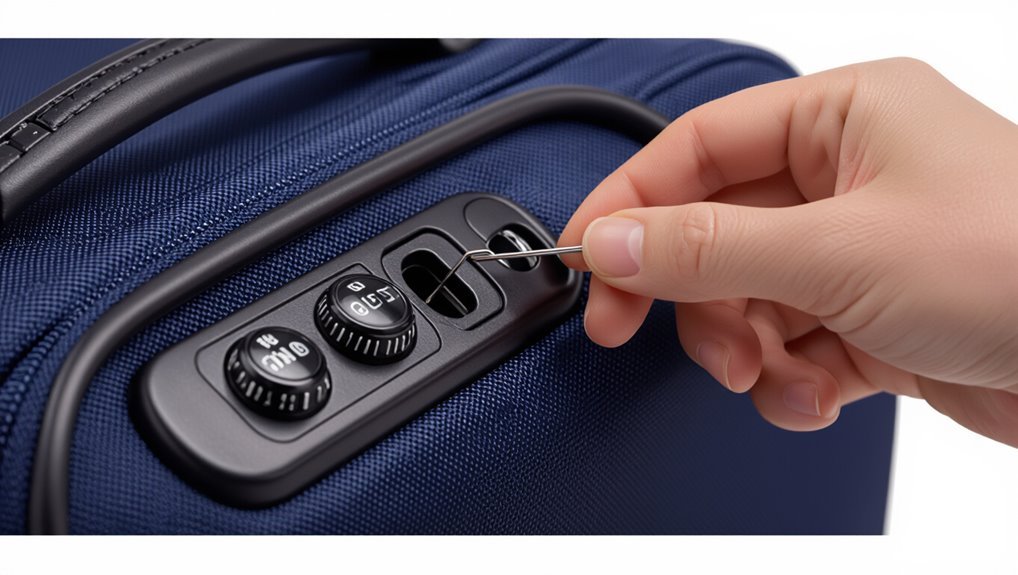
Before you start, make sure the zipper pulls are seated in the lock and the current code is entered (or set to 0‑0‑0 if it’s new).
Align digits, press reset button or slide latch, set your new three‑digit combination, release the reset, then scramble digits to confirm it locks.
Record your code somewhere safe and test reopening before travel.
Which Travelpro Lock Types You Might Have
Now that you know how to set or reset a code, it helps to recognize which Travelpro lock you’re working with so you can follow the right steps for maintenance or troubleshooting.
You’ll typically see three types: built‑in TSA combination locks, detachable padlocks, and zipper‑tab locks.
Identify model markings, keyholes, or reset buttons to determine procedures and replacement parts.
Where to Find the Built‑In Travelpro Lock
When you’re looking for the built‑in Travelpro lock, check the top or side of the suitcase near the zipper tails—manufacturers usually place the lock where the zipper sliders meet so you can secure both pulls at once. You’ll also inspect the handle area and any recessed panel. Use the table to note locations quickly:
| Location | Tip |
|---|---|
| Top | Near handle |
| Side | Near zipper |
| Recessed panel | Hidden flap |
| Handle area | Integrated unit |
Is Your Travelpro Lock TSA‑Approved?
Curious if your Travelpro lock is TSA‑approved? Check for a small red diamond logo—Travel Sentry or TSA logo indicates approval.
If present, TSA agents can open and relock your suitcase without damage.
If you don’t see the logo, assume it isn’t approved and consider using a TSA‑approved padlock or the built‑in approved mechanism specified in your model’s manual.
Tools: What You’ll Need to Set or Reset
You’ll need just a few simple items to set or reset a Travelpro lock: the luggage itself, any original key (for key locks), a small flathead screwdriver or pin tool for models with recessed reset buttons, and a pen or pencil to help align digits while you rotate the dials.
- Original key (if applicable)
- Small flathead screwdriver or pin
- Pen or pencil
- Good light and steady surface
Set a New Combination on Push‑Button Travelpro Locks
First, find the small reset button on the lock—it’s usually inside the shackle or next to the dials.
Then press and hold that button while you pick a memorable three- or four-digit combination.
Release the button to save the new code and test it a few times before closing your luggage.
Locating The Reset Button
Wondering where Travelpro hides the reset mechanism? You’ll find it near the push button assembly: a small recessed pinhole or sliding tab beside the dials.
Use a paperclip or pointed tool, press gently, then hold while you set the new code.
- Inspect the lock face closely.
- Look for a tiny hole or tab.
- Use a slim tool.
- Press and hold to engage reset.
Choosing And Saving Combination
Now pick a memorable yet hard-to-guess code and get ready to set it: align the dials to your current code (usually 0-0-0), press and hold the reset pin or slide the tab, then turn each dial to your chosen digits—release the pin/tab and scramble the dials to confirm the new combination locks in.
Write your code down and store it separately from the bag.
Set a New Combination on Dial‑Style Travelpro Locks
Changing the combination on a dial‑style Travelpro lock is straightforward and only takes a few minutes.
You’ll reset the dials, enter the current code, move to the reset position, choose a new sequence, then return the lock to operation.
Test it several times before traveling to verify it’s set correctly.
- Open lock
- Enter current combo
- Set new numbers
- Confirm and test
Use an External TSA Padlock With Travelpro Zippers
If you prefer a simple, visible lock option instead of resetting an integrated dial, you can secure your Travelpro zippers with an external TSA‑approved padlock. Choose a keyed or combination TSA lock, thread through zipper pulls, and test access. Keep the key or code safe and register it if available.
| Type | Benefit | Tip |
|---|---|---|
| Keyed | Strong | Carry spare |
| Combo | No key | Memorize code |
| TSA | Inspectable | Use airport-safe |
Open a Travelpro Lock Using the Default Code
When you first get a Travelpro suitcase, the lock will usually be set to the factory default code (commonly 0-0-0).
So align the dials to that combination, press the release button or slide the latch, and pull the zipper tab free to open the lock.
- Set dials to 0-0-0.
- Press release or slide latch.
- Pull zipper tab outward.
- Inspect mechanism for debris.
Change Your Travelpro Lock Combination Safely
Now that you’ve opened the lock, you’ll want to reset the current combination before you leave it set.
Make sure you follow the Travelpro instructions to put the lock into reset mode and confirm the old code first.
Choose a secure, memorable code—avoid obvious sequences like 000 or 123—and test it several times before closing the suitcase.
Resetting The Current Combination
Before changing the combination, make sure you know the current code and have the lock open; you’ll need that access to reset it safely.
To reset, press the reset button or push pin, set new wheels, release to lock position, and test multiple times.
Follow these steps:
- Locate reset mechanism.
- Engage reset (press/push).
- Rotate dials to new numbers.
- Release and confirm.
Choosing A Secure Code
With the lock open and the reset mechanism engaged, pick a combination that’s hard for others to guess but easy for you to remember.
Avoid obvious sequences like 000, 123, birthdays, or repeating digits. Use a mix of nonconsecutive numbers tied to a personal mnemonic.
Test the new code several times before closing the lock, then write it down and store that note separately from your luggage.
Confirm Your New Travelpro Combination Works Every Time
Test the lock immediately after setting your new Travelpro combination to verify it opens and closes reliably.
Try the code several times, with firm button presses and dial turns, and confirm the zipper sliders latch properly. If it sticks, reset and try again until smooth.
- Open and close 5 times
- Jostle suitcase gently
- Try alternate finger pressure
- Record the code securely
Restore a Travelpro Lock to Factory Default
If you need to restore your Travelpro lock to factory default, start by locating the reset button—it’s usually recessed near the dials.
You’ll then follow the default code procedure to clear any custom combination and return the lock to its original numbers.
After that, I’ll walk you through the reprogramming steps so you can set a new, memorable code.
Reset Button Location
Most Travelpro locks hide the reset button near the shackle or inside the combination housing; you’ll usually find a small recessed pinhole or switch on the side or back of the lock body.
You’ll press with a paperclip or small tool while setting the code.
Check these locations:
- Beside the shackle
- Under a removable cover
- Inside the combination cavity
- On the lock’s rear panel
Default Code Procedure
After you locate the reset button near the shackle or inside the housing, you can restore the lock to its factory code by following the default code procedure. Press and hold the reset, set dials to 0-0-0, release reset, then test opening. Visualize steps below:
| Step | Action |
|---|---|
| 1 | Find reset |
| 2 | Press hold |
| 3 | Set 000 |
| 4 | Release & test |
Reprogramming Steps
1 simple sequence will get your Travelpro lock back to its factory code: locate the reset, press and hold it, turn all dials to 0-0-0, then release and test the shackle; follow each step deliberately to guarantee the mechanism resets correctly.
- Find the tiny reset button near the shackle.
- Use a pen tip and hold it down.
- Set dials to 0-0-0 while holding.
- Release and verify the lock opens.
Reset a Travelpro Lock If You Forget the Code
If you forget your Travelpro lock code, don’t panic—you can still reset it by following a few straightforward steps that vary slightly by model; first, identify whether your lock is a TSA-approved dial or button-style mechanism so you use the correct procedure.
For dials, align to 000, press reset pin, set new code, release.
For button locks, depress reset, enter new digits, release to save.
Using Travelpro’s TSA/Master Key Access
Travelpro locks include TSA/master key access, which lets Transportation Security Administration agents open your luggage without breaking the lock.
You’ll use the designated key slot while keeping your personal code secure.
Next, I’ll explain how agents access the lock and what you should do to guarantee it works properly.
TSA/Master Key Overview
Because U.S. TSA may need to inspect checked bags, Travelpro includes TSA/master key access so agents can open locks without damaging them.
You should know key points:
- TSA-approved locks use a universal master key system.
- Inspect for the red diamond Travel Sentry logo.
- Master access prevents forced entry during inspections.
- Not all countries use the same master key protocols.
How To Use
Locate the red Travel Sentry diamond on your lock, then align the numbered dials to your set combination and lift or slide the shackle to open it—agents with TSA/master keys can access the lock without damaging it when needed.
When officers need inspection, they use special keys; you won’t need to cut the lock.
After inspection, reseal, scramble dials if desired, and verify closure.
Troubleshoot: Lock Won’t Open Even With the Right Code
If your lock won’t open even though you’re sure the code is correct, don’t panic—small mechanical issues or an out-of-sync mechanism often cause the problem and are usually fixable without replacing the whole lock.
- Jiggle the shackle while pressing/opening the release.
- Reset by cycling all dials to different numbers, then back.
- Apply a small spray of silicone lubricant into the mechanism.
- Tap gently on a flat surface to realign internal parts.
Troubleshoot: Numbers Stuck or Hard to Turn
Struggle with stiff or jammed number wheels?
Gently apply a graphite pencil to each groove, then rotate wheels back and forth to work lubricant in.
If dirt’s visible, use a soft brush or compressed air first.
Don’t force; forcing can break teeth.
If still tight after cleaning and graphite, consult Travelpro support or a luggage repair shop for professional disassembly.
Troubleshoot: Shackle or Latch Won’t Release
If the shackle or latch won’t release, first make sure your combination is perfectly aligned with the indicator marks.
Check the shackle and surrounding area for dirt or debris that could be blocking movement, and clear it gently with a brush or compressed air.
Finally, test the lock mechanism by moving the shackle while you slightly wiggle the dials to see if it frees up.
Check Combination Alignment
When the shackle or latch won’t release, first confirm the dials are exactly on the set numbers — even a single off-position digit can keep the lock jammed.
If still stuck, reset and re-enter slowly, feel for detents, and try slight tension on the shackle while turning.
- Reposition dials precisely
- Apply gentle pull
- Rotate slowly to clicks
- Retrace your set code
Inspect Shackle For Debris
Start by looking closely at the shackle and latch area for grit, lint, or small debris that can block movement; you’ll often find particles trapped in the crevice where the shackle seats.
Use a soft brush, compressed air, or a toothpick to dislodge buildup, then wipe with a damp cloth.
Dry thoroughly before trying to operate the lock again.
Test Lock Mechanism Movement
Move the shackle and latch through their full range of motion to see where they’re sticking and what feels stiff or loose.
Gently wiggle and cycle the parts while observing alignment. If resistance appears, note its location before cleaning or lubricating.
Test again after each adjustment to confirm smooth release.
- Cycle slowly
- Check alignment
- Spot resistance
- Re-test after fix
Lubricate and Maintain Your Travelpro Lock Properly
Keep your Travelpro lock working smoothly by cleaning and lubricating it regularly; a little maintenance prevents jams and extends the mechanism’s life. Wipe debris, use silicone spray sparingly, and cycle the dials. Check annually and after salty or wet trips.
| Task | Frequency | Product |
|---|---|---|
| Clean | Monthly | Soft cloth |
| Lubricate | Yearly | Silicone spray |
| Inspect | After trips | Visual check |
Prevent Shoulder‑Surfing: Keep Your Combination Private
After cleaning and lubricating your lock, protect your combination from prying eyes—shoulder-surfing happens fast and quietly.
You’ll want to shield your keypad or dials whenever you enter numbers, avoid public displays, and be mindful of cameras or curious onlookers.
- Face away from crowds
- Use your body as a screen
- Cover digits with your hand
- Enter code discreetly before storing
Pick an Easy‑to‑Remember but Secure Combination
Pick a combination you’ll remember without writing it down, but don’t use obvious sequences like 1-2-3 or your birth year.
You can choose a pattern that makes sense to you—like a memorable date scrambled or a number tied to a phrase—while staying unpredictable to others.
Test it a few times to make sure it’s easy for you and hard for anyone watching.
Memorable But Unpredictable Codes
Want a code you’ll actually remember without making it obvious to others? You can craft one by combining personal cues only you link, mixing formats, and rotating occasionally.
Try these simple tactics:
- Use birth month + favorite color position.
- Blend a short song lyric number sequence.
- Pick nonconsecutive digits from a memorable date.
- Swap two digits each trip for freshness.
Avoid Obvious Number Patterns
When you set a combo, don’t use sequences or repeated digits that anyone can guess—like 1234, 0000, or your birthday—because those are the first things a thief will try; instead choose a pattern that’s easy for you to recall but not obvious to others.
Use a mix of unrelated numbers tied to a phrase, alternate digits, or a simple math rule you can mentally apply when opening your lock.
Document and Store Travelpro Lock Codes Safely
Security starts with a clear record: write down your Travelpro lock code immediately after setting it, include the date you set it, and store that note in two separate, secure places (one physical, one digital) so you can retrieve it if needed.
Keep access limited and update records after changes.
- Secure paper note in a locked spot
- Encrypted password manager entry
- Trusted person backup (limited access)
- Periodic review and deletion of old codes
When to Replace a Broken Travelpro Built‑In Lock
Keeping a clear record of your lock codes makes it easier to spot when a built‑in Travelpro lock stops working and needs replacement. If it jams, fails to reset, or shows visible damage, replace it to protect your luggage. Check functionality after bumps and before travel; don’t delay replacement.
| Issue | Action |
|---|---|
| Jammed | Replace |
| Won’t reset | Replace |
| Visible damage | Replace |
| Intermittent | Replace |
| After impact | Inspect/replace |
Install an External TSA Padlock on Travelpro Zippers
If you prefer an extra layer of security, pick a TSA‑approved padlock that fits Travelpro zipper pulls and uses a key or combination you trust.
Check the padlock’s size and shackle type so it threads easily through the zipper holes without stressing the fabric.
Then secure the padlock through the two zipper pulls and confirm it closes and opens with the TSA key or your combination.
Choose A TSA Padlock
1 simple step before traveling is choosing a TSA-approved padlock that fits Travelpro’s external zipper pulls; pick a compact, durable model with a visible TSA logo and shackle size that clears the zipper sliders so it closes smoothly without stressing the fabric.
- Confirm TSA approval and logo.
- Measure shackle clearance.
- Choose sturdy, corrosion-resistant material.
- Prefer a compact combination or keyed model.
Attach Padlock To Zippers
Start by aligning the two zipper pulls so their holes sit flush. Then thread the padlock shackle through both holes and close or set the combination—this guarantees the lock sits snugly without catching fabric or straps.
Check zipper movement, tuck any loose fabric away, and confirm the lock’s indicator (if TSA-approved) shows access.
Keep the key or code recorded in a safe place.
Choose the Right TSA Padlock Size for Travelpro Luggage
Because Travelpro luggage comes in different zipper and latch styles, picking the right TSA padlock size matters for both fit and security.
Choose a compact shackle for tight zipper pulls, medium for standard zippers, and larger shackle for latch holes.
Check measurements before buying and prefer TSA-approved models.
- Measure shackle clearance
- Match shackle thickness
- Verify TSA approval
- Test fit on luggage
Buying Used? Adapting to Different Travelpro Lock Models
If you’re buying used Travelpro luggage, check the lock type and condition before committing—models vary between built-in combination locks, removable TSA padlock loops, and older non-TSA mechanisms.
You’ll want to confirm which style you’re getting and whether keys or combos come with it.
Test functionality: spin dials, inspect shackle fit, verify key turns, and ascertain reset features work or that replacement parts are available.
Airline & TSA Rules That Affect Travelpro Locks
When you’re choosing or setting a Travelpro lock, check whether it’s TSA-approved so agents can open it without cutting it.
Also verify your airline’s specific lock policies—some carriers have different rules for checked baggage.
Remember TSA uses master keys for approved locks, so set combinations you can reset if inspection occurs.
TSA-Approved Lock Requirements
Although TSA rules let agents open checked bags for inspection, they also require that travelers use approved locks so luggage isn’t damaged during screening.
You should choose TSA-recognized locks, register combos, and keep keys safe. If agents need access, locks can be opened without cutting.
- Buy TSA-approved lock
- Register combination
- Store spare key
- Inspect lock before travel
Airline Lock Policies
Because airlines and the TSA each set rules that affect how you lock Travelpro luggage, it’s important to know both policies before you travel.
Check your airline’s baggage rules for lock types, checked-versus-carry-on restrictions, and liability disclaimers. Some carriers require TSA-approved locks for checked bags; others may cut noncompliant locks without notice.
Confirm guidelines online or with customer service to avoid delays or damage.
TSA Master Key Access
TSA master keys let Transportation Security Administration agents open approved Travelpro locks without cutting them, so you can secure checked bags while still allowing inspections.
You should choose TSA-approved locks, label checked luggage correctly, and know agents may open and relock your bag.
Keep combinations private and report damaged locks promptly.
- Use TSA-approved locks
- Don’t lock prohibited items
- Note inspection stickers
- Keep combo secure
Check Travelpro Warranty Coverage for Lock Issues
Before you assume your Travelpro lock is permanently damaged, check the warranty to see if the issue is covered.
Locate your purchase receipt and warranty card, note model and serial numbers, and review coverage terms for mechanical or manufacturing defects.
If the issue falls within the warranty period, follow the stated claim procedures to arrange repair or replacement without paying for eligible defects.
Contact Travelpro Support for Lock Problems
If your lock still won’t work, contact Travelpro support by phone, email, or their online form to start a repair or replacement.
Have your model number, purchase proof, and photos of the lock ready to speed things up.
Keep notes of names, ticket numbers, and any instructions they give.
Contact Options Available
Need help with a lock issue? You can reach Travelpro quickly using several options.
Choose the one that fits you best:
- Phone support for immediate troubleshooting and warranty inquiries.
- Email support for photos and detailed descriptions.
- Live chat on the Travelpro website for quick guidance.
- Social media (Twitter/Facebook) for updates and messaging.
What To Prepare
When you contact Travelpro about a lock problem, gather the essentials so their team can diagnose and help fast: your luggage model name or number, a clear photo of the lock and any visible damage, the purchase date or proof of purchase if you have it, and a brief description of what happened and any troubleshooting you’ve already tried.
| Item | Why it matters | How it helps |
|---|---|---|
| Model | Identifies parts | Speeds repair |
| Photo | Shows damage | Confirms issue |
| Receipt | Verifies warranty | Covers cost |
| Notes | Explains events | Guides support |
Common Mistakes When Setting Your Travelpro Lock
A few simple missteps can leave your Travelpro lock failing or stuck, so it’s important you set it correctly from the start.
Avoid these common mistakes to guarantee smooth use and avoid jams or lost combinations.
- Rushing the dial change without aligning numbers precisely.
- Forgetting to press the reset button fully.
- Skipping a test cycle after setting.
- Using an obvious, easily guessed code.
Secure Multiple Travelpro Bags With One Code Strategy
Pick one master code you can remember and set it on each Travelpro to simplify access and reduce fumbling at checkpoints.
Sync the combination across your bags right after setting it so you don’t forget which ones were updated.
Change the master code periodically to keep your luggage secure and limit exposure if a code is compromised.
Choose One Master Code
If you own several Travelpro bags, choosing one master code lets you lock them all with a single, memorable combination—so you won’t juggle multiple numbers at the airport.
Pick a code you’ll recall, avoid obvious sequences, and record it securely. Change it periodically for safety. Test each lock after setting.
- Choose memorable
- Avoid patterns
- Store securely
- Test locks
Sync Combination Across Bags
Syncing the same combination across multiple Travelpro bags saves time and reduces stress when you’re rushing through security or loading luggage.
Choose your master code, then reset each bag’s lock following its instructions. Test every lock to confirm alignment.
Keep a secure record of the code and only share it with trusted travel companions. This streamlines access and avoids fumbling at checkpoints.
Update Codes Periodically
Once you’ve got the same combination across your Travelpro bags, plan to change that code on a schedule—every 3–6 months or after any security concern—to keep your luggage secure.
You’ll rotate codes, record them securely, and notify trusted travel partners. Follow a simple routine to reduce risk.
- Set calendar reminders
- Use varied digits
- Store codes encrypted
- Change after incidents
Combine Travelpro Locks With Cables or Luggage Straps
You can boost security and flexibility by pairing your Travelpro lock with a cable or luggage strap—these let you secure multiple bags together or loop around odd-shaped items that zippers alone can’t protect.
Thread the cable or strap through lock apertures, tighten snugly, then set the combination.
Check tension before travel, and use recognized materials rated for travel to avoid breakage or accidental release.
Spot Counterfeit or Nonstandard Travelpro Locks
Tightening a cable or adding a strap is smart, but you’ll also want to confirm your Travelpro lock is genuine before you rely on it.
Check branding, weight, and build; compare with official photos. Test combination smoothness and inspect markings for TSA logo and model number.
Compare branding and weight to official photos, test the dial’s smoothness, and verify the TSA logo and model number.
- Logo clarity
- Solid feel
- Smooth dial action
- Correct TSA mark
Lost Keys for External Locks: What to Do
If you lose the key to an external Travelpro lock, don’t panic—start by evaluating the lock type and your access needs so you can pick the quickest, least destructive fix.
Check for a serial or code, contact Travelpro or the lock maker for replacement keys, try manufacturer-recommended locksmiths, or use a professional locksmith to pick or replace the lock without damaging your luggage.
Prepare Your Travelpro Lock for Long‑Term Storage
After you’ve handled a lost-key situation, take a few simple steps to ready your Travelpro lock for long-term storage so it stays reliable when you travel again.
After resolving a lost-key issue, prep your Travelpro lock for storage with a few simple care steps.
- Clean exterior with a soft cloth and mild soap, then dry.
- Lubricate shackle and dials lightly with graphite or silicone spray.
- Set a memorable combination and record it securely.
- Store the lock in a cool, dry place away from humidity.
Set Locks Fast During Short Airport Layovers
When you’re racing between gates, set your Travelpro lock quickly and confidently by aligning the dials to your code, snapping the shackle closed, and testing it once before stowing your bag.
Keep the lock accessible on a carry-on pocket, use a simple memorable code, avoid changing it mid‑trip, and glance to confirm it’s secure so you can focus on boarding without fumbling.
Teach Family Members Your Travelpro Combination Safely
You’ll want to share your Travelpro combination with family members in a way that’s quick, clear, and secure.
Teach only trusted people, confirm they can open and lock, and change the code after trips.
Show only trusted people how to open and lock it — verify they can, and reset the code after trips.
Store the combination safely if someone forgets, and avoid writing it on luggage.
- Tell one trusted contact
- Demonstrate setting/resetting
- Use a secure note app
- Change code periodically
If TSA Damages Your Lock: Recovering Valuables
If TSA damages your Travelpro lock, act quickly to document the damage and protect your valuables: photograph the broken lock and any tamper marks, keep all inspection receipts and tags, and report the issue to the airline and TSA before leaving the airport so you have a clear record for claims.
Secure high-value items, list contents and approximate values, and ask about immediate reimbursement options.
Document Lock Incidents for Claims or Repair
1 clear photo and a short, dated note can make or break a claim, so document the lock incident thoroughly before you leave the airport or discovery site.
You should record damage, note time/location, and keep receipts. File reports promptly and retain copies.
- Photograph damage from multiple angles
- Write a dated description
- Get official incident report
- Save repair estimates and receipts
Upgrade Travelpro Security: Choosing Aftermarket Locks
When upgrading your Travelpro’s security, pick an aftermarket lock that balances TSA-compatibility, durability, and ease of use—so you don’t trade convenience for protection.
Choose a certified TSA-approved lock, prefer hardened metal or reinforced cable construction, check weight and fit for your model, and verify resettable combination or key backup.
Compare reviews, warranty, and ease of operation before buying.
Test Your Travelpro Lock Before Every Trip
Give your Travelpro lock a quick run-through before you leave so you don’t get stuck at the airport.
Give your Travelpro lock a quick run-through before you leave so you don’t get stuck at the airport.
You’ll confirm it opens, closes, resets, and aligns properly. Test every combination and TSA function so you don’t face surprises.
- Dial the code and release.
- Close and scramble numbers.
- Use TSA key if available.
- Check latch alignment.
Quick Checklist: Set, Test, and Secure Your Travelpro Lock
Now that you’ve checked the dials and TSA function, use this quick checklist to set, test, and secure your Travelpro lock so it won’t cause last-minute headaches at the airport.
Set your chosen combination, relock and scramble the dials, tug the zipper pulls to confirm engagement, test TSA override if applicable, note your code in a secure place, and recheck before departure.
Frequently Asked Questions
Can a Travelpro Lock Be Reset Remotely or via Smartphone?
No, you can’t reset a Travelpro lock remotely or with a smartphone; you’ll need to reset it manually using the combination or the override key per the manufacturer’s instructions, and you should follow their step-by-step guidance.
Do Travelpro Locks Affect Travel Insurance Claims?
Yes — Travelpro locks can affect claims; insurers often expect reasonable precautions, so if you’ve used a TSA-approved lock and documented damage, you’ll strengthen your claim, but failing to secure luggage might reduce or deny coverage.
Are Travelpro Locks Compatible With Cruise Line Security Rules?
Yes, Travelpro locks generally comply with cruise line security rules because they use TSA-approved designs; however, you should check your specific cruise line and port regulations, and keep keys or combination info accessible for ship security inspections.
Can Extreme Temperatures Damage Travelpro Lock Mechanisms?
Yes, extreme temperatures can damage Travelpro lock mechanisms. You’ll find plastics can warp, lubricants may thin or thicken, and metal parts can expand or seize; avoid prolonged exposure to very hot or freezing conditions to protect them.
How Do Travelpro Locks Behave During Baggage X‑Ray Scanning?
Travelpro locks generally aren’t affected by standard baggage x‑ray scanning; you’ll find they’ll keep working normally. X‑rays don’t alter mechanical tumblers or combination settings, so you won’t need to reset anything afterward.
Conclusion
Now you know how to find, set, and test your Travelpro lock, whether it’s a built‑in TSA‑approved unit or an aftermarket add‑on. Take photos and record combinations for claims or repairs, carry a backup key if needed, and test the lock before every trip. If the factory lock’s weak or damaged, consider upgrading. Follow the quick checklist each time so your luggage stays secure and you travel with one less worry.