Which Type of Trolley Bag Is Best for Travel and Durability
You’ll want a hard‑shell spinner made from polycarbonate or lightweight aluminum with sealed PU wheels and a reinforced telescopic handle for the best mix of travel performance and durability. That setup resists impacts, water, and crushing while rolling smoothly through crowded terminals. Choose thicker shell panels, quality bearings, and sturdy zippers; look for replaceable parts and solid stitching. Keep it maintained and you’ll extend lifespan—and if you keep going you’ll find tips on materials, repairs, and buying choices.
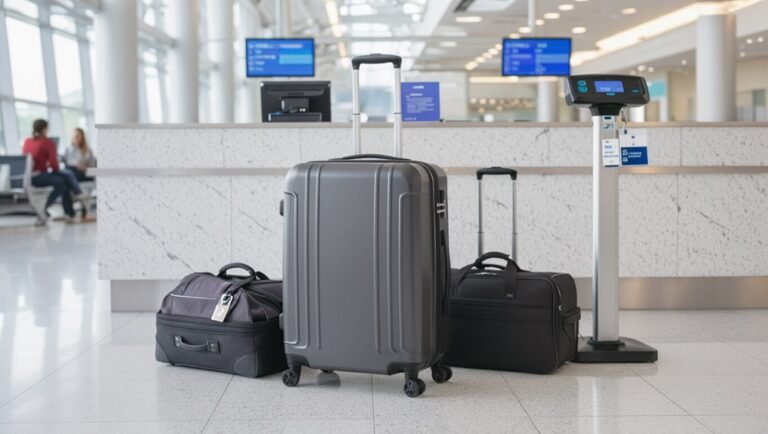
Quick Verdict: Best Trolley Bag by Travel Style
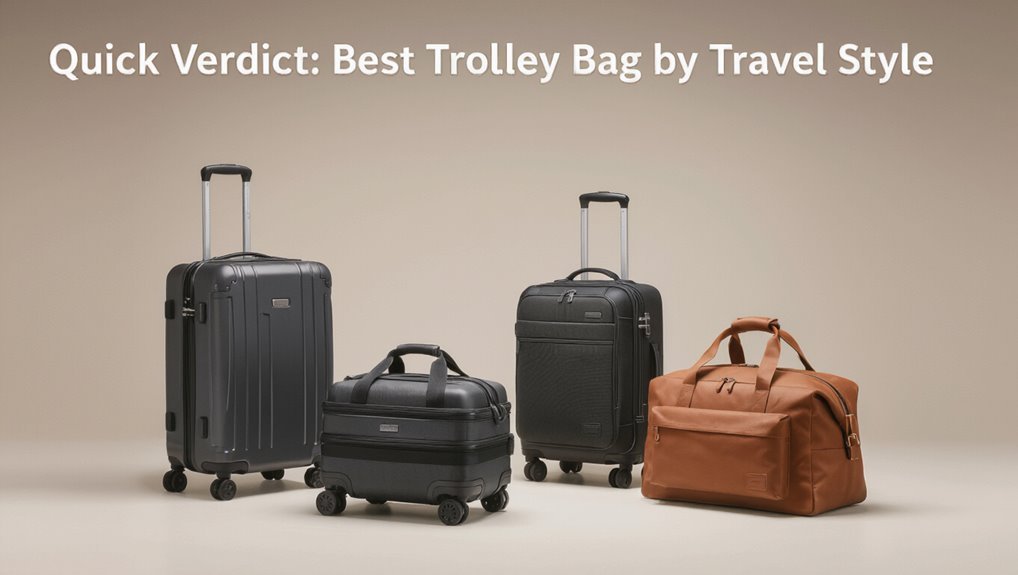
Whether you’re a weekend city hopper, a business traveler, or a long-haul adventurer, we’ve picked the best trolley bag for each travel style so you can grab the right one fast.
For quick trips, choose a lightweight carry-on with smooth wheels.
For business, pick a professional spinner with organized compartments.
For lengthy journeys, opt for a durable, larger trolley with secure locks.
How to Rate Trolley Durability: A Quick Checklist
Durability matters more than brand names when you’re choosing a trolley bag, so focus on a few measurable traits: shell material, wheel quality, handle mechanism, zipper strength, and seam construction.
Check wheels for smooth rotation and reinforced housings. Test handle stability and locking. Feel zippers and sliders under load. Inspect seams and linings for tight stitching.
Review warranty terms for real-world confidence.
Hard‑Shell vs Soft‑Shell: Which Wins for Durability?
You’ve already got the checklist for spotting weak points; now decide which shell type most often meets those standards.
Hard‑shells resist crushing, punctures, and water better, so they often win if you prioritize impact protection and structure.
Soft‑shells flex, absorb scuffs, and usually offer extra pockets and lighter weight, so choose them if you value expandability and handling over rigid protection.
Trolley Shell Materials: Polycarbonate, ABS, Aluminum, Ballistic Nylon
When you’re choosing a trolley, the shell material dictates weight, impact resistance, and how the case wears over time—so know the trade-offs between polycarbonate, ABS, aluminum, and ballistic nylon.
Polycarbonate’s flexible toughness resists cracking; ABS is lighter and cheaper but less durable.
Aluminum offers premium rigidity and denting; ballistic nylon resists abrasion and tears, bends instead of breaking, and repairs easily.
Shell Thickness and Impact Resistance
Material choice sets the baseline for how a shell behaves, but thickness is what actually determines how much blunt force it can absorb or flex under stress.
Thicker shells resist dents and punctures better, but add weight. You’ll balance protection versus carry limits: choose thicker polycarbonate for impact-prone trips, or slightly thinner shells if you prioritize lighter packing and frequent lifting.
Unibody, Tubular, and Telescopic Frames Compared
Because the frame determines how your trolley handles loads, opening, and repairs, you’ll want to weigh unibody, tubular, and telescopic designs against your travel style.
Unibody shells offer rigidity and fewer weak points but limit repairs.
Tubular frames add structural support and are easier to service.
Telescopic handles prioritize adjustability and compact storage, though they can be less robust under heavy, repeated strain.
Trolley Wheel Types: Spinners vs Two‑Wheelers
If you roll your bag through busy terminals or over uneven sidewalks, the wheel type will shape how smoothly and easily you move it.
You’ll choose based on control, load, and terrain:
- Spinner: maneuvers effortlessly, great for crowded airports.
- Two-wheeler: pulls smoothly on rough paths, more stable uphill.
- Consider balance between agility and durability for your routes.
Wheel Materials: Polyurethane, Rubber, Sealed Bearings
Wheels do more than look different—they determine how your bag handles wear, grip, and noise, so knowing what they’re made of matters.
Polyurethane rolls smoothly, resists abrasion, and stays quiet on hard floors. Rubber gives better traction on uneven surfaces but can wear faster.
Sealed bearings keep wheels spinning freely and resist dirt, so choose quality bearings for long-term reliability.
Reinforced Corners and Edge Protection That Matter
You want corners and edges that actually stand up to airports and curb drops, so check what materials are used for reinforcement.
Hard ABS or reinforced rubber corners absorb knocks better and reduce scuffs along seams.
Also look for tested edge-impact resistance ratings or design features that spread force away from zipper lines.
Reinforced Corner Materials
Corners take the brunt of bumps, drops, and conveyor belts, so choosing trolley bags with reinforced corner materials matters more than you might think.
You want durable corner caps that resist cracking, abrasion, and moisture. Consider these options:
- Hardened polycarbonate caps for lightweight impact resistance.
- Rubberized bumpers for shock absorption.
- Metal corner plates for maximum longevity and abrasion resistance.
Edge Impact Resistance
While reinforced corners absorb much of the immediate shock, edge impact resistance guarantees your trolley’s seams, zippers, and shell don’t split when bags get jostled or slammed.
Zippers and Closures Built to Survive Handling
Because zippers and closures take the brunt of airport handling, pick hardware that won’t fail the first time your bag’s tossed or jammed. Look for heavy-duty metal teeth, robust sliders with dual pulls, and reinforced stitching at stress points.
Zippers take the abuse—choose heavy-duty metal teeth, dual-pull sliders, and reinforced stitching at stress points.
You’ll also want:
- Corrosion-resistant metal zippers
- Lockable slider compatibility
- Sealed seams or storm flaps for protection
Telescopic Handles and Carry Handles: Strength Factors
When you pick a trolley bag, check the telescopic and carry handle construction quality to make sure they’re sturdy and long-lasting.
Test the locking mechanism for smooth, reliable engagement so the handle won’t slip or collapse under load.
Also pay attention to grip comfort and ergonomics to avoid hand strain during long hauls.
Handle Construction Quality
If you want a trolley bag that survives frequent travel, focus on the construction of both the telescopic handle and the carry handles: materials, locking mechanism, and attachment points determine how much stress they’ll endure.
You should check welds, rivets, and reinforced stitching, prefer aluminum or steel cores, and test grip ergonomics.
- Material strength
- Attachment design
- Wear points
Locking Mechanism Reliability
Although a solid frame is essential, the locking mechanisms on telescopic and carry handles decide whether your trolley stays functional trip after trip.
You should test locks for positive engagement, minimal wobble, and corrosion resistance. Prefer multi-position, reinforced locks and metal catch points.
Check release buttons for crisp action and spare parts availability so you can repair rather than replace a handle after wear or damage.
Grip Comfort And Ergonomics
Because you’ll be holding and maneuvering your trolley for hours, grip comfort and ergonomics matter as much as raw strength: look for telescopic and carry handles with contoured shapes, soft-touch materials, and enough width to distribute pressure across your palm.
You’ll want handles that feel secure and reduce fatigue. Consider:
- Padded, non-slip grip
- Adjustable height and angle
- Reinforced attachment points
Internal Bracing and Compartment Design for Stability
When you pack a trolley bag, the internal bracing and compartment layout determine whether your items stay organized and protected or end up jumbled and damaged.
Choose rigid frames or reinforced panels to prevent collapse and shifting. Use zippered dividers, mesh pockets, and compression straps to secure clothes, electronics, and toiletries.
Balanced compartments keep weight centered for stable rolling and handling.
Waterproofing and Weather‑Resistant Options
When you choose a trolley bag, check the materials and coatings—like PU or TPU laminates—that keep water from soaking through.
Look for sealed zippers and taped seams to stop leaks at the most vulnerable points.
Also consider external weather features such as rain covers, storm flaps, and water-resistant wheels for protection in heavy conditions.
Materials And Coatings
A slick, water‑beaded finish can make the difference between soggy clothes and stress‑free travel, so you’ll want to weigh materials and coatings carefully.
Choose fabric and treatments that match your routes and care routine:
- Polycarbonate shells — hard, lightweight, repels water, resists abrasion.
- Ballistic nylon — durable, weather‑resistant when coated, good for rough handling.
- PU/C0 coatings — flexible, breathable, add water repellency without stiffness.
Sealed Zippers And Seams
If you want gear that keeps moisture out, sealed zippers and taped seams are the parts that do the heavy lifting—sealed zippers use bonded or covered teeth to block water, while taped seams seal needle holes so rain won’t seep through stitching. You’ll pick bags with these features for wet trips.
| Feature | Benefit | When useful |
|---|---|---|
| Sealed zipper | Blocks surface spray | Rainy travel |
| Taped seam | Prevents seepage | Wet climates |
| Interior coating | Backup barrier | Long trips |
External Weather Features
Some travelers want bags that shrug off downpours and others just need splash protection for city streets; either way, look for durable outer fabrics, water‑repellent coatings, and storm flaps that work together to keep the elements out.
- Prioritize waterproof materials and taped seams.
- Choose water‑resistant zippers and covered pockets.
- Opt for removable rain covers and quick‑dry finishes.
Weight vs Durability: Balancing Sturdiness and Limits
When you pick a trolley bag, you’re choosing between lighter weight for easier handling and heavier materials for long-term toughness; finding the right balance means matching the bag’s construction to how and where you travel.
Choose lighter polycarbonate or soft fabrics for quick trips and strict weight limits, and sturdier ABS or ballistic nylon if you need impact resistance and less stress on zippers and seams.
Replaceable Parts and Repairability to Extend Life
A trolley bag that lets you swap out broken wheels, handles, or zippers will keep working far longer than one you’d have to replace.
Look for models with modular components, available spare parts, and clear repair guides so you can fix issues yourself or get them serviced quickly.
- Check manufacturer part availability.
- Choose easy-to-open panels.
- Prefer universal fittings for repairs.
Durable Security: Locks, Zipper Protection, and Frames
Once you’ve got parts that are easy to replace, protect what’s inside with robust locks, reinforced frames, and zipper defenses.
Choose TSA-approved, tamper-resistant locks, metal-reinforced corners and skeleton frames to resist crushing, and lockable, covered zippers or anti-slash fabric to prevent theft.
Test latches and zipper pulls regularly, and favor designs with welded seams and sturdy handle housings for long-term security.
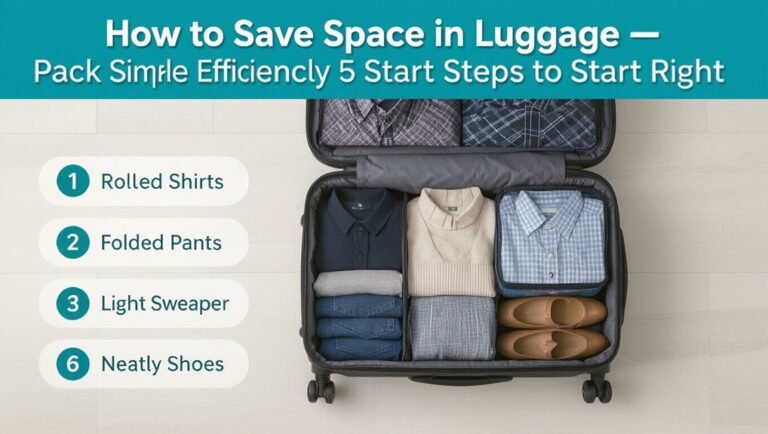
Packing Systems and Compression That Reduce Stress
You’ll appreciate trolley bags with built-in compression straps and panels that keep clothes from shifting and wrinkling.
Look for removable packing cubes to organize outfits and toiletries so you can grab what you need without emptying the whole bag.
Zippered compression compartments are a bonus for squeezing in extras while keeping everything secure.
Compression Straps And Panels
When you tighten compression straps and panels, they lock your clothes and gear into a compact, stable pack that cuts shifting and wrinkling on the road.
You’ll benefit from organized layering and steady weight distribution.
Use straps to secure bulges, protect fragile items, and keep a low profile.
- Stabilize load
- Reduce wrinkles
- Protect fragile items
Removable Packing Cubes
You’ll pack systematically, save time at security or hotels, and protect delicate items.
Choose durable, breathable fabrics and varied sizes so you can rearrange cubes for different trips and maximize space while keeping items visible and accessible.
Zippered Compression Compartments
If you want to reduce bulk and keep outfits wrinkle-free, zippered compression compartments do the heavy lifting: they let you squeeze excess air out of clothes and lock them in a slim, organized pack so items stay put during transit.
You’ll appreciate tidy packing, faster security checks, and less shifting.
- Saves space
- Protects garments
- Speeds unpacking
How Travel Habits Change Your Trolley Priorities
Because how you travel determines what you need from a trolley, your priorities will shift depending on trip length, transport mode, and how much you pack.
If you take short city trips, you’ll favor light, maneuverable bags. For longer journeys, you’ll want capacity and organized compartments.
Train or car travel lets you choose softer shells; flying pushes you toward sturdy, protective designs.
Best Trolley for Frequent Flyers and Business Travel
If you fly often for work, you’ll want a lightweight carry-on that won’t slow you down.
Look for quick-access organization so you can grab documents, chargers, and a laptop without unpacking.
Also prioritize durable wheels and handles that stand up to daily gate-to-gate travel.
Lightweight Carry-On Options
For frequent flyers and business travelers, a lightweight carry-on lets you move faster through airports and avoid checked-bag delays.
You want durable materials, a snug fit for airline overheads, and smooth wheels.
Consider these choices:
- Ultra-light hardshell — protects tech without weight.
- Soft-sided expandable — gives flexibility for souvenirs.
- Spinner with ergonomic handle — reduces strain on long walks.
Quick-Access Organization
A few smart compartments can save you time and stress when you’re rushing through security or hopping between meetings.
Choose a trolley with dedicated, easily reachable pockets for passports, boarding passes, chargers, and pens. A padded laptop sleeve that opens separately helps you breeze through checkpoints.
Look for zippered mesh organizers and removable toiletry pouches so you’ll keep essentials tidy and accessible.
Durable Wheels And Handles
2 things matter most when you’re rolling through terminals: wheels that glide and handles that hold up. You’ll want sturdy spinner wheels, reinforced telescoping handles, and smooth bearings to reduce strain.
Consider:
- Hardened wheels for abrasion resistance
- Dual-stage metal handle with secure locks
- Replaceable wheel assemblies
Choose construction that balances weight and durability for frequent flyers and business travel.
Best Trolley for Family and Leisure Travel
Family trips demand trolleys that balance space, durability, and easy maneuvering, so you’ll want a model that handles both wheeled airport sprints and lazy beachfront strolls. Choose roomy compartments, sturdy wheels, and a comfortable handle so you can pack kids’ gear, organize outfits, and move smoothly.
| Feature | Benefit | Tip |
|---|---|---|
| Size | Fits family items | Check dimensions |
| Wheels | Stable maneuvering | Opt spinner wheels |
| Compartments | Easy organization | Use packing cubes |
| Material | Durable | Prefer water-resistant fabric |
Best Trolley for Adventure and Outdoor Travel
When you’re heading off the beaten path, pick a trolley with a rugged frame that can take knocks and heavy loads.
You’ll want terrain-ready wheels that roll over gravel and mud without getting stuck.
Finish it off with weatherproof materials to keep your gear dry in sun, rain, or spray.
Rugged Frame Construction
If you’re heading off the beaten path, a trolley with a rugged frame keeps your gear secure and lets you focus on the route ahead.
You’ll want strong joints, reinforced corners, and corrosion-resistant materials that endure knocks and weather.
Consider these priorities:
- High-strength aluminum or steel frame
- Reinforced stress points and welds
- Rust-proof coatings and sealed fasteners
Terrain-Ready Wheels
Because rough paths demand more than spinner wheels, terrain-ready wheels give you the traction and shock resistance to keep moving confidently over dirt, rocks, and grass.
You’ll choose larger, treaded wheels with sealed bearings and reinforced axles to resist impacts and maintain roll.
Look for quick-release or replaceable setups so you can repair on the trail without tools.
Weatherproof Material Choices
Though you’ll face sun, rain, mud, and spray on outdoor trips, choosing the right weatherproof materials keeps your trolley light, dry, and durable.
You’ll want fabrics and coatings that resist soaking and abrasion. Consider options:
- PU-coated nylon — lightweight, water-resistant, abrasion-tough.
- Ballistic nylon — heavy-duty, highly abrasion- and water-shedding.
- Waterproof zippers and taped seams — prevent seepage at stress points.
Price Tiers: Where to Spend for Real Durability
When you’re choosing a trolley bag, the price often signals where manufacturers skimp and where they invest—so decide which features matter most to you before splurging. Prioritize frame, wheel quality, and zipper hardware; shell material and handle comfort follow. Spend where failure’s costly, save on aesthetics.
| Feature | Spend Level |
|---|---|
| Frame | High |
| Wheels | High |
| Zippers | Medium |
| Shell | Medium |
| Handles | Low |
Brand Reputation, Warranties, and Durability Signals
Price gives you a rough map of where durability lives, but the brand behind the bag and the promises they make tell you whether that map’s accurate.
You should check reputation, warranty length, and repair availability.
Consider:
- Customer reviews and longevity reports.
- Warranty terms, exclusions, and transferability.
- Brand service network and spare-part access.
Those signals help you pick a bag that lasts.
Pre‑Purchase and Pre‑Check Inspection Tips
Before you buy, give the trolley a focused once-over so you catch issues that’ll cost time or money later.
Check zippers, wheels, handle stability, and frame for play or roughness. Inspect seams, lining, and corner guards for weak stitching or damage.
Test lock mechanisms and expanders.
Ask about repair services and examine the warranty card before you commit.
How to Read Customer Reviews for Durability Signals
When checking reviews, watch for the same problems mentioned by multiple buyers—those repeat complaints usually point to real durability flaws.
Also check for “Verified Purchase” or other authenticity tags so you’re not trusting fake feedback.
Use those two signals together to separate occasional bad luck from consistent build issues.
Look For Repeated Issues
Wondering how to spot real durability problems in reviews? Scan for repeated complaints — they signal patterns, not one-offs.
Focus on:
- Consistent zipper, wheel, or handle failures across multiple reviews.
- Similar timing: many reports within months of purchase.
- Matching conditions: same travel types or misuse described.
Trust recurring specifics over vague praise or isolated faults.
Verify Real Purchase Tags
Noticing repeated complaints is useful, but you also need to confirm those reviewers actually bought the bag. Check “Verified Purchase” tags, profile history, and photos to trust durability claims. Look for detailed, repeatable failure descriptions and follow-up responses from sellers.
| Tag | What it shows | Why it matters |
|---|---|---|
| Verified | Purchased via platform | Authenticity |
| Photo | Real wear evidence | Visual proof |
| Review age | When posted | Timeline of failure |
| Replies | Seller response | Support level |
Maintenance Tips to Keep a Trolley Longer
Because you use your trolley for trips big and small, regular upkeep keeps it functioning and prevents small issues from becoming costly repairs.
Because your trolley gets regular use, simple upkeep prevents minor issues from turning into costly repairs.
Clean wheels and zippers, store dry, and inspect seams. Follow this simple routine:
- Wipe wheels, oil bearings, tighten screws.
- Clean and lubricate zippers; remove debris.
- Air out, spot-clean fabric, treat stains promptly.
When to Repair vs When to Replace a Trolley
When should you fix a scratch, and when is it time to buy a new trolley?
You should repair cosmetic scuffs, loose wheels, broken zippers or minor frame bends if cost and safety are reasonable.
Replace the trolley if structural integrity, telescoping handles or shell cracks compromise function, repairs exceed replacement cost, or recurring failures suggest poor overall durability and reliability.
Quick Decision Checklist: Pick the Right Trolley Bag
Looking for a quick way to choose the right trolley bag? Use this checklist to decide fast and smart.
- Weight & size: pick one that fits airline limits and you can lift comfortably.
- Durability: choose hard shell or reinforced fabric and check wheels/zippers.
- Functionality: guarantee compartments, expandability, and a smooth telescoping handle for your trips.
Frequently Asked Questions
Can Trolley Bags Pass as Carry‑On for All Airlines?
Not always. You’ll need to check each airline’s size and weight limits since dimensions vary; smaller trolley bags often fit, but larger or heavier ones may require gate or checked baggage fees, so measure and weigh before flying.
Are Trolley Bags Allowed in Checked Luggage With Lithium Batteries?
Yes, you can check trolley bags with lithium batteries only if batteries are installed in devices, protected from damage, and spare batteries are carried in carry‑on with terminals taped or in original packaging; follow airline and IATA limits.
How Do I Clean Mold or Mildew From a Trolley Interior?
You’ll remove contents, vacuum, then wipe interior with a mix of equal parts water and white vinegar or diluted bleach (follow fabric care). Rinse, air thoroughly in sun, and fully dry before storing to prevent recurrence.
Can I Use a Trolley Bag for Non‑Air Travel Like Train or Bus Trips?
Yes — you can use a trolley bag for train or bus trips; it’s versatile. You’ll want durable wheels and a sturdy handle, pack to fit storage, and secure valuables since space and handling differ from air travel.
Do Airline Lost‑Luggage Claims Cover Trolley Frame Damage?
Airlines sometimes cover trolley frame damage, but it’s not guaranteed; you’ll need to file a claim, provide proof of damage and travel, and meet baggage policy limits and timelines, so check your carrier’s rules and documentation requirements.
Conclusion
You’ll pick the best trolley by matching travel style, budget, and how tough you need it to be. Choose hard‑shell polycarbonate or aluminum for impact resistance, ballistic nylon for abrasion and flexibility. Check shell thickness, wheels, handles, and zippers in reviews, and follow simple maintenance to extend life. Repair when components fail, replace when frame or shell is irreparably damaged. Use the quick checklist to decide confidently and travel without worry.