What Can I Check in My Luggage Complete Packing Guide
You can check bulky, nonessential items like extra clothes, shoes, toiletries, and sports gear while keeping valuables, medications, and fragile or restricted items with you. Follow airline size and weight limits, secure bags with TSA-approved locks, and pad fragile things. Don’t pack loose lithium batteries or required prescription meds in hold baggage. Label and photograph contents for claims, and weigh luggage to avoid fees. Continue for tips on packing, kid or pet supplies, and handling damaged bags.
Quick Answer : Check vs. Carry On
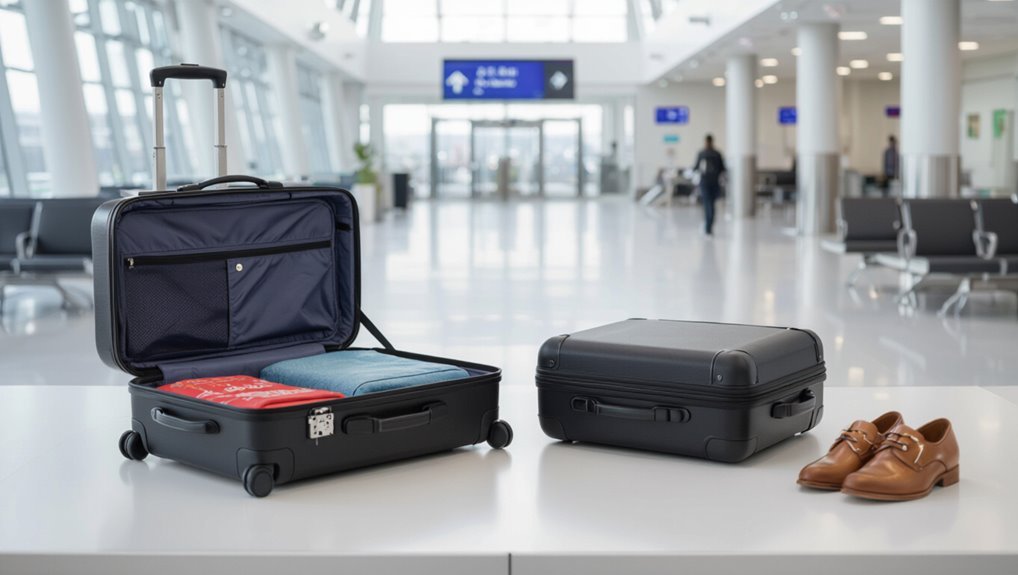
When deciding whether to check a bag or bring a carry-on, think about how long you’ll be gone, what you’ll need during the flight, and how much you’re willing to risk delays or fees.
Choose carry-on for short trips, essentials, and avoiding waits; check luggage for bulky items, souvenirs, or if you’re packing liquids and gear.
Balance cost, convenience, and risk.
TSA Basics for Checked Luggage
When you’re packing checked bags, you should know the TSA’s basic rules on size, weight, and declaration requirements so you don’t face fees or delays.
Check the list of prohibited and restricted items—like explosives, lithium batteries, and certain liquids—to avoid confiscation.
If you’re unsure about an item, declare it at check-in or consult the TSA website before you fly.
TSA Checked Baggage Rules
TSA allows you to check most luggage but sets clear limits and rules you should follow to avoid delays, fees, or confiscations. Pack within airline size/weight limits, lock bags with TSA-approved locks, label contents, and keep valuables with you. Check fragile item policies and declare batteries if required.
| Limit | Tip | Action |
|---|---|---|
| Weight | Weigh bag | Adjust packing |
| Size | Measure | Use compliant bag |
Prohibited And Restricted Items
Although you can check most items, some things are outright banned and others are restricted or require special handling, so you should know what can’t go in checked luggage to avoid delays, fines, or confiscation.
Don’t pack lithium batteries loose, spare fuel, fireworks, or compressed gas.
Declare oversized batteries, certain sports equipment, and large quantities of liquids.
Check airline and TSA guidance before you pack.
Airline Size and Weight Limits
Before you pack, check your airline’s carry-on dimensions so your bag fits the overhead bin or under the seat.
You’ll also need to know checked baggage weight limits to avoid fees or forced repacking at the gate.
Keep measurements and weight allowances handy when you pack so you can adjust items or choose a different bag if needed.
Carry-On Dimensions Allowed
Most airlines let you bring one carry-on plus a personal item, but each carrier sets its own size and weight limits, so you should check rules before you fly.
Measure baggage including wheels and handles; common maximums are 22 x 14 x 9 inches, but low-cost carriers use smaller limits.
If unsure, weigh and measure at home to avoid gate fees or forced gate-checking.
Checked Baggage Weight
Checked baggage rules vary widely by airline and fare type, so always confirm the weight limits for your ticket before you pack.
Pack heavier items first, weigh your bag at home, and redistribute to avoid overweight fees. Typical limits are 23 kg (50 lb) or 32 kg (70 lb); oversized or excess pieces incur charges.
Consider shipping bulky items if costs exceed checked-bag fees.
Decide What to Check vs. Carry On
When you’re choosing what to check and what to carry on, think about value, fragility, and immediate need: keep passports, electronics, medications, valuables, and a change of clothes with you, and pack bulky or replaceable items in checked luggage to save space and avoid stress at the gate.
Also carry essentials like chargers, travel documents, snacks, and a small toiletry kit; check heavy gear and extra shoes.
Pack Clothes to Save Space
If you want to save space, pack clothes with intention: roll soft items, fold structured pieces flat, and group outfits by day or activity so you only bring what you’ll wear.
Use packing cubes to compress and separate layers, tuck socks and underwear into shoes, prioritize versatile garments, and limit duplicates.
Wear bulky items on travel days to free suitcase room.
Protect Fragile Souvenirs and Glass
When you pack fragile souvenirs and glass, pick cushioning materials—bubble wrap, clothing, or foam—that fit each item’s shape.
Wrap items securely, sealing seams and padding edges to prevent movement.
Place wrapped pieces in the center of a hard-shell suitcase surrounded by soft items for extra protection.
Cushioning Materials Selection
Pick cushioning materials that match the fragility and shape of each souvenir so your glassware and ceramics stay intact; bubble wrap, foam sheets, soft clothing, and molded inserts each serve different roles, while packing peanuts and crumpled paper fill voids and prevent shifting.
Choose denser foam for heavy items, soft layers for delicate surfaces, and firm supports for narrow bases to avoid pressure points.
Secure Wrapping Techniques
Now that you’ve matched cushioning to each item’s fragility and shape, focus on wrapping methods that lock those protections in place. Wrap items individually, use tape sparingly, and create buffer layers. Label fragile sides and stagger items.
| Step | Action |
|---|---|
| 1 | Wrap in bubble wrap |
| 2 | Add foam layer |
| 3 | Tape securely |
| 4 | Label fragile |
| 5 | Nest in soft clothing |
Hard-Shell Luggage Placement
Although hard-shell cases give you rigid protection, you still need to plan where fragile souvenirs and glass go inside them.
Place heavy, sturdy items at the base near wheels to absorb shocks. Wrap glass individually with bubble wrap, cloth, or clothing.
Nest smaller pieces in padded containers and fill gaps with soft items to prevent shifting. Lock the case and label it fragile.
Pack Electronics : When to Carry On
When you decide what electronics to carry on, prioritize devices you can’t afford to lose or need during the journey—laptops, tablets, phones, cameras, and external drives—so they’re always within reach and protected from rough handling or checked-bag delays.
Pack them in a padded, accessible bag, keep charging cables organized, and stash essential adapters and a compact case for fragile items to prevent scratches and impact.
Carry-On Rules for Power Banks and Spare Batteries
Since you’ll already be keeping valuable electronics close, make sure your power banks and spare batteries come on board with them: airlines generally require lithium batteries and external chargers to be carried in cabin baggage, not checked luggage, and they often limit capacity (measured in watt-hours) and the number you can bring.
Check each airline’s watt-hour thresholds, carry battery terminals protected or taped, and pack spares in original or insulated cases.
Batteries and Chargers in Checked Luggage
If you’ll be checking luggage, know that most airlines and regulators strongly restrict lithium batteries and external chargers in checked bags.
So you should avoid packing spare power banks and loose batteries there; instead keep them in your carry-on where they’re accessible and monitored.
For devices with built‑in batteries, keep them powered off, protect terminals, and follow airline limits for installed cells and watt-hours.
Pack Toiletry Liquids for Checked Bags
Because checked bags don’t face the same 3-1-1 restrictions as carry-ons, you can pack larger toiletry liquids there—but you should seal, cushion, and label them to prevent leaks and make inspections easier.
Use sturdy, leakproof containers, double-bag anything prone to spill, and surround bottles with soft items.
Place liquids upright in the center, and note fragility on the outside for handlers.
Medications and Medical Devices to Carry
When you travel, pack all prescription medications and essential medical devices in your carry-on so you can access them and avoid delays if checked luggage is lost.
Keep originals, copies of prescriptions, and doctor’s letters. Store items in labeled, sealed bags and bring batteries or chargers.
- Prescription meds (original bottles)
- EpiPens/insulin kits
- CPAP machines and hoses
- Extra batteries/chargers
Pack Valuables and When to Lock Bags
Decide where to store valuables so they’re always within reach or concealed in a locked compartment.
Keep passports, cash, and electronics in a carry-on or a money belt rather than checked luggage.
Lock checked bags when travelling through high-risk areas or when they’ll be out of your sight for long periods.
Where To Store
Where should you stash your passport, cash, and electronics to keep them safe and accessible?
Keep passports and boarding passes in a slim travel wallet.
Cash should be split across pockets, and electronics can be stored in padded carry-on compartments.
Use hidden interior zip pockets for small valuables and a discreet money belt for crowded spots.
- Travel wallet
- Split cash pockets
- Padded carry-on compartment
- Hidden interior pocket
When To Lock
After you’ve tucked passports, cash, and gadgets into their spots, think about which items should be secured and which can ride unsecured.
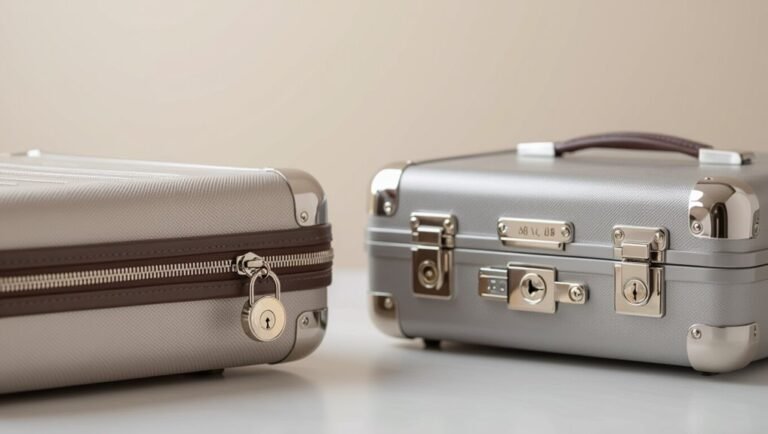
Secure valuables like jewelry, spare credit cards, and backups of important documents, especially in checked bags. Use TSA-approved locks for U.S. travel so agents can inspect if needed.
Leave nonessential items unsecured to save time and reduce hassle.
Sporting Equipment in Checked Luggage
When you pack sporting equipment in checked luggage, think about protection, airline rules, and weight limits so your gear arrives intact and without extra fees.
Wrap fragile items, disassemble when possible, and declare oversized pieces. Check specific carrier policies and buy sturdy cases or padding.
- Use hard cases or padding
- Remove batteries
- Distribute weight evenly
- Weigh before arrival
Musical Instruments: Check or Gate-Check
If you’re deciding whether to check your instrument or gate-check it, consider size, fragility, and how much control you need over its handling; small instruments like violins often fit in overhead bins, but larger or delicate pieces may need gate-checking or a dedicated seat. Pack in hard cases, label clearly, carry essentials onboard when possible.
| Option | Best for |
|---|---|
| Overhead | Small, sturdy |
| Gate-check | Fragile, medium |
| Checked | Large, robust |
| Seat purchase | Valuable, irreplaceable |
Checking Firearms, Ammunition, and Gear
If you need to check firearms, ammunition, or related gear, you’ll follow strict airline and legal restrictions that vary by carrier and destination.
You must pack firearms unloaded in a locked, hard-sided case and store ammunition in approved containers, following both airline rules and local laws.
Confirm requirements with your airline and review applicable federal and state regulations before you travel.
Airline And Legal Restrictions
Although you can bring firearms and ammunition on many flights, strict rules govern how you pack, declare, and transport them; follow airline policies, TSA regulations, and local laws to avoid fines, confiscation, or arrest.
You’ll need to declare items, use approved hard cases, and meet quantity and packaging limits. Check destination rules before travel.
- Declare at check‑in.
- Use locked hard cases.
- Follow ammo limits.
- Verify local laws.
Safe Storage Procedures
1 clear rule governs safe storage when checking firearms, ammunition, and related gear: secure, separate, and declare.
Pack unloaded firearms in locked, hard-sided cases; lock keys stay with you.
Store ammunition in original or secure containers, separated from firearms.
Declare all items to the airline during check-in, follow their procedures, and keep documentation accessible.
Inspect cases on arrival for tampering.
Pack Alcohol, Food, and Duty-Free Items
Packing alcohol, food, and duty-free items requires knowing rules, protecting fragile goods, and keeping scents and perishables in check.
You’ll seal bottles, wrap jars, and use leakproof bags; label perishables and coolants; separate strong-smelling foods; and keep receipts for duty-free proof.
Follow airline limits and local import rules to avoid confiscation.
- Secure glass
- Use airtight bags
- Isolate scents
- Keep receipts
Gifts, Souvenirs, and Customs Rules
When packing gifts, think about whether they’ll be treated as personal effects or commercial items by customs so you can avoid surprises.
You should also check limits and declare souvenirs when required to prevent fines or confiscation.
If you’re unsure, keep receipts and separate presents from your own belongings for easy inspection.
Gifts vs. Personal Items
Although you’ll want to bring back souvenirs, remember gifts and personal items are treated differently by airlines and customs, so pack with purpose: label wrapped presents as “gifts,” keep receipts for high-value purchases, and separate anything you plan to give away from your own belongings to avoid confusion at security or border checks.
- Label gifts clearly
- Keep receipts
- Pack recipient items separately
- Avoid restricted goods
Declaring Souvenirs Abroad
Because customs rules vary by country, you should declare souvenirs and gifts honestly and know the limits before you travel: check duty-free allowances, report high-value or restricted items, and keep receipts and documentation handy so you can answer questions quickly at border control.
You’ll save time and fines by researching prohibited items, packing fragile or perishable gifts securely, and separating declared goods for inspection.
Send Perishables and Frozen Items Safely
If you need to send perishables or frozen goods, plan packing and timing carefully to keep items safe and avoid spoilage.
Choose insulated containers, reliable cold packs or dry ice, and a fast carrier that offers temperature control or expedited delivery.
You’ll label contents, follow carrier rules, and monitor transit.
Consider insurance and local customs rules for food imports.
- Insulation
- Cold source
- Carrier choice
- Labeling
Hazardous Items You Must Never Check
Wondering what you absolutely can’t pack in checked luggage?
Don’t check flammable items (lighters, gasoline, matches), explosives, fireworks, and compressed gas cylinders.
Avoid corrosives (bleach, acids), lithium batteries above permitted limits, and firearms or ammunition unless declared and packed per airline rules.
If in doubt, check your airline and TSA guidelines before you fly to prevent confiscation or fines.
Photograph and Document Bag Contents
After you’ve removed prohibited items and packed safely, take a few minutes to photograph and list what’s in each bag so you’ll have a record if luggage is lost, damaged, or inspected.
Keep photos, receipts, and short descriptions in cloud storage and a printed copy. Numbered inventory helps claims.
- Electronics and chargers
- Valuables and jewelry
- Clothing and accessories
- Documents and medication
Smart Packing Tools and Organizers
You’ll save space and keep clothes wrinkle-free with compression packing cubes that squeeze out air and layer neatly.
Use tech cable organizers to untangle chargers, protect adapters, and find cords fast.
Combined, these tools make packing and accessing gear much quicker.
Compression Packing Cubes
If you want to save space and keep clothes tidy, compression packing cubes are a smart, simple tool to add to your luggage.
They compress garments, reduce wrinkles, and separate outfits for quick access. Use them to optimize suitcase volume and organization without overpacking.
- Save space efficiently
- Protect against spills
- Speed up packing/unpacking
- Sort by outfit or day
Tech Cable Organizers
When you want to stay connected without untangling a mess at every hotel, tech cable organizers keep chargers, earbuds, and adapters neat and accessible.
Choose compact cases with labeled pockets or elastic loops so you can find cords fast.
Use a small power bank sleeve and zippered mesh for plugs. They protect cables, reduce space, and speed packing and unpacking on the road.
Where to Check Airline and TSA Updates
Before you pack, check both your airline’s website and the TSA’s official resources so you know current baggage fees, size/weight limits, and prohibited items.
Before packing, check your airline and TSA sites for current fees, size/weight limits, and prohibited items.
Then verify trip-specific rules, carry-on allowances, and transit country restrictions. Use alerts for sudden changes and save screenshots.
- Airline baggage policy page
- TSA travel and prohibited items pages
- Flight itinerary/confirmation emails
- Mobile alerts and saved screenshots
Handle Oversized Items and Extra Fees
After you’ve confirmed baggage rules, plan for oversized items and extra fees so you’re not caught off guard at the airport.
Measure and weigh large gear (sports equipment, musical instruments); check carrier size/weight limits and declared-item procedures.
Prepay excess or reserve special handling online to save money.
Consider shipping bulky items ahead if fees or handling restrictions make checking them impractical.
Prepare Checked Bags for Delays and Rough Handling
Because delays and rough handling are common, strengthen your checked bags for the worst and pack smartly so you’re ready if baggage shows up late or damaged.
Strengthen checked bags and pack smartly to weather delays, rough handling, and late or damaged luggage.
Reinforce seams, use durable locks, and split valuables between carry-on and checked luggage. Label inside and out, and document contents for claims.
- Use sturdy, water-resistant luggage
- Pad fragile items
- Keep essentials in carry-on
- Photograph contents and tags
Traveling With Kids, Pets, and Medical Supplies
Traveling with kids, pets, or medical supplies adds extra planning and peace-of-mind tasks, so pack strategically and keep essentials accessible.
Pack medications in original labeled containers, extra doses, doctor’s notes, and a small cooler if needed.
For kids, include spare clothes, snacks, and comfort items.
For pets, bring food, a leash, vaccination records, and familiar bedding to reduce stress.
Carry-On Essentials Checklist to Always Bring
One compact carry-on can make the difference between a smooth trip and a stressful one, so pack items that keep you comfortable, connected, and prepared.
A single well-packed carry-on can turn travel chaos into calm—bring comfort, connectivity, and preparedness.
Prioritize essentials that solve delays, comfort needs, and tech gaps.
- Passport, wallet, boarding pass, and emergency contacts
- Phone, charger, power bank, and headphones
- Medication, small first-aid kit, and toiletries
- Light sweater, eye mask, and snacks
Inspect and Report Checked Luggage Damage
If your checked bag arrives damaged, inspect it right at the baggage claim and report the problem to airline staff immediately so you preserve your rights and speed up any repair or reimbursement.
Photograph damage, note missing items, keep boarding pass and bag tag, and get a written Property Irregularity Report (PIR).
Follow the airline’s claim instructions promptly and keep copies of all receipts and correspondence.
Frequently Asked Questions
Can I Lock My Checked Bag With a Non-Tsa-Approved Lock?
You can, but airlines and TSA can cut non‑TSA locks if they need to inspect your bag, and they won’t replace them. Use a TSA‑approved lock if you want inspections without damage and smoother security processing.
Are There Items I Should Insure Separately Before Checking?
Yes — you should insure high-value items separately before checking: electronics, jewelry, watches, designer goods, important documents, and collectibles. Don’t assume airline liability covers full value; get travel or homeowners insurance and declare valuables.
How Do I Handle Checked Luggage During International Layovers?
During international layovers, you’ll claim checked luggage only if your itinerary requires rechecking; confirm with airlines, follow transit visa/baggage rules, lock tags removed if inspected, keep valuables and documents in carry-on, and reconfirm at each stop.
Can I Request Temperature-Controlled Storage for Checked Items?
Yes, you can request temperature-controlled storage for checked items, but it’s uncommon; you’ll need to contact the airline or airport in advance, confirm availability, pay any fees, and follow their specific packing and documentation requirements.
Will Checked Luggage Be X-Rayed or Opened Without Notification?
Yes — checked luggage will usually be x-rayed, and security may open it without prior notice if they need to inspect contents. You’ll be informed afterward if items are disturbed, and procedures vary by country and carrier.
Conclusion
Decide carefully what to check and what to carry on so you’re prepared, comfortable, and compliant. Know TSA rules and your airline’s size and weight limits, pack clothes to save space, and protect fragile or essential items in checked bags. Keep meds, valuables, and immediate needs with you, and prepare for delays or rough handling. Inspect luggage on arrival and report damage promptly so you’re not left dealing with avoidable problems.