Can I Check a Backpack as Luggage on Airlines
You can usually check a backpack as luggage if it meets the airline’s size, weight, and content rules, but policies vary so check your carrier before you go. Consider whether it fits under the seat or overhead to avoid fees and gate-checking. Remove valuables, documents, and spare lithium batteries, and pad fragile items. Weigh and tag the bag at the counter to prevent surprises, and keep essentials with you — keep going to learn practical packing and policy tips.
Can You Check a Backpack as Luggage on Airlines?
Wondering if you can check a backpack as luggage? You can, provided it meets the airline’s size, weight, and content restrictions.
Remove valuables and fragile items, secure loose straps, and pack prohibited items separately. Pay attention to checked baggage fees and declare batteries or electronic devices if required.
Check your carrier’s policy beforehand to avoid surprises at the gate.
Quick Decision Flow: Should You Check Your Backpack?
How do you decide quickly whether to check your backpack?
Ask: will it fit under the seat or overhead? Is it essential during flight or contains valuables? Are you avoiding fees or connecting tight?
Ask: will it fit under the seat or overhead? Is it essential, valuable, fee-avoiding, or rushed connection?
If size, contents, or convenience point to checking, tag it and check at counter.
Otherwise keep it as carry-on to control access and reduce loss risk.
Size Limits That Make a Backpack Checkable
Airlines base whether a backpack must be checked primarily on its dimensions and sometimes its weight, so measure yours before you get to the airport.
Typical carry-on size caps (around 22 x 14 x 9 inches) determine if it fits overhead or under-seat.
Oversized packs—especially with external frames, protruding pockets, or compression straps—usually require checking.
Check airline specs to avoid surprises.
Weight Limits and Overweight Backpack Fees
Check your airline’s weight limits before you pack, because fees for overweight checked bags can climb quickly.
Different carriers use tiered fee structures and weight thresholds, so knowing the exact cutoff can save you money.
If your pack’s close to the limit, consider shifting items to carry-on, wearing heavy layers, or shipping bulky gear ahead.
Airline Weight Limits
Most airlines set strict weight limits for checked backpacks, and if your pack exceeds them you’ll usually face overweight fees calculated per kilogram or pound over the allowance.
Check the carrier’s specific limit (often 20–32 kg/44–70 lb), weigh your bag before you travel, redistribute items to carry-on if possible, and consider repacking or shipping excess to avoid unexpected charges.
Overweight Fee Structures
When your checked backpack goes over the weight allowance, you’ll usually face fees that rise in tiers or by a fixed rate per kilogram/pound.
So weigh and repack beforehand to avoid surprises. Airlines often charge higher rates for successive weight brackets and hefty surcharges for considerably overweight bags.
Check your carrier’s published fee chart, because amounts, unit measures, and international rules vary considerably.
Tips To Reduce Weight
Start by weighing what you really need and removing nonessentials—lay everything out, prioritize versatile clothing and shared items, and pack only what you’ll use so you can stay under the airline’s weight limit and avoid hefty overweight fees.
Use compression bags, wear heavy layers, transfer dense items to carry-ons if allowed, and choose lightweight gear.
Weigh your packed bag before heading to the airport.
How Airlines Classify Backpacks vs. Carry-Ons
Although airlines set broad rules for carry-ons, they often treat backpacks differently based on size, shape, and how you plan to use them.
You should check policies, since classification affects fees and boarding.
Consider these factors:
- Dimensions compared to airline limits
- Whether it fits under the seat
- Soft vs. hard structure
- Planned in-cabin use (personal item vs. carry-on)
- Airline discretion on gate check decisions
When Does a Backpack Count as Your Free Checked Bag?
If your ticket includes a free checked bag, the airline will count a backpack as that checked bag only if you hand it over at check-in or the gate and it meets the carrier’s checked-baggage size and weight limits.
Simply stowing the pack in the overhead or under the seat doesn’t convert it into your paid or free checked allowance. You’ll need to present it to staff, tag it, and accept any handling rules.
When Does a Backpack Count as a Carry‑On or Personal Item?
Whether your backpack counts as a carry-on or a personal item usually comes down to its size and dimensions, so measure it before you pack.
Airlines set different limits and may treat the same bag differently, especially between full‑service and low‑cost carriers.
Check the specific carrier’s rules to avoid surprises at the gate.
Size And Dimension Limits
Airlines classify your backpack as either a carry-on, a personal item, or checked baggage based primarily on its external dimensions and how it fits in designated storage spaces.
You should measure height, width, depth and include wheels or straps. Typical thresholds guide classification:
- Measure packed dimensions
- Compare to overhead bin limits
- Check under-seat fit
- Include external pockets
- Weigh if required
Airline Policy Differences
Because carriers set their own rules, your backpack can count as either a carry-on or a personal item depending on the airline, fare class, and how you pack it. Check size limits, gate checks, and fee rules before flying. Choose a compact daypack for personal-item status or a larger, structured pack as carry-on—pack strategically to meet specific carrier policies.
| Size | Fee | Fit |
|---|---|---|
| Small | Free | Under seat |
| Large | Possible | Overhead |
Soft‑Sided vs. Hard‑Sided Backpacks: What Changes
If you pick a soft‑sided backpack for checked baggage, expect more flexibility and potential savings on weight, but less protection for fragile items; a hard‑sided pack trades that give for rigid structure and usually better impact resistance.
You’ll judge choices by durability, weight, compressibility, handling, and security:
Consider durability, weight, compressibility, handling and security when choosing between soft- and hard-sided checked backpacks.
- lighter and compressible
- less shock protection
- rigid impact resistance
- harder to squeeze into tight spaces
- often better water resistance
Packing Electronics and Valuables in a Checked Backpack
You should check airline rules before packing electronics since many carriers recommend you keep batteries and high‑value devices in carry‑on.
If you must check items, secure them in padded cases and place them in the center of the backpack surrounded by soft clothing.
Also lock or conceal valuables and keep receipts or serial numbers handy in case you need to file a claim.
Electronic Devices Policy
When packing electronics and valuables in a checked backpack, know that airlines and security agencies recommend keeping laptops, tablets, cameras, external batteries, and irreplaceable items in your carry-on rather than checked baggage.
You should follow carrier rules and TSA guidance, declare batteries when required, and pack wisely.
- Check airline device policies
- Remove large batteries
- Use carry-on for fragile items
- Back up data
- Label fragile contents
Securing Valuables Properly
Because checked bags can be out of your sight and handled roughly, secure electronics and valuables before you hand them over: pack devices in padded, lockable compartments, remove or declare batteries that airlines restrict, and put irreplaceable items in your carry-on instead of a checked backpack.
Use tamper-evident seals, waterproof cases, and photo inventory records; insure high-value items and label gear with contact info.
Protecting Fragile Gear Inside a Checked Backpack
Fragile items demand thoughtful packing, so cushion them well and keep them from shifting during transit.
Fragile items need careful cushioning and secure placement to prevent damage from shifting during transit.
You’ll protect gear by layering, isolating, and absorbing shocks. Consider these steps:
- Wrap each item in bubble wrap or soft clothing
- Use padded compartments or foam inserts
- Fill empty spaces to prevent movement
- Place heavier items below lighter ones
- Mark the bag as fragile inside and out
What to Remove Before Checking a Backpack
After you’ve padded and stabilized delicate items, take a moment to strip out anything that could cause trouble in checked baggage. Remove valuables, documents, medications, fragile electronics, and easily damaged clothing. Empty loose change and food. Lock zippers and stash essentials in your carry‑on.
| Valuables | Documents | Meds |
|---|---|---|
| Electronics | Clothing | Food |
| Change | Fragiles | Keys |
Lithium Battery and Power‑Bank Rules for Checked Bags
You need to know airline limits on lithium batteries, since capacity (Wh) often determines whether a battery can go in checked baggage.
Keep power banks in your carry‑on whenever possible and never inside checked bags unless the airline explicitly allows it.
Also declare large batteries or spares to the airline at check‑in to avoid fines or confiscation.
Battery Size Limits
Because lithium batteries can spark or catch fire under pressure or heat, airlines and regulators strictly limit what you can pack in checked baggage.
You must follow watt‑hour and cell counts, declare large batteries, and carry most spares in the cabin.
Common limits include:
- Under 100 Wh: usually allowed
- 100–160 Wh: airline approval
- Over 160 Wh: prohibited
- Spare cells: cabin only
Power Bank Placement
Those battery size limits also affect where you can stow power banks: airlines generally forbid spare lithium power banks in checked baggage and expect installed or approved batteries to be carried in the cabin.
You should pack portable chargers in your carry‑on, keep terminals protected, and know watt‑hour ratings.
If unsure, check airline rules before flying to avoid confiscation or fines.
Airline Declaration Rules
When carrying lithium batteries or power banks in checked luggage, airlines usually require you to declare them and may impose size, quantity, and packaging limits.
So check and follow each carrier’s rules before you pack. You should always declare, secure terminals, and follow airline/ICAO limits.
Check baggage rules vary by carrier and route.
- Declare at check‑in
- Show specs
- Limit watt‑hours
- Protect terminals
- Follow carrier guidance
TSA Screening for Checked Backpacks: What to Expect
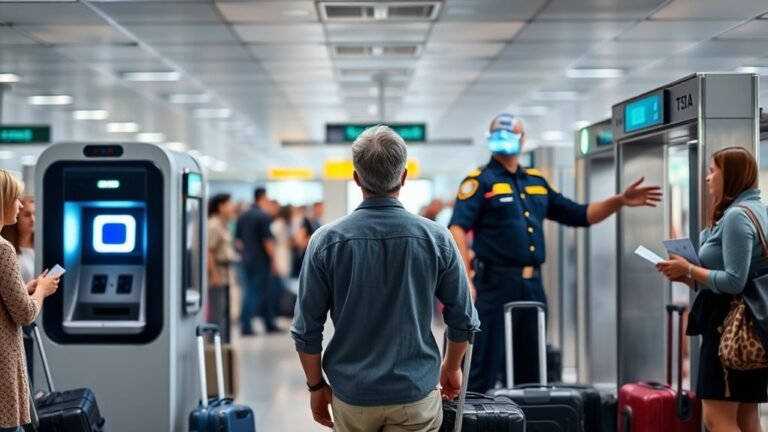
TSA officers will screen your checked backpack using X-ray machines and, if needed, a manual inspection; expect them to open pockets or remove items that trigger alarms.
You’ll be notified if agents need to search further; they’ll document and reseal the bag.
Cooperate, provide ID if asked, and consider packing valuables and fragile items in carry-on to avoid loss or damage during screening.
Prohibited Items You Can’t Check in a Backpack
Because airlines and security rules aim to keep flights safe, you can’t check certain items in a backpack—these include most explosives, flammables, and many batteries.
You should pack dangerous goods in carry-on only if allowed, declare restricted items, or ship them separately.
Common prohibited items include:
- Loose lithium batteries
- Fireworks or explosives
- Gasoline or fuel containers
- Paints or solvents
- Compressed gas cylinders
Alcohol, Aerosols, and Liquids in Checked Backpacks
You can pack alcohol in a checked backpack but there are volume and alcohol-content limits you need to follow.
Aerosols are often restricted or prohibited, and any liquids should be packed to prevent leaks and meet airline and country rules.
Check the carrier’s policy and destination regulations before you fly so you won’t run into surprises at the gate.
Alcohol Limits In Checked Bags
When packing alcohol in a checked backpack, keep airline and international rules in mind so you don’t risk confiscation or fines. You should:
- Check duty-free limits and country import rules.
- Know alcohol-by-volume caps (often 70% for checked baggage).
- Pack bottles securely in spill-proof, cushioned wrapping.
- Declare large quantities at customs.
- Verify airline-specific quantity and container rules before travel.
Aerosol And Liquid Rules
A few clear rules cover aerosols and liquids in checked backpacks, and following them keeps your gear safe and compliant:
You can pack larger quantities of nonflammable aerosols and toiletries, but flammable aerosols, pressurized containers over airline limits, and large volumes of alcohol are restricted.
Seal liquids in leakproof bags, cushion fragile containers, and check your airline’s specific prohibitions before you fly.
How to Tag Your Checked Backpack So It Gets Home With You
Tag your checked backpack inside and out so it’s easy for airline staff to identify and return if it’s separated from you.
Use durable external and internal tags with clear contact info. Include a copy of your itinerary and emergency contact.
Use sturdy external and hidden ID tags with clear contact details and a copy of your itinerary for quick returns.
- Full name and phone
- Email and home address
- Flight number and destination
- Durable material tag
- Concealed ID inside pack
Using TSA‑Approved Locks on Checked Backpacks
You should use a TSA‑approved lock so screeners can open your checked backpack without cutting it.
These locks meet Transportation Security Administration standards and let agents inspect contents if needed.
Keep the key or combination handy and expect officers to access and relock your bag during routine checks.
TSA‑Approved Lock Basics
If you’re checking a backpack, using a TSA‑approved lock lets Transportation Security Administration officers open and relock your bag without cutting the lock off, which reduces damage and keeps your gear secure during inspections.
You should:
- Choose a recognized TSA logo lock
- Use sturdy, tamper‑evident models
- Register combinations or keep keys safe
- Avoid fragile cable locks
- Inspect locks after travel
Airport Security Procedures
1 step in preparing a checked backpack is understanding how TSA inspections work so you can use a TSA‑approved lock correctly; officers may open and relock your bag during screening, so set and record your combination or keep keys accessible and avoid locks that look tampered with.
When you lock, attach ID, declare valuables if required, and expect inspections that won’t damage approved locks.
Compressing or Expanding a Backpack for Checked Limits
When preparing to check a backpack, think about how compression straps, removable components, and packing cubes can shrink its profile so it meets size and weight limits without damaging contents.
You can also expand or protect items to fit rules and prevent crushing.
- Use compression straps
- Remove detachable pockets
- Layer fragile items
- Use packing cubes
- Weigh before leaving
When Your Backpack Is Oversized: Baggage Rules and Fees
Because oversized backpacks often trigger special handling, you’ll want to know each airline’s size and weight thresholds before you head to the airport.
Check dimensional limits, note maximum weight for checked items, and confirm oversized/oversize charges and handling rules.
Some carriers route oversized bags as cargo or require advance notification.
Pack smart, weigh at home, and call the airline if you’re near limits.
Backpack Fees: Low‑Cost vs. Legacy Carriers
If you fly with a budget carrier, expect to pay for almost everything beyond a personal item.
Legacy airlines often include a small backpack in their free carry-on allowance or charge less for checked bags. Knowing which type of carrier you’re booking with will save you money and surprises at the gate.
- Check carry-on size limits
- Compare included allowances
- Watch promotional bundles
- Prepay checked bag fees
- Use loyalty perks when available
International Flights: Backpack Check Rules to Expect
Low-cost versus legacy rules affect domestic trips, but international travel brings extra layers: differing checked-baggage allowances, stricter size and weight limits, and country-specific security or customs restrictions that can change whether you should check your backpack at all. You’ll check baggage based on airline policy, destination rules, and declared contents; pack valuables and documents in carry-on.
| Airline | Weight limit | Notes |
|---|---|---|
| Carrier A | 23 kg | Varies by route |
| Carrier B | 30 kg | Fees possible |
| Carrier C | 20 kg | stricter controls |
Budget Airlines and Stricter Backpack Policies
On budget airlines you’ll need to be extra careful about carry-on size limits, because even slightly oversized backpacks can get flagged.
They often enforce a strict overhead allowance and may require you to gate-check bags that don’t fit.
Check the exact dimensions and weigh your options before you arrive at the airport.
Carry-On Size Limits
Many budget carriers tighten carry-on size rules, so you’ll want to check dimensions before you pack your backpack.
Measure height, width, depth and compare to airline limits. If it’s too big, you’ll face fees or gate check. Consider packing lighter or using a smaller bag.
- Measure your bag
- Check airline site
- Note weight limits
- Use collapsible packs
- Avoid overstuffing
Strict Overhead Allowance
1 major thing to know: budget airlines often enforce much stricter overhead bin rules than legacy carriers, so your backpack that fits on one plane might get flagged on another.
You should measure and weigh your pack before travel, check the carrier’s stated dimensions and fees, and be prepared to gate-check or pay for checked baggage if staff deem it oversized.
Airline Quick Guide: Delta, United, American Backpack Rules
Here’s a quick rundown of how Delta, United, and American handle backpacks so you can decide whether to carry one on or check it.
You’ll usually carry a small backpack as a personal item; larger ones may need carry-on space or checking. Check dimensions and fees before flying.
Typically, small backpacks count as personal items; bigger ones may require carry-on space or checking.
- Delta: personal vs carry-on sizes
- United: strict overhead limits
- American: similar rules, fees apply
- Check gate-check policy
- Protect valuables when checking
Low‑Cost Carriers Quick Guide: Ryanair, EasyJet, Spirit
When flying low‑cost carriers, you’ll want to check each airline’s specific carry‑on and checked bag rules so you don’t get hit with fees.
Ryanair has strict size limits for cabin bags. EasyJet lets you add hold luggage for a fee if your backpack’s too big. Spirit has tight weight and allowance rules that can be costly if you exceed them.
Compare their allowances and fees before you pack so you know whether to gate‑check or pay for baggage.
Ryanair Carry-On Rules
If you’re flying Ryanair, expect strict carry-on limits and extra fees for most larger bags, so plan whether to bring just a small personal item or pay to check a larger cabin bag.
You’ll need to decide and budget ahead. Consider:
- small personal bag only (free)
- pay for Priority & 2 cabin bags
- weight and size checks
- fees for boarding upgrades
- gate-checked policies
EasyJet Hold Luggage
Because EasyJet’s hold baggage rules differ from its carry-on policy, you’ll want to check size, weight, and fee details before you book: you can check a backpack as hold luggage, pay per bag, and choose weight options (15kg/23kg). Verify dimensions and add baggage online to save.
| Option | Weight | Fee tip |
|---|---|---|
| Small | 15 kg | Cheaper online |
| Standard | 23 kg | Common choice |
| Extra | 32 kg | Limited routes |
Spirit Bag Allowances
Switching from EasyJet’s hold rules to Spirit’s limits will highlight how much baggage policies can vary between low‑cost carriers.
You’ll find Spirit strict: backpacks often count as personal or carry‑on depending on size and fee. Know limits, pay for checked bags online, and avoid surprises at gate.
- size matters: measure before travel
- online fees cheaper
- carry‑on strict enforcement
- checked weight limits
- arrival gate charges
How to Verify Backpack Rules Before Your Flight
Wondering whether your backpack will fly as carry-on or checked baggage? Check airline size/weight rules online, review fare restrictions, and confirm fees. Save screenshots and call customer service if unclear. Arrive early to sort issues calmly.
| Concern | Action | Feeling |
|---|---|---|
| Size limit | Measure and weigh | Relieved |
| Fees | Check policy | Prepared |
| Unclear | Call airline | Confident |
At the Gate: What to Do If Your Backpack Is Questioned
If a gate agent questions your backpack, stay calm and know the airline’s policies so you can respond quickly.
Be ready to explain what’s inside and why it meets carry-on or checked baggage rules.
Follow any security or agent instructions promptly to avoid delays.
Know Gate Agent Policies
Before you reach the gate, know that each airline and even individual agents can interpret carry-on rules differently, so be ready to explain why you need to check your backpack and show any receipts or proof of purchase if asked.
Know your rights and adapt quickly:
- Ask calmly about specific policy
- Request supervisor if unclear
- Offer to gate-check
- Show boarding pass
- Note agent name
Be Ready To Explain
Once you’re at the gate and an agent questions your backpack, stay calm and explain clearly why you need it checked—point out size or carry-on restrictions, any medical or fragile contents, and show receipts or a boarding pass if helpful.
Answer questions directly, describe contents succinctly, and offer identification.
If you’ve already paid or pre-tagged luggage, mention that to speed resolution.
Follow Security Instructions
When an agent asks you to follow security instructions at the gate, comply promptly and calmly—remove your backpack or open it as directed, step aside to the designated area, and keep your boarding pass and ID ready.
- Stay polite and cooperative.
- Answer questions briefly.
- Don’t block traffic.
- Remove electronics if asked.
- Accept further screening calmly.
Filing a Claim If a Checked Backpack Is Damaged
If you find your checked backpack damaged after baggage claim, act promptly: document the damage with photos, keep all travel documents and baggage tags, and report the issue to the airline at the airport or via their baggage service counter before you leave.
Follow the airline’s claim procedure, submit photos and receipts, get a written report or reference number, and track the claim until resolution.
How to Insure Valuables Packed in a Checked Backpack
Insuring valuables you pack in a checked backpack means you’ll need to proactively choose the right coverage and document your items before handing the bag over—airlines limit liability for checked baggage and won’t automatically cover high-value goods.
- Photocopy receipts and serial numbers
- Buy travel insurance with specified valuables coverage
- Use a credit card’s purchase protection
- Consider a standalone valuables policy
- Pack items in a locked, padded case
Gate‑Check and Coat‑Check: When to Use Them
You’ve taken steps to protect high‑value items in checked baggage, but sometimes it makes more sense to keep things out of the hold altogether — that’s where gate‑check and coat‑check come in.
Use gate‑check for bulky carry‑ons you need until boarding; coat‑check suits short flights or tight overhead bins.
Always tag items, confirm retrieval procedures, and keep essentials with you.
Packing Checklist for a Checked Backpack
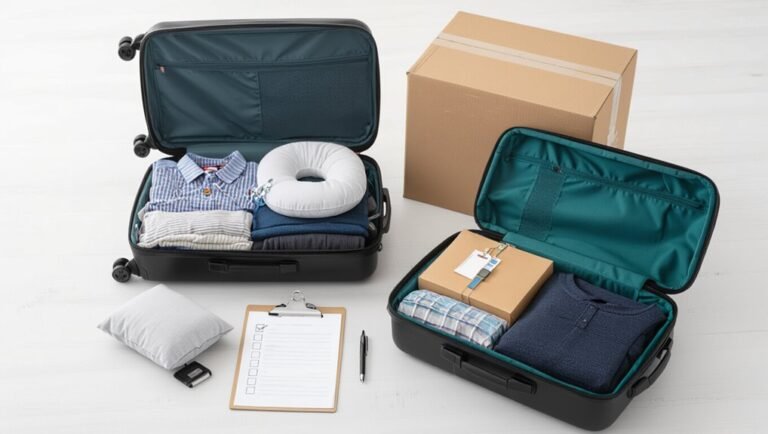
A concise checklist helps you pack a backpack for checked baggage without forgetting essentials or risking damage.
Pack valuables and documents in a small carry pouch. Cushion fragile items with clothing. Seal liquids in a plastic bag. Remove or secure external straps and loose gear.
Keep valuables and documents in a small pouch, cushion fragile items with clothing, seal liquids, and secure loose straps.
- ID tag and itinerary
- Toiletries in zip bag
- Electronics padded
- Spare outfit
- Lock and strap sichern
Distributing Weight for Checked Backpack Durability
Distribute weight evenly inside your checked backpack so the heaviest items sit against the back panel and near the center, which keeps the pack stable and reduces stress on seams and zippers during handling.
Use packing cubes to control shifting, place fragile gear in the middle, and balance side pockets.
Tighten compression straps and avoid overstuffing compartments to prevent strain and deformation.
Traveling With Multiple Backpacks: Tips and Tactics
Ever wondered how to manage two packs without doubling your headaches? You’ll streamline travel by planning roles, packing smart, and staying mobile.
Follow these quick tactics:
- Assign one pack for essentials, one for bulk
- Use compression cubes for space
- Lock valuables in the carry bag
- Balance weight for comfort
- Label both for easy identification and transfers
Managing Carry‑On vs. Checked Backpacks for Short Trips
When you’re planning a short trip, decide early which backpack will ride in the cabin and which can go under the plane so you avoid last‑minute juggling at the gate.
Pack essentials—documents, medication, charger—in your carry‑on.
Put bulkier clothing, shoes, and nonessential toiletries in the checked bag.
Label both, compact items to save space, and weigh luggage to meet airline limits.
Common Mistakes Travelers Make When Checking Backpacks
Once you’ve split items between carry-on and checked backpacks, it’s easy to assume the checked pack will be treated like any other suitcase—but that can lead to mistakes that cost time, money, or possessions.
Don’t assume checked backpacks get gentle treatment—mistakes there can cost you time, money, or possessions.
You should avoid common errors:
- Overpacking fragile electronics
- Leaving valuables inside
- Skipping a sturdy lock
- Ignoring airline size/weight rules
- Not labeling your bag for identification
Quick Recap: Decide Whether to Check Your Backpack
Because deciding whether to check your backpack affects cost, convenience, and security, weigh what you’re carrying against airline rules and your tolerance for risk: choose checked status for bulky items, sports gear, or when you need hands-free mobility.
Keep valuables, important documents, and fragile or irreplaceable items with you.
Compare fees, size limits, and layover handling before you commit.
Frequently Asked Questions
Can I Collect a Checked Backpack at a Curbside Baggage Service?
Yes — you can usually collect a checked backpack at curbside baggage service, but you’ll need ID, claim tags, and to follow airport and airline procedures; check specific carrier rules and possible fees before arriving to avoid surprises.
Will Airlines Accept Backpacks With Exterior Water Bottles Attached?
Yes — most airlines will accept backpacks with exterior water bottles attached, but you should remove oversized or loose items, secure bottles to prevent leaks, and check your carrier’s size, weight, and carry-on policies to avoid surprises.
Do Frequent Flyer Tiers Affect Free Checked Backpack Allowances?
Yes — higher frequent flyer tiers often give you extra free checked bags, so your backpack could be covered; check your airline’s specific baggage allowance, weight limits, and size rules to confirm whether it counts as a free checked item.
Can I Check a Backpack Containing Prescription Medication in Original Bottles?
Yes — you can check a backpack with prescription medication in original bottles, but you shouldn’t. Keep meds in carry-on when possible; if checked, pack securely, keep prescriptions/labels, and check airline and destination rules for controlled substances and temperature-sensitive drugs.
How Do Overstow or Misrouted Backpacks Get Located and Returned?
Airlines track overstow or misrouted backpacks via bag-tag IDs and scanning; you’ll report the issue, they’ll trace scans, locate the bag, and arrange delivery or pickup—expect regular updates and possible compensation for delays or loss.
Conclusion
Deciding whether to check your backpack comes down to size, weight and how much control you want. If it fits airline carry-on rules and you need easy access, carry it on. Check it when it exceeds size limits, saves you hassle on long hauls, or you’re carrying bulky items—just pack valuables and essentials in your personal item. Weigh your pack, know fees, and label it clearly so you’re not surprised at the gate or carousel.