What Can You Pack in a Carry on Bag Complete List
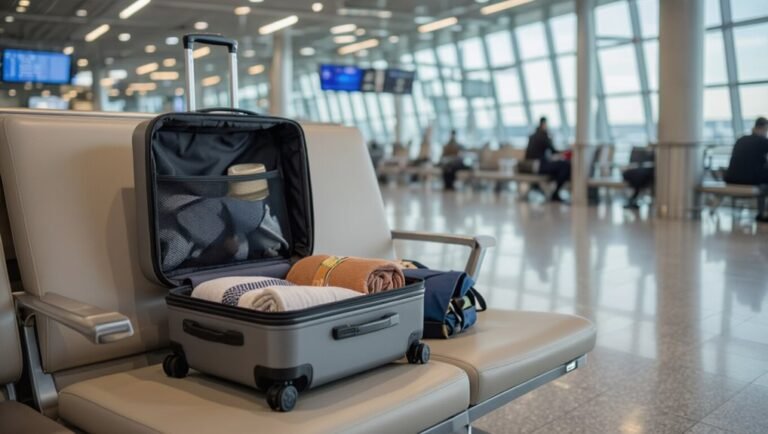
You can pack essentials like passports, boarding passes, cash, electronics, chargers, and a change of clothes, plus prescription meds and medical devices with documentation. Bring compact toiletries in a single quart bag (3.4 oz/100 mL containers), snacks and baby or pet supplies, spare batteries and power banks within airline limits, and valuables like jewelry or cameras. Avoid large sharp or flammable items. Keep items organized for quick screening—scroll down to learn practical packing tips.
Quick Rules: What You Can Bring in a Carry-On
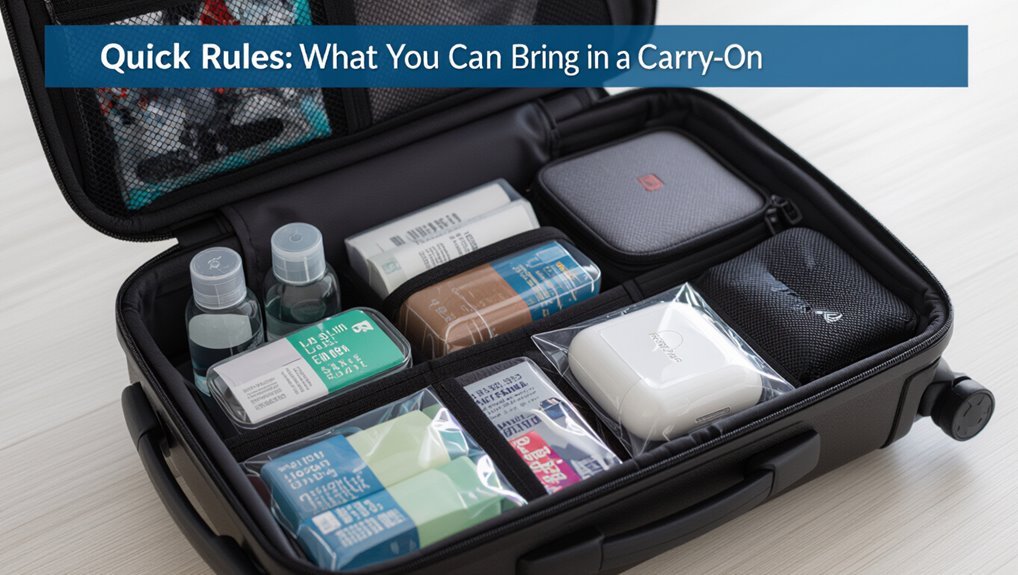
Wondering what you can actually bring on board? You’ll pack essentials: documents, electronics, medications, a change of clothes, and valuables.
Carry permitted food, baby supplies, and basic toiletries (see liquid rules later).
Prohibited items like large sharp objects, most sporting weapons, and flammable materials stay out.
Always check airline and international rules; security may require additional screening or confiscation.
TSA 3-1-1 Liquid Rule and Exceptions
When you’re packing liquids for carry-on, the TSA 3-1-1 rule keeps things simple: each passenger may bring liquids, gels, and aerosols in containers of 3.4 ounces (100 milliliters) or less, all fitting into a single clear quart-sized bag per person, with one bag placed separately for screening.
- Exceptions: medications, baby formula, and breast milk.
- Declare oversized medically necessary liquids.
- Solid toiletries aren’t restricted.
- Pack efficiently to speed screening.
Carry-On Food and Snacks: What’s Allowed
Curious what food you can bring through security? You can carry solid foods like sandwiches, chips, nuts, fruit, granola bars, and baked goods without issue.
Clear any liquids, gels, or spreads over 3.4 ounces—yogurt, soup, sauces—through TSA or pack them in checked baggage.
Declare baby or special-diet foods if asked.
Be mindful of international agricultural restrictions on fresh produce.
Medications & Medical Supplies to Carry On
Keep prescription medications in your carry-on and bring enough for the whole trip plus a few extra days.
Also pack medical devices and supplies you regularly use—like inhalers, insulin pumps, or spare tubing—in their original cases with any necessary documentation.
If something needs refrigeration or has special handling, plan ahead and notify the airline.
Prescription Medications Only
Anyone packing a carry-on should put prescription medications and essential medical supplies in it, not in checked luggage.
Keep originals, copies of prescriptions, and emergency contacts handy. Store pills in labeled containers and carry extra days’ supply.
- Bring originals and copies of prescriptions.
- Keep meds in labeled containers.
- Pack a few days’ backup supply.
- Note emergency contact info.
Medical Devices & Supplies
Along with prescription pills, you should carry any medical devices and supplies you’ll need during travel—think pumps, inhalers, glucose meters, CPAP machines, catheters, syringes, and wound dressings.
Pack manuals, extra batteries, chargers, and a doctor’s note for TSA. Use clear plastic bags for liquids and sharps, label equipment, and stow devices in carry-on compartments to prevent damage and guarantee access.
Baby Formula, Breast Milk, and Baby Food Rules
Traveling with infants means you’ll need special rules for liquids:
- You can bring breast milk, formula, and baby food exceeding 3.4 oz; declare them at security.
- Pack chilled items in a cooler or insulated bag with ice packs.
- Bring measured amounts and extra supplies for delays.
- Be ready for additional screening; cooperate to speed things up.
Electronics in Your Carry-On: What to Pack & Screening Tips
Bring your laptop and tablet in an easy-to-access sleeve so you can remove them quickly at security.
Make sure spare batteries and power banks meet airline and TSA rules and are packed in your carry-on, not checked luggage.
Keep devices charged and know screening procedures so you can power them on if asked.
Laptop and Tablet Essentials
One well-packed laptop or tablet can keep you productive and entertained without slowing you down, so prioritize protection, easy access, and essential accessories in your carry-on.
- Padded sleeve or compact case for impact protection.
- Charger, cable, and adapter neatly coiled in a pouch.
- Lightweight mouse or stylus for precision tasks.
- Screen cloth and minimal backup storage for file access.
Screening and Battery Rules
After you’ve packed your laptop and tablet with protective sleeves and chargers, you’ll also want to know the screening and battery rules that affect how they travel through security and onboard. You’ll remove larger electronics for X‑ray, carry spare batteries in carry‑on only, and check battery watt‑hours. Pack cords neatly and label power banks.
| Item | Action | Tip |
|---|---|---|
| Laptop | Remove | Sleeve |
| Phone | Leave | Accessible |
| Batteries | Carry | Label |
| Power bank | Screen | ≤100Wh |
| Charger | Stow | Tidy |
Power Banks, Spare Batteries, and Restrictions
Batteries and power banks need careful handling when you pack them in your carry-on, because airlines and regulators limit capacity and quantity for safety.
Follow rules, declare large units, and keep terminals protected.
- Carry only allowed watt-hours and counts.
- Pack spare lithium cells in original casing.
- Tape exposed contacts.
- Keep power banks in carry-on, not checked luggage.
Liquor, Alcohol Limits, and Duty-Free Carry-On
Alcohol rules can catch you off guard, so check limits before you pack: You can bring opened alcohol under TSA liquid rules (3.4 oz/100 ml in carry-on).
Unopened duty-free bottles bought internationally may exceed limits if sealed in tamper-evident bags with receipts.
Airlines and countries differ on allowances and in-flight consumption, so confirm airline policy and local regulations before traveling.
Sharp Objects and Allowed Tools in a Carry-On
Wondering which blades and tools you can bring onboard? You can carry small, non-locking scissors and plastic razors; knives with blades are banned.
Pack allowed items thoughtfully to avoid confiscation.
- Small non-locking scissors (blade under 4 inches)
- Disposable razors and cartridge razor heads
- Tweezers and nail clippers
- Small multi-tools without blades
Sporting Equipment & Musical Instrument Rules
If you’re bringing sports gear or a musical instrument, check size and security rules before packing: some items like baseball bats, golf clubs, and large drumsticks are banned from carry-ons and must go in checked luggage, while smaller items and many instruments are allowed if they fit in the overhead bin or meet airline-specific size limits.
Pack instruments in hard or padded cases, declare oversized items, and verify airline policies.
Cosmetics, Aerosols, and Toiletry Rules
Most liquids, gels, creams, and aerosols you bring in your carry-on must follow the TSA 3-1-1 rule: containers 3.4 ounces (100 mL) or less, all fitting in a single clear quart-sized bag, one per passenger.
Most carry-on liquids, gels, creams, and aerosols must follow the TSA 3-1-1 rule: 3.4 oz in one clear quart bag.
Pack essentials neatly and declare medications.
Follow this list:
- Travel-size shampoo/conditioner
- Toothpaste and mouthwash
- Sunscreen (3.4 oz max)
- Shaving cream aerosol
Packing Perfumes and Fragrances Safely in Carry-On
Anyone who likes to travel with a signature scent should know the rules for carrying perfumes and fragrances: bottles must follow the 3-1-1 liquid limits, fit inside your quart-sized clear bag, and be screened separately when asked.
Choose travel-size atomizers, secure caps with tape, place bottles upright in a padded pouch, and declare any larger samples at security to avoid spills or confiscation.
Clothing, Shoes, and Travel Apparel to Carry On
Pack versatile pieces you can mix and match to cover different activities and reduce bulk.
Pick shoes that compress or are easy to slip on and off, and stow them smartly to save space.
Layering keeps you comfortable across changing temperatures without extra luggage.
Pack Versatile Clothing
Because space and weight are limited, choose clothing that pulls double duty and keeps your carry-on light, tidy, and ready for whatever the trip throws at you.
Pack pieces you can layer, mix, and wear multiple times.
- Neutral tops for day and night
- Lightweight sweater for warmth and style
- Convertible pants that dress up or down
- Compact rain shell that stows easily
Choose Rollable Shoes
A single pair of rollable shoes can save space and weight without sacrificing comfort or style, so pick a flexible design you can wear on long walks, to casual dinners, and through airport security.
Choose lightweight, packable materials that won’t deform, prioritize neutral colors to match outfits, and test folding them into your bag.
Bring thin insoles for added support.
Layer For Temperature
When temperatures can swing from chilly plane cabins to humid arrival cities, layer smartly so you can add or shed pieces without digging through your bag.
- Pack a lightweight base tee you can reuse.
- Bring a thin merino sweater for warmth and odor control.
- Include a packable rain shell that doubles as a windbreaker.
- Wear versatile slip-on shoes you can remove on the plane.
Valuables and Documents to Always Keep in Carry-On
If you want to stay calm and in control during travel, keep passports, boarding passes, credit cards, keys, and any irreplaceable jewelry or electronics in your carry-on.
Also pack travel insurance details, emergency contacts, prescriptions, and a copy of your ID.
Use a slim organizer or hidden pocket for quick access, and always verify expiration dates and card activation before you leave.
Pet Supplies and Service-Animal Items Allowed in Cabin
If you’re traveling with a service animal or pet in cabin, make sure you have any required documentation and health certificates handy.
Pack enough food, treats, and medications to cover delays, and label everything clearly.
Bring a familiar carrier and a few comfort items to keep your animal calm and secure during the flight.
Service Animal Documentation
Airlines usually require specific documentation for service animals, so you’ll want to carry the correct forms and identification to avoid delays or denial of boarding.
Keep originals and copies handy, and know airline rules.
- Service animal ID or vest
- Handler’s written confirmation
- Recent veterinary health record (non-medication)
- Airline-specific forms completed ahead of time
Pet Food And Medication
When you’re traveling with a pet or service animal, pack enough food and any medications in your carry-on to cover unexpected delays and the duration of your trip.
Include measured portions, familiar treats, and clearly labeled prescription meds with vet documentation.
Bring extra bowls, dosing syringes, and a copy of feeding instructions.
Keep everything accessible for security checks and in-case of schedule changes.
Comfort Items And Carriers
Because your pet’s comfort affects both their behavior and your travel ease, pack familiar bedding, a favorite toy, and a lightweight, airline-approved carrier that fits under the seat.
- Soft blanket for scent
- Small chew or plush toy
- Collapsible water bowl
- Leash/harness and paperwork
Keep items compact, accessible, and airline-compliant so your trip stays calm and stress-free.
Commonly Mistaken Prohibited Items (Don’t Pack These)
Ever wondered which everyday items you should never stow in a carry-on?
Don’t pack loose lithium batteries beyond spare limits, large power banks over airline watt-hour rules, full-size aerosols, or flammable liquids like lighter fluid.
Sharp tools, some sports equipment, and certain self-defense sprays are banned.
Always check airline and TSA updates before you board to avoid confiscation or fines.
International Carry-On Rules: EU, UK, Canada & More
When flying internationally, you’ll need to follow different rules depending on your destination.
In the EU, liquids and gels must be in 100 ml containers in a clear bag; the UK has extra limits on spare batteries and power banks; and Canada sets specific duty-free allowances you should check before packing.
Review each country’s rules before you travel so you don’t get stopped at security or face unexpected charges.
EU Liquids And Gels
In the EU, most airports let you carry small amounts of liquids and gels in your hand luggage, but you’ll need to follow strict size and packaging rules:
- Containers max 100 ml each.
- All containers fit inside one transparent resealable bag.
- Bag capacity typically 1 litre.
- Present the bag separately at security checkpoints.
Plan toiletries accordingly to avoid delays.
UK Battery Restrictions
Although the UK follows many international rules, its battery limits for carry-on items have some specific nuances you’ll want to know: You can bring spare lithium batteries in carry-on only, generally under 100 Wh without airline approval; 100–160 Wh needs approval. Check device watt-hours and protect terminals.
| Item | Limit | Notes |
|---|---|---|
| Spare Li-ion | <100 Wh | No approval |
| High-capacity | 100–160 Wh | Airline approval needed |
Canada Duty-Free Limits
Duty-free allowances in Canada set clear limits on how much alcohol, tobacco, and other goods you can bring in without paying duty, and it’s smart to know them before you pack.
You should declare items over limits and keep receipts.
Typical allowances:
- 1.5 L spirits or 1.5 L wine
- 200 cigarettes
- Gifts up to CAD 60
- Personal use items only
How to Speed Security Screening With Your Carry-On
When you pack strategically, you’ll breeze through security lines: place liquids under 100ml in a clear, resealable bag, stow electronics on top for easy removal, wear slip-on shoes, and keep your boarding pass and ID accessible.
Empty pockets, minimize metal, and avoid prohibited items.
Arrive early, follow TSA or local rules, and cooperate with staff to speed screening.
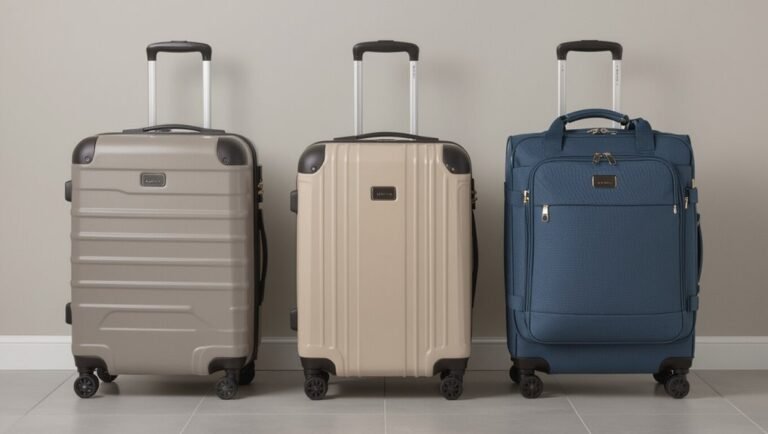
Organize Carry-On to Meet Size and Weight Limits
Speeding through security is only half the battle — you also need a carry-on that actually fits airline size and weight rules to avoid gate checks or fines.
- Weigh your packed bag at home to match airline limits.
- Use a soft-sided bag for slight compression.
- Pack heavy items low and centered to control balance.
- Keep essentials accessible to avoid repacking at the gate.
Quick Checklist: Pack This, Leave That at Home
1 smart checklist will save you time and stress: pack must-haves like your passport, wallet, phone and charger, medications, a change of clothes, and travel documents — and leave bulky nonessentials, full-sized toiletries, and valuables you won’t need in checked luggage at home.
Add masks, snacks, headphones, a pen, and compact toiletry sizes.
Double-check liquids and prohibited items before you leave.
Frequently Asked Questions
Can I Carry Opened Food Purchased After Security Through the Gate?
Yes — you can carry opened food bought after security through the gate. You’ll need to follow airline rules and local regulations, avoid strong odors or messy items, and be prepared to dispose of anything the crew or security objects to.
Are Sharp Manicure Tools Allowed in Carry-On if in a Toiletry Bag?
Yes, you can usually carry sharp manicure tools in your toiletry bag, but blades longer than 4 inches or razor blades detachable from handles are prohibited; pack scissors, nail clippers, and metal files securely to avoid injury during screening.
Can I Bring Unopened Duty-Free Liquids Into a Connecting Flight’s Cabin?
Yes — you can usually bring unopened duty-free liquids into a connecting flight’s cabin if they’re sealed in a tamper-evident bag with receipt and you keep them with you; check transit security rules at your connecting airport.
Do Airline-Specific Carry-On Size Rules Override TSA Allowances?
No — TSA sets security rules, but you’ve got to follow the airline’s size and weight limits for carry-ons; if your bag exceeds the airline’s policy, they can gate-check or charge you even if TSA would allow it.
How Should I Declare Medical Devices at Security Screening Checkpoints?
You should tell the TSA officer about your medical devices before screening, separate them if possible, show supporting paperwork or prescriptions when asked, and request a private inspection or pat-down if you’re uncomfortable with the X-ray process.
Conclusion
You’ve got this: pack essentials like documents, devices, chargers, meds, valuables, a change of clothes, and compliant toiletries (follow 3-1-1), plus snacks, baby needs, and any medical supplies. Leave prohibited items, oversized liquids, and unnecessary duplicates at home. Check your airline’s size/weight limits and international rules before you go, and organize items for quick security screening. With smart packing and a final checklist, you’ll breeze through travel with everything you actually need.