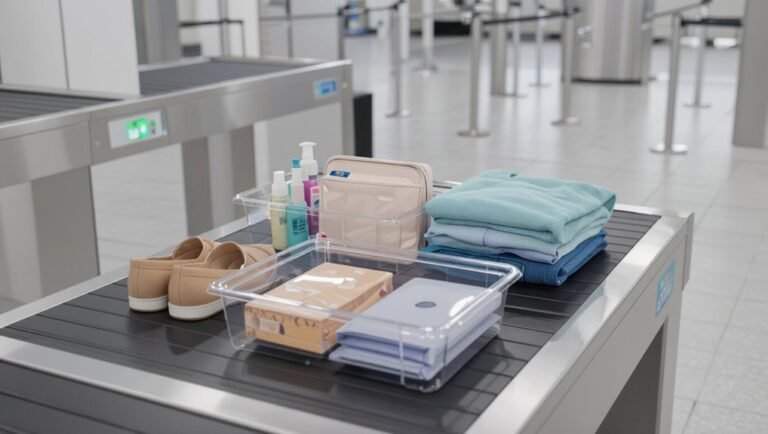
How to Save Space in Luggage Smart Packing Tips
You can cut luggage bulk by sorting essentials, rolling clothes, and using packing cubes or compression bags to nest items and save space. Wear bulky coats and boots on travel days, choose lightweight layers and versatile pieces, and pack outfits by day so you don’t overpack. Tuck shoes into corners, cushion fragile items with soft clothing, and keep frequently used items up top in a quick-access pouch—keep going to discover more smart tricks.
Pack Efficiently: 5 Simple Steps to Start Right
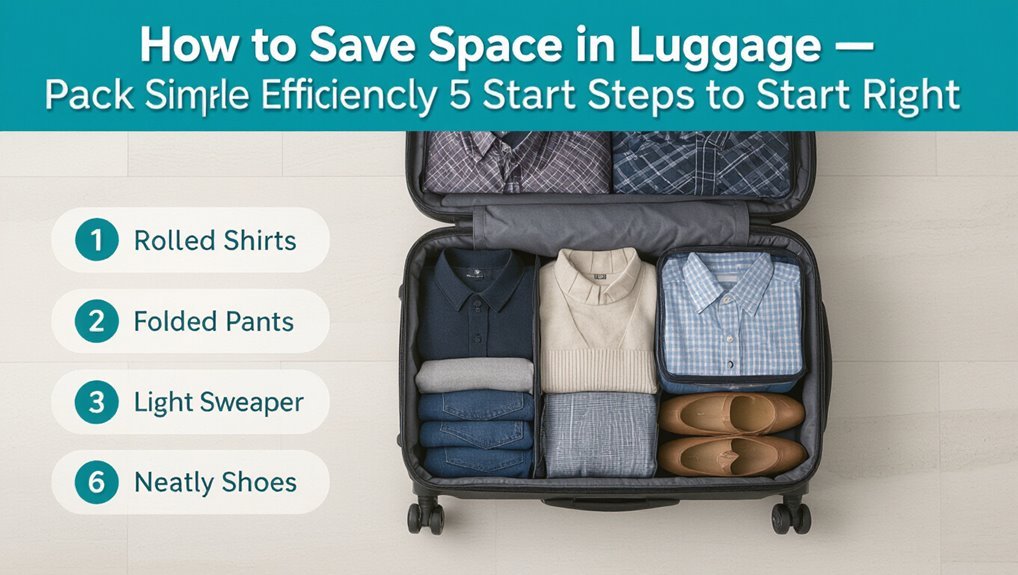
Start by sorting what you really need and ditching extras—lay out essentials, try items on, and group them by use so you can see what’s indispensable.
Roll clothes to save space, pack versatile layers, use packing cubes to compress and organize, place heavy items near wheels, tuck shoes into corners, and keep toiletries in a leakproof bag so you’ll stay neat and ready.
Pick the Right Suitcase Size for Your Trip
Choosing the right suitcase size makes packing easier and prevents extra fees or lugging unnecessary weight; think about trip length, your itinerary, and whether you’ll shop on the road to determine carry-on, weekend, or checked baggage.
Match capacity to planned outfits and activities, prefer a slightly smaller case to avoid overpacking, and confirm airline size limits so you won’t face surprises at the gate.
Choose Lightweight Travel Gear and Fabrics
Once you’ve matched suitcase size to your itinerary, trim weight by picking lightweight gear and fabrics that do more with less.
Choose packable down or synthetic outer layers, quick-dry shirts, and thin merino or performance blends.
Opt for packable down or synthetic jackets, quick-dry tops, and lightweight merino or performance layers.
Swap bulky shoes for compact, multi-use pairs and use inflatables or compressible accessories.
Lighter items reduce bulk and let you carry essentials without extra strain.
Build a Capsule Wardrobe That Mixes and Matches
Start with neutral base pieces you can wear with everything, then add a few versatile layers for changing weather and occasions.
Pick one or two patterned items and keep the rest simple so your outfits stay cohesive.
Mix patterns sparingly so everything pairs easily and you won’t overpack.
Choose Neutral Base Pieces
When you build a capsule wardrobe, pick neutral base pieces that anchor every outfit so you can mix and match with ease.
Choose tops, bottoms, and a dress in black, navy, gray, or beige that coordinate easily. Stick to simple cuts and durable fabrics that resist wrinkles.
With a few neutral anchors, you’ll reduce pieces and still create varied looks for any trip.
Prioritize Versatile Layers
Because weather and plans can change fast, prioritize versatile layers that let you adapt looks without adding bulk.
Pack a lightweight neutral jacket, a thin knit, and a compact rain shell you can layer. Choose pieces that work for day or evening, compress easily, and coordinate with your base items.
Roll or fold strategically to save space and keep outfits interchangeable.
Mix Patterns With Restraint
Layering your neutrals makes it easier to mix patterns without overwhelming your suitcase.
Choose one patterned piece and pair it with solid neutrals, then add a second pattern in the same color family or scale to avoid clashing.
Limit bold prints to one per outfit, stick to complementary colors, and use accessories to echo patterns so every item multiplies outfit options efficiently.
Choose Versatile Clothing Pieces to Maximize Outfits
Stick to mix-and-match basics like neutral tops and versatile bottoms so you can create multiple outfits from fewer pieces.
Use layering—light jackets, scarves, and cardigans—to change the look without extra bulk.
You’ll pack less and still have options for different occasions.
Mix-and-Match Basics
When you choose versatile pieces—neutral tops, well-fitting bottoms, and a couple of statement items—you can create far more outfits than a suitcase full of one-off looks.
Pick items that share a color palette, vary silhouettes, and balance patterns sparingly. Choose shoes and accessories that work with multiple looks.
Pack mixable basics and two adaptable accents to stretch combinations without extra bulk.
Layering For Multiple Looks
Because you can build whole outfits from a few key pieces, think in layers: a base (tank or tee), a mid layer (shirt or lightweight sweater), and an outer piece (jacket or cardigan) that can be added or removed to change the look and warmth.
Pick neutral tones, one patterned item, and lightweight fabrics that pack small.
Swap layers to create daytime, evening, and weather-ready outfits.
Pack Outfits by Day to Avoid Overpacking
If you plan each day’s outfit before you pack, you’ll cut down on excess items and make dressing easier on the trip.
Lay out looks per day, include accessories, and limit repeats. Pack outfits together in separate cubes or sealed bags so mornings are simple.
- Top, bottom, undergarments
- Shoes and socks
- Accessories only as needed
- One extra neutral outfit for flexibility
Roll Clothes to Save Space and Reduce Wrinkles
Rolling your clothes usually saves more space than folding and can cut down on creases if you do it right.
Match the roll to the fabric—soft tees and knits roll tight, while structured items like blazers need different handling or packing flat.
Use thin layers (underwear, tees) as fillers around bulkier rolls to maximize space and keep everything snug.
Roll Vs. Fold
Suitcases tell a different story depending on how you pack them: roll soft garments to squeeze out air and save space, or fold structured pieces to keep creases sharp.
You’ll choose by garment type and trip needs.
- Roll T-shirts, pajamas, and casual tops.
- Fold blazers, dress shirts, and tailored items.
- Use rolls to cushion fragile items.
- Pack folded stacks on top.
Fabric-Specific Techniques
Because fabric behaves differently, you’ll get the best space savings and fewer wrinkles when you tailor your rolling technique to each material: lightweight cotton and knits can be rolled tight to compress air, wrinkle-prone linens benefit from looser, gentler rolls, and delicate silks should be wrapped around soft items or rolled with tissue to protect fibers.
| Fabric | Technique |
|---|---|
| Cotton/knits | Tight roll |
| Linen/silk | Gentle roll/wrap |
Maximize Space With Layers
When you layer garments strategically—placing heavier items like jeans and jackets beneath lighter, more wrinkle-prone pieces—you’ll save space and keep delicate fabrics smoother by preventing crushing and shifting during travel.
Roll each lighter item tightly over the heavier base, tuck small pieces into gaps, and compress gently for balance.
- Roll shirts and blouses
- Nest socks in shoes
- Layer sweaters flat
- Use compression cubes
Fold Dress Shirts to Minimize Wrinkles and Save Space
If you want dress shirts that arrive looking crisp without eating up space, fold them intentionally rather than stuffing them in a corner of your bag.
Button collars and top buttons, lay shirt face down, fold sleeves inward along seams, fold sides toward center, then fold in half or thirds depending on bag depth.
Stack neatly to reduce creases and maximize room.
Use Packing Cubes to Stay Organized and Compact
Grab a set of packing cubes and you’ll instantly maximize packing efficiency by grouping items and making better use of every inch.
Use different cubes to separate clothes, toiletries, and electronics so you can find what you need without unpacking everything.
Choose compression cubes for bulky sweaters and jackets to shrink their volume and fit more in your bag.
Maximize Packing Efficiency
Although packing cubes look simple, they’ll change how you organize and compress your luggage: Use different sizes to fit gaps, roll clothes tight, and zip cubes to reduce air. You’ll find items fast and keep weight balanced.
- Choose sizes to match garments
- Roll or fold by fabric type
- Compress bulky items in larger cubes
- Keep a quick-access cube for essentials
Separate Items By Category
When you separate items by category, packing cubes make it simple to see what you have and where it lives in your bag; group shirts, underwear, electronics, and toiletries into their own cubes so you can pull exactly what you need without unpacking everything.
Label or color-code cubes, nest small ones inside larger ones, and keep frequently used items near the top for quick access.
Compress Bulky Clothing
If you want to save space and keep your bag tidy, compress bulky items like sweaters, jackets, and hoodies into a packing cube and squeeze out excess air before sealing it. You’ll reduce volume, protect fabrics, and spot outfits faster.
Pack strategically:
- Roll items before compressing
- Use size-matched cubes
- Layer thin garments around cubes
- Keep essentials accessible
Use Compression Bags for Bulky Items Like Jackets
Pillowy jackets take up a lot of suitcase real estate, so shove them into compression bags to cut volume and free room for other essentials. Squeeze air out, seal, and roll to compact bulk. You’ll protect fabrics from moisture and dirt while creating space for shoes or souvenirs. Quick, simple, and reversible packing.
| Tip | Benefit |
|---|---|
| Seal well | Saves space |
| Roll out air | Protects fabric |
| Reuse bags | Versatile packing |
Layer Thin Garments Instead of Packing Heavy Pieces
Compression bags work great for bulky coats, but you can save even more space by swapping a single heavy piece for several thin layers.
You’ll mix warmth and flexibility, pack lighter, and adapt to changing weather without a bulky jacket.
- Pack merino or synthetic base layers
- Add a lightweight fleece or sweater
- Include a windproof shell
- Use thin, packable gloves and scarf
Wear Bulky Items on the Plane to Free Luggage Space
When you fly, wear bulky layers strategically so you don’t waste suitcase space on heavy coats.
Stack a sweater over a thin jacket and tuck a scarf so they’re comfortable on the plane but compact when you arrive.
Carry heavy accessories like boots or a large bag on board to keep your checked luggage light.
Wear Layers Strategically
If you’re trying to maximize luggage space, wear your bulkiest items on the plane—think coat, boots, and a thick sweater—so they don’t eat into your suitcase room.
Layer lightweight pieces under that bulky shell to adapt to temps, save space, and avoid extra packing. Use compact layers that mix and match.
- base layer
- insulating midlayer
- weatherproof outer
- packable scarf
Carry Heavy Accessories
You’ve already slimmed down your suitcase by layering, so now think about carrying the heaviest accessories instead of packing them.
Wear bulky coats, boots, or knit hats on the plane and stow compact items in your personal bag.
Distribute weight to your body to free luggage space, avoid overweight fees, and keep fragile or valuable pieces within easy reach during travel.
Pack Shoes Strategically: Stuff, Protect, Position
Although shoes often seem like an afterthought, packing them right saves space and prevents messes; stuff each pair with socks or small items to maintain shape, wrap delicate shoes in a bag or cloth for protection, and place heavier pairs at the bottom of your suitcase with lighter ones near the top or along the sides.
Pack shoes smart: stuff pairs to keep shape, wrap delicates, and place heavy shoes low with lighter ones above.
- Use shoe bags or reusable grocery bags.
- Tuck flats into corners.
- Stack boots heel-to-toe.
- Compress sneakers with clothing.
Protect Fragile Items With Clothing, Not Bulky Cases
Instead of hauling bulky cases, use your soft clothes to cushion fragile items and fill gaps so nothing shifts.
Wrap breakables in sweaters or socks, then layer them with shirts or scarves for extra protection.
You’ll save space and weight while keeping delicate things secure.
Cushion With Soft Clothing
Several layers of soft clothing can do a better job protecting fragile items than bulky hard cases.
Wrap breakables in T‑shirts, socks, or scarves, then nest them among folded clothes so nothing shifts. You’ll save space and weight while keeping items safe.
- Use socks for cups and bottles
- Bundle electronics in soft tees
- Cushion glassware with scarves
- Fill gaps with underwear
Secure With Layering Techniques
You’ve already seen how individual garments can cushion fragile items; now apply layering techniques to make that protection systematic and reliable. Wrap items in soft layers, place them between folded shirts, and center them in the bag. Use zones to prevent shifting and compress outer layers to lock items.
| Layer | Material | Purpose |
|---|---|---|
| Inner | T-shirt | Cushion |
| Middle | Sweater | Stabilize |
| Outer | Jacket | Lock in place |
Fill Gaps With Small Items: Socks, Chargers, Toiletries
When you roll or tuck socks, chargers, and travel-size toiletries into the nooks between shoes and clothing, you’ll squeeze extra space from your suitcase and keep small items from rattling around.
- Stuff socks into shoe cavities
- Wrap chargers around compactly
- Nest small toiletry bottles in gaps
- Fill helmeted corners with underwear
This method tightens your load and protects fragile items.
Use Travel-Sized Toiletries and Refillable Containers
After stuffing small items into gaps, slim down your kit further by packing travel-sized toiletries and refillable containers. You’ll cut bulk, control quantities, and swap essentials into labeled bottles. Keep only what you need and top up at your destination.
| Item | Size | Tip |
|---|---|---|
| Shampoo | 50ml | Pre-fill |
| Lotion | 30ml | Leak-proof |
| Soap | Bar | Space-saver |
| Perfume | 10ml | TSA-friendly |
Manage Liquids: TSA Rules and Refillable Bottles
Because airports enforce strict liquid rules, plan your toiletries around the TSA 3-1-1: pack containers of 3.4 ounces (100 ml) or less, fit them in a single clear quart-sized bag, and limit one bag per passenger.
Pack essentials, decant products, and label bottles for security.
Pack travel essentials, decant into small bottles, and clearly label each container for smooth security screening.
- Use refillable travel bottles
- Pre-fill what you need
- Keep leakproof caps
- Stash extras in checked luggage
Consolidate Electronics: Multiport Chargers & Adapters
If you want to cut down on chargers and save space, pack a multiport USB charger and a universal travel adapter so you can charge several devices from one outlet anywhere you go.
Bring short, braided cables, label cords with colored tape, and choose a charger with surge protection.
Stash everything in a small tech organizer to keep cords untangled and accessible.
Use Wearable Storage and Travel Vests for Extras
You can maximize pocket utility by choosing vests and jackets with varied, secure compartments for small items and tickets.
Layer lightweight items under or over the vest to stay comfortable without bulk.
Keep passports, cash, and electronics close in inner pockets so they’re protected and easy to reach.
Maximize Pocket Utility
When space in your suitcase gets tight, wearable storage—like travel vests and jackets with multiple pockets—lets you carry extras without sacrificing luggage room.
Use pockets strategically to balance weight and access.
- Stash passports, phone, and wallet for quick reach
- Keep chargers and cables organized in zip pockets
- Store small toiletries securely
- Distribute heavy items evenly to stay comfortable
Layer With Lightweight Items
Since space is tight, layer lightweight items and wear a travel vest to carry extras without bulking up your suitcase.
Put thin sweaters, scarves, and packable rain shells in vest pockets to free room.
Use slim pouches for chargers, meds, and documents.
Rotate worn layers during transit to adapt to temperature and keep your bag compact and balanced.
Secure Valuables Close
Although it’s tempting to stash everything in your checked bag, keep passports, cash, cards, and important electronics on your person in wearable storage—money belts, neck pouches, and zippered travel vests cut pickpocket risk and give quick access.
You’ll travel lighter, stay organized, and avoid frantic searches.
- Wear layered pockets for essentials
- Use RFID-blocking options
- Stash backups separately
- Choose comfortable, concealed styles
Minimize Paper: Digitize Documents and Tickets
If you’re tired of rifling through paper at the airport, digitize passports, tickets, and reservations before you leave so everything’s a tap away on your phone.
Scan important documents, save PDFs offline, and use secure apps or encrypted cloud storage.
Share copies with a trusted contact, label files clearly, and delete sensitive images after travel.
Rely on backups to avoid paper clutter.
Place Frequently Needed Items in Your Carry-On
Once you’ve digitized key documents, keep everything you’ll need in flight or during connections within reach by packing them in your carry-on.
Prioritize accessibility: use compartments, clear pouches, and a small organizer so you can grab essentials fast without rummaging.
- Passport and boarding pass
- Phone charger and power bank
- Medications and basic first aid
- Wallet and a spare card
Distribute Luggage Weight to Avoid Fees and Strain
Split heavier items between checked bags and your carry-on so no single piece exceeds airline weight limits or becomes awkward to lift.
Balance weight across suitcases to prevent fees and reduce strain when wheeling or lifting.
Keep heavier items low and centered for stability, distribute electronics and shoes evenly, and weigh bags at home to adjust before travel to avoid surprises.
Optimize Undergarments and Socks That Do More
While you’re packing clothes, choose undergarments and socks that pull double duty so you carry less and stay comfortable on the road.
Choose versatile undergarments and socks that dry fast, resist odor, and provide support for lighter, easier travel.
Pick quick-dry, odor-resistant pieces you can rewear and wash easily. Favor compression or padded socks that aid circulation and support.
- Quick-dry underwear
- Odor-resistant blends
- Compression/padded socks
- Lightweight thermal liners
Choose Dual-Purpose Items: Scarves, Sarongs, Zip-Offs
If you pack a few versatile pieces—like a lightweight scarf, a sarong, or zip-off pants—you’ll cut bulk without sacrificing options.
Use a scarf as a shawl, headwrap, or pillowcase; a sarong becomes a beach cover, skirt, or towel; zip-off pants switch from hiking to townwear.
Choose quick-dry, neutral colors to mix and match, minimizing items while maximizing outfits.
Limit Accessories: A Small Jewelry and Belt Capsule
Because accessories can make or break an outfit, keep them small and intentional: choose a few versatile jewelry pieces (think a pair of studs, a necklace that layers, and a bracelet) and one neutral belt that works with multiple waistlines.
Accessories matter—keep them small and intentional: a few versatile jewelry pieces and one neutral belt for every outfit.
- Pack jewelry in a compact case to avoid tangles.
- Choose metals that match most outfits.
- Roll the belt to save space.
- Limit extras to one statement piece for evenings.
Use Laundry Options to Halve the Clothes You Bring
When you plan to do quick laundry on the road, you can halve how much you pack without sacrificing outfit options: wash basics like underwear, socks, and tees every few days, and rotate the same nicer pieces for evenings.
Pack a compact detergent, a travel clothesline, and a sink stopper. Schedule short wash-and-dry cycles, rewear outer layers, and fold damp items to finish drying in your room.
Avoid “Just-In-Case” Items by Planning Real Contingencies
Though it’s tempting to toss in extras “just in case,” you’ll save space and stress by listing the real problems you might face and packing only items that solve them.
- Bandage and blister kit for minor injuries
- Lightweight umbrella or packable rain jacket
- Phone charger and power bank for connectivity
- One versatile outfit for unexpected events or delays
Create a Destination-Specific Packing Checklist
Where will you be going and what’ll you actually need there?
List activities, weather, dress codes, and local amenities to decide essentials. Prioritize multipurpose items and limit duplicates.
List activities, weather, dress codes, and local amenities to choose essentials—favor multipurpose items and avoid duplicates.
Note chargers, medications, and documents specific to your destination. Pack outfit combinations, not standalone pieces.
Review and trim the list before you zip the bag to avoid overpacking.
Troubleshoot: Quick Fixes for Common Packing Problems
You’ve trimmed your list and packed smart, but stuff still goes wrong—zippers jam, shoes squish outfits, chargers get lost.
Stay calm: keep essentials in an accessible pouch, improvise fixes, and rethink placement quickly.
- Lubricate stuck zippers with pencil graphite
- Stuff shoes with socks to protect clothes
- Use a cord organizer or binder clip
- Swap bulky items for compressible alternatives
Frequently Asked Questions
Can I Ship Items Home Instead of Overpacking?
Yes — you can ship items home to avoid overpacking. You’ll save space, avoid excess baggage fees, and send bulky or heavy purchases ahead. Compare shipping costs and timing, pack securely, and track shipments for peace of mind.
How Do I Pack for Different Climates in One Suitcase?
Pack layered, versatile pieces you can mix, roll lighter items, use compression bags for bulky coats, choose convertible clothing, plan outfits per day, carry a compact waterproof, and wear your bulkiest boots or jacket on travel days to save space.
What About Medications and Temperature-Sensitive Items?
You should keep medications and temperature-sensitive items in insulated pouches or a small cooler with gel packs, carry essentials in your carry-on, check storage requirements, pack prescriptions in original labels, and ask pharmacists about travel stability and alternatives.
How to Handle Special Dietary Travel Gear (E.G., Formula, Supplements)?
Pack formula and supplements in original labeled containers, keep needed daily portions in clear resealable bags, carry prescriptions and a doctor’s note, bring compact measuring tools, and use insulated pouches for temperature-sensitive items on flights.
Can I Pack Gifts or Purchases Without Exceeding Customs Rules?
Yes — you can pack gifts or purchases, but you’ll need to declare items exceeding duty-free limits, keep receipts, avoid restricted goods, and follow destination customs rules; check allowances beforehand so you won’t face fines or confiscation.
Conclusion
You’ve got the tools to pack smarter, so do it with confidence. Start with a plan, pick a suitcase that fits your trip, and choose lightweight, versatile pieces that mix and match. Rely on laundry and skip “just-in-case” items by planning real contingencies. Use packing cubes and compression where needed, and follow your destination-specific checklist. When problems pop up, troubleshoot quickly—then enjoy the freedom of lighter, more efficient travel.