Will Chocolate Melt in Checked Luggage Travel Tips
Yes — expect chocolate to soften or melt in checked luggage on hot days. Cargo holds can exceed 77–86°F (25–30°C), which makes softer confections go gooey. Pack firm, low‑moisture items like plain dark bars or well‑tempered truffles in a rigid container with cushioning and lightweight insulation. Add frozen gel packs wrapped in cloth to avoid contact, and avoid peak summer flights when possible. Keep items stable to prevent crushing, and if you want tips for packing and salvage, keep going.
Will Chocolate Melt in Checked Luggage? (Short Answer + Temps)
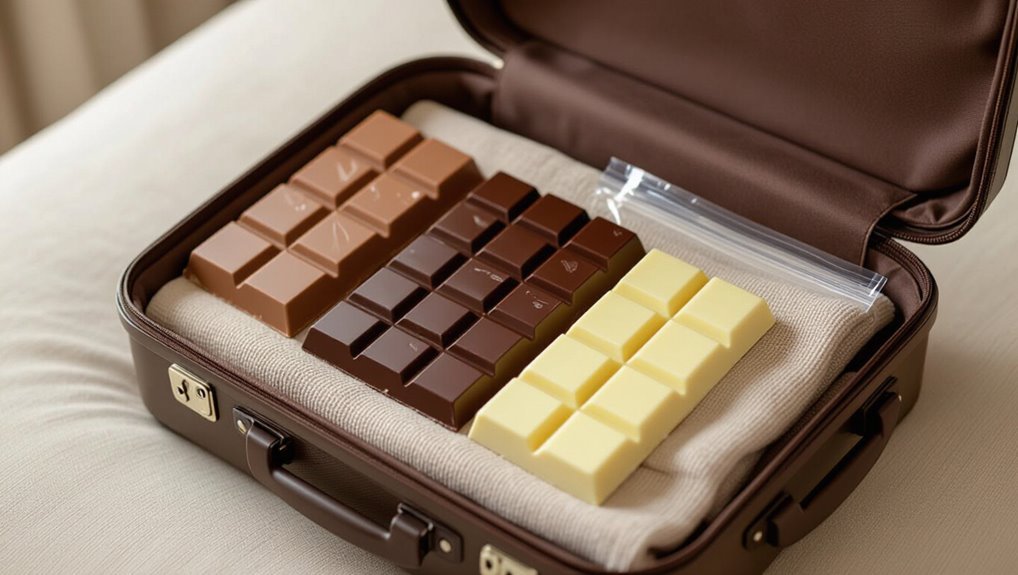
Wondering if your chocolate will survive checked baggage?
Short answer: maybe.
Chocolate softens around 77–86°F (25–30°C) and fully melts above that. Checked cargo can reach higher temps on hot tarmacs or in non‑pressurized holds.
Chocolate softens at about 77–86°F (25–30°C) and can fully melt higher—checked cargo may get even hotter.
Insulate with bubble wrap, foil, or a thermal pouch and avoid peak summer flights. Aim for quick transfers and consider carry‑on when possible.
Which Chocolates Travel Best
If you want chocolate that survives travel, pick firm, low-moisture varieties and sturdy packaging: plain dark chocolate, solid milk bars, and well-tempered truffles hold up best, while soft centers, ganaches, and pralines are riskier.
Choose individual bars or sealed molded pieces, avoid air-filled confections, wrap in insulating material, and pack between clothing to cushion and limit direct sunlight or pressure during handling.
How Cargo Hold Temperatures Affect Chocolate
You’ve picked the right kinds of chocolates and packed them securely, but what happens once they board the plane matters too.
Cargo hold temperatures can swing from cold at altitude to warm during ground delays. You should expect moderate fluctuations; prolonged heat above about 77°F (25°C) risks softening or blooming.
Rapid cooling can cause condensation. Monitor flight type and season when deciding to check chocolate.
Pack Chocolate for Checked Baggage: Materials & Layers
1 simple rule will keep most chocolate safe in checked baggage: layer insulation, cushioning, and a temperature buffer.
You’ll choose sturdy inner wraps, soft padding, and an outer protective shell. Pack items to prevent movement and add a small thermal pouch if needed.
- Bubble wrap or cloth
- Rigid container
- Lightweight insulating layer
Best Insulation for Traveling Chocolate
When you want chocolate to arrive looking—and tasting—its best, choose insulation that balances thermal protection, size, and weight.
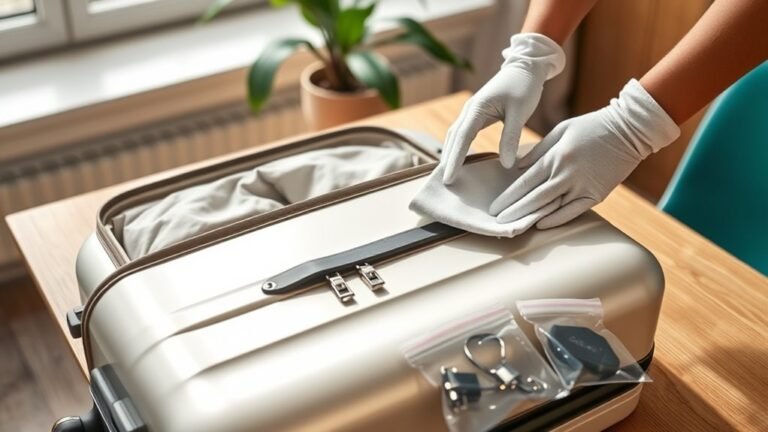
Use rigid insulated containers or thick neoprene sleeves plus frozen gel packs wrapped in cloth to avoid direct contact.
Add reflective foil and bubble wrap for extra barrier.
Match insulation to trip length and climate so chocolate stays solid without adding excessive bulk or weight.
Airline Rules: Carry‑On vs Checked Chocolate
After packing insulation and gel packs, you should decide whether to carry your chocolate on or check it—airline rules, security screening, and temperature control all affect that choice.
After insulating your chocolate and adding gel packs, choose carry‑on or checked—balance airline rules, screening, and temperature control.
You’ll weigh convenience, safety, and restrictions:
- Carry‑on: you control cabin temperature, but watch size limits.
- Checked: less oversight, higher heat risk.
- International: check customs and duty rules before flying.
Timing & Shipping Strategies to Avoid Melting
Because heat and transit time are the biggest threats to your chocolate, plan shipments or travel for the coolest part of the day and shortest route possible.
Choose overnight or express shipping, avoid weekend delays, and track transit windows.
Pack in insulated containers with cold packs (not frozen solid), label as perishable, and schedule pickups or arrivals to minimize time in uncontrolled temperatures.
What to Do If Chocolate Arrives Melted
If your chocolate arrives melted, first assess the damage by checking texture, smell, and any separation of fats.
Decide whether you can salvage it—refrigerate to reset texture, or use it in baking or sauces.
If it smells off, has mold, or shows severe fat bloom, dispose of it safely.
Assess The Damage
1 clear step: quickly assess how badly your chocolates melted so you can decide what to do next.
- Check packaging: intact wrappers mean less contamination.
- Inspect texture: firm pieces may retemper; gooey masses are more compromised.
- Smell and spot-check: off odors or separation indicate spoilage.
Decide whether to separate salvageable pieces from messy ones and prevent cross-contamination.
Salvage Or Dispose
Now that you’ve assessed the damage, decide quickly whether to salvage what you can or toss it — your choice depends on contamination, texture, and safety.
If chocolate’s only softened but wrapped, refrigerate and reshape; unwrapped, sticky, or odor-tainted pieces should go.
For homemade treats, err on the side of caution.
Pack replacements or buy fresh at your destination if unsure.
Chocolate Souvenirs That Withstand Travel
When you want chocolate souvenirs that survive bumps, heat, and delays, pick varieties that travel well: filled bonbons and delicate truffles usually won’t make it, but hard caramels, chocolate-covered nuts, and sturdy bars often do.
You’ll want options that resist melting, crushes, and flavor loss:
- Chocolate-covered nuts
- Sturdy chocolate bars
- Hard caramels
Quick Packing Checklist for Chocolate Travel
Pack a few essentials to keep your chocolate intact: insulated pouches or a small cooler pack, sturdy containers or tins to prevent crushing, resealable bags for separating kinds, absorbent paper or cloth to catch melting, and a thermometer or temperature-check app if you’re traveling in heat.
Add ice packs for checked flights when allowed, label contents fragile, cushion gaps with clothing, and carry delicate bars in your carry-on.
Frequently Asked Questions
Can Melted Chocolate Be Safely Refrozen and Eaten?
Yes — you can refreeze melted chocolate, but you shouldn’t if it was contaminated or sat warm too long. You’ll preserve texture and safety best by cooling promptly, wrapping airtight, and inspecting for odd smells or separation.
Will Humidity Cause Chocolate to Bloom in Checked Bags?
Yes — humidity can cause chocolate to bloom in checked bags. You’ll see sugar or fat bloom if moisture condenses on the surface, so keep chocolate sealed, insulated, and away from temperature swings to minimize bloom risk.
Can White or Ruby Chocolate Handle Heat Better Than Dark?
No — you shouldn’t assume white or ruby chocolate handle heat better than dark; white melts easily because of higher dairy and cocoa butter, while ruby can be delicate too, so all types need cool, insulated packing.
Are Liquid-Filled Chocolates More Likely to Burst in Flight?
Yes — liquid-filled chocolates are more likely to burst in flight because you’d expose them to pressure and temperature changes; pack them cushioned, upright, and insulated, and avoid extreme heat to reduce leaking and mess.
Do International Customs Restrict Bringing Chocolate Across Borders?
Yes, many countries allow small quantities of commercially packaged chocolate, but some restrict dairy, meat-filled, or large amounts. You should check destination customs rules, declare items if required, and avoid prohibited or undeclared food.
Conclusion
In short, yes — chocolate can melt in checked luggage if temperatures in the cargo hold rise above about 70°F (21°C), but you can prevent it. Choose sturdy, higher-cocoa solids like dark chocolate; wrap in insulated liners, gel ice packs, and airtight bags; pack in the center of your suitcase surrounded by clothing; travel during cooler parts of the day or ship express with temperature control; and inspect and refrigerate immediately if it softens. Follow the quick checklist to stay ahead of melting.