Is Food Allowed in Hand Luggage: Tsa Rules Explained
Yes — you can bring most solid foods in your carry-on, but liquids, gels, and anything over 3.4 ounces must follow TSA’s 3-1-1 rule or be declared and screened separately. Pack commercially sealed snacks for faster screening, label homemade items, and expect extra checks for cut fruits, large quantities of produce, or baby formula and medications that need screening. Check destination customs rules for prohibited foods, and keep going to learn practical packing tips and examples.
Quick Answer: Are Foods Allowed in Carry-On?
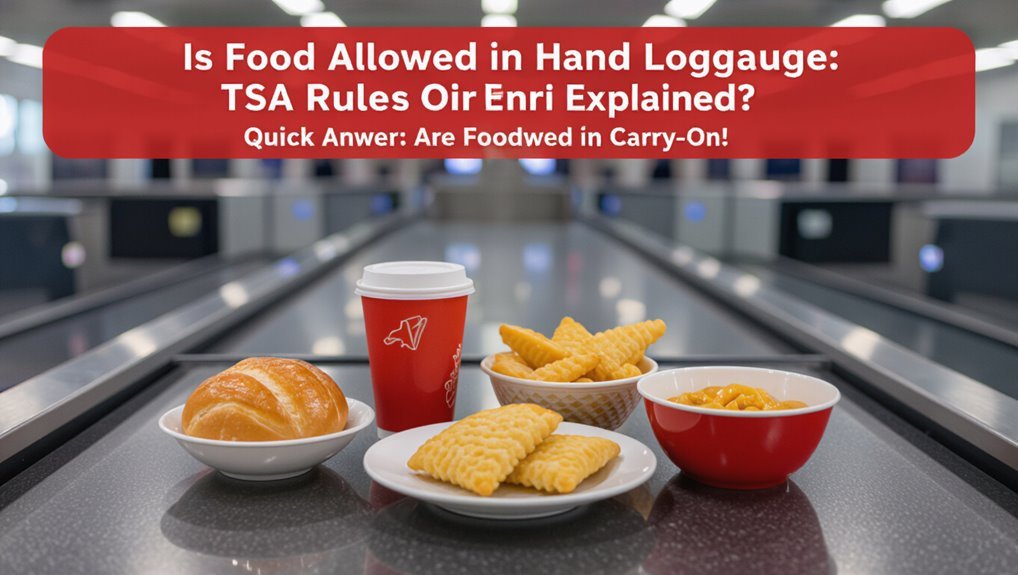
If you’re wondering whether you can bring food in your carry-on, the short answer is yes — most solid foods are allowed, but rules vary for liquids, gels, and international flights.
You can pack sandwiches, fruit, and snacks.
Pack liquids and gels under 3.4 ounces (100 ml) in a clear quart bag.
Declare unusual items and check destination rules to avoid surprises.
Who This Guide Is For
This guide is for you if you need to pack specific foods for medical, religious, or allergy reasons and want to avoid surprises at security.
It’s also for parents and caregivers who need tips on transporting snacks, baby food, or meals for kids.
You’ll find clear, practical advice to help keep those items safe and compliant on your trip.
Travelers With Dietary Restrictions
Managing food allergies, religious diets, or medical restrictions can make packing snacks feel like a high-stakes task—are you prepared to navigate security rules and cross-border limits?
You’ll want documentation for meds and special formulas, clearly labeled items, and TSA-friendly packaging.
Check airline and destination food regulations ahead, pack nonperishables when possible, and notify security if you need to carry liquids or refrigerated items for health reasons.
Parents And Caregivers
When you’re traveling with little ones or caring for infants, toddlers, or children with special feeding needs, packing snacks and meals takes extra planning to meet security rules, safety, and comfort.
You’ll need infant formula, breast milk, baby food, and special diets screened separately at security.
Bring labeled containers, ice packs (if allowed), clear documentation for medical diets, and a calm plan for feeding during delays.
How TSA Defines Solids, Liquids, Gels, and Aerosols
Understanding how the TSA classifies items as solids, liquids, gels, or aerosols matters because those categories determine what you can pack in your carry-on and how you must package it.
Solids are nonflowing items; liquids flow and take container shape; gels sit between solids and liquids, like spreads; aerosols are pressurized sprays.
Knowing these definitions helps you present items correctly at security.
How the 3-1-1 Rule Applies to Food
The TSA’s 3-1-1 rule limits the amount of liquids, gels, and aerosols you can carry through security, and that includes many common foods—think sauces, yogurts, and spreads—so you should know which items qualify and how to pack them. Pack containers ≤3.4 oz (100 ml) inside one clear quart bag; larger amounts go in checked bags.
| Item | Size Limit | Packing |
|---|---|---|
| Sauce | ≤3.4 oz | Quart bag |
| Yogurt | ≤3.4 oz | Quart bag |
| Spread | ≤3.4 oz | Quart bag |
Which Snacks Are Treated as Liquids or Gels by TSA
Because TSA treats any spreadable or pourable snack as a liquid or gel, you’ll need to follow the 3-1-1 rule for items like peanut butter, hummus, pudding, and creamy dips; solid snacks such as whole fruits, chips, nuts, and hard cheeses generally aren’t restricted.
You should pack spreads in containers 3.4 ounces (100 ml) or less, place them in a quart-sized bag, and declare them if asked.
Carrying Baby Food and Formula Through Security
When you’re traveling with infants, know that baby food and formula aren’t strictly bound by the 3.4-ounce liquid rule—TSA allows reasonable quantities for feeding.
You’ll still get screened separately and may need to explain any medical necessity or show supporting documents if requested.
Prepare containers where you can access them quickly to speed up the security check.
Baby Food Liquid Rule
If you’re traveling with an infant, you can bring breast milk, formula, and baby food through security in quantities greater than 100 ml.
However, you should tell the TSA officer at the checkpoint and separate these items for screening.
Pack needed portions, label containers if possible, and expect additional screening like X-ray or hand inspection.
Follow officer instructions to speed the process.
Medical Necessity Exemption
You can also bring baby food and formula through security under the medical necessity exemption when your child needs them for health reasons beyond routine feeding.
Carry only what’s necessary, label items clearly, and separate them from other belongings for inspection.
Inform security officers promptly and cooperate during screening so required checks are quick and straightforward, minimizing delays for you and your child.
Screening And Documentation
Because security officers need to verify liquids and gels, have your baby’s food and formula separated and ready for inspection before you reach the checkpoint. Present documentation like a child’s ID, formula packaging, or a pediatrician note if asked. Expect testing and possible opening. Stay calm and cooperative to speed screening.
| Item | Document | Tip |
|---|---|---|
| Formula | Package label | Keep accessible |
| Baby food | Receipt | Separate container |
| Breast milk | Note | Inform officer |
Bringing Breast Milk and Expressed Milk Through Screening
When traveling with breast milk or expressed milk, know that security checkpoints treat it differently from other liquids and allow larger quantities for infants’ needs.
You’ll present it separately for X-ray inspection; officers may visually inspect or test it.
Label containers, keep them accessible, and be prepared to explain infant need.
Solid documentation or cooler bags can speed screening and reduce delays.
Medication and Meal Supplements: Exceptions to 3-1-1
Although TSA’s 3-1-1 liquid rule limits most drinks and gels, it makes clear exceptions for medically necessary medications and meal supplements, letting you carry reasonable quantities beyond the usual 3.4-ounce limit.
Declare these items at screening, separate them from carry-ons if requested, and label prescriptions.
Keep documentation handy for liquid medications and powdered meal replacements to speed inspection and avoid delays.
Packaged Sauces, Dressings, and Dips: Allowed vs. Not
You can bring packaged sauces, dressings, and dips in your carry-on, but liquids and gels must follow the TSA 3-1-1 rule (containers 3.4 oz/100 ml or less, all in one clear quart bag).
Larger bottles are allowed in checked bags, so consider stashing family-size condiments there to avoid confiscation.
Check foreign or airline-specific rules before you pack, since limits can vary.
Carry-On Liquid Limits
Because airport security limits liquids in carry-on bags, you’ll need to check how packaged sauces, dressings, and dips fit the rules before packing them. You can bring containers 3.4 oz (100 ml) or less in a single quart-sized bag; larger jars usually need checked luggage. Review labels and consolidate servings to stay compliant.
| Item | Size | Action |
|---|---|---|
| Sauce | ≤3.4 oz | Carry |
| Dressing | >3.4 oz | Check |
Checked Bag Exceptions
If your sauces, dressings, or dips exceed the 3.4 oz (100 ml) carry-on limit, pack them in checked baggage instead and follow airline and country rules for packaged foodstuffs.
You can usually include commercially sealed jars and plastic bottles, but avoid undeclared perishable, homemade, or liquid-laden items that may be restricted or confiscated.
Label containers and secure lids to prevent leaks.
Jars of Peanut Butter and Nut Butters: Rules and Tips
When packing jars of peanut butter or other nut butters in your hand luggage, remember that they’re treated like other liquids and gels—so containers over 100 ml (3.4 oz) usually aren’t allowed through security unless you follow specific rules or declare them for medical/dietary reasons.
Pack single 100 ml containers in a clear resealable bag, label dietary exceptions, and be ready to remove or surrender oversized jars at the checkpoint.
Honey, Jam, and Spreads: When They Count as Liquids
Although they might seem solid, honey, jam, and similar spreads are usually treated as liquids or gels at security.
So you’ll need to follow the 100 ml/3.4 oz rule, pack them in a clear resealable bag, and be ready to declare any larger containers for medical or dietary needs.
If you need more, check airline policies, carry a doctor’s note, or ship bulky jars.
Soups, Stews, and Hot Meals in Carry-On Bags
Moving from spreads to more liquid meals, remember that soups, stews, and hot takeout count as liquids and fall under the same 100 ml/3.4 oz carry-on limit unless they’re packed in approved containers or needed for medical reasons.
You can bring solid hot meals if cool and contained; otherwise, place liquids in checked baggage or buy after security to avoid screening issues.
Fresh Fruit and Vegetables in Carry-On: TSA Rules and Tips
You can bring most fresh fruits and vegetables in your carry-on, but be ready for a few common restrictions: whole produce is usually fine, cut or sliced items may trigger extra screening, and large quantities could raise questions.
Pack produce to avoid bruising, declare items when asked, and check destination rules—some countries ban certain fresh goods even if TSA allows them.
Cheese and Dairy Products: Solid vs. Spreadable Nuance
When you pack cheese and other dairy in your carry-on, the key distinction is texture: solid, hard cheeses generally pass through security without issue, while soft, spreadable varieties can run into the 3.4-ounce (100 mL) liquid/gel limit and may need to be placed in checked luggage or declared for inspection.
Pack spreads in clear bags, label containers, and be ready for additional screening.
Eggs and Raw Foods: Screening and Smuggling Concerns
When you pack eggs or other raw foods in hand luggage, expect them to get extra scrutiny during screening and possibly require separate inspection.
You should know airlines and countries often restrict raw items to prevent contamination and pest introduction.
Watch for smuggling risk indicators like excessive quantities, poor packaging, or inconsistent declarations, since those can trigger further checks.
Eggs Screening Procedures
1 clear rule governs eggs in hand luggage: they face strict screening because they’re both fragile and potential biosecurity risks.
You’ll need to declare them at security if asked. TSA agents may X-ray, hand-inspect, or open containers to verify contents.
Pack eggs securely to prevent breakage and avoid undeclared commercial shipments. If agricultural concerns arise, officials may seize or deny transport.
Raw Food Restrictions
Because raw foods like eggs, unpasteurized dairy, and uncooked meats can carry pathogens and agricultural pests, you’ll face tighter screening and stricter rules than with packaged snacks.
- You’ll need to declare items at checkpoints and to customs.
- Some items may be confiscated or require inspection.
- International rules vary; check destination regulations.
- Pack safely to prevent leaks and cross-contamination.
Smuggling Risk Indicators
Rules about declaring and packing raw foods also tie into security and smuggling concerns, since eggs and other perishables can hide contraband or mask prohibited items. You should declare suspicious items, pack transparently, and expect inspection. Officers look for odor, concealment, unusual packaging, and excessive quantities.
| Indicator | Example | Action |
|---|---|---|
| Odor | Strong smell | Inspect |
| Concealment | Hollowed shell | Open |
| Quantity | Large lots | Question |
| Packaging | Vacuum seal | X-ray |
Packaged Snacks and Sealed Foods: What Speeds Screening
Packaged snacks and sealed foods usually speed your screening because they’re easy for security officers to inspect and rarely trigger questions about liquids or freshness.
You should pack commercially sealed items, labelable jars, and factory-wrapped treats for quick X-ray checks. Keep them accessible so you can remove them if asked.
- Individually wrapped bars
- Factory-sealed chips
- Vacuum-packed jerky
- Canned goods
Homemade Foods and Open Containers at Security
When you bring homemade foods or open containers through security, expect closer scrutiny and possible extra screening since officers can’t verify ingredients or liquid content at a glance.
You’ll be asked to separate items for X-ray, and officers may test or open containers.
Labeling helps, but be ready to discard or transfer items if they’re treated as liquids or raise security concerns.
Frozen Foods and Ice Packs: Allowed Methods and Limits
You can bring frozen foods and ice packs in your carry-on, but how you pack them matters: solid frozen items stay acceptable even if partially thawed, while any ice or gel that’s still liquid at security may count toward the 3.4-ounce (100 ml) liquid limit and be rejected.
- Pack solid blocks of frozen food separately
- Use frozen gel packs that remain solid
- Keep items well insulated
- Expect inspection if damp or leaking
Bringing Ice Cream and Frozen Desserts Through TSA
Although frozen desserts often pass through TSA without trouble, you should plan ahead because anything that’s melted or semi-liquid can be treated as a liquid and exceed the 3.4-ounce (100 ml) limit.
Keep ice cream solid during screening, use hard containers, and pack in insulated coolers with gel packs.
Declare unusual items to the officer and be ready to discard melted portions.
Carbonated Drinks, Sports Drinks, and Bottled Beverages
Curious about bringing soda, sports drinks, or bottled water through TSA? You can carry sealed non-alcoholic bottled drinks in carry-on, but liquids over 3.4 ounces must follow the 3-1-1 rule or be purchased past security.
Unopened large bottles bought after screening are fine. Consider pressure changes and leaks.
- Small soda in 3.4 oz container
- Sealed sports drink in clear bag
- Bottled water bought post-security
- Avoid half-open bottles
Alcoholic Beverages in Hand Luggage: Volume Limits
You can bring alcohol in your carry-on, but there are strict volume limits for liquids in security screening and rules on alcohol percentage.
Remember that duty-free bottles bought after security are usually allowed through, provided they’re sealed and accompanied by the receipt, while larger bottles in your carry-on may be restricted.
Check your airline and destination regulations before you pack to avoid surprises.
Carry-On Alcohol Limits
Most airlines and security agencies let you bring limited amounts of alcoholic beverages in your carry-on, but strict volume and alcohol-by-volume (ABV) rules apply.
You’ll need to follow container size limits, total liquid rules, and ABV thresholds; higher-proof spirits are often prohibited. Check airline and destination rules before packing.
- 100ml/3.4oz per container standard
- 1-quart clear bag rule
- ABV limits (typically ≤70%)
- Prohibited over 70%
Duty-Free Bottle Rules
Some travelers assume duty-free purchases slip past carry-on liquid limits, but airlines and security checkpoints still enforce strict volume and sealing rules for bottles bought after security. You can carry sealed duty-free bottles, often up to 1000 ml if packaged in tamper-evident bags with receipts. Check airline limits and transfer rules when connecting flights.
| Item | Rule |
|---|---|
| Bottle size | Up to 1000 ml |
| Seal | Tamper-evident bag |
| Receipt | Required |
| Transfers | May be restricted |
| Airline | Verify limits |
International Food Souvenirs and Customs Rules to Know
When bringing edible souvenirs home, check destination and transit-country rules first so you don’t get fined or have items confiscated; many places restrict fresh produce, meat, dairy, and plants, while packaged, commercially sealed goods are often allowed with declaration.
Know phytosanitary certificates, quarantine limits, and cash fines. Pack receipts and originals.
- jars of jam
- cured sausages
- dried fruit packs
- sealed spice tins
Which Foods Must Be Declared on Arrival Forms
You’ve checked rules for souvenirs and packed receipts, so next you’ll want to know exactly which foods require declaration on arrival forms.
Declare fresh produce, meats, dairy, eggs, seeds, nuts, live plants, soil, and animal products.
Declare fresh produce, meats, dairy, eggs, seeds, nuts, live plants, soil and any animal products.
Also report packaged items if labels are unclear or ingredients list animal origin.
When in doubt, declare it—failure to do so can lead to fines or confiscation.
USDA and CBP Restrictions That Go Beyond TSA Rules
Remember that the USDA and CBP can ban items even if TSA lets them through, so you need to check for prohibited agricultural items before you travel.
You’ll have to declare plant and animal products on your arrival form and be ready for inspection at the border.
Failure to declare can lead to fines or confiscation, so it’s best to know the rules for what you can bring.
Prohibited Agricultural Items
Because USDA and CBP enforce agricultural rules that go beyond TSA’s security-focused list, you’ll need to check their restrictions before packing snacks or produce in your carry-on.
They ban many items to prevent pests and diseases. Don’t assume TSA approval equals entry permission. Check declarations and local rules.
- Fresh fruit
- Soil or potted plants
- Meat products from certain countries
- Unprocessed grains and seeds
Plant And Animal Products
When you pack snacks or souvenirs that come from plants or animals, know that USDA and CBP rules can be stricter than TSA’s security limits; they focus on preventing pests and diseases and may bar items that look harmless at airport checkpoints.
You should avoid fresh fruits, unprocessed meats, certain cheeses, and soil‑containing goods unless explicitly allowed, and always check destination country restrictions before travel.
Declaration And Inspection Rules
If you’re bringing any plant- or animal‑derived items, you’ll also need to follow USDA and CBP declaration and inspection rules that go beyond TSA screening.
You must declare items, may face inspection, and could be fined or have goods seized if prohibited. Follow guidance to speed processing.
- Fill out the customs form accurately
- Declare fruits, meats, seeds
- Submit items for inspection
- Expect possible confiscation
Domestic vs. International Screening: How Airports Differ
Although security rules share the same goal of safety, domestic and international screening often look and feel different, and you’ll want to know what to expect at each.
Domestic checks usually focus on carry-on liquids and obvious food items; international screening adds customs, agricultural inspections, and stricter rules about fresh produce, meats, and dairy.
Always declare items and follow signage to avoid delays.
Security Officer Discretion: Items Likely to Be Questioned
You’ll often find that strong-smelling, liquid-heavy, or oddly packed foods draw extra attention at security.
Officers use factors like appearance, smell, packaging, and country-specific rules to decide whether to question or test an item.
Be ready to explain what the food is and how it’s packed to speed things up.
Questionable Food Items
Wondering which snacks might slow you down at security?
You’ll face questions for items that look suspicious, dense liquids, or scents that draw attention. Pack with care and be ready to separate items for inspection.
- Homemade sauces in jars
- Large blocks of cheese
- Gelatin desserts or puddings
- Vacuum-packed meats
Officer Discretion Factors
When officers screen your bag, they’ll flag items that look unusual, could conceal prohibited materials, or interfere with X‑ray images.
You should expect scrutiny for dense, irregularly shaped foods, large liquids or gels, wrapped or layered items, and containers hiding compartments.
Declare sauces, alcohol, and powdered foods when asked.
Cooperate, separate suspicious items for inspection, and pack clearly to reduce delays.
How to Pack Food to Minimize Inspection Time
If you pack smartly, you’ll speed up security checks and keep your food intact. Organize items so officers can quickly view them; separate fragile or odoriferous items; label homemade goods; keep knives or utensils accessible for declaration.
Pack smart: organize for quick inspection, separate fragile or pungent foods, label homemade items, and keep utensils ready to declare.
- Place snacks on top for easy access
- Use leakproof containers
- Tightly wrap soft foods
- Avoid mixing strong-smelling items with dry goods
Using Clear Bags and Containers for Faster Screening
Clear, transparent bags and containers let screeners see your food quickly, so pack snacks and liquids in them to speed up checks and reduce handling. You’ll pass through screening faster, avoid delays, and protect fragile items. Keep containers sealed and organized for easy removal.
| Item | Container | Tip |
|---|---|---|
| Chips | Clear bag | Compress |
| Fruit | Clear box | Dry |
| Yogurt | Clear cup | Seal |
| Nuts | Zip bag | Label |
Labeling and Receipts: Why Proof of Purchase Helps
Keep labels and receipts with your food so you can prove what you’re carrying to customs and security.
Showing a purchase receipt or clear product labeling makes duty assessment quicker and reduces the chance of your items being held.
That simple documentation also speeds up screening by confirming ingredients and origin.
Proof Strengthens Customs Claims
Because customs officers rely on verifiable details, having labels and receipts makes it far easier to prove what you’re carrying and why it’s allowed.
You should keep originals or clear photos, present them when asked, and explain origins succinctly.
- Pack original purchase receipts
- Keep product labels visible
- Store photos on your phone
- Group documents in one folder
Simplifies Duty Assessment
When you present labeled products and purchase receipts, customs can quickly determine if items are dutiable and calculate any owed charges without lengthy inspections.
You’ll speed processing, reduce subjective assessments, and avoid disputes.
Clear labels and itemized receipts let officers verify origin, value, and quantity fast, so you’ll likely face fewer delays and pay accurate duties rather than guesswork or penalties.
Eases Security Screening
1 clear receipt or a visible label can cut screening time considerably: security officers can confirm a food item’s commercial packaging and purchase details at a glance, so you won’t be pulled aside for extra checks.
You’ll breeze through checkpoints when you show proof. Keep receipts or labels accessible, organized, and intact.
- Pack receipts separately
- Label containers clearly
- Keep originals, not photos
- Present items on top
Transit and Layovers: Rules When Leaving the Sterile Area
If you leave the sterile area during a layover, you’ll need to follow the arrival country’s security and customs rules as well as any restrictions for returning through airport security—this can affect what food you can bring back into the secure zone.
You should check local import rules, declare perishables, pack opened or liquid items to meet re‑screening limits, and allow extra time for inspection.
Carry-On vs. Checked Baggage: When to Check Food Instead
Because security rules, perishability, and your itinerary all affect what you can carry on, you’ll want to decide whether to stash food in your carry-on or check it instead.
Consider weight limits, temperature needs, customs restrictions, and fragile packaging. Check food that’s bulky, perishable without refrigeration, likely to leak, or restricted at your destination.
- Large baked goods
- Raw meat or seafood
- Liquid sauces over 3.4 oz
- Fragile jars and bottles
TSA PreCheck and Global Entry: Do They Change Food Rules?
Wondering if TSA PreCheck or Global Entry makes bringing food through security easier?
They speed screening, letting you keep shoes and belts on, but liquid and gel food limits still apply. Solid snacks pass normally; gel-like items over 3.4 ounces must go in checked bags or be declared.
Global Entry only fast-tracks customs—doesn’t change TSA food rules.
Traveling With Infants and Toddlers: Extra Allowances
When you’re traveling with infants or toddlers, you’ll get extra allowances for baby food, milk, and breast milk that exceed normal liquid limits.
You’ll need to declare these items at security and may be asked to separate them for inspection.
Check airline policies too, since carriers can have their own rules about quantities and packaging.
Baby Food And Milk
If you’re traveling with an infant or toddler, airlines and security checkpoints usually let you carry reasonable amounts of baby food, formula, breast milk, and expressed milk in your hand luggage beyond the standard liquid limits.
You should declare these items at screening, separate them for inspection, and expect testing if needed.
- bottles of formula and prepared milk
- jars or squeezable purees
- ice packs or frozen packs
- ready-to-feed containers
Breast Milk Exemptions
Because security recognizes that infants need feeding, you’re allowed to carry breast milk in quantities greater than the usual liquid limits, provided you declare it at screening and separate it for inspection. Carry enough for the trip, keep it accessible, and expect additional checks. Communicate with agents if needed.
| Item | Tip |
|---|---|
| Declaration | Tell officers |
| Storage | Insulated bag |
| Labeling | Date/time |
| Quantity | Reasonable |
| Inspection | Separate bag |
Liquid Limits For Children
You can also carry more liquids for young children than the standard 100 ml limit, but you should know how those allowances work so screening goes smoothly.
You’ll declare extra baby formula, breast milk or juice, separate them for inspection, and expect officer questioning.
Pack measured portions and cooling aids.
- baby formula and breast milk
- juice and medicine
- separate containers for inspection
- measured, labeled portions
Traveling With Dietary Restrictions: Medical Letters and Notes
When travelling with dietary restrictions, bring concise medical letters or notes that clearly state your condition, required foods or supplements, and any necessary medications. Airlines and security staff rely on straightforward documentation to verify needs quickly.
Also include contact details for your healthcare provider, list medical devices or supplies, note any allergies, and pack items in labeled containers to streamline screening and avoid misunderstandings.
Bringing Pet Food and Treats Through Security
If you’re traveling with pet food or treats, check packaging rules—sealed, commercially labeled containers are usually easiest to get through screening.
Remember liquid and gel limits apply to things like wet food, sauces, or liquid supplements, so pack them in compliant sizes or in checked baggage.
Also verify international agricultural restrictions, since many countries ban meat, dairy, or plant-based items.
Pet Food Packaging Rules
Because security rules focus on safety and clear screening, packing pet food and treats needs some planning so you’re not delayed at the checkpoint.
You should label containers, keep solids separate from powders, and present items for inspection. Follow airline rules for international travel and declare unusual items.
- Use resealable bags or original packaging
- Portion into clear containers
- Label contents and brand
- Keep a small sample accessible
Liquid And Gel Limits
Although pet food often seems solid, many treats, wet foods, and supplements count as liquids or gels under security rules.
So you’ll need to follow the 3-1-1-style limits and present them separately for inspection.
Pack jars, pouches, and squeezables in a clear quart bag, keep containers 3.4 ounces (100 ml) or less, and declare larger medically necessary pet supplies at the checkpoint.
International Agricultural Restrictions
When you’re traveling internationally, know that many countries strictly control bringing pet food and treats across their borders, and you’ll usually need to declare them at customs.
You’ll face inspection, possible confiscation, fines, or quarantine. Check import rules beforehand and carry receipts or ingredient lists.
- Inspected by agriculture officers
- Meat or dairy often banned
- Fresh treats usually prohibited
- Packaged, labeled items preferred
Avoiding Common Confiscations at the Checkpoint
If you want to keep snacks and other items with you through security, know what typically gets flagged so you can pack or declare accordingly.
Avoid liquids over 3.4 ounces, gelatinous foods, and large blocks of cheese.
Separate powders and baby formula for inspection.
Pack meats and fresh produce in checked luggage when possible, or be ready to discard them if they’re prohibited.
What to Do If TSA Confiscates Your Food Item
Sometimes, even careful packing won’t prevent an agent from taking an item. You should stay calm, ask why it was confiscated, and request clarification on rules.
If you disagree, politely ask about filing a complaint or contacting TSA. Save receipts or photos for records.
- Remain courteous and calm
- Request the specific reason
- Ask about complaint procedures
- Document the item and loss
Tips for Carrying Hot Food Safely on a Plane
Carrying hot food on a plane can be done safely with a little planning, and you’ll want to focus on secure containers, temperature control, and spill prevention. Pack insulated sleeves, preheat briefly before boarding, and use leakproof seals. Let food cool slightly to avoid pressure issues. Inform security if needed and stow upright under the seat.
| Tip | Why it matters |
|---|---|
| Insulation | Keeps temp steady |
| Seal | Prevents spills |
| Cool slightly | Avoids pressure issues |
Best Container Types for Airline-Friendly Snacks
When packing snacks, choose leak-proof containers to keep sauces and wet foods from spilling into your bag.
You’ll also want lightweight reusable bags for chips, nuts, and sandwiches to save space and reduce waste.
Together, these options make your hand luggage cleaner and more organized.
Leak-Proof Containers
If you want snacks that survive airport security and the trip, pick containers that seal tightly, resist crushing, and meet the 100ml/3.4oz rules for liquids—think leak-proof silicone tubs, sturdy BPA-free plastic jars, and small screw-top glass bottles with silicone gaskets.
You’ll avoid spills, simplify inspections, and keep portions handy.
- Silicone snap-top tubs
- Screw-top glass vials
- BPA-free plastic jars
- Locking snap containers
Lightweight Reusable Bags
Leak-proof containers are great for liquids and fragile snacks, but lightweight reusable bags give you flexibility and save space for dry items like nuts, granola, and fruit slices.
You can compress bags to maximize carry-on room, label them for security screening, and choose breathable or zip-top styles depending on freshness needs.
Wash and reuse them to cut waste and stay organized on travel days.
How to Pack Perishables for a Long Journey
Packing perishables for a long journey demands planning and the right gear to keep food safe and fresh. You’ll choose insulated containers, frozen gel packs, and sturdy packaging.
Packing perishables for long trips means planning, insulated containers, frozen gel packs, and sturdy packaging to stay fresh.
Keep temperatures steady and check TSA and airline rules for liquids or gels.
- Insulated lunchbox with seal
- Frozen gel packs wrapped in cloth
- Vacuum-sealed portions
- Hard container for fragile items
Managing Food Odors and Cleanliness in Carry-On Bags
When you carry food on a flight, controlling odors and keeping your bag clean prevents embarrassment and keeps fellow passengers comfortable.
Seal strong-smelling items in airtight containers or double-bag them, and use odor-absorbing packets.
Pack spills in leakproof pouches and include disposable wipes or a small sanitizing spray.
Empty waste into airport bins before boarding to avoid lingering smells and messes.
Bringing Spices and Cultural Foods Through Customs: What to Declare
Controlling odors and spills is only part of traveling with food—you also need to know how to handle spices and cultural dishes at customs.
You should declare fresh produce, meats, dairy, and large quantities of spices; packaged, shelf-stable spices may be allowed but check rules. Be honest to avoid fines or confiscation.
- fresh herbs or bulbs
- cured meats and sausages
- homemade sauces or pastes
- kilo-sized spice bags
Airport Lounge and Onboard Food Policies to Expect
Although policies vary by airline and lounge, you can usually expect restrictions on strong odors, open containers, and messy homemade dishes—so grab sealed snacks or neatly packed meals that won’t spill or bother others.
In lounges you’ll find offered food, but you can eat your own if it follows rules.
Onboard, avoid odorous foods and use spill-proof containers to respect fellow passengers.
Airline Rules That Can Be Stricter Than TSA Guidance
Remember that your airline can enforce rules stricter than TSA, so check their policies before packing.
You’ll need to watch carry-on size limits, any bans on perishable items, and airline-specific rules about what foods are allowed onboard.
Don’t assume TSA approval covers everything—follow both sets of rules to avoid surprises.
Carry-On Size Limits
Because airlines set their own carry-on dimensions, you can meet TSA rules and still get dinged at the gate if your bag’s too big.
Check your airline’s size and weight limits before packing food. Measure packed containers and consider collapsible bags. Gate fees may apply for oversized items.
- Small hard cooler
- Soft-sided tote
- Collapsible silicone containers
- Airline-approved rollaboard
Perishable Item Restrictions
If you packed a small cooler or soft-sided tote for snacks, double-check your airline’s rules before heading to the gate—perishable items often face restrictions beyond TSA’s liquid and solid-food guidance.
Airlines may limit coolers, require ice packs to be frozen, prohibit raw meats or prepared meals on certain routes, or enforce temperature-control requirements.
Verify allowances to avoid disposal or gate-checking.
Airline-Specific Food Policies
While TSA sets the baseline for what you can bring through security, individual airlines often impose stricter rules about food, coolers, and temperature-sensitive items—so check your carrier’s policy before you pack.
You’ll need to follow airline size, packaging, and perishability rules, and declare items if required.
Examples:
- No ice packs or gel packs on some carriers
- Limited coolers or soft-sided bags
- Restrictions on hot food on domestic flights
- Canned alcohol quantity limits
Packing a Travel Snack Kit: Sample Checklist
A compact snack kit keeps hunger and airport stress at bay, so pack a mix of protein, carbs, and something fresh to stay satisfied between flights.
Include: sealed nuts or trail mix, protein bars, whole-grain crackers, a piece of fruit (apple/banana), individually wrapped cheese or hummus cups (if allowed), instant coffee or tea bags, and a reusable utensil and napkin.
Smart Buys at the Airport to Replace Confiscated Items
When airport security takes your homemade salad dressing or oversized shampoo, you can replace them quickly without breaking your schedule by picking up compact, travel-ready versions in terminals.
Head to newsstands or convenience shops for sealed, TSA-compliant items that fit your itinerary.
- Mini toiletry sets
- Single-serve condiment packets
- Pre-packaged snack tubs
- Travel-sized sunscreen and lotion
Real Traveler Scenarios Illustrating TSA Decisions
Shopping the terminal for replacements can only go so far; sometimes you’ll still face a TSA decision that affects your plans.
You’ll read brief officer explanations when jars, gels, or liquids exceed limits. You might be told to discard home-baked goods or reroute sauces to checked bags.
Knowing typical outcomes helps you decide: accept disposal, request screening, or adjust travel plans quickly.
Where to Check Official TSA and CBP Rules
Wondering where to find the official guidance? You’ll check primary sources for definitive answers and updates.
Visit agency sites, use search tools, and confirm policies before travel.
- TSA official website: security and carry-on rules
- CBP website: customs and import limits
- TSA contact center or social channels for clarifications
- CBP Traveler Redress Inquiry Program and FAQs
Quick Reference Cheat Sheet for Food in Hand Luggage
Now that you know where to find official TSA and CBP guidance, keep a quick reference cheat sheet handy to speed up packing and security checks.
List permitted solids, gels/creams limited to 3.4 oz (100 ml), declare powders and larger food items, note liquid foods like soups require screening, and record country-specific restrictions.
Keep receipts and labels accessible for faster inspection.
Frequently Asked Questions
Can I Bring Homemade Baby Formula in Powdered Form Internationally?
Yes — you can bring powdered homemade baby formula internationally, but you’ll need to check airline and destination rules, declare it at security if required, and pack it in labeled, sealed containers to avoid delays or confiscation.
Are Fermented Foods Like Kimchi Allowed in Carry-On?
Yes — you can usually bring kimchi in carry-on, but you’ll need to follow liquid/gel limits for brined kimchi (3.4 oz/100 mL containers), declare it if required, and expect extra inspection or restrictions flying internationally.
Do Organic Labels Affect Customs Declaration Requirements?
No, organic labels don’t change declaration rules; you’ve still got to declare agricultural items and controlled foods at customs, and inspectors will decide admissibility based on country regulations, not organic certification or sticker claims.
Can I Bring Bakery Items With Creamy Fillings on International Flights?
You can bring bakery items with creamy fillings, but you’ll face strict rules: many countries restrict perishable dairy, customs may seize them, and airlines or security can refuse entry—declare them and check destination-specific regulations first.
How Do TSA Rules Apply to Alcohol-Based Food Extracts?
TSA treats alcohol-based food extracts as liquids. You’ll need containers 3.4 ounces (100 mL) or less in a single quart-sized bag for carry-on; larger bottles must go in checked baggage. Declare if required.
Conclusion
You can bring most solid foods in your carry-on, but remember the 3-1-1 rule for any sauces, spreads, or items that’re liquid-like. Check rules for baby food, gels, and international limits before you travel, and be ready to dispose of or buy replacements if TSA flags something. When in doubt, pack questionable items in checked luggage or buy them after screening. Always consult TSA/CBP for the latest guidance.