Is Tsa Part of Homeland Security: Explained Simply
Yes. The Transportation Security Administration (TSA) is part of the Department of Homeland Security (DHS), and it runs airport and other transportation security programs. You’ll find TSA organized within DHS but operating as its own agency focused on screening passengers, managing credentials like TSA PreCheck, and coordinating threat response. It was created after 9/11 to centralize aviation security and prevent attacks, and if you keep going you’ll see how it differs from agencies like CBP, ICE, and FEMA.
Is the TSA Part of the Department of Homeland Security?
Yes — the Transportation Security Administration (TSA) is part of the Department of Homeland Security (DHS).
You rely on TSA to secure travelers, airports, and baggage nationwide. It enforces federal aviation security rules, screens passengers and cargo, and develops threat responses.
When you pass through security, TSA staff and systems work under DHS authority to protect the aviation system and public safety.
Where the TSA Sits Inside Homeland Security
Although TSA operates under the Department of Homeland Security, it functions as a distinct agency within DHS’s federal structure, reporting to the DHS Secretary through its own Administrator and leadership team.
You’ll see its role via:
- Airport security screening operations
- Federal regulations for transportation
- Coordination with other DHS components
- National staffing and training programs
- Incident response and threat assessments
Why the TSA Was Created After 9/11
After 9/11, you saw the federal government step in to coordinate a stronger response to terrorist attacks.
That led to an aviation security overhaul focused on preventing hijackings and other threats.
You also got standardized screening procedures at airports so security would be consistent nationwide.
Federal Response To Attacks
When the September 11 attacks exposed glaring gaps in aviation security, the federal government moved quickly to centralize and strengthen protections for travelers and critical infrastructure; you saw agencies restructure, laws change, and resources shift to prevent repeats.
You witnessed:
- rapid federal coordination
- new security funding
- intelligence sharing mandates
- standardized protocols
- expanded oversight to improve resilience and response
Aviation Security Overhaul
Because the attacks revealed that airport screening, intelligence sharing, and regulatory oversight were fragmented and inconsistent, the federal government moved to overhaul aviation security by creating the Transportation Security Administration.
This new agency centralized screening protocols, tightened passenger and baggage checks, and set uniform standards across all U.S. airports to restore confidence and reduce vulnerabilities.
You’ll see expanded federal oversight, coordinated threat response, and new security roles that directly protect travelers.
Standardized Screening Procedures
Though airport screening had varied widely before 9/11, the federal government moved quickly to create the TSA so you’d face consistent, standardized procedures at every checkpoint.
You now know what to expect and why processes exist:
- ID and boarding pass checks
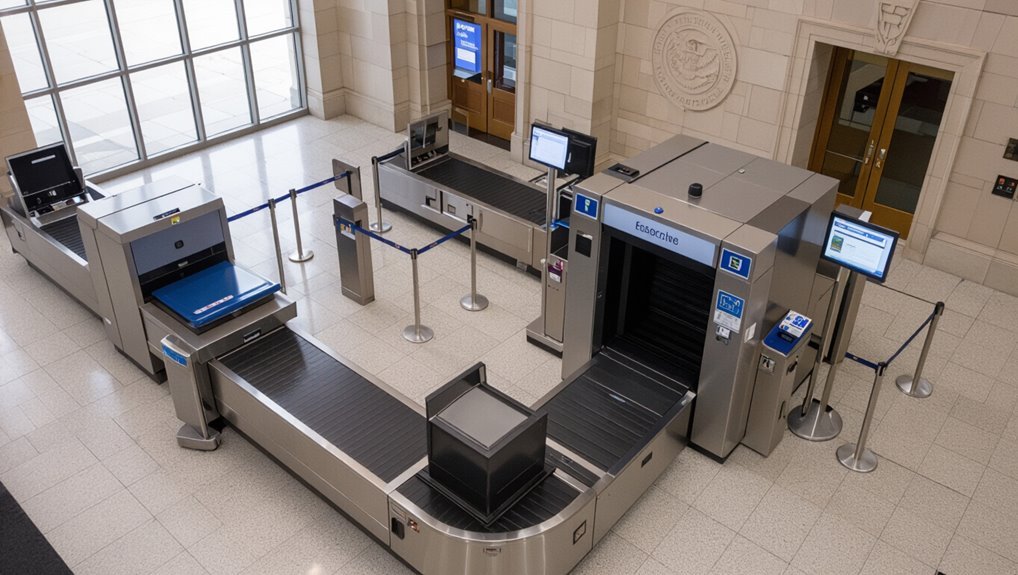
- Carry-on X-rays
- Metal detectors and body scanners
- Random and targeted pat-downs
- Liquid and item restrictions
TSA Core Responsibilities and Programs
Understand TSA’s core responsibilities as the agency that secures the nation’s transportation systems, focusing primarily on aviation security but also covering rail, transit, highways, and pipelines.
You’ll rely on screening, intelligence-driven risk assessments, credentialing programs like TWIC and TSA PreCheck, explosive detection technologies, and security directives for operators.
You’ll also engage in training, compliance inspections, and incident response coordination.
How TSA Differs From Other DHS Agencies (CBP, ICE, FEMA)
While TSA focuses on preventing threats to transportation—especially aviation—other DHS agencies have distinct, narrower missions:
- CBP secures land, air, and sea borders and inspects travelers and cargo.
- ICE enforces immigration laws, investigates transnational crime.
- FEMA coordinates disaster response and recovery.
- TSA concentrates on passenger, baggage screening and security protocols.
Roles overlap, but each agency has its own authorities and daily duties.
Who Oversees the TSA (Within DHS)
Because the Transportation Security Administration is a component of the Department of Homeland Security, it’s overseen ultimately by the DHS Secretary, who sets broad policy and coordinates with the White House and Congress.
You’ll also see day-to-day leadership from the TSA Administrator, who implements DHS guidance, manages operations, and reports up the chain.
Congressional oversight and DHS internal reviews provide accountability and direction.
TSA’s Relationship With Federal, State, and Local Partners
You’ll see how TSA coordinates with other federal agencies to align security standards and operations.
You’ll also learn how it integrates with state and local authorities at airports and critical infrastructure.
Finally, you’ll get a look at the information-sharing protocols that keep partners informed and responsive.
Federal Agency Coordination
Although TSA operates under the Department of Homeland Security, it works closely with a network of federal, state, and local partners to secure transportation systems across the country.
You’ll see coordination through:
- Intelligence sharing with FBI and DHS components
- Joint threat assessments with federal agencies
- Interoperable communication systems
- Combined training exercises
- Coordinated incident response protocols to streamline actions during crises
State And Local Integration
When local airports, transit agencies, and law enforcement partners need support, TSA teams step in to share expertise, resources, and real‑time intelligence to bolster everyday security and responses to threats.
You’ll see TSA advising on screening, providing training, deploying specialists for events, and coordinating exercises with state and local officials so you get consistent, practical security practices tailored to community needs.
Information Sharing Protocols
Because timely intelligence can stop threats before they reach you, TSA maintains formal information-sharing protocols with federal, state, and local partners that define what data is shared, how it’s protected, and who’s authorized to act on it.
You’ll see clear rules and rapid alerts, so you and responders act quickly:
- Real-time threat alerts
- Secure data exchanges
- Role-based access controls
- Joint training updates
- Privacy safeguards
What TSA Authority Means for Travelers at Airports
If you’re traveling through a U.S. airport, TSA authority shapes what you can carry, how you pass through security, and the procedures officers can use to screen you and your property.
You’ll follow screening rules, present ID, cooperate with inspections, and accept pat-downs or enhanced screening when necessary.
TSA sets limits on liquids, prohibited items, and carry-on sizes to keep flights secure.
Common Myths About the TSA and DHS
Misconceptions about the TSA and the Department of Homeland Security can lead you to overestimate or misunderstand their powers and responsibilities.
You should know common myths so you can travel informed:
- TSA is a police force with arrest power
- TSA sets immigration policy
- DHS directly runs every airport
- TSA controls all federal security spending
- Screening rules are arbitrary and unenforceable
How TSA Policies Are Made and Changed
You’ll see TSA policies usually start with formal rulemaking and public notice, where the agency proposes changes and invites comments.
Congress and DHS oversight can push or pull those rules through hearings, funding decisions, and directives.
Understanding both processes helps you follow why and how screening procedures evolve.
Rulemaking And Notice
When TSA changes a screening rule or introduces a new procedure, it follows formal notice-and-comment rulemaking under federal administrative law so you can see proposed actions, submit feedback, and understand the agency’s rationale before a rule becomes final.
You can track and influence changes by:
- Reading proposed rules in the Federal Register
- Submitting public comments online
- Reviewing agency responses to comments
- Watching agency timelines and deadlines
- Checking final rule explanations
Congressional And DHS Oversight
Because Congress and the Department of Homeland Security share authority over TSA, they play direct roles in shaping and changing screening policies: Congress sets broad statutory mandates and funding, holds hearings and passes laws that constrain TSA’s options, and DHS provides executive oversight, policy guidance, and compliance checks through its leadership and internal review offices.
You’ll see policy shifts after hearings, budget changes, or DHS directives; you can petition lawmakers or DHS for change.
Recent TSA Reforms and Accountability
Although often criticized for inconsistent practices, the TSA has rolled out several targeted reforms to boost performance and accountability across checkpoints.
You’ll see clearer metrics, improved training, and complaint channels.
Reforms include:
- standardized performance measures
- enhanced officer training programs
- passenger feedback systems
- independent audits and reporting
- disciplinary and incentive structures
These steps aim to make oversight more transparent and effective.
Airport Screening: What to Expect and Your Rights
Curious what happens at the checkpoint and what rights you retain?
You’ll remove shoes, belts, and electronics, follow instructions, and pass through screening machines.
You can request private screening or a pat-down and decline certain searches, though refusals may delay travel or bar boarding.
Carry ID, declare restricted items, and remain calm—knowing your rights helps the process go smoothly.
Frequently Asked Questions
Does TSA Handle Security on Public Transportation Systems Beyond Airports?
Yes — TSA handles some public transportation security beyond airports. You’ll find TSA primarily focused on aviation, but it provides risk assessments, guidelines, and limited screening support for other transit systems, working with local agencies and operators.
Can TSA Seize Personal Belongings Permanently?
No, TSA can’t permanently seize most personal belongings; they’ll confiscate prohibited items at checkpoints, but you can often reclaim valuables through procedures or appeals, and law enforcement — not TSA — handles permanent seizures under legal authority.
How Does TSA Handle Passenger Medical or Disability Accommodations?
TSA accommodates medical and disability needs: you can request screening modifications, private or pat-down screening, and medical device handling; you’ll notify officers or airlines in advance, provide documentation if needed, and they’ll try to minimize discomfort.
Are TSA Agents Allowed to Use Force During Screenings?
Yes—they can use reasonable force if you resist, pose a safety threat, or try to bypass screening; they’ll try de-escalation first, follow policies, and you can report excessive force or request a supervisor immediately.
Can Travelers Appeal TSA Screening Decisions or Penalties?
Yes — you can appeal TSA screening decisions or penalties by filing a complaint with the TSA Contact Center, requesting a review, or pursuing judicial review for certain enforcement actions; follow TSA’s complaint procedures and keep documentation handy.
Conclusion
Yes — the TSA is part of the Department of Homeland Security, created after 9/11 to secure travel and transportation. It sits within DHS alongside agencies like CBP, ICE, and FEMA but focuses on screening passengers, baggage, and cargo. TSA’s core programs include airport security, trusted traveler programs, and vetting. Policies evolve through DHS rulemaking, public input, and congressional oversight. Recent reforms aim to improve accountability, transparency, and passenger experience while you travel.