Can You Bring Water on a Plane: Tsa Rules Explained
Yes — you can bring water on a plane, but carry-on bottles must follow TSA’s 3-1-1 rule: containers 3.4 ounces (100 ml) or less in a single quart-sized bag, or buy sealed water after security. Medically necessary liquids and baby formula are exceptions if declared. Empty bottles are fine to bring through and refill past the checkpoint. Checked luggage can hold larger quantities if packed to prevent leaks. Keep reading to get tips on screening, refills, and international limits.
Quick Answer: Can You Bring Water Through TSA?
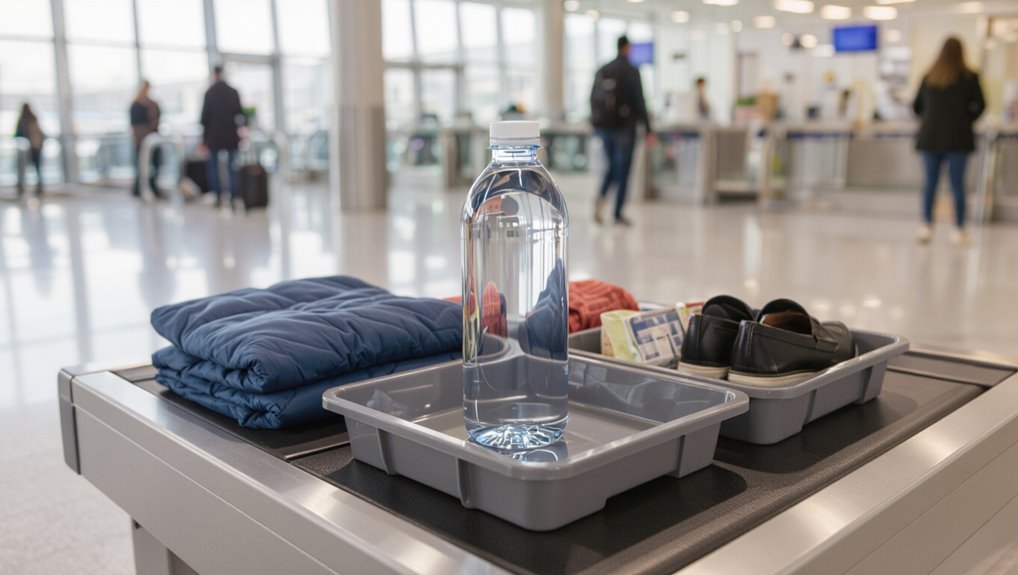
If you want to bring filled containers, they must follow the 3-1-1 liquids rule or be purchased past security.
Expect random screening and possible disposal if agents suspect a security risk.
Always check current airport rules before travel to avoid surprises.
TSA 3-1-1 Liquids Rule: The Short Version
You can bring liquids in carry-on bags only in containers of 3.4 ounces (100 ml) or less, all fitting inside a single clear quart-sized bag.
There are exceptions for medications, baby formula, and special dietary needs, so have documentation or tell the screener if you need more.
Before you pack, think about tips like empty reusable bottles to refill past security or buy bottled water after screening.
Carry-On Limits
When packing liquids, follow the TSA 3-1-1 rule: place each liquid, gel, or aerosol in containers no larger than 3.4 ounces (100 ml).
Fit those containers into a single clear quart-sized bag, and limit yourself to one bag per passenger.
Pack that bag where it’s easy to remove for screening.
Keep larger bottles in checked baggage or discard them before security to avoid delays.
Exceptions And Tips
Although the 3-1-1 rule covers most situations, there are useful exceptions and practical tips you should know so security checks go smoothly.
You can bring medically necessary liquids and breast milk in larger quantities—declare them at screening.
Empty bottles are allowed through security to refill later.
Consider a reusable bottle, check airline policies, and arrive early to avoid delays when items require inspection.
What Counts as a “Liquid” Under TSA?
Because the TSA’s rules hinge on consistency as much as volume, it’s important to know what counts as a “liquid” before packing your carry-on.
Liquids include water, drinks, soups, syrups, lotions, perfumes, aerosol sprays, gels and pastes like toothpaste, and any substance that flows or spreads.
Solid foods aren’t liquids unless they melt or become pourable under normal conditions.
Which Bottled Waters Are Allowed Through Security?
Now that you know what counts as a liquid, you’ll want to understand how bottled water fits into the TSA rules.
You can bring small, carry-on-sized bottles (3.4 ounces/100 ml or less) inside your quart bag.
Larger unopened bottles generally aren’t allowed through security unless purchased after screening or exempted for medical/infant needs—be prepared to declare such exceptions and show documentation.
How Sealed Store-Bought Bottles Are Screened
When you bring a sealed, store-bought bottle to the security checkpoint, TSA officers will usually let it pass through screening but may inspect it further if its contents or packaging raise doubts. You’ll place it on the X-ray belt; officers might ask to swab or X-ray separately. Cooperate, show receipt if needed, and replace it after screening.
| Action | Result |
|---|---|
| X-ray | Pass or flagged |
| Swab | Further check |
| Receipt shown | Faster clearance |
Why Empty Water Bottles Are Treated Differently
You’ll notice empty bottles get different treatment because security screening procedures focus on liquids that could be hazardous.
After screening, most airports let you refill empty bottles past the checkpoint, but specific post-screening water rules can vary.
Empty bottle advantages include faster screening and the flexibility to carry more water once you pass through.
Security Screening Procedures
Although liquid restrictions are strict, empty water bottles move through security more smoothly because they’re not considered a threat; screening officers treat them as benign items since they can’t contain prohibited liquids.
So you can usually bring them through checkpoints empty and refill them afterward.
Place bottles in bins or on the conveyor for X‑ray inspection, answer officer questions, and avoid packed or sealed containers.
Post-Screening Water Rules
Because empty bottles pose no liquid threat, security officers treat them differently after screening, letting you carry them through checkpoints and refill them beyond the security line.
You should remove caps when asked and place bottles in bins if instructed.
Once cleared, you can keep the empty container; officials may inspect it again if suspicious, but generally you’ll pass with it intact.
Empty Bottle Advantages
Why are empty bottles handled differently at security?
You’re allowed empty bottles because they pose no liquid-threat risk, so TSA lets you carry them through checkpoints. You can refill them after screening at water fountains or onboard.
Keep bottles empty until you pass screening, remove any caps if officers ask, and be ready for quick inspection to avoid delays and smoother boarding.
Preparing Refillable Bottles Before Security
Before you reach the security line, empty and disassemble your refillable bottle so it’s ready for inspection; remove filters, caps, and any attachments, and stow them where an officer can easily see them.
Wipe moisture, pack parts in a clear bag, and place the bottle in an accessible spot of your carry-on.
Be prepared to show components quickly when asked.
How to Carry Refillable Bottles on Flights
When packing your refillable bottle for a flight, keep it accessible, empty for security, and protected from leaks so you can grab it for inspection and avoid spills in your bag.
Stow it in an outer pocket or carry-on side sleeve, use a leakproof cap or sleeve, and separate it from electronics and documents.
Refill after screening at airport water stations.
How Much Water You Can Bring in a Carry-On Bottle
Now that you know to keep refillable bottles empty through security and refill them afterward, you’ll want to be clear on how much liquid you can actually carry in your bottle once it’s filled.
For carry-on, the TSA follows the 3.4-ounce (100 milliliter) rule for liquids in quart-sized bags.
Larger filled bottles go in checked baggage or must be consumed before screening.
What Happens if Your Water Exceeds 3.4 Oz?
If your filled bottle tops the 3.4-ounce (100 ml) limit, security officers will ask you to either discard the water, drink it before screening, or place the bottle in checked baggage if you have time and access to check your bag.
You’ll follow their direction, avoid argument, and plan next steps.
- Keep calm and comply
- Drink it quickly if thirsty
- Dispose responsibly
- Move on to screening
Rules for Bringing Water in Checked Bags
If you plan to pack water in checked luggage, know the basic rules and limits so you won’t run into problems at the baggage check.
You’ll want to seal bottles tightly, use leak-proof containers or double-bag them, and cushion them to prevent breakage.
Also consider airline and hazardous-materials rules for large quantities to avoid confiscation or fees.
Water In Checked Luggage
Although you can usually pack water in checked baggage without the liquid restrictions that apply to carry-on bags, airlines and international rules still set limits on quantity, container type, and packaging for safety and leak prevention.
You should check airline policies, declare large containers if required, and secure bottles to avoid spills.
Consider:
- Bottle material (rigid vs. flexible)
- Size limits per airline
- Customs/import restrictions
- Security declarations
Packaging And Leak Prevention
Pack water carefully to prevent spills and protect your belongings: use sturdy, leakproof containers, place bottles upright in sealed plastic bags or a hard-sided toiletry case, and pad them with clothing or bubble wrap to absorb shocks. Check caps, avoid overfilling, and label fragile items. Stay aware of pressure changes and airline rules.
| Container | Placement | Padding |
|---|---|---|
| Plastic bottle | Upright | Clothing |
| Metal flask | Center | Bubble wrap |
Storing Water in Checked Luggage Safely
When you plan to bring water in checked luggage, choose sturdy, leakproof containers and protect them from pressure changes and rough handling.
Pack bottles upright, cushion with clothing, seal caps with tape, and place in a plastic bag to contain spills. Follow airline weight limits and declare large volumes if required.
- Use hard-sided bottles
- Double-bag liquids
- Pad around edges
- Monitor total weight
Bringing Ice or Frozen Water Through Security
After securing water in checked bags, you might wonder how ice or frozen bottles fare at security checkpoints.
Solid ice and frozen water are allowed through TSA screening, but if they melt and become liquid, they’ll count toward your 3.4-ounce carry-on limit.
Label frozen items clearly, keep them fully solid when screening, and be prepared for officers to inspect or deny melted contents.
Can You Bring Carbonated Water or Soda?
You can usually bring sealed carbonated water or soda in your carry-on as long as each bottle fits the liquid limits (typically 100 ml/3.4 oz in many countries).
Be aware that open containers aren’t allowed through security and that some airlines or countries have different rules or exceptions for beverages.
Check both your airline’s policy and the departure country’s regulations before you pack.
Carry-On Liquid Limits
Although security rules can feel strict, you can bring carbonated water or soda in your carry-on only if each container fits the TSA 3-1-1 rule: 3.4 ounces (100 milliliters) or less per bottle, all containers in a single clear quart-sized bag, and one bag per passenger.
You should:
- Use small bottles or cans.
- Pack them visibly.
- Limit quantity to fit the bag.
- Remove the bag for screening.
Open vs Sealed Containers
Those carry-on limits cover sealed bottles, but rules change when containers are open—especially for carbonated drinks that can fizz or leak.
You can bring carbonated water or soda in carry-on only if it fits the 3.4-ounce rule when in your bag; larger open containers are prohibited through security.
Once past screening, you may purchase or transport open beverages onboard per airline policy.
International And Airline Exceptions
When flying internationally, check both the departure and arrival countries’ security rules plus your airline’s policy, since some nations and carriers allow slightly different allowances for carbonated drinks.
You can often bring sealed soda in checked baggage, but carry-on limits vary and opened cans may be restricted after screening.
- Confirm local liquid limits
- Prefer factory-sealed bottles
- Expect random checks
- Buy after security when unsure
Bringing Alcohol and Beverage Restrictions
If you plan to bring alcoholic drinks on a flight, know that rules vary by type, quantity, and whether the alcohol is in carry-on or checked luggage.
You can carry small amounts of alcohol in carry-on within the TSA liquid limit if under 70% ABV; stronger spirits often go only in checked bags and may face airline or customs limits.
Which Travel-Sized Water Containers Comply?
Although airport security limits liquids, you can bring travel-sized water that meets the TSA’s 3-1-1 rule: containers of 3.4 ounces (100 milliliters) or less, all fitting in a single quart-size, clear, resealable bag.
You should pick clear, labeled bottles and pack them accessibly to speed screening.
- Small plastic bottles (≤3.4 oz)
- Silicone collapsible flasks
- Travel-sized aluminum bottles
- Sample spray misters
Best Travel Bottles Designed for Air Travel
When choosing a travel bottle for flying, you’ll want TSA-friendly sizes that fit carry-on rules.
Pick leakproof designs so you won’t end up with soaked gear, and favor durable, lightweight materials that stand up to frequent handling.
I’ll highlight top options that balance size, seal, and sturdiness for air travel.
TSA-Friendly Bottle Sizes
Pick bottles that match TSA rules so you won’t lose time or liquids at security.
Choose clear, 3.4-ounce (100 ml) or smaller bottles for your quart bag and label liquids to avoid questions.
Consider compact refillable bottles for post-screening water.
- 3.4 oz (100 ml) travel bottles
- Clear plastic or silicone
- Compact reusable options
- Clearly labeled contents
Leakproof Travel Designs
A reliable leakproof travel bottle saves you from soggy bags and lost toiletries, so look for models with secure locking caps, silicone seals, and sturdy materials that resist pressure changes on flights.
Choose bottles with one-handed operation, clear volume markings, and removable tops for easy cleaning.
Test seals before packing and carry liquids in a dedicated, sealed pouch to prevent surprises.
Durable Lightweight Materials
Although weight matters less on a single commute, you’ll feel the difference on multi-leg trips, so choose travel bottles made from durable lightweight materials like high-grade aluminum, Tritan plastics, or silicone blends that resist dents, cracks, and pressure changes.
- You’ll avoid leaks and survive drops.
- Materials stay odor- and stain-resistant.
- They pack easily into carry-ons.
- They handle temperature shifts without warping.
Packing Hydration Packs and Bladder Reservoirs
If you’re planning to bring a hydration pack or bladder reservoir on a plane, know the rules and prep it correctly to avoid delays:
empty bladder before security, detach and pack the hose or mouthpiece separately, and carry as part of your carry-on.
If you want to refill after screening, ask gate agents about water refill stations.
Label cleaning supplies and secure caps to prevent leaks.
How to Transport Water for Pets When Flying
When you fly with a pet, plan how you’ll provide water during travel and after arrival to keep them comfortable and healthy.
Carry a collapsible bowl, pre-fill a sealed bottle for security checks, and offer small amounts regularly.
After landing, hydrate gradually to avoid stomach upset.
- Collapsible bowl
- Sealed, pre-filled bottle
- Small, frequent sips
- Post-flight hydration check
Exceptions: Medications and Medical Liquids?
Because medical needs come first, you’re allowed to bring essential medications and medical liquids through security even if they exceed the usual limits.
However, you should prepare documentation and declare them at the checkpoint.
Be ready with documentation and declare any essential medications at security to ensure smooth screening.
Bring only what’s necessary, pack items accessibly, label prescriptions, and carry supporting notes.
Security may screen these separately; remain cooperative and allow extra inspection to expedite processing.
How to Declare Medically Necessary Liquids at Security
When you reach the security line, tell the officer you have medically necessary liquids and keep them accessible.
Present any prescription or doctor’s note promptly so screening moves smoothly.
Use clear, separate containers or a labeled bag to make inspection quick and simple.
Declare At The Line
1 simple step makes security smoother: tell the TSA officer at the ID checkpoint that you have medically necessary liquids before they ask.
Stay calm, point them out, and follow directions.
- Say what the liquid is and why you need it
- Indicate quantity clearly
- Keep containers accessible
- Follow officer instructions for screening
Present Documentation Promptly
Need proof? When you reach security, show any medical letters, prescriptions, or documentation right away to the TSA officer.
Keep originals or clear photocopies in an easy-to-reach pocket or folder. Verbally state that the liquid is medically necessary while presenting papers, and answer questions directly.
Prompt documentation speeds screening and reduces delays, so be organized and cooperative.
Containers For Screening
After you’ve shown your paperwork, focus on how to present the liquids themselves: remove them from bags and place them where TSA can clearly see the containers and labels.
Tell the officer each item, hand over any prescriptions, and keep containers uncapped if asked. Be concise and cooperative.
- Small bottles labeled and separate
- Larger medical containers declared
- Carry original prescription labels
- Have proof ready
Exceptions: Baby Formula, Breast Milk, and Juice?
While the usual 3.4-ounce rule applies to most liquids, TSA makes clear exceptions for baby formula, breast milk, and juice for infants and toddlers, so you can bring larger quantities through security for feeding needs; just separate these items from your carry-on for screening and tell the officer if you have any.
| Item | Allowed Amount | Screening Tip |
|---|---|---|
| Formula | Any reasonable amount | Separate for inspection |
| Breast milk | Any reasonable amount | Declare to officer |
| Juice | Any reasonable amount | Be prepared to test |
How Special-Needs Travelers Get Liquid Exemptions
If you or a family member has a disability that requires medication, medical devices, or specialized liquids, you can bring those items through TSA checkpoints in amounts exceeding the 3.4-ounce limit; just declare them to the officer and separate them from your carry-on for screening.
Declare and separate required medications, devices, or specialized liquids at TSA checkpoints—amounts over 3.4 ounces are permitted for disability needs.
- Tell the officer what the item is
- Offer items for inspection
- Carry documentation if helpful
- Ask for quiet or private screening assistance
Can You Bring Powdered Drink Mixes and Tablets?
Wondering whether you can bring powdered drink mixes and effervescent tablets through TSA checkpoints?
Yes—you can carry powdered mixes and tablets in carry-on or checked bags.
Powders over 12 ounces may face additional screening; pack them separately for inspection.
If mixed with water before screening, they fall under liquid rules.
Keep packaging clear and labeled to speed up security checks.
How to Handle Water During Long-Haul Flights
On long-haul flights, you’ll want a clear hydration strategy to combat cabin dryness and jet lag.
Bring a refillable bottle and top it up after security, ask flight attendants for water regularly, and use electrolyte mixes if you plan to sleep a lot.
Plan your intake around meal service and bathroom breaks so you stay comfortable without disrupting your rest.
Hydration Strategies In-Flight
While cabin air and long flight schedules can dry you out, you can stay comfortably hydrated with a few simple strategies:
- Sip water regularly; set a timer so you don’t forget.
- Bring an empty reusable bottle to refill after security.
- Limit caffeine and alcohol; they increase dehydration.
- Eat water-rich snacks like fruit and cucumbers to supplement fluids.
Managing Cabin Water Needs
Those hydration habits will help, but long-haul flights bring extra challenges you’ll want to plan for: limited tap access, reused serviceware, and periods when crew service is paused.
Pack an empty reusable bottle to fill after security, bring electrolyte tablets, and request water from crew early.
Sip regularly, avoid excess alcohol and caffeine, and use moist towelettes to freshen up when sinks are unavailable.
Preparing Water for Layovers and Connecting Flights
When you have a layover or connecting flight, plan how you’ll access water so you won’t end up thirsty between gates; refill a reusable bottle after security or pack empty and fill it at airport water stations.
Pack a small cooler for meds, note gate locations with fountains, buy bottled water at shops if needed, and set reminders to drink regularly so you stay hydrated and comfortable.
How International Liquid Limits Affect Connecting Travel
Because international security rules can vary, you’ll need to plan how liquid limits on connecting flights affect what you can carry and where you refill.
Items that meet the 100 ml/3.4 oz rule in one country can be confiscated after a transfer in another with stricter checks.
Check each airport’s transit policies, pack compliant sealed items, and consider buying drinks post-security at your final departure gate.
How Airport Liquid Rules Differ Abroad
If you travel internationally, you’ll find that liquid rules at airports can look quite different from one country to the next. You should check local regulations before packing to avoid surprises.
Consider bottling, duty-free allowances, and security screening variations.
- Some countries allow larger carry liquids
- Others enforce strict 100ml limits
- Duty-free purchases may be sealed
- Airport security procedures vary
What TSA Officers May Ask About Your Water Bottle?
When a TSA officer stops you about your water bottle, they’ll explain why they’re inspecting it—security checks and screening rules are the usual reasons.
They may ask you to empty the bottle or show the contents, so be ready to comply. Answer any brief questions about what’s inside calmly and clearly to speed things along.
Reason For Inspection
TSA officers may ask about your water bottle to confirm it’s safe and compliant with security rules, so be ready to explain where you filled it, what it’s made of, and whether it contains only water or any other liquids.
They’ll assess risk, authenticity, and screening clarity. Be cooperative and concise.
- Where you filled it
- Material (plastic, metal, etc.)
- Contents (water only?)
- Packaging or seals
Request To Empty Bottle
Because security officers need a clear view of what’s inside, they may ask you to empty your bottle into a cup or trash if it wasn’t filled past the checkpoint or if the contents look unclear; cooperate promptly, remove caps or seals, and follow any further instructions so screening can proceed quickly.
You should stay calm, answer simple procedural questions, and comply to avoid delays or confiscation.
Questions About Contents
If an officer asks you to empty or clarify your bottle, they’ll often follow up with a few direct questions about the contents — what it is, where you filled it, and whether anyone else handled it.
Answer calmly and honestly. They want to verify safety, not penalize. Be concise and cooperative.
- What’s inside?
- Where did you fill it?
- Who handled it?
- Any additives or scents?
When to Request a Manual Inspection of Your Water
Wondering when you should ask for a manual inspection of your water?
Ask if your bottle’s contents look questionable, exceed allowed size, or trigger an alarm at screening.
Request inspection if you’ve filled a reusable bottle after security, carry homemade mixtures, or need a medical or infant-related exception.
Be polite, present documentation if available, and follow the officer’s instructions to speed the process.
Security Screening Technology That Inspects Liquids
You’ll notice checkpoints increasingly use advanced imaging technology to analyze bottles and containers without opening them.
Computed tomography scanners give officers a 3D view that distinguishes liquids from other items, while millimeter wave screening helps flag unusual densities quickly.
Understanding these tools will help you prepare and respond if your water gets inspected.
Advanced Imaging Technology
Because airports need faster, more precise ways to inspect carry-on liquids, Advanced Imaging Technology (AIT) systems have been developed to image the contents of bottles and containers without opening them.
You’ll see clearer scans, fewer manual checks, and quicker processing, helping you move through security faster.
- Identifies liquid types
- Reduces bag openings
- Speeds checkpoint flow
- Enhances operator confidence
Computed Tomography Scanners
Computed Tomography (CT) scanners are now being used at security checkpoints to create detailed 3D images of carry-ons and their liquid contents, letting operators inspect bottles without unpacking them. You’ll pass bags through faster, with fewer liquid removals, and security can detect threats more reliably. Benefits include speed, accuracy, and less hassle for travelers.
| Benefit | Impact |
|---|---|
| Speed | Faster lines |
| Accuracy | Better detection |
| Convenience | Keep liquids packed |
| Safety | Reduced risks |
| Compliance | Easier screening |
Millimeter Wave Screening
While CT scanners give a detailed look inside bags, millimeter wave screening focuses on quickly and noninvasively inspecting people and the items they carry for concealed liquids and other threats.
It helps you pass security faster by flagging anomalies without contact. You’ll step into a booth, follow simple instructions, and resolve alerts with minimal inconvenience.
- You stand in a scanner
- It checks for liquids
- Alerts are noninvasive
- Resolution is quick
How TSA Screening Handles Suspicious Bottles
If you arrive at the checkpoint with a bottle that looks suspicious—cloudy liquid, odd residue, or an improvised seal—TSA officers will stop it for closer inspection and may ask you to open it or pour some out into a clear container for testing.
You’ll be asked short questions, cooperate with gentle handling, and may face additional screening while officers use chemical swabs or sight tests to assess safety.
What to Do If TSA Confiscates Your Water
When TSA decides a bottle isn’t allowed through, don’t panic—know your immediate options and next steps.
You’ll likely be asked to discard it; stay calm, comply, and ask questions if unsure.
Keep receipts for any lost items and note officer names if you’ll file a complaint.
- Comply politely
- Ask why it’s confiscated
- Request a supervisor
- Keep documentation
Tips for Refilling Bottles After Security Checkpoints
Once you’re past the security line, refill your bottle at designated water fountains, bottle-filling stations, or airport restaurants to stay hydrated without buying single-use plastic.
Check maps or ask staff for the nearest refill point, sanitize the mouthpiece if needed, and use hands-free fill stations when available.
Keep a collapsible bottle for easy storage and refill before boarding to avoid last-minute searches.
Where to Buy Water Inside Airport Secure Areas
Once you’re through security, you can grab bottled water from shops and kiosks located near gates.
Restaurants and cafés also sell bottles or will refill your container if you ask.
Look for water fountains and dedicated fill-up stations scattered around terminals for a free option.
Shops Past Security
You’ll usually find several convenient spots to buy bottled water after you clear security: airport concourse newsstands, grab-and-go cafes, and larger duty‑free or travel retail shops near gates.
Pick a chilled bottle, refill at a water station, or buy specialty brands. Check prices and sizes before boarding.
- Newsstands
- Travel retail/duty‑free
- Convenience kiosks
- Water refill stations
Restaurant And Café Options
When hunger or a long layover drives you to a sit‑down spot, airport restaurants and cafés are an easy place to grab water alongside a meal or snack—most offer bottled still and sparkling options, and many will fill your reusable bottle at a tap or filtered station.
You can also buy flavored, vitamin, or large-format bottles to stay hydrated during your flight; ask staff about refill policies.
Water Fountains And Fill-Up Stations
If you’re looking to refill without buying a bottle, most secured terminals now have water fountains or filtered fill‑up stations near gates, food courts, and restrooms so you can top off your reusable bottle before boarding.
You’ll find spots that are quick, free, and safe; just check signage or airport maps.
- Near major gate clusters
- By food courts
- In restroom areas
- On airport maps and apps
How Airport Water Fountains and Refill Stations Compare
Many travelers assume airport water fountains and refill stations do the same job, but they actually differ in design, convenience, and water quality.
You’ll find fountains are simple, push-button sources with variable flow and older plumbing, while refill stations often offer filtered, higher-flow fills and touchless sensors.
You should choose based on speed, cleanliness, and whether you need filtered water for taste or safety.
Using Refillable Bottles to Save Money at Airports
You can save a lot by carrying a refillable bottle and knowing where refill stations are located in the terminal.
Pick a bottle size that fits TSA rules and your carry-on pockets so you won’t have to ditch it at security.
At screening, empty or show your bottle if asked and use designated refill points after clearing checkpoints.
Refill Station Locations
Wondering where to refill your water bottle at the airport? You can find refill stations near key spots; just look for hydration kiosks or ask staff.
Common locations include:
- Gate areas and seating clusters
- Food courts and food halls
- Near security checkpoint exits
- Transportation hubs and terminal connectors
Refill stations save money and reduce single-use plastic—carry your bottle and stay hydrated.
Bottle Size Considerations
After you locate a refill station, think about what size bottle you’ll bring through the airport—capacity affects how often you’ll top up, where you can store it, and whether it fits under seats or in overhead bins.
Choose a lightweight, leakproof bottle that fits your carry-on space and cup holder. Smaller bottles save space and are easier to handle, while larger ones reduce refill frequency.
Security Screening Tips
Since refillable bottles can save you a lot on airport drinks, plan for security screening so the process stays quick and stress-free.
Empty bottles before you reach the checkpoint, or refill past security. Keep bottles accessible in an outer bag pocket. If asked, declare and show bottles promptly to TSA agents to avoid delays.
- Empty before screening
- Refill after security
- Keep accessible
- Be cooperative
Budget Travel Hacks for Staying Hydrated at Airports
When you’re trying to keep costs down, staying hydrated at airports doesn’t have to mean buying overpriced bottled water; bring an empty refillable bottle, use water fountains or refill stations after security, pack electrolyte tablets or powder packets, and grab free water from cafes when you buy a snack.
Check airport apps for lounge access or free water options, and prioritize hydration before you fly.
Airlines: What Onboard Water Service Can You Expect?
Though airplane water service varies by carrier and cabin class, you can usually expect at least periodic offering of bottled or cup-served water on most flights.
You’ll get different frequency and container types depending on flight length and seat. Pack a refillable bottle for longer trips.
Consider these typical scenarios:
- Short domestic hops: occasional cup service
- Long-haul: bottled rounds
- Premium cabins: frequent glass/bottle
- Low-cost carriers: limited availability
Airline Self-Service vs Flight-Attendant Service for Water
You’ll want to know whether you can grab water from a self-service station or wait for a flight attendant to pour it for you.
Check carrier rules about when attendants can pour—especially for alcohol mixes—and whether you’re allowed to mix your own beverages.
Knowing those distinctions helps you stay hydrated without breaking any onboard policies.
Self-Service Water Options
Choice shapes your in-flight water access: many airlines now offer self-service stations or overhead dispenser taps, while flight attendants still provide bottled or cup service on request.
- You grab cups and fill from a nearby dispenser.
- You refill a reusable bottle between flights.
- You choose chilled or room-temperature options.
- You follow posted hygiene and usage guidelines.
Flight-Attendant Pouring Rules
When you board, know whether water service is handled by crew members or left to self-serve stations.
If attendants pour, wait for them to offer cups or bottles; don’t grab flight supplies.
Follow crew instructions during turbulence.
If service is limited, ask politely for a refill — they’ll comply when safe.
Respect seating rules and any airline-specific beverage policies communicated onboard.
Mixing Own Beverages
Anyone can mix a drink onboard, but whether you should depends on how water is served: with self-service stations you can refill and combine ingredients at your seat, while when attendants handle pouring you should wait for their assistance and follow their instructions.
- Use sealed mixers or packets you brought.
- Don’t siphon crew supplies.
- Ask before using communal dispensers.
- Keep spills minimal and dispose of waste properly.
How to Carry Hydration Supplements and Electrolyte Packs
If you’re packing hydration supplements or electrolyte packs, keep packaging, visibility, and TSA rules in mind to avoid delays at security.
Carry powders in original, labeled containers or clear resealable bags; limit powdered amounts to rules if flying internationally.
Store single-serve sticks in carry-on for easy inspection.
Declare larger quantities at screening, and have receipts or ingredient lists ready to speed the process.
Bringing Ice Packs or Frozen Electrolyte Blocks?
Because ice packs and frozen electrolyte blocks can trigger questions at security, you should plan how you’ll transport them ahead of time.
You can bring frozen packs in carry‑on if solid; if partially melted they count as liquid. Label medical items, pack spare frozen blocks, and be ready to separate them during screening.
- Keep packs fully frozen
- Use clear labeling
- Pack extras
- Separate at screening
How Weather and Climate Affect Inflight Hydration Needs
After you’ve handled ice packs and screening rules, consider how weather and climate shape how much water you’ll need on board.
Hot, humid departure points and long flights increase dehydration risk, so drink more before and during travel.
Cold, dry cabin air also dries you out—sip regularly.
If you’re crossing time zones or exerting yourself, boost intake and monitor thirst and urine color.
Environmental Benefits of Bringing a Reusable Bottle
When you bring a reusable bottle, you cut down on single-use plastic waste at airports and on flights, reducing the demand for bottled water and the packaging that often never gets recycled.
You also lower carbon footprint, save money, and encourage greener airport services.
- Save plastic from landfill
- Reduce transport emissions
- Avoid repeated purchases
- Promote refill stations
Legal Considerations for Bringing Liquids Internationally
Although rules vary by country and airline, you should know the key legal limits and documentation required for carrying liquids across international borders. You must declare certain quantities, follow size limits, and present receipts or prescriptions when needed. Check customs and airline policies before travel to avoid confiscation or fines.
| Item | Action |
|---|---|
| Quantities | Declare |
| Documentation | Carry receipts |
| Exceptions | Prescriptions only |
How COVID-Era Changes Impacted Liquid Rules Long-Term
Because security priorities shifted during the pandemic, you’ll see lasting changes to how liquids are screened and carried, from expanded allowances for medical and hygiene items to more robust documentation and touchless processes at checkpoints.
- You’ll report medications and baby formula more clearly.
- You’ll encounter contactless bag checks.
- You’ll show receipts or notes for exemptions.
- You’ll notice clearer signage and guidance.
Common Misconceptions About Bringing Water on Planes
If you’re unsure about bringing water through airport security, you’re not alone—many common beliefs mix outdated rules with airport-specific practices, so it helps to separate myth from fact.
You can’t bring large liquids past checkpoints unless sealed or purchased airside. Empty reusable bottles are allowed; filling them pre-security may be restricted.
Security may request screening, and rules vary by country.
Final Checklist: Bring, Refill, and Buy Water at Airports
Here’s a quick checklist to help you decide what water to bring, where to refill, and when to buy so you stay hydrated without delays:
- Bring an empty reusable bottle through security to refill after screening.
- Pack a small sealed bottle in carry-on if you need immediate hydration.
- Refill at airport water stations or cafes before boarding.
- Buy bottled water past security for long flights or limited refill options.
Frequently Asked Questions
Can I Bring Powdered Infant Formula in Powdered Form Only?
Yes, you can bring powdered infant formula in powdered form only; you’ll need to declare it at security, allow inspection or testing, and you won’t be limited by the 3.4-ounce liquid rule, though additional screening may occur.
Are Spray Mists or Facial Sprays Allowed Through Security?
Yes — you can bring spray mists and facial sprays through security if each container is 3.4 ounces (100 ml) or less and fits inside your single quart-sized clear bag; larger aerosolables won’t pass.
Can I Carry a Personal Water Filter or Purification Straw Onboard?
Yes, you can carry a personal water filter or purification straw onboard, but it must be empty when passing security; you’ll fill it after screening, and any liquid inside during screening must follow the 3.4-ounce/100ml rule.
Do TSA Rules Differ for Military or Diplomatic Passport Holders?
No — TSA rules for carry-on liquids and security procedures apply to everyone, including military and diplomatic passport holders, though they may get expedited screening or special handling at checkpoints based on status or specific agreements.
Is Moisture From Wet Clothing or Ice Packs Considered a Liquid?
Yes — you treat moisture from wet clothing or melted ice packs as a liquid; you’ll need to follow carry-on liquid rules if they’re free-flowing, and drained or solid frozen items are less likely to cause issues.
Conclusion
You can bring water through TSA with a bit of planning. Remember the 3-1-1 rule for carry-ons: liquids must be in 3.4-ounce containers inside a quart bag, but sealed store-bought bottles and empty reusable bottles are usually fine. Refill after security or buy bottled water past the checkpoint for longer flights. For international travel, check destination rules. Keep bottles accessible for screening, and don’t assume pandemic-era changes eliminated security requirements—follow current TSA guidance.