Does a Backpack Count as a Personal Item: Full Guide
You can usually use a backpack as your personal item if it fits under the seat in front of you and meets the airline’s size limits (commonly about 9 x 14 x 22 inches), so measure length, width and depth with contents inside and include straps or wheels. Pack essentials and valuables, follow liquid rules, and be ready to gate-check if staff ask. Keep airline-specific dimensions handy, and if you keep going you’ll find tips on sizing, packing and disputing gate checks.
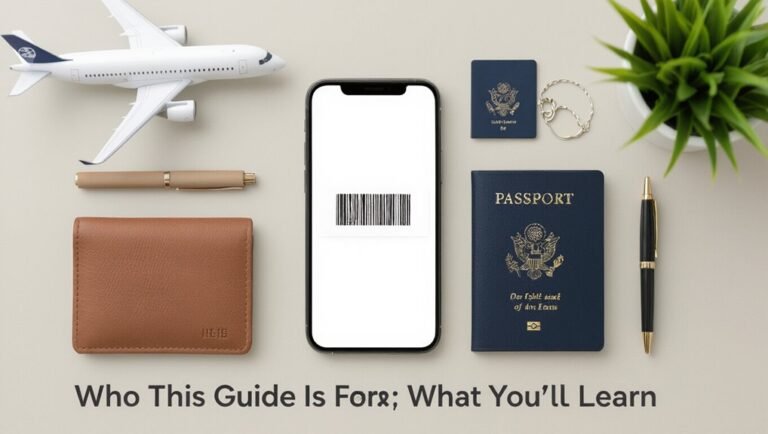
Who This Guide Is For and What It Covers
If you’re unsure whether your backpack counts as a “personal item,” this guide is for you.
You’re likely a traveler maneuvering through airline rules, commuting with gear, or prepping carry-on essentials. You’ll get clear criteria, measurement tips, and scenarios showing when backpacks qualify or don’t.
You’ll learn how to pack efficiently and what to expect at the gate, saving time and surprises.
Quick Answer: Does a Backpack Count as a Personal Item?
Wondering whether your backpack counts as a personal item? You’ll usually be fine if it fits under the seat and holds essentials.
Policies vary by airline, so check dimensions and allowed contents.
Consider these quick points:
- Size matters—measure it.
- Seat-under rule—follow it.
- Essentials only—keep it light.
- Airline rules—confirm before travel.
Personal Item vs. Carry-On: The Core Difference
Think about size and dimensions first, because a personal item usually has to fit under the seat while a carry-on goes in the overhead bin.
You’ll also consider placement onboard—where you stow the bag affects accessibility during the flight.
Finally, check allowed contents since some items are fine in a carry-on but restricted in a personal item.
Size And Dimensions
How big should your bag be to count as a personal item rather than a carry-on?
You’ll measure length, width, and depth to meet airline limits—usually smaller than carry-on.
Compare dimensions to your carrier’s rules, pack only essentials, and choose a compressible model.
- Check airline max dimensions
- Measure packed size
- Aim under limits by 1–2 cm
- Use lightweight materials
Placement Onboard
While a carry-on stows in the overhead bin, your personal item rides under the seat in front of you—so you’ll want to know which bag goes where to avoid gate-checking or delays.
Pack essentials and valuables in the personal item for quick access and to guarantee they stay with you.
Place bulkier items in the carry-on to maximize space and comply with airline rules.
Allowed Contents
Because airlines limit what you can bring onboard in each bag, you should treat your personal item and carry-on as complementary: Pack essentials in your personal item and bulky or restricted items in your carry-on.
Prioritize access and security.
- Documents, wallet, phone
- Medications, glasses
- Laptop/tablet (if allowed)
- Liquids under 100ml in one clear bag
Standard Personal-Item Size Limits to Check First
Before you pack, check the airline carry-on dimensions so your backpack meets the personal-item size.
You’ll also want to note any weight restrictions and how strictly the airline enforces them.
Use a tape measure or a luggage scale to get exact measurements and avoid surprises at the gate.
Airline Carry-On Dimensions
Most airlines set specific dimensions for what qualifies as a personal item, so check those size limits first to avoid surprises at the gate.
You should measure your backpack (including straps) and compare to airline rules.
Common carry-on dimensions to note:
- 9 x 14 x 22 inches (typical personal-item max)
- 10 x 16 x 24 inches
- 40 x 30 x 55 cm
- 45 x 35 x 20 cm
Weight Restrictions Overview
Now that you’ve checked dimensions, you’ll also need to watch weight limits—airlines often cap how heavy a personal item can be, and those limits vary widely by carrier and fare class. You should verify limits before packing and weigh your backpack to avoid fees.
| Airline | Typical Limit | Notes |
|---|---|---|
| Carrier A | 7 kg | Economy stricter |
| Carrier B | 10 kg | Premium lenient |
| Carrier C | 8 kg | Regional rules |
Measurement Tips And Tools
Start by checking the airline’s stated personal-item dimensions—length, width, and depth—and compare them to your backpack’s measurements so you can spot any problem areas.
Use a tape measure and firmly compress the bag when measuring. Follow these quick checks:
- Measure empty and packed dimensions.
- Check exterior pockets and straps.
- Test fit under a seat or in a sizer.
- Note airline rounding rules.
Common Carry-On Size Limits and Why They Matter
Although airlines set different limits, knowing common carry-on size rules helps you pick a backpack that actually fits overhead bins or under the seat.
Most carriers allow ~22 x 14 x 9 inches for carry-ons; some tighten to 21 x 15 x 8. Budget airlines often restrict larger bags.
You’ll avoid gate checks, extra fees, and travel delays by choosing sizes that match typical limits.
How Airlines Define “Personal Item
When you book a flight, the airline usually lets you bring a “personal item” in addition to your carry-on.
That term covers a range of small bags meant to fit under the seat in front of you.
You should note airlines define it by:
- Dimensions
- Weight
- Type (purse/laptop bag)
- Placement (under-seat only)
Check policy before boarding.
Major U.S. Airlines: Personal-Item Rules at a Glance
You’ll want to compare airline size limits to see which backpacks qualify as a personal item.
Note how each carrier treats carry-on versus personal items, since some let slightly larger bags on top of a suitcase while others are stricter.
Also watch for exceptional airline policies—fees, gate-check rules, or loyalty perks—that can change what you can bring.
Airline Size Limits
Because airlines set different dimensions for what counts as a personal item, you should check each carrier’s size limits before packing.
Measure your backpack and compare to these common limits to avoid gate checks:
- Budget carriers: often very small, e.g., 16 x 12 x 8 inches.
- Legacy airlines: slightly larger, vary by carrier.
- International: stricter, check airline policy.
- Always confirm current dimensions online.
Carry-On Versus Personal
Now that you’ve checked size limits, it’s helpful to compare carry-on and personal items so you know what fits where and what you can bring aboard without a fee.
Carry-ons are larger, go in overhead bins; personal items must fit under the seat.
Airlines let one personal item free; carry-ons may incur fees on basic fares.
Pack essentials in your personal item for quick access.
Exceptional Airline Policies
While airlines generally follow the same under-seat sizing rule, each major U.S. carrier has its own twists on what counts as a free personal item and how strictly they’ll enforce dimensions—so check policies before you pack.
You should know variations and exceptions:
- Southwest: bag plus personal item, flexible.
- Delta: strict size checks at gate.
- United: premium fares include larger items.
- JetBlue: loyalty perks expand allowances.
Major International Airlines: Personal-Item Rules Summary
When you fly internationally, each major carrier treats backpacks as personal items slightly differently, so it pays to check rules before you pack. You should verify size limits, whether backpacks must fit under the seat, and any weight restrictions. Quick comparison:
| Airline | Size limit | Under-seat required |
|---|---|---|
| Airline A | 45 x 35 x 20 cm | Yes |
| Airline B | 40 x 30 x 20 cm | Usually |
Low-Cost Carriers: Stricter Rules and Extra Fees
When you fly with a low-cost carrier, you’ll often face stricter distinctions between a carry-on and a personal item, so check which size gets gate access.
Measure your backpack against the airline’s exact dimensions before you go, because anything over the limit can trigger fees.
If you don’t prepay for a larger bag you’ll likely pay hefty pay-at-gate charges, so plan ahead.
Carry-On vs Personal
Because low-cost carriers squeeze every inch of overhead space, you’ll often face stricter rules and extra fees for what counts as a carry-on versus a personal item. You should check policies before packing.
- Personal item: fits under seat, usually free.
- Carry-on: overhead bin, often paid.
- Fee surprises: apply at gate.
- Strategy: avoid gate-check charges by sizing smart.
Measured Bag Dimensions
Low-cost carriers enforce measured bag dimensions strictly, so you’ll want to know exact limits for both personal items and carry-ons before you pack. Measure your backpack flat, include wheels or straps, and aim under limits to avoid fees. Check airline sites for cm/inch specifics and pack smartly.
| Item | Max Size | Note |
|---|---|---|
| Personal | 40x30x15 cm | Varies |
| Carry-on | 55x40x20 cm | Often strict |
| Checked | 158 cm total | Fees apply |
Pay-At-Gate Charges
One thing to watch for is pay-at-gate fees: if your bag exceeds the allowed size or you skipped prepaying for carry-on or checked luggage, the airline will charge you—often at a much higher rate—right at the gate.
You should:
- Check limits before travel.
- Prepay online when possible.
- Measure and weigh your backpack.
- Keep receipts for disputes.
How Gate Agents Enforce Personal-Item Size on Boarding
When you board, gate agents typically check personal items by physically testing them against a sizer or asking you to place the bag under the seat. They’ll enforce size limits to guarantee carry-on space isn’t compromised and boarding stays efficient.
Expect polite, consistent checks, brief explanations, and quick decisions. If yours’s too large, you’ll be asked to gate-check it or pay an upgrade fee.
How to Measure Your Backpack Quickly and Accurately
Start by measuring your backpack’s length, width, and height so you know it meets airline limits.
Use a tape measure or ruler and record the largest point in each dimension.
If any measurement exceeds the allowed size, adjust contents or pick a smaller bag.
Measure Length, Width, Height
Grab a tape measure and place your backpack on a flat surface to get the most accurate dimensions.
Measure length (top to bottom), width (side to side), and depth (front to back). Note protruding pockets or wheels.
Record dimensions in the airline’s required order.
- Length
- Width
- Depth
- Total (L×W×H)
Use Tape Or Ruler
Use a tape measure or a rigid ruler to get precise dimensions quickly, laying the backpack flat and smoothing any bulges before you measure.
Measure length, width, and depth at the widest points. Record each in inches or centimeters.
Compare totals to airline or transit limits. If it’s close, compress pockets and re-measure—small adjustments often keep you within allowed personal-item size.
Measuring Irregular-Shaped Backpacks
When your backpack has curves, pockets, or external gear, measuring it like a simple rectangular bag won’t give accurate results; you’ll need to account for the widest, tallest, and bulkiest points and note where the shape swells beyond the main body.
- Lay bag flat and measure peak width.
- Measure from highest to lowest point.
- Measure deepest bulge side-to-side.
- Recheck with items inside to confirm fit.
What Counts Toward Size: Wheels, Straps, Pockets
Think about whether wheels and a reinforced base add thickness that airlines might measure.
Check how bulky or fixed the straps are, since their position can push your bag over size limits.
Don’t forget external pockets and accessories—they often count toward overall dimensions.
Wheels And Base Thickness
Wheels and the thickness of your backpack’s base often make the difference between fitting under an airline seat and getting bumped to checked baggage, so measure with them included.
You should:
- Measure base thickness plus wheels.
- Factor wheel housings and protective bumpers.
- Compress pockets when measuring.
- Compare combined dimensions to airline personal item limits.
Strap Position And Bulk
1 key detail many travelers overlook is how straps and their placement add bulk and affect whether your bag counts as a personal item.
If straps stick out or aren’t stowed, airlines may measure them. Slim, tuckable straps keep overall dimensions down.
Use strap covers or compressible designs, fasten loose ends, and check carrier rules so your backpack stays within personal-item limits.
External Pockets And Accessories
Although external pockets and add-ons seem minor, they can push a backpack over an airline’s personal-item size limit. You should check every protrusion, since pockets, straps, and wheels add depth.
Consider removing or compressing extras before boarding.
- Measure with pockets full
- Stow detachable straps
- Collapse wheels if possible
- Avoid oversized pouches
Weight vs. Size Limits: What Matters for Backpacks
When deciding what to carry in your backpack as a personal item, you’ll usually face two constraints: size limits set by airlines and weight limits set by carriers or gate agents.
Size often determines whether the bag fits under the seat; weight matters for safety and policies.
Prioritize compact packing, distribute weight evenly, and check both airline dimensions and any posted weight allowances before you travel.
When a Backpack Is Allowed as Your Only Carry-On
Size and weight rules set the stage for whether a backpack can be your only carry-on, but airlines and fare types ultimately decide if that’s allowed.
You’ll usually get one carry-on if your backpack:
- Fits airline dimensions
- Meets weight limits
- Is permitted with your fare class
- Is stowed in the overhead or underseat per crew instructions
Check your carrier before packing.
When Backpacks Must Meet Both Personal-Item and Carry-On Limits
1 situation where your backpack has to satisfy both personal-item and carry-on rules is on airlines that strictly enforce size and weight tiers for each slot; if your bag straddles the airline’s personal-item dimensions but you want to store it in the overhead, you’ll need to meet the larger carry-on limits (and sometimes the stricter weight rules) to avoid being gate-checked or charged.
Check both limits preflight, pack accordingly.
Backpack Styles That Usually Pass as Personal Items
Most airlines accept compact, low-profile backpacks as your personal item, so pick styles that slip under the seat without bulking up.
Choose slim, structured designs with minimal external pockets and lightweight materials.
Consider:
- Slim commuter pack
- Tablet/everyday sleeve pack
- Foldable nylon daypack
- Small leather backpack
These stay neat, meet size limits, and fit under seats.
When a Daypack or Tote Is Safer Than a Large Backpack
When you’re maneuvering crowded terminals, tight overhead bins, or strict boarding rules, a daypack or tote can be a safer choice than a bulky backpack because it slips under seats, stays within airline personal-item limits, and keeps essentials easily accessible without forcing you to shoulder a heavy load.
You’ll reduce theft risk, move faster, and avoid gate-checking by choosing compact, easily stowed bags.
Using a Backpack Plus a Separate Personal Item: Allowed Combos
When you’re allowed a carry-on plus a backpack, you’ll want to know how the two items can be combined without breaking airline rules.
Check size and placement limits so your backpack counts as the personal item while the carry-on rides in the overhead.
Knowing common allowed combos saves you time at the gate and prevents surprises.
Allowed Carry-On + Backpack
If you want to carry both a backpack and a separate personal item on a flight, many airlines let you bring them as a paired combo as long as each piece meets the carrier’s size and weight limits and the personal item fits under the seat.
You should:
- Check airline size/weight rules.
- Place the personal item under the seat.
- Stow the backpack in overhead bin.
- Avoid oversized extras or gate-check fees.
Backpack Plus Separate Item
Wondering whether you can board with both a backpack and a separate personal item? You usually can: most airlines allow one carry-on plus one personal item, or a backpack as your personal item plus an additional small item.
Check size limits and policy specifics—some carriers treat backpacks as carry-ons.
Pack strategically: keep essentials in the personal item for easy access and abide by weight/size rules.
Packing Strategy to Keep a Backpack Within Size Limits
Start by measuring your backpack against the airline’s allowed dimensions and then pack with those limits in mind; prioritize items you’ll need in flight and compress or remove anything that makes the bag bulky.
Use packing cubes and roll clothes to save space. Consider swapping heavy shoes or jackets to wear. Remove nonessentials.
- Pack light
- Use compression
- Wear bulky items
- Weigh final bag
Placing Tech and Toiletries in a Backpack Personal Item
When you pack tech and toiletries in your backpack personal item, group them by access and vulnerability so you can reach what you need quickly and keep fragile gear protected.
Place electronics in padded compartments or sleeves, chargers in a small zip pouch, and toiletries in a leakproof bag near the bottom.
Keep passport, phone, and medication in an easy-access pocket.
Clothes Packing Tricks to Slim Your Backpack
To slim your backpack, roll clothes instead of folding to save space and reduce wrinkles.
Choose dual-purpose items you can wear in multiple settings, and squeeze everything into compression bags to cut volume.
These simple tricks let you carry more without bulking up your pack.
Roll, Don’t Fold
Rolling your clothes instead of folding them lets you fit more into your backpack and keeps items from shifting on the trail.
You’ll save space, spot wrinkles easier, and access layers faster.
Try these quick tips:
- Roll tightly from seams.
- Group by fabric weight.
- Use packing cubes for compression.
- Tuck small rolls into gaps.
Pack Dual-Purpose Items
If you’ve mastered rolling to save space, start choosing garments that pull double duty to slim your pack even more.
Pick reversible tops, neutral layers that mix with everything, and items that work for day and night.
Choose quick-dry fabrics you can wash on the go, convertible pants or dresses, and a lightweight jacket that doubles as a pillow or blanket.
Use Compression Bags
You’ve probably seen compression bags marketed for big trips, but they’re just as useful for keeping a personal-item backpack slim and organized.
Use them to reduce bulk and separate clean from worn clothes.
Follow these steps:
- Roll garments before sealing.
- Squeeze air manually or use a vacuum.
- Label bags by outfit.
- Fit denser items at the bottom.
Compression Cubes, Folders, and Space-Saving Tools
Packing smart makes a huge difference when you treat your backpack as your personal item. Compression cubes, packing folders, and other space-saving tools are the shortcuts that keep your gear organized and compact.
Use cubes to separate outfits, folders to keep shirts wrinkle-free, and slim toiletry or cable organizers for small items. They maximize capacity, speed up packing, and simplify security checks.
Handling Bulky Items: Shoes, Jackets, and Outerwear
You’ll want to think about where to stow bulky shoes so they don’t crush clothes or spread dirt—use external shoe compartments or a dedicated pouch.
For jackets and outerwear, compress them into a top pocket or strap them to the pack’s exterior to save internal space.
These simple moves keep your bag organized and make access quicker when you need layers or footwear.
Managing Bulky Footwear
When space gets tight, deal with bulky footwear first so it doesn’t dictate the rest of your packing; slip heavier shoes into the bottom of your backpack, stuff socks or small items inside them to save room and maintain shape, and use compression sacs or external straps for jackets to free internal space.
- Place heavy shoes low
- Stuff interiors
- Wrap delicate pairs
- Use external straps
Packing Jackets Smartly
1 smart approach is to treat jackets like flexible gear: compress, protect, and position them so they free up core space instead of crowding it. Roll lightweight layers, stuff bulky collars with socks, and wear the bulkiest coat on transit. Use pockets for flat items and keep waterproofs accessible.
| Tip | Action |
|---|---|
| Compress | Vacuum or compression sack |
| Protect | Use packing cube |
| Position | Perimeter of pack |
| Access | Top or external pocket |
| Wear | Onboard if needed |
Where to Store Travel Documents and Valuables in Your Pack
Because your passport, cards, and cash are the keys to moving freely, plan their spot in your pack deliberately:
- Keep passport in a zippered internal pocket close to your back for protection.
- Store cards in a slim RFID sleeve inside a secure compartment.
- Place some cash in a hidden pocket and some in your wallet.
- Keep a small pouch for jewelry and electronics.
Airport Security and Backpack Screening Expectations
Although airport security procedures vary by country, you’ll usually need to remove laptops, tablets, liquids, and sometimes shoes from your backpack for X-ray screening.
So organize small items into clear, accessible compartments to speed the process and reduce the chance of forgotten valuables.
Expect security staff to inspect suspicious items, ask questions, or request you repack; follow instructions, keep receipts for electronics, and stay calm.
Tips to Avoid Gate-Checking Your Backpack
After preparing your bag for security, take a few extra steps to keep it with you at the gate: know your airline’s carry-on size and weight limits and pack within them.
Stow bulky or oddly shaped items (blankets, souvenirs, water bottles) in your checked luggage or wear them.
Board with priority groups when possible so overhead space is still available.
- Measure your backpack.
- Pack light.
- Use compression cubes.
- Gate early.
What to Do If an Agent Asks You to Gate-Check
If an agent asks you to gate-check your backpack, stay calm and act quickly: confirm whether it’s a firm requirement or a suggestion, ask where they want you to leave it, and request a gate-check tag so you can identify your bag at baggage claim.
Remove valuables and essentials, keep receipts, note the tag number, and ask about retrieval procedures at your destination.
How to Choose a Backpack That Meets Most Airline Rules
Want a backpack that won’t cause headaches at the gate? Pick one that fits airline size limits, stays under weight caps, has a simple shape for easy measuring, and zips closed securely.
Check airline dimensions before you buy, choose a lightweight model, and keep bulky items in checked luggage.
- Size
- Weight
- Shape
- Secure closure
Materials and Design Features That Reduce Apparent Size
When you pick materials and design features that compress, streamline, or visually slim a backpack, it’ll look smaller at the gate even if capacity’s the same. Choose low-bulk fabrics, structured panels, tapered shapes, and minimal external pockets to reduce perceived volume. Roll soft items, use compression straps, and favor matte finishes for less attention.
| Feature | Effect |
|---|---|
| Compression straps | Flatten load |
| Structured panels | Keep shape |
| Tapered silhouette | Visual slimming |
| Matte fabric | Reduces shine |
Convertible Bags: Backpacks That Switch to Briefcases
You’ll appreciate how convertible bags switch carry styles so one pack can become a briefcase in seconds.
This lets you present a professional silhouette when you arrive at work without carrying extra luggage.
Pick models with quick-release straps and a structured handle for a seamless, work-ready transformation.
Convertible Carry Styles
You’ll appreciate quick changes, secure straps, and tidy organization.
Consider these features:
- Convertible handles
- Tuck-away straps
- Dedicated laptop sleeve
- Balanced weight distribution
Work-Ready Transformation
Switch your pack into a polished briefcase in seconds and stride into meetings with a clean, professional silhouette.
You’ll find hidden handles, tuck-away straps, and structured panels that convert a casual backpack into a sleek work bag.
Choose one with laptop protection, organized pockets, and durable hardware so you can shift effortlessly from commute to conference, keeping gear secure and appearance sharp.
Student and Commuter Backpacks: Common Compliance Issues
A common problem students and commuters face is assuming their everyday backpack automatically qualifies as a personal item on transit or airline services. That misconception can lead to denied boarding or extra fees.
You should check size rules, pack minimally, remove bulky items, and have a backup bag.
- Measure dimensions
- Weigh loaded bag
- Know carry-on limits
- Carry receipts
Photography and Gear Backpacks: Packing and Airline Exceptions
1 smart move when traveling with photography gear is treating your backpack as specialized luggage, not an everyday bag — airlines often make exceptions for camera equipment but only if you pack it correctly, declare oversized items when required, and follow specific size and security rules.
Use padded inserts, organize accessories to avoid loose batteries, check airline carry-on and gate-check policies, and label fragile gear clearly.
Business Backpacks: Carrying a Laptop as a Personal Item
While photography packs need protective inserts and clear labeling, business backpacks usually focus on fitting a laptop within airline personal item rules without sacrificing quick access or security.
You’ll want a slim profile, padded laptop sleeve, and easy-reach front pocket. Consider these tips:
- Measure dimensions before travel.
- Use a dedicated laptop compartment.
- Opt for TSA-friendly design.
- Keep chargers organized.
Long-Haul and International Flights: Allowance Differences
On long-haul and international routes you’ll often face different personal-item rules than on domestic flights, so check each carrier’s size and weight limits before you pack.
International allowances may be stricter or more generous, vary by cabin class, and include weight limits.
You should review airline websites, loyalty benefits, and whether your passport, documents, and essentials fit within the allowed dimensions.
Connecting Flights: Mixed-Carrier Rules to Watch
If you’re flying on a trip that mixes carriers, pay close attention to each airline’s personal‑item rules because the stricter policy usually applies at connection points and can catch you off guard at boarding or gate checks.
- Check both carriers’ size and weight limits.
- Note which carrier handles the first boarding.
- Confirm transfer airport gate-check practices.
- Pack a compact backup or compressible bag.
Reconciling Airline Website Rules With Gate Practice
Those mixed‑carrier surprises at connections often show you how airline websites and actual gate practice can tell different stories, so you’ll want to reconcile the two before you pack. Check both sites, screenshots help, and ask gate agents early. Compare dimensions, policies, and enforcement likelihood:
| What to check | Action |
|---|---|
| Size limits | Measure bag |
| Policy notes | Screenshot |
| Gate practice | Ask agent |
| Boarding group | Monitor |
When to Buy Priority Boarding or an Extra Carry-On Allowance
Wondering whether to buy priority boarding or pay for an extra carry-on? You’ll decide based on urgency, baggage size, and cost.
Consider:
- Time pressure: prioritize boarding to secure overhead space.
- Bag size: buy extra if you need a larger carry-on.
- Cost comparison: weigh fee vs. value.
- Connection risk: choose extra boarding for tight layovers.
How to Dispute a Gate-Check Decision Politely and Effectively
Facing a gate-check decision you disagree with? Stay calm, smile, and ask the agent for a clear reason.
Politely state your airline allowance, show relevant documentation or photos, and request a supervisor if needed.
Calmly cite your airline’s allowance, present proof (photos/docs), and ask to speak with a supervisor if needed.
If still denied, note names, take timestamps, and ask about formal complaint channels or compensation.
Follow up via email or the airline app promptly with evidence.
Preflight Checklist: Decide If Your Backpack Will Fly
Ready to know if your backpack can ride in the cabin? Check basics quickly and decide before you arrive.
- Review airline rules for personal items.
- Assess weight and how full it is.
- Confirm it fits under the seat in front.
- Remove prohibited items and valuables.
If any check fails, plan to gate-check or carry a smaller bag.
Quick Reference: Backpack Dimensions That Usually Work
Most airlines accept personal-item backpacks around 16 x 12 x 8 inches (41 x 30 x 20 cm), so check your bag against those dimensions and the carrier’s specific limits—if it’s particularly larger, you’ll likely need to gate-check or stow it in the overhead.
Measure height, width, depth including pockets and wheels. Aim for 15 x 11 x 7 inches to be safe on strict carriers.
Frequently Asked Questions
Can a Backpack With a Hidden Hydration Bladder Be Considered a Personal Item?
Yes — you can often count a backpack with a hidden hydration bladder as a personal item if it meets the airline’s size and carry-on rules; check dimensions and fluid restrictions, since policies vary and security may inspect the bladder.
Are Backpacks With External Ski/Snowboard Straps Allowed as Personal Items?
Generally, carriers won’t count backpacks with external ski or snowboard straps as personal items; you’ll likely need to check them or use them as your carry-on, so expect to gate-check or purchase an additional bag allowance.
Do Airline Employee or Military Discounts Affect Personal-Item Policies?
Usually, no — airline employee or military discounts don’t change personal-item rules. You should still follow the carrier’s size and allowance limits, though some airlines may offer occasional exceptions, so always confirm with the airline directly.
Can a Backpack Containing Aerosols (Spray Cans) Be a Personal Item?
No, you can’t pack aerosols in a personal-item backpack if they’re prohibited or exceed airline limits; you’ll need to check TSA and airline rules, place allowed aerosols in checked baggage if permitted, or discard them before boarding.
Will Biometric or TSA Precheck Lanes Treat Backpack Size Differently?
They won’t treat backpack size differently; you’ll follow the same carry-on and personal-item limits. TSA PreCheck or biometric lanes speed screening processes, but size and whether it fits under the seat still matter for enforcement.
Conclusion
Now you know how to decide if your backpack counts as a personal item: check airline size limits, compare your bag to typical personal-item dimensions, and weigh whether you need overhead space. If your pack fits under the seat and contains essentials, treat it as your personal item. If it’s bulky or you need more stuff, consider upgrading to a carry-on, buying priority boarding, or packing smarter to avoid gate-check hassles and extra fees.