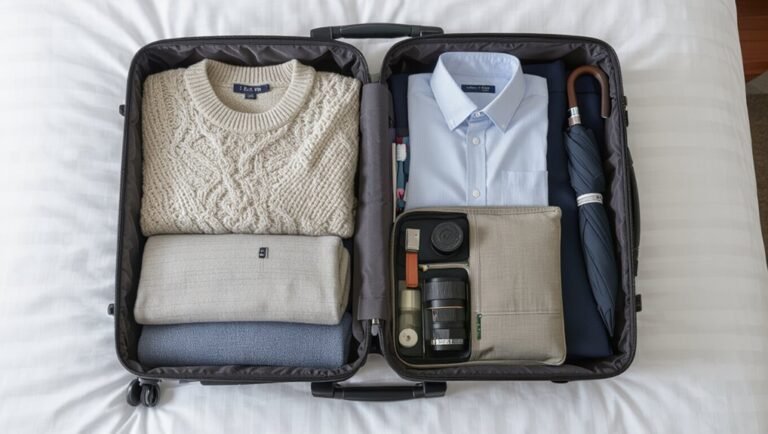
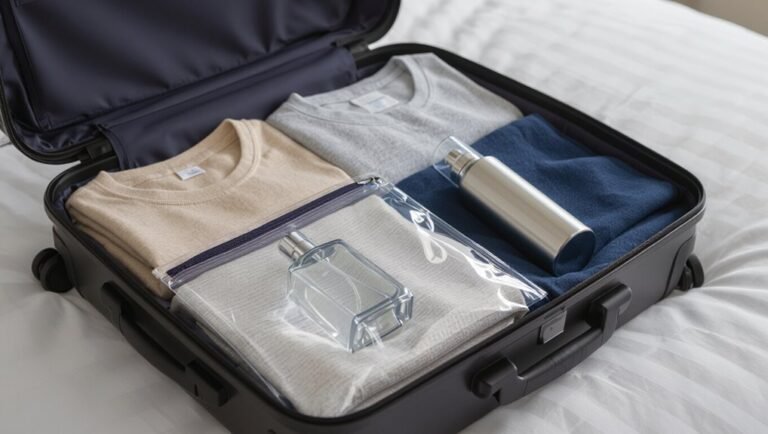
Are 29 Inch Suitcases Allowed on Planes?
Yes — you can usually check a 29‑inch suitcase, but only if its total linear dimensions (length + width + height, including wheels, handles and pockets) fit your airline’s limit — commonly 158 cm (62 in). Packed contents, expanders or bulky handles can push it over the line and trigger oversize or overweight fees. Rules vary by carrier and route, so measure and weigh your bag before you go; keep going below for specific tips and exceptions.
Can You Bring a 29‑Inch Suitcase on a Plane?
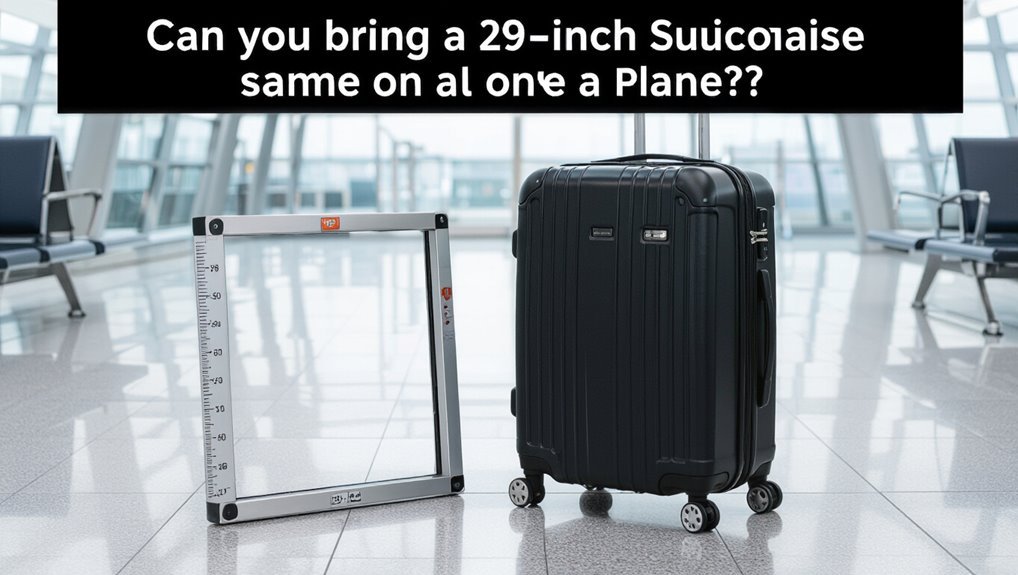
You should check your carrier’s rules before flying, consider soft-sided options for flexibility, and pack strategically to avoid excess charges or damage during handling.
How Airlines Measure Checked Baggage (L+W+H)
Airlines measure checked baggage by adding length, width and height (L+W+H), so you should measure your suitcase including wheels and handles to get an accurate total.
Use a tape measure from the longest points, include external pockets and protrusions, and record centimeters or inches per airline rules.
Compare the sum to your carrier’s maximum to avoid oversized fees or repacking at the desk.
Why Linear Dimensions Matter for a 29‑Inch Bag
A 29‑inch suitcase sounds simple, but carriers judge size by the sum of length, width, and height (including wheels and handles).
So that single number can be misleading when you’re trying to meet limits. You should measure the full linear dimensions because airlines enforce total size, not just length.
Protruding parts can push you over allowed totals, risking fees or forced repacking.
Typical International Size Limits for Checked Baggage
When you check a 29‑inch suitcase abroad, airlines usually set a maximum linear dimension (length + width + height) you’ll need to meet.
Limits commonly hover around 158 cm (62 inches), but weight allowances and exact size rules can vary widely by carrier and route.
Always check your airline’s specific linear and weight limits before you travel.
Typical Linear Dimension Limits
Curious what “linear dimensions” means for your checked bag? You measure length + width + height, including wheels and handles.
Airlines usually cap totals; exceed and you pay oversize fees or get denied.
- Common maximum: 158 cm (62 in)
- Some carriers: 203 cm (80 in) for special items
- Measure fully extended
- Check airline rules before travel
Weight And Size Variations
Although size limits are often the headline, weight restrictions vary more by airline and route, and you’ll usually see them tied to fare class or frequent-flyer status.
You’ll find most international carriers cap checked bags at 23–32 kg (50–70 lb). Heavy or oversized fees apply beyond linear limits too.
Check your ticket: business or elite status often grants higher weight allowances, saving you fees.
Typical U.S. Domestic Checked Baggage Size Limits
Most U.S. airlines set a standard maximum for checked baggage around 62 linear inches (length + width + height).
You should measure your 29‑inch suitcase including wheels and handles, since carriers enforce that total.
Size allowances usually match across major airlines, but always check your carrier before travel.
- Measure exterior dimensions
- Include wheels and handles
- Compare airline policies
- Note oversized fees
How Weight Limits Affect a 29‑Inch Suitcase
Size matters, but weight often limits what you can actually pack in a 29‑inch suitcase.
You’ll face airline weight caps—typically 50 lbs for checked bags—so a large case can still hit fees if packed heavy.
Weigh your loaded bag before leaving, prioritize denser items in carry‑on if allowed, and redistribute or remove items to avoid overweight charges and surcharges.
When a 29‑Inch Bag Becomes Oversize (And Why)
You’ll need to check airline size limits because a 29‑inch case can tip into oversize territory once you include wheels and handles.
Each carrier’s checked baggage rules set specific linear dimensions and fees, so what’s acceptable on one airline might be oversized on another.
Knowing those measurements beforehand helps you avoid surprise charges or having to gate‑check your bag.
Airline Size Limits
Because airlines set both linear and weight limits, a 29‑inch suitcase can be fine for one carrier and oversize for another — it all depends on how they measure and add dimensions.
You should check carrier rules before travel, since policies vary and fees apply.
- Measure height + width + depth precisely
- Compare to airline linear allowance
- Note weight caps per bag
- Account for wheels and handles
Checked Baggage Rules
A 29‑inch suitcase can turn into an oversize bag when its total linear dimensions (height + width + depth) exceed the airline’s limit, or when wheels and protruding handles push it past the allowance; airlines often round measurements differently and may include external pockets, so what fits on one carrier can be rejected or charged as oversize on another.
| Feature | Impact |
|---|---|
| Wheels | Add length |
| Handles | Protrude beyond shell |
| Pockets | Counted by some airlines |
| Packing | Bulks dimensions |
| Scale | Staff rounding varies |
How Airlines Calculate Linear Dimensions for Fees
When measuring luggage for size fees, airlines add the bag’s length, width, and height to get the linear dimension. They’ll compare that total to their published limits to decide whether to charge extra.
Airlines add length, width, and height to get a bag’s linear dimension and check it against size limits.
You should measure including wheels and handles, round up to the nearest inch, and check airline rules before you travel.
- Include wheels and handles
- Measure peak-to-peak
- Round up inches
- Compare published limits
Which Airlines Accept 29‑Inch Suitcases (Big Carriers)
Now you’ll look at how major U.S. airlines handle 29‑inch checked bags and what limits or fees you might face.
You’ll also compare typical policies from international carriers so you know where large suitcases are more or less likely to be accepted.
This quick survey will help you decide whether your 29‑inch case fits a carrier’s rules or will incur extra charges.
Major U.S. Airlines
Most major U.S. carriers let you bring a 29‑inch checked suitcase as long as it meets their size and weight limits, but rules and fees vary enough that you’ll want to check each airline before booking.
You’ll typically find standard checked baggage allowances, overweight fees, and occasional size restrictions; know the policy for:
- American Airlines
- Delta Air Lines
- United Airlines
- Southwest Airlines
International Carriers Policies
Because international carriers vary widely, you’ll want to confirm size and weight limits before you travel—many big airlines accept 29‑inch checked suitcases as long as they meet each carrier’s linear dimension and weight rules, but fees and allowances differ by route, fare class, and frequent‑flyer status.
Check specific carriers (e.g., British Airways, Lufthansa, Air France, Emirates) for weight caps, excess baggage charges, and transfer restrictions to avoid surprises.
Which Airlines Consider 29‑Inch Bags Oversize?
When you check specific airline rules, you’ll find that several major carriers treat a 29‑inch suitcase as oversize because its total dimensions (length + width + height) often exceed the standard 62‑inch limit for checked baggage.
This means you can expect extra fees or special handling with airlines like American, Delta, United, Alaska, and many international carriers.
- Expect oversize fees
- Prepare for special handling
- Measure packed dimensions
- Check carrier policies before travel
Delta, American, United: 29‑Inch Policy Examples
You’ll want to check each carrier’s sizing rules before you pack a 29‑inch suitcase.
Delta’s size limits, American’s carry‑on rules, and United’s checked baggage policies all treat that length differently.
Let’s compare how each airline measures and enforces those limits.
Delta Size Limits
Curious how major U.S. carriers treat a 29‑inch suitcase?
You’ll find Delta lets checked bags up to 62 linear inches (length+width+height), so a 29‑inch roller usually qualifies as checked luggage but may exceed carry‑on limits.
Check weight and fare rules before travel.
- Checked size max: 62 linear inches
- Carry‑on limits differ
- Overlimit fees apply
- Confirm with Delta assistant
American Carry‑On Rules
Wondering whether a 29‑inch roller can ride in the cabin or has to go under the plane? You’ll find American Airlines limits near 22 x 14 x 9 inches, so a 29‑inch bag won’t fit as carry‑on. Check gate policies for exceptions or oversized fees; consider checking the bag instead.
| Airline | Carry‑On Max | 29‑Inch Outcome |
|---|---|---|
| American | 22x14x9 in | Not allowed |
| Delta | 22x14x9 in | Not allowed |
| United | 22x14x9 in | Not allowed |
United Checked Policies
While a 29‑inch roller is too large for cabin stowage on most U.S. carriers, you can check it with United as long as it meets their checked-size limit and weight rules; you’ll usually pay standard checked‑bag fees if it’s within 62 linear inches and under weight limits.
Check for oversize/overweight charges and policy updates before travel.
- Verify dimensions
- Confirm weight
- Expect fees
- Check updates
Southwest, JetBlue, Alaska: 29‑Inch Policy Examples
If you’re flying with Southwest, JetBlue, or Alaska and packing a 29‑inch suitcase, check each carrier’s size rules because they treat large checked bags differently:
Southwest allows standard checked dimensions but enforces weight limits and fees;
Southwest accepts standard checked dimensions but imposes weight limits and charges fees for oversized or heavy bags
JetBlue accepts most 29‑inch bags within dimensional limits, charging for extra pieces or overweight items;
Alaska Airlines similarly permits them but applies baggage fees and strict weight/size enforcement.
Ryanair, EasyJet, Wizz Air: 29‑Inch Policy Examples
When flying Ryanair, EasyJet, or Wizz Air, you’ll want to check both carry-on size limits and checked baggage rules before packing a 29‑inch suitcase.
Each carrier has strict cabin dimensions that usually rule out oversized carry-ons, while checked allowances vary by fare and route.
Know the measurements and fees so you don’t get hit with surprise charges at the gate or check‑in.
Carry-On Size Limits
Curious whether a 29‑inch suitcase will slip into the overhead bin?
You’ll usually find that low-cost carriers limit carry-on dimensions tightly, so a 29‑inch case often exceeds allowances.
Check each airline’s published maximums before you pack.
- Ryanair: strict, smaller cabin bag limits
- EasyJet: variable by fare type
- Wizz Air: measured at gate
- Measure your case precisely
Checked Baggage Rules
After checking cabin limits, you’ll want to confirm each airline’s checked-baggage policy for a 29‑inch suitcase since many carriers treat larger carry-ons as checked items or charge extra.
Ryanair typically requires checked status and fees; EasyJet may accept larger bags in hold with weight limits and charges; Wizz Air often enforces strict size/weight rules and fees.
Always measure, weigh, and prepay to avoid surprises.
How Low‑Cost Carriers Treat 29‑Inch Suitcases
Low-cost carriers usually treat 29‑inch suitcases as checked baggage and charge extra unless you’re within a fare that includes a free checked bag. Their stricter size/weight rules and smaller free allowances mean you’ll often pay a fee, need to prepay online for a lower rate, or face gate-checking if your bag exceeds limits.
On budget airlines, a 29‑inch suitcase is typically checked and often incurs fees unless your fare includes one.
- Expect per-bag fees
- Prepay online to save
- Strict weight enforcement
- Possible gate-checking or refusal
Regional Differences: Europe, Asia, Middle East Rules
When you fly within Europe you’ll often face stricter carry‑on size caps that can make a 29‑inch suitcase impractical as cabin baggage.
In many Asian countries, airlines and airports enforce their own dimensional and weight rules, so check each carrier before you travel.
Middle East carriers may allow larger checked sizes but still vary on carry‑on limits, so confirm policy to avoid surprises.
Europe Carry-On Limits
In much of Europe you’ll find slightly stricter carry-on rules than in North America: you’ll often be limited by size and weight, and low-cost carriers enforce them strictly.
Check your airline before packing.
- Typical size: around 55 x 40 x 20 cm
- Weight caps: commonly 7–10 kg
- Personal item allowed
- Gate-checked fees may apply
Asia And Middle East Regulations
Although size and weight rules vary widely across Asia and the Middle East, you’ll usually find that full-service carriers are more generous than budget airlines, and Gulf carriers in particular often allow larger carry-ons and higher weight limits. Check airline policies before you pack.
| Carrier Type | Typical Allowance |
|---|---|
| Gulf/full-service | Larger carry-ons, higher weight |
| Low-cost | Stricter size/weight limits |
Carry‑On vs Checked: Where a 29‑Inch Bag Fits
Wondering whether a 29‑inch suitcase counts as carry‑on or checked? You’ll usually need to check it: most airlines limit carry‑ons to about 22–24 inches.
Still, rules vary by carrier and aircraft, so confirm before packing.
Airline policies differ by carrier and plane—always double‑check baggage rules before you pack.
- Typical carry‑on limits are smaller than 29″
- 29″ suits standard checked baggage size
- Oversize fees may apply
- Measure including wheels and handles
When Gate‑Check or Special Handling Is Required
If your 29‑inch suitcase won’t fit in the overhead bin, you’ll often be asked to gate‑check it and you should check the airline’s gate‑check size limits first.
Some carriers make exceptions for strollers, medical equipment, or elite status passengers, so read the policy or ask the gate agent.
Be prepared for oversized bag fees if the carrier treats the case as checked baggage instead of a complimentary gate‑checked item.
Gate-Check Size Limits
When a 29-inch suitcase won’t fit in the cabin or overhead bin, airlines often require you to gate‑check it or arrange special handling; that means knowing the specific size and weight limits that trigger these rules.
You should measure dimensions, weigh the bag, and confirm limits before boarding to avoid surprises.
- Maximum linear dimensions
- Weight thresholds
- Carry‑on vs. checked distinctions
- Aircraft type restrictions
Airline Policy Exceptions
Because aircraft configurations and flight circumstances vary, airlines make exceptions that force a gate‑check or special handling for a 29‑inch suitcase.
You might be asked to gate‑check if overhead bin space is limited, during weight balance needs, or on fully booked flights.
Special handling also applies when your case is deemed awkward, contains fragile items, or exceeds cabin dimension rules despite nominal size.
Oversized Bag Fees
Although airlines try to accommodate carry‑on sizes, you may still face oversized bag fees when a 29‑inch suitcase gets gate‑checked or requires special handling.
These charges cover the extra handling, storage, or checked‑baggage processing your bag triggers.
You’ll often pay when:
- your bag exceeds airline linear dimensions
- it needs curbside or special equipment
- it blocks overhead space
- it’s labeled oversize at check‑in
Extra Handling and Fee Types for Large Bags
1 important thing to know is that oversized bags like a 29-inch suitcase often trigger extra handling and steeper fees, since they don’t fit standard conveyor systems and need manual loading or special equipment.
You’ll encounter per-piece oversize charges, dimensional fees based on total inches, and occasional special handling surcharges; airlines list these on baggage policies, so check rates before you travel.
How Fare Class and Elite Status Can Waive Fees
Those oversize charges can add up fast, but your ticket type and loyalty status can often cut or eliminate those fees.
You should check fare rules and elite benefits before packing. Airlines may grant free oversized or extra checked bags to:
- First/business class tickets
- Premium economy on some carriers
- Frequent flyer elite tiers
- Co‑brand credit card holders
Confirm specifics with your airline.
How to Measure Your 29‑Inch Suitcase Correctly
Measure your suitcase by taking the full length, width, and height.
Be sure to include wheels and handles in your measurements so you don’t underestimate the size.
Compare those dimensions to your airline’s size limits before you pack.
Measure Length, Width, Height
Start by laying your suitcase flat on a hard surface and unzipping any expandable sections so you get its true packed size.
Then use a tape measure to record three dimensions: length, width, height. Measure at the widest points, keeping the tape taut and straight.
- Measure length end-to-end
- Measure width across the front
- Measure height from base to top
Note measurements in inches.
Include Wheels And Handles
Because airlines count the full exterior, include wheels and handles when you record your suitcase dimensions so you don’t get surprised at the gate.
Measure with the handle extended and collapsed, note the highest point of wheels and any protrusions, and measure depth including wheel housings.
Record the largest values for length, width, and height so you’ll have accurate, gate-ready dimensions.
Check Airline Size Limits
Now that you’ve noted the suitcase’s full exterior—including wheels and handles—you’ll want to compare those recorded dimensions with the size rules of the airlines you’ll fly.
Check each carrier’s maximum linear dimensions, baggage class allowances, and carry‑on versus checked distinctions. Measure length, width, depth precisely and note any expandable sections.
- Linear total (L+W+D)
- Carry‑on limits
- Checked limits
- Expansion allowance
Measuring Packed Luggage vs Empty Shell Differences
When you measure a 29-inch suitcase for airline limits, remember that the packed dimensions can be noticeably larger than the empty shell because clothes, shoes, and toiletries add bulk and can push fabric or zipper seams outward.
You should pack and measure as you’ll travel, compressing items only as realistically possible, and include handles and wheels in total length, width, and height.
How Expandable Zippers and Pockets Affect Size
If your 29-inch suitcase has an expandable zipper, you’ll need to account for the extra depth that can push it over airline size limits.
Also check external and internal pockets, since bulky items there add to overall dimensions and can change how the bag fits in sizers.
When measuring, zip the expansion closed and open, and measure with typical packed contents so you know which configuration airlines will see.
Expandable Zipper Impact
Because many 29-inch suitcases include expandable zippers and external pockets, you’ll often need to check actual packed dimensions rather than the nominal size. An expansion can add 1–3 inches to depth, and bulging pockets can push overall measurements beyond airline limits.
You should test packed expansion, zip fully, and measure all sides before travel.
- Measure expanded depth
- Zip with typical contents
- Note materials’ give
- Compare airline limits
Pocket Bulk Considerations
Although expandable zippers give you more room, external pockets and bulging seams can push a packed 29-inch suitcase over airline size limits.
So you should account for their added bulk when measuring. Check pocket depth, sewn-on straps, and protruding handles.
Compress soft pockets, redistribute contents into the main compartment, and zip carefully.
Airline agents measure maximum external dimensions, not internal capacity.
Measurement With Expansion
One extra inch from an expanded zipper can be the difference between accepted and oversized, so always measure your 29-inch suitcase fully expanded—including any zipper teeth, external pockets, and sewn-on trim—before you travel.
You’ll check depth, width, and height with expansions engaged, noting how packed contents push seams.
- Measure with zippers fully opened and closed
- Include external pocket bulges
- Account for removable straps
- Record packed dimensions
Why Hard‑Shell 29‑Inch Suitcases Can Cause Fit Issues
Hard-shell 29-inch suitcases can be deceptively bulky, and that rigidity often keeps them from conforming to tight overhead bins or luggage compartments. You’ll struggle when corners catch, edges won’t compress, or doors won’t close. Consider how shape, handles, wheels, and shell thickness interact:
| Feature | Effect | Problem |
|---|---|---|
| Corners | Catch | Jam |
| Wheels | Protrude | Snag |
| Handles | Bulk | Block |
| Shell | Rigid | No flex |
| Size | Large | Refuse fit |
How Check‑In Staff Assess Oversized Bags
When you wheel up to the counter, check‑in staff quickly judge size by visual cues and a brief measurement routine, looking for bags that exceed airline limits or won’t fit cargo doors.
You should expect concise checks, possible gate measurements, and immediate fee or recheck decisions.
- Dimensions taped or measured
- Weight noted for load balance
- Wheelbase and handles inspected
- Fit test at cargo hatch
Practical Packing Tips to Reduce Size and Weight
If you want to avoid oversized or overweight fees, pack smart by prioritizing versatile clothing, layering, and lightweight materials.
Roll garments to save space, wear your bulkiest items on the plane, and limit shoes to two pairs.
Roll clothes, wear your bulkiest pieces on the plane, and stick to two pairs of shoes.
Use travel-size toiletries, choose multifunctional accessories, and weigh your bag at home to adjust contents.
Aim for essentials only to stay under limits.
Use Compression Bags and Straps to Save Space
Although they look simple, compression bags and straps can dramatically reduce bulk so you’ll fit more into a 29‑inch suitcase without exceeding size limits.
You’ll compress clothing, protect fabrics, and stabilize loads so weight’s distributed evenly. Use them strategically to maximize carry-on allowances and check-in limits.
- Roll or fold before compressing
- Separate clean and dirty
- Protect fragile items
- Use adjustable straps
When to Split Gear Into Two Smaller Suitcases
Because airlines charge by weight and size more than by piece, you’ll often save money and hassle by splitting heavy loads into two smaller suitcases instead of cramming everything into one 29‑inch bag.
Do it when one bag nears weight or size limits, you need easier handling, or you want to balance fragile and bulky items.
Pack strategically to avoid fees and protect gear.
Shipping Bulky Items vs Paying Airline Oversize Fees
Decide whether to ship bulky items or pay airline oversize fees by comparing total cost, convenience, and risk: calculate shipping rates and transit times, then contrast them with the carrier’s oversize/overweight charges and any added hassle at the airport.
Compare shipping costs, times, and damage risk versus airline oversize fees to choose the least disruptive option.
You’ll weigh speed, reliability, and handling risk, then choose the least disruptive option.
- cost vs convenience
- transit time
- damage risk
- pickup/dropoff burden
Estimate Oversize and Overweight Fee Costs
When you’re estimating oversize and overweight fees, start by checking the airline’s published size and weight thresholds, then add up any per-piece surcharges and excess-weight charges that apply to your 29-inch suitcase. Use this quick table to compare typical fees:
| Airline | Oversize | Overweight |
|---|---|---|
| A | $75 | $50 |
| B | $100 | $75 |
| C | $125 | $100 |
How to Request Fee Waivers or Dispute Charges
Now that you’ve estimated potential oversize and overweight charges, you can take steps to avoid or reduce them by requesting waivers or disputing incorrect fees.
Contact the airline promptly, keep receipts and photos, and know policy specifics. Be polite and concise when submitting claims; escalate to customer service supervisors if needed.
- Document measurements and weight
- Save boarding passes and tags
- File claims online quickly
- Request supervisor review
Risks of Damage With Oversize Handling
If you check a 29‑inch suitcase, anticipate extra rough handling and a higher chance of scuffs, broken wheels, or cracked shells because oversized bags often tumble, get stacked under heavy loads, or are squeezed into tight compartments.
You should pad fragile contents, reinforce seams, secure loose straps, and consider a hard shell, since repairs or replacements after baggage belt and cargo mishaps can be costly and time‑consuming.
Gate Constraints and Aircraft Types That Matter
Because airport gates and aircraft vary widely, you should check dimensions and boarding procedures before you travel.
Gate size, jetbridge type, and overhead bin depth determine if a 29-inch suitcase fits; regional jets often restrict carry-ons. You’ll want to confirm with your airline to avoid gate-checking.
Gate layout, jetbridge type, and overhead depth decide if a 29-inch suitcase fits—check with your airline to avoid gate-checking.
- Gate layout
- Aircraft model
- Overhead bin size
- Boarding policy
How International Connections Affect Bag Rules
Gate and aircraft differences can affect whether you gate-check a 29-inch bag, but international connections add another layer: different airlines and countries enforce varying size, weight, and transfer rules that you’ll need to follow. Check baggage agreements, transfer times, and customs requirements to avoid surprises.
| Airline policy | Transfer rule | Customs note |
|---|---|---|
| Varies | Tight connections risk fees | Declare oversize items |
Sport Equipment vs Standard 29‑Inch Bag Rules
How do rules change when you’re packing sports gear instead of a standard 29‑inch suitcase?
You’ll face extra size, weight, and handling rules; some items count as oversized or require fees.
Check airline policies, crate or pad fragile gear, and declare bulky items at check‑in.
- oversized fees
- weight limits
- special packing
- advance notice
Best 29‑Inch Suitcase Features for Air Travel
Once you’ve checked how sports gear might change size, weight, and handling rules, pick a 29‑inch suitcase that balances capacity with airline friendliness.
Choose lightweight, durable shells; smooth 360° wheels; sturdy telescoping handles; secure, TSA‑approved locks; and easy-access external pockets.
Prioritize organized interiors with compression straps and removable toiletry pouches so you’ll pack efficiently and meet carrier limits without surprises.
Quick Checklist to Avoid Surprises With a 29‑Inch Case
Want to skip last‑minute fees and delays? Check dimensions, weight, and airline policies before you leave.
Pack strategically to meet weight limits and avoid bulging zippers. Keep receipts and warranty info accessible. Inspect wheels and handles so nothing fails at the airport.
- Measure length, width, depth
- Weigh packed suitcase
- Review carrier size rules
- Secure essential documents
Frequently Asked Questions
Do Oversized Bags Get Priority Luggage Handling or Arrive Later?
Oversized bags generally arrive later, and you won’t get priority handling unless you paid for a service or have elite status. Airlines and airports usually sort standard carry and checked bags first, so expect slower delivery times.
Can a 29‑Inch Suitcase Be Accepted on Small Regional Turboprops?
Generally no: you’ll likely be denied or charged because most small regional turboprops have strict size/weight limits and limited cargo space, so check the airline’s specific dimensions and fees before you arrive to avoid surprises.
Do Cruise Lines Use the Same Suitcase Size Rules as Airlines?
No, cruise lines don’t use the same suitcase size rules as airlines; you’ll generally see much looser size and weight guidelines, though individual lines might restrict oversized bags for tendering or stateroom storage, so check your cruise’s policy.
Are Insurance Claims Affected by Airline Oversize Handling Damage?
Yes — your insurance claims can be affected by airline oversize handling damage. You’ll need to check policy limits, exclusions, and required documentation; airlines’ liability and timely reporting often influence whether your insurer reimburses or denies the claim.
Can TSA or Security Screening Require Unpacking Oversized Suitcases?
Yes — TSA or security can require you to unpack oversized suitcases for screening; they’ll open and inspect items if needed, and you’ll cooperate, repack, and follow their directions to guarantee prohibited or suspicious contents are revealed.
Conclusion
You can usually bring a 29‑inch suitcase on a plane, but airlines measure length + width + height, not just one dimension, so check the linear total to avoid oversize fees. International and some U.S. carriers often cap checked bags at 62 linear inches; others vary. If you connect internationally, the most restrictive rule can apply. Pack light, use a compliant hard or expandable 29‑inch case, and confirm limits with your airline before you fly.