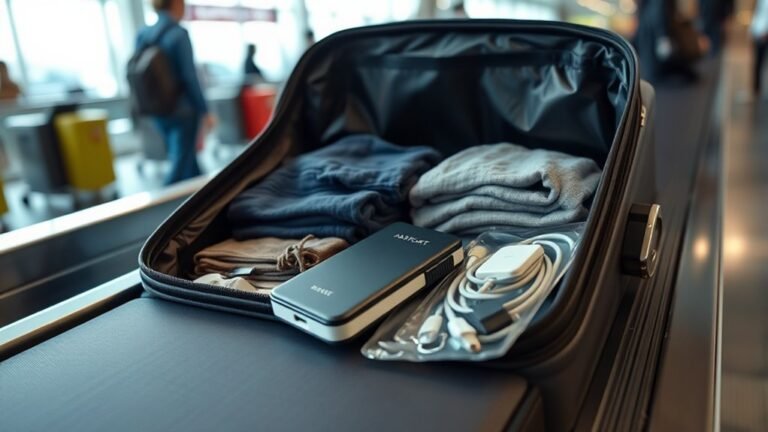
Are Candles Allowed in Hand Luggage TSA?
You can usually bring solid candles in your carry-on—pillar, votive, tealights, and battery-operated ones are generally fine—while gel candles and large amounts of liquid/gel wax may be denied. Jarred or strongly scented candles can prompt extra screening, so pack them accessibly and protected to avoid breakage. Declare or label homemade items if asked, and check your airline or connecting airports for local restrictions. Keep going to see types, packing tips, and exceptions.
Quick Answer: Can I Bring Candles in My Carry-On?
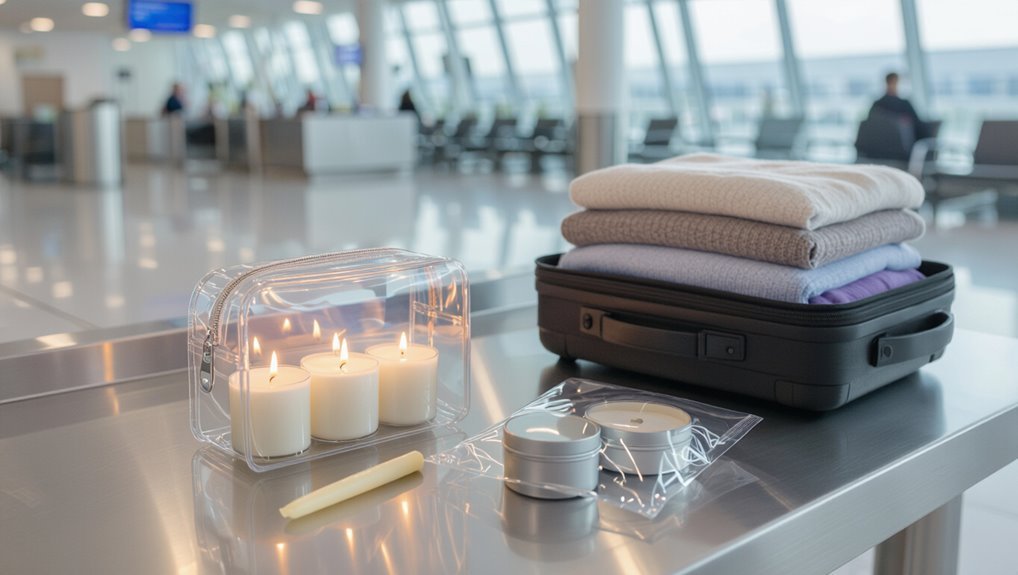
Wondering if you can carry candles through TSA security? Yes—you can bring most solid candles in your carry-on.
Wondering about candles at TSA? Most solid candles are allowed in your carry-on—just avoid open flames.
Avoid open flames and large quantities of liquid or gel wax; battery-operated or solid wax items are fine.
Expect screening; pack candles accessibly and declare any questionable items if asked.
Prohibited: flammable liquid fuels and candle wicks soaked in accelerants.
Which Items Count as “Candles”: Jars, Tealights, Wax Melts?
While TSA treats most solid wax products similarly, the exact category—jar candles, tealights, wax melts—can affect how they’re screened and what you can pack in carry-on versus checked bags. You should label items clearly and expect screening differences: jar candles may look like liquid containers; tealights pair with metal cups; wax melts are often solid.
| Item | Note |
|---|---|
| Jar candles | May resemble liquids |
| Tealights | Small, in cups |
| Wax melts | Solid, compact |
Does TSA Allow Candles in Carry-On?
Yes — you can usually bring candles in your carry-on, but TSA has specific rules about materials and quantities you need to follow.
Check for restrictions on wax types and any wick or fuel components, and put candles in clear, accessible bags for screening.
Pack them cushioned and separate from electronics so agents can easily inspect without damaging your items.
TSA Rules Overview
If you’re flying with candles, TSA generally lets you bring them in your carry-on so long as they’re solid (like wax or pillar candles) and don’t contain prohibited liquids or gels.
Scented wax melts and jar candles with liquid centers may be treated differently. You should expect screening, declare unusual items if asked, and follow officer instructions—restrictions aim to prevent flammable or liquid hazards aboard aircraft.
Packing Tips For Candles
You can bring most solid candles in your carry-on, but pack them smart to speed screening and avoid damage: wrap each candle in tissue or bubble wrap, place them in a sturdy resealable bag or a small hard-sided case, and put them near the top of your bag so TSA officers can inspect them without unpacking everything.
Label fragile items, separate scented from unscented, and cushion gaps.
Which Candle Types Are Always Allowed in Carry-On?
Wondering which candles you can always bring in your carry-on? You can carry solid, non-liquid candles like pillars, votives, and tealights without issue.
Wax bars and pressed wax shapes are fine too. Make sure they’re clean and odor-free to avoid attracting scrutiny.
Wrapped or in protective cases to prevent breakage is smart. Remember to follow airline and TSA general carry-on size rules.
Which Candle Types Are Restricted or Banned?
You should watch out for gel candles, since they’re typically prohibited because the gel counts as a liquid/gel under TSA rules.
Aerosol-scent sprays and other pressurized fragrance canisters are also restricted or banned in carry-on.
Candles with wicks treated in flammable or pressurized substances may be denied, so check specifics before packing.
Gel Candles Prohibited
Although many traditional wax candles fly without issue, gel candles are generally restricted or outright banned in carry-on luggage because they fall under TSA rules for gels and liquids.
You shouldn’t pack gel candles in carry-ons; TSA agents may confiscate them at security.
Pack gel candles in checked baggage only if allowed by your airline and local fire-safety regulations, and secure them to prevent leaks.
Aerosol Scent Sprays
When traveling, don’t bring aerosol scent sprays in your carry-on since they’re treated as pressurized containers and often fall under TSA and airline restrictions.
Small aerosol air fresheners or spray-on candle scents can be confiscated at security.
Check airline policies and pack non-aerosol alternatives like solid or gel sachets in checked baggage if allowed.
Declare any questionable items at screening.
Candles With Wicks Treated
If aerosol scent sprays are off-limits, pay similar attention to candles with treated or infused wicks—some are restricted because they can behave like incendiary or aerosolized sources during screening or in-flight.
You should avoid wicks soaked in alcohol, oils that vaporize easily, or novelty chemical coatings.
Check TSA guidance and airline policies; when in doubt, pack untreated, solid wax candles or ship treated types separately.
Are Gel Candles Allowed in Carry-On TSA?
Curious whether you can bring gel candles in your carry-on? You can usually pack solid gel candles if they’re fully solid and within TSA rules.
Avoid bringing gel with free liquids or flammable components.
- Check candle consistency.
- Confirm no liquid pools.
- Verify non-flammable labeling.
- Declare if unsure to TSA agents.
Are Candles With Liquid Fuels Allowed in Carry-On?
Can you bring candles that contain liquid fuels in your carry-on? You can’t pack open fuel reservoirs or large quantities of liquid fuel in carry-on luggage. TSA and airlines generally prohibit flammable liquids; sealed, non-volatile candle components may be allowed but check airline rules. Declare anything questionable at security to avoid confiscation.
| Allowed? | Typical outcome |
|---|---|
| Sealed wax | Usually allowed |
| Liquid fuel present | Not allowed |
| Small amounts? | Usually confiscated |
| Airline variance | Check before travel |
What Counts as a Flammable Component in a Candle?
When you pack a candle, consider which parts can burn: the wax base (soy, paraffin, beeswax) affects how easily it ignites.
Fragrance oils and added essential oils can be flammable or make a candle more hazardous.
Also check the wick and any additives—metal-core wicks or accelerants change the fire risk.
Wax Base Types
Although candles look simple, their wax base can make a big difference for TSA rules because it determines how much flammable material the candle contains.
You should know common bases and how they affect flammability:
- Paraffin — petroleum-based, more flammable.
- Soy — plant-based, burns cooler.
- Beeswax — dense, slower burning.
- Gel — solvent-based, highly flammable.
Fragrance And Oils
You’ll want to check product labels and Safety Data Sheets for solvent-based fragrances, high alcohol content, or volatile organic compounds—these increase fire risk and may affect TSA allowances.
Wick And Additives
If you inspect a candle closely, you’ll see that the wick and any added materials are often the most directly flammable parts and can determine whether the item raises concerns with TSA.
- Natural cotton wicks burn cleanly and usually pose less concern.
- Metal-core or treated wicks may be scrutinized.
- Additives like accelerants or wax solvents increase flammability.
- Glitter, essential oil saturants, or fuel beads can trigger bans.
How TSA Screens Candles at Security
When you bring a candle through TSA security, officers will screen it like other carry-on items using X-ray machines and, if needed, a physical inspection.
Solid wax candles usually pass through quickly, while gel, liquid-filled, or candle kits with wicks and fuel may trigger further checks.
You should remove candles from bags if requested, declare unusual items, and comply with additional screening to resolve any alarms or ambiguities.
Will Candles Set Off Bomb-Detection Alarms?
You might worry that candles will trigger bomb-detection sensors, but most metal- and vapor-based detectors focus on electronics, metals, and specific chemical signatures.
Wax residue itself rarely registers, though strong fragrances or volatile vapors from scented candles could draw extra attention or prompt a bag check.
If you’re carrying heavily scented or melted candles, pack them sealed to minimize any vapors that might cause a closer inspection.
Candles And Sensors
Though small and harmless, candles can sometimes trigger heightened scrutiny from bomb-detection sensors, so it’s useful to know what to expect at security checkpoints.
- You might be asked to remove candles from bags for X-ray inspection.
- Strong scents or unfamiliar packaging can prompt manual checks.
- Gel or liquid-filled candles may need separate screening.
- Cooperate with officers; explain contents clearly to speed the process.
Wax Residue Concerns
If an officer raises questions about a candle during screening, you might wonder whether wax residue could trigger bomb-detection alarms. You’re unlikely to set off explosive-detection systems with inert wax; sensors focus on explosive compounds. Still, keep candles clean and declared if asked to avoid extra inspection.
| Item | Risk |
|---|---|
| Clean wax | Low |
| Soot | Very low |
| Unknown debris | Moderate |
Fragrance And Vapors
While the solid wax in candles rarely trips explosive sensors, strong fragrance compounds and vapors can sometimes raise concerns during screening, so you should be aware of what your candle releases.
You’ll likely be fine, but consider these factors:
- Concentrated essential oils can produce detectable vapors.
- Aerosolized sprays are riskier than solid wax.
- Strong synthetic scents draw more attention.
- Declare if asked.
How the 3-1-1 Liquids Rule Applies to Candles
1 important thing to know is that the TSA’s 3-1-1 liquids rule can apply to some candle products—specifically gels, creams, and other liquid-based candle components—so you should pack those in containers of 3.4 ounces (100 milliliters) or less and place them in a single clear quart-sized bag for carry-on screening.
| Item type | Pack rule |
|---|---|
| Gel candles | 3.4 oz limit |
| Creamy wax | 3.4 oz limit |
| Solid wax | Not liquid rule |
| Oils | 3.4 oz limit |
How Much Wax or Liquid Is Considered a “Liquid” by TSA?
Because TSA treats anything that can flow, pour, or be pumped as a liquid for screening purposes, you should assume that soft or melted waxes, wax mixes with oils, gel-based candles, and all fragrance oils fall under the 3.4-ounce rule.
You should:
- Count melted wax as a liquid.
- Treat gel candles like liquids.
- Include fragrance oils.
- Combine amounts per container.
How to Pack Candles to Prevent Crushing in Carry-On
Now that you know which candle types count as liquids for screening, focus on protecting solid candles from being crushed in your carry-on.
Wrap each candle in soft clothing or bubble wrap, place them upright in a hard-sided toiletry case or padded compartment, and avoid heavy items above them.
Fill gaps with socks to prevent shifting during handling and security checks.
Protecting Candle Jars From Breaking During Screening
If you want your candle jars to survive TSA screening, pack them so glass won’t hit other items or the hard bin walls during X-ray checks and handling.
Cushion jars, separate them, and make them easy to inspect. Consider these steps:
- Wrap each jar in bubble wrap or clothing.
- Use a sturdy pouch or small box.
- Fill gaps with soft items.
- Place jars upright and accessible.
Best Travel Containers for Votives and Tealights
For votives and tealights, pick containers that keep multiple pieces snug, prevent wax damage, and fit TSA rules—think small hard-sided tins, padded organizers, or dedicated candle travel cases.
You’ll want shock-absorbing liners, individual compartments or dividers, and secure lids to stop shifting.
Choose lightweight, crush-resistant options that seal cleanly and slip easily into your carry-on.
Packing Multiple Candles Without Odor Transfer
When you pack several candles, keep each scent sealed in its own airtight container to prevent mingling.
Then layer those containers with odor-absorbing barriers like zip-top bags, paper, or activated charcoal pouches. That combo keeps fragrances isolated and your luggage smelling neutral.
Separate With Airtight Containers
Although you can tuck several candles into your bag, keep each scent sealed so fragrances don’t mingle and ruin them.
Use airtight containers to lock in aroma and prevent wax damage. Label and cushion each jar, and pack heavier ones below lighter.
- Vacuum-seal small candles
- Use screw-top tins
- Place silica packets inside
- Wrap in foam
Layer With Odor Barriers
Layer multiple odor barriers between candles to stop scents from seeping into each other—start with a sealed container, add a fabric layer like muslin or felt, then tuck in a silicone or plastic wrap barrier before closing.
Then individually wrap each candle in tissue or cloth, place small silica packets to absorb moisture and scent, and seal everything tightly to prevent transfer during travel.
Can Scented Candles Trigger Security Alarms?
If you’re worried about scented candles setting off airport security, rest assured they rarely trigger alarms on their own—metal wicks or decorative metal components are the main culprits that can cause a detector to respond.
You should:
- Check for metal cores or embellishments.
- Remove metal wicks before packing.
- Keep candles in clear, separate bins.
- Declare unusual items if asked.
What to Do If TSA Asks You to Open a Candle Container?
Wondering what to do when TSA asks you to open a candle container? Stay calm, cooperate, and politely comply.
Remove the lid and any packaging, showing the wax and wick clearly. Answer questions briefly about contents and ingredients if asked.
If you prefer, request a private screening. Follow officer instructions; refusal may mean the item won’t travel with you.
How to Handle Candles Flagged at the Checkpoint
If a TSA officer flags your candles, know the basic rules about wax, wicks, and scents so you can respond confidently.
You’ll usually be offered options like a secondary inspection, disposal, or returning the item to checked baggage if time allows.
To avoid issues, consider packing candles in checked luggage or using travel-safe flameless alternatives.
Explain TSA Rules
When a candle shows up on the X-ray or draws attention at the checkpoint, TSA officers will evaluate it like any other object to determine if it poses a security risk; you’ll be asked questions and may need to remove it for inspection.
Follow TSA guidance, answer clearly, and comply promptly.
- Declare if asked
- Present packaging
- Show receipts if available
- Accept officer instructions
Options At The Checkpoint
Because candles often look unusual on X-ray, you’ll want to stay calm and cooperate if an officer flags yours at the checkpoint. Answer questions, remove the item for inspection, and accept disposal if required. If allowed, request repacking or a clear bag. Stay polite; officers aim for safety.
| Action | Tip |
|---|---|
| Inspect | Be present |
| Dispose | Accept politely |
Packing Alternatives
After cooperating at the checkpoint, you’ll want practical packing alternatives to avoid inspections or disposals on future trips.
Choose safer formats, protect scents, and follow airline rules.
- Wrap solids in bubble wrap and seal in luggage.
- Carry wax melts in leakproof containers.
- Ship fragile or large candles ahead.
- Buy candles at your destination to skip hassles.
Declaring Unusual Candle Materials to TSA
If you’re carrying candles made from unusual materials—like essential-oil–soaked wax, solidified gel, or botanical embeds—declare them to TSA at screening so officers can quickly assess any flammable liquids, gels, or organic items that might trigger extra inspection.
Tell the officer what’s inside, provide packaging details, and answer questions honestly; this speeds screening and avoids delays or confiscation.
Airline Rules That Differ From TSA for Candles
While TSA sets baseline rules for what you can carry, individual airlines can impose stricter limits on candles in carry-on or checked bags.
So always check your carrier’s policy before you fly. You should also note weight, scent, packaging, and battery-powered restrictions.
- Weight limits
- Scented or flammable additives
- Packaging and containment
- Battery or electronic candles allowed
Bringing Candles on International Flights With Layovers
If you’re flying internationally with layovers, check the rules at each connecting airport before you pack candles.
Remember transit countries can have stricter limits or prohibitions that affect whether your candles will be allowed.
Pack candles so they’re easy to remove and inspect to speed through security checks.
Check Connecting Airport Rules
Because layover airports each set their own rules, you should check the baggage and security policies for every connecting airport on your itinerary before packing candles.
Verify allowances online, note restrictions, and contact airlines if unclear.
- Search airport TSA or security pages.
- Confirm carry-on vs checked rules.
- Check prohibited items lists.
- Save screenshots or emails as proof.
Consider Transit Country Limits
When you’re flying internationally with layovers, remember that transit countries can enforce their own import rules and security screenings for items like candles, so check each country’s regulations before you pack.
Verify restrictions on wax, fragrances, and packaging, and confirm whether undeclared goods may be confiscated.
If rules differ, adjust where you stow or consider shipping items ahead to avoid fines or removal.
Pack For Security Inspections
Although security officers may need to open your bag for inspection, you can make that process quick and trouble-free by packing candles thoughtfully: keep them visible in a clear pouch or the top of your carry-on, separate scented or liquid-filled candles in resealable bags, and label any specialty or homemade items so agents can assess them without delay.
- Place candles near the top
- Use clear resealable bags
- Label wax blends or oils
- Keep receipts for purchased items
Traveling With Candles to Canada, Mexico, and Beyond
Flying to nearby countries like Canada or Mexico—or farther afield—doesn’t mean you have to leave your favorite candles behind, but you should know the rules: some airlines and countries treat candles as nonhazardous solid items allowed in carry-on, while others restrict or require packaging for wax melts, liquid-filled candles, or anything with a wick that could be considered a fire risk.
Check airline policies, declare if unsure, and pack securely.
EU and UK Rules for Bringing Candles
Traveling to or within the EU and UK, you can usually carry solid candles in your hand luggage, but there are important limits and variations to know.
Traveling to or within the EU and UK, solid candles are usually allowed in hand luggage—check rules and pack carefully.
You should check airline and airport rules; gel or liquid candles may be restricted. Pack securely to prevent breakage and scent leakage.
- Confirm airline policy
- Follow liquid rules
- Use protective casing
- Declare if asked
Checking Candles in Checked Baggage Safely
When you pack candles in checked baggage, protect them from breakage, melting, and leaking by wrapping each one individually and placing them in the center of your suitcase away from heavy items.
Cushion with clothing or bubble wrap, seal in plastic bags to catch any residue, and avoid temperatures near heat sources.
Label fragile contents and consider a hard-sided case for extra protection.
Carry-On vs Checked: Which Is Better for Candles?
Wondering whether to tuck your candles into carry-on or checked baggage? You’ll weigh accessibility, fragility, regulations, and scent.
Generally, you’ll prefer carry-on for small tins and travel candles; checked works for bulk or solid pillars if well packed.
Prefer carry-on for small tins and travel candles; pack larger pillars securely in checked luggage.
- Accessibility: carry-on wins.
- Fragility: checked with padding.
- Regulations: carry-on may restrict waxy liquids.
- Scent: keep scented items in checked.
Shipping Candles Instead of Flying: Pros and Cons
If you don’t want to risk broken jars, melted wax, or TSA drama, shipping your candles can be a smart alternative to hauling them on a plane.
You’ll avoid carry-on limits and security questions, but pay for packing and transit. Insure fragile items, choose reliable carriers, and allow extra delivery time.
Consider cost versus convenience before deciding.
Bringing Candle Accessories: Wick Trimmers and Lighters
You can bring metal wick trimmers in your carry-on, since they’re treated like other small tools, but check the airline and TSA updates before you pack.
Keep in mind that lighters are restricted: disposable and Zippo-style lighters are typically allowed in carry-on but not in checked baggage, while torch lighters are usually prohibited.
Always confirm current rules to avoid surprises at security.
Wick Trimmer Rules
Because wick trimmers and lighters are common candle accessories, it’s important to know what you can pack in carry-on and checked bags.
You can bring small, non-sharp wick trimmers in carry-on; blade length matters.
Check checked-bag rules for heavier metal tools.
Follow airline and TSA guidelines, secure tools in packing, and declare anything questionable at the checkpoint.
- Carry-on: small non-sharp only
- Checked: heavier allowed
- Secure packing
- Declare if unsure
Lighter Restrictions
When traveling with candles, know the TSA and airline rules for lighters so you can pack them correctly and avoid delays at security.
You can carry disposable lighters in carry-on only; torch and fuel-filled lighters are prohibited.
Zippo-style lighters are allowed if empty of fuel.
Pack lighters on your person, not checked bags, and check airline policies for stricter rules.
Are Travel-Size Candle Tins Allowed Through TSA?
Curious about carrying a travel-size candle tin through TSA? You can usually bring solid wax tins in carry-on luggage if they’re non-flammable and meet TSA rules.
Check for metal wick containers and no aerosols. Pack them securely to avoid leaks and declare if asked. Consider restrictions at your destination.
- Confirm solid, non-aerosol
- Secure lid
- Avoid flammable labels
- Be ready to show
Bringing Candles in Your Personal Item vs Suitcase
Now that you know small solid candle tins are generally allowed in carry-on, you’ll want to decide whether to keep them in your personal item or checked suitcase.
Keep fragile or prized tins in your personal item to monitor pressure and handling.
If space’s tight or tins are bulky, pack them in checked luggage cushioned in clothing.
Avoid open-wick candles in either.
Documenting Expensive or Collectible Candles for Travel
If you’re traveling with expensive or collectible candles, document them before you leave so you can prove their condition and value if anything happens in transit.
Take clear photos, record serial numbers or maker marks, and keep receipts or appraisals.
Photograph items, note serial or maker marks, and keep receipts or appraisals for proof of value and condition.
Store copies digitally and in your carry-on.
- Photo evidence
- Receipts/appraisals
- Serial/maker details
- Digital and paper backups
Bringing Homemade or Artisanal Candles Through Security
When you pack homemade or artisanal candles for a flight, treat them like fragile handmade goods and prepare for security scrutiny—label ingredients, solidify any soft wax, and pack them to prevent damage or melting.
Wrap each candle in bubble wrap, use rigid containers, separate scented pieces to avoid odor transfer, and place them where TSA can easily inspect without unwrapping everything.
What Candle Labels and Ingredients to Keep Handy
Wondering which labels and ingredient details to have on hand at security? Keep clear, verifiable info to speed screening and answer officer questions.
- Brand and product name.
- Wax type (soy, beeswax, paraffin).
- Scent oils or essential oils used.
- Flame-retardant additives or metal cores (wick composition).
Carry labels, receipts, or a short ingredient list for quick reference.
How TSA Candle Policies Change After Incidents?
Keeping those labels and ingredient lists handy can also help explain your candle to officers after an incident prompts a policy change. You’ll need to show provenance and composition if rules tighten. Expect more inspections, temporary bans, or new packing rules. Stay informed, cooperate, and pack alternatives.
| Incident | Response | What You Do |
|---|---|---|
| Spill | Ban | Provide label |
| Fire | Inspect | Declare |
| Risk | Limit | Use alternatives |
How to Find the Latest TSA Guidance on Candles
You can check the TSA website and use its search bar to find current rules or any recent updates about carrying candles.
If the website doesn’t answer your question, contact TSA directly via their customer service phone line or social media channels for clarification.
Keep a screenshot or note of any guidance you receive in case you need it at the checkpoint.
TSA Website Search
When you need the most current TSA rules about carrying candles in hand luggage, go straight to the source: the TSA website’s “What Can I Bring?” page and the searchable FAQ.
Use site search, filter by “candles,” and note state-specific advisories.
Check update timestamps and linked policies.
- Search bar
- FAQ filter
- Update date
- Policy links
Contacting TSA Directly
If you need clarification beyond the website, contact TSA directly—either by phone, email, or social media—to get the most current guidance on carrying candles in your hand luggage.
When you call or message, mention candle type (wax, gel, scented), size, and container.
Ask about inspection procedures, declaration requirements, and any recent policy updates so you won’t face surprises at the checkpoint.
How Local Airport Policies Affect Candle Screening
Because local airports set their own screening priorities and procedures, you may see different rules about carrying candles in hand luggage from one terminal to the next.
You should check airport and airline guidance before travel. Local screening can affect permitted quantity, inspection intensity, container rules, and decision appeals.
- Quantity limits
- X‑ray vs. manual checks
- Packaging requirements
- Appeal options
Tips for Gifting Candles at Your Destination
While you’ll want to respect local regulations and customs, thoughtful presentation makes candles feel like a special, travel-ready gift; pack them securely, include care instructions, and consider scent sensitivity when choosing fragrances.
| Tip | Why | Quick Action |
|---|---|---|
| Wrap well | Prevents damage | Bubble-wrap and box |
| Label scent | Avoids allergy issues | Add clear tag |
| Include care | Safe use | Short instructions |
| Keep receipt | Customs or returns | Slip inside box |
How Customs Treat Large Quantities of Candles
If you’re carrying a large number of candles, you’ll need to declare them at customs to avoid fines or confiscation.
Customs will usually distinguish between personal gifts and items meant for sale, so be ready to explain your purpose and show receipts if available.
Knowing the commercial limits and declaration rules for your destination will save you time and trouble.
Large Quantity Declaration
When you’re carrying a large number of candles through customs, declare them up front to avoid delays or fines; authorities treat bulk quantities differently than personal-use items and may suspect commercial intent.
- Tell officers quantity and purpose.
- Have purchase receipts ready.
- Expect inspection or assessment.
- Be prepared to pay duties or face seizure if paperwork’s missing.
Commercial Versus Personal
Customs officers distinguish between personal and commercial candle shipments by looking at quantity, packaging, labeling, and your stated intent.
So you should be ready to explain why you’re carrying a large number of candles. If they suspect commercial intent, they’ll check invoices, samples, or business documents, assess duties or restrictions, and may seize items or require permits.
Be transparent and carry proof.
Bringing Candles Through Cruise Terminal Security
Because cruise terminals follow strict security protocols, you’ll want to know how candles are treated before you pack them in your carry-on. Inspectors may screen for flammables, scented wax, or metal tins.
To prepare, follow these tips:
- Declare candles if asked.
- Pack in carry-on in original packaging.
- Avoid gel or aerosol-based candles.
- Keep receipts for personal-use verification.
Bringing Candles on International Flights With Tight Connections
If you’ve got candles in your carry-on and only a short layover between international flights, plan for extra screening and potential confiscation at security checkpoints or during transit; tight connections mean less time to resolve issues like prohibited liquids, gel candles, or unclear packaging. Pack definitive labels, receipts, and solid wax only. Act fast if flagged.
| Issue | Action |
|---|---|
| Gel | Avoid |
| Liquids | Check |
| Solid wax | Accept |
| Flagged | Show proof |
Eco-Friendly Travel Candles: TSA Considerations
After sorting solid wax and paperwork for tight connections, you’ll want to pick eco-friendly travel candles that meet TSA rules and reduce waste.
Choose biodegradable, solid wax or wax tablets and avoid gels or aerosols. Pack in carry-on within size limits and declare when asked.
Consider:
- Beeswax or soy solids
- Metal tins
- No liquid scents
- Compact packaging
Safety Tips for Transporting Candles After Travel
1 smart step after your trip is to cool and solidify any candles before packing them for the return journey; let tins and jars fully set at room temperature, wipe away melted wax, and make sure lids are secure so nothing shifts or leaks in your bag.
Pack candles upright, cushion them with clothing, separate strong scents to avoid transfer, and declare oddly shaped items if asked.
What to Do If TSA or an Airline Treats You Inconsistently
If an agent treats you inconsistently, ask for the specific reason they’re denying your candle so you have a clear explanation.
If that doesn’t resolve it, calmly ask to speak with a supervisor to escalate the issue.
If you still disagree with the outcome, file a formal complaint with TSA or the airline afterward.
Ask For Specific Reason
Wondering why one agent lets your candles through while another denies them? Ask for the specific reason politely and note the wording they use.
You can:
- Request the exact policy citation or wording.
- Ask if it’s a security, airline, or local rule.
- Note agent name and time.
- Take a photo of any written explanation for later reference.
Escalate To A Supervisor
When an agent gives you confusing or inconsistent treatment, ask to speak with a supervisor calmly and promptly so you can get a clear, authoritative explanation and possibly resolve the issue on the spot.
Stay polite, state the specific rule or prior guidance you received, show any supporting documentation or photos, and request a definitive ruling.
If needed, note the supervisor’s name and decision.
File A Formal Complaint
Although escalating to a supervisor can resolve many issues, you should file a formal complaint whenever you face inconsistent or improper treatment by TSA or an airline so there’s an official record and a chance for corrective action.
Follow these steps:
- Note date, time, names, and details.
- Keep receipts, photos, and boarding passes.
- Submit complaints via TSA/airline online forms.
- Request follow-up and keep copies of responses.
Common Myths About Candles and Airport Security
Curious whether that favorite travel candle will cause a security headache? You’ll find myths like all candles being banned, wax being treated as a liquid, or scented candles triggering extra scrutiny.
In reality, solid wax is usually allowed, but rules vary by airport and country.
Always check airline and TSA guidance, pack carefully, and declare anything unusual to avoid delays.
Real Traveler Stories: Allowed or Denied Cases
If you’ve ever wondered how strict TSA and other airport security teams can be about candles, traveler stories show a mixed bag: some folks breezed through with several small tins of solid wax, while others had their scented jars pulled aside or confiscated for unclear reasons.
- You packed unlabeled tins and passed.
- You’d a jar seized without clear explanation.
- You showed receipts and kept them.
- You were told to gate-check them.
Decision Flow: Should You Pack Candles in Carry-On?
Those anecdotes show that outcomes can vary, so you’ll want a clear decision flow to decide whether to pack candles in your carry-on.
Check TSA rules, confirm airline and destination restrictions, inspect candle material and packaging, and assess quantity and scent.
If anything’s unclear, call the airline or pack candles in checked baggage to avoid delays or confiscation at security.
Alternatives If Candles Aren’t Allowed at Your Destination
When candles aren’t allowed where you’re going, don’t panic — there are practical substitutes that give you the same ambience or scent without risking confiscation or fines.
- Battery-operated LED candles for safe, flickering light.
- Portable essential oil diffuser or roll-on scents for aroma.
- Incense alternatives like scent sachets or dryer sheets.
- Flameless wax melts with USB warmers for a candle-like experience.
Quick Checklist: What to Do at Security for Each Candle Type
When you reach security, check each candle type against TSA rules so you know what to expect.
Treat solid wax differently from gel or soy—solids usually pass, gels may count as liquids, and soy containers can trigger questions.
Don’t forget accessories like wicks, holders, or lighters might’ve their own restrictions, so separate and declare them if needed.
Solid Wax Candles
- Pack in a sturdy case
- Limit quantity per bag
- Declare if inspected
- Avoid open flames
Gel And Soy Candles
Label containers, keep lids secure, and put them where you can easily pull them out for inspection.
For gel, use clear, quart-sized bags; for soy, firm up before travel.
Candle Accessories Rules
Because accessories like wicks, snuffers, and jars can affect how candles clear security, pack them with purpose:
- Remove long metal wicks or trap them in checked luggage.
- Seal wax jars to prevent leaks; label fragile.
- Pack wick trimmers and snuffers in carry-on if compact and non-sharp.
- Place accessories in a clear bag for quick inspection and declare if asked.
Official Resources to Check Before You Fly
Want to be sure your candles are allowed before you pack them? Check the TSA website for official carry-on and checked baggage rules, plus the Transportation Security Officer (TSO) guidelines.
Review your airline’s policy and any international airport security pages if traveling abroad.
Contact the airline or airport directly if rules seem unclear or you need confirmation for specific candle types.
Frequently Asked Questions
Can TSA Confiscate Candles Without Explanation?
Yes — TSA agents can confiscate candles without a detailed explanation; you’ll be told item is prohibited or screened out, they’ll enforce rules, and you can’t contest on the spot, though you can ask for clarification later.
Are Candle Warmers or Electric Wax Melters Allowed in Carry-On?
Yes — you can bring candle warmers or electric wax melters in your carry-on, but they’ll be screened; remove batteries or loose components if requested, and check airline policies since size, battery type, or heating elements might be restricted.
Do Fragrance Oils or Perfume-Infused Candles Count as Liquids?
Yes—they’re treated as liquids if free-flowing or in containers over TSA limits; fragrance oils and perfume-infused candles with liquid components count, so you’ll need to follow the 3-1-1 rule or pack them in checked baggage.
Are Beeswax or Soy Candles Treated Differently by TSA?
No, TSA doesn’t treat beeswax or soy candles differently; you’ll follow the same rules for solid candles in carry-ons. If they’re liquid-infused or gel, they’ll fall under the 3.4 oz liquid restrictions, so pack accordingly.
Can I Bring Candle Supplies Like Wax Dye or Molds in Carry-On?
Yes—you can bring nonflammable candle molds and solid wax dyes in carry-on, but you shouldn’t pack liquid dyes, aerosol sprays, or large flammable waxes; TSA officers may inspect or confiscate prohibited items at security.
Conclusion
You can usually bring candles in your carry-on, but rules vary by type and destination. Solid candles like jar candles, votives, and tealights are generally allowed, while wax melts and liquid or gel candles may be restricted due to flammability rules. If a candle seems hazardous, pack it in checked baggage or choose alternatives like beeswax melts or scented travel sprays. Always check TSA and airline rules before flying to avoid surprises at security.