Are Duffle Bags Allowed as Carry On TSA?
You can bring a duffle bag as a carry-on if its packed dimensions meet your airline’s size limits and you follow TSA rules for liquids, electronics, and prohibited items. Use a soft-sided duffle for easier fit in overhead bins or under the seat, measure length, height and depth including handles, and pack liquids in a clear quart bag. Fasten zippers, keep meds and ID accessible, and check your carrier’s limits before you go — more tips follow.
Can I Bring a Duffle Bag as Carry-On? Quick Answer
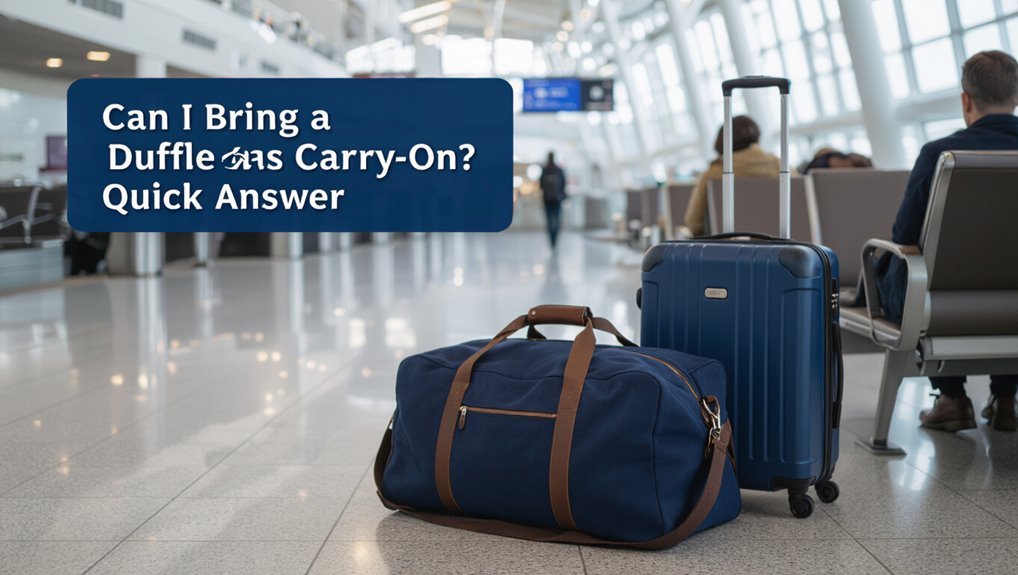
Can you bring a duffle bag as a carry-on? Yes — you can usually bring a duffle as carry-on if it fits airline size rules and can be stowed in the overhead bin or under the seat.
Pack efficiently, use soft-sided duffles to squeeze into tight spaces, and check your airline’s specific carry-on allowance before you travel to avoid surprises at the gate.
TSA Carry-On Size Limits and Allowed Items
Although airlines set the size rules, TSA screening determines what you can bring through security, so you should know both the dimensional limits and item restrictions before you pack.
Remember: airlines set size limits, but TSA decides what passes security—know both before you pack.
You’ll need to follow TSA rules on liquids, sharp objects, and electronics. Common allowed/restricted items include:
- 3-1-1 liquids and sealed toiletries
- Laptops and larger electronics for separate screening
- No knives, explosives, or most sporting firearms
Standard Airline Carry-On Size Limits to Compare
Airlines commonly set carry-on size limits in inches, so you should compare dimensions—not just weight—before you pack.
Typical U.S. carriers allow about 22 x 14 x 9 inches, while some low-cost airlines shrink allowances to roughly 21 x 15 x 7 or enforce strict personal-item rules.
International limits vary; always verify your specific airline to avoid gate-checking.
How to Measure Your Duffle for Carry-On Compliance
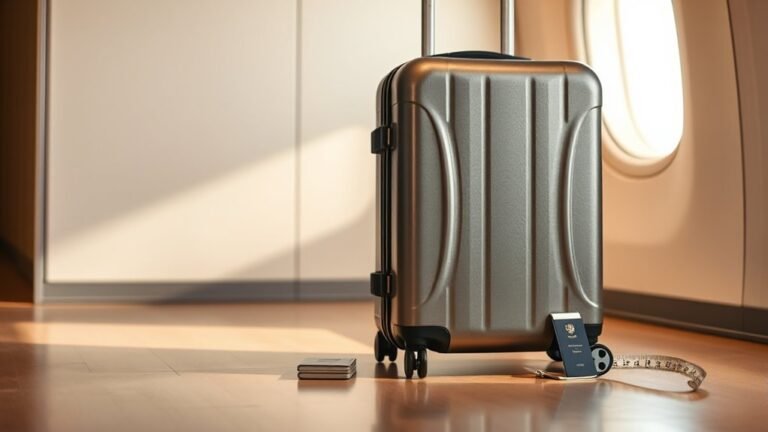
Start by laying your duffle flat on a hard surface and measuring its longest, tallest, and deepest points with a tape measure—length (end to end), height (top to bottom), and depth (side to side or how wide it’s when filled).
Lay your duffle flat, measure its length, height, and depth, and include any handles or wheels before comparing to airline limits.
Record dimensions, add handles/rollers if protrude, and compare to airline limits.
- Measure length.
- Measure height.
- Measure depth.
Choose a Duffle That Fits Overhead Bins
Now that you’ve measured your duffle, use those numbers to pick a bag that will actually fit in overhead bins. Choose snug, sturdy shapes, low profiles, and lightweight materials so you won’t stress at the gate. Test zippers and handles. Consider expandable sides cautiously.
| Practical | Emotional |
|---|---|
| Dimensions match bin | Relief boarding quickly |
| Low profile | Confidence storing bag |
| Lightweight | Calm travel |
When a Duffle Must Be Checked Instead of Carried On
If your duffle exceeds the airline’s carry-on dimensions, has rigid or protruding parts, or contains restricted items, you’ll have to check it—so weigh it and prepare for gate drop-off or the ticket counter.
- Oversized: it won’t fit overhead or underseat.
- Bulky hardware: wheels, frames, or hard panels.
- Security holds: flagged for inspection or hazardous contents.
What You Can and Can’t Pack in a Carry-On Duffle
Think of your carry-on duffle as a small, mobile closet with strict rules: you can pack clothing, electronics, medications, documents, and TSA-approved liquids in containers of 3.4 ounces (100 ml) or less placed in a clear quart bag, but you must leave out aerosols, large batteries, sharp objects like razors or box cutters, and any flammable or otherwise prohibited items.
| Allowed | Not Allowed |
|---|---|
| Clothes | Aerosols |
| Electronics | Large batteries |
| Meds/docs | Sharp objects |
| Small liquids | Flammables |
TSA Liquids Rule for Duffles (3-1-1 Explained)
The TSA’s 3-1-1 rule limits the liquids, gels, and aerosols you can carry in a duffle: each container must be 3.4 ounces (100 ml) or less, all containers must fit inside a single clear quart-sized bag, and you’re allowed one bag per passenger.
TSA’s 3-1-1 rule: carry 3.4 oz (100 ml) containers in one clear quart-sized bag—one bag per passenger.
- Keep travel-size bottles and replace tight caps.
- Remove the quart bag for screening.
- Pack medications and baby formula separately if needed.
How to Pack Liquids Inside a Duffle for Security
When you pack liquids inside a duffle for TSA screening, organize them so security checks go quickly: place all 3-1-1 compliant containers in a single clear quart bag, seal it, and position it near the top or an external pocket for easy access.
Keep full bottles upright, wipe spills, and group toiletries together so you can remove the quart bag without unpacking the whole duffle.
Packing Electronics and Lithium Batteries Safely
If you’re carrying laptops, tablets, or spare batteries, pack them so TSA and airline staff can inspect them quickly:
- Remove laptops and larger electronics into an easy-access compartment or top layer.
- Keep spare lithium batteries in carry-on only, individually protected from short circuits (tape terminals or use original packaging).
- Power devices off and separate chargers for faster screening.
Carrying Sports Gear and Gym Items in a Duffle
When you pack sports gear in a carry-on duffle, check size and capacity first so your bag fits overhead or under the seat.
Keep items secure and easy to screen by using clear pouches and separating bulky gear for quick inspection.
If anything’s wet or odorous, seal it in waterproof bags to prevent leaks and complaints from fellow passengers.
Size And Capacity
Think of your duffle as a compact locker: pick a size that holds your routine gear without wasting space.
You’ll want a balance of volume and organization so items don’t shift or bulk. Choose by typical load: shoes, clothes, small equipment.
Consider compartments and compressible packing cubes to maximize usable capacity.
- Shoes and cleats
- Clothing layers
- Small equipment
Security And Screening
Because TSA agents need quick visibility into what you’re carrying, pack sports gear and gym items so they’re easy to inspect without unpacking everything.
Place small items in clear plastic bags, separate electronics like fitness trackers, and stow sharp objects (cleats, skate tools) securely or check them.
Label any medical supplies, and be ready to remove bulky equipment for screening to keep lines moving.
Wet Or Odorous Items
Wet or smelly gear can make a short trip miserable, so pack damp clothes and shoes in waterproof, sealable bags or a separate compartment to contain moisture and odors.
You’ll also air items when possible, use odor absorbers, and separate clean gear.
- Sealable plastic bags for wet items
- Activated charcoal or baking soda sachets
- Removable compartment or odor-proof pouch
Medications and Medical Devices in a Carry-On Duffle
You should keep prescription meds in your carry-on duffle and follow TSA liquid limits and labeling rules for any liquids or gels.
Be prepared to remove medical devices for screening and tell TSA agents if you need special handling or a private screening.
Carry prescriptions, a doctor’s note, and device manuals or ID cards to speed inspection and avoid questions.
Carry-On Medication Rules
When packing meds and medical devices in your carry-on duffle, keep essential items accessible and clearly labeled so security checks and in-flight needs go smoothly.
Carry prescriptions in original containers, bring a doctor’s note for controlled meds, and pack extra doses.
Follow liquid limits for medications but declare them at screening.
- Originals
- Documentation
- Extras
Medical Device Screening
After organizing prescriptions and notes, prepare for screening procedures specific to medical devices so they don’t slow you down at the checkpoint.
Tell TSA officers about implants, pumps, or monitors before screening. You may need to remove external devices or undergo a pat-down instead of walking through the metal detector.
Keep devices accessible in your duffle for quick inspection and reassurance.
Packing And Documentation
If you’re packing medications and medical devices in your duffle, group pills in labeled containers.
Keep injectables and liquids in leak-proof bags, and store devices where TSA can access them without unpacking your whole bag.
Keep prescriptions and device manuals handy, declare items at screening, and know limits for liquids.
- Prescriptions and notes
- Leak-proof packing
- Easy-access placement
How TSA Inspects Soft Duffles at Security
Because soft duffles don’t have rigid frames, TSA agents rely on visual inspection and manual probing to assess their contents.
You’ll usually be asked to place the bag on the X-ray belt or open it for a quick search if the image is unclear.
Stay cooperative, remove any electronics or liquids when requested, and answer brief questions so agents can complete checks quickly and return your bag.
Organize Your Duffle for Faster Security Screening
1 simple way to speed you through TSA is to organize your duffle so agents can see and access key items quickly.
Pack essentials in clear pouches, place electronics near the top, and keep liquids together. Use compartments for shoes and toiletries to avoid digging.
Pack essentials in clear pouches, stash electronics near the top, and group liquids and toiletries for quick access.
Follow this checklist:
- Clear pouch for chargers/liquids
- Top-access pocket for laptop/tablet
- Separate shoe/toiletry compartment
Common Items That Trigger Secondary Screening
Keeping your duffle organized helps speed screening, but some items will still prompt agents to pull your bag aside.
You’ll trigger secondary checks with loose electronics, batteries, liquids over limits, aerosol cans, dense food or powders, and oddly shaped metal objects.
Sharp tools, sporting gear, and unusually heavy or tightly packed sections also draw attention.
Declare questionable items and be ready to open compartments.
Safely Packing Valuables and Travel Documents
When you pack valuables and travel documents in a duffle, keep them accessible yet concealed—store passports, boarding passes, cash, and cards in an inside zippered pocket or a small travel wallet you can slip into a shoulder strap or wear on your person.
Secure items, minimize bulk, and avoid obvious exterior pockets.
- Carry-on organizer
- RFID-blocking sleeve
- Small lock
Airline Carry-On Duffle Policies to Check Before Flying
Before you head to the airport, check the airline’s carry-on size and weight limits for duffles—rules vary widely and a bag that’s fine on one carrier might cost you a gate-checked fee on another.
Also confirm boarding group restrictions, overhead bin space policies, and any seasonal weight exemptions.
Verify prohibited item rules and whether soft-sided bags must compress to fit; call the airline if unclear.
Using a Duffle as a Personal Item vs. Carry-On Bag
If you plan to bring a duffle on board, decide early whether you’ll treat it as your personal item or your carry-on—each option affects size limits, placement, and what you can pack.
You’ll choose based on space needs, gate-check risk, and airline rules. Consider:
- Size: fits under seat or overhead?
- Contents: liquids, valuables, bulk?
- Convenience: reachability during flight?
Carry-On Fees, Boarding Groups, and Duffles
Deciding whether your duffle is a personal item or carry-on also affects costs and boarding strategy, so factor fees and boarding groups into your plan.
Choose the option that avoids checked-bag charges and keeps essentials accessible.
Opt for the choice that avoids checked-bag fees while keeping your essentials close at hand.
If you’re assigned late boarding, stow your duffle strategically or upgrade to priority to guarantee bin space.
Weigh fees versus convenience before you travel.
Compression Packing and Expanding Duffles: Risks
You can compress a duffle to fit size limits, but remember it can spring back or expand after you stuff it.
If you overstuff to squeeze more in, you risk the bag not fitting in the overhead or being flagged at gate checks.
Think about carry-on size rules and leave a little wiggle room to avoid surprises.
Compression Limits And Expansion
Because duffles compress and expand differently than rigid carry-ons, you’ll need to balance how much you shove in before a flight and how much the bag might bulge afterward.
- Test compression at home so you know baseline volume.
- Leave room for items that spring back, like jackets or shoes.
- Zip strategically to avoid sudden expansion that can block overhead bins.
Overstuffing Carry-On Risk
Compression tests help, but overstuffing still causes problems once the bag hits the gate: a bulging duffel can spill into neighboring bins, resist zippers, and trigger TSA inspections when its shape hides prohibited items.
You should leave a little give for compression, distribute weight evenly, avoid rigid items near seams, and check zippers and handles before boarding to prevent delays or damage.
Gate-Checking a Carry-On Duffle: When and How
When the overhead bins are full or your duffle exceeds the airline’s carry-on dimensions, you’ll often be asked to gate-check it before boarding; knowing when to agree and how to prepare will save time and protect your gear.
- Accept quickly if crowding delays boarding; avoid carry-on pileups.
- Remove valuables and fragile items; carry them on.
- Tag visibly, secure zippers, and expect curbside pickup at arrival.
Best Duffle Features for TSA-Friendly Travel
When choosing a carry-on duffle, look for durable yet lightweight materials so it stands up to handling without pushing you over weight limits.
Choose bags with TSA-friendly compartments that let you access toiletries and electronics quickly at security.
Also confirm the bag’s dimensions and empty weight meet your airline’s size and weight limits.
Durable, Lightweight Material
Think of material as the duffle’s armor: you want fabrics that resist tears and abrasions while keeping weight—and TSA hassle—down.
- Choose ripstop nylon or ballistic polyester for durability without bulk.
- Look for water-resistant coatings to protect contents and cut inspection delays.
- Prefer reinforced seams and lightweight zippers so your bag stays strong yet easy to lift into overhead bins.
TSA-Friendly Compartments
Having sturdy, lightweight materials sets the stage for smart compartment design that speeds you through TSA checkpoints.
Choose duffles with quick-access exterior pockets for boarding passes and essentials, a dedicated, zippered laptop sleeve, and a clear toiletry pouch pocket that lies flat for inspection.
Compressible main compartments and easy-open zippers let you present items without unpacking, saving time and hassle.
Size And Weight Limits
Because airlines and TSA enforce strict carry-on dimensions and weight limits, you’ll want a duffle that fits both overhead bins and scale checks without wasted bulk.
Choose a lightweight, structured bag under common limits, and measure packed dimensions nightly before travel.
- Aim for 22 x 14 x 9 inches or smaller.
- Keep packed weight under 7–10 kg for most carriers.
- Use compression and lightweight materials.
How to Choose a Durable, Compliant Carry-On Duffle
When choosing a carry-on duffle that lasts and meets TSA rules, start by checking dimensions and material: pick a bag that fits airline size limits and’s made from abrasion-resistant fabric like ballistic nylon or TPU-coated canvas.
Also prioritize sturdy zippers, reinforced seams, comfortable straps, and a lightweight structured base.
Verify external pockets won’t exceed limits and choose a color you won’t mind traveling with.
Real Examples: Duffles That Passed TSA and Why
You’ll see real carry-on duffles that made it through TSA because their dimensions fit overhead bins and their materials held up to handling.
We’ll point out specific sizes and the sturdy fabrics or frames that kept them compliant and protective.
Use these examples to match a bag’s measured dimensions and construction to your airline’s rules.
Size And Dimensions
Size matters: carry-on duffles that pass TSA share clear, measurable traits you can check before you pack.
You’ll pick bags that fit airline limits and still hold essentials. Measure length, width, height including wheels and straps; compressible fabrics help.
- External dimensions under 22x14x9 inches.
- Packed but not overstuffed.
- Easy to measure and verify at gate.
Material And Structure
Although fabric and frame might seem like small details, they determine whether your duffle passes TSA checks and how it performs at the gate.
Pick rigid, structured bags with firm panels and lockable zippers for easy inspection; soft nylon works if dimensions stay compliant.
Real winners had reinforced bottoms, clear internal pockets, and sturdy handles that withstand lifting without collapsing during security screening.
Quick Checklist: Fly With a Duffle Without Surprises
1 quick check can save you airport headaches: confirm your duffle meets your airline’s carry-on dimensions, fasten all zippers and straps, stash liquids in a clear quart bag, and keep essentials like ID and boarding pass in an easy-access pocket.
- Weigh your packed duffle to avoid gate fees.
- Lock or secure compartments for TSA inspection.
- Fold bulky items to fit overhead bins or underseat space.
Frequently Asked Questions
Can I Board With a Duffle Containing Wrapped Gifts or Presents?
Yes — you can board with a duffle containing wrapped gifts, but TSA may ask to unwrap them for inspection. Keep presents accessible, avoid prohibited items, and be prepared to repack after screening to avoid delays or confiscation.
Are Inflatable Travel Pillows Allowed Inside a Carry-On Duffle?
Yes — you can pack inflatable travel pillows inside a carry-on duffle. You’ll deflate them if needed for space, they’re allowed through security, and they won’t trigger restrictions unless filled with prohibited items.
Do Cultural or Religious Items in a Duffle Require Special Screening?
Yes — you’ll usually just get normal screening, but TSA may need to inspect cultural or religious items separately. You should tell officers, be respectful, and be prepared for additional bag or handheld inspections and possible X‑ray checks.
Can a Duffle With Built-In Locks Be Opened by TSA Without Notice?
Yes — TSA can open your duffle with built-in locks without notice if they need to inspect it. You’ll want to use TSA‑approved locks or accept potential damage if agents need to force entry during screening.
Will Pet Carriers or Travel Crates in a Duffle Need Separate Inspection?
Yes — if your duffle holds a pet carrier or travel crate, TSA may inspect it separately; you’ll be asked to remove the carrier and open it for screening, and you’ll need to cooperate while agents check inside.
Conclusion
You can usually bring a duffle bag as your carry-on, but it has to meet the airline’s size limits and TSA rules. Pick a duffle that fits overhead bins or stows under the seat, check dimensions before you pack, and use durable materials with organized compartments for easy screening. Keep prohibited items out and be ready to gate-check if the flight’s full. With a little prep, your duffle will get you through TSA smoothly every time.