Are TSA Locks Worth It for Travel Security?
Yes — you should use a TSA‑approved lock when you want a simple, tamper‑evident layer that lets inspectors open checked bags without destroying your lock. They deter casual snooping and show if someone’s poked around, but won’t stop determined thieves or slash‑and‑grab attacks. Pick a durable, low‑profile model and keep combo codes safe. For short trips they’re optional; for longer or higher‑risk travel they’re worth it, and the guide below explains how to choose.
Quick Answer: Are TSA Locks Worth It?
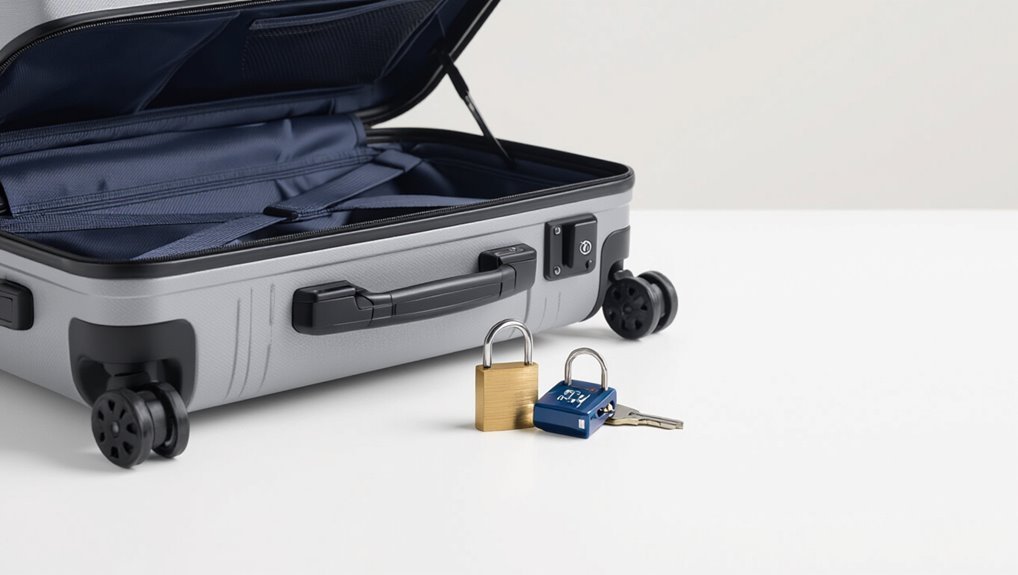
Wondering whether TSA locks are worth the cost and hassle? You’ll get modest benefits: they deter casual tampering, signal secure intent, and let TSA agents reopen bags without breaking keys or zippers.
They won’t stop determined thieves or replace vigilance. If you value convenience and minor extra protection, they’re a sensible, low-cost choice — but don’t treat them as foolproof security.
Who Should Read This Guide
If you travel often for work, this guide helps you pick locks that balance security, durability, and speed at checkpoints.
If you only take a few vacations a year, it points out simpler, budget-friendly options that still meet TSA requirements.
Either way, you’ll get practical tips tailored to how frequently you travel.
Frequent Travelers’ Needs
Because you travel often, you need TSA locks that balance security, convenience, and durability—locks that survive baggage handlers, fit different luggage types, and let you pass airport inspections without hassle.
You want solid construction, reliable keyed or combination mechanisms, low-profile designs that don’t snag, and easy reset features.
Prioritize locks rated for frequent use and backed by clear warranty and replacement policies.
Casual Vacationers’ Considerations
While you’re planning a relaxed getaway, you still want a lock that’s simple, reliable, and won’t slow you down at the airport.
If you travel a few times yearly, prioritize ease: combo or key TSA locks that open for inspections without damage.
You don’t need heavy-duty security, just deterrence against opportunistic theft and peace of mind during short trips.
How TSA Locks Work With Screening
When your luggage goes through airport screening, TSA-approved locks let Transportation Security Administration officers open and relock your bag without damaging the lock or the zipper, using a master key or combination override.
You’ll avoid forced breaks and lost pieces if agents need to inspect contents.
Still, keep valuables with you and document bag condition; locks reduce damage risk but don’t guarantee privacy.
What “TSA‑Approved” Means
When a lock is labeled “TSA‑approved,” it means authorized screeners can open it with a master key so your bag can be inspected without being cut open.
You’ll want to know which lock types—keyed, combination, or cable—use those master keys and how they’re marked.
Understanding this helps you choose a lock that balances security and easy screening.
How TSA Access Works
Because TSA‑approved locks let agents inspect checked bags without breaking them, you’ll see them labeled as compatible with the agency’s master keys or electronic access systems.
When TSA needs to inspect, officers use designated keys or scanners to open approved locks, examine contents, and relock.
You should use these locks if you want inspected luggage resealed without damage and predictable handling during security checks.
Lock Types Explained
TSA‑approved locks let you secure luggage while still allowing Transportation Security Administration officers to open and relock your bag for inspection without damaging the lock.
You’ll find keyed, combination, and cable styles labeled “TSA,” meaning they include a master keyway or approved mechanism.
Pick a sturdy model, verify the logo, and remember TSA access doesn’t guarantee theft protection—just safer inspections.
Who Issues TSA Lock Approvals
Who authorizes TSA lock approvals, and what does that process involve? You should know the Transportation Security Administration vets and approves locks for airport screening. Manufacturers submit designs, testing data, and samples for certification. Once approved, products get the Travel Sentry or Safe Skies mark so agents can open them if needed.
- Manufacturer submission
- TSA testing and audit
- Certification and marking
How TSA Master Keys Work
When agents need to inspect checked luggage, they use a set of master keys that can open approved travel locks without damaging them. You should know these keys match standardized lock pins, letting agents bypass without cutting. They’re controlled, limited in circulation, and meant for inspections only.
| Feature | Purpose |
|---|---|
| Master key | Opens approved locks |
| Standardization | Guarantees fit |
| Control | Limits access |
| Inspection-only | Prevents misuse |
Types of TSA‑Compatible Locks
When choosing TSA‑compatible locks, you’ll want to compare traditional key lock mechanisms, push‑button or dial options, and newer electronic models.
You can also consider flexible cable and strap locks for items that don’t fit standard zippers or built‑in hasps.
In the next section, we’ll look at how each type balances convenience, security, and TSA access.
Key Lock Mechanisms
Key-lock TSA‑compatible locks come in a few common styles you’ll encounter: tubular (barrel) keys, flat keys, and coded master-key systems used by the TSA.
You should pick based on convenience, repairability, and perceived security. Consider:
- Tubular: compact, harder to pick.
- Flat: common, easy to replace.
- Coded master-key: widely accepted, inspectable by agents.
Electronic TSA Options
Although mechanical keys remain common, electronic TSA‑compatible locks give you convenience and new features: keypad codes, Bluetooth control, and rechargeable batteries let you access luggage without a key and change access quickly.
You’ll appreciate remote entry, temporary guest codes, and audit logs on some models. Check TSA approval, battery life, and build quality so electronics don’t become a security weak point.
Cable And Strap Locks
Think of cable and strap TSA locks as flexible alternatives to traditional padlocks: they use braided steel cables or reinforced webbing to secure zippers, wrap around handles, or bind multiple bags together.
You’ll appreciate their versatility, light weight, and ease of threading through awkward anchor points. Choose based on strength, lock type, and flexibility.
- Strength
- Convenience
- Visibility
Combination vs Key TSA Locks: Pros/Cons
When choosing between combination and key TSA locks, you’ll weigh convenience against control: combination locks spare you from carrying a key and let you reset codes, while key locks can feel quicker to operate and avoid forgotten PINs.
Combination locks prevent lost keys but risk code memory issues; key locks require careful key management and spare keys, yet they often offer simpler, faster access during travel.
Build Quality: What to Look for in a TSA Lock
A solid TSA lock starts with materials and construction you can trust: look for hardened zinc alloy or brass bodies, stainless-steel shackles or cables, and snug, well-aligned moving parts that resist wobble and play.
- Solid feel: no rattles, smooth operation.
- Corrosion resistance: keeps mechanisms working.
- Clear markings: TSA indicator and model info for inspectors.
Mechanism Types Explained (Zipper, Latch, Cable)
Now you’ll look at how different TSA lock mechanisms work so you can pick the right one for your bag.
Zipper locks secure the pulls, latch locks fasten a built-in clasp, and cable locks loop through handles or zippers for flexible routing.
Understanding those basics helps you evaluate security and convenience quickly.
Zipper Lock Mechanics
You’ll find zipper-based TSA locks rely on a simple pin-and-slotted-tab arrangement that secures the two zipper pulls together so a keyed or combination lock can immobilize them.
You’ll see its pros and limits: it’s light, quick to use, and accepted by inspectors, but zippers remain a weak point compared with rigid closures.
- Convenience
- Inspectability
- Vulnerability
Latch Lock Operation
Because latch-style TSA locks pivot around a physical clasp rather than threading pulls together, they work differently and suit different use cases.
You secure a latch into a receiver on rigid cases or built-in lock plates, then set the combination or key. They offer quick one-handed operation and visible engagement, but they need proper alignment and can be less flexible than zipper-style systems.
Cable Lock Functionality
While latch locks clip onto a fixed receiver, cable-style TSA locks give you flexibility by threading a braided steel cable through zipper pulls, handles, or luggage hardware before locking.
You’ll appreciate their reach and ability to secure multiple closures at once, though cables can be cut.
Choose quality steel, compact reels, and TSA-approved mechanisms for convenience and compliance.
- Versatility
- Cut resistance
- TSA access
How To Check a Lock’s Durability Before Buying
If you want a lock that survives rough handling, inspect its materials and construction before you buy.
Check for hardened steel shackles, solid-body casings, and corrosion-resistant coatings.
Test the shackle movement for stiffness, verify smooth dial or key action, and confirm rivets or welds look clean.
Look for certification stamps and read concise user reviews about longevity before deciding.
Affordable TSA Locks That Perform Well
Finding a reliable TSA lock that won’t break the bank is easier than you might think; focus on models that balance sturdy materials, simple mechanisms, and TSA approval so you don’t sacrifice security for price.
Find an affordable TSA-approved lock with sturdy materials and a simple, reliable combination—security without extra cost.
You’ll want practical features that last without extras.
- Lightweight metal body for durability
- Clear, easy-to-set combination
- Recognized TSA logo for hassle-free inspections
Premium TSA Locks Worth the Cost
When you invest a bit more in a premium TSA lock, you get stronger materials, smoother mechanisms, and extended warranties that actually matter on long trips.
You’ll benefit from higher-grade metals, precise dials or keys, and better resistance to wear. That reduces replacement frequency and travel stress.
Choose a reputable brand, check warranty terms, and weigh longevity against upfront cost.
How Easy Is It To Bypass Common TSA Locks?
You should know that TSA locks aren’t immune — known master key vulnerabilities have let unauthorized access happen.
Many models can be opened with simple mechanical exploits like shims or a bumped combination.
And newer electronic or Bluetooth-enabled locks bring software and firmware risks that can let attackers bypass them remotely.
Known Master Key Vulnerabilities
Many widely used TSA-approved locks share a handful of master key designs, and that commonality makes them surprisingly easy to bypass for anyone with a copied master key or basic lockpicking skills.
- You risk unauthorized access when master keys circulate.
- Replicated keys defeat the designed inspection-only purpose.
- You should treat TSA locks as access indicators, not full security.
Simple Mechanical Exploits
A surprising number of TSA-approved locks can be defeated with basic tools and a little practice, so you shouldn’t assume they’re more than a visual deterrent.
Simple exploits like shimming, decoding with a pen, or raking the tumblers let someone with modest skills open many models in seconds to minutes.
You should inspect locks, prefer robust hardware, and pack valuables separately since mechanical bypasses are common and quick.
Software And Electronic Risks
Although electronic and smart TSA-approved locks promise convenience, they’re not immune to bypasses, and you should treat them like any other imperfect security layer.
You can be vulnerable to weak firmware, predictable PIN fallback, and RF/blue‑tooth exploits. Consider these risks and mitigate them:
- Outdated firmware enables known exploits.
- Simple PINs invite brute force.
- Unencrypted wireless links leak access.
Alternatives to TSA Locks: Cable Ties, Seals, Wraps
When you want lightweight, low-cost options for showing tamper evidence without using TSA-approved locks, cable ties, plastic seals, and luggage wraps give clear, disposable protection and let inspectors open bags without damaging zippers or hard-shell latches.
Use ties or numbered seals to spot interference quickly, and consider a wrap for full-case visibility. They’re cheap, simple, and won’t prevent inspection.
Alternatives to TSA Locks: Straps, Built‑In Locks
One practical set of alternatives you can use instead of TSA locks are external straps and luggage with built‑in locks, both of which secure your case without relying on TSA key access.
You can choose visible deterrents, integrated mechanisms, or combo options that balance convenience and security.
- Compression straps for tamper evidence
- Integrated combination locks on hard cases
- Reinforced strap plus padlock for added deterrence
Alternatives to TSA Locks: GPS Trackers & Anti‑Theft Zippers
If you want alternatives to TSA locks that focus on recovery and tamper resistance, consider combining a compact GPS tracker with anti‑theft zippers.
You’ll get location updates if baggage goes missing, while slash‑proof or locking zippers deter casual thieves.
Choose trackers with long battery life and geofencing, and zippers rated for travel.
Pick trackers with long battery life and geofencing, and use travel‑rated, slash‑resistant zippers for real protection.
This combo prioritizes retrieval and physical protection without relying on locks.
When TSA Locks Reduce Inspection Damage
When you use a TSA-approved lock, inspectors can open and relock your bag without forcing zippers or seams.
That simple access often prevents broken zippers and keeps your luggage intact during checks.
It’s a small step that can save you from costly repairs and lost contents.
Prevents Broken Zippers
Because TSA-approved locks let agents open your luggage without cutting or forcing the zipper, you’re far less likely to come back to shredded fabric or a broken zipper pull.
You save time and hassle at arrivals, and you avoid sudden repair costs.
Consider these practical benefits:
- Reduced chance of forced entry damage
- Fewer trips to repair shops
- Longer zipper lifespan
Keeps Luggage Intact
Although inspections can be routine, TSA-approved locks keep your suitcase whole by letting agents open and relock it without tearing fabric or breaking seals.
You avoid ripped linings, broken clasps, or cut straps that often follow forced entry. With a proper lock, inspections stay orderly, your gear stays organized, and you spend less time fixing baggage damage after travel.
When TSA Locks Offer Little Real Protection
If you rely on TSA-approved locks to keep valuables safe, know they can give a false sense of security in many situations.
You should still assume determined thieves, rough handling, and accidental damage can bypass them.
Consider these limits:
Consider these limits: TSA locks have clear weaknesses—don’t overestimate their protection; valuables can still be compromised.
- Easily cut or shimmed by tools.
- Opened when bags are inspected and not relocked properly.
- Offer no protection against internal tampering or covert theft.
Real Theft Scenarios Where TSA Locks Help
When your checked bag is opened for inspection, TSA-approved locks let agents resecure it without cutting them off, so your contents stay contained and discreet.
They also discourage quick opportunistic tampering by airport staff or other handlers who might otherwise flip zippers or pry latches.
While they won’t stop a determined thief, they reduce casual chances of someone rifling through your luggage.
Checked Bag Inspections
Because checked bags sometimes get opened for screening, using a TSA-approved lock gives you control: it deters casual thieves, signals tampering, and lets Transportation Security Administration agents re-lock your luggage after inspection without breaking your lock.
You’ll reduce risk and spot interference quickly.
- Protects privacy and valuables
- Preserves lock integrity after inspection
- Provides clear tamper evidence
Opportunistic Tampering
Checked-bag inspections are one thing, but opportunistic tampering often happens outside official screenings — at baggage carousels, in hotel storage rooms, or during brief moments you set your bag down.
You’ll deter casual thieves with TSA locks because they add visible, quick-to-use protection. They won’t stop determined criminals, but they reduce impulse openings, protect small valuables, and buy you time to notice and respond.
Real Theft Scenarios Where They Don’t
Though TSA-approved locks can stop casual tampering, they won’t deter a determined thief who can cut a bag or bypass the lock entirely.
You’ll still face real risks like pickpocketing at busy terminals, luggage slashing, and opportunistic grab-and-run thefts where locks offer little protection.
- Watch crowded areas for hands near pockets.
- Use slash-resistant bags or straps.
- Keep valuables on you, not checked.
How TSA Locks Affect Insurance and Claims
Locks won’t stop every kind of theft, and that reality affects how insurers view your claim.
If you use TSA-approved locks, insurers may see you as taking reasonable precautions, which can help legitimacy.
Still, coverage depends on policy terms—some require proof of forcible entry or list excluded losses.
Check your policy, note lock type, and report promptly to improve claim chances.
How To Document Damage or Theft for Claims
When you discover damage or missing items, act quickly: photograph the exterior and interior of your luggage, capture close-ups of broken zippers, torn fabric, and any tampered TSA lock.
List missing or damaged contents with approximate values so you can give a clear, time-stamped account for your claim.
File reports, keep receipts, and stay organized.
- Date-stamped photos
- Itemized list
- Official report number
Airport Security Policies and TSA‑Locked Bags
You should know the basic TSA regulations that let agents open and inspect checked bags secured with TSA‑accepted locks.
Expect agents to inspect contents if screening flags an item, and they may leave a notice if they open your lock.
Knowing how inspections work helps you choose the right lock and prepare your luggage to avoid surprises.
TSA Regulations Overview
Although airport security rules can seem strict, understanding TSA regulations for checked and carry‑on luggage makes packing and travel smoother. Agencies allow certain TSA‑approved locks so inspectors can open and relock your bag without damaging it, while still enforcing limits on prohibited items and screening procedures.
You should choose approved locks, label bags, and comply with liquid and battery rules.
- Use approved locks
- Label luggage
- Follow item limits
Inspection Procedures Explained
Packing TSA‑approved locks and labeling your bags helps, but inspectors still need to verify contents to meet safety rules.
If an agent needs access, they’ll open your lock with a master key or request you release it. You should comply promptly, repack quickly, and note any damage.
Knowing this process reduces surprises and keeps inspections efficient while balancing security and luggage protection.
Airline Rules for Locked Checked and Carry‑On Bags
When you secure a checked bag, airlines still need a way to inspect it, so they require either TSA‑approved locks or the ability to open the bag without damage.
For carry‑ons, policies are tighter and crew may ask you to access items for screening. You should follow rules, label bags, and anticipate requests.
- Use TSA‑approved locks for checked luggage.
- Keep carry‑ons accessible.
- Know airline-specific rules.
International Screening: Will Non‑US Screeners Accept TSA Locks?
TSA-approved locks are widely recognized, but acceptance varies by country and airport, so you should check local screening policies before you travel.
Some regions allow TSA keys to be used by their security teams, while others may cut locks or require you to open bags for inspection.
If you expect non-compliant handling, consider alternatives like cable ties, tamper-evident seals, or leaving valuables in carry-on.
Global Recognition Varies
Although many travelers assume TSA locks work worldwide, acceptance actually varies by country and airline, so you should check policies before you leave.
You’ll find some airports permit TSA-approved locks, others ignore them, and a few may cut locks regardless.
Consider these factors before locking luggage:
- Local security authority practices
- Airline handling and ground staff procedures
- Destination baggage inspection rates
Regional Screening Policies
If you’re traveling internationally, expect variation: some foreign security agencies honor TSA locks and use compatible master keys or procedures, while others either ignore the locks, cut them during inspections, or require you to present or reopen bags on request.
You should check destination and transit screening rules beforehand, lock items with care, label fragile contents, and be prepared to comply if officials demand access.
Alternatives For Non‑Compliant Locks
When you know that some foreign screeners won’t honor TSA locks, plan alternatives so your luggage stays secure and you avoid delays.
Choose options that balance access and protection.
- Use cable ties or tamper-evident seals so officials can inspect without cutting your lock.
- Carry a lightweight hard-sided case for fragile items.
- Keep valuables in a carry-on or travel pouch under your clothes.
How Baggage Holds and Transfers Interact With Locks
Because baggage goes through multiple hands and screening points, you’ll want locks that let agents inspect contents without damaging them.
Choose locks recognizable to security staff so screening or transfers don’t trigger forced entry.
Expect checked bags to be opened for inspection; fragile seals or nonstandard locks can be cut.
For tight connections, use easily resealed options and keep valuables with you to avoid transfer-related loss.
Pros of Combo TSA Locks for Carry‑Ons
When you use a combo TSA lock on your carry‑on, airport agents can inspect your bag without breaking the lock, which speeds up checks and keeps your gear secure.
You don’t have to worry about losing or forgetting keys, since you set and reset the code yourself.
That combination of smoother inspections and no key hassles makes combo locks a practical choice for frequent travelers.
Easier Airport Inspections
If airport security needs to check your bag, a combo TSA lock lets agents open and relock it without damaging your luggage, saving you time and hassle.
You’ll breeze through inspections, avoid broken zippers or taped seams, and maintain privacy. Quick access also reduces missed connections and stress.
- Faster processing
- Preserved baggage integrity
- Smoother travel flow
No Key Hassles
Although you might forget a tiny key, you won’t get stuck at the gate with a combo TSA lock on your carry‑on — you just dial the code and go.
You set and change combinations easily, avoid lost‑key delays, and share access with travel partners without copying keys.
If you memorize or store the code securely, combos cut hassle and speed up boarding and security checks.
Pros of Key TSA Locks for Checked Bags
Because key TSA locks give you straightforward control over access, they’re a reliable choice for checked bags — you keep the key, and only trusted people can open the lock.
Key TSA locks give clear, reliable control—keep the key, limit access to only trusted people.
- You get clear ownership: keys mean definite control.
- Keys resist accidental combination resets and tampering.
- Retrieval is simple at security checkpoints when needed.
Downsides of Relying Only on TSA Locks
You might think a TSA lock makes your checked bag secure, but it can give a false sense of safety if you rely on it alone.
Thieves can still break or bypass these locks, and airport personnel may open them without signature.
Use TSA locks as one layer, not your only defense.
False Sense of Security
While TSA locks can prevent casual tampering and signal that your bag is locked, they don’t make your luggage impenetrable—determined thieves, baggage handlers, or opportunistic opportunists can still break or bypass them.
Screening procedures may expose contents even when locks are used. You should stay vigilant and use layered precautions.
- Inspect locks routinely.
- Keep valuables with you.
- Use discreet packing.
Limited Theft Deterrence
Noticing that TSA locks can give only a false sense of security, remember they offer limited theft deterrence on their own. You shouldn’t assume a lock will stop determined thieves; it’s mainly a convenience for inspections.
Combine locks with vigilance: keep valuables on you, use tamper-evident seals, choose hard-shell luggage, and consider tracking devices. Those layers actually reduce theft risk.
How TSA Locks Create a False Sense of Security
Ever wondered why a tiny padlock with a red diamond makes you feel safer despite offering little real protection? You rely on its symbol more than vigilance, assuming luggage is secure while skipping backups. That misplaced trust can cost you.
A tiny red-diamond padlock comforts you into complacency — symbol over vigilance, until the cost becomes real
- Masks risk, reduces caution
- Encourages minimal layering of security
- Shifts responsibility from owner to system
Which Travelers Benefit Most From TSA Locks
If you mostly travel domestically and want a quick, low-effort way to signal tamper-resistance, TSA locks can make sense—especially for infrequent flyers, business travelers who check the same bag routinely, and families looking to keep curious hands out of suitcases during transit.
You’ll benefit if you want simple deterring, easy re-locking after inspections, and minimal fuss when passing through U.S. checkpoints.
Which Travelers Should Skip TSA Locks
Who shouldn’t bother with a TSA lock?
If you travel light, use carry-on only, or carry low-value items, you might skip them. They add weight and false security.
Travel light, keep valuables with you — skip TSA locks; they weigh you down and give false security.
Consider alternatives like discreet packing or tamper-evident straps.
- Minimalist carry-on travelers
- Those with low-risk, low-value contents
- Travelers using constant supervision of bags
How To Set and Remember Combination Codes Safely
How will you choose a combination that’s both memorable and secure? Pick non-obvious numbers (avoid birthdays), use a pattern only you know, and change codes occasionally. Write a hint—not the code—somewhere separate. Share only with trusted companions.
| Tip | Example | Why |
|---|---|---|
| Personal pattern | Every 3rd prime | Memorable |
| Hint | “Green door” | Not revealing |
| Rotate | Quarterly | Limits exposure |
Best Practices: TSA Locks on Checked Luggage
Someone checking a bag should use a TSA-approved lock and attach it properly so your luggage stays secure without delaying inspections.
You should also label inside with contact info and keep keys or combo backups separate. Inspect locks after baggage claim and report damage immediately.
- Use visible TSA-approved locks.
- Store backup combos securely.
- Check locks post-flight.
Best Practices: TSA Locks on Carry‑Ons
When you carry a bag onto a plane, use a TSA‑approved lock only if it won’t interfere with security screening—many carry‑ons are opened for visual inspection, and a lock can slow the process or force agents to cut it.
Check airline and airport rules, prefer easily opened compartments, keep valuables accessible, and consider a cable or small zipper lock that doesn’t block quick inspection.
Labeling and Tracking TSA‑Locked Bags (Tags, Photos)
One simple step you can take is to clearly label and photograph your TSA‑locked bag before you travel, so you can prove ownership and document the lock’s condition if it’s opened or damaged.
Label and photograph your TSA‑locked bag before travel to prove ownership and document any damage.
You’ll also want to tag contact info and a unique identifier.
- Attach a durable tag with name and phone.
- Photograph exterior, lock, and tags.
- Note serial or suitcase model details.
What To Do If a TSA Lock Is Damaged During Inspection
If TSA damages your lock during inspection, stay calm and document the damage right away: take clear photos of the broken lock and surrounding luggage, note the inspection date and location, and keep any TSA forms or receipts they give you.
Next, report the incident to the airline and TSA lost-and-found or claims office before leaving the airport. Get written acknowledgement, and save all records for any follow-up.
How To Replace a Lost or Broken TSA Lock Quickly
Got a lost or broken TSA lock? Act fast: replace it before your next trip to keep luggage secure and avoid delays.
Buy a compatible TSA-approved lock online or at a travel shop, or use cable ties temporarily.
Keep your key/code record safe and register new lock details.
- Buy compatible TSA lock
- Use temporary cable ties
- Record new key/code
How To Test Your TSA Lock at Home Before Travel
Before you head to the airport, test your TSA lock at home to make sure it opens, closes, and resets smoothly—this prevents surprises and delays at security. Try the combination, key override, and reset procedure three times. Check for stiffness or damage. If it sticks, replace it.
| Action | Result |
|---|---|
| Set combo | Opens smoothly |
| Key test | Works/doesn’t |
| Reset | Successful |
| Repeat | Consistent |
| Inspect | No damage |
Combining TSA Locks With Layered Security Strategies
Checking your TSA lock at home gives you confidence, but you shouldn’t stop there—layered security multiplies protection.
You combine visible locks with hidden measures and alerts to deter thieves and improve recovery chances.
Use these steps:
- Add tamper-evident seals and discreet luggage straps.
- Carry valuables in a secure anti-theft bag on you.
- Enable device tracking and backup data before travel.
Packing Choices That Reduce Theft Risk Without Locks
When you pack smartly, you can make your luggage far less attractive to thieves without relying on locks: choose unmarked bags that don’t advertise expensive contents, distribute valuables across carry-on and checked items so there’s no single loss, and keep essentials and documents in a slim, concealed travel wallet or money belt that you wear.
Stow backups in hidden pockets, use packing cubes to obscure contents, and avoid obvious brand boxes.
Cost‑Benefit Examples: Short Trips vs Long Trips
If you’re taking a quick overnight or weekend trip, the costs of buying, carrying, and managing TSA‑approved locks often outweigh the benefits—you’re less likely to check bags, valuables stay with you, and simpler anti-theft habits serve you well; by contrast, longer journeys increase the chance of checked baggage, transfers, and cumulative risk, making the upfront expense and convenience of TSA locks more justifiable.
- Short trips: skip locks, keep essentials with you.
- Medium trips: weigh risk, consider one lock for checked items.
- Long trips: use TSA locks for transfers and extended exposure.
Common Myths About TSA Locks Debunked
Although TSA‑approved locks offer real benefits, a few persistent myths make travelers either overconfident or needlessly anxious about using them.
You might think they’re unbreakable, but they’re deterrents, not guarantees. You may worry TSA will wreck your bag—agents usually open and relock properly.
And believing locks slow theft drastically misreads reality; layered precautions and sensible packing matter more than any single lock.
Quick Checklist: Should You Use a TSA Lock?
Wondering whether a TSA lock makes sense for your trip? You should weigh practicality, risk, and convenience quickly.
Ask if your luggage needs basic deterrence, if you’ll use checked bags often, and if you accept potential inspections. Use this simple checklist to decide:
Ask whether your luggage needs basic deterrence, how often you check bags, and if inspections are acceptable.
- Is theft risk low-to-moderate?
- Will it speed inspections?
- Do you prefer replacement over damaged zippers?
Frequently Asked Questions
Can I Use TSA Locks on Non-Luggage Items (Backpacks, Toiletry Bags, Electronics Cases)?
Yes—you can use TSA locks on backpacks, toiletry bags, and electronics cases if they have lockable zippers or closures; they’ll deter casual tampering, but TSA access may require cutting or bypassing non-compliant designs, so choose wisely.
Do TSA Locks Interfere With Travel by Train, Bus, or Cruise Lines?
They generally won’t interfere with train, bus, or cruise travel, but you should check each carrier’s rules. You might face inspections where staff cut or open locks, so keep receipts and be prepared to replace damaged locks.
Are There Legal Issues if TSA or Foreign Agents Cut My Lock?
Yes — you could face issues: TSA or foreign agents can legally open or cut locks for inspections, and you won’t usually get compensation for damage; you’ll want to use TSA-approved locks and document any harm promptly.
Can TSA Master Keys Be Duplicated and Sold to the Public?
No, you can’t lawfully obtain genuine TSA master keys; their originals are controlled, and duplicating or selling them is illegal. You might find fake copies or images online, but they’re unreliable and often blocked by airlines or authorities.
Do TSA Locks Affect My Ability to File a Police Report for Theft?
Yes—you can still file a police report if your luggage with a TSA lock is stolen. You’ll want to document damage and missing items, keep receipts, and note the lock type; that evidence strengthens your theft report and claims.
Conclusion
If you want hassle-free inspections and increased peace of mind, TSA locks are worth using for most checked bags — they let agents inspect without breaking your zipper or latch. If you carry high-value items, consider alternatives like keeping them in carry-on, using tamper-evident straps, or choosing hard-shell cases with integrated locks. For short, low-risk trips you might skip them, but overall TSA-approved locks offer a small, sensible layer of protection.