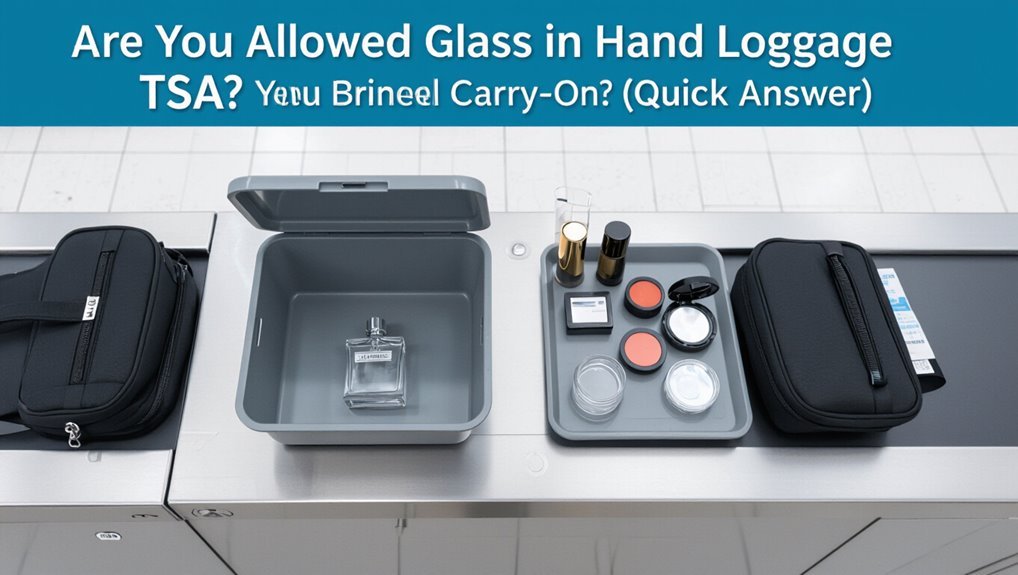
Are You Allowed Glass in Hand Luggage TSA?
Yes — you can bring most solid glass items in your carry-on, but liquids in glass bottles must follow the TSA 3-1-1 rule (3.4 oz/100 ml in a single quart-sized clear bag). Pack fragile glass with padding, keep it accessible for screening, and expect officers to inspect it; larger liquid containers should go in checked baggage. Bring prescriptions in original labeled vials and document valuables, and keep going for practical packing tips and checkpoint advice.
Can You Bring Glass in Carry-On? (Quick Answer)
Can you bring glass in your carry-on? Yes — solid glass items like vases, frames, or intact drinkware are allowed if they fit screening and size limits.
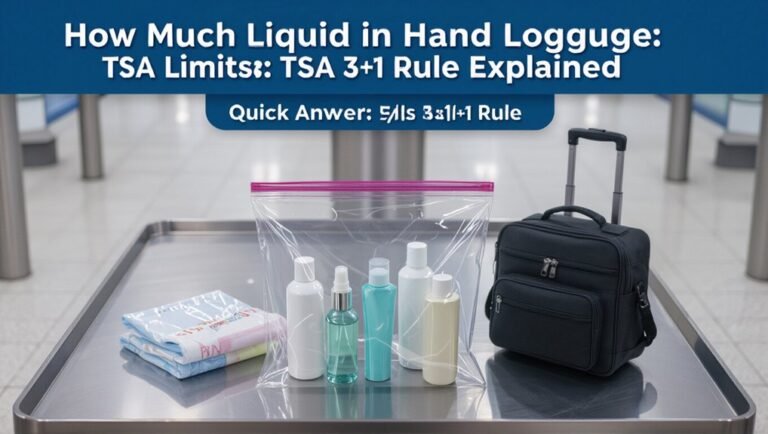
Liquids in glass bottles must follow the 3-1-1 liquids rule (containers ≤100 ml, all in one quart bag).
Fragile pieces might be inspected or rejected for safety; pack them securely to avoid breakage and delays.
Who This Guide Is For and How to Use It
Who needs this guide and how should you use it? You’ll get clear, practical rules about carrying glass in carry-on bags.
Follow quick tips, checklists, and scenario notes so you can decide fast.
- Travelers unsure about glass items
- People packing fragile souvenirs
- Frequent flyers wanting rules refreshers
- Those preparing for security screening
How TSA Defines Glass and Similar Materials
TSA treats “glass” broadly: it covers standard glass items like bottles and jars, as well as variants such as tempered glass, leaded crystal, and coated or painted glass that still break into sharp fragments.
You should also consider ceramics, mirrored surfaces, and some rigid plastics that shatter similarly; TSA screens for potential hazards based on composition and fragmentation risk, not just label names.
TSA Liquids Rule for Glass Bottles
Since glass and similar materials can shatter into dangerous shards, you’ll want to know how the liquids rule applies when those liquids are in glass bottles.
- You must follow the 3-1-1 rule for carry-on liquids.
- Place glass bottles in a quart-sized, clear plastic bag.
- Each bottle must be 3.4 ounces (100 ml) or less.
- Larger glass liquids go in checked baggage or get discarded.
Glass Containers Allowed in Carry-On
You can bring certain glass containers in your carry-on as long as they meet safety and liquid rules—small toiletry bottles, perfume vials, and medication containers are generally allowed when they fit the 3-1-1 limits and are packed in a clear quart-sized bag.
Wrap fragile items, cushion them to prevent breakage, and keep them accessible for screening to speed inspection and reduce damage risk.
Glass Items Not Allowed in Carry-On
You shouldn’t pack fragile glass containers in your carry-on because they can break and spill, creating a safety and cleanup hazard.
Large glass bottles are also often restricted due to size limits and the risk of shattering under pressure changes.
Check airline rules and consider packing these items in checked baggage or using protective, approved alternatives.
Fragile Glass Containers
Though airlines make exceptions for small toiletry bottles, fragile glass containers like full-size perfume bottles, decorative vases, and glass jars are generally barred from carry-on because they break easily and can injure passengers or damage other items.
- Wrap items securely.
- Pack in checked baggage when possible.
- Use protective cases.
- Declare unusual pieces to security if unsure.
Large Glass Bottles
When a bottle is large, heavy, or filled with liquid over the allowed 100 ml limit, airlines will usually require you to pack it in checked baggage rather than carry-on.
Oversized glass bottles pose spill, pressure, and breakage risks that can injure passengers and damage luggage.
You should check airline and TSA rules beforehand, wrap bottles securely, and declare fragile or valuable glass to avoid surprises.
Size Limits: Perfume, Vials, Travel Glass Bottles
You can carry perfume and other liquids in glass containers only if each is within the permitted liquid size—usually 100 ml (3.4 oz) or less—and fits your carry-on’s clear plastic bag.
Solid vials and similar small glass items may be allowed but still need to meet airline and security rules, so check before you pack.
Always declare any unusual containers at security to avoid delays.
Permitted Liquid Size
Wondering how much perfume or other liquids you can take in your carry-on?
You must follow the 3-1-1 rule: containers 3.4 ounces (100 ml) or less, all fit in one clear quart bag, one bag per passenger.
Consider sturdy travel glass bottles and secure caps to prevent leaks.
- 3.4 oz / 100 ml
- One quart bag
- One bag only
- Secure caps
Solid Vial Rules
Although small vials and travel-sized perfume bottles seem simple, they still have specific size and packing rules you need to follow: you can carry glass vials if each liquid is 3.4 ounces (100 ml) or less and all fit inside a single clear quart-sized plastic bag.
Secure caps, use leakproof containers, and pad fragile glass to prevent breakage during screening.
Packing Fragile Glass for Security Screening
When packing fragile glass for security screening, wrap each item individually in bubble wrap or soft clothing and secure it so it won’t shift during handling.
Follow these steps:
- Cushion bottoms with soft layers.
- Separate pieces with padding.
- Place upright in the center of your bag.
- Mark the bag as fragile and notify screeners if items need special handling.
Using Clear Quart Bags for Glass Liquids
How do you safely carry glass-containing liquids through security?
Use a single, clear quart-size bag per passenger, placing each sealed glass bottle upright and spaced to avoid contact.
Pack each sealed glass bottle upright in one clear quart bag, spaced to prevent contact and zippable for screening.
Zip it fully and present it separately at screening.
Label fragile contents if possible and keep volumes within the TSA 3-1-1 limits.
Replace damaged bags between trips to maintain visibility and containment.
Packing Hand-Blown Ornaments and Souvenirs
If you’re carrying hand-blown ornaments or fragile glass souvenirs, pack them with plenty of cushioning — bubble wrap, soft clothing, and sturdy dividers work best.
Place fragile items near the center of your carry-on and mark the bag so TSA agents can handle it gently during screening.
Be prepared to remove or present fragile pieces separately if an agent asks to inspect them.
Packing Fragile Glass Ornaments
Because hand-blown glass is delicate and often irreplaceable, you’ll want to pack each ornament with care to prevent chips or breaks during transit.
- Wrap individually in tissue, then bubble wrap.
- Nest in a sturdy box with dividers.
- Fill gaps with soft clothing or foam.
- Label “Fragile” and keep in cabin, handling gently during placement in overhead bin.
TSA Screening Tips
Now that your glass ornaments are packed snugly, you’ll want to think about what happens at TSA checkpoints so they don’t get opened, inspected, or confiscated.
Carry a clear inventory and label fragile items.
Place ornaments near the top of your bag for quick access.
Be ready to remove them if requested, explain they’re fragile hand-blown pieces, and accept secondary screening politely.
Carrying Glass Drinkware and Stemware
Delicate wine glasses and thick tumblers can travel in your carry-on, but you’ll need to pack them carefully to prevent breakage and speed you through security.
- Wrap each glass in clothing or bubble wrap.
- Place stems upright between soft items.
- Use a rigid case or hard-sided compartment.
- Declare oversized or oddly shaped pieces to officers if asked.
Glass Toiletries: Shampoo, Lotion, Cosmetics
If you plan to bring shampoo, lotion, or cosmetics in glass bottles, remember most liquids in hand luggage must meet the 100ml (3.4oz) container rule and fit in a single clear bag.
Pack fragile glass in padded pouches or wrap it in clothing to prevent breakage and leaks.
You’ll also want to seal caps and consider transferring larger products into compliant plastic travel containers.
Glass Bottle Limits
Because most airlines follow liquid restrictions, you can’t simply pack full-size glass bottles of shampoo, lotion, or cosmetics in your carry-on; they must fit the 100 ml (3.4 oz) per container rule and go in a single, clear quart-sized bag.
Consider these limits:
- Each bottle ≤100 ml.
- All bottles in one quart bag.
- One quart bag per passenger.
- Empty glass bottles are allowed.
Packing And Protection
Now that you know how glass toiletries must meet the liquid rules, you’ll want to focus on packing them so they don’t break or leak in your carry-on.
Wrap bottles in soft clothing or bubble wrap, seal lids with tape, and place them upright in a sturdy, zippered pouch.
Use a plastic bag for spills and keep fragile items centered away from edges.
Contact Lens Solution and Meds in Glass Vials
When packing contact lens solution or medications in glass vials, remember that TSA and most international airlines treat liquids in hand luggage under the usual 100 ml/3.4 oz rule unless you qualify for an exception; follow these steps to comply and protect meds:
- Carry prescriptions or doctor’s note.
- Use original labeled containers when possible.
- Pack vials in a clear resealable bag.
- Cushion glass to prevent breakage.
Food in Glass Jars: Jams, Sauces, Baby Food
If you plan to bring jams, sauces, or baby food in glass jars, treat them like any other liquid or gel: they must meet the 100 ml/3.4 oz carry-on limit unless you qualify for an exception (such as baby food needed during the flight). You should pack jars in a clear quart bag and declare exceptions at security.
| Item | Limit | Tip |
|---|---|---|
| Jam | 100 ml | Seal well |
| Sauce | 100 ml | Use travel jars |
| Baby food | Exception possible | Notify TSA |
Alcohol in Glass Bottles: Carry-On vs Checked
Wondering whether you can bring that glass bottle of wine or spirits on board? You can, but rules differ.
- Carry-on: bottles over 3.4 oz (100 ml) aren’t allowed through security.
- Duty-free purchases in sealed tamper-evident bags are permitted.
- Checked: wrap bottles to prevent breakage; alcohol over 70% is prohibited.
- Pack valuables and open bottles in carry-on when allowed.
Telling Airline and TSA About Fragile Glass
How should you notify the airline and TSA about fragile glass in your luggage?
Call the airline ahead, mention fragile glass and any special packing or carriage needs, and check their policy.
At the airport, inform the check-in agent and security officer if an item requires special handling.
Label items fragile, pack cushioning, and be ready to answer questions about contents and size to expedite screening.
When Glass Must Go in Checked Baggage
When an item is large, fragile, or contains liquid glass components that exceed carry-on limits, you’ll need to pack it in checked baggage.
Airlines require bulkier or potentially hazardous glassware—like large mirrors, framed glass art, and certain laboratory vials—to travel this way for safety and screening reasons.
- Large mirrors
- Framed glass artwork
- Heavy glassware sets
- Glass items wrapped with padding and declared
Exceptions: Medical Glass and Prescription Vials
You can bring medical glass items like insulin pens or inhalers in your carry-on, but there are specific rules for prescription vials.
Security may ask to see prescriptions or doctor’s notes and will screen these items separately.
Keep documentation handy and pack vials to prevent breakage.
Medical Glass Allowed
Although airlines generally ban loose glass in carry-on bags, they make clear exceptions for medically necessary items—so you can carry medication vials, inhalers with glass components, and other prescription containers if they’re required for your health.
- Keep items accessible for screening.
- Bring documentation or prescriptions.
- Pack bottles upright and cushioned.
- Declare items at security checkpoints.
Prescription Vial Rules
Because prescription vials are considered medically necessary, TSA and most airlines let you carry them in your hand luggage even if they’re glass—provided you follow screening rules and can show prescriptions or documentation on request. You should pack vials securely, separate them for inspection, and declare them if asked.
| Item | Material | Tip |
|---|---|---|
| Vial | Glass | Cushion |
| Label | Paper | Visible |
| Quantity | Small | Separate |
| Carry | Hand | Accessible |
Documentation And Screening
When carrying medical glass or prescription vials in your hand luggage, have prescriptions or medical documentation ready and accessible for screening.
TSA agents may ask to verify necessity but will generally allow them if properly labeled and declared.
- Show prescription labels.
- Present doctor’s note if needed.
- Declare items at checkpoint.
- Separate vials for X-ray inspection.
International Flights and Differing Glass Rules
If you’re flying internationally, remember that glass rules can change dramatically between countries and airlines, so you can’t assume what’s allowed in one airport will be allowed in another.
Check each carrier’s policy and the arrival and transit countries’ security regulations before packing.
Consider packing fragile glass in checked baggage when allowed, or using approved protective cases and declaring unusual items to avoid confiscation.
What to Expect at the Security Checkpoint
As you approach the security checkpoint, expect officers to inspect any glass items in your carry-on closely and to ask you to remove them for separate screening.
You’ll need to:
- Place glass items in a bin.
- Show receipts if available.
- Answer brief questions about contents.
- Wait while screeners run tests.
Follow instructions, stay calm, and reclaim items promptly.
What TSA Screeners Do With Glass Items
Because glass can trigger additional checks, TSA screeners will separate it from your bag, X‑ray it, and may inspect it by hand to confirm it’s safe.
You’ll be asked to remove wrapped or padded glass so they can see contents and any liquids.
If they need clearer views, they might request you open containers or unwrap items briefly while they handle screening procedures.
Why Glass Items Get Confiscated
When glass items get confiscated, it’s usually because they pose a safety, security, or regulatory risk that can’t be mitigated during screening.
You may have them taken for reasons like:
- Fragile shards that can injure passengers or crew.
- Containers that could hide prohibited liquids.
- Unlabeled or suspicious contents.
- Size or quantity exceeding allowed limits.
Preventing Breakage During Screening and Boarding
Pack fragile glass items in padded cases or wrap them in clothing so they won’t shift or crack during screening and boarding.
Position them centrally in your carry-on, away from zippers and edges. Mark fragile items if possible and ask screeners politely for careful handling.
Keep items accessible to remove if requested, and avoid overpacking around glass to minimize pressure and impact during transit.
Best Carry-On Packing List for Glass Items
If you’re bringing glass in your carry-on, prioritize items and protective gear that reduce breakage risk and speed security checks: padded sleeves or hard cases, bubble wrap or microfiber cloths, a small ziplock for loose shards or receipts, and a dedicated compartment or packing cube to keep glass centered and separate.
- Label fragile pieces clearly.
- Pack small items together.
- Place heavier items below.
- Keep documentation handy.
Wrapping and Cushioning That Protect Glass
When packing glass in your carry-on, wrap each piece in soft padding to absorb shocks.
Use bubble-wrap to secure fragile edges and keep items from shifting.
You’ll want to tuck wrapped pieces into a snug compartment so they stay cushioned throughout the flight.
Use Soft Padding
Because glass takes the blunt of bumps and drops, wrap each fragile item in soft padding—bubble wrap, foam sleeves, or thick clothing—to absorb shocks and keep surfaces from rubbing.
- Cushion corners with folded fabric.
- Layer items separately to avoid contact.
- Fill gaps with socks or towel pieces.
- Place wrapped glass mid-bag, surrounded by soft items for extra protection.
Secure With Bubble-wrap
Start by wrapping each glass item tightly in several layers of bubble-wrap so the air pockets absorb shocks and prevent scratches.
Then tape edges, tuck fragile pieces into a padded pouch, and place them upright in your carry-on between soft clothing.
Use extra bubble-wrap around bottle necks and lids, label fragile, and keep heavier items away to avoid crushing during transit.
Using Hard-Sided Bags and Garment Protection
If you want extra protection for glass items, choose a hard-sided bag and pack strategically: place fragile pieces in the center, cushion them with soft clothing, and use dividers or padded pouches to prevent shifting.
- Position glass away from edges.
- Wrap each item individually.
- Fill gaps with garments.
- Use a garment bag for added suspension and crease-free padding.
When to Ship Valuable Glass Instead of Carry It
If your glass item is rare or very expensive, you might be safer shipping it with a specialist carrier rather than risking carry-on damage or loss.
Check insurance options and keep receipts, appraisals, and photos as documentation before you decide.
Compare the carrier’s guarantees and costs to the risks of carrying it yourself so you can choose the smarter option.
High-Value Fragile Items
When you’re dealing with expensive or sentimental glass—antique drinkware, art pieces, or designer lighting—think twice before packing it in your carry-on: airline security, cramped bins, and jostling during boarding can still damage fragile items, and some carriers restrict certain glass types.
- Ship when repair costs exceed replacement.
- Ship for irreplaceable heirlooms.
- Ship large or oddly shaped pieces.
- Ship if airline policies prohibit carriage.
Insurance And Documentation
Packing expensive glass is one thing; proving its value and protecting it in transit is another, so you’ll want to contemplate insurance and documentation before deciding to carry or ship.
Photograph items, note serial numbers, obtain appraisals or receipts, and check insurer and carrier limits.
Declare high-value pieces, buy appropriate coverage, and keep copies accessible—digital and paper—for claims or customs inspections.
Shipping Versus Carrying
Deciding whether to ship or carry valuable glass comes down to risk, convenience, and cost—you’ll want to weigh how fragile, valuable, and replaceable each piece is against the logistics of travel.
- Ship insured for high value or irreplaceable items.
- Carry fragile but small, easily padded pieces.
- Ship bulky, heavy items to avoid airline fees.
- Carry when you need control and immediate access.
Airline-Specific Rules That Affect Glass Carry-Ons
Because airlines set different safety and size limits, the rules that apply to glass in your carry-on can vary considerably by carrier.
Check your airline’s carry-on dimensions, weight limits, and prohibited items list before packing glassware. Some carriers ban fragile or high-value glass, others require packaging or declaration.
Frequent-flyer status or gate-check policies may also change whether you can bring glass aboard.
Handling Transit and Tight-Connection Screenings
When you’re connecting through another airport—especially on a tight schedule—plan for extra screening time and know where security lanes are so you can move quickly; some transit hubs reroute connecting passengers through a separate checkpoints or require customs clearance that can delay re-screening of carry-ons containing glass.
- Pack glass securely and accessibly.
- Label fragile items.
- Know transit rules online.
- Allow buffer time.
Insuring and Declaring High-Value Glass for Travel
If you’re traveling with high-value glass—artwork, antiques, or designer pieces—declare them to your carrier and insurer before you fly so you won’t be surprised by coverage gaps or customs delays.
Itemize value, provide photos, and get written confirmation of coverage and packing requirements.
Check airline liability limits and consider specialized transit insurance or courier services for valuable, fragile pieces to guarantee proper protection.
What to Do If TSA Confiscates or Breaks Glass
Even with declarations and specialized insurance, you can still face inspection issues at security—so know what to do if TSA confiscates or breaks glass.
- Stay calm and ask for the officer’s name and reason.
- Document damage with photos and timestamps.
- Request a written incident report and keep copies.
- File a claim with the airline and your insurer promptly, attaching evidence.
Quick Pre-Flight Checklist for Traveling With Glass
Before you leave for the airport, check which glass items are allowed in carry-on and which need to go in checked baggage.
Pack fragile pieces with padding, use hard-sided cases or wrap items in clothing, and secure lids or caps to prevent leaks.
Keep receipts or documentation for special items handy in case TSA asks.
Allowed Items Overview
When you pack glass in your hand luggage, know what’s allowed so you don’t get held up at security:
- Solid glass items (decor, figurines) are usually allowed.
- Empty glass bottles are permitted; filled liquids must follow liquid rules.
- Medication in glass is allowed with documentation.
- Fragile or sharp glass may be inspected or denied.
Check airline and TSA updates before travel.
Packing Safety Tips
If you’re carrying glass in your carry-on, follow a short checklist to keep it intact and breeze through security:
Wrap items individually with bubble wrap or clothing.
Place them upright in a hard-sided case.
Pad gaps to prevent shifting.
Seal liquids in clear quart bags if applicable.
Label fragile items.
Keep receipts for specialty glass.
Pack heavier items below lighter ones for stability.
Official TSA Links and Further Resources
To make sure you get the most accurate, up-to-date guidance on carrying glass in your carry-on, consult the Transportation Security Administration’s official resources directly—start with the TSA’s “What Can I Bring?” page and their specific guidance on fragile items and liquids.
- TSA What Can I Bring?
- Carry-on rules
- Liquid exceptions
- Contact TSA for clarifications
Frequently Asked Questions
Can I Bring Glass Perfume Refills or Decanted Samples on Board?
Yes — you can bring glass perfume refills or decanted samples in carry-on, but they must follow liquid rules: each container ≤100 ml, all fit inside a single clear quart-size bag, and security may inspect or refuse them.
Are Tinted or Colored Glass Items Treated Differently at Screening?
No, tinted or colored glass isn’t treated differently at screening; you’ll be screened based on size, contents and safety risk, and opaque glass may prompt extra inspection if officers can’t confirm there’s nothing prohibited inside.
Can I Pack Glass in My Personal Item Instead of Carry-On?
Yes, you can pack glass in your personal item, but it must follow TSA rules: pack securely, cushion fragile pieces, and remember size/weight limits. Sharp or prohibited items still can’t go in carry-on or personal items.
Will TSA Allow Glass Art Cases or Display Boxes Through Security?
Yes — TSA will generally allow glass art cases or display boxes through security, but you’ll need to remove them from your bag for X-ray screening, and they might be inspected or rejected if deemed unsafe or oversized.
Do Glass Items Trigger Secondary Explosive Trace Screening?
Yes — glass items can trigger secondary explosive trace screening if security officers suspect contamination; you’ll be asked to open cases or remove items for swabbing, and they’ll clear or swab you and the object before rejoining your luggage.
Conclusion
You can bring many types of glass in your carry-on, but TSA has rules: glass items that don’t contain prohibited liquids, sharp edges, or hazardous materials are generally allowed, while glass bottles with liquids must follow the 3-1-1 rule. If you’re carrying valuable or fragile glass, declare it, pack it securely, and consider insurance. If TSA confiscates or breaks an item, follow their claims process. Check TSA guidance before you fly.