Can TSA Search Your Phone at Airport
Yes — TSA can inspect your phone visually and may ask you to power it on or unseal it, especially if an alarm or threat is suspected, but officers rarely demand passwords or perform deep forensic searches without law enforcement or a warrant. At borders screening is broader and non‑US searches are stricter, so cooperation can reduce delays; you can refuse advanced access but risks include seizure or detention. Keep your device clean and stay informed to learn more.
Short Answer: Can TSA Search Your Phone?
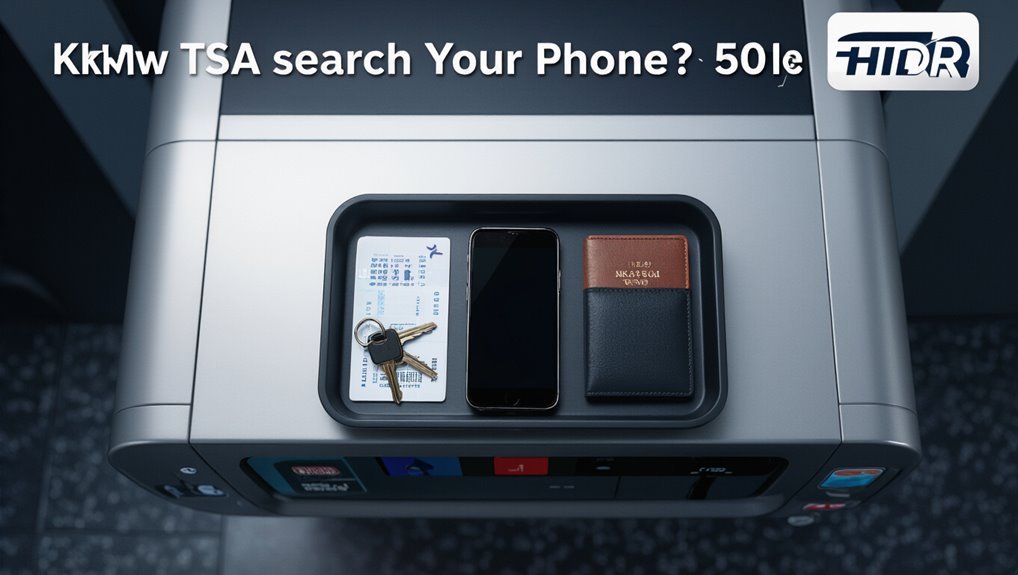
Can the TSA search your phone? You’ll usually face screening of devices for threats; TSA can inspect contents visually but rarely demands passwords.
You can refuse advanced forensic searches, though that may delay travel or involve law enforcement.
Know your rights: cooperate with standard checks, politely assert limits on invasive exams, and request counsel or legal advice if agents seek deeper access.
What TSA’s Role Is vs. Law Enforcement
TSA’s job is to screen for transportation threats and keep the security checkpoint moving, not to investigate crimes or collect evidence for prosecution.
You should know TSA focuses on safety measures and detecting prohibited items; if agents spot potential illegal activity, they’ll call law enforcement.
Police have authority to investigate, detain, or seize devices — TSA doesn’t perform criminal probes or act as investigators.
When TSA Can Physically Inspect Devices
You might be asked to hand over a device for a physical inspection when an officer sees something that looks like a prohibited item on the screen or in the device.
Officers can also request to inspect your phone if you give consent or if there are specific security concerns that justify it.
We’ll explain what that inspection can involve and what rights you have during the process.
When Physical Search Allowed
When officers have reasonable suspicion that a device may conceal a threat or contain prohibited items, they can ask to conduct a physical inspection.
You’ll be asked to unseal and power on devices; you can refuse investigatory searches without probable cause.
Expect limited, supervised handling and documentation.
Rights and procedures include:
- Ask for officer ID and reason
- Request privacy measures
- Request receipt or record
Officer Observes Prohibited Items
If an officer spots an item in your carry-on that’s clearly prohibited—like a large knife, undeclared fireworks, or a disguised weapon—they can move from visual observation to a physical inspection of devices and bags.
You must comply while they verify the threat, and officers may power on or briefly handle electronics to confirm contents.
Refusal can delay you and affect travel.
Consent Or Security Concerns
Airport security can physically inspect your phone or other electronic devices either with your consent or under specific security concerns.
You’ll usually be asked; you can refuse, but refusal may delay travel or trigger additional screening. Inspecting occurs when threats, prohibited items, or intelligence-specific risks arise.
- cooperate to speed resolution
- know your rights and limits
- ask for supervisor if unsure
What “Advanced Screening” of Phones Looks Like
If TSA asks for advanced screening of your phone, they’ll typically run a more thorough check of its contents and functionality, sometimes using specialized tools.
You’ll want to know what types of data officers can access and what limits or safeguards apply to avoid overreach.
Ask for clarification about what they’ll search, whether they’ll copy files, and how long any data will be retained.
What Advanced Screening Entails
When agents decide to conduct an advanced screening of your phone, they go beyond a quick visual inspection and use a structured process to examine device content, connectivity, and functionality; that can include requesting you access the device, asking you to power it on, searching stored files and apps, and temporarily connecting it to other equipment for forensic review.
- You’ll be asked to demonstrate functionality.
- They may inspect apps and files.
- Temporary connections enable deeper diagnostics.
Data Access And Limits
Because agents can look through your device and connect it to diagnostic tools during advanced screening, it’s important you know what they can and can’t access: you can expect inspection of accessible content, metadata, and apps; they can’t compel decryption without warrant. Know your rights, cooperate, and ask for a supervisor or written record.
| Can Access | Can’t Access | Notes |
|---|---|---|
| Accessible files | Encrypted backups | Request warrant |
| Metadata | Remote cloud without legal process | Ask for documentation |
| App data visible | Hidden/sealed containers | Supervisor availability |
Domestic vs. International TSA Screening
Although both domestic and international travelers face device screening, the rules and procedures can differ greatly depending on your route and destination.
You should expect different questioning, varying levels of inspection, and possible data requests when traveling abroad. Know rights and cooperate to avoid delays.
Expect tougher questioning, deeper inspections, and possible data access when traveling internationally—know your rights and cooperate to minimize delays.
- Domestic: limited, policy-driven checks
- International: heightened scrutiny, partner agencies
- Prep: backup data, passwords available
How Airport Screening Differs at the Border
If you’re crossing a national border, expect screening to be more intrusive and broader in scope than routine domestic checks.
Border agents have wider authority to inspect devices, ask detailed questions, and detain property for further review.
You should cooperate, know your rights vary by country, and consider minimizing sensitive data before travel.
Always carry necessary credentials and backup access methods.
When TSA Can’t Compel You to Unlock Your Phone
You have constitutional protections that can limit when authorities force you to access a phone, but those limits aren’t absolute.
At the border, different rules may apply and officers sometimes have broader search powers.
Strong device encryption and refusing to provide a passcode can bolster your protection in many non-border situations.
Constitutional Rights Limitations
When federal agents ask you to open your phone at the airport, your Fifth Amendment protection against compelled self-incrimination can sometimes stop them from forcing you to provide a passcode or biometric access—though the rule depends on whether they’re seeking testimonial evidence or simply accessing non-testimonial data.
You should know limits:
- You can refuse to divulge passcodes (testimonial).
- Courts vary on compelled biometrics.
- Non-testimonial system searches may be allowed.
Border Search Exceptions
Courts treat searches at the border differently than searches in the interior, so the Fifth Amendment protections you rely on can be narrower at airports and other entry points.
You generally can’t refuse basic inspections, and agents may examine devices without probable cause.
However, compelled decryption or forcing passcodes is more legally fraught; you should politely assert rights and request to speak with counsel before complying.
Device Encryption Protections
Several legal lines limit agents’ power to force you to access an encrypted device, and knowing them can protect your data. You can refuse to provide passwords in many contexts; warrants or clear statutory authority are often required.
Consider these protections and steps:
- Know your constitutional and statutory rights.
- Use strong encryption and biometric lock alternatives.
- Ask for legal counsel before complying.
What to Say If an Agent Asks You to Unlock It
If an agent asks you to access your phone, stay calm and respond clearly about your rights and intentions.
Say you’ll cooperate but won’t provide your passcode; offer to open it yourself to show specific content needed.
Request clarification: why they need access and what they’ll view.
Ask for an officer’s name and badge number, and note the time and location.
How to Refuse a Request Without Escalation
You can refuse without making things worse by staying polite, firm, and cooperative: tell the officer you won’t provide your passcode but you’ll comply in other ways (like opening the phone yourself to show specific content).
Stay polite but firm: refuse your passcode, offer to unlock the phone yourself to show specific content.
Keep your hands visible, and ask concise questions about what they need and why.
- Offer limited, specific access
- Request legal basis or supervisor
- Decline access, allow inspection
What Happens During Secondary Device Screening
If an officer asks to inspect your device in secondary screening, you’ll be asked to power it on and access it so they can view specific content.
They’ll usually limit the inspection to relevant files or apps and may document what they look at, while following agency privacy protocols.
You can ask how they’ll handle any copied data, what they’ll retain, and whether you’ll get a receipt for the inspection.
Device Inspection Procedure
When TSA agents flag a device for secondary screening, they’ll ask you to power it on and may request passcodes so they can confirm the device functions normally. You can decline to provide a passcode, but that may lead to further inspection or denial of carriage.
You’ll stay present while they inspect hardware and visible content. They may:
- power cycle and test components
- check for suspicious modifications
- verify connectivity and basic operation
Data Privacy Measures
Although agents may access your device during secondary screening, they’ll generally limit their examination to visible content and basic functionality rather than deep data extraction.
You can ask for explanations about what they’re doing and for a record of the inspection.
You should lock accounts, disable biometrics, and back up data beforehand.
Request privacy safeguards, witness presence, and written documentation if you’re concerned.
When Devices Can Be Seized and Why
Because airport security can require you to hand over a device for further inspection, agents may seize phones or laptops when they believe the item poses a security risk, contains evidence of a law violation, or can’t be properly screened on the spot.
Airport security can seize devices for inspection if they pose safety risks, suggest criminal activity, or can’t be screened.
You should know reasons and your options:
- safety risks (unusual devices, threats)
- legal evidence (criminal indicators)
- screening failures (cannot be inspected)
How Long TSA Typically Holds Seized Devices
If TSA seizes your device, it usually holds it for a short period—often hours to a few days—while officers finish inspections.
In some cases, though, legal holds or referral to law enforcement can extend retention for weeks or longer.
You’ll want to ask when and why your device is being kept and get contact information for follow-up.
Typical Retention Periods
When agents seize a phone or other electronic device at the checkpoint, they’ll usually inventory it and note a tentative retention period so you know how long it’s likely to be held.
You can expect varied timelines depending on the situation:
- Short-term: hours to days for quick inspections.
- Mid-term: days to weeks for deeper review.
- Long-term: weeks to months if evidence requires further processing.
Legal Hold Variations
Although most seized devices are returned after routine checks, legal holds can change how long the TSA keeps your phone—sometimes substantially.
If your device’s data ties to a criminal or national-security probe, investigators or courts can impose holds. You’ll be notified when possible, but access may be restricted for weeks or months.
Contact legal counsel and file timely requests to expedite return.
How to Retrieve a Seized Phone After Screening
Because you want your device back quickly and intact, start by staying calm and asking the officer who took it for the reason and the expected return process.
Document names, badge numbers, and time. Follow instructions for retrieval or appeals. If needed, contact TSA customer service or airport authorities.
- Record all details immediately
- Preserve receipts and screening paperwork
- Ask about appeal timelines
What TSA Agents Can Do With Device Hardware
When your device is flagged, agents can inspect its hardware to verify it’s safe and operational.
They can handle, power on or off, and briefly open compartments, but they can’t permanently damage or take parts without cause.
Know your rights and ask for a supervisor if you think the handling exceeds those limits.
Device Inspection Limits
While TSA officers can power on devices, scan their contents, and briefly handle hardware to access batteries or removable storage, they can’t dismantle your phone or permanently alter its components without your consent or a higher-level authorization.
You should know limits and assert rights calmly.
- They’ll inspect accessible parts only
- They won’t perform invasive repairs
- Consent or warrant required for teardown
Physical Handling Rights
If an officer needs to examine your device hardware, they’ll handle only accessible parts—buttons, ports, removable batteries or SD cards—and they won’t dismantle, permanently alter, or perform repairs without your consent or proper authorization.
You can request a supervisor, refuse nonconsensual repairs, and ask for documentation of actions.
Officers may secure, tag, or temporarily retain devices for inspection under established procedures.
What TSA Agents Can’t Do With Your Digital Content
Because your phone and other devices contain a lot of personal information, it’s important to know what TSA officers aren’t allowed to do with your digital content:
Because your devices hold private data, know what TSA officers may not do with your digital content.
- They can’t view or copy unrelated private files without specific cause.
- They can’t force you to access encrypted data or install software.
- They can’t publicly share, publish, or use your personal photos or messages beyond the security check.
What “Copying” Phone Data On-Site Involves
When a TSA officer says they’ll “copy” data from your phone on-site, they typically mean making a bit-for-bit duplicate or exporting specific files like photos or documents for inspection.
You should know exactly what type of copy they intend, how long they’ll keep it, and whether they’ll transfer it to an external device.
Ask whether they’ll image the whole device, pull selected files, or use forensic tools, and get that in writing.
When Police, Not TSA, Can Demand Phone Access
While TSA’s authority is limited to screening for transportation security, police can compel phone access in ways that affect you—often under different rules and with stronger legal tools.
You should know when and how law enforcement can demand data, and what limits exist.
- warrants can authorize searches of phones
- exigent circumstances may justify immediate access
- subpoenas or court orders can require data from providers
How TSA Coordinates With Local Police and Federal Agencies
When you’re stopped at the checkpoint, TSA can coordinate with local law enforcement if a situation escalates beyond its authority.
You’ll want to know how information is shared between TSA and federal agencies, since that can affect who actually views your phone data.
We’ll outline when officers call in partners and what data-sharing protocols might apply.
Coordination With Local Law Enforcement
Because airport security incidents can cross criminal and civil lines, TSA coordinates closely with local police, state agencies, and federal partners to handle searches, evidence preservation, and potential arrests.
You should know how this affects you:
- Officers may take custody of devices when crimes are suspected.
- You’ll be asked to comply with lawful orders on scene.
- Legal counsel can help protect your rights promptly.
Information Sharing With Agencies
Coordination with on-scene officers often leads to sharing information with other agencies, and you should know how that flow works.
When TSA or officers find data they deem relevant, they can pass summaries or copies to local police, FBI, or Homeland Security.
You’ll be notified only if required; otherwise agencies may use shared info for investigations, following legal and policy limits on access and retention.
Probable Cause vs. Reasonable Suspicion for Phones
Although airports present unique security concerns, the legal standards that let officers search your phone—probable cause and reasonable suspicion—operate quite differently and yield distinct consequences for your privacy.
Although airports raise security issues, probable cause and reasonable suspicion affect phone searches differently and shape your privacy rights
You should know how each applies so you can assert your rights:
- Reasonable suspicion lets officers briefly investigate; it’s limited and less invasive.
- Probable cause supports a full search and requires stronger evidence.
- Always ask why before consenting.
How Warrants and Court Orders Affect Airport Searches
You should know that, as a general rule, agents need a warrant to search the contents of your phone, because digital data gets strong court protection.
Courts treat warrants and other orders differently—warrants require probable cause and judicial approval, while some court orders can compel access under narrower legal processes.
That said, agents can sometimes bypass a warrant in exigent circumstances, like imminent threats or risk of evidence destruction.
Warrant Requirement Basics
1 key point about searching phones at airports is that warrants and court orders change the legal landscape: a valid warrant generally lets agents search locked devices and seize digital data, while absent one the government faces stricter limits and higher burdens to justify invasive digital searches.
You should know practical consequences:
- Warrants lower resistance; compel access.
- No warrant raises privacy protections.
- Exceptions are narrow; challengeable in court.
Court Orders Versus Warrants
Having a warrant changes the government’s options, but court orders serve a different role and sometimes demand less to compel access to devices at airports.
You should know warrants generally require probable cause and judicial approval before searches.
Court orders, like subpoenas or orders under specific statutes, can compel disclosure with lower standards or targeted scope, but they still face legal challenges and privacy defenses you can assert.
Exigent Circumstances Exceptions
When officers reasonably believe there’s an imminent threat—such as a bomb risk, a rapidly disappearing suspect, or data that could be wiped remotely—they can act without a warrant or full court order under exigent circumstances.
That power changes how searches at airports play out for you; courts will later review whether the emergency was genuine and whether the response was narrowly tailored to the danger.
- Immediate danger can justify device access
- Courts assess reasonableness after the fact
- You should document and seek counsel promptly
Fourth Amendment Limits on Airport Phone Searches
Although airport security aims to keep you safe, the Fourth Amendment still constrains how and when officers can search your phone, requiring reasonable suspicion or a warrant in many situations; courts balance travelers’ privacy against government interests, considering factors like the scope of the search, exigent circumstances, and border-search doctrine.
| Situation | Likely Rule |
|---|---|
| Routine checkpoint | No deep search |
| Reasonable suspicion | Limited search |
| Probable cause/warrant | Broad search |
| Exigent circumstances | Immediate search |
| Border | Expanded authority |
Key Statutes and Regulations Affecting TSA and Phones
Beyond constitutional limits, a web of statutes and federal regulations governs how TSA and other agencies can handle phones at airports.
You should know key authorities, limits, and procedural safeguards that shape searches, seizures, and data access.
- Privacy Act and Electronic Communications Privacy Act constrain data access.
- DHS and TSA policies set operational rules and training.
- Statutory warrants and court orders often control evidentiary use.
Border-Search Doctrine: What Changes at Exit/Entry
When you cross a border, the usual privacy rules shift and officers have broader authority to inspect devices under the border-search doctrine.
Entry searches are typically most permissive, but exit inspections can raise different legal questions depending on jurisdiction and purpose.
We’ll look at how the scope of searches and the distinction between entry versus exit affect what officials can lawfully do to your phone.
Border Search Scope
At the border, federal agents get broader authority to search your electronic devices than they do inside the country, and that shift matters for anyone traveling in or out.
You should know how scope changes affect you and what limits exist.
- Agents can inspect devices without probable cause.
- Forensic exams may occur based on suspicion.
- You can assert traveler rights and request legal counsel.
Entry Versus Exit
Border searches at entry and exit operate under the same broad doctrine, but how agents apply that authority can change depending on whether you’re coming into or leaving the country.
At entry, agents often inspect devices to protect national security, and you’ll face more intrusive searches.
At exit, enforcement focuses on customs violations and evidence preservation, so searches may be narrower but can still be invasive.
Documenting an Interaction With TSA or Police
If you plan to record an interaction with TSA or police, know your rights and act deliberately: stay calm, state you’re recording, and keep distance.
Record continuously, note names, times, and badge numbers. Preserve footage securely and back it up.
- Announce recording calmly.
- Note identifying details.
- Save and timestamp files immediately.
When to Contact a Lawyer After a Device Search
After you’ve preserved your recording and documented details of the encounter, consider whether you need legal help: contact a lawyer promptly when your device was searched without clear consent, when agents copied or retained data, when you were detained or arrested, or when you believe your constitutional or privacy rights were violated.
| Situation | Action |
|---|---|
| No consent | Seek counsel |
| Data copied | Consult lawyer |
| Detained/arrested | Hire attorney |
Notable Court Cases About Airport Phone Searches
When courts weigh the balance between national security and individual privacy, they’ve produced several landmark decisions that shape how and when agents can search phones at airports.
You’ll want to know these cases because they set the legal boundaries, the exceptions, and the remedies available if your device was searched.
You should know precedents that define scope, consent, and review:
- Riley v. California — warrants for most searches.
- Border search exceptions — limited at airports.
- Fourth Amendment remedies — suppression and damages.
Common Myths About TSA Phone Searches, Debunked
Though airports feel like federal zones, you don’t automatically give up your digital privacy at the security line; several widespread beliefs about TSA phone searches confuse policy, law enforcement practice, and myth.
You might think TSA can always demand passwords, routinely comb your data, or confiscate devices without cause—none are broadly true.
TSA focuses on explosives screening; deeper searches involve probable cause or voluntary cooperation.
Practical Privacy Steps Before You Travel
Now that you’ve seen what TSA can and can’t do, take control of your digital footprint before you get to the airport.
Limit what inspectors can access by preparing devices and accounts. Quick steps to follow:
- Turn off auto-login and sync for sensitive apps.
- Back up and remove nonessential personal files.
- Carry a device-cleaning checklist and temporary guest account for inspections.
How to Minimize Sensitive Data on Your Phone for Travel
If you want to reduce what inspectors can see, strip your phone down to essentials before you leave home: sign out of accounts, disable biometric access and autofill, and move photos, messages, and documents you don’t need to an encrypted backup or a secure cloud you can log into later. Clear caches, remove payment apps, and enable strong passcodes.
| Action | Why |
|---|---|
| Sign out | Limits account access |
| Backup | Keeps data safe |
| Remove apps | Reduces exposure |
| Strong passcode | Prevents easy entry |
Using a Travel-Only Device or Temporary Factory Reset
When you want maximum privacy at checkpoints, consider carrying a travel-only device or doing a temporary factory reset on your phone before you go: a clean, minimal device gives inspectors only the apps and data you choose to bring, and a reset wipes residual accounts, cached credentials, and background services that could be accessed.
For maximum privacy at checkpoints, use a travel‑only device or temporarily factory‑reset your phone.
- Install only essential apps.
- Disable automatic logins.
- Keep offline maps and docs.
How to Back Up Your Data Before a Trip
Before you reset or rely on a travel-only device, make a complete backup of your phone so you can restore personal data afterward without stress.
Use cloud services or a local encrypted backup to save contacts, photos, messages, and app data.
Verify backup integrity, note account passwords, and export any critical documents.
Test restoration on another device before you travel.
Encryption, Passcodes, and Effective Device Locks
Because inspectors can ask to gain access to or briefly inspect your device, you should make sure encryption is enabled and you’re using a strong, unique passcode or biometric lock; this keeps your data unreadable even if someone gets physical access.
You should also:
- Use a long, unique numeric or alphanumeric passcode.
- Enable full-disk encryption and automatic access control.
- Disable simple entry options when traveling.
Best Practices for Cloud Accounts and Offline Access
If you sync sensitive data to cloud services, assume inspectors could request access to those accounts and plan accordingly: use strong, unique passwords or a passphrase, enable multi-factor authentication, and limit what’s stored in the cloud while traveling.
Before travel, export essential files for offline use, delete unnecessary cloud copies, sign out of sessions, and know how to revoke access quickly if prompted.
Tips for International Travelers Facing Different Rules
Rules and enforcement can vary widely from country to country, so plan for different expectations than you’d face at home.
Know local laws, backups, and privacy limits before travel. Prepare by:
- Encrypting sensitive data and carrying minimal local copies.
- Carrying paperwork proving device ownership and business necessity.
- Using temporary devices or clean profiles when entering high‑risk jurisdictions.
How Airline and Airport Policies Intersect With TSA Rules
While the TSA sets federal screening standards, airlines and individual airports often layer their own policies and operational practices that you’ll need to navigate, from carry-on size limits and gate access to additional identity checks and device-handling procedures.
You’ll face varied rules about powered-on devices, required packing, and staff authority; check your airline and airport websites before travel and follow on-site instructions to avoid delays.
Quick Checklist If Your Phone Is Flagged at Security
1 simple checklist can save you time and stress when your phone gets flagged at security: stay calm, keep your ID ready, follow the TSA officer’s instructions, and be prepared to power on the device or access it if asked.
- Show ID and boarding pass promptly.
- Open or power on when requested.
- Ask concise questions about next steps.
Quick Summary: Your Rights and Smart Travel Habits
After you handle the immediate steps at security, know what rights you have and how simple habits can protect both your privacy and travel plans.
You can refuse extensive searches without a warrant, ask for clarification, and request a supervisor.
Back up and encrypt sensitive data, minimize on-device secrets, use strong passwords, and keep travel apps updated.
Stay calm and document the interaction.
Frequently Asked Questions
Can TSA Search Smartwatch or Wearable Data at Screening?
Yes — TSA can inspect your smartwatch or wearable at screening; they’ll ask you to remove it, power it on, and may view or ask to access displayed data, though forensic deep searches typically require legal authorization.
Can TSA Demand Biometric Unlocks (Face/Fingerprint) Without Passcode?
No — TSA generally can’t force biometric access; they’ll ask you to unlock devices, but compelling biometrics is legally murky. You should cooperate when lawful, know your rights, and politely refuse if they demand biometric access.
Are Tablets and E-Readers Treated Differently Than Phones?
Yes — tablets and e-readers are treated like phones at U.S. airport security; you’ll face similar inspection, potential device retention, and requests to power on or access, though policies and enforcement can vary by officer and situation.
Can Airline Staff (Not TSA) Inspect My Device During Boarding?
Yes — airline staff can inspect your device during boarding if they reasonably suspect a security or safety issue; they’ll usually ask for consent, and you can refuse, though refusal might delay boarding or lead to denied boarding.
Does TSA Screening Affect Device Warranties or Insurance Claims?
TSA screening generally won’t void warranties, and it usually won’t affect insurance claims unless their inspection causes damage you can prove. You’ll want photos and documentation if damage occurs, then contact the manufacturer or insurer promptly.
Conclusion
TSA generally won’t search your phone—that’s law enforcement’s job—but TSA may inspect devices for security (like checking batteries or looking for threats) and refer suspicious electronics to police. At international ports, other countries can demand device access. Keep devices charged, use strong passcodes but know you might be asked to gain entry to them by officers with legal authority, and back up data before travel. If stopped, stay calm, ask about grounds, and assert your rights politely.