Can TSA Take Your Money at Security
Yes — TSA can temporarily take your cash during screening if it raises safety or law-enforcement concerns, but agents don’t have free rein to permanently seize money without police or legal basis. You’ll be asked questions, should cooperate, and insist on documentation and a receipt. Law enforcement handles actual seizures and forfeiture, and you can contest them with proof of legitimate use. Keep records and stay calm, and you’ll find steps to reclaim funds if needed.
Can TSA Legally Seize Your Cash? Quick Answer
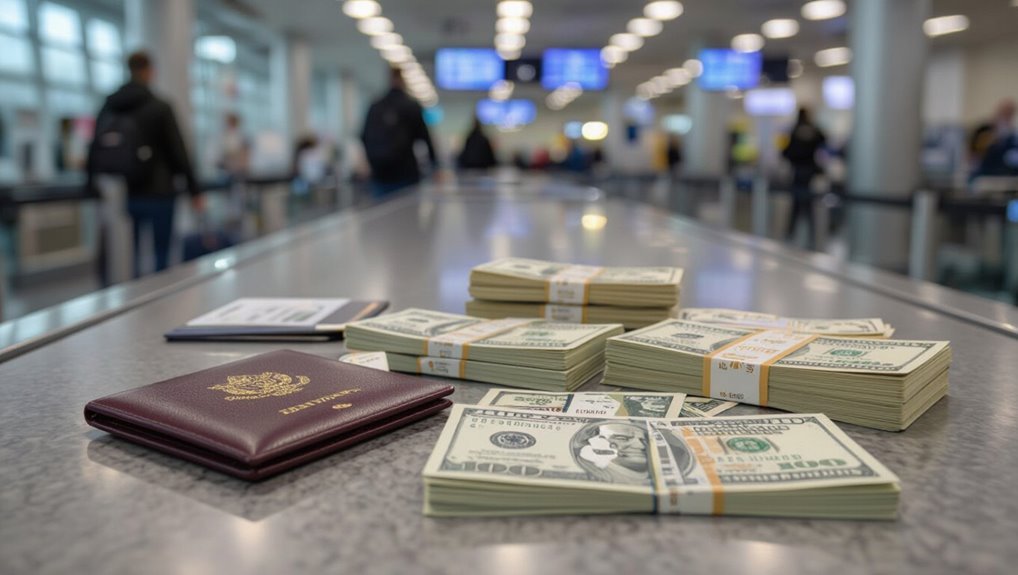
Curious whether TSA can grab your cash at screening? You’re unlikely to have money seized by TSA itself; agents focus on safety, not civil forfeiture.
If law enforcement is present and suspects criminal activity, they might detain funds under applicable laws.
You should stay calm, ask for reasons, and request contact info for the law enforcement agency handling any seizure.
What Powers Do TSA Officers Have During Screening?
When you go through TSA screening, officers have the authority to inspect your carry-on items and use imaging or swabs to check for prohibited items.
They’re limited by rules—searches must be reasonable, noninvasive procedures are preferred, and more intrusive checks generally require your consent or a supervisor.
If currency is found, officers will document and secure it, and any suspected criminal issues get referred to law enforcement rather than automatically seized by TSA.
Authority To Inspect
Although TSA officers don’t have unlimited authority, they can inspect your person, carry-on items, and checked baggage as part of routine screening and security checks.
You’ll be asked to remove items, undergo pat-downs, or have bags X-rayed; officers follow protocols and document actions. You can ask questions and request supervisor involvement if needed.
- ID and boarding pass checks
- X-ray and CT scans
- Physical bag inspections
- Pat-downs and swabs
Limits On Searches
While TSA officers can inspect you and your luggage to keep flights safe, their search powers aren’t limitless — they’re governed by federal regulations, agency policies, and constitutional protections.
You must submit to routine screening, but officers need reasonable suspicion for expanded searches and should follow protocols for privacy and dignity.
You can ask about authority, request supervisor review, and file complaints if procedures aren’t followed.
Handling Found Currency
If TSA officers find cash during screening, they can temporarily seize it only under limited circumstances tied to security or law enforcement concerns, not simply because it’s large or unattended.
You should cooperate, ask for reason, and request documentation. If warranted, law enforcement handles seizure and disposition; otherwise you get it back.
- Ask why and get a receipt
- Request supervisor presence
- Contact local police if seized
- Preserve evidence for claim
How Is TSA Screening Different From a Law Enforcement Seizure?
When you go through TSA screening, it’s an administrative security process focused on aviation safety, not a criminal seizure by law enforcement.
TSA’s legal authority and procedures differ from police powers, which affects what actions they can take and why.
If you believe your property was taken improperly, you’ll face different remedies and challenges than in a criminal seizure, so knowing those distinctions matters.
Administrative Security Screening
Although TSA agents can inspect and temporarily hold items to maintain aviation security, their administrative screening differs from a law enforcement seizure because it’s focused on safety and regulatory compliance rather than criminal prosecution.
You must follow screening rules, may contest procedures, and usually get property back after resolution.
- safety-focused actions
- administrative handling, not charges
- temporary retention common
- appeal or retrieval options
Legal Authority Differences
Because TSA’s role is regulatory rather than criminal, their screening and temporary retention of items operate under administrative rules and federal aviation statutes, not the probable-cause and warrant standards that govern law enforcement seizures.
You should understand TSA actions focus on safety compliance and aviation rules, not criminal investigatory power; law enforcement can seize evidence under criminal standards, while TSA enforces carry-on rules and may confiscate prohibited items administratively.
Remedies And Challenges
If you disagree with TSA’s screening actions or a temporary confiscation, you’ll face administrative remedies rather than the constitutional protections that apply to police seizures.
TSA follows procedures tied to aviation safety and agency rulemaking, so challenges typically proceed through agency complaint processes, civil litigation under specific statutes, or appeals to the TSA/Federal Security Director rather than criminal suppression motions.
- File an agency complaint
- Seek DHS/TSA review
- Pursue civil suit under statutes
- Use arbitration or settlement avenues
When Is Cash Treated as Evidence vs. Personal Property?
When agents suspect your cash is tied to a crime—such as drug trafficking or money laundering—they’ll treat it as evidence and may seize it for investigation; otherwise, routine amounts are handled as your personal property and should be returned after screening.
If seized, you’ll be told why, given a receipt when possible, and may need legal steps to contest forfeiture; cooperate but document everything.
Which Federal Laws Govern Cash Seizures at Airports?
Which federal laws matter when agents take cash at an airport? You should know statutes and regulations shaping seizures, reporting, and travelers’ rights so you can respond and seek recovery if needed.
- Civil Asset Forfeiture statutes (federal)
- Currency Transaction reporting rules (FinCEN)
- Criminal statutes tied to drug trafficking or money laundering
- Fourth Amendment protections and related case law
How Does Civil Asset Forfeiture Work at Airports?
If TSA or another agency suspects your cash is tied to wrongdoing, officers can seize it at the airport and start a civil forfeiture process.
You’ll get notice and a chance to file a claim to recover your funds, but you’ll need evidence and often legal filings to prove the money was legitimate.
Knowing the timelines and paperwork required can make the difference between getting your cash back or losing it.
Property Seizure Process
Although airport security agents rarely target travelers’ cash for its own sake, civil asset forfeiture can occur when officers suspect the money is connected to crime; you should know how the seizure process works so you can protect your rights.
- Officers detain cash and document reasons
- You’ll be given seizure paperwork and instructions
- Agency stores funds while investigating criminal links
- You can request notice and later challenge the seizure in court
Claiming Your Funds
Gather receipts, travel records, and witness statements. Hire an attorney if possible, respond to forfeiture filings, and attend hearings to contest forfeiture or negotiate return.
When Can Local Police (Not TSA) Confiscate Money?
When might local police seize your cash during a stop or search? You could lose money if officers suspect it’s tied to crime, find large unexplained amounts, get arrested, or if civil forfeiture laws apply.
Police can seize cash if they suspect it’s crime-related, find large unexplained sums, or you’re arrested—know your rights.
Know your rights, ask for receipts, and consult an attorney promptly.
- suspected drug or criminal proceeds
- large unexplained sums
- arrest or search incident to arrest
- civil forfeiture statutes
What Raises Suspicion About Carrying Cash?
If you’re carrying a lot of cash without a clear reason, that’ll raise eyebrows.
Frequent currency exchanges or multiple small transactions can also look suspicious.
Concealed bills or odd packaging will make agents pay extra attention.
Large Unexplained Amounts
Why would a large sum of cash make you stand out at TSA screening? You’ll draw attention because unexplained bundles suggest risk: illegal activity, undeclared transport, or flight diversion.
Be ready to explain source and destination, show documentation, and accept inspection. TSA may report findings to law enforcement if answers aren’t satisfactory.
- visible stacks or rolls
- lack of receipts
- inconsistent travel plans
- nervous behavior
Frequent Currency Exchanges
Because frequent currency exchanges can look like layering funds, carrying lots of different currencies or repeatedly converting cash raises red flags at TSA and with law enforcement.
You should keep exchange receipts, declare large sums when required, and explain legitimate reasons for varied currencies.
Officers may question patterns suggesting money laundering or trafficking, so be transparent, calm, and prepared to document your transactions.
Hidden Or Suspicious Packaging
When you hide cash in unusual containers or wrap it to look like something else, TSA officers will take notice and ask questions; concealed bills—inside toiletries, lining for electronics, hollowed books, or taped under luggage frames—signal attempts to evade screening or law enforcement.
You’ll be asked about source, destination, and intent; unexplained, poorly labeled, or oddly positioned money raises seizure risk.
- Unmarked containers
- Layered wrapping
- Inconsistent item weight
- Mismatched contents
How Can Screening Tech Flag Your Money?
If you carry cash through a TSA checkpoint, screening tech can flag it in a few clear ways tied to how the machines detect density, shape, and concealment.
X‑ray images show dense, rectangular stacks; anomalous silhouettes among clothing or electronics draw attention; opaque materials that obscure contents trigger manual inspection.
Automated alarm algorithms and operator review both prompt secondary screening when layout or density looks unusual.
What Happens If TSA or Police Find Large Sums in Carry-On?
Carrying a large sum of cash in your carry‑on can prompt different actions from TSA agents and law enforcement depending on the amount, behavior, and context they observe.
You might be questioned, have bags inspected, or face reporting to police. If suspicious, authorities can detain you or seize funds under civil forfeiture rules until you prove lawful ownership.
- You’ll be questioned
- Bags searched
- Police notification
- Possible seizure
Do Airline or Airport Policies Affect How Cash Is Handled?
Beyond questioning and potential police involvement, airline and airport policies can shape what happens to cash you bring through security.
You should check carrier rules and airport procedures—some require reporting large amounts or may confiscate items deemed suspicious.
Policies vary, so knowing rules and documenting funds helps.
If staff flag your cash, follow instructions, ask for written reasons, and request police involvement if needed.
Customs vs. TSA: Who Handles Currency on International Travel?
Who handles your cash on an international trip depends mainly on where you’re in the travel process: TSA screens you and your belongings at U.S. airports for security threats, but Customs and Border Protection (CBP) enforces currency reporting and seizure rules when you enter or leave the country.
- TSA focuses on safety screening, not declaring funds
- CBP handles declarations and investigations
- You must comply with CBP questions
- Seizure can occur if rules are violated
How Much Cash Must You Declare Entering the U.S.?
When you enter the U.S., you’re required to declare if you’re carrying more than $10,000 in currency or monetary instruments.
You’ll fill out a CBP form and answer questions about the source and planned use of the funds.
If you fail to report amounts over the threshold, you could face seizure or civil penalties.
Cash Declaration Thresholds
If you’re bringing cash or other monetary instruments into the United States, you must declare them to Customs and Border Protection whenever the total value equals or exceeds $10,000. Failing to do so can lead to seizure, fines, or criminal charges.
You should:
- Count all currencies and negotiable instruments.
- Combine amounts carried by companions.
- Keep receipts and documentation.
- Expect questioning and possible inspection.
Reporting Procedure Overview
You’ve already seen the $10,000 rule for declaring cash at the border; now you’ll learn how to actually report it.
When you enter the U.S. with more than $10,000 in currency or negotiable instruments, you must complete a CBP FinCEN Form 105 and truthfully answer questions.
Have documentation ready, declare amounts honestly, and expect inspection; failure to report can mean seizure and penalties.
How Should You Respond If an Agent Asks About Your Cash?
Although agents may ask about cash during screening, you should stay calm and answer clearly and briefly. Tell the truth, state amounts only if asked, and avoid volunteering extra details.
Ask polite clarifying questions if unsure.
- State the purpose of funds
- Give concise numeric answers
- Keep identification ready
- Request supervisor if concerns arise
How to Document Your Cash Before Travel
Before you travel, take clear photos of your cash and any receipts so you’ve got time-stamped proof of what you carried.
Make a simple cash inventory listing amounts and currency types, and note serial numbers for larger bills where possible.
Keeping these records on your phone and backed up to the cloud will help if you need to contest a seizure.
Photograph Bills And Receipts
Anyone traveling with cash should photograph each bill and any receipts that show deposits, withdrawals, or purchases, so you have a clear record if TSA or another agency questions your funds.
You’ll keep images organized, timestamped, and backed up to cloud storage for quick access during inspection.
- Photograph both sides of bills
- Capture dated receipts clearly
- Use cloud backup with encryption
- Label images by source and date
Create A Cash Inventory
A simple cash inventory gives you a clear, defensible record of what you’re carrying, so inspections go faster and disputes are easier to resolve.
List denominations, totals, currency types, and where each amount is stored (wallet, pouch, carry-on).
Date and sign the list, keep a copy with you and another elsewhere. Present it calmly if agents ask, and note any changes immediately.
Record Serial Numbers
If you want the strongest proof of ownership, write down each bill’s serial number and note which stack or pouch it’s in; agents and investigators take serials seriously, and having them recorded makes it far harder to dispute what’s yours.
Do it before travel, store records separately, and keep photos as backup.
- Note serials by bill and pouch
- Timestamp and date entries
- Photograph bills clearly
- Keep copies off-site
Best Ways to Pack and Present Cash at Security
When you’re carrying cash through TSA screening, pack it so officers can quickly see and count it without unwrapping layers: use a clear travel wallet or a slim, easy-to-open billfold, place bills flat and facing the same way, and keep receipts or change separate in a different compartment.
Keep bills accessible in your carry-on or on your person, avoid bulky straps, and present calmly when asked.
Safer Alternatives to Carrying Large Amounts of Cash
If you don’t want to carry a lot of cash, use debit or credit cards for most purchases to keep funds protected and traceable.
You can load a prepaid travel card for limited spending without exposing your main accounts.
Also keep digital wallets set up on your phone so you can pay contactless and lock or wipe access if your device is lost.
Use Debit Or Credit
Because carrying large amounts of cash raises the risk of loss or seizure, you’ll usually be better off using debit or credit cards for travel purchases and emergencies.
Cards offer transaction records, fraud protection, and easy replacements if lost.
- Use credit for big purchases and dispute rights
- Keep a debit for ATM access
- Notify your bank before travel
- Carry one backup card
Prepaid Travel Cards
Though prepaid travel cards look like debit cards, they let you load a fixed amount and spend without exposing your bank account, making them a safer way to carry funds on a trip.
You can limit losses if a card’s stolen, set spending controls, and often reload online.
Keep receipts and register the card for faster recovery, but don’t treat it like cash.
Keep Digital Wallets
Anyone can lighten their pockets and still carry plenty of spending power by using a digital wallet on their phone or smartwatch. You’ll avoid bulky cash, reduce theft risk, and speed up transactions.
Set up backups, enable biometrics, and keep cards updated before travel.
- Enable two-factor authentication
- Add multiple payment methods
- Keep a secure offline backup
- Update passes and IDs regularly
What Steps to Take If TSA or Police Seize Your Money
Start by staying calm and asking for a clear explanation of why the TSA or police have taken your cash, including whether they’re treating it as evidence, undeclared currency, or suspected proceeds of a crime.
Request identification, a written receipt or seizure form, and note the officer’s name, badge number, time, and location.
Contact your attorney promptly and preserve any related documentation or witnesses.
How to File a Claim for Wrongful Seizure or Lost Property
After you’ve documented the seizure and contacted an attorney, you’ll want to move quickly to preserve your rights by filing a formal claim for wrongful seizure or lost property.
File with the agency that handled the seizure, include photos, receipts, and a clear timeline, and request a written decision.
Follow appeal deadlines and keep copies of everything.
- File with agency
- Attach evidence
- Request written decision
- Track deadlines
When to Contact an Attorney and What Evidence to Bring
When should you call an attorney? Call one if TSA refuses to return substantial cash, accuses you of criminal activity, or denies your claim after administrative steps.
Bring ID, boarding pass, seizure receipt, photos, witness names, correspondence, and any video.
Also gather bank records showing typical cash usage.
An attorney can assess criminal exposure and guide civil recovery or appeals.
Common Myths About TSA Taking Your Cash : Debunked
Think a TSA agent can just confiscate your cash on a whim? You’re protected by rules and due process; agents don’t seize money arbitrarily.
Think TSA can seize your cash on a whim? Rules and due process protect you — agents don’t confiscate arbitrarily.
Know the limits, cooperate, and ask for explanations.
Common myths debunked:
- TSA routinely takes cash without cause
- You can’t carry large amounts
- Seizures need no paperwork
- You can’t dispute a seizure
Real Court Cases and Rulings That Affect Airport Seizures
Because courts set the boundaries for what agents can do, you should know key rulings that shape airport seizures of cash and property.
Courts have limited warrantless searches, required probable cause for forfeiture, and stressed due process.
You’ll see cases distinguishing routine security checks from investigatory seizures, and precedents that protect travelers’ rights while allowing lawful confiscation when clear legal standards are met.
How State Laws Change Outcomes for Seized Airport Cash
Federal courts set broad rules, but state civil forfeiture laws and procedures can change how airport cash seizures play out where you travel.
You should know state notice deadlines, burden of proof, claim filing steps, and available remedies. Differences affect how quickly you act and your chance to recover funds.
- notice deadlines
- burden of proof standards
- claim filing procedures
- available remedies and appeals
Travel Tips to Reduce Scrutiny When Carrying Cash
When you plan to travel with cash, take simple steps to reduce questions and speed your passage: keep bills organized in a wallet or money belt, declare large amounts if required, carry receipts or documentation for purchases, avoid obvious bulk displays, split funds between companions or bags, and arrive early to allow screening.
Being transparent and prepared minimizes suspicion and delays.
How to Stay Calm and Handle a Confrontational Screening
If a screening turns confrontational, stay composed and speak clearly about what you’re doing and why—keep your hands visible, answer questions succinctly, and avoid arguing.
You can request a supervisor calmly, record the interaction if allowed, and ask for clarification on procedures.
Keep tone neutral, follow lawful instructions, and seek resolution through proper channels afterward.
- Stay calm and breathe
- Speak plainly
- Request supervisor
- Note details
Quick Checklist: Protect Your Money Through Airport Security
Because security checkpoints can get chaotic, have a simple plan to keep cash and cards secure as you move through screening: tuck bills and cards in a front pocket or money belt, use a slim travel wallet, remove only what’s required, watch bins and conveyor belts, retrieve items promptly, and keep receipts separate.
If something’s missing, report it immediately to TSA or airport lost and found.
Frequently Asked Questions
Can TSA Search My Locked Luggage for Cash Without My Presence?
Yes — TSA can inspect locked luggage and may open it if necessary; you won’t always be present. They’ll try to notify you, document the search, and follow procedures, but you’re responsible for securing valuables beforehand.
Can TSA or Airport Staff Refuse Boarding Over Undisclosed Large Cash?
Yes — they can refuse boarding if undisclosed large cash raises security or legal concerns; you’ll be detained, questioned, and possibly reported to law enforcement or customs. Cooperate, provide documentation, and seek legal help if needed.
Does Carrying Cash in Different Currencies Change Screening Outcomes?
Yes — carrying multiple currencies won’t usually change TSA screening outcomes; you’ll still go through the same checks, but officers might ask questions or inspect amounts more closely if behavior or cash raises suspicion during security screening.
Can Airport Security Report Cash Discoveries to Immigration Authorities?
Yes — if security finds large or suspicious cash, they’ll usually report it to immigration or law enforcement; you’ll be questioned, and authorities might detain or seize funds depending on laws, disclosures, and suspected criminal activity.
Will Declaring Cash to Airline Staff Protect Me From Seizure?
Declaring cash to airline staff doesn’t guarantee protection from seizure; they’ll note it but can’t override security or customs laws. You’ll still face inspection, questioning, or seizure if authorities suspect undeclared or suspicious amounts.
Conclusion
Yes — TSA can temporarily take your cash during screening if agents suspect a security issue or apparent evidence of a crime, but they don’t have general police powers to permanently seize money. Federal or local law enforcement typically handles forfeiture under specific statutes, and outcomes depend on jurisdiction, evidence, and whether the cash’s origin is proven. To minimize problems, carry ID, documentation, and declare large amounts when required; stay calm and follow instructions.