Can You Bring Alcohol Through TSA Security
Yes — you can bring alcohol through TSA security, but you’ve got to follow rules. Carry-on bottles must fit the 3-1-1 liquid rule (3.4 oz/100 ml each in a single quart bag) unless they’re duty-free and sealed in a tamper-evident bag with a receipt. Checked luggage can hold larger bottles but pack them securely and check airline limits and high-proof restrictions. Keep IDs and receipts handy, and keep going for practical packing tips and policy links.
What “Bringing Alcohol Through TSA” Actually Means
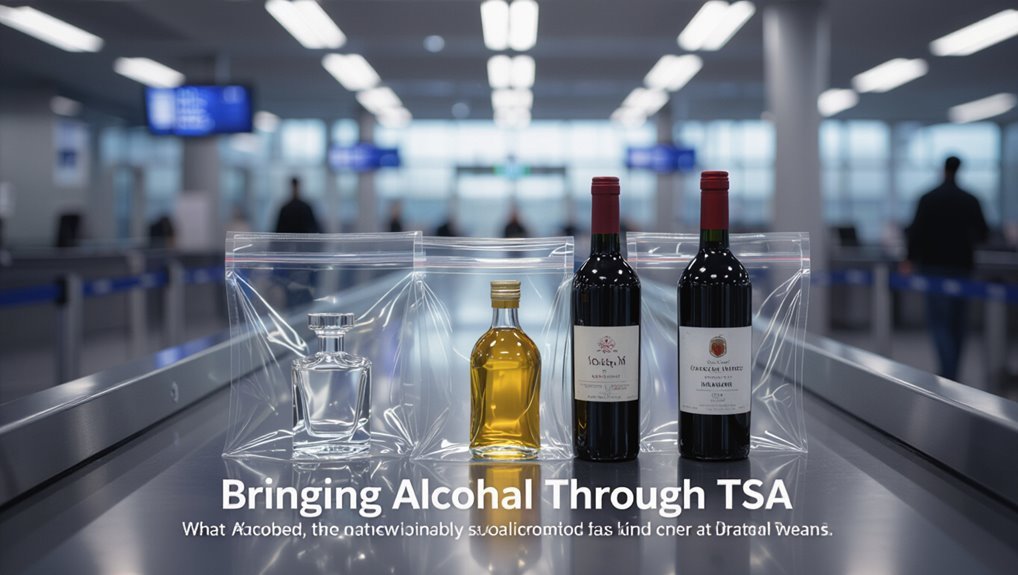
When you hear “bringing alcohol through TSA,” it means transporting alcoholic beverages past airport security checkpoints—whether in your carry-on, checked bag, or on your person—while following TSA rules and federal regulations.
You’ll need to know container size limits, alcohol content restrictions, packing methods, and state or international duty rules. Knowing these specifics helps you avoid confiscation, delays, or fines at checkpoints.
Quick Answer: Can You Take Alcohol Through TSA?
Can you take alcohol through TSA? Yes, with limits: you can bring unopened alcohol in checked bags within airline and country limits, and certain amounts in carry-ons if they meet size and alcohol-content rules.
You must follow airline, state, and international regulations, declare when required, and avoid transporting prohibited or improperly packaged containers.
Always check specific carrier and destination rules before travel.
How TSA 3-1-1 Liquid Rules Affect Alcohol in Carry-Ons
You can only bring liquids in carry-ons in containers of 3.4 ounces (100 ml) or less and they must fit in a single clear quart-size bag.
That limit applies to alcohol too, unless the bottles were purchased after security in the airport duty-free area, which are allowed even if larger when sealed with a receipt.
Keep that in mind when packing so you don’t have to discard bottles at the checkpoint.
Carry-On Size Limits
TSA’s 3-1-1 rule limits liquids in your carry-on to 3.4-ounce (100 mL) containers packed in a single clear quart-sized bag, so any alcoholic beverages you want to bring through security must fit those size and packing requirements.
You’ll need travel-sized bottles, all visible in the bag, and you’ll have to remove the bag for screening. Larger bottles aren’t allowed in carry-ons.
Airport Alcohol Exceptions
Although the 3-1-1 liquid rule generally limits carry-on alcohol to 3.4-ounce containers in a clear quart-sized bag, there are a few specific exceptions and nuances you should know about.
Duty-free purchases over 3.4 ounces sealed in tamper-evident bags are allowed if you keep the receipt.
Medically necessary alcohol or special dietary items may qualify for separate screening; always declare them.
Carry-On Alcohol Limits by Proof and Volume
When you bring alcohol through airport security, limits depend on both the drink’s proof (alcohol by volume) and the container size:
You may carry alcohol under 24% ABV in checked or carry-on luggage without special limits beyond the 3.4 oz/100 mL liquid rule for carry-ons.
Liquor 24–70% ABV is restricted in carry-on and often prohibited; above 70% is banned.
Duty-Free Purchases: Rules for Bottles Bought After Screening
If you buy alcohol at a duty-free shop after screening, there are specific rules about how those bottles are treated.
You’ll usually get them sealed in a tamper-evident bag with your receipt, which helps you carry them through to your gate.
Be aware that connecting flight rules can limit what you can bring onboard, so check transfer airport policies before you fly.
Duty-Free Bottle Rules
Because you bought the bottle after screening, TSA and airline rules let you carry duty-free alcohol onboard under specific conditions — you must keep it in the sealed, tamper-evident bag with the receipt visible and follow carry-on size limits for your final destination.
Check airline and country restrictions, pack fragile bottles carefully, and be prepared to show the sealed bag and receipt at boarding or on request to avoid confiscation.
Screening And Sealing
After you buy alcohol post-screening, airport staff will screen the bottle and seal it in a secure, tamper-evident bag that displays your receipt; keep that bag intact until you board or clear any connecting flight checks.
You must present the sealed bag and receipt at gate or security if asked.
Don’t open the bag before boarding, or you risk confiscation and losing eligibility for carry-on alcohol.
Connecting Flight Limits
When you buy duty-free alcohol after clearing security but have a connecting flight, airlines and TSA set strict limits you need to follow to keep the bottle in your carry-on—most importantly, you must keep the sealed, tamper-evident bag and receipt intact and be prepared to show them at any subsequent checkpoint or gate. You’ll also confirm airline policies and allow extra time.
| Item | Requirement | Note |
|---|---|---|
| Bag | Sealed tamper-evident | Keep closed |
| Receipt | Visible | Within time limit |
| Gate | Show proof | May be rechecked |
Packing Alcohol in Checked Bags : Weight and Packaging
If you plan to stash alcohol in your checked luggage, pay close attention to each bottle’s weight and how you pack it—airlines limit checked-bag weights and bottles can break or leak if not protected.
Wrap bottles in clothing or bubble wrap, place them upright in a sealed plastic bag, distribute weight evenly, and weigh your bag before heading to the airport to avoid overweight fees and damaged bottles.
Carry-On Quantities Under the 3-1-1 Rule
Although you can bring alcohol in your carry-on, TSA’s 3-1-1 rule limits liquids to containers of 3.4 ounces (100 milliliters) or less, all fitting in a single quart-sized clear bag. You should pack small bottles, show them if asked, and keep only one bag per passenger.
| Item | Max Size | Notes |
|---|---|---|
| Bottle | 3.4 oz | Clear bag |
| Bag | Quart | One per person |
| Alcohol | Small | Limits apply |
What Happens to Oversized Bottles at Security?
Exceeding the 3-1-1 limits means TSA won’t let you carry oversized bottles through the checkpoint in your carry-on.
So you’ll need to choose between checking them, disposing of them, or returning them to your vehicle before screening.
Officers may confiscate liquids that violate rules; you’ll get a receipt only in limited circumstances.
TSA officers may confiscate rule-breaking liquids, and receipts are issued only in limited situations.
Pack oversized alcohol in checked luggage or remove it before security to avoid delays.
How Airlines Enforce Their Alcohol Policies
When you’re boarding, airlines enforce alcohol rules through crew briefings, onboard monitoring, and clear policies tied to federal law and carrier terms of service.
You’ll face refusals or removal for intoxication, limits on serving, and confiscation of improperly packaged alcohol. Crew document incidents and can refuse service.
- Crew training on alcohol signs
- Service limits per passenger
- Incident reporting procedures
- Coordination with law enforcement
Domestic vs. International Flights: Key Differences
When you fly domestically you’re bound by the TSA’s 3.4-ounce carry-on liquid rule, but international travel lets you take duty-free bottles through security if they’re sealed and documented.
You’ll also need to watch the duty-free allowances and taxes at your destination, since limits and exemptions vary by country.
Check the specific alcohol rules for the airline and countries you’re traveling to so you don’t get caught out.
Carry-On Liquid Limits
Although TSA’s 3-1-1 rule generally governs carry-on liquids on domestic flights, international travel often follows different limits set by destination countries and airlines.
You should check rules for each leg of your trip. You’ll need to confirm allowed container sizes, alcohol percentage limits, transfer rules after security, and airline-specific policies before packing.
- container size limits vary by country
- alcohol by volume restrictions apply
- sealed duty-free transfers differ
- airlines may ban certain volumes
Duty-Free Allowances
Carry-on liquid rules can affect how you handle duty-free purchases, but duty-free allowances themselves follow different sets of guidelines depending on whether you’re flying domestically or internationally.
For domestic flights, duty-free alcohol typically isn’t applicable; purchases are subject to carry-on limits.
On international routes, allowances and import rules vary by destination—know total volumes and declare if required to avoid seizure or fines.
Country-Specific Regulations
Because rules differ sharply by destination, you’ll need to treat domestic and international flights as separate cases when bringing alcohol through TSA security.
You’ll follow TSA liquid rules domestically, but international trips add customs, duty-free limits, and local import bans. Check destination regulations before packing.
- Domestic: 3.4 oz carry-on limit
- International: duty-free allowances vary
- Some countries ban certain alcohol
- Declare purchases at arrival
Bringing Alcohol Back Through U.S. Customs
When you return to the U.S. with alcohol, you’ll need to declare it and be ready to show receipts and proof of origin at customs; limits and duty exemptions vary by state and your length of stay. You may owe duty on excess quantities, and age verification applies. Keep documentation handy and answer officers honestly to avoid fines or seizure.
| Item | Typical Limit | Action |
|---|---|---|
| Spirits | 1 L | Declare |
| Wine | 2 L | Possible duty |
| Beer | 12 cans | Check rules |
State and Local Laws That May Restrict Carrying Alcohol
Before you bring alcohol through TSA and into a destination, check state and local rules that might limit possession or public consumption.
You’ll need to follow open-container laws, carry valid ID to meet age restrictions, and avoid dry counties or special-event prohibitions.
Ignoring these can lead to fines, confiscation, or arrest.
Local Open-Container Laws
- Public streets and parks often restrict open containers.
- Special event zones may allow exceptions.
- Transit systems can have unique rules.
- Penalties range from fines to confiscation.
Age And ID Restrictions
Although federal rules let you carry alcohol through TSA checkpoints in many cases, state and local laws often impose strict age and ID requirements you’ll need to follow.
You’ll generally have to be 21 to possess or transport alcohol; some jurisdictions demand valid photo ID at all times.
Check local statutes and airline policies before travel, since penalties and seizure rules vary by locality and carrier.
Dry County And Events
When you travel through or near dry counties—or attend special events that ban alcohol—local laws can prohibit possession or transport of liquor even if TSA and your airline allow it.
So always check municipal ordinances and event policies in advance. You’ll need to verify rules, permits, and penalties before carrying alcohol.
- Local ordinances vary widely
- Event permits may restrict possession
- Crossing jurisdiction lines matters
- Fines and confiscation are possible
TSA Prohibited Alcohol-Related Hazards (Flammability, Etc.)
Fire risk is the main reason TSA bars certain alcohol items from carry-on and checked bags, and you need to know which products are off-limits.
You can’t bring flammable aerosols, fuel-based alcohols, or consumer products with high vapor pressure that pose ignition hazards.
Containers leaking or pressurized beyond safety limits are prohibited.
Follow airline and TSA notices to avoid confiscation and delays.
Traveling With High‑Proof Spirits: Special Rules
Because high-proof spirits pose bigger fire and pressure risks than typical liquor, you’ll need to follow stricter TSA and airline rules when packing them.
You should verify alcohol percentage limits, declare bottles if required, and prefer checked baggage when allowed. Securely pack to prevent breakage and leakage.
- Check legal alcohol-by-volume limits
- Declare at check-in if requested
- Use leakproof, cushioned packaging
- Prefer checked bags when permitted
Transporting Homemade or Artisanal Alcohol on Flights
If you’re planning to bring homemade or small-batch artisanal alcohol on a flight, know that TSA and airline rules treat these the same as commercially produced spirits for safety and customs purposes.
You’ll need to follow liquid carry-on limits or check bottles in checked baggage, declare them for international travel, and verify airline policies—homebrew doesn’t exempt you from volume, labeling, or import restrictions.
Bringing Alcohol for Gifts, Weddings, or Work Events
Whether you’re packing a special bottle as a gift, carrying wine for a wedding reception, or bringing spirits for a work event, remember that TSA and airline rules still apply — volume limits, packaging, and customs requirements don’t change based on your reason for travel.
Packing alcohol for travel? TSA, airline limits, packaging, and customs rules still apply—regardless of the occasion.
You should:
- Pack bottles in checked luggage when allowed and well-cushioned.
- Follow liquid carry-on limits for small gifts.
- Declare alcohol at customs if required.
- Check airline policies and destination laws before you fly.
Moving Alcohol Long Term: Shipping vs. Flying
Moving a personal collection or stocking a new home with alcohol calls for a clear plan: decide if you’ll ship bottles or bring them on the plane, then compare cost, legality, and risk.
If you fly, follow TSA limits and check airline policies; declare any duty rules.
If you ship, use licensed carriers, verify state shipping laws and taxes, and insure the shipment for loss.
Best Ways to Pack Alcohol to Prevent Breakage
When packing bottles, wrap each one tightly in clothing to create a soft barrier and save space.
Put wrapped bottles inside hard-shell containers or a sturdy suitcase to protect against impacts.
Add bubble wrap or extra padding around any gaps so nothing shifts during transit.
Wrap Bottles In Clothing
Wrap each bottle in soft clothing to cushion it and absorb shocks during transit. You’ll want layers around the body and neck, and you should tuck fragile caps into sleeves or socks to limit movement.
Pack snugly so bottles don’t bang each other.
- Use thick socks for neck protection
- Wrap in T-shirts or sweaters
- Fill voids with scarves
- Place bottles vertically if possible
Use Hard-Shell Containers
If soft clothing cushions help, hard-shell containers will stop bottles from getting crushed in checked or carry-on luggage. Use sturdy plastic or metal cases with snug inserts, lockable latches, and clear labeling so TSA sees contents quickly. Keep bottles upright when possible and secure lids tightly before sealing the case.
| Material | Feature | Benefit |
|---|---|---|
| Plastic | Lightweight | Durable |
| Metal | Rigid | Impact-proof |
| Foam | Cut-to-fit | Stabilizes |
| Lock | Secured | Prevents opening |
Cushion With Bubble Wrap
Because glass can shift and smash during transit, you’ll want to wrap each bottle in several layers of bubble wrap and secure the ends with tape before placing them in your bag or case.
Then cushion bottles individually, keep them upright, and separate with soft padding so impacts don’t transfer.
- Use small-bubble wrap near fragile necks
- Overwrap body twice
- Tape seams tightly
- Add cloth layers for shock absorption
Declaring Alcohol at International Arrival
When you arrive from abroad, you’ll need to declare any alcohol that exceeds your duty-free allowance or that falls under restricted categories on the customs form or to the officer at the checkpoint; failing to do so can result in fines, seizure, or other penalties.
You should know limits, provide receipts, and answer questions truthfully. Pay duties when required and keep documentation handy for inspection.
Carrying Opened or Partial Bottles Through Security
After handling declaration rules for arrivals, you should also know TSA’s limits on opened or partial bottles carried through airport security.
You can’t bring open containers through checkpoints in carry-on unless they meet liquid rules; partial bottles often count toward your quart-sized bag.
Check airline policies for onboard consumption and pack larger containers in checked luggage when allowed.
Confirm airline rules for drinking onboard, and stow larger bottles in checked luggage when permitted.
- Open bottles subject to 3-1-1 rule
- Partial bottles count as liquids
- Airline discretion for onboard use
- Securely seal checked alcohol
If TSA or an Airline Confiscates Your Alcohol : Next Steps
If TSA or an airline confiscates your alcohol, stay calm and ask for a clear reason and the officer’s name or badge number so you know what rule was applied and who to contact later.
Take photos of the item, receipt, and screening area, note date/time/flight, and request a written confiscation receipt.
Contact the airline and TSA customer service promptly to file a complaint and seek reimbursement.
Alcohol and Connecting Flights / Layover Rules
If you’re making a connection, know the rules for transferring duty-free bottles between flights and countries so they don’t get seized.
Remember carry-on alcohol limits and the TSA’s 3-1-1 exceptions for items purchased after security, and check airline policies that might be stricter.
Also verify international layover restrictions, since some countries won’t allow alcohol transfers or require special packaging.
Duty-Free Transfer Rules
When you have duty‑free alcohol and a connecting flight, know that transfer rules depend on where you land and where you go next. Many airports let you keep sealed duty‑free purchases if you stay within the secure area, but if you reclear security or enter a country with strict import limits you’ll need to check airline and local rules to avoid confiscation or fines.
- Keep receipts and original sealed packaging
- Confirm transit security procedures
- Verify destination import allowances
- Ask airline or airport staff for guidance
Carry-On Alcohol Limits
After sorting out duty‑free transfer rules, you’ll also need to know how much alcohol you can carry through security and onto connecting flights.
You’re limited by the 3-1-1 liquid rule for carry-ons: containers must be 3.4 oz (100 ml) or less and fit in a quart bag.
Exceptions apply for duty-free sealed purchases; otherwise follow TSA and airline policies to avoid confiscation.
International Layover Restrictions
Because different countries and airlines set their own rules, you’ll need to check both local customs and carrier policies before you rely on bringing alcohol through an international layover.
You may face differing duty-free rules, security re-screening, or confiscation. Confirm transit visa and customs allowances, and pack receipts for sealed purchases.
- Duty-free sealing and receipts
- Security recheck at connection
- Local import limits
- Airline carry policies
Alcohol Rules for Minors and Children on Flights
Kids and alcohol don’t mix on flights: federal law and airline policies prohibit serving alcohol to anyone under 21, and you must not let minors drink brought-on or purchased alcohol aboard. You’re responsible for supervising minors; airlines may delay or refuse boarding for violations. Report concerns to crew immediately.
| Rule | Age | Action |
|---|---|---|
| Law | <21 | No service |
| Parent | Any | Supervise |
| Crew | Any | Enforce |
Can You Drink Your Own Alcohol on Board?
While minors can’t be served or allowed to drink on board, adult passengers often wonder whether they can consume alcohol they bring themselves.
You generally can’t drink your own alcohol on flights; airlines and federal regulations require alcohol served by crew. Crew discretion, flight rules, and intoxication laws apply.
- Airline policies override personal bottles
- Crew may confiscate or refuse service
- Intoxication can lead to penalties
- Duty-free exceptions still restricted
TSA PreCheck/Trusted Traveler and Alcohol Screening
If you’re enrolled in TSA PreCheck or another Trusted Traveler program, you’ll still pass through the same alcohol screening rules—PreCheck speeds up document and security checks but doesn’t exempt you from limits on carrying alcohol, restrictions on open containers, or secondary screening for suspicious liquids. You must follow 3-1-1 rules, pack checked bottles securely, and present duty-free properly.
| Tip | Applies to | Action |
|---|---|---|
| Carry-on limit | Liquids | Follow 3-1-1 |
| Checked bottles | All travelers | Pack padded |
| Open containers | Any traveler | Not allowed |
| Secondary check | Suspicious liquids | Comply |
Duty‑Free Packaging Slips and Proof of Purchase Tips
Because duty‑free purchases often travel through multiple security checkpoints, keep the original sealed tamper‑evident bag and the receipt handy so you can prove the purchase and show the sealed packaging if asked.
You’ll also want to:
- Keep receipt visible and legible
- Keep packaging unbroken until gate or destination
- Store receipts separately from luggage for quick access
- Photograph purchase and bag for backup
Common Traveler Mistakes With Alcohol at Security
When you rush through security or rely on assumptions about rules, mistakes with alcohol are common and can cost you time or your bottle.
You might forget size limits, try to carry open containers, ignore duty‑free seals, or fail to declare bottles when required.
Pack smart, keep receipts accessible, and follow agent instructions to avoid delays, confiscation, or fines.
Quick Pre-Trip Checklist for Packing Alcohol
1 quick checklist will save you time and headaches at the security line: confirm bottle sizes and seals, pack liquids in your carry or checked bag according to limits, keep receipts and duty‑free paperwork accessible, and know the rules for international transfers and unopened containers.
Pack smart, label clearly, and stash proofs where staff can see them.
- Use leakproof wrapping
- Follow 3-1-1 rules
- Separate duty‑free items
- Photograph receipts
How to Find Airline-Specific Alcohol Policies Fast
After you’ve packed and organized your bottles, check your airline’s specific alcohol rules so you won’t hit surprises at the gate.
Visit the carrier’s site, search “baggage alcohol policy,” or use their mobile app. Look for limits on ABV, carry-on versus checked, and duty-free allowances.
Call customer service if unclear. Save a screenshot or PDF of the policy for reference during travel.
Official Resources: TSA, Customs, and Airline Links
Because rules can vary and change, you should bookmark the official sources—TSA for U.S. security rules, CBP and your destination’s customs agency for import limits, and your airline’s policy page—so you can quickly confirm limits on ABV, carry-on vs. checked allowance, and duty-free allowances before travel.
Check links before packing, and print or save confirmations.
- TSA liquids and alcohol guidance
- CBP import limits and declarations
- Destination customs regulations
- Your airline’s alcohol and baggage policy
Frequently Asked Questions
Can I Bring Unopened Wine in My Laptop Bag Through TSA?
Yes — you can’t carry unopened wine in your laptop bag through TSA checkpoint security if it exceeds 3.4 ounces; you’ll need to pack bottles larger than that in checked luggage or ship them ahead to avoid confiscation.
Are Powdered Alcohol Products Allowed in Carry-Ons or Checked Bags?
No, powdered alcohol’s restricted: you can’t carry it in either carry-ons or checked bags on most U.S. flights. You’ll need to check specific airline and local rules, because some carriers or jurisdictions ban it outright.
Do Duty-Free Alcohol Limits Differ for Children Traveling With Adults?
Yes — duty-free allowances typically apply per adult traveler, not children, but rules vary by country; you’ll need to check destination customs and airline policies, and any alcohol carried for a child must follow those country-specific limits.
Can I Transport Alcohol-Infused Food Items Through Security?
Yes — you can bring alcohol-infused food items through security if they’re solid or comply with liquid rules; don’t pack liquids over 3.4 ounces (100 ml) in carry-on, and follow TSA and airline restrictions for carry-on.
Will TSA Allow Airline-Served Alcohol to Be Carried off the Plane?
Generally, no — you can’t carry off airplane-served alcohol because the flight crew controls service and consumption; you’ll need to finish it onboard or surrender it, unless the airline explicitly permits takeoff of unopened, purchased bottles.
Conclusion
You can bring alcohol through TSA, but you’ve got to follow the liquid rules and airline limits. Carry-on bottles over 3.4 ounces aren’t allowed unless they’re sealed duty-free purchases you bought after screening, while checked baggage usually accepts larger quantities within airline and international limits. Don’t pack open containers, and declare alcohol when required. Check both TSA and your airline’s rules before you travel to avoid surprises and potential confiscation.