Can You Put Ice Packs in Checked Luggage?
Yes — you can put ice packs in checked luggage if they’re fully frozen, sealed, and follow TSA and airline rules. Use solid frozen packs or completely frozen gel packs in leakproof bags and insulated containers, and brace them to prevent punctures or leaks. Declare medications or dry ice if required, and expect possible inspections. Check your airline’s specific limits and guidelines; keep going to learn practical packing tips, documentation needs, and troubleshooting steps.
Can You Put Ice Packs in Checked Luggage? Quick Answer and Rules
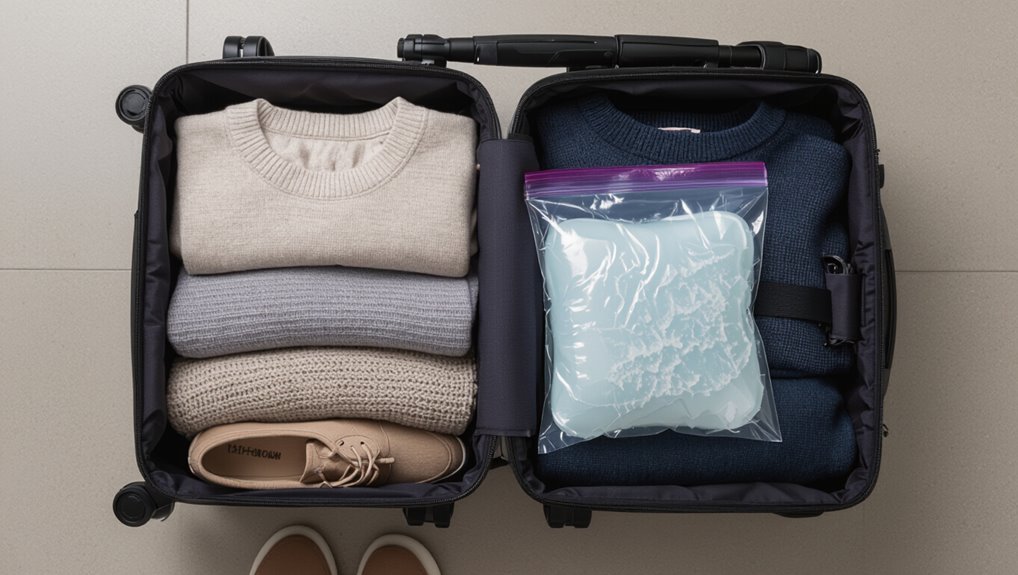
Wondering whether you can pack ice packs in checked luggage? You can, but follow airline and TSA rules:
Solid frozen ice packs are allowed if fully frozen at screening; gel or partially melted packs may be treated as liquids and restricted.
Label medical refrigeration needs if applicable, declare at check-in when required, and secure packs to prevent leaks or damage to your bag and others’.
Which Ice Pack Types Travel Best?
Choosing the best ice packs depends on your needs: solid frozen packs (ice blocks or reusable hard packs) travel best because they’re fully frozen at screening and won’t be treated as liquids, while gel packs, instant cold packs, and partially thawed packs are more likely to be restricted or leak.
You should wrap frozen packs to prevent condensation, secure them in waterproof bags, and label fragile contents.
Gel Ice Packs vs. Frozen Water Packs : What’s the Difference?
When you compare gel packs to frozen water packs, notice that gels are made from thickened liquids or polymers while frozen water packs are just plain water.
You’ll want to take into account that gels can leak sticky material if a pack ruptures, whereas frozen water simply melts into liquid.
Also remember gels often stay colder longer but don’t expand when frozen like water does, affecting rupture risk and freezing behavior.
Gel Pack Composition
Think of gel ice packs and frozen water packs as two simple ways to keep things cold that behave differently: gel packs use a polymer-based slurry that stays pliable and slowly releases cold, while frozen water packs rely on solid ice that melts and gives up cold more quickly.
Gel formulations often include propylene glycol, cellulose, or superabsorbent polymers, providing flexible, long-lasting cooling without freezing rigidly.
Leak And Rupture Risks
Although both types can leak, gel packs and frozen water packs fail for different reasons, and you should treat them accordingly.
Gel packs can rupture under puncture or heat, releasing sticky, often colored gel.
Frozen water packs burst from expansion or impact, spilling clear water and shards of ice.
Picture these failures:
- Torn seam oozing gel
- Punctured corner leaking sticky goo
- Cracked pack spraying cold water
Freezing And Melting Behavior
Because they rely on different materials and structures, gel ice packs and frozen water packs freeze and melt in noticeably different ways: gel packs use thickened polymers that stay slushy and release cold slowly, while water packs solidify into hard ice that holds temperature well but can crack and leak as it melts.
You’ll choose gel for flexible, gradual cooling and water for longer, rigid chill—mind potential leakage.
How Does Dry Ice Differ From Gel and Frozen Packs?
Dry ice is a solid that turns directly into gas, while gel and frozen water packs stay liquid as they warm. That physical difference changes how you can transport them.
Because dry ice releases carbon dioxide gas, airlines treat it as a hazardous material and limit how much you can pack and how it must be declared.
Knowing the state and regulations helps you choose the safer, allowed option for checked luggage.
Physical State Differences
When you’re packing ice alternatives, remember they behave very differently: dry ice is solid carbon dioxide that sublimates directly into gas, creating cold without melting, while gel and frozen packs are liquid-based and thaw into water as they warm.
- Dry ice: foggy, shrinking blocks releasing CO2 vapor.
- Gel pack: flexible, slushy core.
- Frozen water: rigid then wet puddle.
Airline Regulation Impact
Those physical differences matter because airlines and regulators treat each cooling option very differently.
You’ll face restrictions: dry ice is a hazardous material with limits, labeling and carrier approval required; gel packs and frozen water packs are generally allowed if sealed and non-leaking.
You should check airline policies and international rules before packing to avoid confiscation, delays, or fines.
Are Frozen Water Packs Liquids or Solids?
Curious whether a frozen water pack counts as a liquid or a solid for travel rules?
You’ll treat it as a solid while fully frozen because it won’t flow, but airlines and security care about eventual melting.
Keep it sealed and insulated to limit leakage risk.
Imagine:
- A hard block clinking in your bag
- A thawing puddle seeping outward
- Damp clothes stuck to luggage lining
Do Gel Packs Count Toward Liquid Limits?
You’ll want to know whether gel packs count as liquids because TSA and airline rules treat them differently from frozen water.
Generally, soft or squishy gel packs are considered liquids or gels and can fall under carry-on limits, while hard, solidified gel packs are less likely to be restricted.
Check both TSA guidance and your airline’s policy before packing to avoid surprises.
Gel Packs As Liquids
Wondering whether gel ice packs count as liquids when you go through airport security?
You’ll often find they’re treated like solids unless they can leak or melt into liquid. Pack them frozen and sealed to avoid liquid classification.
Imagine scenarios:
- A solid, sealed blue pack in your bag.
- A partially thawed pack seeping gel.
- A punctured pack leaking onto clothes.
TSA And Airline Rules
How do gel ice packs affect the TSA’s 3-1-1 liquids rule?
You’ll generally find that commercial gel packs larger than 3.4 ounces aren’t allowed in carry-on if they’re considered liquids, gels, or aerosols. TSA agents make the call.
Checked luggage usually accepts larger gel packs, but check your airline’s hazardous materials and perishables policies before packing to avoid surprises or confiscation.
Hard Vs. Soft Gels
If your gel pack’s classification was unclear with TSA or the airline, the next thing to check is whether it’s a hard or soft gel—because that often determines whether it counts toward the 3-1-1 liquid limits.
Hard gels are rigid and usually allowed; soft gels can leak and might be treated as liquids.
Picture:
- Solid puck
- Squishy tube
- Burst puddle
What the TSA Allows for Ice Packs in Checked Bags?
Although you can bring ice packs in checked luggage, the TSA expects them to be mostly solid at screening and to be packed so they won’t leak onto other items.
So freeze gel packs completely and seal them in plastic or a leakproof bag before placing them in your suitcase.
You’ll also declare liquids if asked, follow officer directions, and remove soft, slushy packs if they’re liquid during inspection.
How Individual Airlines Treat Ice Packs in Checked Luggage
Screening rules set the baseline, but individual carriers can add their own restrictions or packing suggestions, so you should check your airline’s policy before you fly.
Airlines vary: some allow sealed gel packs, others require dry ice declarations, and a few forbid loose ice.
Consider these scenarios for packing:
- Frozen blocks wrapped in plastic.
- Soft gel packs in sealed bags.
- Ice in insulated coolers.
How Much Dry Ice Is Allowed in Checked Baggage?
Wondering how much dry ice you can pack in checked baggage? You can usually bring up to 5.5 lbs (2.5 kg) of dry ice in checked luggage, but limits vary by airline and destination. Follow packaging and ventilation rules. Check carrier policies before flying.
| Item | Limit |
|---|---|
| Dry Ice | 5.5 lbs |
| Note | Airline may restrict further |
How to Declare Dry Ice and Temperature-Controlled Items at Check-In
If you plan to pack dry ice or other temperature-controlled items, tell the airline and check in early so staff can document the shipment and confirm packaging meets rules.
At check-in, declare contents, label packages, and state dry ice weight. Be ready to follow staff instructions and accept possible cargo routing.
- Closed, vented container
- Weight label visible
- Accessible for inspection
What Documentation Airlines Need for Temperature-Sensitive Medicine
When you travel with temperature-sensitive medicine, airlines will usually want to see a prescription label that matches the medication and your name.
You should also carry written temperature storage instructions from your doctor or pharmacist so staff know how the drug must be kept.
Finally, notify the airline in advance—many require prior notice for special handling or to approve ice packs, dry ice, or gel packs.
Medical Prescription Labeling
Need proof that your temperature-sensitive medicine is legitimate and prescribed to you?
Labeling should show your name, prescribing doctor, drug name, dosage, and pharmacy contact.
Keep the original pharmacy label on the bottle and carry a copy of the prescription or a physician’s note.
- Clear pharmacy label
- Doctor’s contact and signature
- Drug name, dosage, and patient name
Temperature Storage Instructions
Because airlines and security screeners often need clear proof of how to handle temperature-sensitive meds, bring concise, specific storage instructions from your prescriber or pharmacist. Include temperature range, duration, and emergency steps. Carry originals and copies with contact info.
| Item | Detail | Why it matters |
|---|---|---|
| Temp range | e.g., 2–8°C | Guarantees potency |
| Duration | e.g., 24 hrs | Limits exposure |
| Emergency | Contact | Enables rapid action |
Airline Advance Notification
After you’ve got clear storage instructions from your prescriber or pharmacist, notify the airline ahead of time and bring documentation they’ll accept for temperature-sensitive medicine.
Call the carrier, email medical services, and confirm policies. Pack originals and copies of prescriptions, a doctor’s letter detailing temperature range, and any manufacturer storage guidelines.
Have printed contact info for your pharmacist.
- Prescription
- Doctor’s letter
- Manufacturer guide
Can You Transport Meds or Medical Samples With Ice Packs?
Want to keep medications or medical samples cold during travel? You can use ice packs in checked luggage, but pack them securely in insulated containers and protect vials or syringes from crushing.
Label contents and include a physician’s note or prescription when possible.
Check airline and destination regulations for biological samples or controlled meds, since some items may require special handling or documentation.
How to Prepare Insulin and Refrigerated Meds for Air Travel
When you travel with insulin or other refrigerated meds, pack them in your carry-on in a well-insulated case to avoid temperature swings.
Use manufacturer-recommended or TSA-approved cooling packs and gel packs that won’t leak or freeze the medication.
Keep prescriptions and a doctor’s note handy in case security asks.
Pack Insulin Properly
Packing insulin for air travel takes a bit of planning, but with the right steps you can keep doses safe and effective throughout your trip.
Pack insulin in a carry-on cooler or insulated pouch, carry a doctor’s note and prescriptions, and use original labeled vials or pens.
Keep meter supplies accessible and monitor temperature regularly.
- Insulated pouch
- Labeled vials
- Accessible meter
Use Approved Cooling Packs
Now that you’ve got insulin stored in an insulated pouch and labeled for easy access, pick cooling packs designed and approved for medical transport to keep temperatures stable.
Choose gel or phase-change packs that maintain recommended ranges, follow manufacturer instructions, freeze or chill them properly, and wrap packs to avoid direct contact.
Inform airline staff and carry documentation for smoother screening and handling.
Special Rules for Breast Milk and Formula With Ice Packs
Need guidance on transporting breast milk or formula with ice packs?
You can pack chilled milk or ready-made formula with frozen gel packs, but keep containers sealed and insulated.
Check airline policies and security rules before travel. Store items where staff can access them for inspection.
- Frozen gel pack tucked beside bottles
- Insulated cooler with absorbent towel
- Clearly accessible, sealed container
How to Label Checked Bags That Contain Meds or Dry Ice
If you’re packing medications or dry ice, label your checked bag clearly so TSA and airline staff can spot them quickly.
Put a visible note listing prescription names, dosages, and contact info, and mark any dry ice with its weight and “Dry Ice” label.
That simple labeling helps avoid delays and guarantees safety checks go smoothly.
Label Medications Clearly
- Prescription bottles lined up.
- Clear pouch with paper documents.
- Bright luggage tag visible.
Mark Dry Ice Contents
Wondering how to mark a checked bag that contains dry ice or temperature-sensitive meds?
You’ll label the bag clearly with “Dry Ice” plus the net weight in kilograms, and note any medications inside.
Attach a visible tag and include emergency contact info.
Follow airline and IATA rules, declare at check-in, and guarantee ventilation requirements are met so handlers know there’s sublimating CO2.
How to Identify Sealed vs. Leaking Ice Packs Before Packing
How can you tell whether an ice pack is truly sealed or starting to leak?
Check visually for bulges, cracks, or sticky residue; squeeze gently to feel for soft spots or fluid movement; and smell for odd chemical odors.
Check for bulges, cracks, or sticky residue; squeeze for fluid movement and sniff for odd chemical odors.
If any sign appears, don’t pack it.
- Bulges/cracks
- Soft spots/liquid shift
- Sticky residue/odor
What Materials in Gel Packs Can Trigger Safety Concerns
Because gel packs can contain a range of chemicals, you should know which ingredients may pose hazards if a pack leaks or is exposed to heat: common fillings include water with propylene glycol or glycerin (lower risk), sodium polyacrylate or hydroxyethyl cellulose (superabsorbent polymers that can irritate skin or eyes), and in rarer cases toxic additives like methanol, ammonium nitrate, or formaldehyde-based preservatives—these can be flammable, corrosive, or poisonous.
| Material | Risk | Action |
|---|---|---|
| Propylene glycol | Low | Rinse |
| Sodium polyacrylate | Irritant | Avoid contact |
| Methanol | Toxic/flammable | Dispose safely |
| Ammonium nitrate | Oxidizer | Keep cool |
| Formaldehyde | Corrosive/toxic | Avoid inhalation |
How to Pack Ice Packs to Prevent Leaks and Spills
Now that you know which gel-pack ingredients can cause problems if they leak, take steps to pack them so leaks and spills won’t spread.
Wrap each pack in a sealed plastic bag, place absorbent material like towels around it, and position packs upright in luggage center.
- Sealed bag
- Absorbent buffer
- Centered, upright placement
Which Coolers Work Best for Checked Luggage?
When choosing a cooler for checked luggage, you’ll want to weigh the trade-offs between soft-sided insulated bags and hard-shell rigid coolers.
Soft-sided options are lighter and compressible, making them easier to fit into tight spaces, while hard-shell coolers offer better crush protection for fragile contents and ice packs.
Consider your fragility needs, weight limits, and how long you need items to stay cold.
Soft-Sided Insulated Coolers
If you’re planning to check a cooler, soft-sided insulated models usually offer the best balance of flexibility, weight, and protection for ice packs and perishables.
You’ll want a waterproof lining, sturdy zippers, and crushable sides that conform to baggage handlers. Pack ice packs snugly, wrap leaks, and cushion fragile items.
- rolled gel packs
- layered insulation
- compressed clothing surrounding the cooler
Hard-Shell Rigid Coolers
Because rigid hard-shell coolers give you the most protection and temperature retention, they’re often the best choice for checked luggage when you need to keep items cold and safe.
Choose impact-resistant, watertight models with thick insulation and secure latches.
Use frozen gel packs or dry ice per airline rules, cushion contents to prevent shifting, and label fragile or perishable items for handlers.
Best Insulating Wraps and Barriers for Checked Coolers
Although airport x-rays and rough handling won’t ruin your cooler’s contents by themselves, choosing the right insulating wraps and barriers will keep ice longer and protect fragile packaging.
You should use dense foam panels, reflective bubble wrap, and rigid corrugated inserts to control temperature and cushioning.
Visualize:
- Layered foam slabs
- Silver reflective bubble wrap
- Cardboard or plastic partitions
How to Layer Ice Packs and Perishables for Maximum Cold Time
Pick ice packs rated for long melt times and the right size for your cooler so they actually keep things cold.
Start with a base layer of packs, add perishables in the middle, then top with another layer of packs to create a cold core.
Seal gaps with insulation and airtight sleeves to limit air exchange and extend chill time.
Choose Proper Ice Packs
When you layer ice packs and perishables correctly, you’ll extend cold time and reduce spoilage during travel.
Choose sturdy, leakproof gel packs, frozen solid, sized to fill gaps and touch items. Prefer reusable packs over single-use.
Pack in insulated cooler bags and monitor weight.
- slim frozen gel packs
- thick block packs
- flexible cold sheets
Layering Order Strategy
To maximize cold time, layer your ice packs and perishables so cold sources touch the items that need chilling most. Place dense items (meat, dairy) closest to frozen packs, softer items around them, then add a final pack layer. Check weight distribution so nothing crushes. Visualize:
| Layer | Item type | Position |
|---|---|---|
| 1 | Ice pack | Direct contact |
| 2 | Meat/Dairy | Surrounding |
| 3 | Soft produce | Outer |
| 4 | Ice pack | Top seal |
| 5 | Luggage | Exterior |
Insulation And Sealing
Good insulation and a tight seal will keep cold in and warm air out, so wrap perishable items in insulating layers and close every gap before you zip your bag.
You’ll want to pack strategically:
- Frozen ice packs directly against items.
- Bubble wrap or towels around the bundle.
- Airtight plastic bags and a sealed cooler bag outside.
How Long Will Ice Packs Stay Frozen in Checked Luggage?
Because flights, baggage handling, and luggage insulation all affect temperature, you’ll see wide variation in how long ice packs stay frozen in checked bags.
Expect anywhere from a couple of hours to most of a day depending on ambient temperature, ice pack type, pre-freezing quality, and how well you pack with insulating layers.
Check perishables sooner rather than later.
How Airline Weight Limits Affect Your Ice Pack Choices
Now that you know how long ice packs might stay frozen, you’ll also want to factor in airline weight limits when choosing which ones to bring.
Pick lighter gel packs to save ounces, weigh bulkier hard packs against baggage allowances, and consider distributing weight across bags to avoid fees.
- slim gel pack in your bag
- heavy hard pack in checked luggage
- split packs between bags
How Cabin vs. Checked-Hold Temperatures Affect Contents
When you choose between cabin and checked-hold storage, temperature differences matter—cabin areas are typically warmer and more stable while the hold can get much colder or fluctuate during ground operations.
That means perishable items, medications, and certain gels or creams can react differently depending on where they ride.
Consider insulating or using approved frozen ice packs in checked luggage to protect contents from extreme cold or thawing.
Cabin vs. Hold Temperatures
Though cabin and checked-hold temperatures might seem similar, they can differ enough to affect what you pack: cabins stay relatively stable and climate-controlled for passenger comfort, while the hold can experience wider swings, cooler averages, and brief exposures to extreme cold during ascent, descent, or on the tarmac.
Consider visuals:
- Frost on luggage lining
- Condensation pooling under seals
- Frozen gel packs cracking
Effects On Perishable Contents
Because the hold can swing colder and more unpredictably than the cabin, perishable items you check are at higher risk of freezing, thawing, or suffering temperature-related texture loss.
You should expect softened dairy, mushy produce, and compromised marinades after fluctuating temps.
Pack insulated containers, separate fragile items, and use reliable ice packs only when allowed; otherwise, carry sensitive foods in your cabin.
What Happens to Ice Packs in Baggage Holds at Altitude?
If you stash ice packs in checked luggage, they’ll face lower air pressure and much colder temperatures in the baggage hold, which can make liquid packs expand, freeze harder, or—if they’re already frozen—stay solid longer than you expect.
- A bulging gel pack cracking inside a zippered pocket.
- Rigid blocks clunking against fragile contents.
- Condensation pooling as they thaw on the carousel.
How to Prevent Freeze Damage to Electronics and Cosmetics
You’ll want to keep electronics dry by sealing them in plastic bags or a waterproof pouch to block condensation.
Wrap devices in soft clothing or foam to add insulation against cold and shocks.
Store temperature-sensitive cosmetics in an insulated pouch and pack them near warm clothing to reduce the chance they’ll freeze.
Protect Electronics From Moisture
Wondering how to keep your gadgets and cosmetics safe when they’re exposed to cold and moisture?
Seal electronics in waterproof zip bags, squeeze air out, and add silica packets. Keep batteries separate. Insulate devices with bubble wrap and place them center of suitcase away from ice packs.
- Waterproof bag with silica
- Battery removal and separate pouch
- Bubble-wrap insulation and central placement
Shield Cosmetics From Freezing
When your cosmetics face freezing temperatures in checked luggage, quick steps can prevent cracked tubes, separated formulas, and ruined palettes. Pack creams and liquid makeup in insulated pouches, keep palettes near clothing, use sealed plastic bags to catch leaks, and avoid placing fragile items near cold sources.
| Item | Protection |
|---|---|
| Creams | Insulated pouch |
| Palettes | Between clothes |
| Liquids | Sealed bag |
| Fragile | Avoid cold zones |
How to Choose Reusable vs. Disposable Ice Packs for Travel
Need help deciding between reusable and disposable ice packs for your trip? You’ll weigh weight, longevity, and disposal.
Reusable packs last, chill longer, and cut waste; disposables are lighter, single-use, and simple to toss.
- Reusable: gel bladder, firm cold, packable.
- Disposable: thin, cold for hours, easy discard.
Choose by trip length and baggage limits.
How to Make Safe DIY Frozen Ice Packs for Checked Bags
When you make DIY frozen ice packs for checked bags, pick non-toxic, low-expansion liquids or gels that freeze solid and won’t burst.
Seal them in multiple leakproof layers and pack them upright in a waterproof bag or hard case to prevent messes if they thaw.
Also check TSA rules and your airline’s policies about frozen items and wet ice before you travel.
Choosing Safe Frozen Materials
If you plan to pack DIY frozen ice packs in checked luggage, pick materials that stay solid, won’t leak as they thaw, and pose no hazard to baggage handlers or aircraft systems.
Choose non-toxic, low-expansion gels or sealed water bottles. Pack several small units rather than one large slab.
- clear, rigid bottles
- commercial gel sachets
- frozen sponges in sealed bags
Preventing Leaks And Mess
Start by sealing each DIY ice pack in two layers of protection so you won’t end up with soggy clothes or a ruined suitcase: Wrap leakproof bags in heavy-duty freezer bags, then tape seams. Pad between packs and clothing with absorbent towels. Place packs upright in a hard-sided compartment.
| Layer | Material |
|---|---|
| Inner | Leakproof bag |
| Middle | Freezer bag |
| Outer | Tape |
| Padding | Towel |
TSA And Airline Considerations
Curious about what the TSA and airlines allow? You can pack frozen gel or ice packs in checked luggage if solidly frozen; liquid limits apply only to carry-ons.
Check airline rules—some ban leaking containers or hazardous materials. Secure packs to prevent thawed spills and label fragile perishables.
- Frozen block wrapped in plastic
- Insulated cooler with absorbent lining
- Leakproof bag inside suitcase
How Airport Security Inspects Cooled Packages?
When you send cooled packages through checked baggage, Transportation Security Administration (TSA) officers and their counterparts abroad inspect them using X-ray screening and, when needed, physical checks to confirm contents and rule out prohibited items or hazardous materials. You’ll usually see clear procedures, documented exceptions, and stepwise handling:
| Step | Purpose |
|---|---|
| X-ray | Identify density, shapes |
| Manual check | Verify contents |
| Documentation | Confirm allowed items |
| Disposal | Remove hazards |
When Might Frozen Ice Packs Be Opened for Inspection?
You should expect frozen ice packs to be opened if security screening flags them for further inspection or if X-ray images look unclear.
Customs and border agents may also request to inspect packs when they’re checking for prohibited items or undeclared goods.
If that happens, cooperate and follow their instructions to avoid delays.
Security Screening Procedures
If your checked luggage goes through additional screening or sets off an alarm, TSA or airline security may ask to open and inspect frozen ice packs to verify they’re not concealing prohibited items or liquids above allowed limits.
They’ll typically do this by visual inspection and, if needed, by briefly thawing a small portion or using equipment to test contents.
- A tech probes a seam.
- An agent smells for chemicals.
- A tiny thaw reveals liquid.
Customs And Border Checks
Why might customs agents open frozen ice packs during border inspections? You should expect opening when agents suspect undeclared food, organic material, or prohibited items. They’ll check for agricultural contaminants, drugs, or hidden contraband. Cooperate, declare items, and pack receipts.
| Reason | Concern | Action |
|---|---|---|
| Food residue | Agricultural risk | Inspect |
| Odor/suspicion | Contraband | Open |
How to Handle an Ice Pack Leak in Checked Baggage
A leaking ice pack in checked baggage can soak clothing, damage electronics, and create a mess that delays luggage handling, so act quickly to contain the spill, protect valuables, and notify airline staff.
Stop, isolate wet items, and request assistance.
Stop immediately, separate wet belongings, and get airline staff help right away.
Then:
- Wrap soaked clothing in plastic bags.
- Cushion electronics with dry towels.
- Ask staff for cleanup and possible inspection paperwork.
What to Do If Your Ice Packs Melt on Arrival
When your ice packs have melted by the time you arrive, act quickly to salvage perishable items and limit water damage: remove damp contents, separate soggy clothing, and put perishables in a refrigerator or cooler immediately.
Blot wet items with towels, air-dry or launder as soon as possible, and inspect electronics or paperwork for moisture.
Report significant damage to the airline and document it with photos.
Packing Perishables for Short Flights vs. Long Flights
If you’re flying for just a couple of hours, you can get away with simpler cooling methods—rigid frozen gel packs or a small insulated bag will usually keep perishables safe—but for longer trips you’ll need more planning.
This includes layering insulation, using multiple frozen packs, or a hard-sided cooler to maintain temperature over time.
- Soft insulated lunch bag with one frozen pack.
- Insulated cooler with three stacked packs.
- Hard-sided cooler with ice bricks and foam lining.
How International Airline Rules Differ for Ice Packs
Short flights let you rely on simple gel packs, but international travel brings different rules you’ll need to check before packing ice.
Airlines and countries vary on frozen, gel and dry ice limits, documentation and labeling. You’ll confirm carrier policies, weight and quantity caps, and whether melting water is allowed.
Always contact your airline and review destination regulations to avoid delays or confiscation.
How to Check Customs Rules for Food Arriving With Ice Packs
How do you find out whether your chilled food and ice packs will clear customs? Check the destination country’s official customs website for food import rules, email their customs helpdesk with specifics, and note quarantine or declaration requirements.
Check the destination country’s customs website, email their helpdesk with specifics, and note quarantine or declaration rules.
Visualize steps:
- Search government customs FAQs and prohibited lists.
- Save confirmation screenshots and official links.
- Prepare accurate declarations and receipts for inspection.
Choosing Checked vs. Carry-On for Fragile Chilled Items
After checking customs rules and documenting allowances, decide whether to pack fragile chilled items in checked or carry-on luggage based on temperature control, handling risk, and access during the journey.
You’ll usually keep perishable medicines, delicate desserts, or temperature-sensitive samples with you to monitor temperature and prevent rough handling.
Use insulated bags and ice packs that meet airline rules if you choose carry-on.
Does TSA PreCheck or Elite Status Reduce Inspection Risk?
While TSA PreCheck and airline elite status can streamline your security line experience, they don’t guarantee your checked bags won’t be inspected.
Even with PreCheck or elite status, checked bags can still be inspected—expect random screening and pack accordingly.
You still face random screening and safety checks. Expect possible inspection regardless of status; pack plainly and label perishables.
Consider these visuals:
- A TSA officer opening a suitcase.
- Melted ice packs in a bin.
- A tagged, resealed bag.
How to Document Medical Necessity to Avoid Hassles
If you rely on ice packs or other temperature-sensitive items for medical reasons, document that need clearly before you travel so screeners and airline staff can verify it quickly. Carry a physician note, prescription, and plain instructions. Have digital and paper copies. Be ready to explain usage calmly.
| Document | Purpose |
|---|---|
| Physician note | Verifies need |
| Prescription | Confirms treatment |
| Instructions | Shows use |
| Photos | Support claim |
| Digital copy | Backup |
How to Store Spare Ice Packs at Your Destination
When you arrive, set aside a cool, accessible spot for spare ice packs so you can swap them quickly without rummaging through luggage; a small insulated cooler in a closet or a drawer lined with a chill pack works well for short-term storage.
- Stack packs flat on a towel to prevent condensation.
- Label by date to rotate usage.
- Keep away from heat sources and sunlight.
How to Dispose of Ice Packs Safely After Travel
After you’re done using your ice packs, check the label and separate reusable, non-toxic packs from those that are damaged or contain unknown gel; this helps you decide whether to donate, recycle, or trash them safely.
When finished, check labels and sort reusable, non-toxic packs from damaged or unknown ones to decide donate, recycle, or trash.
If reusable, clean and donate or store.
For recycling, follow local rules.
For damaged or unknown packs, seal and dispose with household waste or contact hazardous-waste services.
Common Mistakes Travelers Make With Ice Packs in Checked Bags
Because checked bags get jostled, opened, and exposed to temperature changes, travelers often make avoidable mistakes with ice packs that lead to leaks, delays, or confiscation.
Don’t be one of them; check rules, secure packs, and pack smart.
- Overfill packs so seams burst.
- Skip waterproof barriers; contents soak clothes.
- Ignore airline policies; packs get taken.
Budget Tips: Keeping Food Cold Without Expensive Gear
If you’re trying to keep food cold without buying fancy coolers, simple tricks and household items can do the job.
Use insulated bags, wrap items in towels, and freeze bottles of water as budget ice packs.
Pack food tightly to reduce air pockets, store perishable items near the center of your bag, and drain melted water into leakproof containers to avoid soggy messes.
When to Use Refrigerated Shipping or Couriers Instead
When your shipment contains highly perishable, temperature-sensitive, or regulated items—like fresh seafood, pharmaceuticals, or gourmet desserts—use refrigerated shipping or a specialized courier instead of DIY methods.
They’ll control temperature, handle documentation, and reduce spoilage risk.
Consider options:
- Insulated pallet with gel packs for overnight freight.
- Dedicated refrigerated van for local deliveries.
- Temperature-monitored air courier for long-distance, timed transit.
What to Do If an Airline Refuses Your Ice Packs at Check-In
What should you do if an airline refuses your ice packs at check-in?
Stay calm, ask why, and request to see the policy.
If they’re prohibited, remove or dispose of them per instructions.
Ask about alternatives—carry-on allowance, shipping, or airport storage.
Document the interaction: names, times, and reasons.
If needed, contact the airline’s customer service later to appeal or seek clarification.
Real Traveler Scenarios: Vacations, Moves, and Sample Shipping
Because travel needs vary, you’ll face different ice-pack rules depending on whether you’re packing for a beach week, moving perishable goods, or sending samples to a client:
Because travel varies, ice-pack rules change—beach coolers, long moves, or shipping samples each need different packing.
- Toss a frozen gel pack in your checked bag for a weekend beach cooler—double-wrap for leaks.
- For a long-distance move, use dry ice alternatives and label perishables clearly.
- When shipping samples, confirm carrier temperature rules and pack with absorbent padding.
Troubleshooting: Fix Common Packing and Temperature Problems
Struggling with leaking gel packs, warm perishables, or crushed containers? Inspect seals, double-bag gels, and place absorbent towels to contain leaks.
Use rigid containers or protective sleeves for jars, and pack perishables in insulated pouches near the suitcase center. Add frozen water bottles for extra thermal mass.
Check airline rules before travel, and monitor items on arrival to spot spoilage early.
Quick Packing Checklist: Ice Packs for Checked Luggage
Wondering which ice packs to toss into checked luggage and how to pack them fast?
You’ll want stable, non-leaking packs, clear labeling, and a secure barrier against moisture.
Pack them centered among clothes to cushion, place in a sealed plastic bag, and avoid blocking zippers.
- Gel packs sealed in heavy plastic
- Frozen hard packs wrapped in towels
- Extra plastic liners and absorbent cloth
Final Summary: Safe, Compliant Ice Packs for Checked Luggage
When you pack ice packs in checked luggage, choose intact, non‑leaking gel or hard frozen packs. Seal them in sturdy plastic bags and nest them among clothing so they stay insulated and won’t damage your gear.
Follow airline and TSA rules, declare if required, avoid dry ice beyond limits, and inspect on arrival.
Do this and travel confidently with compliant, safe cooling.
Frequently Asked Questions
Are There Insurance Implications if Ice Packs Cause Damage to Checked Baggage?
Yes — you could face insurance issues if ice packs leak or cause damage; you’ll need to check your policy exclusions, document damage immediately, keep receipts, and file claims promptly, since coverage varies by insurer and carrier.
Can Pet Food With Ice Packs Be Transported in Checked Luggage?
Yes — you can usually check pet food with ice packs, but you’ll need to secure leakage, follow airline rules about frozen/gel packs, and expect possible inspection; contact your carrier beforehand to confirm specific restrictions and packing tips.
Do Temperature-Sensitive Cosmetics Require Special Permits or Declarations?
You generally don’t need special permits for temperature-sensitive cosmetics, but you should declare them if they contain restricted chemicals or large quantities. Check airline and destination regulations, pack securely with cooling if necessary to prevent spoilage.
Will Travel Insurance Cover Spoiled Medicines Due to Thawed Ice Packs?
Usually not automatically; you’ll need to check your policy. If your plan covers medication loss or spoilage, file a claim with receipts and proof of temperature control. Don’t expect universal coverage without documentation.
Can Airport Lounges Provide Ice or Frozen Packs for Checked Luggage Use?
Yes — many airport lounges will provide ice or frozen packs if you ask; policies vary, so call ahead or check lounge staff availability, and you’ll likely get help keeping medications or perishables cold before check-in.
Conclusion
You can put most ice packs in checked luggage, but follow airline rules and common-sense packing. Gel and frozen water packs are usually fine if solid when you board; avoid loose ice and large amounts of dry ice without airline approval. Pack spills and leaks by sealing packs in plastic and cushioning them away from valuables. For shipping, use approved materials and label dry ice. Check your carrier’s current rules before travel to stay compliant and safe.