Can You Ship Luggage Through USPS? Shipping Guide
Yes — you can ship luggage through USPS, but you’ll need to prepare it right. Empty pockets, remove prohibited items and batteries, secure zippers, pad fragile contents, and attach a clear label. Measure length plus girth and weigh the bag to pick Priority Mail or Retail Ground and avoid DIM-weight surprises. Insure valuables, photograph contents, and keep tracking; international shipments need customs forms. Keep going to learn tips, costs, and packing hacks.
Can You Ship Luggage Through USPS?
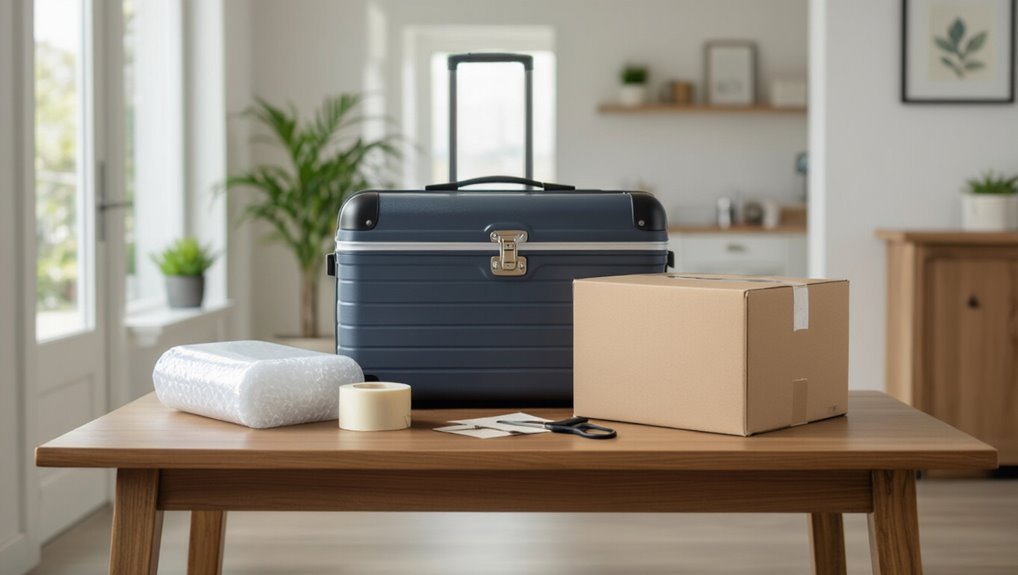
Wondering if you can ship your suitcase instead of hauling it to the airport? Yes — USPS accepts suitcases as parcels if they meet size and weight limits.
You’ll need to pack items securely, label clearly, and choose an appropriate service (Priority Mail, Retail Ground).
Check prohibited items, insure valuables, and verify dimensions/weight to avoid surcharges or refusal at the counter.
When Shipping Luggage Is Worth It (Quick Decision Guide)
When does shipping your suitcase actually save you time, money, or stress?
You should ship when fees for extra bags or tight connections exceed shipping costs, when fragile or bulky items risk damage or inconvenience at airports, or when door-to-door delivery prevents heavy lifting.
Also ship if coordinating pickups at your destination is easier than hauling luggage through transit hubs.
When Shipping Luggage Isn’t Worth It
Although shipping can solve many travel hassles, it isn’t always the best choice — especially if you’re traveling light, have flexible baggage allowances, or need guaranteed same-day access to your gear. You’re better off not shipping when delays, high costs, loss risk, or short trips make it impractical.
| Reason | Impact | When to avoid |
|---|---|---|
| Cost | High | Short trips |
| Delay | Possible | Urgent need |
| Risk | Loss/damage | Valuable items |
| Convenience | Lower | Quick access |
USPS Size and Weight Limits for Suitcases
Before you ship a suitcase, you’ll want to check USPS’s size limits to make sure your bag fits within maximum dimensions and girth rules.
You’ll also need to confirm weight restrictions and any extra fees that kick in for heavier items. Knowing both size and weight limits up front helps you avoid surprises at the counter.
Size Limits Overview
If you plan to ship a suitcase through USPS, know that both size and weight limits will determine your options and cost.
You’ll need to measure length plus girth and compare to service maxima. Check dimensions before packing.
Consider these quick size points:
- Measure length + 2×width + 2×height.
- Max combined size varies by service.
- Oversize fees may apply.
- Hard cases differ slightly.
Weight Restrictions Explained
When you’re shipping a suitcase with USPS, weight limits will often affect which service you can use and how much you’ll pay, so weigh your bag before choosing an option.
You’ll typically stay under 70 lbs for standard retail services; Priority Mail has size/weight caps, and heavier items may require Ground Advantage or commercial pricing.
Check limits, pack smart, and declare accurate weight.
How USPS Dimensional (DIM) Weight Affects Luggage Cost
When you ship a suitcase, USPS may charge by dimensional (DIM) weight, which uses package size rather than just scale weight to set rates.
You’ll want to know how DIM is calculated so you can compare billed weight to the actual weight.
I’ll also show simple ways to reduce DIM charges, like using smaller boxes or compressing contents.
Dimensional Weight Basics
Though package weight used to be the main factor, USPS now often charges based on dimensional (DIM) weight, which can raise the cost of shipping bulky luggage even if it’s light.
You’ll want to know how DIM is calculated and applied:
- Measure length × width × height (in inches)
- Divide by USPS DIM divisor
- Compare DIM vs actual weight
- Bill uses the higher weight
Reducing DIM Charges
1 simple step can cut DIM charges: shrink the package volume.
You’ll use smaller boxes, compress soft items, or remove unused space so carriers calculate lower dimensional weight. Measure length, width, height accurately and pack tightly.
Compare actual vs. DIM weight; USPS bills whichever is greater.
Choose packaging that balances protection with minimal volume to keep shipping costs down.
How to Estimate USPS Shipping Cost for Luggage
Estimating USPS shipping costs for your luggage starts with measuring and weighing the bag accurately, since size and weight drive almost every rate calculation.
Estimating USPS luggage costs begins with accurately measuring and weighing your bag—size and weight determine most rates.
Then use USPS tools and consider service, insurance, and DIM rules to refine estimates.
- Measure length×width×height
- Weigh on a postal scale
- Check Priority vs Retail Ground
- Add insurance and extras
Real-World Cost Examples and Sample Calculations
Now let’s look at concrete examples so you can see how measurements, weight, and service choices change the final price.
Say a 25″ suitcase weighs 30 lbs and measures 40″ combined—retail rate might charge dimensional or zone-based pricing, yielding $65.
A compact 15 lb bag under cubic limits could be $30.
Add insurance or extras to adjust totals accordingly.
Comparing Priority Mail vs Retail Ground for Suitcases
Whether you want speed or savings, choosing between Priority Mail and Retail Ground affects cost, delivery time, and handling for your suitcase.
You’ll weigh faster delivery and included tracking against lower cost but slower transit.
Consider:
- Price difference
- Transit time
- Insurance and protection
- Size/weight limits
Pick Priority for speed; pick Retail Ground for budget-conscious, non-urgent shipments.
Choose Priority Mail Express for Time-Sensitive Baggage
When you need luggage to arrive on a strict timetable, choose Priority Mail Express for its overnight delivery and guaranteed date options; it gives you the fastest domestic USPS service, end-to-end tracking, and a money-back guarantee if the package misses the promised window.
You’ll get signature options, insurance up to $100 included, and predictable pickup/dropoff choices to minimize delays and stress.
How Shipping Luggage Compares to FedEx and UPS
You’ll want to compare USPS, FedEx, and UPS on cost to see which gives the best value for your luggage.
Check typical delivery speeds and pickup options so you don’t miss tight travel windows.
Also weigh handling practices and insurance limits to protect fragile or high‑value items.
Cost Comparison
Although price depends on size, weight, and delivery speed, shipping luggage through USPS generally costs less than similar services from FedEx and UPS for many domestic moves.
You’ll save on flat-rate options and basic ground service.
Compare:
- USPS Priority Mail vs. FedEx Ground
- USPS Flat Rate vs. UPS Ground
- Extra fees (dimensional weight)
- Insurance and tracking costs
Delivery Speed
Because delivery speed often drives your choice, compare USPS, FedEx, and UPS transit times before you ship luggage.
USPS Priority Mail usually takes 1–3 business days regionally, slower for coast-to-coast.
FedEx and UPS offer comparable 1–3 day ground and faster guaranteed overnight or 2-day air options.
Choose based on how quickly you need bags versus cost and pickup convenience.
Handling And Insurance
When you ship luggage, how carriers handle rough treatment and what they’ll cover matters as much as price.
You’ll compare handling, declared value limits, claim ease, and add-on insurance. Consider:
- USPS: limited included coverage, slower claims.
- FedEx: higher declared value, quicker inspections.
- UPS: strong tracking, straightforward claims.
- Buy extra insurance for high-value bags.
Door-to-Door Luggage Shipping Services: What’s Different
If you’d rather skip airport baggage lines and have your suitcase meet you at your destination, door-to-door luggage shipping services change the game by handling pickup, transit, and delivery so you don’t have to.
You’ll get scheduled curbside pickup, tracking updates, customs assistance for international moves, and optional insurance. Prices are higher than drop-off options but save time and reduce travel stress.
How to Prepare a Suitcase for USPS Shipping
1 simple checklist will make preparing your suitcase for USPS shipping quick and reliable:
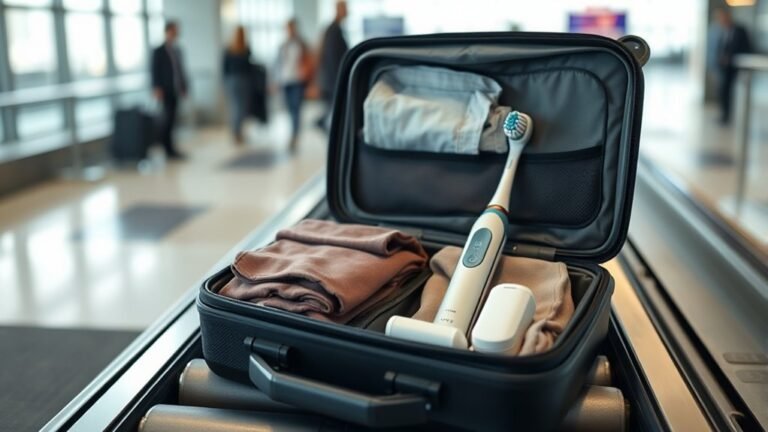
- Empty and clean pockets, remove batteries and prohibited items.
- Secure loose straps, cushion fragile contents with clothing or bubble wrap.
- Lock or tape zippers; attach a durable shipping label and your contact info.
- Weigh and measure to choose proper USPS service and purchase insurance if needed.
Reinforce Soft-Shell vs Hardshell Suitcases for Shipping
Now that your suitcase is clean, empty of prohibited items, and properly labeled, think about how its shell will handle rough handling and what reinforcement it needs.
For soft-shells, add structure with cardboard panels or foam inserts to prevent crushing and secure zippers.
For hardshells, protect corners and scuffs with edge guards and cushioning inside to prevent interior items from shifting and cracking.
What Packaging Materials to Buy for Mailed Luggage
You’ll want a sturdy outer box that’s slightly larger than your suitcase to protect against drops and crushing.
Add protective internal padding—bubble wrap, foam inserts, or packing peanuts—to cushion corners and prevent shifting.
Choose materials rated for shipping weight so your luggage stays secure in transit.
Sturdy Outer Boxes
A strong outer box is the single most important purchase you’ll make when mailing luggage—choose one that matches your bag’s size, weight, and fragility rating.
Pick double-wall corrugated boxes for heavy cases, new or like-new condition, correct dimensions to prevent shifting, and reinforced corners.
- Double-wall corrugated
- Correct size fit
- New or sturdy used
- Reinforced corners and seams
Protective Internal Padding
Think in layers: you’ll want cushioning that fills voids, absorbs shocks, and keeps items from shifting inside the box.
Use bubble wrap for fragile parts, foam sheets for structural support, and packing peanuts or crumpled kraft paper to prevent movement.
Wrap handles and wheels separately, secure loose straps, and seal gaps so the luggage won’t compress or rub during transit.
Should You Lock Your Suitcase Before Shipping?
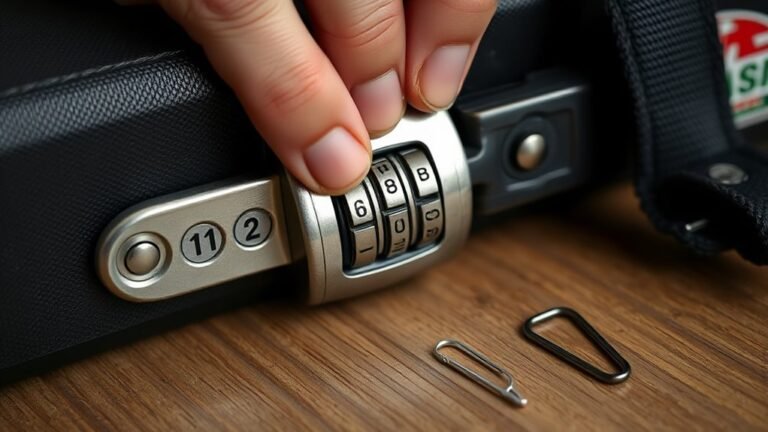
Wondering whether to lock your suitcase before shipping it? You should weigh security versus access: locks deter casual tampering but may be cut for inspection.
Consider these points:
- Use TSA-approved locks if you want inspection-friendly security.
- Label fragile or valuable contents visibly.
- Add tamper-evident seals for proof of entry.
- Remove bulky external locks that risk damage during transit.
How to Pack Batteries, Electronics, and Liquids Safely (USPS Rules)
When packing batteries, electronics, and liquids for USPS, you need to follow specific packaging and restriction rules to avoid delays or refusals.
Make sure batteries are protected against short circuits. Electronics must meet mailing restrictions, and liquids should be sealed in leakproof containers with absorbent padding.
We’ll cover the exact USPS requirements and practical packing tips so you can ship safely and compliantly.
Batteries Packaging Rules
Because batteries can pose fire and chemical risks in transit, you need to pack them carefully and follow USPS rules exactly.
Handle and prepare batteries this way:
- Remove batteries from devices when possible.
- Insulate terminals with tape or original packaging.
- Use strong, rigid outer packaging and cushioning.
- Declare restricted battery types and follow labeling requirements before mailing.
Electronics Shipping Restrictions
If you’re shipping electronics through USPS, follow specific rules for batteries, devices, and any liquids they contain to avoid delays or safety holds.
You must remove or secure batteries per USPS guidelines, insulate terminals, and pack devices to prevent activation or damage.
Declare hazardous batteries, use approved packaging, and check size, weight, and destination restrictions to guarantee acceptance and safe transit.
Liquids Containment Guidelines
Start by separating liquids from batteries and electronics and placing them in leak-resistant, sealed containers so you reduce the chance of spills, corrosion, or device damage during transit.
Then follow USPS rules:
- Use absorbent cushioning around containers.
- Seal lids with tape and place in secondary waterproof bags.
- Remove batteries from devices if possible.
- Label packages with liquid contents.
Prohibited and Restricted Items to Remove Before Mailing
Before you pack that bag for shipment, check and remove any items the USPS won’t accept or that need special handling.
Don’t include hazardous materials (fuels, fireworks, corrosives), lithium batteries unless properly packaged or shipped separately, illegal drugs, perishable food, firearms without required declarations, or live animals.
Remove valuables and anything requiring permits; follow USPS restricted-item rules to avoid delays.
Insurance & Declared Value for Shipped Luggage
Once you’ve removed prohibited items and valuables, think about protecting the remaining contents with insurance or a declared value.
After removing prohibited items and valuables, protect remaining contents with insurance or a declared value for added coverage.
You can declare value for higher coverage, buy extra insurance for loss or damage, and keep receipts and photos to support claims.
Consider declared value limits and fees, then pack to minimize damage.
- Check USPS declared value rules
- Photograph contents
- Keep receipts
- Buy extra insurance
Tracking and Delivery Confirmation With USPS
1 key advantage of shipping luggage through USPS is real-time tracking and delivery confirmation that lets you monitor your bag from drop‑off to arrival.
You’ll get tracking numbers, status updates, and delivery signatures for eligible services.
Check scans online or via the USPS app, sign up for alerts, and verify receipt with signature confirmation to guarantee your luggage reached its destination safely.
How Long Does USPS Take to Deliver Luggage Domestically?
Tracking gives you confidence that your luggage is en route, but you’ll also want a clear sense of timing: how long USPS actually takes to deliver domestic bags.
Delivery varies by service; expect these ranges:
- Priority Mail Express: 1–2 days
- Priority Mail: 1–3 days
- First-Class/Parcel Select: 2–5+ days
- Retail Ground: 2–8 days, depending on distance and season
Can You Ship Luggage Internationally With USPS?
Wondering if you can ship your suitcase abroad with USPS? You can, using Priority Mail International or First-Class Package International (if light). You’ll need proper packing, a declared value, and accepted destination service. Transit times vary by country. Check prohibited items and size/weight limits before shipping.
| Service | Best for |
|---|---|
| Priority Mail Intl | Faster, heavier |
| First-Class Intl | Lightweight, cheaper |
Customs Forms and Rules for International Luggage
When you ship luggage internationally, you’ll need the correct customs forms and clear descriptions of what’s inside.
Accurately declaring contents helps avoid delays, inspections, or penalties, and some items may be restricted or prohibited.
Be prepared to pay duties and taxes based on the declared value and destination country’s rules.
Required Customs Documentation
If you’re sending luggage overseas, you’ll need to complete specific customs forms and follow rules that let officials identify the shipper, recipient, and contents.
This guarantees smooth processing and helps avoid delays, fines, or returned items. You’ll provide documentation, pay duties if applicable, and follow packaging standards.
Required items:
- CN22/CN23 customs form
- Detailed packing list
- Commercial invoice (if required)
- Endorsement/authorization letters
Declaring Contents Accurately
Because customs officers rely on clear, consistent descriptions, you should list each item’s exact name, quantity, value, and material on the CN22/CN23 and any attached packing list. Be specific, honest, and consistent to avoid delays. Use the table below to visualize an entry:
| Item | Qty | Material |
|---|---|---|
| Jacket | 1 | Leather |
| Shoes | 2 | Synthetic |
| Camera | 1 | Metal |
Duties, Taxes And Restrictions
Although customs rules vary by country, you’ll usually be responsible for declaring items above a duty-free allowance and paying any applicable duties or taxes; check the destination’s thresholds before shipping.
You must complete accurate customs forms and label values. Consider:
- List contents with values.
- Mark commercial vs. personal.
- Attach receipts for high-value items.
- Verify prohibited/restricted goods before sending.
How to Tag and Label Your Suitcase for Reliable Delivery
When you tag and label your suitcase correctly, you make it much easier for USPS handlers to identify and route it quickly.
Use a durable printed tag with your name, phone, and destination address; include a backup card inside.
Affix labels securely to hard surfaces, avoid straps that can slip, and add a clear barcode/USPS tracking sticker so scans stay readable throughout transit.
How to Measure and Weigh Your Bag for Accurate Pricing
Start by measuring your bag’s length, width, and height with a tape measure and noting the largest single dimension—USPS and other carriers often charge by the combined measurements for oversized items.
Measure your bag’s length, width, and height—note the largest dimension since carriers may charge by combined size.
Then weigh it on a bathroom or postal scale. Follow these steps:
- Empty extras before weighing.
- Measure at widest points.
- Round up measurements.
- Record weight and dimensions for quotes.
How to Avoid DIM Surprises When Packaging
Before you tape up your bag, measure its length, width, and height so you can calculate dimensional (DIM) weight and compare it to the actual weight.
Use a box or crate that’s snug but not crushed—oversized packaging can trigger higher DIM pricing.
If your bag barely fits in a smaller box, choose that box to avoid surprise DIM charges.
Measure Dimensional Weight
Dimensional weight can surprise you at the counter, so measure carefully to avoid unexpected fees: calculate DIM by multiplying length × width × height (in inches), dividing by USPS’s divisor (usually 166 for domestic), and compare that result to the actual weight — whichever is greater determines the bill.
- Measure longest points.
- Round up inches.
- Use a tape measure.
- Recheck before drop-off.
Use Proper Box Size
Pick a box that fits the contents snugly — too much extra space inflates your DIM calculation and costs you.
Compress clothing, use bubble wrap only where needed, and fill voids with soft items to avoid shifting.
If your luggage is bulky, consider a slightly larger box that reduces awkward dimensions.
Seal and label securely, then remeasure to confirm the DIM weight before shipping.
How to Schedule a USPS Pickup for Oversized Luggage
Scheduling a USPS pickup for oversized luggage is simple: you can request pickup online, via the USPS mobile app, or by calling customer service, and you’ll need your tracking number, package dimensions, and pickup address ready.
- Choose pickup date and window.
- Enter package weight and dimensions.
- Print or label package clearly.
- Confirm pickup and keep confirmation number.
Drop-Off Options: Post Office, Retail Center, or Shipper
You can drop off luggage at a local Post Office, which handles most USPS shipments and can help with packaging and forms.
Retail centers offer extended hours and may provide packing services if you need extra help.
Third-party shippers can be convenient for pickup, specialized handling, or if you want one-stop service outside USPS locations.
Post Office Locations
When you’re ready to drop off your luggage, USPS gives you three main options: a staffed Post Office, a Postal Retail Center (PRC) with extended services, or an approved shipper like a travel or package business—each option has different hours, packaging help, and walk-in availability, so choose the one that fits your schedule and need for assistance.
- Find local Post Offices online.
- Check hours.
- Confirm packing help.
- Note holiday closures.
Retail Center Services
If the staffed Post Office doesn’t fit your timing or service needs, retail centers and approved shippers offer convenient alternatives for dropping off luggage.
You can bring packed bags to USPS retail partners, self-service kiosks, or local contract units that accept prepaid labels. They’ll scan packages, provide receipts, and often offer extended hours, letting you ship without waiting for full Post Office services.
Third-Party Shippers
Although the Post Office and retail centers handle most luggage shipments, third-party shippers give you more drop-off flexibility.
Contract shipping stores and carriers will accept prepaid USPS-labeled bags, scan them for tracking, and often provide extended hours, packing help, or added services like insurance and fragile handling.
You can:
- Drop off after hours
- Get professional packing
- Buy extra insurance
- Request fragile labeling
How to Create and Print a USPS Shipping Label at Home
Start by gathering your package, addresses, and payment method so you can finish the label in one session; creating and printing a USPS shipping label at home is quick and saves trips to the post office.
Go to USPS.com or use Click-N-Ship, enter sender and recipient info, choose service and insurance, pay, then print the PDF.
Affix label securely and drop off or schedule pickup.
Ship Multiple Suitcases Efficiently: Batching, Labeling, and Pricing
If you’re shipping several suitcases, group them into batches to streamline dropoff and tracking.
Create a consistent labeling protocol—include recipient info, a bag number (e.g., 1 of 3), and any handling notes on each tag.
That way you’ll speed processing and avoid lost or mismatched pieces while comparing pricing for combined shipments.
Batch Multiple Bags
When you’re sending more than one suitcase, batching them together simplifies tracking and can cut your per-bag costs. Group shipments let you consolidate paperwork, label efficiently, and compare rate options for the whole set rather than handling each piece separately.
You should:
- Count and weigh every bag before pickup.
- Choose combined insurance or declared value.
- Schedule a single pickup for all pieces.
- Keep one master manifest for easy reference.
Consistent Labeling Protocol
Because consistent labeling prevents mix-ups and speeds handling, you should apply the same clear, durable label format to every suitcase before pickup. Use bold name, destination, and phone; include handling notes; secure with waterproof sleeves. Scan and photo each tag for records. Verify weight and batch ID.
| Field | Example |
|---|---|
| Name | J. Doe |
| Destination | JFK |
| Phone | 555-1234 |
| Batch ID | BATCH01 |
| Notes | Fragile |
How Seasonal Demand Affects Delivery and Rates
Although peak travel seasons strain capacity, USPS still delivers reliably, but you should expect slower transit times and higher prices during holidays and summer peaks.
Plan ahead, choose services with tracking, and insure valuable items.
Consider these seasonal effects:
- Longer transit windows
- Increased rates and surcharges
- Limited pickup/appointment availability
- Higher risk of delays for non-priority shipments
Tips for Packing Important Documents and Valuables Separately
Keep important papers in a separate, labeled pouch so they’re easy to find and don’t get mixed with clothing.
Use tamper-evident seals or bags on anything you don’t want opened en route to spot interference quickly.
Whenever possible, keep expensive jewelry and irreplaceable items with you instead of packing them.
Separate Document Pouch
1 smart, thin pouch can save you hours of stress at delivery and beyond: pack passports, travel documents, receipts, and small valuables in a dedicated, clearly labeled sleeve that you keep with you or place in an easily accessible compartment.
- Waterproof pouch
- RFID-blocking sleeve
- Foldable pen and photocopy
- Emergency contact card
Use Tamper-Evident Seals
When you’re sending important documents or small valuables, use tamper-evident seals so you’ll know right away if someone’s messed with your package; these simple strips or tapes peel or break to show any interference, giving you a clear chain-of-custody signal without opening the parcel.
Apply seals to inner pouches and outer packaging, photograph placement, and record serial numbers for tracking and claims.
Keep Valuables Onhand
Seals help show tampering, but they shouldn’t be your only safeguard — carry passports, cash, jewelry, and original IDs with you instead of packing them in checked or shipped luggage.
Keep copies and separate backups, and limit what’s inside shipments.
- Scan documents
- Carry originals
- Use hidden pouches
- Ship nonessentials only
How to File a Damage or Loss Claim With USPS
If your luggage arrives damaged or doesn’t show up at all, you’ll need to act quickly to file a USPS claim so you can recover losses or get repairs.
Document damage with photos, keep original packaging and receipts, and note tracking details.
Start a claim at usps.com or your local post office within allowed timelines, provide proof of value, and follow requested forms and inspections.
How to Track a Claim and Speed Up Reimbursement
Although it can feel slow, you can actively monitor your USPS claim online and take steps that often speed reimbursement.
Check status daily, respond quickly to requests, and keep records organized. Follow these steps:
- Log into your USPS claim dashboard.
- Upload clear photos and receipts immediately.
- Reply to emails within 24 hours.
- Call customer service with your claim number.
How to Avoid Common Shipping Mistakes That Delay Luggage
While you keep tabs on your claim and respond quickly, preventing delays is even better than fixing them after the fact.
Pack securely, label clearly with complete addresses and phone numbers, and remove old tags.
Choose the right service and insurance, weigh accurately to avoid surcharges, and drop off on time.
Inspect receipts and get tracking to catch issues early.
How to Save Money: Discounts, Flat-Rate Boxes, and Regional Pricing
1 smart move to cut shipping costs is to know and use discounts, flat-rate boxes, and regional pricing to your advantage.
Compare options, weigh size vs weight, and pick USPS choices that fit your route.
- Use online and business discounts.
- Choose flat-rate for heavy, compact items.
- Check regional zone pricing.
- Combine shipments when possible.
Packing for Long Moves vs Short Trips When Shipping Luggage
Now that you’ve weighed discounts, flat-rate boxes, and regional pricing, think about how trip length changes what you pack and how you pack it when shipping luggage.
For short trips, send essentials and fragile items in a small, well-padded bag.
For long moves, consolidate, use sturdier suitcases or crates, distribute weight evenly, and protect garments with plastic and padding to prevent damage.
Checklist: What to Do Before Handing Your Luggage to USPS
Before you hand your luggage to USPS, run through a short checklist to avoid delays, losses, or unexpected fees.
Do these steps quickly and clearly:
- Weigh and measure to choose the right service.
- Remove prohibited items and valuables.
- Secure zippers, add durable tags, and tape weak seams.
- Label with full names, addresses, and a contact number.
Red Flags: When You Should Not Ship Your Luggage
If your bag contains fragile, irreplaceable valuables, hazardous materials, or items that are time-sensitive, don’t ship it—carry it with you instead.
Also avoid shipping bags that are poorly packed, heavily soiled, or structurally damaged.
Don’t send items prohibited by USPS rules, high-theft goods without secure insurance, or anything requiring strict temperature control.
When in doubt, keep it with you.
Final Decision Checklist: Ship vs Check Your Bags
You’ve just reviewed the warning signs that mean you should keep your bag with you, so let’s weigh the practical factors that will help you decide whether to ship or check a suitcase.
Consider cost, timing, security, and convenience:
Consider cost, timing, security, and convenience when deciding to ship or check your suitcase.
- Price comparison (fees vs shipping).
- Transit speed and reliability.
- Valuables and inspection risk.
- Door-to-door convenience vs airport handling.
Frequently Asked Questions
Can I Ship a Suitcase With a Tsa-Approved Lock Left Engaged?
Yes — you can ship a suitcase with a TSA-approved lock engaged, but you should release it for inspection if requested. Carriers may still need access; leaving it locked could delay opening and security checks.
Will USPS Accept Damaged Suitcases for Shipment?
Yes, they’ll accept damaged suitcases, but you’ll need to disclose damage, reinforce packaging, and they may require additional packing or refuse if it’s unsafe. You’ll also be responsible for adequate protection and potential claims limitations.
Do I Need to Notify USPS About Fragile Contents Inside Luggage?
Yes — you should tell USPS if your luggage holds fragile items, since they might require special labeling, packaging, or services; that helps guarantee careful handling, potential insurance coverage, and clearer expectations during transit and claims.
Can I Ship Oversized Luggage Containing Sports Equipment?
Yes — you can ship oversized luggage with sports equipment, but you’ll need to check USPS size/weight limits, declare prohibited items, pack and protect gear securely, consider additional fees, and possibly use oversized parcel services or freight options.
Are There Seasonal Blackout Dates for Shipping Luggage With Declared Value?
Yes — there can be seasonal blackout dates for declared-value coverage, especially around peak holidays and major travel periods; check the carrier’s policy and calendar, and plan shipments early to avoid uncovered dates and limited service.
Conclusion
Shipping luggage through USPS can save you time and hassle, but weigh the costs, timing, and risks first. Ship if your bag’s within size/weight limits, contains replaceable items, and you’ve packed and insured it properly. Don’t ship valuables, fragile items, or irreplaceable documents, and avoid last-minute or urgent travel needs. Compare shipping vs. airline fees, factor in delivery speed, and choose the option that best balances cost, convenience, and peace of mind.