Can You Take Cheese in Hand Luggage on Flights?
Yes—you can usually take solid cheeses like cheddar or Parmesan in your carry-on, but soft, spreadable, or unpasteurized cheeses may face extra screening, liquid-limit rules, or customs restrictions. Pack solids airtight and keep soft spreads in 100 ml containers inside your clear bag; make them easy to pull out for inspection and declare any dairy when entering another country. Keep cheeses cool in insulated bags and check airline and destination rules for specifics if you want more details.
Can You Take Cheese in Hand Luggage?
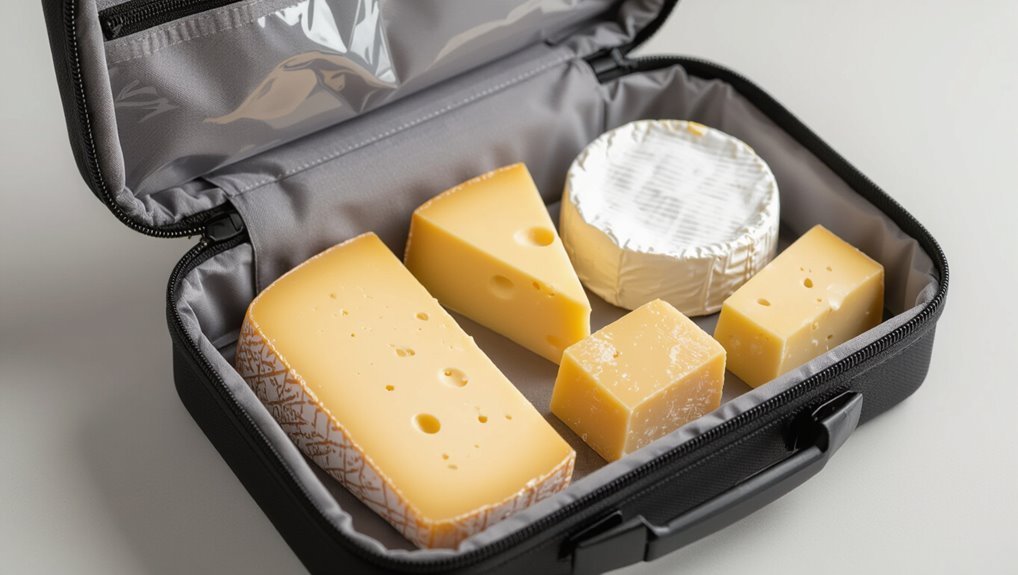
Can you bring cheese in your carry-on? You can, but rules vary: solid cheeses are usually fine, while soft, spreadable cheeses may count as liquids and face limits.
Pack securely in airtight containers and declare if required. Check your airline and destination rules for quarantine or dairy bans.
Keep receipts for purchased items to speed customs, and avoid strong-smelling varieties.
Quick Answer and What to Do at Security
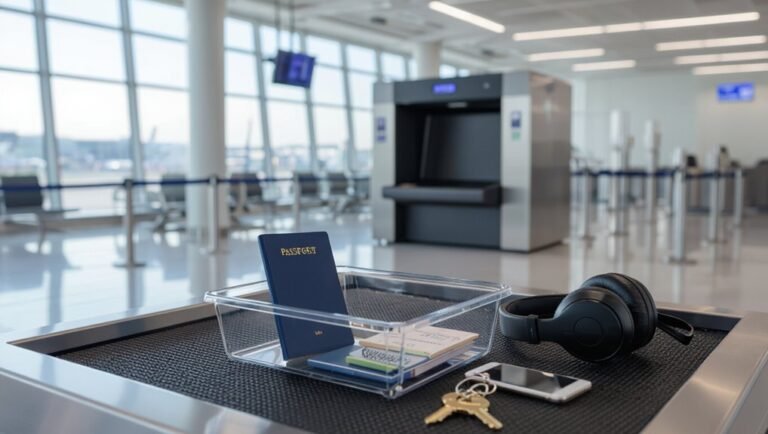
Wondering what to do at security with your cheese? You can usually carry solid cheese; keep it accessible, declare if asked, and place it in a bin for screening. Soft or large amounts might prompt extra checks.
| Item | Tip | Expectation |
|---|---|---|
| Solid cheese | Easy access | Likely allowed |
| Soft cheese | Declare | Possible inspection |
| Large qty | Pack receipts | May be restricted |
How Airport Security Screens Food and Dairy Products
Although screening procedures vary by country and airport, security agents follow a few consistent steps when checking food and dairy:
Although screening varies, agents follow consistent steps when inspecting food and dairy for safety at checkpoints.
- You’ll place items in trays; agents may ask you to remove packaging for X‑ray clarity.
- They’ll inspect suspicious densities or shapes and may open sealed containers for a sniff test.
- If required, you’ll submit samples for chemical or swab testing before being cleared or discarded.
Which Cheeses Are Allowed in Carry-On Luggage?
Which cheeses you can bring in your carry-on depends on their type and consistency: hard, aged cheeses like Parmesan or cheddar are almost always fine.
Soft fresh cheeses like mozzarella or burrata are typically allowed but may be subject to extra inspection.
Creamy spreads such as brie, ricotta, or cream cheese can run into liquid/gel rules and might need to follow TSA liquids limits or be opened for testing.
You should pack securely and declare any doubtful items.
Which Cheeses Are Treated as Liquids or Gels?
How do authorities decide when cheese counts as a liquid or gel? You’ll be judged by texture, packaging, and spreadability.
If it flows, oozes, or’s sold as a spread, it’s treated like a gel.
- Soft, runny cheeses (brie when melted)
- Spreadable tubs (cream cheese spreads)
- Sauces and dips (cheese fondue, nacho cheese)
How Liquid Rules Affect Soft Cheeses and Spreads
When you bring soft cheeses or spreads through airport security, liquid rules mean they’re often treated like gels and must follow the 3-1-1 carry-on limits: containers of 3.4 ounces (100 ml) or less placed in a single clear quart-sized bag.
Pack tubs, cream cheeses, pâtés, and dips in compliant containers, consolidate into one bag, and expect scrutiny or disposal if oversized.
Does Pasteurisation Affect Cheese in Hand Luggage?
Whether your cheese’s been pasteurised or not can affect its labelling, shelf life, and any health declarations you might need to make.
You’ll also want to check airport security and destination regulations, since some countries restrict unpasteurised dairy even if it passes X-ray screening.
Know the difference and confirm rules before you pack to avoid surprises at the checkpoint.
Pasteurised Vs Unpasteurised Differences
Because pasteurisation changes the bacteria in milk, it can affect how authorities treat cheese at security and customs, but it doesn’t automatically ban it from your hand luggage.
You should know differences in safety, shelf life, and labeling so you can decide what to pack.
- Safety: pasteurised lowers bacterial risk.
- Shelf life: unpasteurised can age differently.
- Labeling: check origin and dates.
Airport Security & Regulations
Knowing if a cheese is pasteurised or not helps you assess safety and shelf life, but airport rules are what determine if you can carry it aboard.
You’ll face two issues: security screening and customs. Liquids or soft cheeses exceeding liquid limits may be refused at security.
Customs restricts animal products depending on destination—declare them or risk fines. Check both airline and arrival-country rules.
Domestic Flights vs International Flights: Key Differences
On domestic flights, you’ll generally follow standard carry-on rules that allow solid cheeses in your bag but may limit liquids like soft, spreadable varieties.
For international travel, you’ll also have to clear customs and may face restrictions or limits on bringing dairy products into your destination country.
Check both your airline’s carry-on policy and the destination’s customs rules before you pack.
Domestic Carry-On Rules
When you’re flying within your country, carry-on rules for cheese are usually simpler than for international trips: most domestic airlines let solid cheeses in carry-on bags without special paperwork, though soft, spreadable, or liquid-like cheeses may fall under the TSA’s 3.4-ounce (100 ml) liquid rule.
You should:
- Pack solid cheeses loose or vacuum-sealed.
- Put spreads under 3.4 oz in clear bags.
- Declare unusual items if asked.
International Customs Limits
Traveling across borders brings stricter rules: many countries ban or limit bringing dairy products like cheese to protect local agriculture and prevent pests or disease, so you can’t assume the same liberties you have on domestic flights. You should check destination customs, declare dairy, or risk fines or confiscation.
| Item | Outcome |
|---|---|
| Soft cheese | Often banned |
| Hard cheese | Sometimes allowed |
| Undeclared | Penalties |
How Airline Policies May Restrict Cheese Items
Because airlines set rules for safety, security, and international regulations, you may find that what counts as an allowed cheese item varies by carrier and route.
- Flight crew may ban soft, unpackaged cheeses that can leak or smell.
- Security might treat spreads or liquids over limits as prohibited.
- Some carriers restrict imported dairy due to biosecurity or destination laws.
EU, UK and Schengen Rules for Cheese in Carry-On
When packing cheese for a flight within the EU, UK, or Schengen area, check which types are allowed in the cabin — typically hard and vacuum-sealed cheeses are safer than fresh or soft varieties.
You’ll also need to follow quantity and packaging limits, especially for liquids or spreads and for security-screening rules.
Finally, be aware of border and health restrictions that can ban certain dairy products or require documentation when crossing non-EU/UK/Schengen borders.
Types Allowed In Cabin
Although rules vary across countries, the EU, UK and Schengen area generally allow most hard and semi-hard cheeses in carry-on bags if they meet security and hygiene checks.
You can usually bring:
- Cheddar, Parmesan and other aged hard cheeses.
- Gouda, Emmental and similar semi-hard varieties.
- Vacuum-sealed or well-wrapped portions for cleanliness and inspection.
Quantity And Packaging Limits
Most travelers can carry a reasonable quantity of hard and semi-hard cheeses in their hand luggage, but you should keep portions modest and packed for easy inspection.
In the EU, UK and Schengen areas, small personal quantities are generally allowed; individually wrapped portions or sealed containers speed checks.
Avoid large blocks; declare when asked.
Follow airline liquid rules for soft, spreadable cheeses.
Border And Health Restrictions
Packing cheeses within allowed quantities helps smooth security checks, but you’ll also need to meet border and health rules that vary across the EU, UK and Schengen area.
- Check entry rules: some countries ban unpasteurized or certain animal products.
- Declare when required: failure can mean fines or confiscation.
- Carry documentation: receipts or producer info help prove origin and safety.
United States Rules for Cheese in Carry-On Luggage
When you’re flying within or into the United States, TSA and USDA rules shape what cheeses you can carry on and how they must be packed.
Soft cheeses like brie or fresh ricotta are allowed in carry-on bags, but any liquids or spreads over 3.4 ounces (100 mL) must go in your checked luggage or follow the TSA liquids rule if in a clear quart-sized bag.
International arrivals may face additional USDA restrictions on unpasteurized or foreign cheeses.
You should declare large quantities, keep packaging intact, and expect inspection; pasteurized, solid cheeses are simplest to travel with.
Canada, Australia and New Zealand Agricultural Controls
If you’re flying to Canada, remember their border has strict rules about bringing meat and certain cheeses — you’ll usually need to declare them and may be turned away or fined.
Australia and New Zealand have some of the toughest biosecurity controls in the world, so you can’t assume dairy or meat items will be allowed.
Check each country’s official guidance before you pack to avoid penalties and confiscation.
Canada Border Meat/Cheese Rules
Because Canada, Australia and New Zealand all enforce strict agricultural controls, you need to know their specific rules before bringing meat or cheese across their borders.
- Canada bans many fresh meats; declare any meat or dairy at entry.
- Hard, commercially packaged cheeses are often allowed if declared.
- Undeclared items can be seized and fined, so always check current Canadian import lists before travel.
Australia New Zealand Biosecurity
Although both Australia and New Zealand share strict biosecurity priorities, they each have specific rules you’ll need to follow before bringing any meat, dairy, or plant-based food into the country.
You’ll declare all food on arrival cards, and many cheeses or meats are prohibited unless commercially packaged with clear labels and import permits.
Check each country’s official biosecurity site before travel to avoid fines or confiscation.
How Customs and Agricultural Checks Can Seize Cheese
When you arrive at customs or pass through agricultural inspections, officers actively look for dairy items that could carry pests, diseases, or violate import rules.
They’ll seize any cheese that doesn’t meet the country’s regulations. You should declare cheese, or it’ll be confiscated.
Expect inspection, fines, or disposal if rules aren’t followed.
- Declare items
- Present packaging
- Follow officer instructions
How to Check Your Destination’s Import Rules Quickly
Start by checking your destination’s import rules for dairy so you know if any cheese is banned or restricted.
Use official government sites or embassy pages for the most current, reliable information.
If rules aren’t clear, contact customs or agricultural authorities before you travel.
Check Local Import Rules
Wondering whether your cheese will clear customs? Check local import rules quickly so you won’t be surprised at arrival.
- Search country-specific food allowances and restrictions.
- Note quantity limits, declared items, and prohibited varieties.
- Contact the destination’s customs helpline or embassy for clarifications.
Pack documentation (purchase receipts, ingredient lists) and be ready to declare or dispose of cheese on arrival.
Use Official Government Sites
If you want a fast, reliable answer on whether you can bring cheese into a country, go straight to that country’s official government customs or agriculture website — they publish up-to-date import rules, permit requirements, and lists of prohibited foods.
Check search terms like “bringing food,” “duty-free limits,” or “agricultural declarations.”
Bookmark the page, note contact emails, and confirm rules close to travel.
How Much Cheese Can You Realistically Carry Through Security?
Exactly how much cheese can you carry through security depends on its form and whether you’re flying domestically or internationally.
You’ll face liquid rules for soft cheeses and agricultural inspections for cross-border travel. Pack smart, declare when required, and expect variability.
Expect liquid rules for soft cheeses and possible agricultural checks abroad—pack wisely, declare items, and be prepared for variation.
- Soft/creamy: follow 100ml/3.4oz liquid limits.
- Hard: usually unlimited domestically.
- International: check customs.
How to Pack Hard Cheeses for Carry-On Travel
Packing hard cheeses for carry-on travel is straightforward when you keep them cool, wrapped, and easy to inspect.
Wrap wedges in parchment, then airtight plastic or a reusable silicone bag to prevent odor and contamination.
Place in an insulated lunch bag with a small frozen gel pack.
Keep receipts or labels handy for inspection, and pack where security can access without crushing other items.
How to Pack Soft Cheeses and Spreads to Meet Liquid Rules
Soft cheeses and spreads often count as gels or liquids at airport security, so you’ll need to plan how much and how you pack them to meet the 3-1-1 rule.
Soft cheeses and spreads count as liquids at security — portion into 100ml containers and pack in a clear quart bag.
- Portion spreads into containers no larger than 100ml and seal them tightly.
- Place containers in a clear, resealable 1-quart bag for screening.
- Declare unusual items and be ready to remove the bag at security.
How to Travel With Blue, Aged, or Unpasteurised Cheese
Traveling with blue, aged, or unpasteurised cheese takes a bit more planning because they can be fragile and are often subject to stricter rules.
You’ll want to pack them in airtight containers or vacuum-sealed bags with ice packs to control temperature and prevent odor leaks.
Also check your airline’s policy and the destination’s import rules—some countries ban unpasteurised dairy or require declarations.
Packing And Storage
If you’re bringing blue, aged, or unpasteurised cheese on a trip, plan how you’ll store it so flavor and safety stay intact.
- Wrap in wax or parchment, then aluminum to control moisture and odor.
- Use an insulated cooler bag with gel packs; avoid direct ice contact.
- Keep cheese in cabin with you, monitor temperature, and consume within recommended time to prevent spoilage.
Airline And Border Rules
Because rules vary by carrier and country, you should check both your airline’s policies and customs regulations before packing blue, aged, or unpasteurised cheese.
Some airlines ban strong-smelling varieties in cabin or require vacuum sealing.
Many countries restrict unpasteurised dairy and aged cheeses; declare them on arrival to avoid fines.
When in doubt, contact customs or choose pasteurised, well-sealed options.
Using Coolers, Ice Packs, and Insulated Bags in Hand Luggage
One or two small insulated bags or a soft-sided cooler with gel ice packs will usually keep cheese safe and meet airline carry-on rules, but you should pack them smartly: use leak-proof containers, freeze packs beforehand, and make sure any liquid or gel meets TSA size limits and airline-specific restrictions.
Small insulated bags or a soft cooler with frozen gel packs will keep cheese safe and comply with carry-on rules.
- Wrap cheese airtight to prevent leaks.
- Use frozen gel packs, not loose ice.
- Keep cooler accessible for inspection.
What to Say If TSA or Security Questions Your Cheese?
If an agent asks about your cheese, tell them what type it’s (hard, soft, or fresh) and whether it’s pre-packaged or homemade.
Offer details about how you packed it—sealed containers, cooler bags, or ice packs—and mention any refrigeration you used.
Being clear and upfront will speed up the screening and reduce the chance of questions.
Explain What It Is
When a TSA officer asks about your cheese, clearly name the type (cheddar, brie, feta, etc.), state whether it’s hard, semi-soft, or soft, and mention if it’s pasteurized or homemade—this quick description helps officers assess whether it’s allowed, especially for international flights or carry-on liquid rules.
- Say the cheese name and texture.
- Note pasteurized or homemade.
- Be concise and cooperative.
Offer Preparation Details
After naming the cheese and its texture, be ready to show how it’s packed and explain any prep steps you took. Calmly state that it’s solid, wrapped, and stored in a sealed container. Offer to unwrap or present a receipt. Keep answers short and factual; follow instructions.
| Item | Prep | Note |
|---|---|---|
| Cheese type | Wrapped | Solid |
| Packaging | Sealed | Clean |
| Receipt | Available | Optional |
| Temperature | Cooled | Recommended |
| Quantity | Reasonable | Explainable |
Buying Airport-Safe Cheese: Sealed Portions and Vacuum Packs
One easy way to keep cheese travel-friendly is to buy sealed portions or vacuum-packed varieties that meet TSA and airline rules.
They stay fresh, won’t leak, and speed security checks. When shopping, look for clear labeling and intact seals.
- Single-serve vacuum packs
- Factory-sealed cheese sticks
- Retail blister packs
Bringing Cheese Across Borders: Gifts vs Resale Rules
If you’re crossing borders with cheese, know that customs treats personal gifts and commercial shipments very differently.
You should pack small, clearly labeled gifts for personal use and avoid anything suggesting resale: bulk quantities, price tags, or business packaging.
Check destination rules for import limits, allowed dairy types, and required permits.
Declaring honestly prevents confiscation, delays, or fines.
How to Declare Cheese at Customs to Avoid Fines
When you arrive at customs, declare any cheese on your forms and tell the officer up front—honest disclosure is the quickest way to avoid fines and delays.
Be ready with receipts, packaging details, and origin. Follow instructions if inspection’s required.
Have receipts, labels, and origin info ready — comply calmly if customs needs to inspect.
- Have receipts and labels visible.
- State quantity and purpose (gift/personal).
- Accept officer directions calmly.
Alternatives to Carrying Fresh Cheese on Flights
Declaring cheese at customs is smart, but you might prefer options that sidestep inspection and spoilage altogether.
Choose shelf-stable alternatives like aged hard cheeses, vacuum-sealed portions, or shelf-stable cheese spreads.
Buy local after arrival, pack powdered cheese for recipes, or ship refrigerated orders to your destination.
These choices reduce risk, simplify travel, and keep flavors intact without customs headaches.
How to Store Cheese During Long Layovers and Delays
Because layovers and delays can stretch your travel day, plan how you’ll keep cheese cool and safe for those extra hours.
Plan ahead for layovers—keep cheese cool and secure with insulation and airtight packing to stay safe during delays.
- Use an insulated lunch bag with reusable ice packs to maintain temperature.
- Keep cheeses sealed in airtight containers to prevent odors and contamination.
- Store soft cheeses in the coldest spot of your carry-on and hard cheeses wrapped in wax or parchment for durability.
Troubleshooting: Melted, Seized, or Spoiled Cheese
Even with the right cooler and airtight containers, cheese can still melt, seize, or spoil during long waits, so you’ll want to know how to spot problems and act fast. Check texture, smell, and temperature; discard if sour, slimy, or excessively oily. Rechill firm cheeses; salvage hard ones by trimming.
| Sign | Action |
|---|---|
| Melted | Chill gently |
| Seized | Grate/use cooked |
| Sour | Discard |
| Slimy | Discard |
| Oily | Trim and use |
Quick Checklist to Prepare Cheese for Your Carry-On Trip
When you’re packing cheese for a flight, follow a short checklist to keep it fresh, legal, and easy to get through security:
- Wrap: seal in airtight bags or vacuum pack to prevent odor and leakage.
- Chill: use a small cooler pack to keep hard and soft cheeses below safe temperatures.
- Declare: know and declare any dairy at customs when required to avoid fines.
Further Resources: Where to Check Country and Airline Rules
Wondering where to check rules for bringing cheese abroad? Check your airline’s website, contact customer service, and review departure and arrival country customs pages.
Look up agricultural import restrictions and the official government travel or border agency site. Use embassy or consulate resources for unclear cases, and consult forums or travel sites only after verifying official guidance to avoid outdated or incorrect information.
Frequently Asked Questions
Can Infants or Medical Diets Allow Extra Cheese in Carry-On?
Yes — infants’ food and medically necessary items often get exceptions, so you can bring extra cheese for a baby or dietary needs. Check your airline and security rules, declare it if required, and pack it safely.
Can Powdered Cheese or Seasoning Packets Be Treated Differently?
Yes — powdered cheese and seasoning packets are usually treated as solid food, so you can pack them in carry-on, but you’ll need to declare large quantities and follow specific airline or country rules, and security may inspect them.
Are Cheese Knives or Spreaders Allowed in Hand Luggage?
Yes — you can usually pack small cheese knives or spreaders in carry-on luggage if their blades are rounded or under airline/TSAs allowed length; however, sharp or pointed knives are often prohibited, so check local airport rules first.
Do Duty-Free Cheese Purchases Bypass Liquid Rules?
Yes — duty-free cheese bought after security usually bypasses liquid rules, so you can carry it onboard, but keep receipts and follow airline or destination restrictions; customs rules may still apply when you arrive.
Will Travel Insurance Cover Spoiled or Seized Cheese?
Generally no — travel insurance usually won’t cover spoiled or seized cheese unless you bought a specific baggage or perishables rider. Check your policy terms, declare purchases, keep receipts, and contact your insurer promptly to file a claim.
Conclusion
You can usually take cheese in your carry-on, but rules vary so check airline and destination restrictions before you travel. At security, solid cheeses typically pass, while soft, spreadable, or liquid-like cheeses might count toward your liquids allowance and risk being confiscated. Pack cheese in airtight containers, use a cooler bag for long waits, and keep receipts for declared items. If in doubt, declare it to security or ship it ahead to avoid surprises.