Do Carry On Bags Get Checked at Airport Security?
Yes — you usually keep your carry-on, but security can and will check it if it’s randomly selected or looks suspicious. Agents may X‑ray, open, swab for explosives, or ask you to remove electronics and liquids. Oversized or heavy bags, prohibited items, or unclear containers often trigger checks. You can request a private search or a supervisor if needed, and you should keep valuables and meds on you — more practical tips follow if you want them.
Quick Answer: Will Your Carry-On Be Checked?
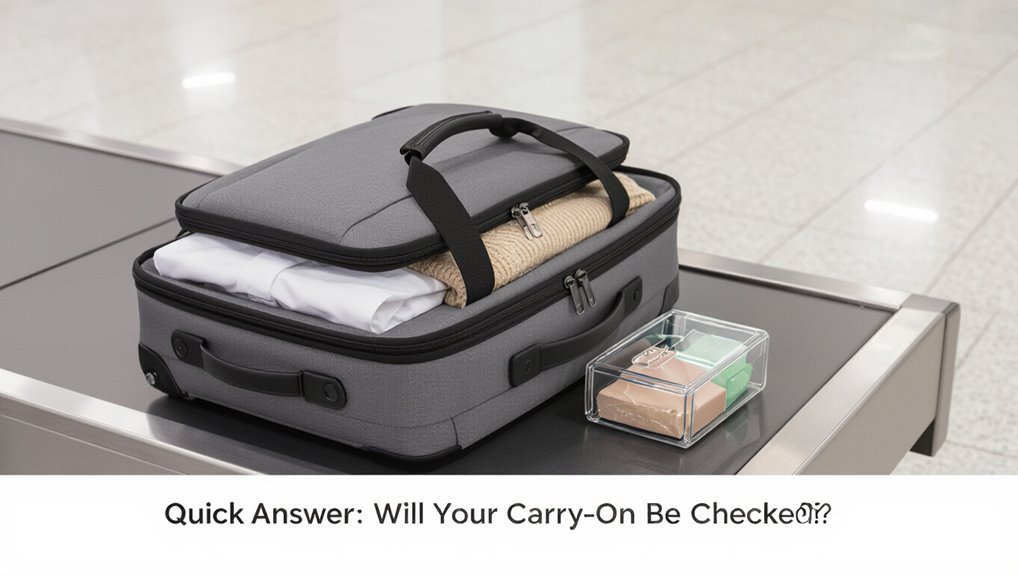
Wondering if your carry-on will get checked? Usually it won’t, but security may inspect it.
Random screenings, alarmed scanners, or suspicious items can trigger a search. TSA or local agents may open bags, swab for explosives, or ask you to remove contents.
You can reduce checks by following rules: pack liquids properly, keep electronics accessible, and avoid prohibited items to speed screening.
What Counts as a Carry-On vs. a Checked Bag
Bags you carry onto the plane are generally categorized as either a carry-on (the smaller bag you stow in the overhead bin) or a personal item (the smaller item that fits under the seat).
Larger, heavier pieces you hand over at check-in become checked baggage. Carry-ons and personal items stay with you; checked bags go in the aircraft hold and follow airline check-in procedures.
Carry-On Size & Weight Limits That Trigger Checking
Airlines set specific size and weight caps for carry-ons, and if your bag exceeds those limits they’ll require you to check it.
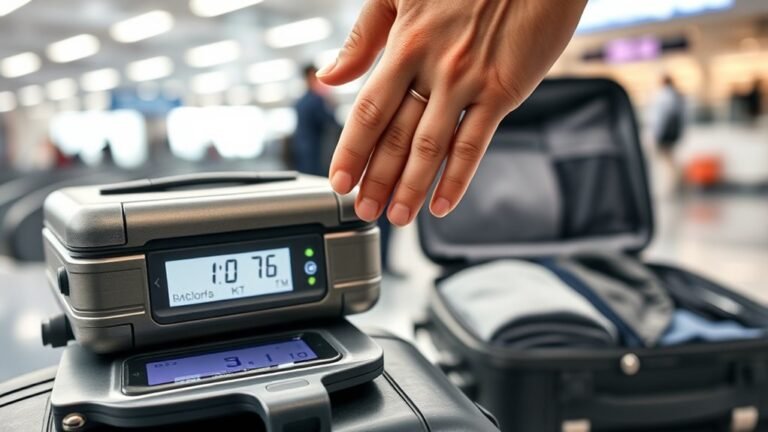
You should measure and weigh your bag before travel to avoid gate fees or delays.
- Typical size limits: 22x14x9 inches (varies)
- Weight caps: often 7–10 kg on some carriers
- Overhead vs underseat rules differ
- Sports gear often checked
- Check airline policy before packing
Prohibited and Restricted Items That Force a Check
If you pack liquids over the allowed limit, sharp tools, or anything flammable or explosive, TSA officers will usually pull your bag for inspection.
You’ll either have to discard, check, or properly declare those items before continuing.
Know the rules beforehand so you can avoid surprises at the checkpoint.
Liquids Over Allowed Limit
What happens when you try to bring a bottle that exceeds the TSA liquid limit? You’ll be stopped at screening; agents will ask you to discard, repack, or check the item.
You can’t carry oversized liquids through security.
- Bottle over 3.4 oz (100 ml)
- Unsealed containers
- Multiple combined containers
- Liquids in carry-on pockets
- Noncompliant duty-free packaging
Sharp Objects And Tools
Because sharp objects and many tools can pose clear safety risks in a cabin, security officers will often require you to check them rather than carry them through screening.
You’ll need to pack knives, box cutters, large scissors, crowbars, and many multi-tools in checked baggage or leave them behind.
Small, blunt tools might be allowed, but check your airline and TSA rules before travel.
Flammable Or Explosive Materials
Sharp objects and tools can’t make it through screening for safety—flammable and explosive materials are treated even more strictly.
You’ll have items confiscated or forced into checked baggage if they pose a fire or blast risk. Don’t try to sneak them; declare anything uncertain.
Common examples include:
- Aerosol cans
- Gasoline-powered tools
- Lighter fluid
- Fireworks
- Spare lithium batteries
How X‑Ray, CT, and Explosive-Detection Screening Leads to Checks
When your carry-on passes through X‑ray or CT scanners, operators are looking for shapes and densities that don’t match normal items.
If images flag suspicious objects or the explosive‑detection algorithms trigger an alert, agents will pull your bag for a closer inspection.
You’ll either be asked to open the bag, have items swabbed, or have the bag sent for additional screening.
X‑Ray And CT Screening
How do X‑ray and CT machines decide whether your carry‑on needs a closer look? You’ll have images analyzed by algorithms and officers; strange shapes, dense objects, or clutter trigger alarms.
If flagged, your bag gets pulled for manual inspection.
- dense metals
- irregular organic shapes
- overlapping items
- prohibited electronics
- image artifacts
Explosive‑Detection Protocols
Ever wondered what steps security takes when imaging flags a possible explosive?
You’ll see layers: automated CT/X‑ray alerts technicians, who rerun scans, inspect images, then use explosive trace detection (ETD) swabs.
If ETD’s positive or images stay suspicious, your bag’s opened for manual inspection and possible secondary screening.
You’ll be asked questions; officers follow strict protocols to guarantee safety and minimize delays.
Who Decides: TSA vs. Airline – Counter‑Check vs. Gate‑Check
Who decides whether your carry-on gets checked isn’t always obvious: the TSA enforces safety rules, but airlines set size, weight, and gate‑space policies that often determine if you’ll have to counter‑check or gate‑check. You should follow airline rules, arrive early, and expect staff to direct last‑minute checks at the counter or gate.
- Check airline size/weight limits
- Pack to avoid delays
- Arrive early
- Watch gate announcements
- Ask staff for options
Common Packing Mistakes That Cause Surprise Checks
Because airport staff and TSA agents have to move quickly, small packing mistakes can suddenly turn your carry-on into checked luggage; common culprits include oversized bags, liquids over the 3.4-ounce limit, improperly packed batteries, and hidden prohibited items.
You’ll also trigger checks by packing loose sharp objects, forgotten electronics, unopened food that looks suspicious, or poorly organized items that slow screening.
Quick Pre-Check Steps to Keep Your Carry-On With You
Before you get to the checkpoint, stick to essentials only so your bag stays light and easy to inspect.
Know TSA rules for liquids, electronics, and prohibited items so you don’t trigger a manual check.
Arrive early to give yourself time to fix any issues without missing your flight.
Pack Essentials Only
If you want to keep your carry-on with you, pack only what you really need: essentials like travel documents, a small toiletry kit meeting TSA limits, medications, chargers, and one change of clothes.
You’ll move through screening faster and reduce chances of gate-checking.
- Passport and boarding pass
- Prescription meds
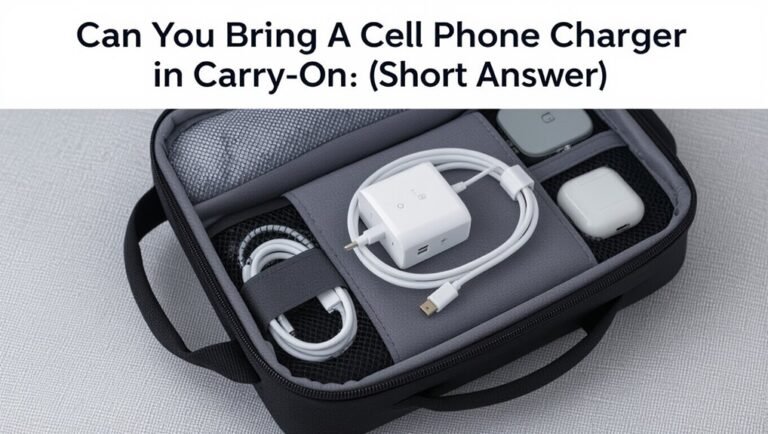
- Phone and chargers
- Compact toiletry bag
- Spare shirt and underwear
Know TSA Rules
Packing only what you need helps, but knowing TSA rules makes the difference between carrying your bag onto the plane or watching it go on the conveyor.
Check liquid limits, remove electronics for separate screening, and keep prohibited items out.
Label medications and receipts, pack sharp objects in checked luggage, and follow TSA officer instructions.
Doing this reduces secondary inspection and keeps your carry-on with you.
Arrive Early
When you give yourself extra time at the airport, you cut stress and leave room for quick fixes—repacking a banned item, addressing a security question, or swapping out liquids—so your carry-on stays with you.
You’ll move calmly through screening and avoid last-minute checks that force gate-checks.
- Check liquids and meds
- Wear easy shoes
- Keep electronics accessible
- Have ID ready
- Weigh your bag
If Your Carry-On Is Selected: Step‑by‑Step Handling and Rights
Occasionally your carry-on will be pulled aside for extra screening; here’s what to expect and what rights you have while that happens.
You’re asked to step aside, open bags, and remove electronics or liquids. Inspectors may swab for traces.
You can request a private room for a search and watch the process. If you disagree with treatment, ask for a supervisor and note details.
Accepting a Gate‑Check: How to Protect Valuables and Essentials
Worried about handing your bag to the gate agent? You can gate‑check but keep items you need and value with you.
Worried about handing your bag to the gate agent? Gate-check, but keep essentials and valuables with you.
Follow simple steps to minimize loss and damage.
- Remove passports and boarding passes
- Pack jewelry and electronics in a small personal bag
- Take medications and chargers onboard
- Use a padded sleeve for laptops
- Label the checked bag clearly
Frequently Asked Questions
Can Carry-On Liquids Bought After Security Be Brought Onboard Internationally?
Yes — you can usually bring liquids bought after security onboard internationally, as long as they’re sealed in a store receipt bag and you keep the receipt; some countries or connecting flights may still impose restrictions, so check ahead.
Will Carry-Ons With Lithium Batteries Ever Be Refused Gate-Checking?
Yes — airlines and TSA can refuse gate-checking carry-ons with lithium batteries if they exceed watt-hours, aren’t protected against short circuits, or breach airline policy; you’ll need to follow carrier rules or keep the battery-powered item onboard.
Do Carry-On Size Rules Differ for Codeshare or Interline Flights?
Yes — you’ll find size rules can vary between codeshare or interline segments; each operating carrier enforces its own limits, so you’ll need to follow the airline actually flying each leg and check their carry-on dimensions beforehand.
Can Medical Equipment in Carry-Ons Bypass X-Ray Screening?
No, medical equipment usually won’t bypass X-ray screening; you’ll need to notify security, request manual inspection or shielding for sensitive devices, and follow officer instructions—you’re allowed accommodations, but screening requirements still apply for safety.
How Are Carry-Ons Handled During Tarmac Delays or Emergency Evacuations?
During tarmac delays or evacuations, you’ll usually leave carry-ons behind if crew orders quick evacuation; during delays, carry-ons stay with you aboard but may be stowed, inspected, or removed by crew or security for safety.
Conclusion
Now you know why your carry-on might get checked and how to avoid surprises. Keep prohibited items out, follow size and weight rules, and pack liquids, electronics, and valuables where they’re easy to access. If TSA or airline staff select your bag, stay calm, ask questions, and request receipts for gate-checks. With a little prep—clear packing, limits observed, and essential items on your person—you’ll maximize the chance your carry-on stays with you.