Do I Need a Luggage Tag on My Carry On?
Yes — you should usually put a visible ID tag on your carry‑on. It helps staff return misplaced bags, speeds recovery at busy gates, deters theft, and may be required for transfers or priority handling. Keep info simple: name and mobile (avoid full home address). Use a durable tag, ribbon, or discreet QR card for privacy. Check airline rules for specific trips and test any smart trackers before you go; more practical tips follow if you want them.
What People Search For When Asking About Carry-On Luggage Tags
Why are people so curious about carry-on luggage tags? You want quick ID, theft deterrence, and easy reclaiming if a bag’s misplaced.
Searches focus on privacy-safe info to display, durable tag types, airline rules, and stylish options.
You’re also checking whether tags add weight or snag security, and which materials survive rough handling while remaining readable and secure.
Do You Need a Carry-On Luggage Tag? Quick Decision Guide
You don’t always need a carry-on tag, but some airlines or international connections require one for identification or security.
Tagging can speed up reclaiming, deter theft, and help staff return misplaced bags.
If you prefer not to use a visible tag, consider a discreet ID sleeve, a digital tag, or adding contact info inside the bag.
When It’s Required
When is a carry-on luggage tag actually required? You need one when airlines mandate checked-to-cabin transfers, oversized/priority handling, or special routing; international connections sometimes demand tags too. Check airline rules before flying.
| Situation | Tag required? |
|---|---|
| Oversize/priority handling | Yes |
| International connection with transfer | Often |
| Airline-specific policy | Check airline |
Benefits Of Tagging
Although tags might seem optional, they give you clear advantages: faster identification at baggage claim, smoother transfers during tight connections, and a simple way to signal special handling or priority status.
You’ll also reduce mix-ups, speed staff assistance if your bag’s misplaced, and make spotting your carry-on on crowded racks easy. Tags save time and cut travel stress.
Alternatives To Tags
A few simple options can replace a traditional carry-on luggage tag depending on how you travel and how much risk you’ll tolerate.
You can still guarantee ID and visibility without a tag by choosing discreet, secure alternatives that suit your comfort level.
- Bright ribbon tied to handle
- Sticker with initials on inside flap
- QR code card tucked in pocket
- Luggage sleeve with window
- Personalized luggage strap
How Airlines Treat Carry-On Tags and ID
Airlines each have their own rules about tags, so you should check your carrier’s policy before you travel.
Some airlines treat carry-on tags as optional identifiers while others require ID matching at the gate or during boarding.
Remember that personal ID (passport or driver’s license) matters for security and boarding, whereas baggage tags mainly help with lost-and-found.
Airline Policies On Tags
When you attach a tag to your carry-on, the way it’s handled depends on each carrier’s rules and staff practices, so it’s smart to know the basics before you fly.
You should check size limits, visible placement, and whether staff may remove tags at gates. Follow carrier guidance to avoid delays.
- small paper tag flapping
- bold adhesive label
- clear plastic sleeve
- staff scanning barcode
- gate agent peeling tag
ID Vs. Baggage Tags
Knowing how staff handle tags at the gate helps set expectations, but you also need to know how carry-on tags compare with the ID you show for boarding.
Your boarding ID proves identity and boarding permission; baggage tags identify ownership and routing. Staff rely on your ID for access and security, not carry-on tags.
Keep both readable, but don’t expect tags to substitute for your ID.
When a Carry-On Tag Matters Most (Quick Scenarios)
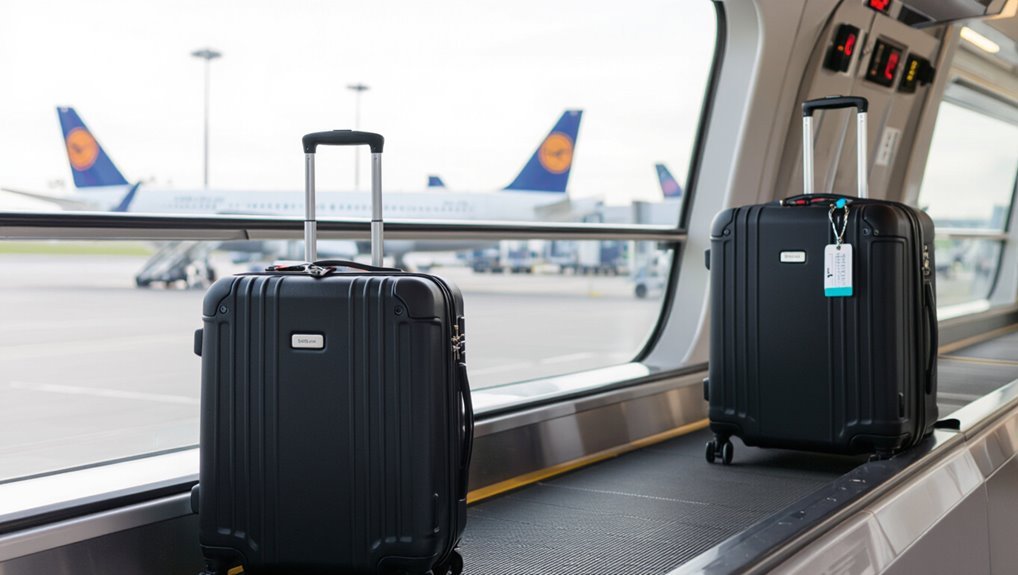
Ever wondered which trips actually call for a carry-on tag? You’ll want one when you’re juggling tight connections, unfamiliar airports, shared rides, overnight layovers, or valuable gear.
A visible tag speeds ID and recovery if staff move your bag or you misplace it.
- sprinting between gates
- red-eye with a layover
- rideshare pickup chaos
- unfamiliar foreign airports
- camera or laptop transport
When a Carry-On Luggage Tag Won’t Help
Although a carry-on tag can help in lots of tight situations, it won’t do much for problems that start after you leave the airport or involve hidden tracking needs.
If your bag’s stolen, lost outside transit, or tampered with where contact info isn’t checked, a simple tag won’t locate it. You’ll need police reports, insurer support, or tech like GPS trackers for those cases.
What Information to Put on a Carry-On Luggage Tag
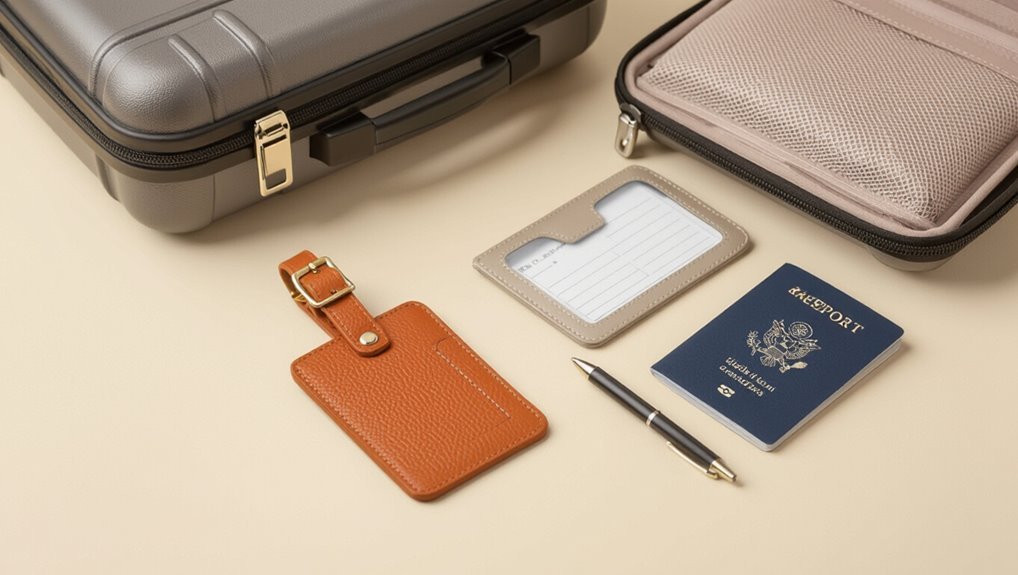
When you attach a carry-on tag, include only the details that help someone return your bag quickly without compromising your privacy: your full name, a phone number they can actually reach while you’re traveling, and a destination address or hotel name so handlers know where to send it.
- Your name on a clean label
- A reachable mobile number
- Hotel name and address
- Flight number and arrival date
- Simple, legible print
What Not to Include on an External Tag for Safety
Because anything visible on an external tag can be seen by strangers, don’t put sensitive details that could invite theft or identity fraud: skip your full home address, passport number, frequent-flier or loyalty numbers, and personal ID numbers.
Also avoid listing your birthdate, credit card fragments, or detailed travel itinerary.
Use only minimal contact info—name and a phone number reachable while traveling.
Visible ID vs. Discreet ID: Choose the Right Approach
You’ll want to decide whether to use visible contact information for quick identification or keep details discreet to protect your privacy.
Consider privacy-conscious addressing options like an email or a phone number instead of your full home address.
Also think about quick identification methods—colorful tags or coded labels—that let you spot your bag without exposing personal data.
Visible Contact Information
Deciding whether to display your contact details on a luggage tag comes down to balancing convenience against privacy and security: a visible ID makes it easy for airline staff or good Samaritans to return lost bags, while a discreet ID reduces the chance your personal info is seen by strangers or opportunistic thieves.
- Bright tag with name and phone
- Small flap hiding address
- Clear window showing email only
- Folded card inside pocket
- Initials and emergency contact
Privacy-Conscious Addressing
If you’ve weighed how much contact info to show, next decide how visible that info should be.
You can use full details on an external tag for quick ID or opt for a discreet option—initials, phone only, or a covered card—to limit exposure.
Balance recoverability with privacy based on destination, crowding, and how comfortable you’re sharing personal data.
Quick Identification Methods
When you need to spot your bag fast, choose between visible ID that lets anyone identify it at a glance and discreet ID that hides personal details while still aiding recovery.
Pick the option that matches your travel risk tolerance, destination, and how quickly you expect to reclaim lost luggage. You’ll decide based on visibility, privacy, speed, crowding, and theft risk.
- Bright neon tag
- Plain leather loop
- QR code patch
- Interior card
- Monogrammed ribbon
Removable ID Sleeves and Privacy-Safe Options
Because you don’t always want your personal details on full display, removable ID sleeves give you control: you can hide or reveal info, swap cards quickly, and protect privacy during transit. They’re lightweight, affordable, and fit most carry-ons.
| Feature | Benefit | Tip |
|---|---|---|
| Sleeve | Conceals info | Use short card |
| Removable | Swap easily | Keep extras |
| Clear | Verify quickly | Cover when public |
Smart Luggage Tags: Are They Better Than Paper?
Curious whether a smart luggage tag beats a paper one? You’ll like durability, reusable displays, and remote info updates, but weigh cost and battery needs.
Curious if smart luggage outperforms paper? Expect durable, reusable displays and remote updates—just factor in cost and batteries.
You get clearer ID without messy paper.
- Sleek metal tag glinting on handles
- Small LED screen showing your name
- Waterproof casing shrugging off rain
- Recharge port under a flap
- Soft silicone loop fastening tight
Bluetooth Trackers vs. Airline Baggage Systems
You’ll want to compare tracking accuracy, since Bluetooth trackers can show nearby BLE pings while airline systems rely on scanned tags.
Remember that Bluetooth gives limited real-time location — it works well at close range or via crowdsourced networks, but not for continuous global tracking.
Also check how or whether your tracker integrates with airline systems, because mismatches can leave you blind to official baggage updates.
Tracking Accuracy Comparison
While both Bluetooth luggage trackers and airline baggage systems aim to keep tabs on your bag, they work very differently and that affects how accurately they can tell you where your luggage is.
You’ll rely on Bluetooth for nearby precision; airlines use scanning for broader placement, which can miss short moves.
- Small airport carousel scan
- Bluetooth ping under a seat
- Baggage truck transfer
- Conveyor belt shuffle
- Gate-to-plane loading
Real-Time Location Limits
Having covered how each system reports location differences, let’s look at how close to real time those reports actually are. You’ll find Bluetooth trackers give frequent nearby updates while airline systems batch-scan at checkpoints, so expect delays. Compare typical update cadence below to judge expectations.
| System | Update frequency | Typical delay |
|---|---|---|
| Bluetooth tracker | Seconds–minutes | Seconds–minutes |
| Airline scans | Checkpoint-based | Minutes–hours |
| Hybrid apps | Depends on connectivity | Variable |
Integration With Airline Systems
Because airline baggage systems and Bluetooth trackers serve different roles, you should treat their data as complementary rather than interchangeable.
You’ll rely on airline scans for official routing and on Bluetooth for nearby, personal tracking. Combine both for best results.
- conveyor belt scans
- gate-loading confirmation
- short-range Bluetooth pings
- phone notifications buzzing
- visible luggage at the carousel
Durable Materials That Extend Tag Life
If you want a luggage tag that survives frequent travel, pick materials built to resist tears, scratches, and weather. Choose leather for longevity, metal for impact resistance, and heavy-duty PVC for flexibility. Match material to handling and style so tags stay readable and intact.
| Material | Benefit |
|---|---|
| Leather | Durable, stylish |
| Metal | Impact-resistant |
| PVC | Flexible, tough |
Waterproof and Tear‑Resistant Tag Choices
When you travel in rain, snow, or humid climates, pick a tag that won’t soak, shred, or fall apart—waterproof materials like sealed PVC, silicone, and coated fabrics keep info legible, while reinforced seams and laminated ID windows prevent tears where straps attach.
You’ll want sturdy construction that resists abrasion, fading, and splitting so your contact details stay readable through rough handling.
- Droplets beading on PVC
- Soft, grippy silicone
- Woven coated fabric
- Laminated clear window
- Reinforced stitched edges
How to Attach a Tag to Different Carry-On Types
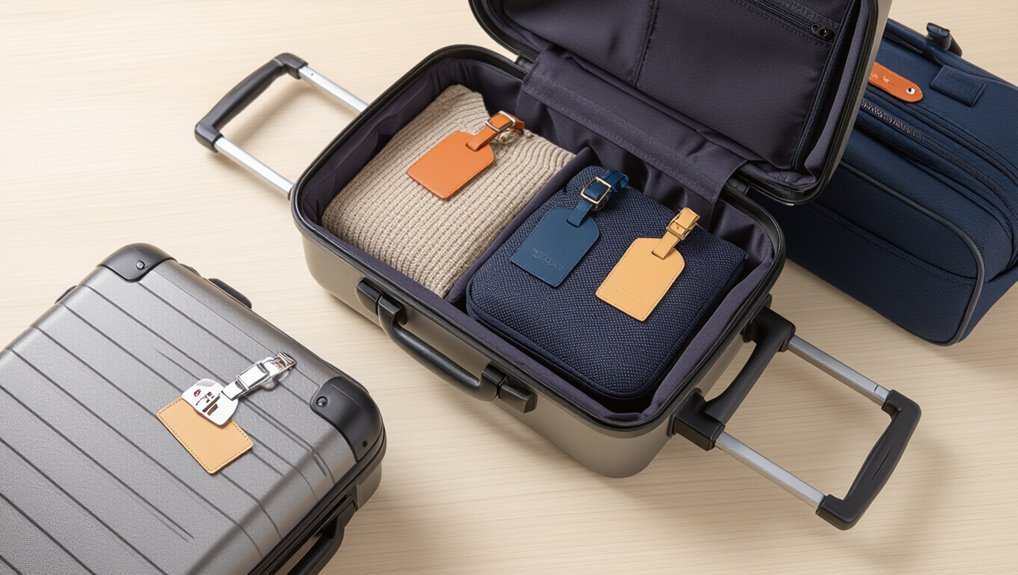
1 clear, secure attachment keeps your contact info visible and prevents loss, but the best method varies by carry-on style. For hard shells use straps through handles, soft bags take sewn loops, and backpacks attach tags to top haul straps. Check stability and visibility before travel.
| Carry-on Type | Best Spot | Attachment |
|---|---|---|
| Hard shell | Handle | Strap |
| Soft bag | Exterior loop | Sewn loop |
| Backpack | Top haul | Clip |
Airline Rules: What Major Carriers Require
When you travel, airlines often have specific rules about tags, and major U.S. carriers like Delta, United, and American each set their own requirements.
You’ll also want to check international airline policies, which can differ on things like name display, contact info, and barcode tags.
Finally, be aware of special circumstances rules for fragile, oversized, or medically necessary items that may require extra labeling.
Major U.S. Carriers
Though rules vary by airline, most major U.S. carriers expect you to attach at least a basic ID tag to checked bags and often recommend or require tags on carry-ons, too.
You’ll find variations: some airlines want contact info visible, others accept interior tags. Pack a clear tag to speed recovery and compliance.
- Handle with bright tag
- Clear name and phone
- Airline barcode sticker
- Flight info card
- Secure fastener
International Airline Policies
If you’ve handled domestic carrier tag expectations, expect more variation and stricter ID rules on international flights—airlines and countries often require visible contact info, government-issued ID details, or internal tags for customs and security.
Check each carrier’s website before travel: some insist on name/address, others want passport numbers or special airport stickers.
Follow rules to avoid delays or confiscation.
Special Circumstances Rules
Because special circumstances—like unaccompanied minors, pets, oversized sports gear, or fragile items—change what airlines require, you’ll want to review carrier-specific rules before you pack.
You’ll often need special tags, paperwork, or gate-checks. Check size, containment, and labeling rules to avoid delays or fees.
- leashed small dog in carrier
- golf bag with protective case
- musical instrument with hard shell
- fragile glassware box
- child ID and consent form
Tags and Tight Connections: Reduce Missed Luggage
When your itinerary includes tight connections, tagging your checked bag with clear airline and destination info gives ground crews the fastest cue for routing it correctly, so you’re less likely to wait at baggage claim. You’ll feel calmer knowing crews can act fast. Pack essentials in your carry-on and label both bags to reduce stress.
| Urgency | Relief |
|---|---|
| Tight gate | Breathes easier |
| Missed bag risk | Calm returns |
| Late flight | Comfort grows |
International Trips: What to Show on Your Carry-On Tag
On international trips, you’ll want a carry-on tag that clearly shows a contact name, local phone number, and email so you can be reached if your bag is separated from you.
Add passport and visa details or at least a reminder of your nationality and passport number in a discreet spot if regulations or your itinerary make that useful.
Also include any customs declaration label or codes required by your destination to speed inspections and avoid misunderstandings.
Visible Contact Details
If you’re traveling internationally, your carry-on tag should display the essentials clearly: your full name, a local phone number where you can be reached at your destination (or an international number with country code), and an email address you check regularly.
Make information legible, use durable print, and limit personal data to what helps reunite you quickly.
- Bold, readable font
- Country code included
- Short, current email
- Local contact preferred
- Waterproof tag
Passport And Visa Info
Because border checks hinge on documentation, only put what’s necessary about your passport and visa on a carry-on tag: your nationality, passport number (optional and generally discouraged), and visa status or entry stamps only if required by local rules or your airline.
Keep details minimal to reduce risk. Don’t include full passport data routinely; confirm destination and carrier rules before adding any sensitive information.
Customs Declaration Label
Wondering whether to include a customs declaration label on your carry-on? You usually don’t need one unless specific rules apply, but having required forms or stickers accessible speeds inspections.
Keep originals and copies handy, attach temporary tags if directed, and know which items need declaring to avoid delays.
- folded customs form
- duty-free receipt
- medication list
- souvenir receipts
- temporary tag
Business Travel: Professional ID and Branding Tips
When you travel for work, your luggage and ID become extensions of your professional brand, so choose durable, discreet tags and badges that reflect your company’s image and make identification quick.
Use neutral colors, subtle logos, and clear contact info. Opt for secure attachment methods and scannable QR cards if allowed.
Keep personal details minimal to protect privacy while enabling easy returns.
Family Travel: Labeling for Kids’ Carry-Ons
How will you keep your kids’ carry-ons easy to spot and safe on busy travel days?
Use bright tags, names, and contact info that kids can point to.
Add fun visuals so they claim their bag.
- Neon tag with name
- Cartoon sticker on handle
- Velcro name patch
- QR code with guardian contact
- Ribbon tied to zipper
Reduce Theft Risk While Keeping Your Bag Identifiable
You want your bag to be easy to spot without advertising personal details. Use a simple visible tag or color-coded marker, fasten it with a locking cable or tamper-resistant strap, and avoid obvious name-and-address displays.
Instead put minimal contact info—phone or email, or a QR code linking to a secure contact form—to keep ID useful but private.
Visible Yet Minimal ID
A simple, low-profile tag gives your bag an identity without advertising your full name or contact details. You use initials, an email alias, or a phone number with just the last four digits to stay reachable but discreet.
Keep it visible on the handle so staff can spot it quickly.
- worn leather tab
- small plastic window
- stitched fabric loop
- muted metal plate
- colored corner patch
Secure Attachment Methods
One reliable option is a fixed-loop attachment that threads through the bag’s handle and locks, so thieves can’t just snag your tag or rip it off; pick materials like stainless steel cable or reinforced nylon and avoid flimsy straps that tear under tension.
Use tamper-evident seals, soldered metal rings, or welded keyrings for permanence, and double-check knots and closures before travel to prevent accidental loss.
Privacy-Friendly Contact Info
After securing your tag with a tamper-proof loop, think about what contact details you actually attach; showing your full name, phone number, and address invites scammers and opportunistic thieves, so use privacy-friendly alternatives instead.
Use limited info that still helps reunite you with your bag.
- First name only
- Secondary email address
- Hotel or office phone
- Flight confirmation number
- Trusted contact’s number
Use Tags to Speed Up Security and Customs Checks
Two practical tags can cut minutes off security and customs lines: a clear ID tag and a visible “This Side Up/Fragile” marker.
You’ll make officer inspections faster when your name, contact city, and phone are legible without opening the bag. Use bold, waterproof print and place markers where scanners and agents can see them immediately.
Travelers with neat tags get through checks quicker.
Temporary Tag Solutions for Short Trips or Transfers
Those quick, visible tags work great for long trips, but for short hops or tight airport-to-airport transfers you’ll want simpler, disposable options that won’t slow you down.
For short hops, skip bulky tags—use quick, disposable IDs that stay visible without slowing you down.
You’ll grab what’s cheap, clear, and tossable—fast ID without fuss. Consider these lightweight choices:
- Adhesive paper tag with flight number
- Colorful ribbon loop
- Temporary plastic wrap tab
- Printed mailing label
- Bright duct-tape strip
When to Rely on Overhead Bin Placement Instead of Tagging
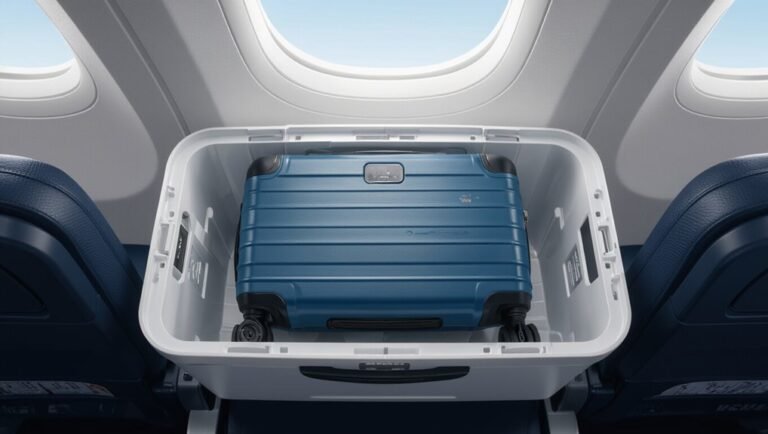
If you’ve got priority boarding, you can stash your bag in the overhead and skip a tag for many trips.
On short flights with quick turnarounds, it’s often simpler to keep things in sight rather than risk checked baggage.
And if you recognize your own bag at a glance, overhead placement can be the fastest, low-risk option.
Priority Boarding Benefits
Sometimes you can skip tagging altogether when you board early; priority boarding gives you first dibs on overhead bin space so you can stow your carry-on within arm’s reach.
You’ll save time, avoid gate checks, and keep essentials nearby.
Picture moments that make priority worth it:
- sliding your bag into the closest bin
- settling without lifting others’ luggage
- zipping a toiletry pouch out fast
- grabbing a laptop mid-flight
- stepping off with everything in hand
Short Flight Simplicity
Priority boarding makes overhead stowage easy, but on short flights you can often skip tagging altogether and rely on bin placement—especially when you’re carrying a streamlined bag that fits airline size limits.
If you gate-check only bulky items, keep essentials with you. Stow your carry-on in sight, note its location, and retrieve it promptly on descent to minimize mix-ups and avoid unnecessary tags.
Familiar Bag Recognition
When you fly with the same compact bag regularly, you’ll often spot it instantly in the overhead bin and skip a luggage tag. You trust visual cues, seating position, and routine to reclaim it quickly.
Rely on familiarity when flights are calm and bins not crowded; still attach a tag for unfamiliar routes or chaos.
- Worn leather handle
- Bright zipper pull
- Scuffed corner
- Sticker from a cafe
- Distinctive strap
Airline-Staff Tips: What Helps Them Reunite Bags Faster
If you want your bag returned quickly, make it easy for airline staff to identify and process it: use a clear, durable external tag with legible contact info, attach a unique identifier inside the suitcase, and avoid bulky coverings that obscure airport barcodes.
Also label contents briefly (electronics, documents), use high-contrast colors, keep locks TSA-accessible, and report discrepancies promptly to speed recovery.
Real Stories: When a Carry-On Tag Saved a Trip
Those practical tagging tips matter because real travelers have seen carry-on tags turn a stressful mishap into a saved trip.
Those small tagging tricks turn travel mishaps into saved trips, from carousel reunions to calming family mix-ups.
You spot your bag at a crowded carousel, reunite with a misplaced weekend bag, prove ownership during a security mix-up, reclaim a laptop case after gate confusion, and ease a frantic family scramble when a stroller gets swapped.
- Bright tag catching your eye
- Name plate proving ownership
- Contact info for quick calls
- Distinctive ribbon for instant ID
- Airline slip tucked under clear cover
Cost vs. Benefit: Cheap Tags, Premium Tags, and ROI
Because you’re weighing cost against practical value, think of a luggage tag as an investment: a $3 plastic tag may get your bag identified once, while a $30 leather or smart tag can save time, replace lost items, and reduce stress repeatedly.
You should match tag features to travel frequency and risk: occasional flyers can opt cheap; frequent travelers benefit from durable, secure, and trackable options for better return on investment.
Eco-Friendly and Reusable Tag Options
When you care about sustainability, choose tags made from recycled materials, biodegradable plastics, or durable natural fibers that you can reuse trip after trip.
You’ll reduce waste and still get clear identification, weather resistance, and a stylish look that lasts.
- a woven cotton tag with stamped info
- a cork leatherette loop catching sunlight
- a recycled plastic card with embossed name
- a bamboo tag with laser-cut initials
- a silicone band in bright color
DIY Tag Ideas That Are Effective and Secure
If you like the sustainability angle but want a personalized, budget-friendly option, you can make your own luggage tags that look good and hold up.
Use sturdy materials like leather scraps, recycled plastic, or laminated cardstock.
Include a clear window for contact info, secure metal or nylon fasteners, and bright colors or unique shapes so your bag’s easy to spot without exposing sensitive details.
How to Test a Smart Tag or Tracker Before Travel
Before you leave home, run a quick checklist to make sure your smart tag or tracker actually works where you’ll be traveling.
Test connectivity, battery, and app alerts, and confirm location updates in real environments.
- Watch the tag reconnect after you walk away
- Trigger an alert from your phone
- Verify real-time location on a map
- Check battery percentage under load
- Try through airport doors and elevators
Maintenance Checklist: Keep Your Carry-On ID Travel-Ready
Keep a short, regular routine so your carry-on ID stays reliable: inspect straps and seams for wear, wipe surfaces, tighten fasteners, and replace frayed loops.
Check contact info and battery status on smart IDs, update details when plans change, and test attachment points before each trip.
Store spare tags and a small repair kit in your luggage for quick fixes.
Quick Final Checklist: Do You Need a Luggage Tag for This Trip?
Wondering whether to slap a luggage tag on your bag for this trip? You’ll decide fast: check destination rules, transit stops, ticket type, valuables inside, and contact info visibility.
If any raise concern, tag it. If not, a discreet ID card or digital info may suffice.
- crowded gate with similar bags
- overnight layover risk
- checked baggage transfer
- laptop and documents inside
- long travel day
Frequently Asked Questions
Can a Tag Help if My Carry-On Is Gate‑Checked Last Minute?
Yes — a tag helps if your carry-on’s gate‑checked last minute. You’ll speed identification, improve return chances, and let agents route it properly. Include contact info and a covered address to protect privacy and facilitate retrieval.
Are Stickers Acceptable as Temporary ID on Carry‑Ons?
Stickers can work as temporary ID, but you’ll want durable, legible ones affixed securely; include your name and contact, avoid obscuring zippers, and replace with a proper tag before gate‑check or longer travel to guarantee retrieval.
Do Privacy Concerns Differ by Country When Displaying Contact Info?
Yes — privacy risks vary by country; you’ll want to limit visible contact details in places with higher theft, surveillance, or strict data laws. Use minimal info, temporary tags, or concealed IDs to protect your personal data.
Can Airlines Refuse Carry‑Ons Without Visible Identification?
Yes, they can. Airlines and security may refuse unidentified carry‑ons if they can’t verify ownership or for safety rules; you should attach visible ID or be ready to open the bag, or they’ll require inspection or gate check.
How Do I Transfer a Tag Between Multiple Bags Quickly?
Use a quick-release or strap-style tag, keep spare tags in a small pouch, loop the tag through each bag’s handle, and snap it closed. You’ll transfer tags fast by practicing once and organizing bags before travel.
Conclusion
You don’t always need a luggage tag on your carry-on, but having one can save you time and stress. If you’re checked at the gate, traveling with valuable items, or switching planes, add one. Use a visible, durable tag or a discreet ID card with contact info and consider a smart tracker. Test trackers, secure fastenings, and update details. Before you leave, quickly confirm your bag’s ID and tracker are working.