Do I Need Birth Certificate for TSA PreCheck?
You don’t usually need a birth certificate to enroll in TSA PreCheck if you have a valid, unexpired government photo ID or passport to prove identity and citizenship. Enrollment requires proof of identity, citizenship or lawful status, fingerprints, a background check, and an application fee. Originals or certified documents are required at your appointment; photocopies generally won’t work. If you want more details on acceptable IDs, minors, and special cases, keep going for specifics.
Short Answer: Do You Need a Birth Certificate for TSA PreCheck?
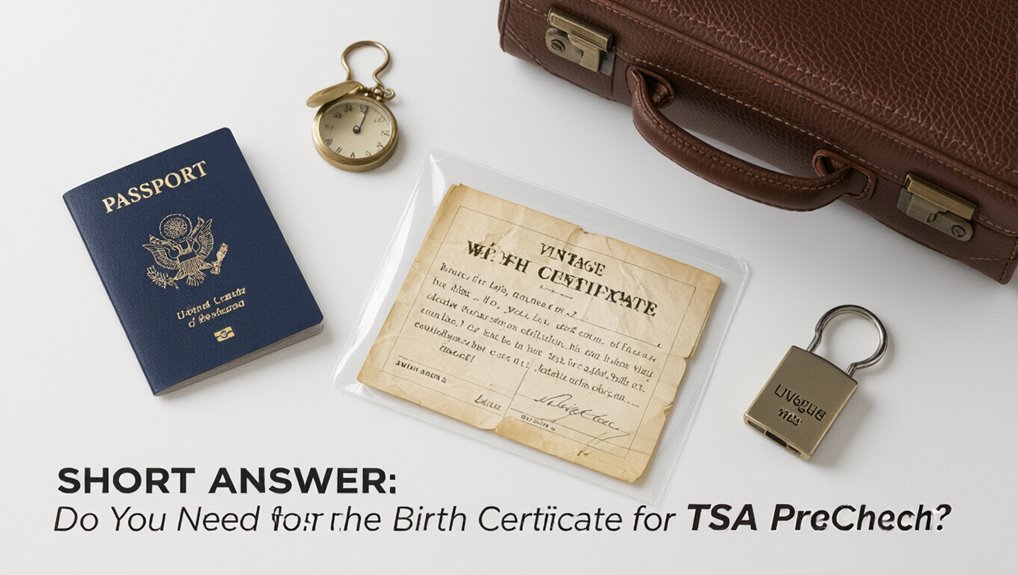
Wondering if you need a birth certificate for TSA PreCheck? You generally don’t; the program accepts various identity documents, and a birth certificate alone usually isn’t sufficient for enrollment.
You’ll rely on commonly accepted IDs instead. If you lack typical identification, check alternatives or contact enrollment centers for guidance before applying so you won’t face unexpected documentation hurdles.
What Documents Does TSA PreCheck Require?
TSA PreCheck requires you to provide proof of identity and U.S. citizenship or lawful immigration status, typically at your in-person enrollment appointment.
You’ll also submit biographic details, fingerprints, and pay the application fee.
Bring original or certified documents that establish your name, date of birth, and status. The officer will verify originals; photocopies usually aren’t accepted.
Enrollment includes a brief interview and background check.
Which IDs Prove Your Identity for TSA PreCheck?
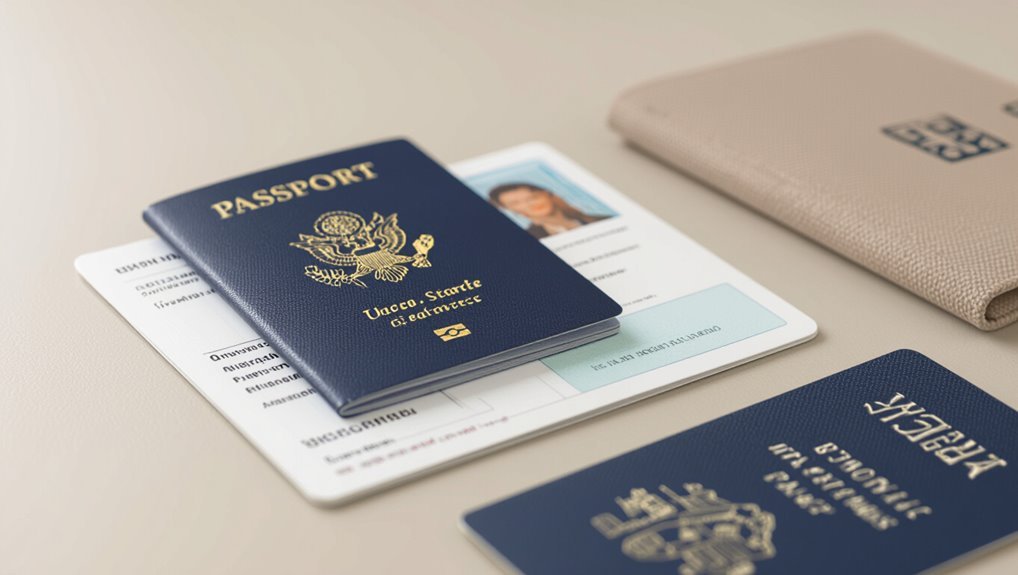
When you apply for TSA PreCheck, you’ll need to show primary government IDs like a passport or driver’s license.
However, there are also acceptable alternatives such as military IDs or permanent resident cards.
If your name has changed, bring legal proof like a marriage certificate or court order to match your ID to your application.
We’ll cover which specific documents are accepted and how to present name-change proof at your appointment.
Acceptable Government IDs
Which government IDs prove your identity for PreCheck?
You’ll need a valid, unexpired government photo ID: a U.S. passport, passport card, state driver’s license or ID compliant with REAL ID, or military ID.
Permanent resident cards and other federally issued photo IDs also work.
Bring the original document to your TSA PreCheck enrollment appointment for identity verification.
Alternative Identity Documents
Wondering what counts if you don’t have a standard ID? You can often use alternative documents to prove identity for TSA PreCheck enrollment.
Bring originals or certified copies and photocopies when required. Common alternatives include:
- Passport (current or expired within limited rules)
- Permanent resident card (green card)
- Military ID
- Federally recognized tribal ID
Proof For Name Changes
Need to update your name on TSA PreCheck? You’ll need legal proof: updated driver’s license, passport, or court-issued name-change decree. Submit originals at enrollment or bring copies with ID. Use documents showing both old and new names when possible to speed processing.
| Document | Acceptable | Notes |
|---|---|---|
| Driver’s license | Yes | Updated state ID preferred |
| Passport | Yes | Valid with new name |
| Court decree | Yes | Official proof |
Which Documents Prove U.S. Citizenship for TSA PreCheck?
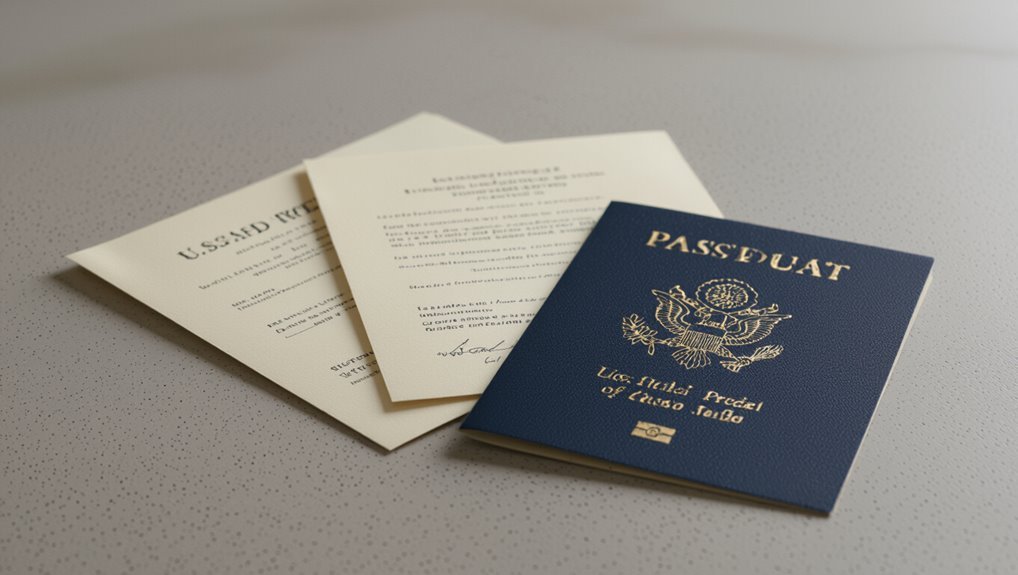
Curious which papers count as proof of U.S. citizenship for TSA PreCheck?
You’ll need original or certified documents showing U.S. citizenship. Acceptable options include:
- U.S. birth certificate (official, long-form)
- Naturalization certificate
- Certificate of citizenship
- U.S. passport book/card
Bring the document when you enroll so the TSA can verify citizenship and complete your background check.
Can a Passport Replace a Birth Certificate for PreCheck?
Yes — a valid U.S. passport can substitute for a birth certificate when you enroll in TSA PreCheck.
Bring your passport to the enrollment center as your primary proof of citizenship and identity. It’s widely accepted, speeds verification, and eliminates the need for an original birth certificate.
Make sure your passport is unexpired and in good condition to avoid delays during the application.
Can a Passport Card Be Used for TSA PreCheck?
You can use a U.S. passport card to apply for TSA PreCheck, since it’s an accepted proof of citizenship and identity.
When you enroll, the card meets the passport-category document requirement, but it’s only valid for land and sea travel—not a full passport.
Check enrollment options ahead of time so you bring the right document to your appointment.
Passport Card Eligibility
Can a passport card be used for TSA PreCheck? You can use a passport card as an identity document when enrolling or traveling, but it must meet TSA REAL ID or federal ID standards where required. Check specifics before you go.
- Valid U.S. passport card qualifies
- Used for identity proof at enrollment
- Not all states accept substitute IDs
- Bring secondary ID if unsure
Document Enrollment Options
Anyone applying for TSA PreCheck can present a U.S. passport card as a primary identity document during enrollment and travel, provided it meets REAL ID or federal ID requirements for your departure state or airport.
You’ll still need proof of citizenship and identity documents if the card lacks necessary data. Bring originals; photocopies aren’t accepted.
Ask enrollment centers if unsure.
How Does a Naturalization Certificate Work for PreCheck?
How does a naturalization certificate factor into your TSA PreCheck application? You can use it as proof of U.S. citizenship when enrolling.
Bring the original document to your appointment so an agent can verify identity and citizenship. It’s accepted in place of a birth certificate and supports background check processing.
- Original certificate required
- Shows U.S. citizenship
- Verifies identity
- Speeds verification process
Can a Lawful Permanent Resident Apply Without a Birth Certificate?
Wondering if you need a birth certificate to apply as a Lawful Permanent Resident? You don’t necessarily need one.
You can use your permanent resident card (Green Card) as primary identification when applying for TSA PreCheck. Make sure your name, date of birth, and A-number are clear.
If the card’s info is incomplete, TSA may ask for supplemental documents to verify identity and eligibility.
What Documents Prove Lawful Presence for PreCheck?
Which documents prove your lawful presence for TSA PreCheck?
You’ll need acceptable ID showing citizenship or immigration status. Provide one of the following documents when required:
- U.S. passport or passport card
- State-issued enhanced driver’s license
- Permanent Resident Card (Green Card)
- Employment Authorization Document (EAD)
Carry originals; photocopies usually won’t suffice.
Can a Consular Report of Birth Abroad (CRBA) Be Used for PreCheck?
You can usually use a Consular Report of Birth Abroad (CRBA) as proof of U.S. citizenship when applying for TSA PreCheck, since it’s an accepted document for establishing identity and lawful presence.
When you enroll, bring the original CRBA plus a government photo ID to speed verification. If the CRBA lacks a photo or there’s any question, a supplemental ID like a passport or state ID will help confirm your identity.
Acceptability For Proof
Can a Consular Report of Birth Abroad (CRBA) serve as acceptable proof of identity for TSA PreCheck? You may use a CRBA in some cases, but confirm requirements before applying.
- Valid government-issued document
- Proof of citizenship for many applicants
- May need secondary ID
- TSA/Enrollment Provider final say
Check current TSA ID list to be sure.
Using CRBA During Enrollment
When you enroll in TSA PreCheck, a Consular Report of Birth Abroad (CRBA) can sometimes be accepted as a primary identity document, but acceptance depends on the enrollment provider and the agent reviewing your application—so bring it along with any additional ID listed on TSA’s current approved documents. You should present originals and be ready to verify name, date, and citizenship.
| Document | Accepted? | Notes |
|---|---|---|
| CRBA | Sometimes | Enrollment-agent discretion |
| Passport | Yes | Preferred primary ID |
| State ID | Conditional | May need supplement |
When Supplemental ID Helps
If your CRBA isn’t accepted as a primary ID during TSA PreCheck enrollment, bringing it as a supplemental document can still help verify your citizenship and name, especially when paired with a current passport or state-issued ID.
Use it to:
- Confirm birth and citizenship details
- Resolve name mismatches
- Support missing or outdated documents
- Speed up verification at enrollment appointments
How Do Minors Prove Identity for PreCheck?
Wondering how kids prove their identity for TSA PreCheck? You generally use the same ID documents accepted for adults: passport, state ID, or school ID if applicable.
For minors enrolled in PreCheck through a parent’s Known Traveler Number, bring any government-issued ID and the child’s boarding pass.
Always check airline and TSA guidelines before travel to confirm acceptable proof.
What Documentation Do Newborns and Infants Need for PreCheck?
How should you document a newborn or infant for TSA PreCheck enrollment and travel?
You’ll need proof of identity and age and to link the child to your Known Traveler Number when required.
Provide clear, valid documents such as:
- Birth certificate or hospital record
- Passport (if available)
- State ID for older infants (rare)
- Enrollment confirmation showing child’s name and DOB
How Do Parental or Guardian Documents Support a Child’s PreCheck?
When you’re enrolling a child in PreCheck, parental or guardian documents help prove authority and relationship so the TSA can verify eligibility.
Bring a completed parental consent form and a proof of relationship like a birth certificate or adoption papers.
If someone other than a parent is traveling with the child, a guardian authorization letter signed by the parent or legal guardian is also essential.
Parental Consent Form
Need parental consent? You’ll often need a signed parental consent form when enrolling a minor in TSA PreCheck or traveling with them.
It verifies permission, authority, and contact info. Bring a completed form plus ID copies.
Typical items include:
- Parent/guardian signature and date
- Child’s full name and DOB
- Emergency contact details
- Notary or witness if required
Proof Of Relationship
Why does proof of relationship matter for a child’s TSA PreCheck? You’ll show you’re authorized to enroll or accompany a minor, linking child and parent/guardian for eligibility and security checks. Provide documents like birth certificates, adoption records, or court orders.
| Document | Purpose | Tip |
|---|---|---|
| Birth certificate | Proves parentage | Bring original or certified copy |
| Adoption record | Legal custody proof | Match names on application |
| Court order | Guardianship evidence | Include dates and signatures |
Guardian Authorization Letter
How do guardian authorization letters help a child get TSA PreCheck? You’ll use a signed letter when documents aren’t enough, proving consent and guardianship.
Carry originals and copies to speed verification.
- Name and relationship to child
- Child’s full name and birthdate
- Guardian signature and contact info
- Notarization if requested by TSA or airline
Can Military ID or Veteran Documents Be Used for PreCheck?
Can you use a military ID or veteran document to get TSA PreCheck? Yes — your Common Access Card (CAC), Department of Defense ID, or veteran ID can serve as acceptable identification during enrollment and at the airport, provided they’re current and federally issued.
Bring original documents; photocopies won’t work. Check TSA guidance for any additional proof required during application or renewal.
How Do Dual Citizens Document Eligibility for PreCheck?
If you’re a dual citizen, you’ll generally want to use the passport for the country you’re applying with when proving eligibility for TSA PreCheck.
Make sure you document both nationalities if required by the application and update your Known Traveler Number and passport information whenever you travel on a different passport.
That way your TSA PreCheck status stays linked to the passport you present at the airport.
Passport Preference And Use
When you’re a dual citizen, choosing which passport to use for TSA PreCheck matters because your Known Traveler Number (KTN) must match the passport you present at the airport; otherwise the PreCheck indicator mightn’t show on your boarding pass.
- Add your KTN to the airline profile tied to the passport you’ll use.
- Present that same passport at check-in.
- Update travel reservations if needed.
- Carry both passports for entry/exit rules.
Documenting Dual Nationality
How do you prove dual nationality for TSA PreCheck eligibility? You’ll present valid government IDs and passports showing both nationalities during enrollment and at ID check. If one passport suffices, show it; otherwise, bring both. Provide consistent name documentation and any required visas or residency cards to confirm travel privileges.
| Document | Purpose |
|---|---|
| Passport A | Citizenship proof |
| Passport B | Secondary citizenship |
| Residency card | Travel/residency rights |
| Visa | Entry permission |
Updating Known Traveler Information
Because your travel documents determine which citizenship the TSA PreCheck system associates with you, you’ll need to keep your Known Traveler Number and personal information aligned with the passport you plan to use for travel.
Update your KTN in your airline profile and with DHS if you change passports. Follow these steps:
- Choose the passport you’ll present.
- Update name and DOB to match.
- Notify your airline.
- Keep copies of both passports.
How Do Name Changes Affect Your PreCheck Documents?
Changed your name recently? You should update your TSA PreCheck profile, bring legal ID showing current name, and carry documentation proving the change when flying until records sync. Expect brief verification calls or re-enrollment if discrepancies persist. Keep passport, driver’s license, and enrollment ID consistent to avoid delays.
| Before | After |
|---|---|
| ID | Updated ID |
| Record | Synced |
| Flight | Smooth |
| Call | Resolved |
| Re-enroll | Rare |
Can a Marriage Certificate Reconcile Name Differences for PreCheck?
If your name changed after enrollment, you’ll need documentation like a marriage certificate to show the legal change.
You’ll also want to update your TSA PreCheck enrollment ID so your boarding pass matches your updated name.
Check TSA guidance on acceptable name-change documents and the steps to request an enrollment update.
Name Change Documentation
When your name on a driver’s license or passport doesn’t match the name on your TSA PreCheck enrollment, a marriage certificate can often bridge that gap, but only if you present it alongside updated government ID showing your new name.
You should:
- Carry the original or certified marriage certificate.
- Show updated passport or driver’s license.
- Bring your PreCheck approval documentation.
- Expect TSA to verify identity on site.
Enrollment ID Update
Wondering whether a marriage certificate can update your TSA PreCheck enrollment ID?
You can use a marriage certificate to prove a legal name change when updating your Known Traveler Number (KTN) and enrollment record.
Log into your Trusted Traveler account or visit an enrollment center with the original or certified copy.
TSA verifies documents; once processed, your PreCheck eligibility links to your new name.
What to Bring to Your TSA PreCheck Enrollment Appointment?
You’ll need just a few items for your TSA PreCheck enrollment appointment: a valid photo ID, proof of U.S. citizenship or lawful permanent residency, and your appointment confirmation.
You’ll need a valid photo ID, proof of U.S. citizenship or LPR, and your appointment confirmation.
Bring originals and copies, arrive on time, and dress for fingerprinting.
- Government-issued photo ID (driver’s license or passport)
- Proof of citizenship or LPR card
- Appointment confirmation
- Payment receipt or card for fees
How Does TSA Verify Documents During Enrollment?
Because TSA needs to confirm your identity and eligibility on the spot, enrollment officers will visually inspect originals of your ID and citizenship or residency documents, compare them to your appearance, and scan or record key data (like passport numbers or driver’s license details) into their system. You’ll answer brief questions, sign consent, and receive immediate verification.
| Document | Action |
|---|---|
| Passport | Inspect, scan |
| Birth certificate | Inspect |
| Driver’s license | Inspect, scan |
| Green card | Inspect, scan |
| Consent form | Sign |
Can I Use Electronic Copies for TSA PreCheck Verification?
After the officer inspects and scans your original documents during enrollment, you might wonder whether electronic copies will do instead.
You can’t use e-copies for initial verification; originals or certified physical documents are required.
For clarity, remember:
- Bring original ID
- Bring original birth certificate or certified copy
- No photos or PDFs accepted
- Officials may refuse enrollment without originals
How Long Does Document Verification for PreCheck Take?
How long does document verification for TSA PreCheck usually take?
Verification often completes within days, but timelines vary.
If your documents are clear and submitted correctly at enrollment, you’ll typically see approval in 72 hours to two weeks.
Delays occur with discrepancies, high application volume, or manual review.
You can check status online or contact enrollment center for updates.
What If TSA Rejects My Birth Certificate or ID?
If TSA rejects your birth certificate or ID, you can usually submit acceptable alternate documents like a passport, driver’s license, or naturalization papers.
You’ll want to follow the agency’s instructions to resolve the issue—often by uploading corrected scans, visiting an enrollment center, or contacting customer service.
If those steps don’t work, you can file an appeal or request a review of the denial.
Acceptable Alternate Documents
When TSA can’t accept your birth certificate or primary ID at enrollment or the checkpoint, you’ll need one of several alternate documents to prove identity and citizenship or lawful status; acceptable options include a valid passport, a DHS trusted traveler card (Global Entry/NEXUS/SENTRI), a state-issued enhanced driver’s license, or a certified naturalization/citizenship certificate.
- Valid U.S. passport
- DHS trusted traveler card
- Enhanced state driver’s license
- Certified naturalization/citizenship certificate
Steps To Resolve Issues
Although a rejected birth certificate or ID can be frustrating, you can resolve it quickly by following a few clear steps: confirm the rejection reason, check document expiration or authenticity, and verify names match your application.
If needed, bring alternate acceptable ID, obtain certified copies, or correct clerical errors with the issuing agency.
Schedule a new enrollment appointment and bring updated documentation to avoid delays.
Appealing Denial Options
Because the TSA can reject documents for various reasons, you should know your appeal options so you can act quickly and preserve your enrollment chances.
You’ll want to review the denial notice, gather corrected IDs, and follow appeal steps promptly. Options include:
- Requesting a written explanation
- Submitting corrected documents
- Scheduling a reconsideration appointment
- Contacting TSA customer service for guidance
How Do I Appeal or Resubmit Documents After Denial?
Wondering what to do if TSA PreCheck denies your application? You can request a reconsideration online or by calling the enrollment center, then resubmit acceptable ID documents promptly.
Correct any errors on your application, upload clear scans, and include supporting evidence. Keep copies, track your case number, and follow deadlines.
Expect a response within weeks; contact customer service if delayed.
What If My Birth Certificate Is Amended: Will TSA Accept It?
If your birth certificate has been amended, TSA can accept it as long as it’s an official, certified copy showing the change.
You’ll need supporting documents—like the amendment record, court order, or marriage certificate—to verify the modification.
If the name on your application differs, provide legal proof of the name change so TSA can match your identity.
Amended Certificate Validity
When your birth certificate has been amended, TSA will generally accept it as long as the document is an official, state-issued certificate showing your name, date of birth, place of birth, and any amendment markings or notations that link the change to the original record.
You should:
- Present the original or certified copy
- Guarantee amendment is legible
- Confirm state seal/signature present
- Carry matching photo ID for consistency
Supporting Documentation Needed
Because an amended birth certificate alters the original record, you’ll want to bring supporting documents that clearly tie the amendment to your identity and travel eligibility.
Carry the amended certificate plus original or certified copy, photo ID, and any court order or amendment affidavit.
If the amendment changed key facts, include secondary IDs (passport, naturalization certificate) to confirm your identity and avoid delays.
Name Change Verification
You’ll also need to verify any name change on your amended birth certificate so TSA PreCheck can match your records.
Bring originals and copies of supporting documents, and be ready to explain changes. TSA accepts amended certificates if they’re official.
- Original amended birth certificate
- Government-issued photo ID
- Marriage or court name-change decree
- Certified translation (if not in English)
What If My Birth Certificate Has Errors or Misspellings?
Not sure what to do if your birth certificate has errors or misspellings? You should get the mistakes corrected before using it for TSA PreCheck enrollment.
Contact the essential records office where it was issued to learn the amendment or reissue process, required documents, fees, and processing time.
Use the corrected certificate to avoid verification delays or identity mismatches during enrollment.
What to Do If Your Birth Certificate Is Lost?
If your birth certificate is lost, you’ll want to request a certified replacement from the essential records office in the state or county where you were born.
While you wait for the replacement, you can use other accepted ID documents for TSA PreCheck verification, like a valid passport or a state-issued REAL ID.
Keep copies of any requests or temporary IDs to speed up your application and avoid delays.
Replace Your Birth Certificate
When your birth certificate’s gone, don’t panic — you can usually get a certified replacement from the crucial records office in the state or territory where you were born.
Apply online or by mail, pay fees, and provide ID.
Steps:
- Find your state crucial records website
- Complete application
- Provide required ID and proof
- Pay replacement fee and wait for processing
Use Alternative Documents
What else can you use when your birth certificate’s missing? You can submit other proof of U.S. citizenship like a valid passport, passport card, or naturalization certificate.
For identity, use a current driver’s license or state ID. If you lack those, check TSA PreCheck’s acceptable documents list and contact the enrollment center—staff can advise temporary alternatives or steps to complete your application.
How to Get a Certified Replacement Birth Certificate
Because a certified birth certificate is the official document TSA accepts for PreCheck applications, you’ll need to request a replacement from the crucial records office in the state or territory where you were born.
Follow these steps:
- Check the vital records website for requirements.
- Complete the application form online or by mail.
- Provide ID and required fees.
- Choose certified copy delivery and submit.
How Long to Get a Replacement Birth Certificate
How long will it take to get your replacement birth certificate?
Processing time depends on whether you apply in person, by mail, or online.
In-person requests are fastest—often same day to a few days.
Mail and online orders can take several weeks, especially with verification and shipping.
Expedited services shorten waits for a fee; plan ahead if you need it for TSA PreCheck.
State-by-State Variability in Replacing Birth Certificates
Each state runs its own essential records system, so the rules, fees, ID requirements, and processing times for replacing a birth certificate can vary widely—sometimes substantially—from one state to another.
You’ll need to check local procedures. Consider these points:
- Which office issues certificates in your state
- Acceptable ID types for requests
- Whether you can apply online or must mail
- Typical processing timeframes
Fees for Getting Replacement Birth Certificates
Fees for replacement birth certificates typically range from about $10 to $30, though some states charge more for expedited service or certified copies you’ll need for TSA PreCheck.
Check your state’s essential records website for exact fees, acceptable payment methods, and processing times.
Budget extra for overnight shipping, notary requirements, or third-party service fees if you use a private replacement service.
Using Secondary Documents When a Birth Certificate Is Unavailable
What can you use if your birth certificate isn’t available? You can provide alternative documents that prove identity and citizenship when applying for TSA PreCheck.
Bring originals or certified copies and check TSA guidelines before your appointment.
- Valid U.S. passport
- Certificate of naturalization
- State-issued ID with birth details
- Federally recognized tribal ID
Can School or Immunization Records Help for PreCheck?
Wondering whether school or immunization records can substitute for a birth certificate with TSA PreCheck?
You can sometimes use longstanding school transcripts, immunization records, or other government documents showing name, birth date, and parental info as secondary ID.
Acceptance varies by enrollment center and agent discretion, so call ahead.
Bring multiple supporting documents to strengthen your application if your birth certificate isn’t available.
How to Use a CRBA or Foreign Birth Document for PreCheck?
How can you use a Consular Report of Birth Abroad (CRBA) or a foreign birth document to enroll in TSA PreCheck? You’ll present the document at your enrollment appointment and provide a valid photo ID. The officer will verify details and copy the record.
Tips:
- Bring original CRBA or certified foreign birth certificate
- Carry a passport or state ID
- Bring photocopies
- Confirm document legibility
How to Prove Citizenship If You Were Born Abroad?
If you were born abroad, you’ll need to show U.S. citizenship documents like a Consular Report of Birth Abroad (CRBA) or a U.S. passport to qualify for PreCheck.
If those aren’t available, you can use alternative proof options such as a naturalization certificate or a certificate of citizenship.
Check the specific ID requirements before your appointment so you bring the right document.
U.S. Citizenship Documents
Born abroad and need to prove U.S. citizenship for TSA PreCheck? You’ll need primary documents showing U.S. citizenship and identity.
Gather originals or certified copies, then present them at enrollment.
- U.S. passport (preferred)
- Consular Report of Birth Abroad (CRBA)
- Certificate of Citizenship
- Naturalization certificate
Bring valid photo ID too; documents must be unexpired and legible.
Alternative Proof Options
Even when you don’t have a passport, there are other documents that will prove U.S. citizenship for TSA PreCheck enrollment—so don’t assume you’re out of options. If you were born abroad, use a Consular Report of Birth Abroad, Certificate of Citizenship, naturalization certificate, or secondary IDs with proof. Check originals at your appointment.
| Document | Issuer | Use |
|---|---|---|
| CRBA | State Dept | Primary |
| Cert. of Citizenship | USCIS | Primary |
| Naturalization | USCIS | Primary |
| Secondary ID | Various | Supporting |
How Do Name Mismatches Between Documents Impact PreCheck Approval?
How will a name mismatch affect your TSA PreCheck approval? You must guarantee your application name matches official ID documents; discrepancies can delay or deny approval.
Check and correct names before applying, and bring supporting proof to enrollment if needed.
- Confirm exact spelling across documents
- Update IDs before enrollment
- Bring legal name change papers
- Contact enrollment center for guidance
How Do Background Checks Relate to Document Verification?
When you apply for TSA PreCheck, the background check and document verification work together: the agency uses your submitted IDs to confirm your identity while running criminal, immigration, and watchlist checks, so any discrepancy can halt or complicate approval. You should provide consistent, valid documents to avoid delays; errors trigger manual review and requests for more proof.
| Check Type | Purpose |
|---|---|
| ID Match | Identity confirmation |
| Records | Criminal/immigration screening |
How Long Does TSA PreCheck Enrollment Last Without Changes?
If you enroll in TSA PreCheck and don’t report any changes to your name, citizenship, or criminal history, your membership stays valid for five years from the date of approval; you’ll keep using the same Known Traveler Number until it expires unless you renew early.
- Valid five years from approval
- KTN remains the same
- No updates required if unchanged
- Renew before expiration to extend
When Must You Update TSA About New or Renewed Documents?
You should tell TSA whenever your identification or citizenship documents change or are renewed, since those updates can affect your PreCheck eligibility.
Typical triggers include a new passport, updated driver’s license, name change certificate, or corrected birth certificate.
You can update your info online through your Trusted Traveler account or by contacting the enrollment center for guidance.
When To Notify TSA
How soon should you tell TSA about a new or renewed ID? You should update TSA promptly to avoid screening delays.
Notify them after renewal or any legal name change and before travel when possible.
Steps to follow:
- Update your Known Traveler Number info online or via the enrollment center
- Bring new ID to your next interview if requested
- Check confirmation before flying
Documents Triggering Updates
After updating TSA about a renewed ID or name change, check which specific documents require notification so you don’t face issues at the security checkpoint.
You must report updates to any identification used for PreCheck: passport, driver’s license/state ID, Global Entry card, or citizenship/naturalization papers.
Also notify TSA if your known traveler number changes or if you add/remove legal name suffixes.
How To Update Info
If a document that’s tied to your Known Traveler Number gets renewed, replaced, or legally changed, tell TSA as soon as the new information is available so your PreCheck eligibility isn’t interrupted.
Update online or by phone, and carry new ID when traveling. Keep records of changes.
- Visit the TSA PreCheck portal
- Call the enrollment center
- Upload updated ID copies
- Note effective dates for travel
Common Documentation Mistakes That Delay Approval
Because documentation errors are one of the fastest ways to stall your TSA PreCheck application, it’s important to know which mistakes agencies see most often.
You should avoid expired IDs, mismatched names, illegible copies, incomplete forms, and uploading wrong document types.
Don’t submit selfies instead of photos, obscure edges, or altered records.
Double-check expiration dates and name spellings before you hit submit.
How to Prepare Documents for PreCheck Renewal
Mistakes with documentation can derail renewal just as they do initial applications, so you’ll want to get your paperwork in order before you reapply.
Gather current ID, proof of name changes, and any expired PreCheck details. Scan clear copies and save them securely. Bring originals to your appointment if required.
- Driver’s license or passport
- Marriage/divorce decree
- Previous Known Traveler Number info
- Proof of citizenship
Quick Checklist: Apply for PreCheck Without a Birth Certificate
Anyone can apply for TSA PreCheck without a birth certificate by using alternative, accepted documents—so you don’t need to delay your application while hunting down a copy.
Checklist: bring a valid passport or passport card, state-issued driver’s license or ID, proof of citizenship like a naturalization certificate, and original or certified name-change documents if needed.
Bring photocopies and scheduled appointment confirmation.
Quick Troubleshooting: Lost Documents the Week Before Travel
Running into lost documents the week before travel is stressful, but you can still salvage your TSA PreCheck plans with quick, targeted steps.
Act fast: contact issuing agencies, check digital backups, and verify alternate IDs accepted by TSA. If needed, schedule an expedited replacement or call the TSA Enrollment Center.
Act fast: contact issuers, check digital backups, confirm acceptable alternate IDs, and arrange expedited replacements or TSA help.
- Contact issuer immediately
- Search digital scans
- Verify alternate ID acceptance
- Request expedited replacement
Are Rules Different in U.S. Territories for PreCheck Documents?
If your documents are in order for the mainland, you’ll want to confirm whether any different rules apply when you’re dealing with U.S. territories like Puerto Rico, Guam, the U.S. Virgin Islands, or American Samoa.
Generally, federal ID standards apply, but local practices vary.
Check TSA guidance and local enrollment centers for accepted IDs, residency proof, and appointment availability to avoid surprises.
How Does Applying for Global Entry Differ From PreCheck for International Travelers?
How do Global Entry and TSA PreCheck differ for international travelers? You’ll notice key contrasts when applying:
- Global Entry covers expedited immigration and includes PreCheck benefits.
- PreCheck only speeds domestic security screening.
- Global Entry requires a passport, interview, and higher fee.
- PreCheck accepts proof of U.S. identity and has a simpler enrollment process.
When to Contact a TSA Enrollment Center About Documents?
Wondering when you should call a TSA Enrollment Center about your documents? You should call if your ID or proof of citizenship is missing, damaged, expired, unclear, or mismatched with your application. Ask before your appointment to confirm acceptable alternatives or to reschedule if you need time to get documents.
| Issue | When to Call |
|---|---|
| Missing document | Before appointment |
| Damaged/unclear | Before appointment |
| Expired ID | Before appointment |
| Name mismatch | Immediately |
Frequently Asked Questions
Can TSA Precheck Be Transferred Between Family Members on One Account?
No, you can’t transfer TSA PreCheck between family members on one account; each traveler needs their own Known Traveler Number. You’ll enroll, complete fingerprints and an interview separately, then link individual KTN to reservations.
Does TSA Precheck Speed Apply to Carry-On Bag Checks?
Yes — TSA PreCheck speeds up your security screening, including quicker carry-on bag checks through dedicated lanes and procedures; you’ll usually keep shoes, belts, and laptops in your bag, so your carry-on moves through faster.
Will TSA Precheck Be Affected by a Pending Criminal Charge?
Yes — a pending criminal charge can affect TSA PreCheck eligibility; you’ll need to disclose it on your application, and TSA may deny or revoke enrollment depending on the charge’s nature, outcome, and background-check findings.
Can Noncitizen Family Members Accompany Precheck Passengers Through the Lane?
No, noncitizen family members can’t use the TSA PreCheck lane unless they’re enrolled in Global Entry or TSA PreCheck themselves; you should verify each traveler has their own approved membership or use standard screening together at security.
How Does TSA Handle Identity Fraud Discovered After Enrollment?
If TSA discovers identity fraud after your enrollment, they’ll deactivate your Known Traveler Number, notify you, and may refer the case to law enforcement; you’ll need to resolve the issue, reapply properly, and provide valid identity documents.
Conclusion
In most cases you don’t need a birth certificate for TSA PreCheck — you just need one approved identity document (like a REAL ID-compliant driver’s license or a passport) when you enroll and at the airport. If you’re proving U.S. citizenship and don’t have a passport, a birth certificate works, but a passport or passport card can replace it. Contact your enrollment center if you’ve lost documents or have questions, especially from U.S. territories.