Do TSA Agents Carry Guns? Security Roles Explained
No, you shouldn’t expect TSA officers at checkpoints to be armed; they focus on passenger and baggage screening, using X‑rays, metal detectors and other nonlethal tools to detect threats. Armed protection on planes and in terminals is handled by Federal Air Marshals, airport police, or other law enforcement who’re trained and authorized to use force and make arrests. Stay calm and follow instructions at checkpoints — keep documents handy and you’ll find more detail on roles and responses below.
Do TSA Agents Carry Guns?
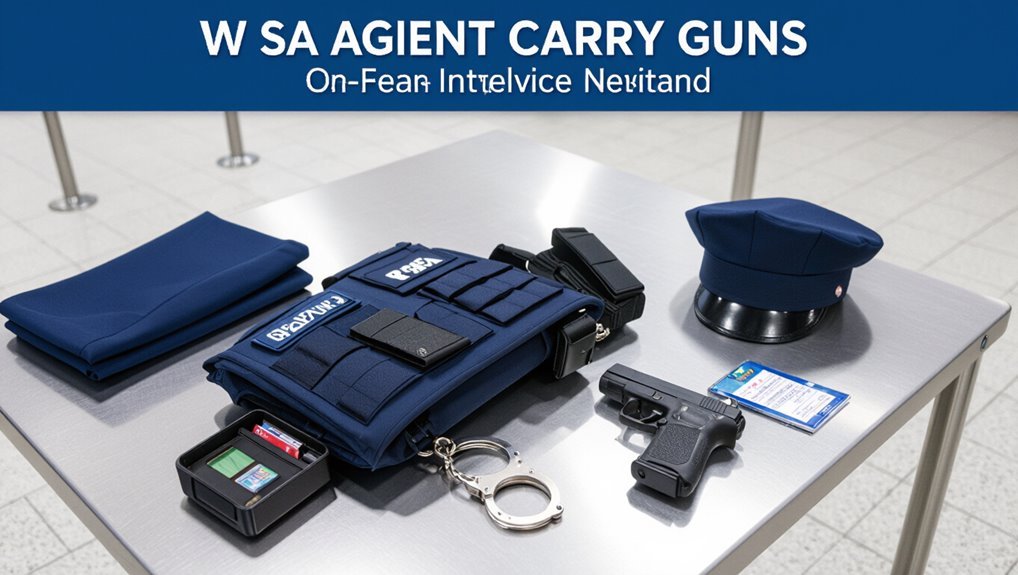
Curious whether TSA agents carry guns? You’ll find most Transportation Security Officers don’t carry firearms; they screen passengers and baggage, focusing on detection and deterrence.
Federal Air Marshals and some armed law enforcement detail provide armed protection. If you’re traveling, expect visible screening tools and unarmed officers managing checkpoints, while armed responders handle threats beyond TSA’s screening duties.
What Is the TSA’s Primary Role?
At its core, the TSA’s primary role is to protect the traveling public by preventing weapons, explosives, and other threats from getting onto commercial aircraft.
You rely on TSA officers to screen passengers, baggage, and cargo, enforce security policies, operate checkpoints, and use technology and intelligence to detect risks.
You expect them to balance safety, efficiency, and lawful treatment while minimizing disruptions to travel.
Who Are the Federal Air Marshals?
Beyond the visible checkpoint work of TSA officers, another layer of in-flight protection operates quietly onboard many commercial flights: Federal Air Marshals (FAMs). You’ll rarely spot them; they blend in, monitor threats, and intervene if needed. They’re trained agents deployed undercover to protect passengers and crew.
| Role | Visibility | Primary Task |
|---|---|---|
| FAMs | Low | Surveillance |
| FAMs | Low | Intervention |
| FAMs | Low | Deterrence |
What Legal Authority Do Air Marshals Have?
Although they operate undercover, Federal Air Marshals have clear statutory and regulatory powers that let them act to protect aircraft, passengers, and crew; they’re authorized to make arrests, use force when necessary, and carry firearms across domestic and many international flights under the authority of the Transportation Security Administration and federal law.
You’ll rely on their federal jurisdiction, training, and interagency coordination to respond lawfully to in-flight threats.
How TSA Duties Differ From Airport Police
When you compare them side by side, TSA officers focus on passenger and baggage screening, checkpoint procedures, and regulatory enforcement of federal aviation security rules.
In contrast, airport police handle broader public safety duties like patrols, crowd control, criminal investigations, and emergency response on airport property.
You’ll interact with TSA at checkpoints and screening lanes; you’ll see airport police patrolling terminals, managing incidents, and coordinating with other law enforcement.
Which Local and Federal Police Patrol Airports?
Who patrols your local airport depends on the facility: most airports are covered by a mix of local municipal or county police, airport police or public safety departments, and federal law enforcement agencies like the FBI, DHS components, and Customs and Border Protection for international terminals. You’ll encounter uniformed officers, federal agents, and specialized units tasked with passenger screening, perimeter security, and investigations.
| Agency Type | Typical Role |
|---|---|
| Local/County | Patrols, traffic, arrests |
| Federal | Investigations, border control |
How Armed Units Coordinate During Incidents
Because multiple agencies respond to incidents at airports, coordination hinges on clear command structures, communication channels, and predefined roles so you get a timely, unified response.
You’ll see incident commanders assign tasks, law enforcement secure perimeters, and TSA or federal agents protect critical areas.
You’ll rely on interoperable radios, joint briefings, and mutual aid agreements to avoid gaps, duplication, or jurisdictional confusion.
TSA Screening Steps and Nonlethal Security Tools
You’ll follow clear TSA screening steps—from ID check and carry-on scans to secondary inspections—to keep throughput steady and risks low.
You’ll also get familiar with nonlethal tools like pat-downs, screening wands, and restraint options that help manage threats without lethal force.
Throughout it all, you’ll use concise officer communication techniques to coordinate actions and de-escalate situations.
TSA Screening Process
1 key part of airport security is the TSA screening process, which moves passengers through identification checks, X‑ray and advanced imaging, carry‑on and checked‑baggage inspections, and targeted secondary screening; along the way, agents use nonlethal tools—metal detectors, explosive trace detection, handheld wands, and pat‑downs—to detect threats while minimizing disruption.
You’ll follow clear directions, present ID, remove restricted items, and cooperate with secondary checks.
Nonlethal Tools Overview
Building on the screening steps you just read about, this section explains the nonlethal tools TSA agents use to find threats without escalating force.
You’ll encounter handheld and walkthrough metal detectors, advanced imaging systems, explosives trace detection swabs, and X-ray screening for carry-ons.
Agents also use chemical detectors, controlled canine teams, and barriers to redirect passengers while resolving alarms calmly and safely.
Officer Communication Techniques
Although screening relies on technology and procedures, effective officer communication ties those tools to safe outcomes. You’ll hear clear instructions, calm reassurance, concise alerts, and de-escalation phrases that guide behavior. Officers use consistent cues during screening and explain nonlethal options.
| Cue | Purpose | Example |
|---|---|---|
| Calm tone | Reduce anxiety | “Please step forward.” |
| Clear instruction | Guarantee compliance | “Place items here.” |
| Brief warning | Safety | “Stop, please.” |
TSA Rules: What Screeners Can’t Carry
You’re not allowed to carry personal firearms while screening passengers, as TSA maintains strict prohibited items lists to keep checkpoints safe.
You’ll need to follow the agency’s restricted-items policy for things like certain tools and sharp objects.
Only designated, armed law-enforcement officers are exempt from the firearms ban under specific agency rules.
Personal Firearms Prohibited
When you’re working as a TSA screener, you can’t carry personal firearms or other weapons while on duty, and that rule applies regardless of any off-duty permits or law enforcement credentials you might hold.
You must store personal weapons offsite and follow employer procedures. Violations can lead to disciplinary action, up to termination and possible legal consequences, so comply strictly with agency policies.
Restricted Items Policy
Because screeners handle passenger screening and secure areas, TSA limits what you can carry on the job to prevent safety risks and conflicts of interest.
You’re prohibited from bringing weapons, explosive materials, and certain tools that could compromise inspections.
You also can’t carry personal protective gear that mimics enforcement equipment or items that create bias, and supervisors enforce strict reporting and storage rules for any restricted property.
Exceptions For Armed Officers
Although most screeners are barred from carrying weapons, TSA makes specific allowances for armed federal or contract law-enforcement officers who must be armed while performing security duties.
These officers follow separate authorization, training, and credentialing requirements that don’t apply to regular screening staff. You’ll see armed officers handle incidents, support perimeter security, and respond to threats under strict oversight.
- Armed federal officers’ duties
- Contract officers’ limits
- Oversight and training requirements
How Airports Decide Who Carries Firearms
Deciding who carries firearms at an airport involves a mix of federal regulations, agency policies, and local law enforcement agreements that shape the authority and responsibilities of armed personnel.
You’ll find procedures vary: airport police, contracted law enforcement, or federally deputized officers may be authorized.
Decisions hinge on threat assessments, jurisdictional boundaries, training standards, and memoranda of understanding that set patrol zones, command structure, and use-of-force rules.
What Passengers Should Expect at Checkpoints
Once you know who’s armed and why, you’ll want to understand what happens when you reach the checkpoint.
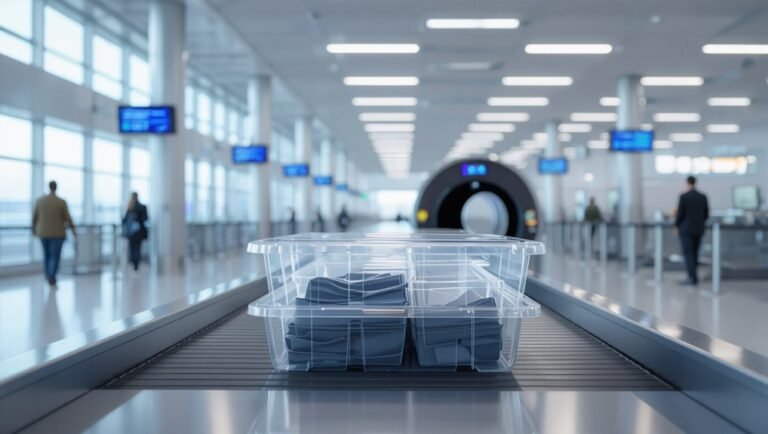
You’ll pass through screening, follow officer directions, and expect professional but firm interactions. Stay prepared, keep documents handy, and comply with requests to remove shoes or electronics.
- Show ID and boarding pass promptly
- Place items in bins as directed
- Follow officer instructions quickly and calmly
Real Examples of Armed Responses at Airports
When armed officers respond at airports, they act fast and follow clear protocols to contain threats and protect travelers. You’ll see coordinated evacuations, perimeter control, and medical aid after incidents. Learn from past responses to recognize instructions and stay calm.
| Incident | Response | Outcome |
|---|---|---|
| Active threat | SWAT, K9s | Neutralized |
| Bomb scare | Evacuation | No detonation |
| Medical emergency | First responders | Stabilized |
Common Myths About TSA and Guns : Debunked
After seeing how armed officers handle real incidents, it’s easy to assume you understand every aspect of guns and security at airports — but several persistent myths still shape public expectations.
You shouldn’t assume all TSA employees are armed, that visible weapons mean lax screening, or that armed officers handle every threat. Remember roles, training, and jurisdiction differ.
- Not all TSA staff carry guns
- Visible arms don’t equal weak screening
- Law enforcement, not TSA, leads armed response
Practical Safety Tips for Nervous Travelers
A packed terminal can feel overwhelming, but you can reduce stress by preparing a simple checklist before you leave: pack essentials, secure ID and boarding pass, and wear easy-to-remove shoes.
Arrive early, know TSA rules, and use trusted traveler programs if eligible.
Stay hydrated, breathe deeply, and ask staff for directions or assistance—agents are there to help you through the process.
Frequently Asked Questions
Do TSA Agents Undergo Firearm Training Even if Unarmed on Duty?
Yes — even if you’re unarmed on duty, TSA agents receive firearm awareness and response training; armed Federal Air Marshals and certain armed TSA officers get extensive weapon instruction, and all get protocols for coordinating with armed responders.
Can Airport Contractors Legally Carry Weapons Within Terminals?
Yes — sometimes. Whether you can legally carry weapons as an airport contractor depends on federal, state, and airport policies; you’ll need proper authorization, background checks, certifications, and explicit employer and airport security approval before being armed.
Are TSA Canine Teams Armed or Considered Armed Personnel?
Yes — when deployed, TSA canine handlers are armed and considered armed personnel; you’ll see handlers carry firearms and controls for dogs, since they’re trained to protect teams, passengers, and airside security during operations.
Do TSA Agents Have Authority to Detain or Arrest Passengers?
You generally can’t arrest passengers; TSA officers can detain individuals for security screening, refuse boarding, and hold people until law enforcement arrives, but only sworn federal or local officers have full arrest powers.
How Are Complaints Against Armed Officers at Airports Investigated?
Complaints about armed officers at airports are investigated by internal affairs or oversight units; you’ll file a report, cooperate with interviews and reviews, and the agency will examine bodycam, witness statements, and policies before disciplining or referring criminally.
Conclusion
TSA agents you see at checkpoints don’t carry guns — their job is screening and customer service, not armed law enforcement. Federal Air Marshals are the trained, armed officers who work covertly on flights, while airport police handle on-ground armed responses and criminal enforcement. If you’re nervous, remember procedures are strict and incidents are rare; follow instructions, arrive early, and ask officers calmly if you need help. Staying informed and cooperative keeps everyone safer.